11 Jan: Further Ado
We had hoped to begin the new year with a cast and crew ready to go, but due to delays with our auditions process in December, we are now in the final casting stage.
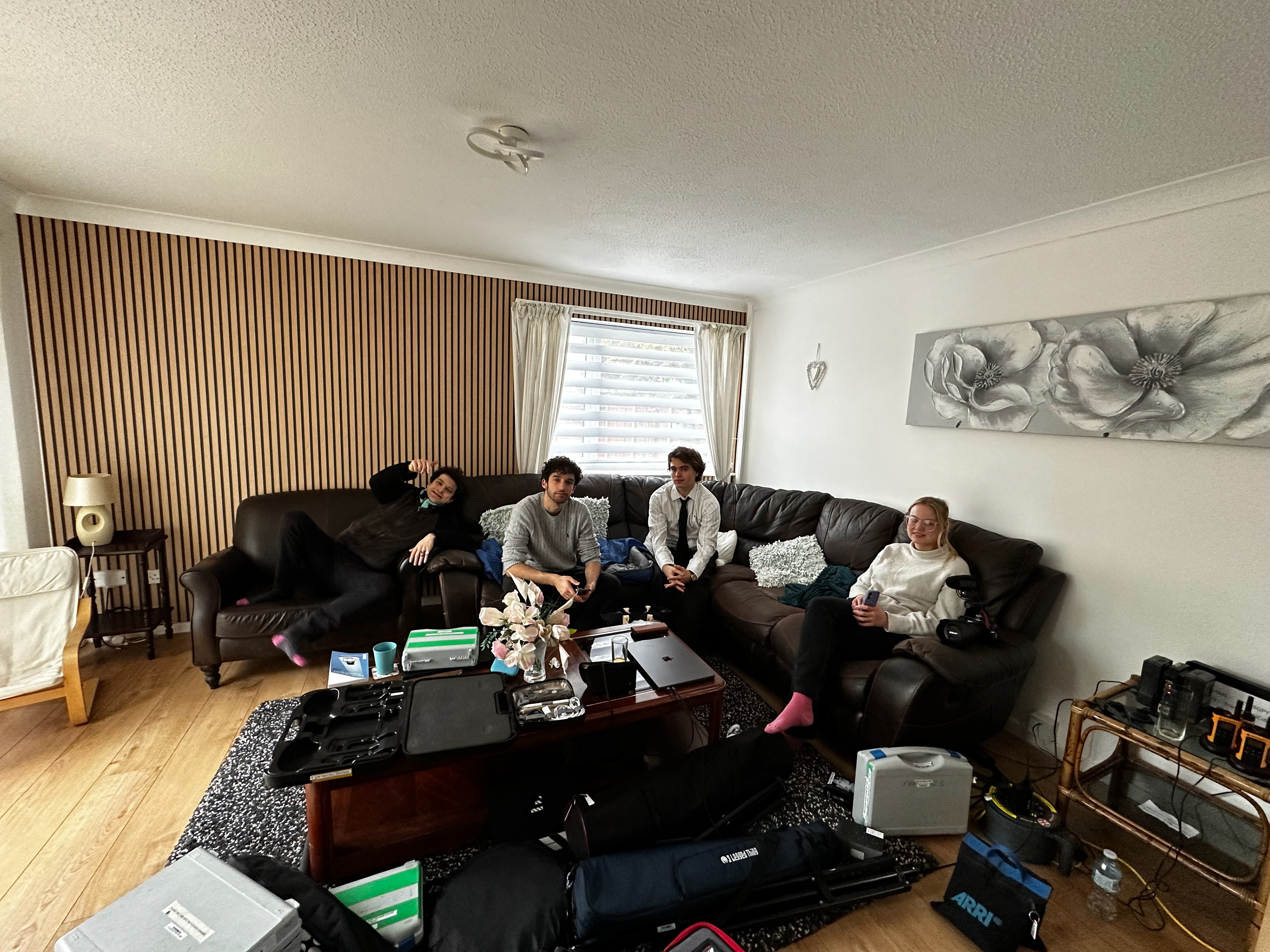
Today, we met at Hannah’s to discuss our first round of showreels. We received almost a hundred emails in response to our Facebook call-out — of this, we skimmed them all and narrowed our pool down to thirty people. (Some were easier than others to rule out - we had one applicant who lives in Venezuela!) We then watched their showreels, looked through their Spotlight pages, Instagrams, or whatever else they’d given us, to see who we liked and thought suited the characters best.
After a few hours of this, we had further whittled our pool down to:
Josh Ruskin, Liam Prince, Scott Davis, Luca Stojanovic, Ryan Barnes, Daniel Hammond, for Elias and/or Lucid;
Celena Meziri, Neve Lofthouse, Maya Weir, Poppy Parfitt, Aliye Baram, and Lily Fisher, for Isobella.
My personal favourites are Luca, Ryan, and Liam, for Elias/Lucid — but I’m not sure who I’d pair with who, yet — and Neve and Aliye for Isobella. Aliye has slightly more character to her voice, and I’m not sure yet if this works or not for Isobella — but both are clearly very talented actresses.
Admittedly, I had been concerned about the calibre of applicants we’d get from Facebook, but I have been very much proven wrong!
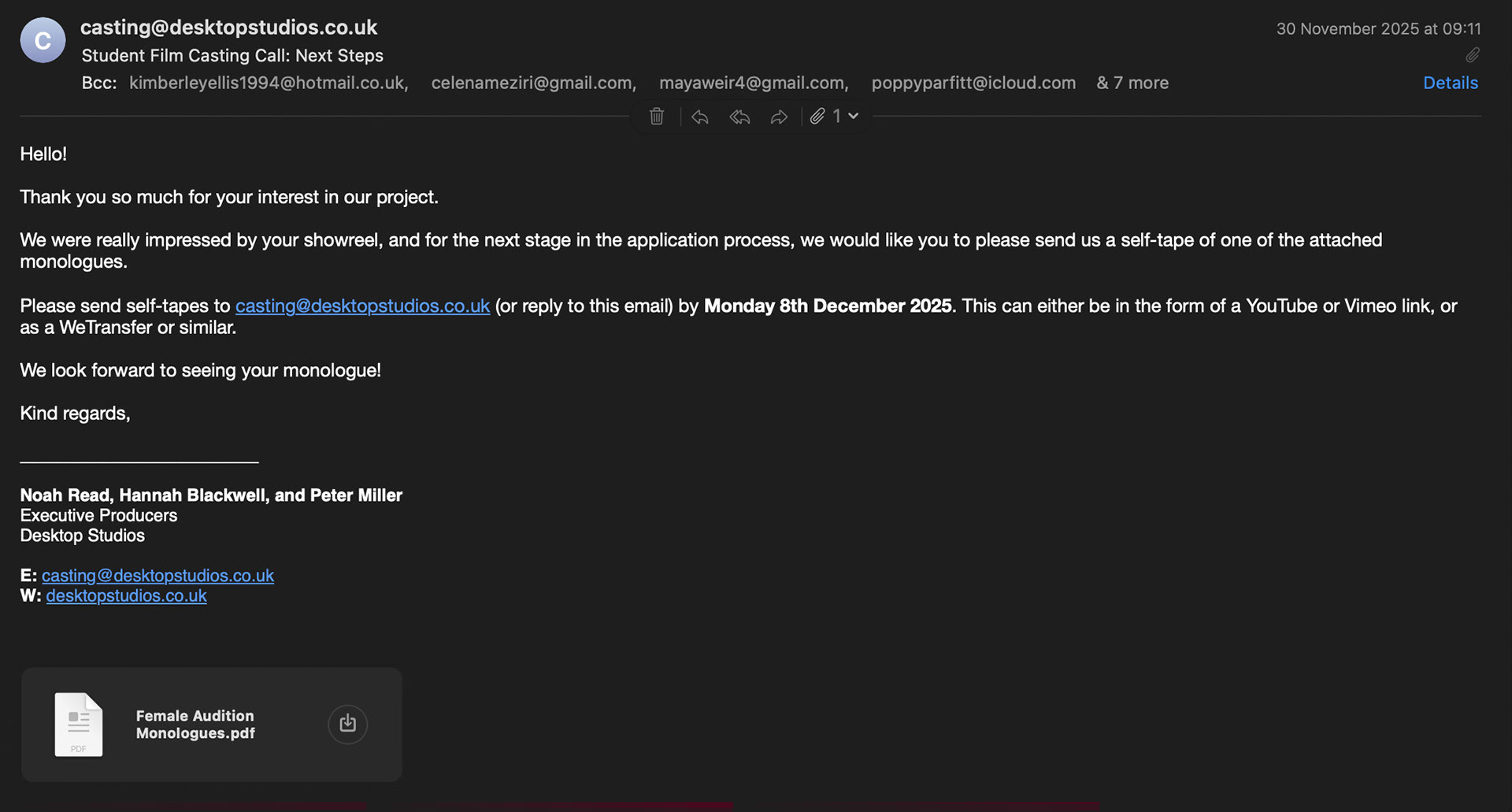
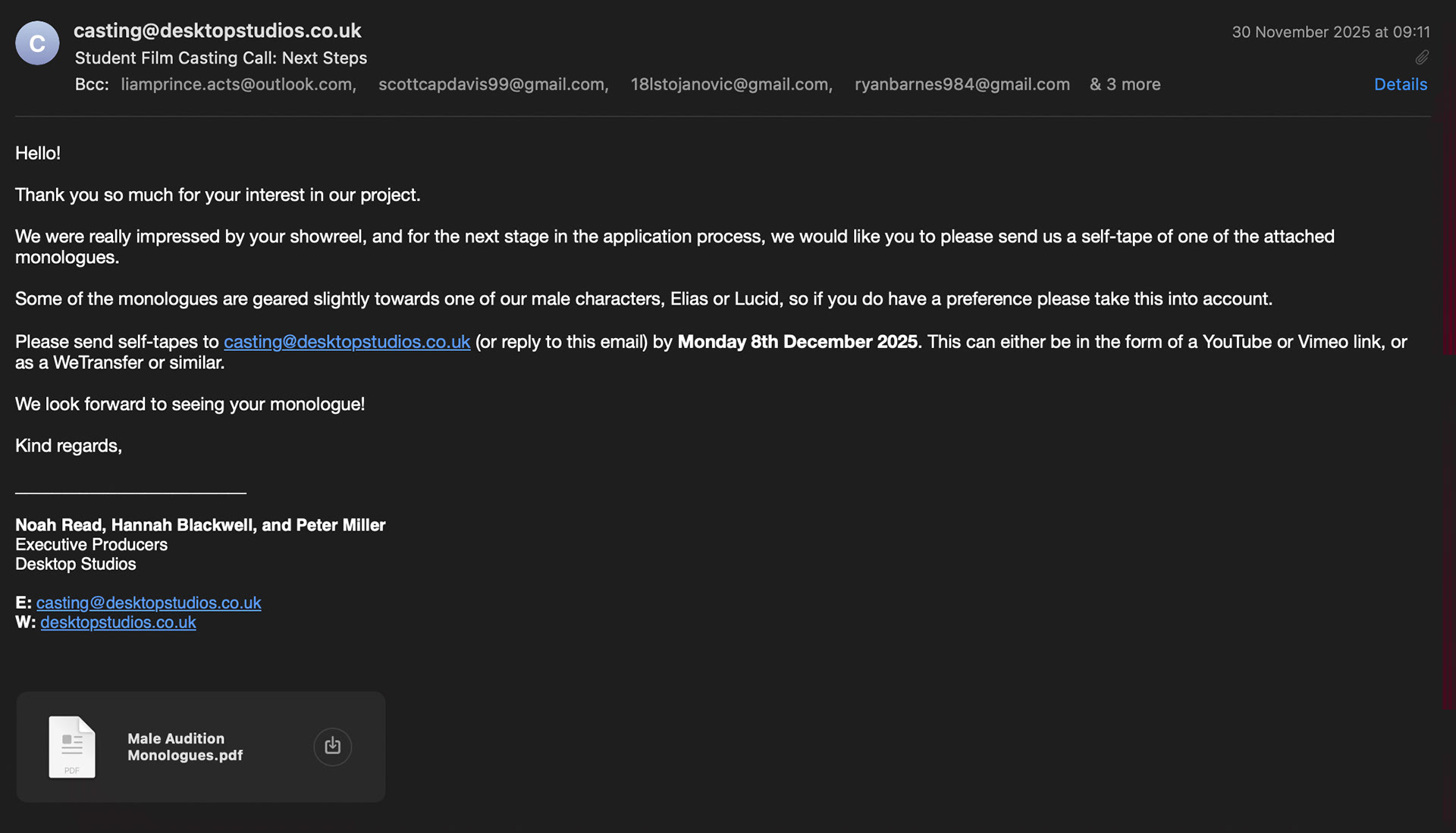
We sent have sent out emails asking for people’s availability for in-person auditions…!
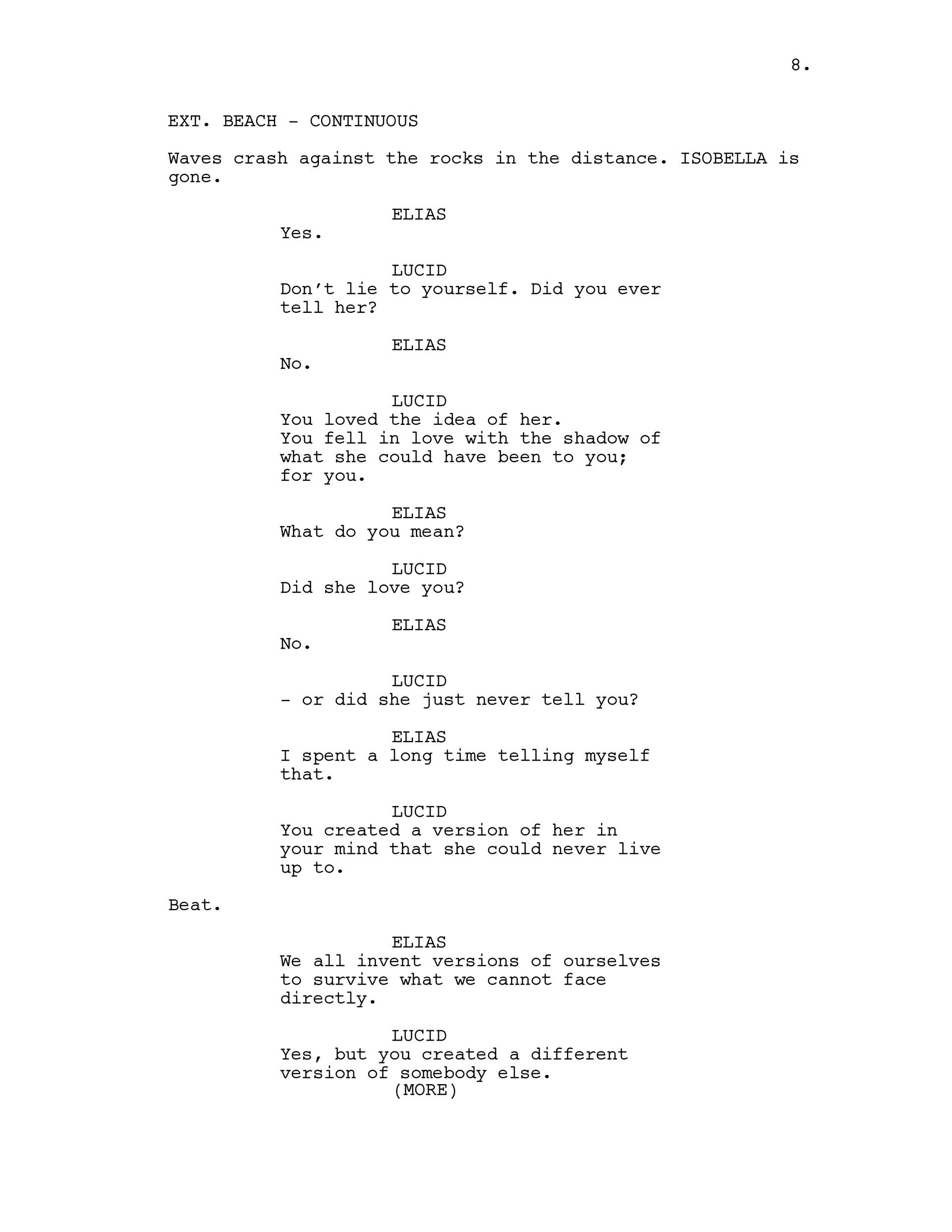
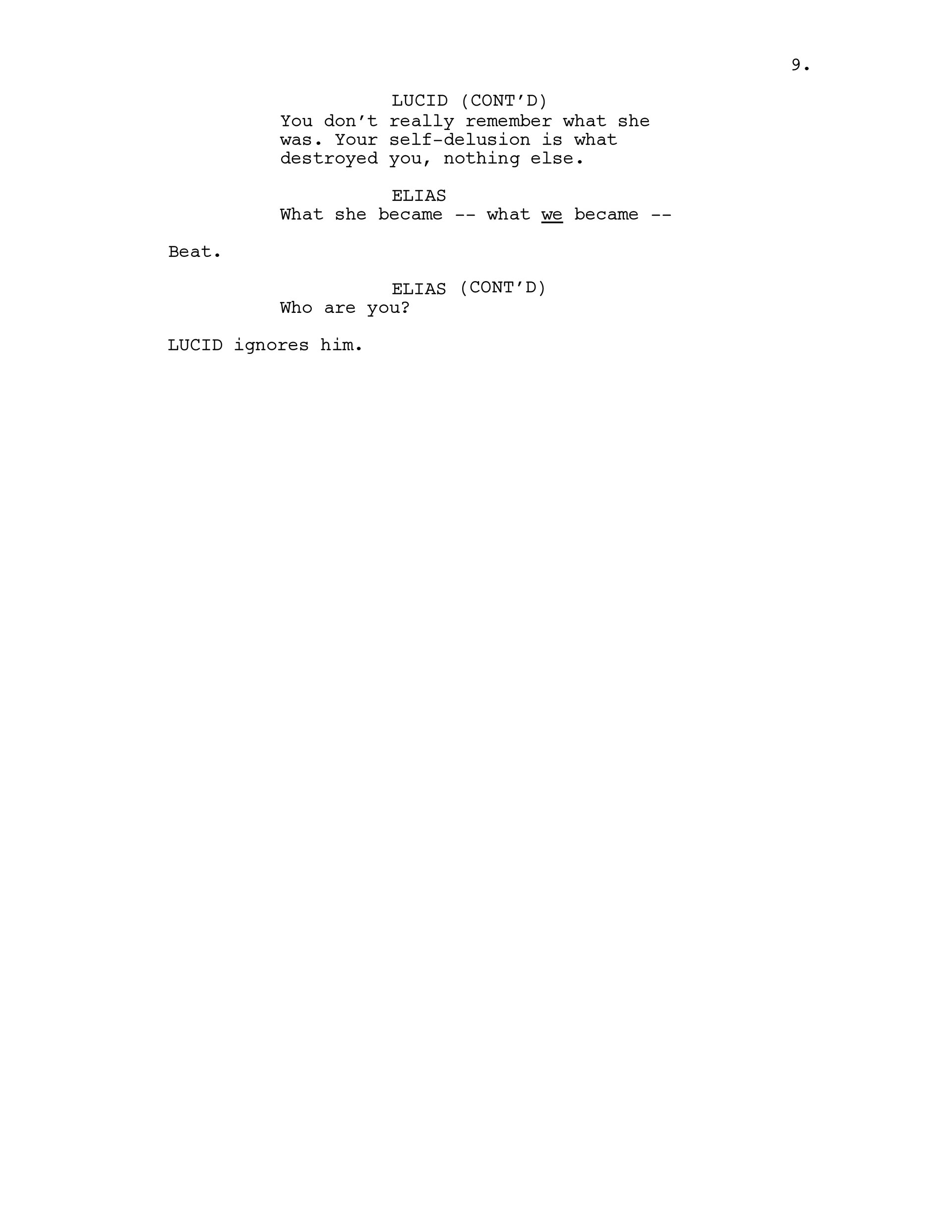
16 Jan: In-Person Auditions
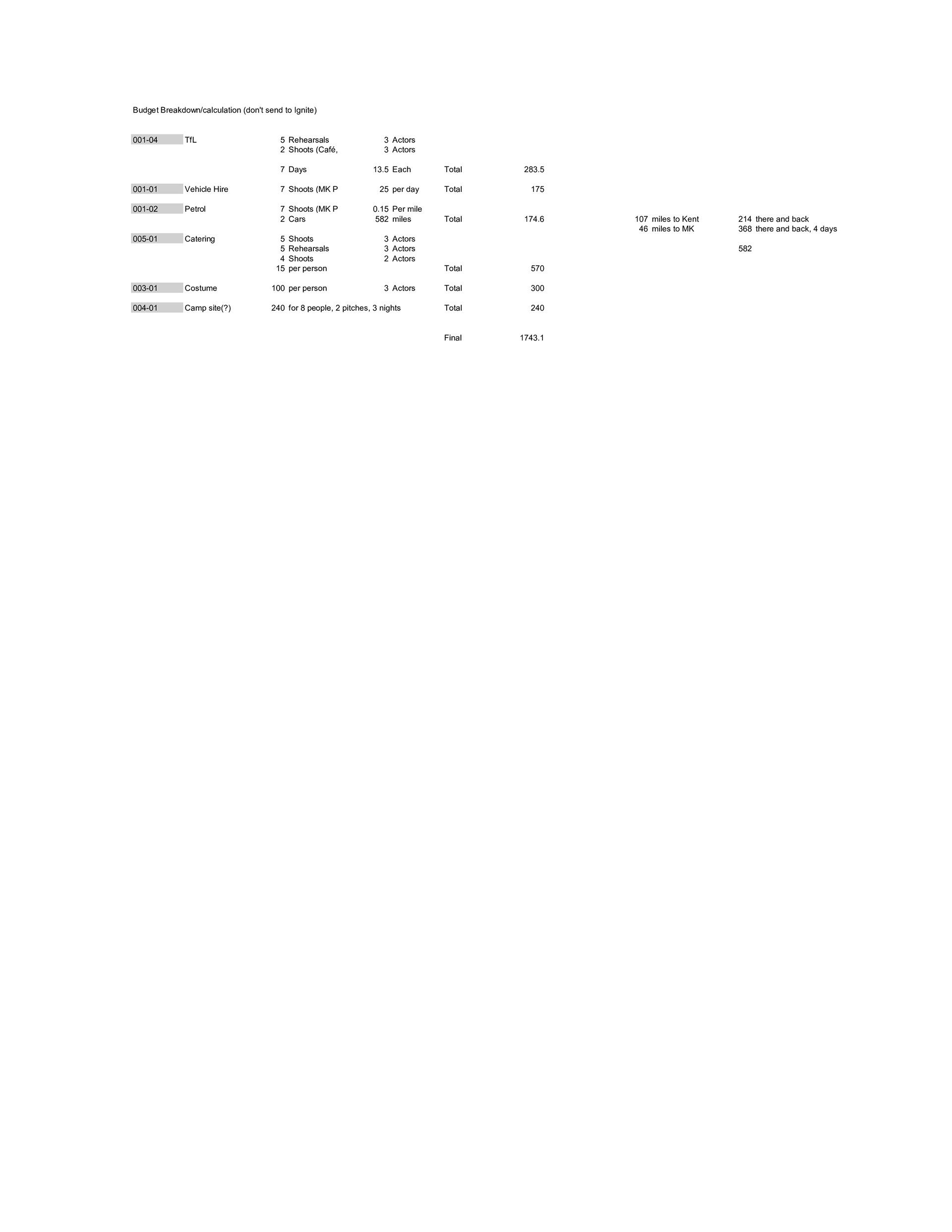
This week, (after my final dissertation meeting with Chris Chris!) Hannah, Peter, and I met to discuss budget and our Ignite Fund application at Peter’s on Monday, and then prepared for our in-person auditions today.
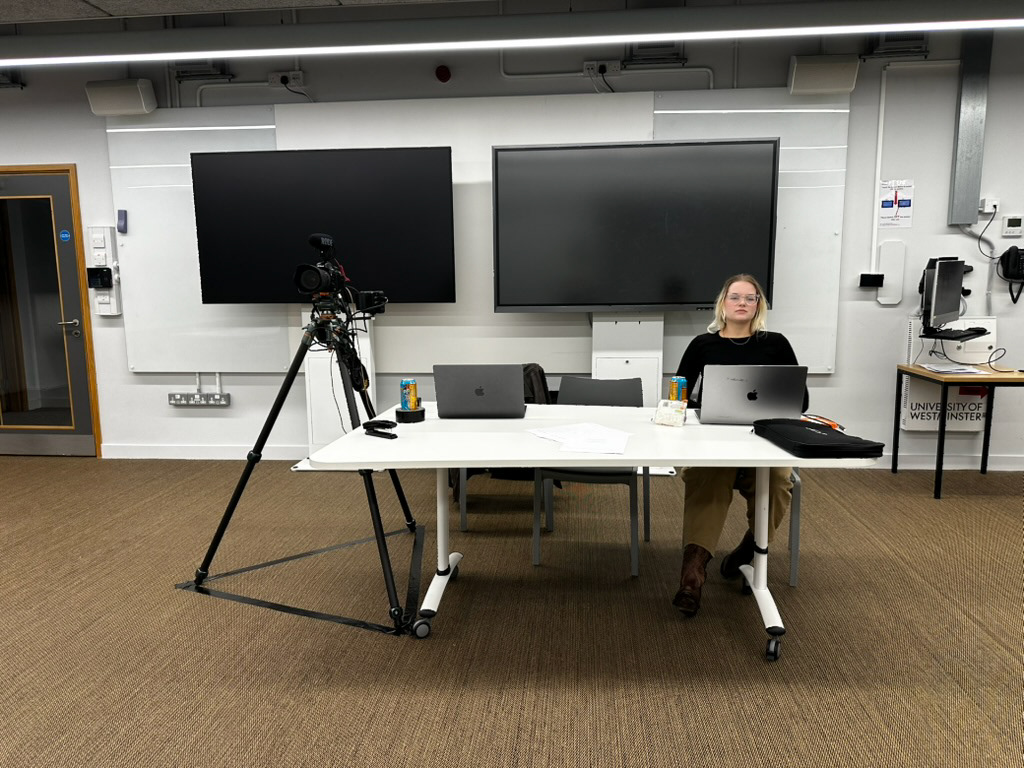
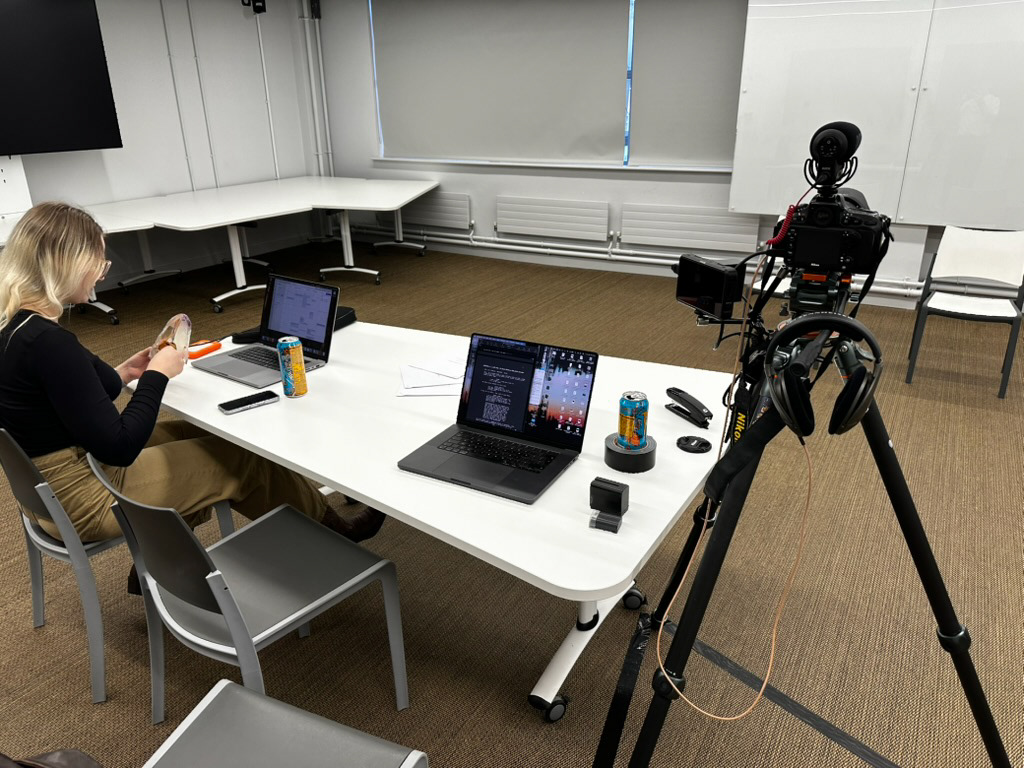
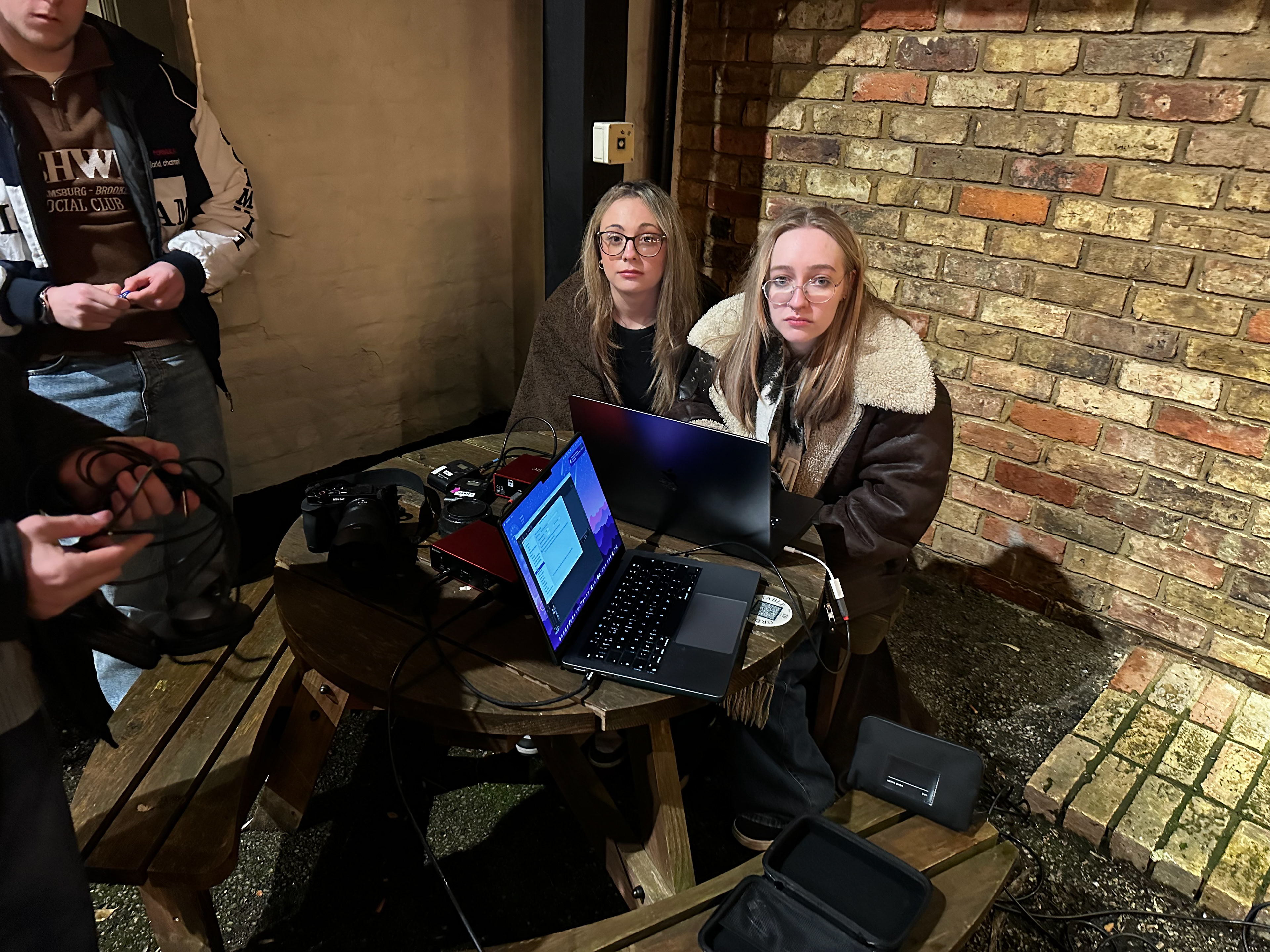
(Photos taken while Peter was collecting actors from reception — I realised we hadn’t photographed the set-up yet!)
I think these went reasonably well, despite the sporadic arrival times of our auditionees!
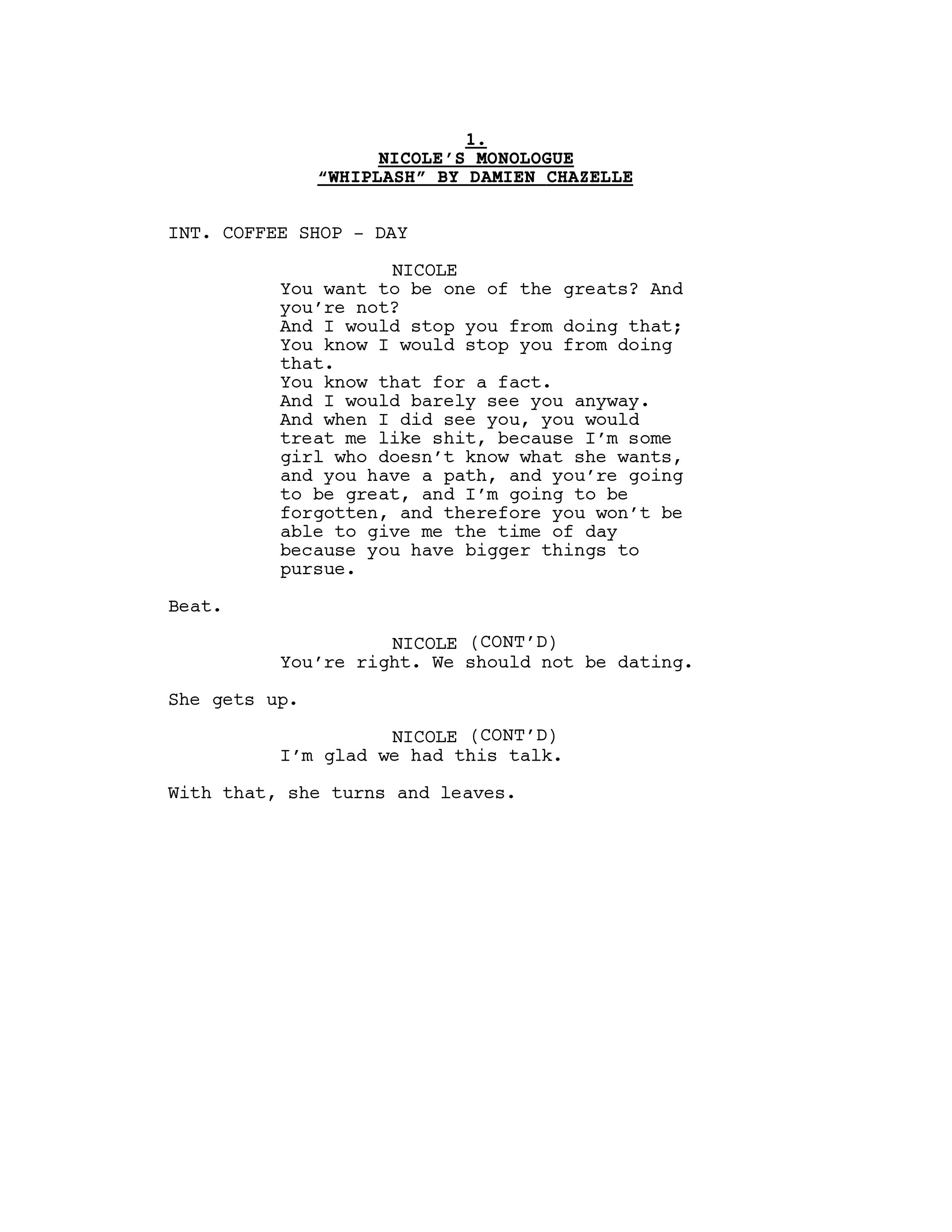
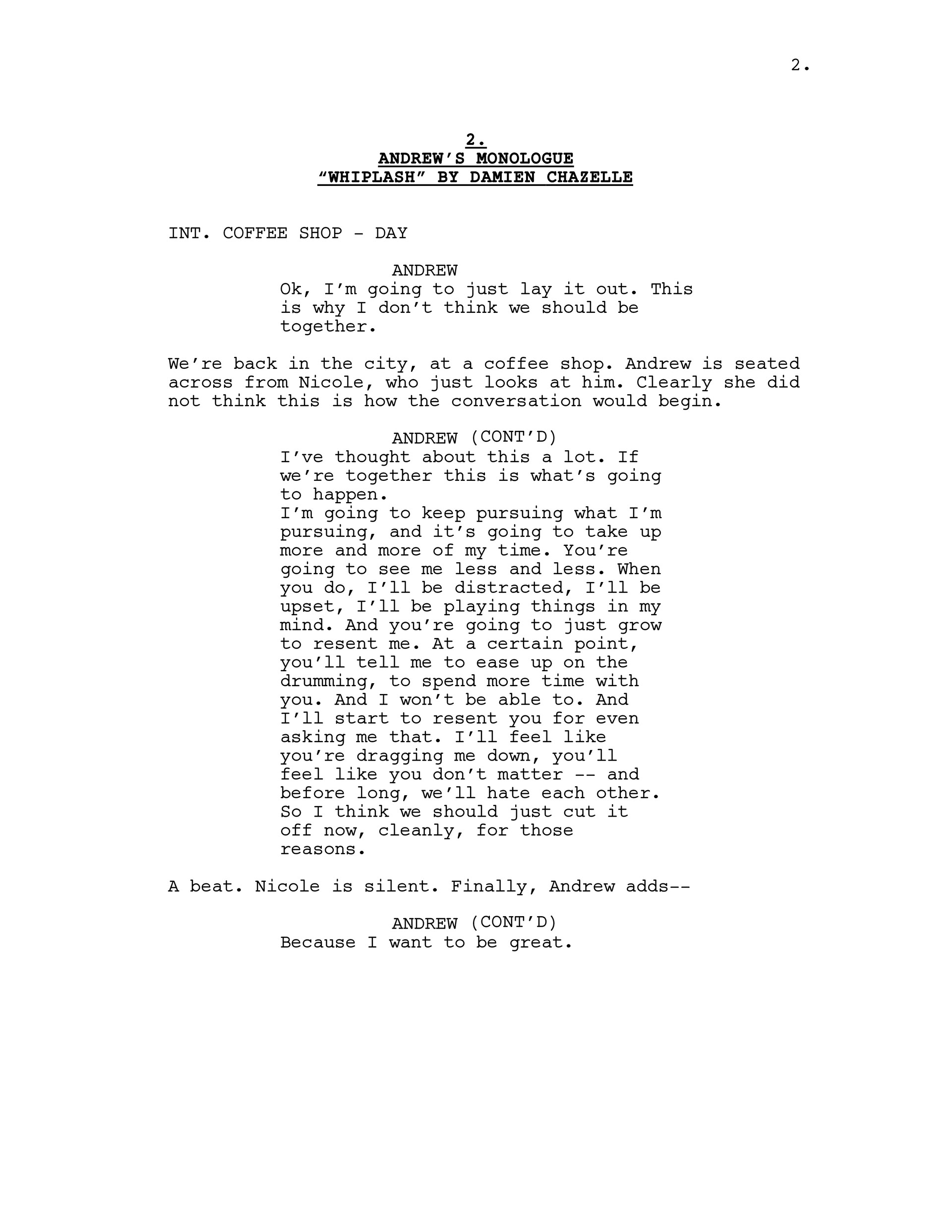
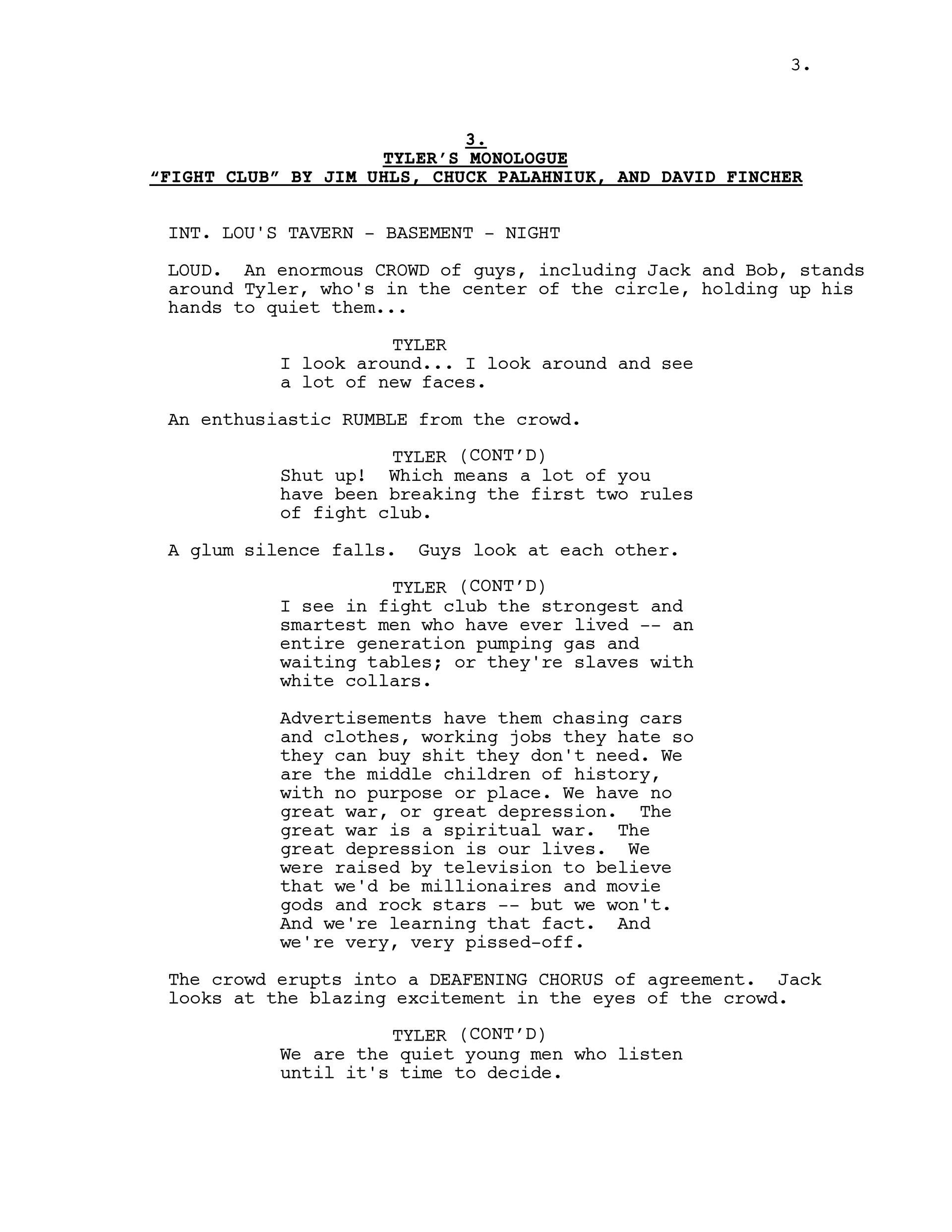
First to arrive was Liam, who had travelled almost two hours by bus! He read Fight Club and Whiplash for us — I preferred his Fight Club, pushing him towards Lucid, in my opinion at least.
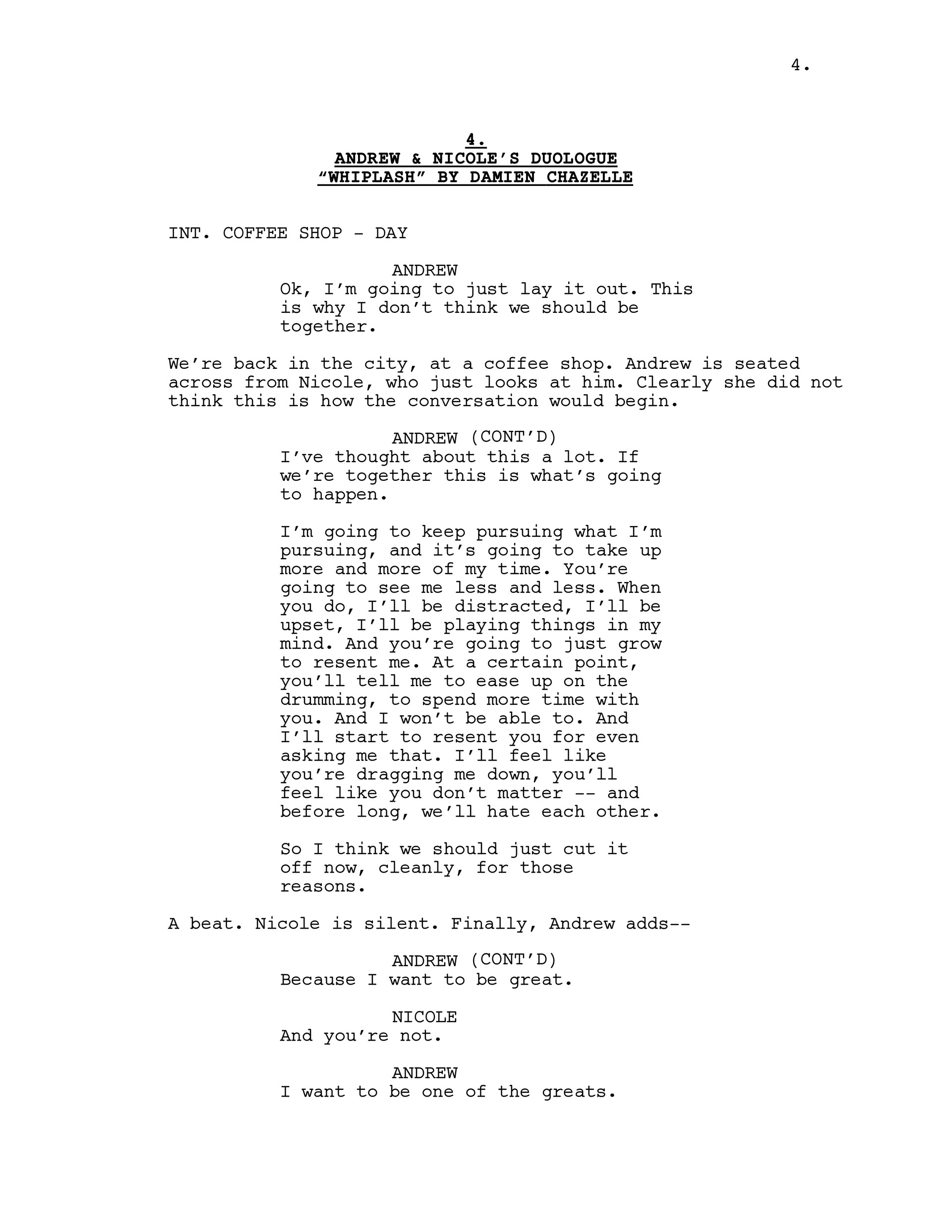
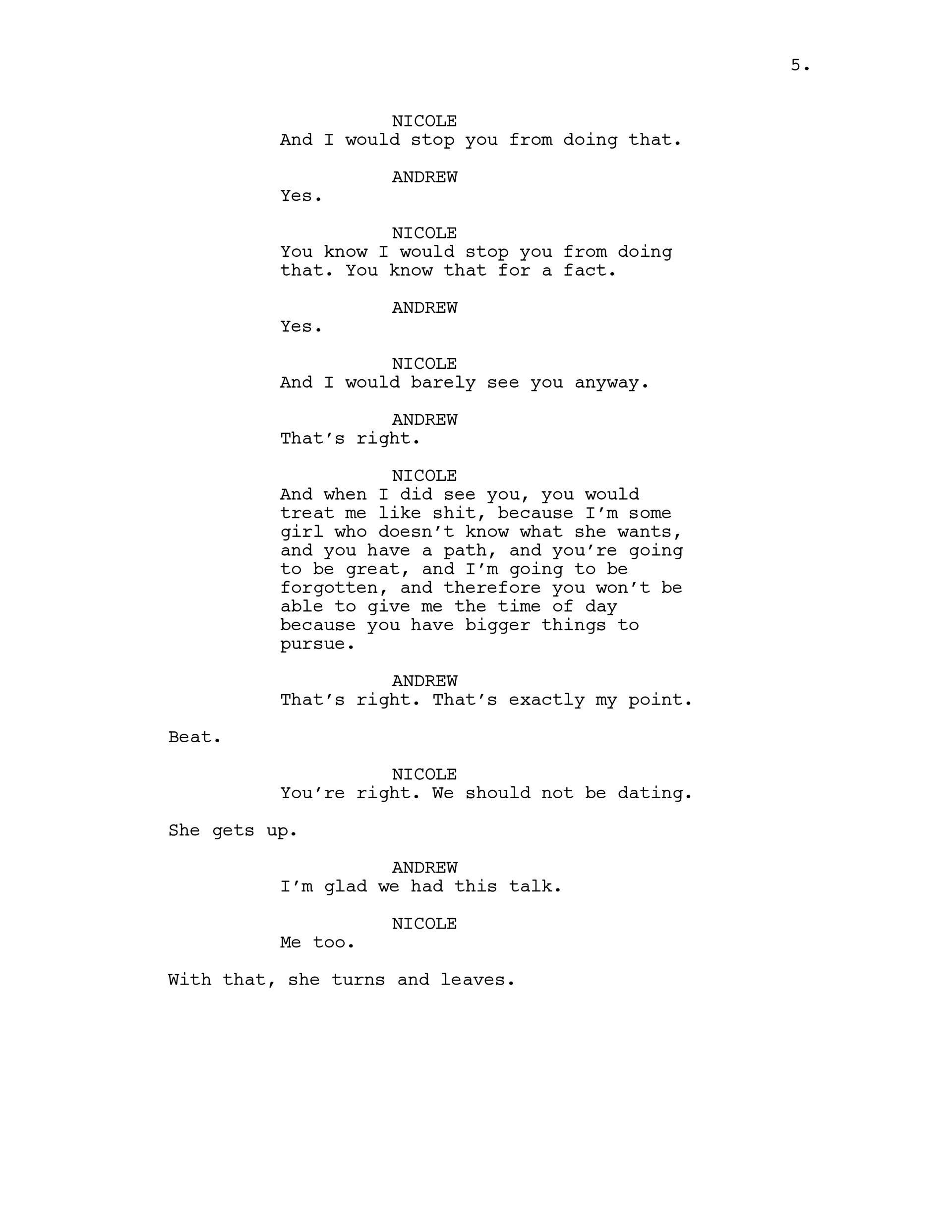
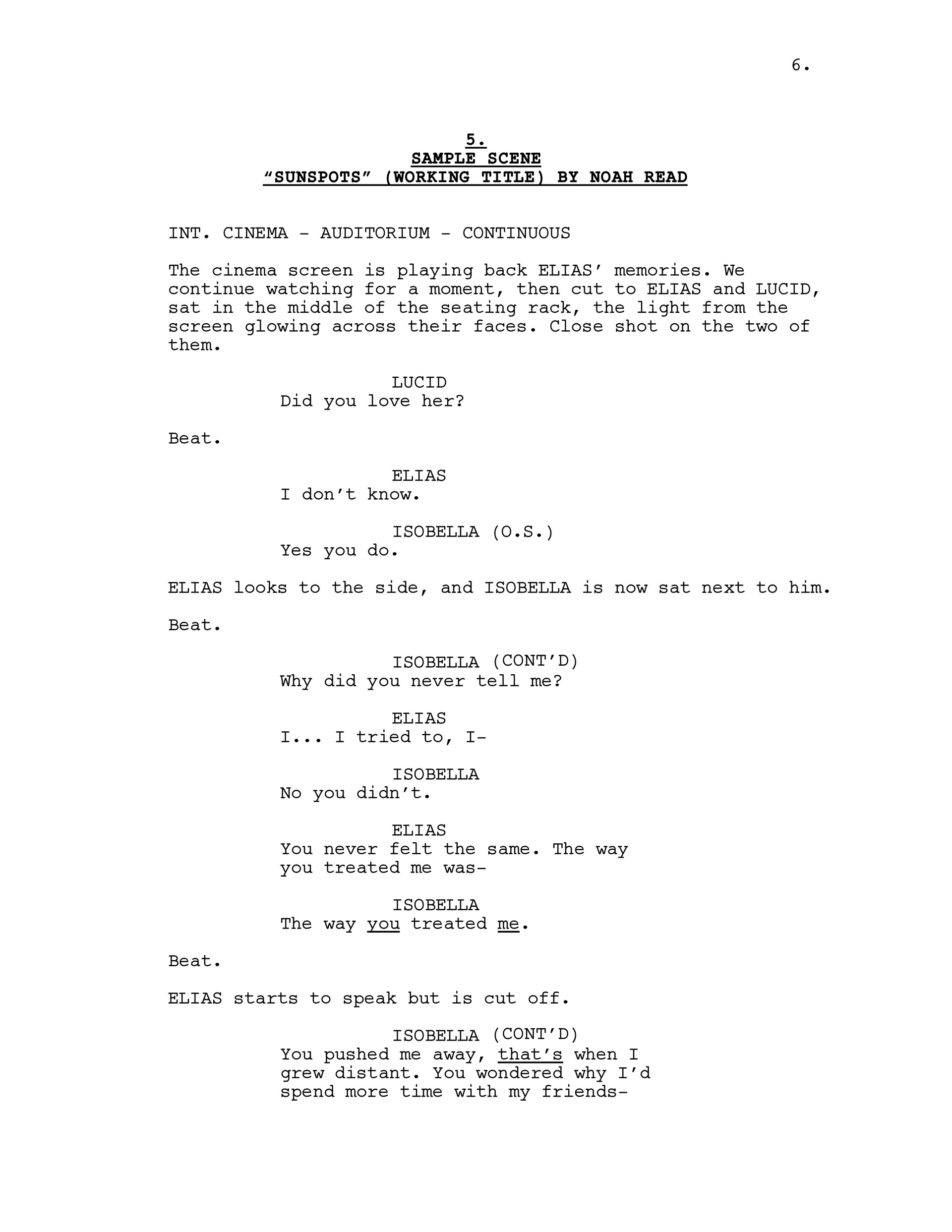
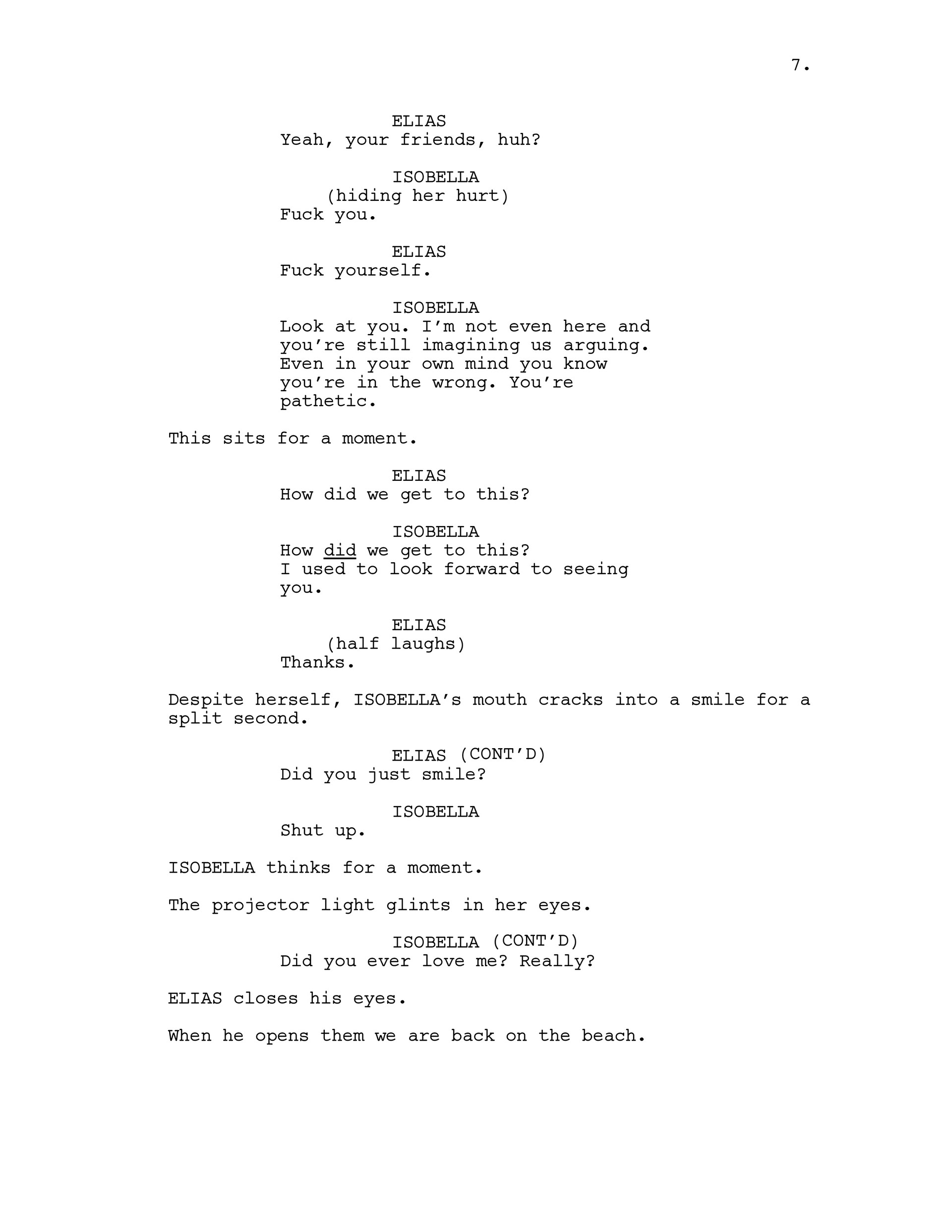
Ryan and Luca came together, delayed by traffic. Both were very good, but Luca was especially excellent at Whiplash. His delivery was believable and heartfelt, without copying Miles Teller’s performance from the film. We then asked them to perform the short expert from our Working Title script. Both did both roles very well, but if I had to pick I would probably vote for Luca as Elias and Ryan as Lucid.
Neve, unfortunately, wasn’t able to make it to the first audition as her drama school had rescinded her day off. This is slightly worrying, as although she seems very good, it would be very inconvenient to have the possibility of that happening for a shoot date…
These is our final actor pool…
18 Jan: The Cafe on the Lake
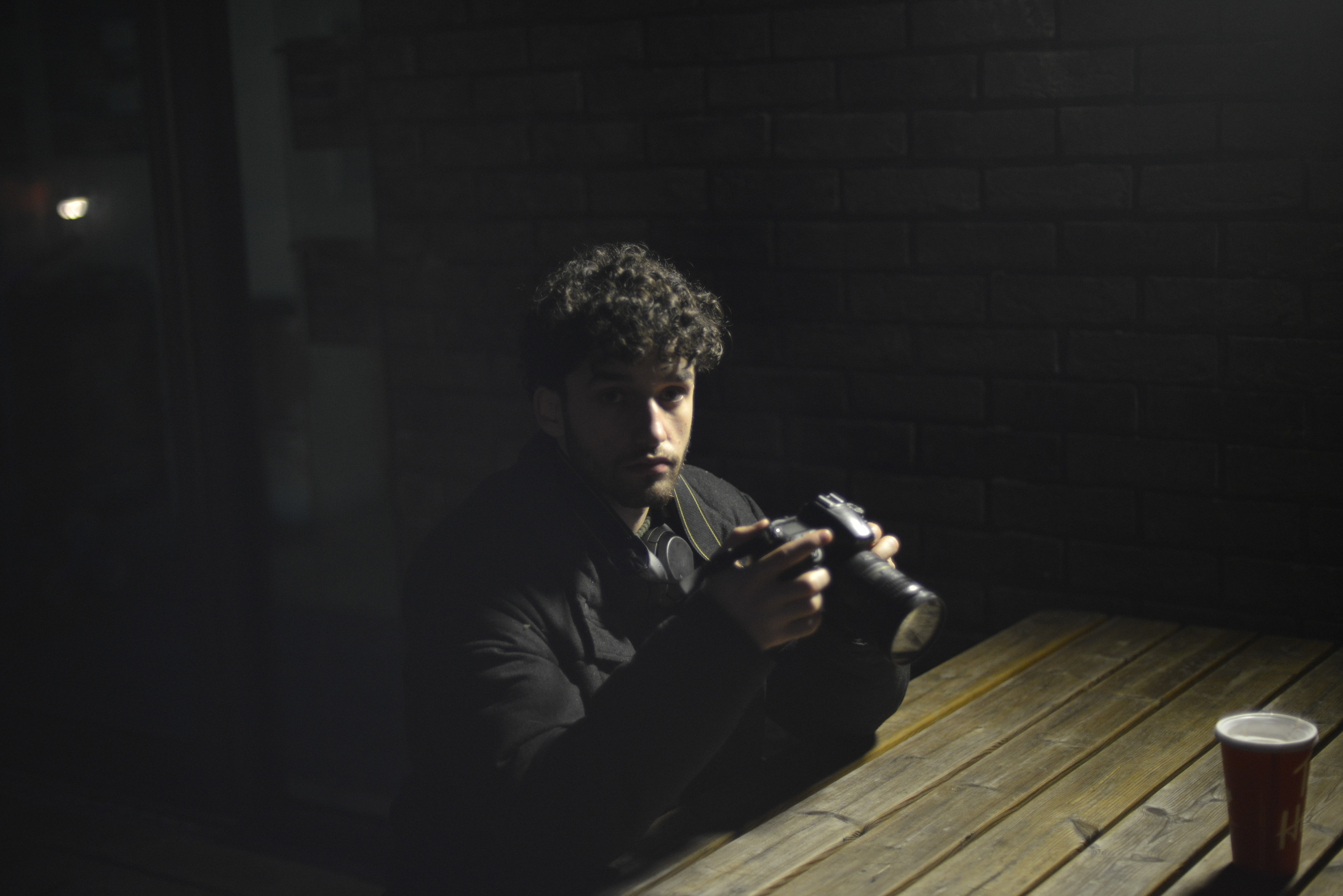
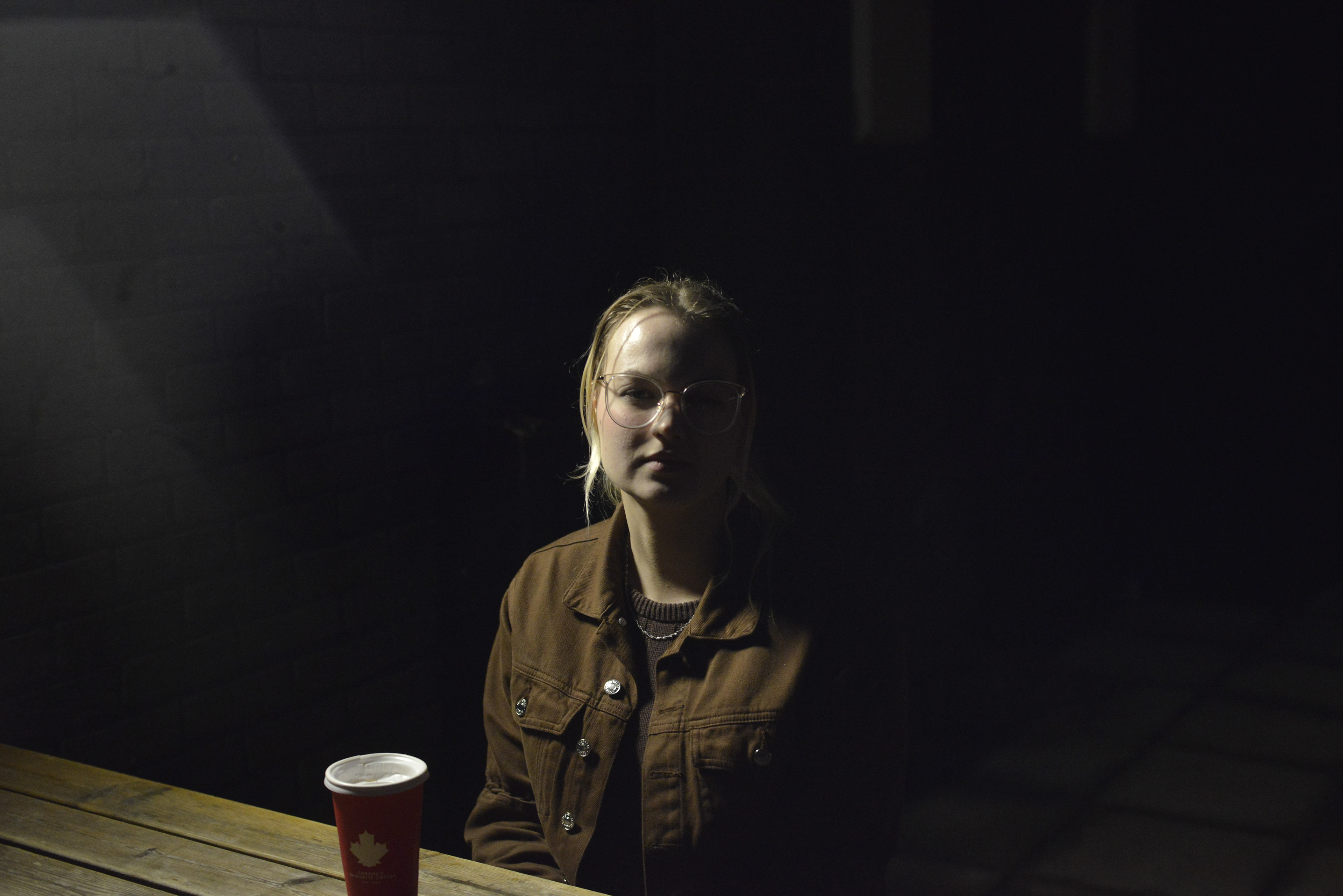
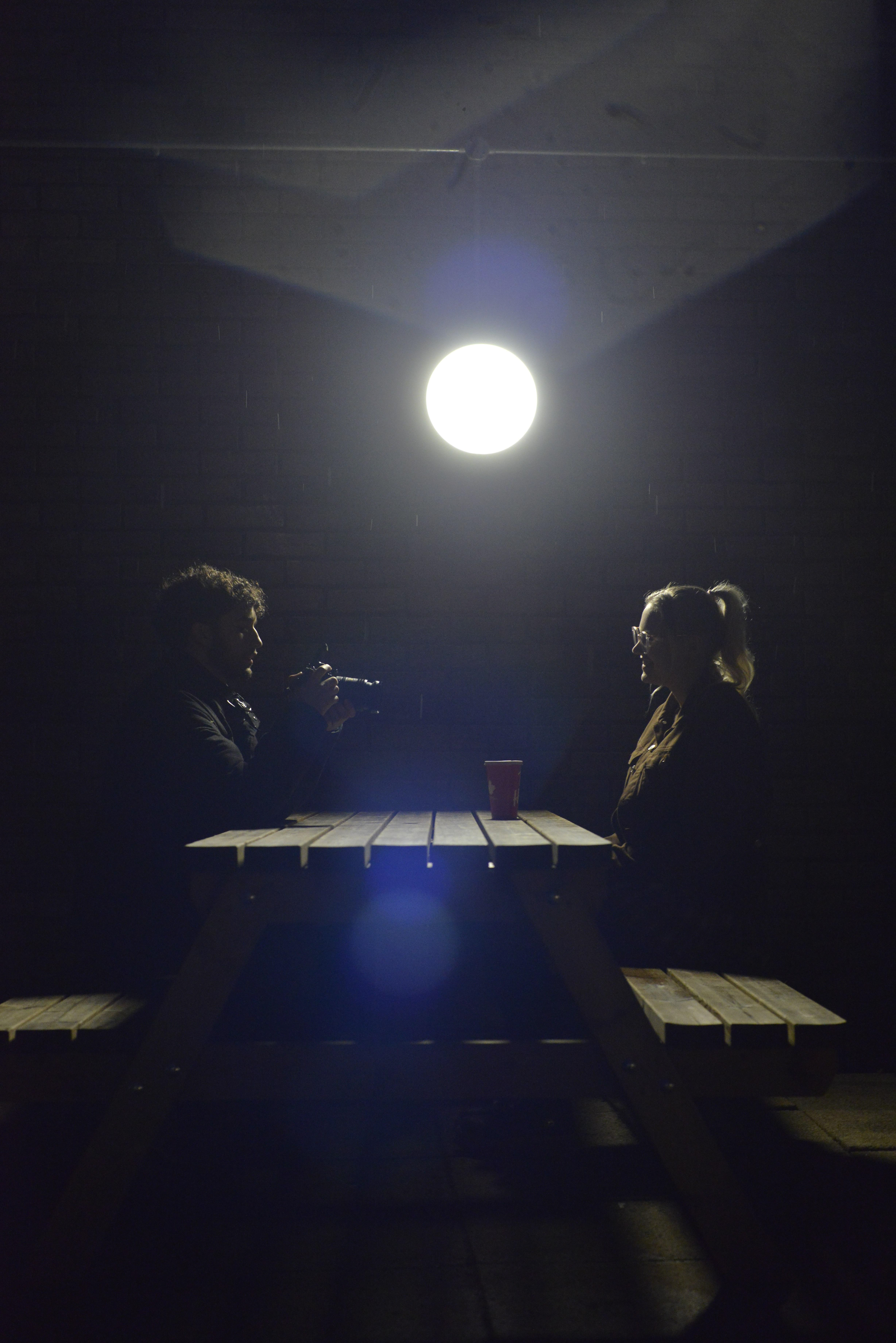
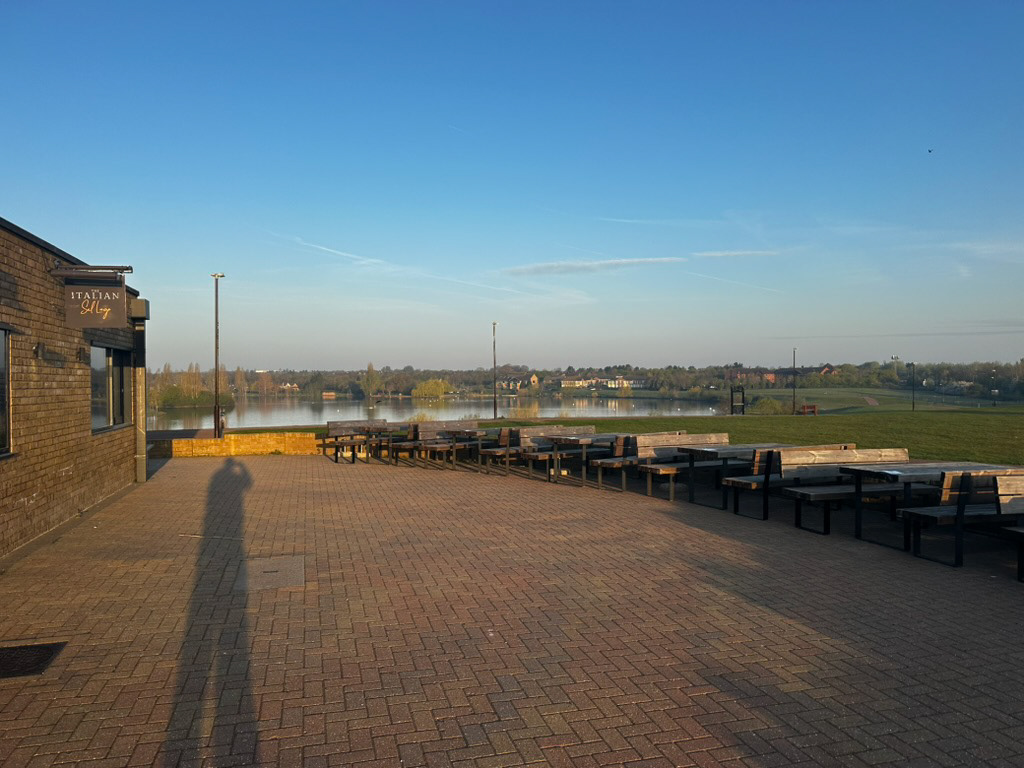
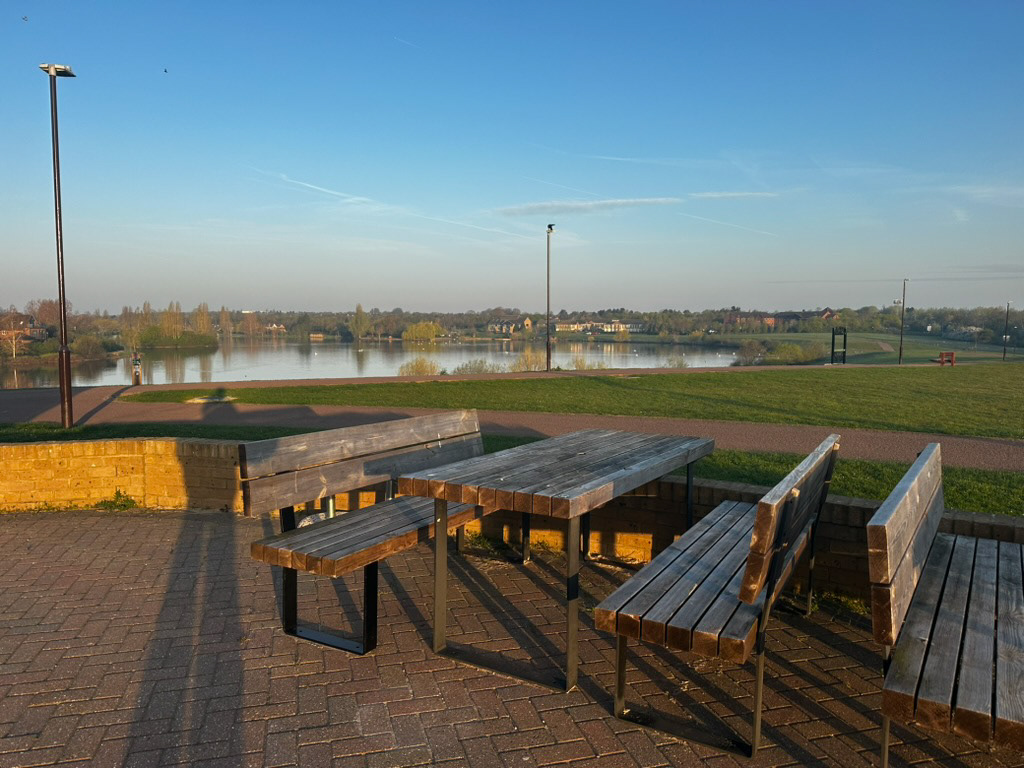
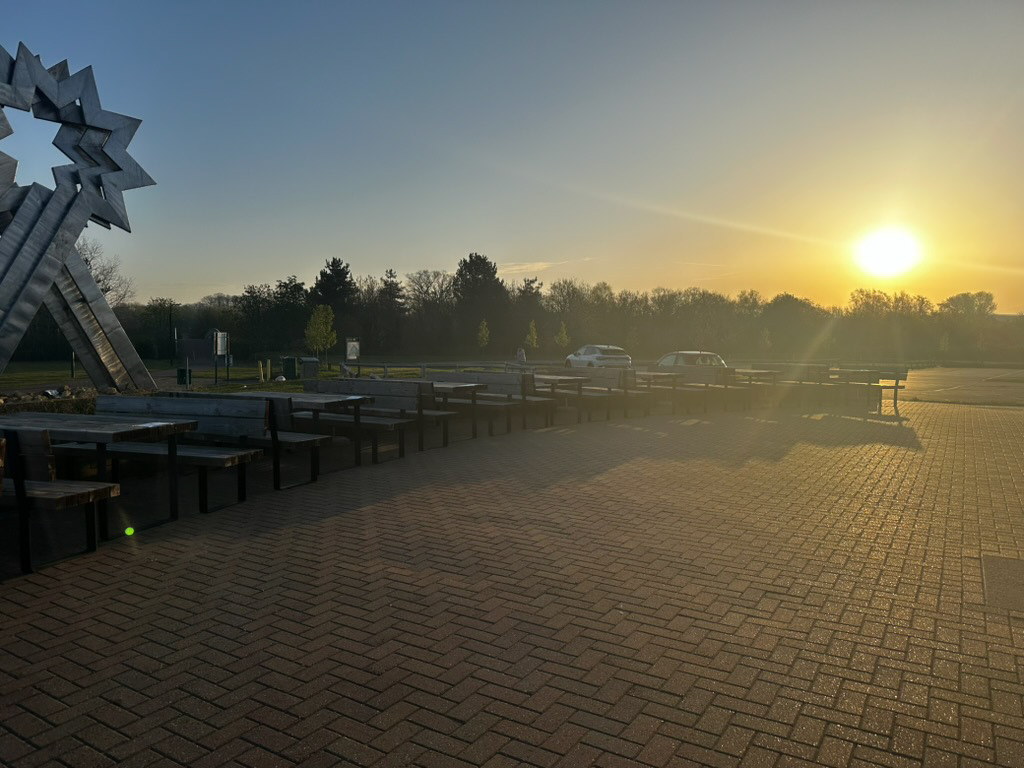
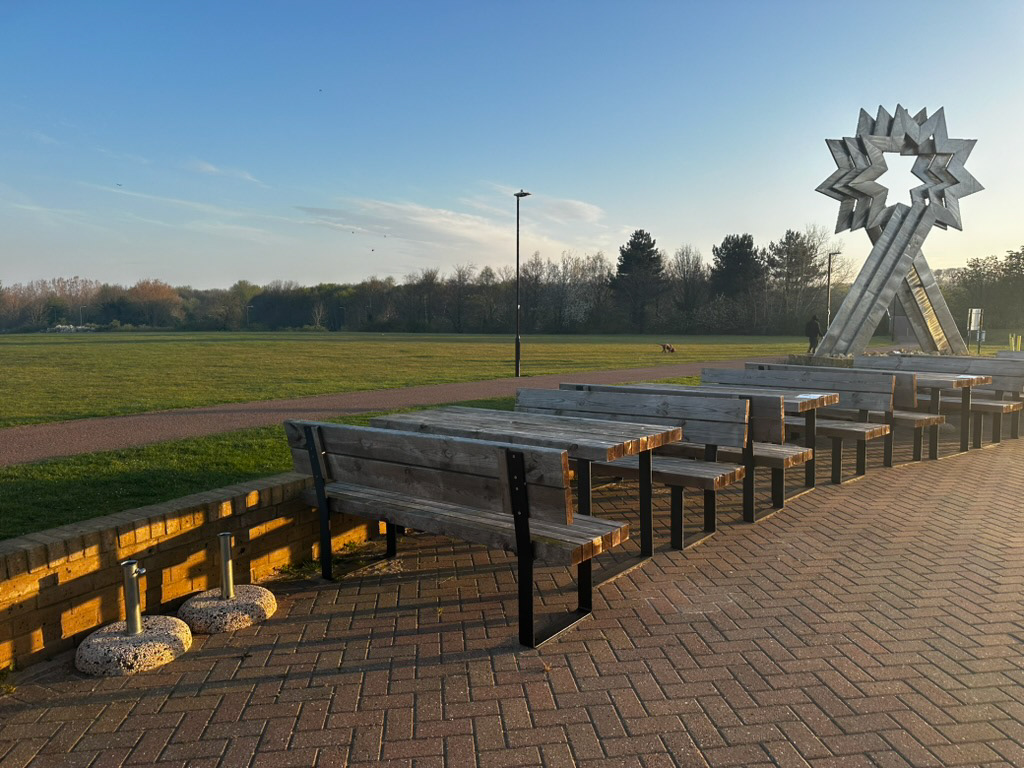
Today, we revisited some of our potential pub locations, in the search for a café we could shoot in (or outside of). I drove everyone up to Milton Keynes and we looked around places for several hours, before we found this bench positioned under a wall-lamp in such a way that it produced some very stark, harsh shadows. I don’t think this is actually quite the look we’re gong for, but it is definitely interesting and very visually striking.
23 Jan: In-Person Auditions, Part Two
Today’s auditions were a bit rogue: we had a small selection from the SU’s acting society, in addition to Aliye and Daniel. Aliye was excellent, with engaging, enveloping performances. Daniel was also very strong — performing Whiplash and Fight Club (no one picked Shakespeare, perhaps unsurprisingly). In my opinion, Luca is still the best of the men we’ve seen, and it’s now probably between Aliye and Neve for Isobella’s role.
I’m glad I added the cinema scene now — I would’ve felt really bad having dragged an actress through auditions and shooting without much/any dialogue. I think the scene also really adds to the narrative, and I’m glad that we have performers across the board who are clearly extremely talented. I do think the script worked as just Elias and Lucid, as it all being only ‘his’ internal thoughts, but the addition of Isobella as her own character adds agency to her that she didn’t have before — and, arguably, she could well still be just Elias’ internalised version of her, so it doesn’t take away from the idea of the whole story being his own fantasy.
30 Jan: Budgetly Quite—
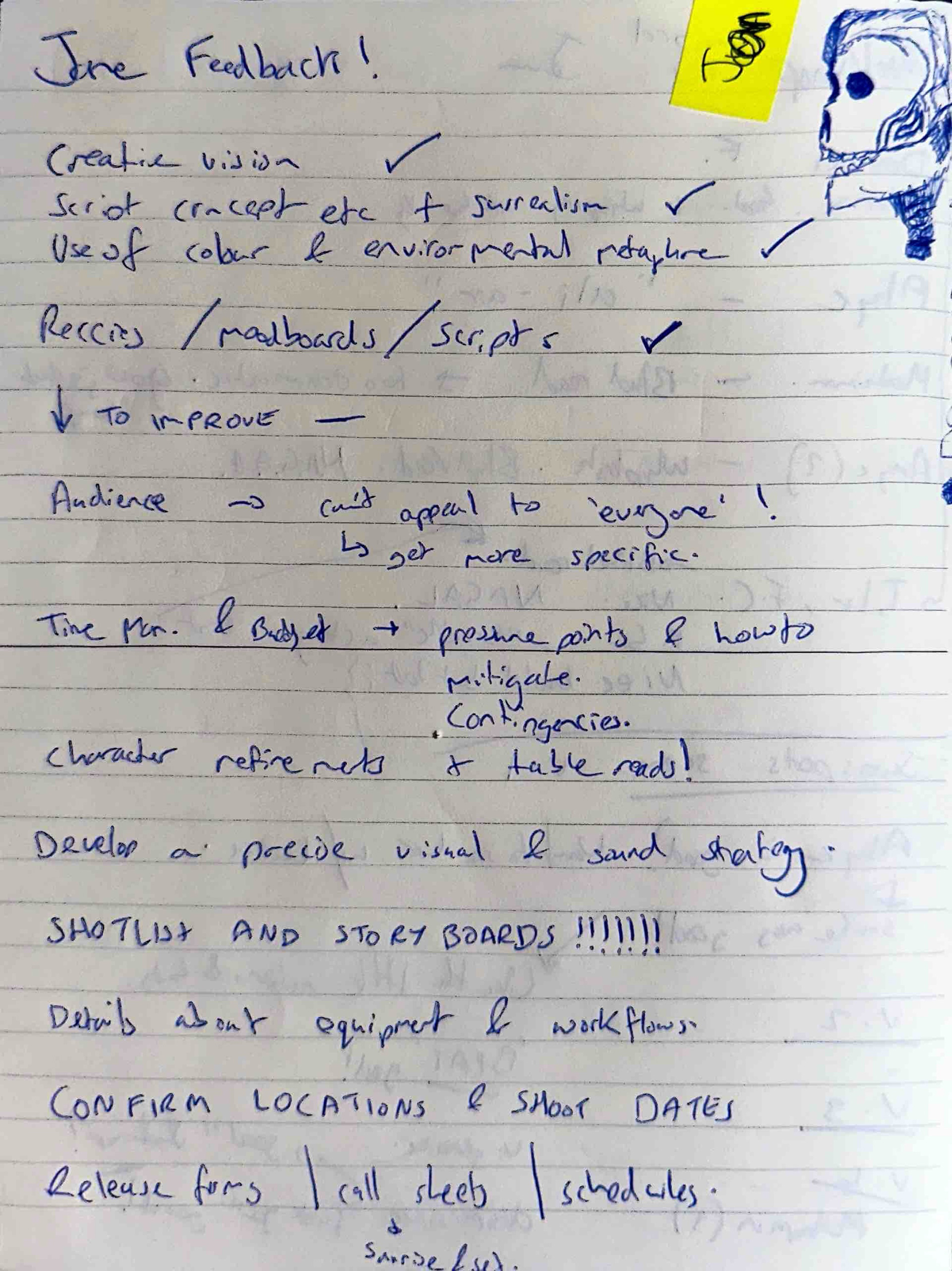
This week was busy — on Tuesday, we met with Jane to go over everything so far. Our major takeaways were to decide who our audience is — we can’t appeal to everyone. We also need to look at our budget and scheduling, what pressure points there may be, and how to mitigate them.
This are my notes from the meeting:
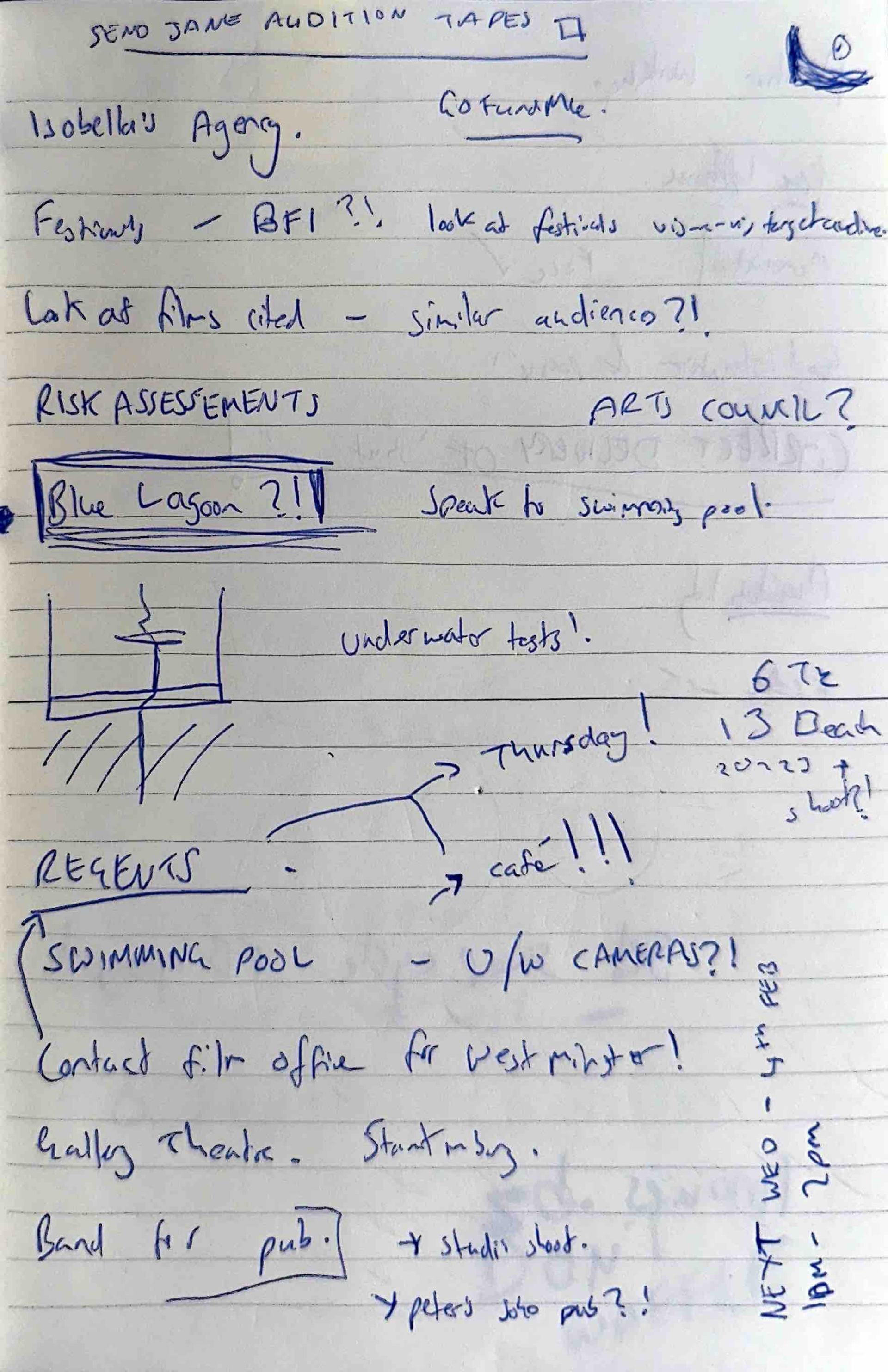
Next, on Thursday, we emailed our final choices for actors: Luca, for Elias; Liam, for Lucid; and Neve, for Isobella.
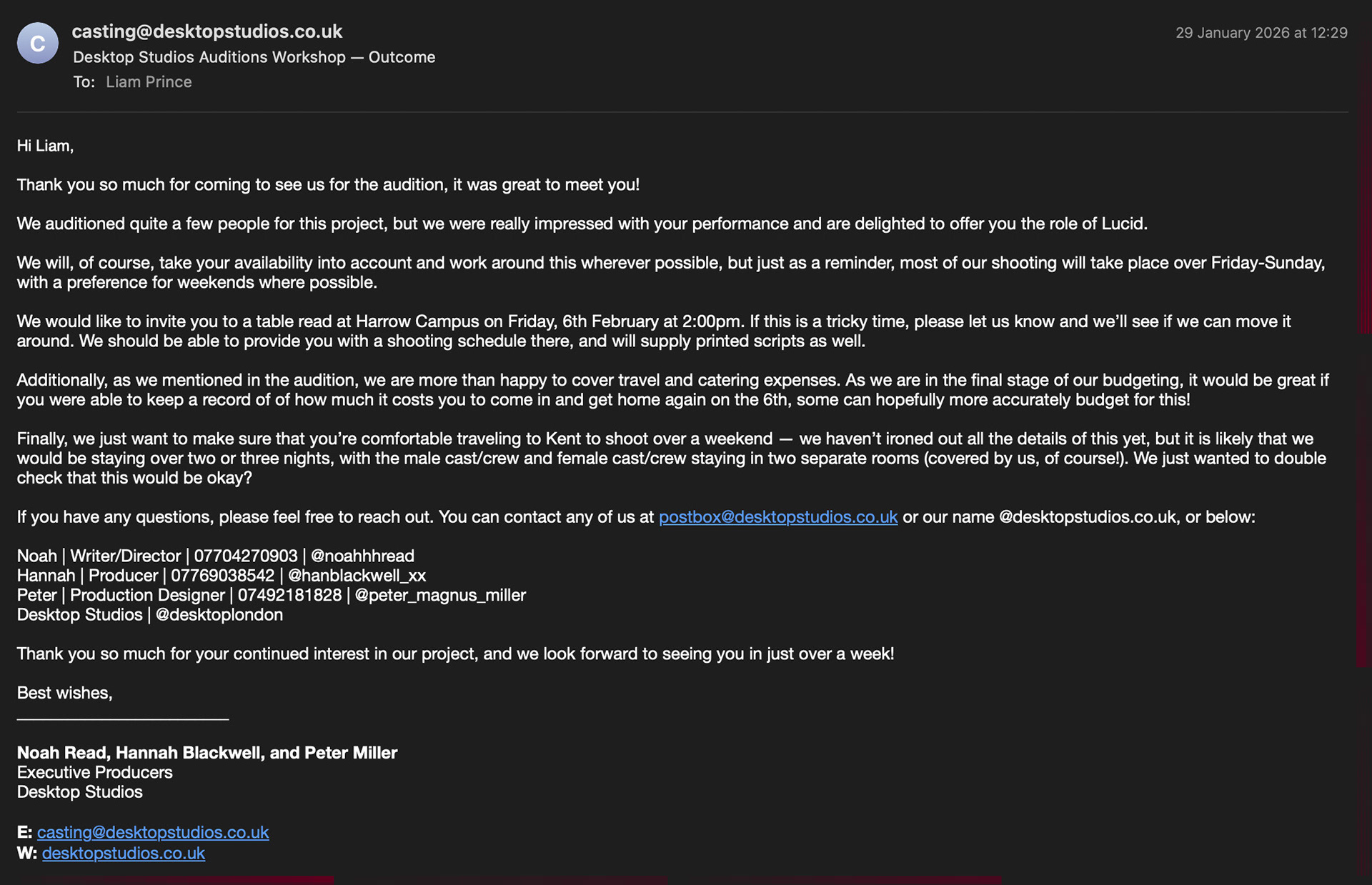
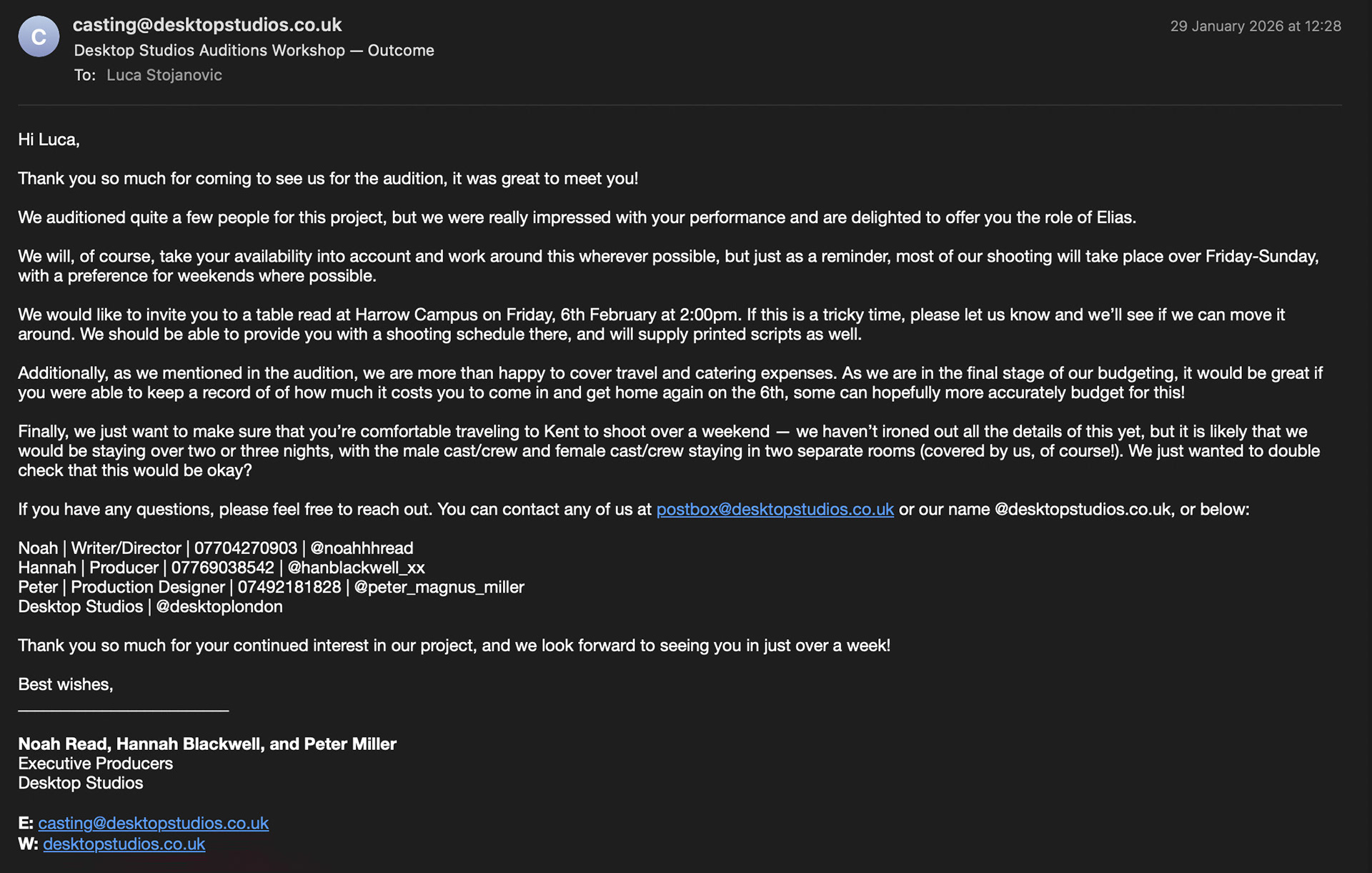
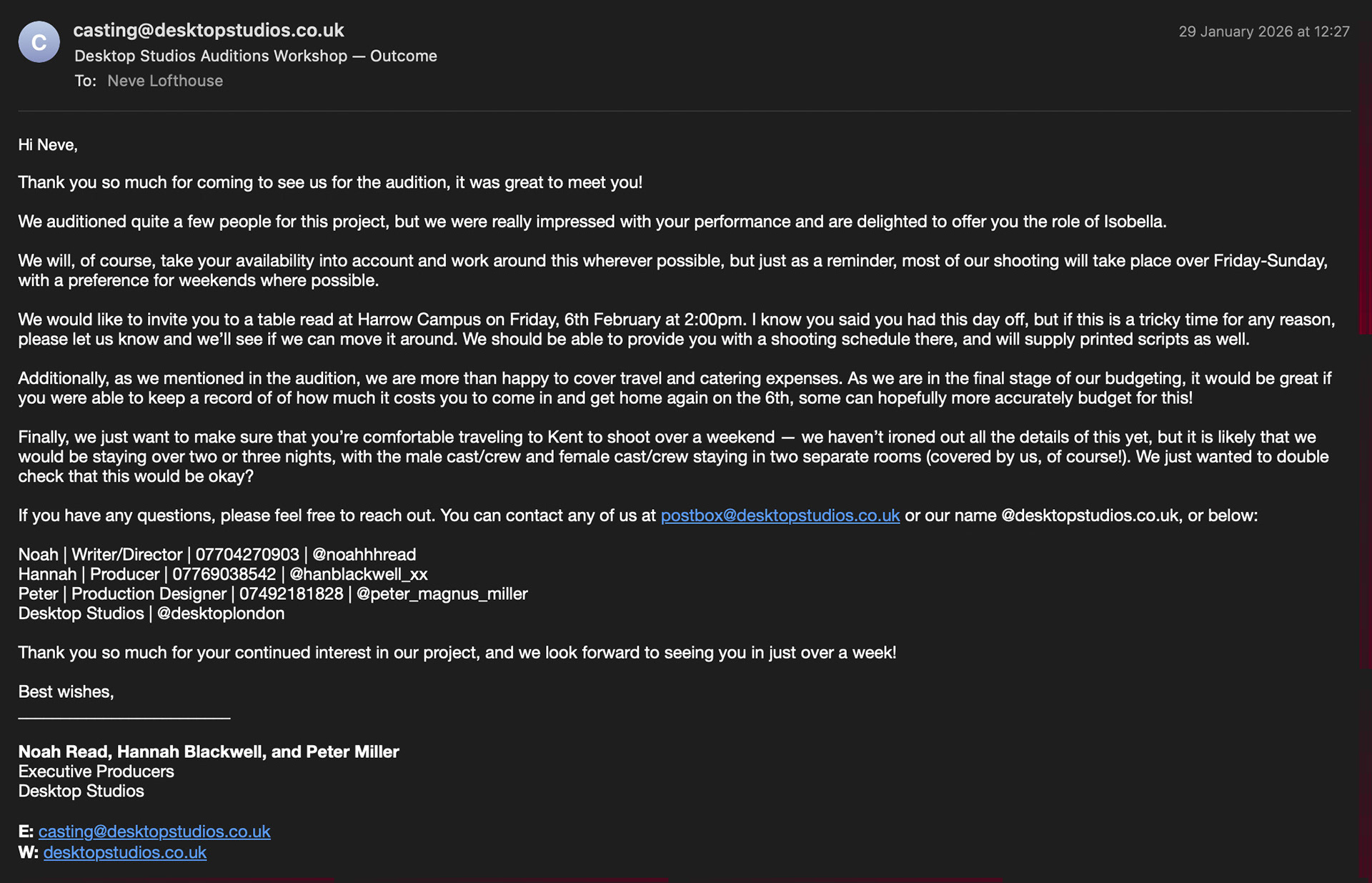
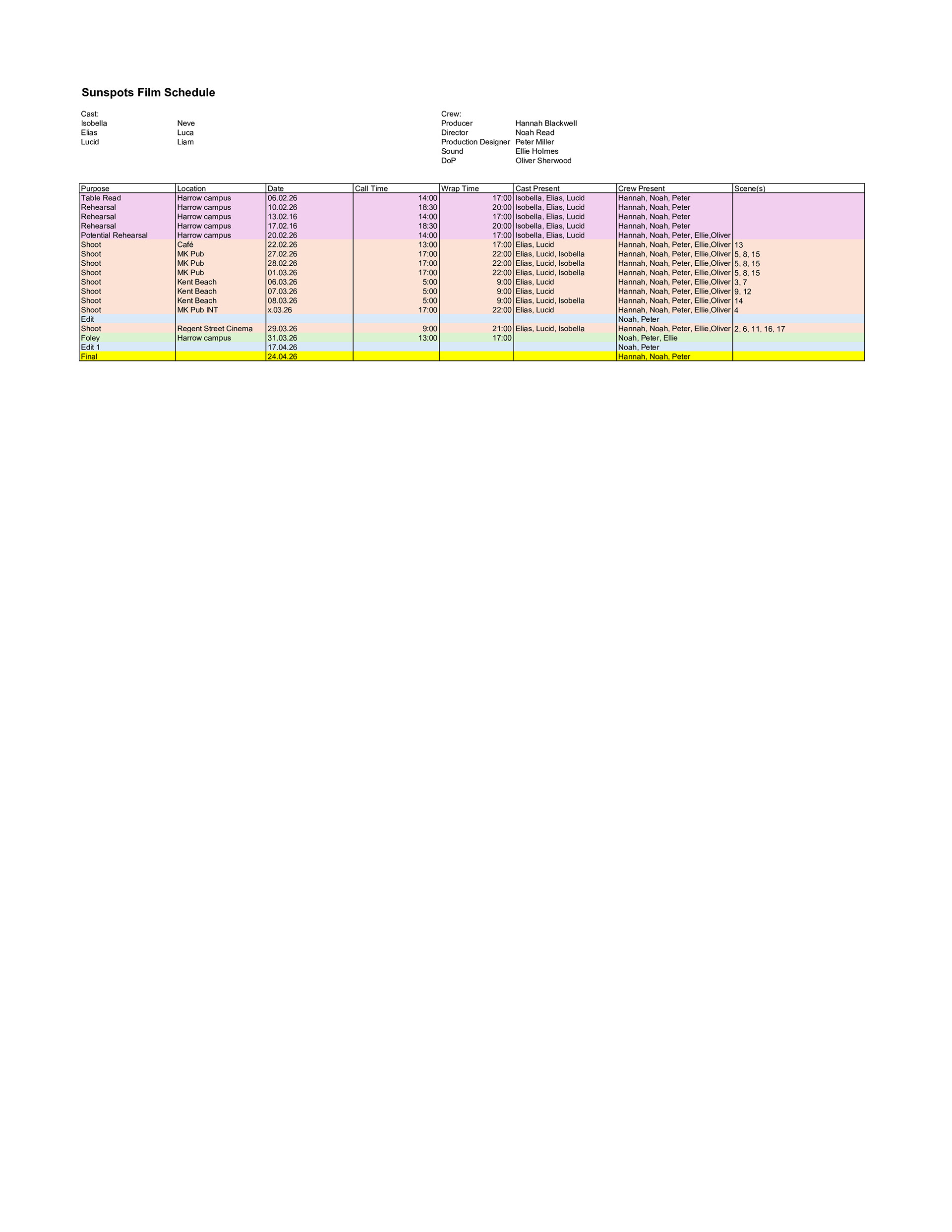
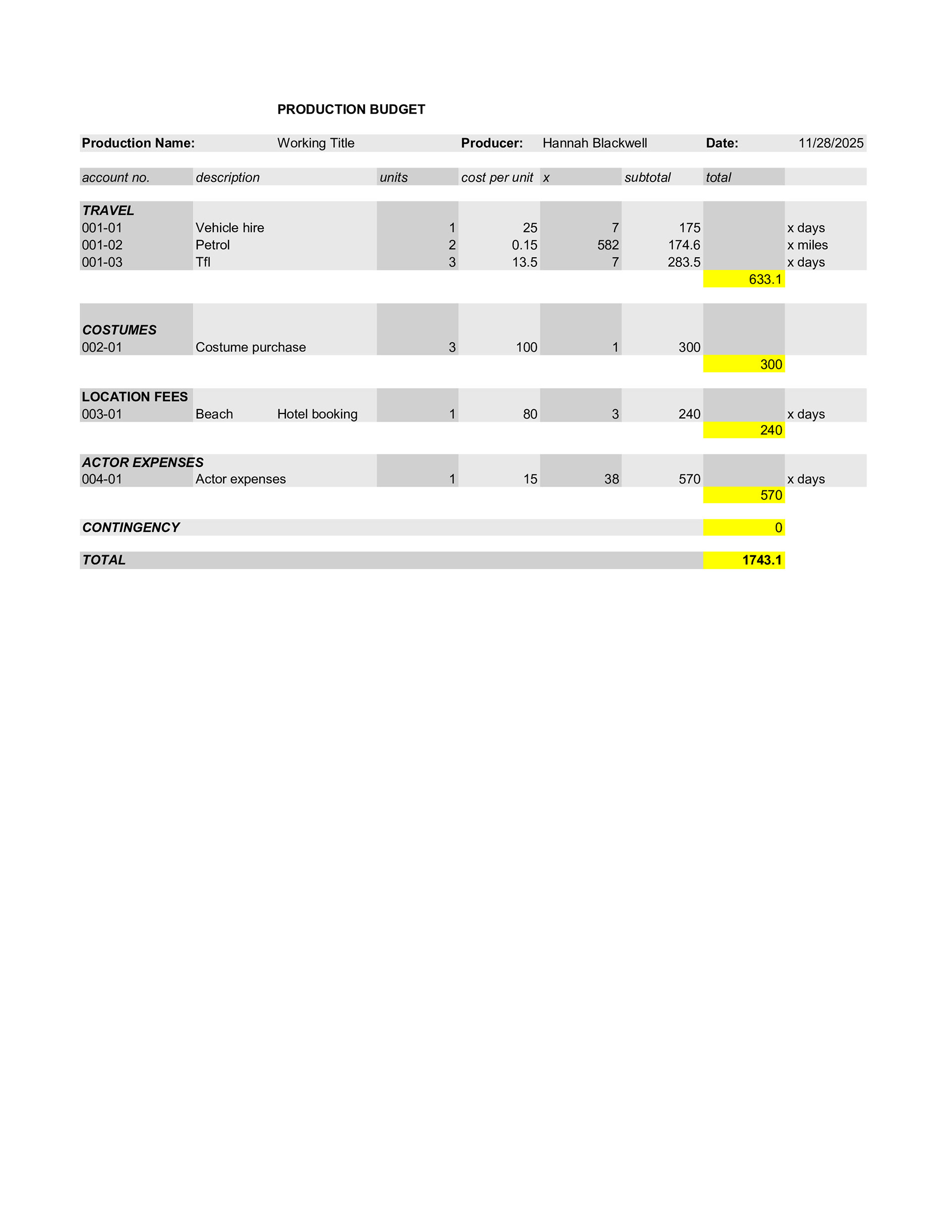
Then, after work on Friday, we all met at Regent Street Campus to record a group pitch for the Ignite Fund — initially, we had been told the three of us could all apply for the full funding of £1500, each, but it turns out only one person can apply for a group project. This was a bit of a blow, as it meant we had to slash our budget by two-thirds, but should still be manageable.
While editing, we decided to add auto-captions. Luckily, we read them back before sending anything off, as this was not said by anyone!!!
As accurate as that may end up being, we hope that the funding should cover our budget so far — before any contingencies, which we will just have to cover ourselves.
This was my initial individual pitch:
And this is our final group pitch:
6 Feb: Table Read, Interim Exhibition, and The Hand
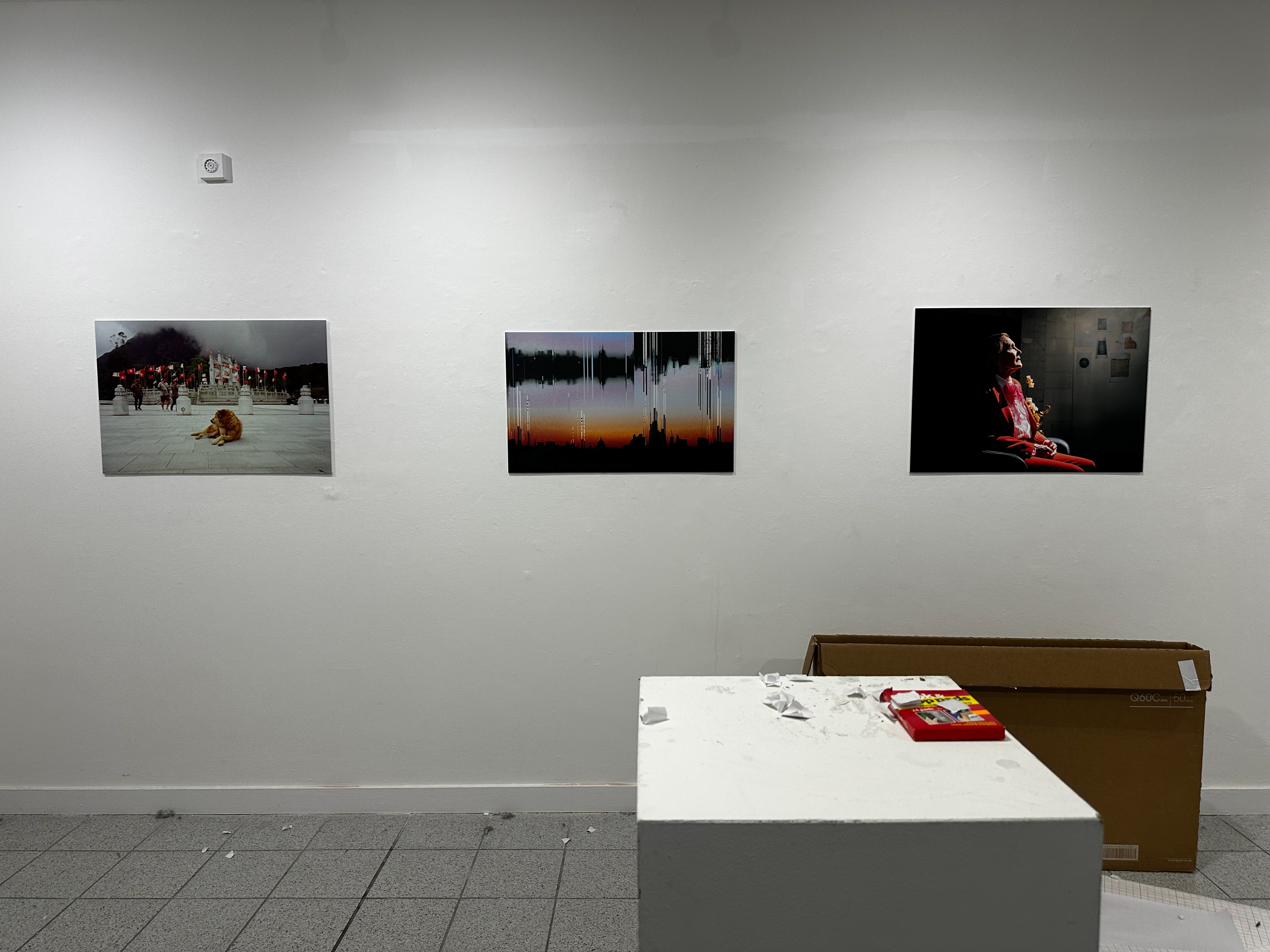
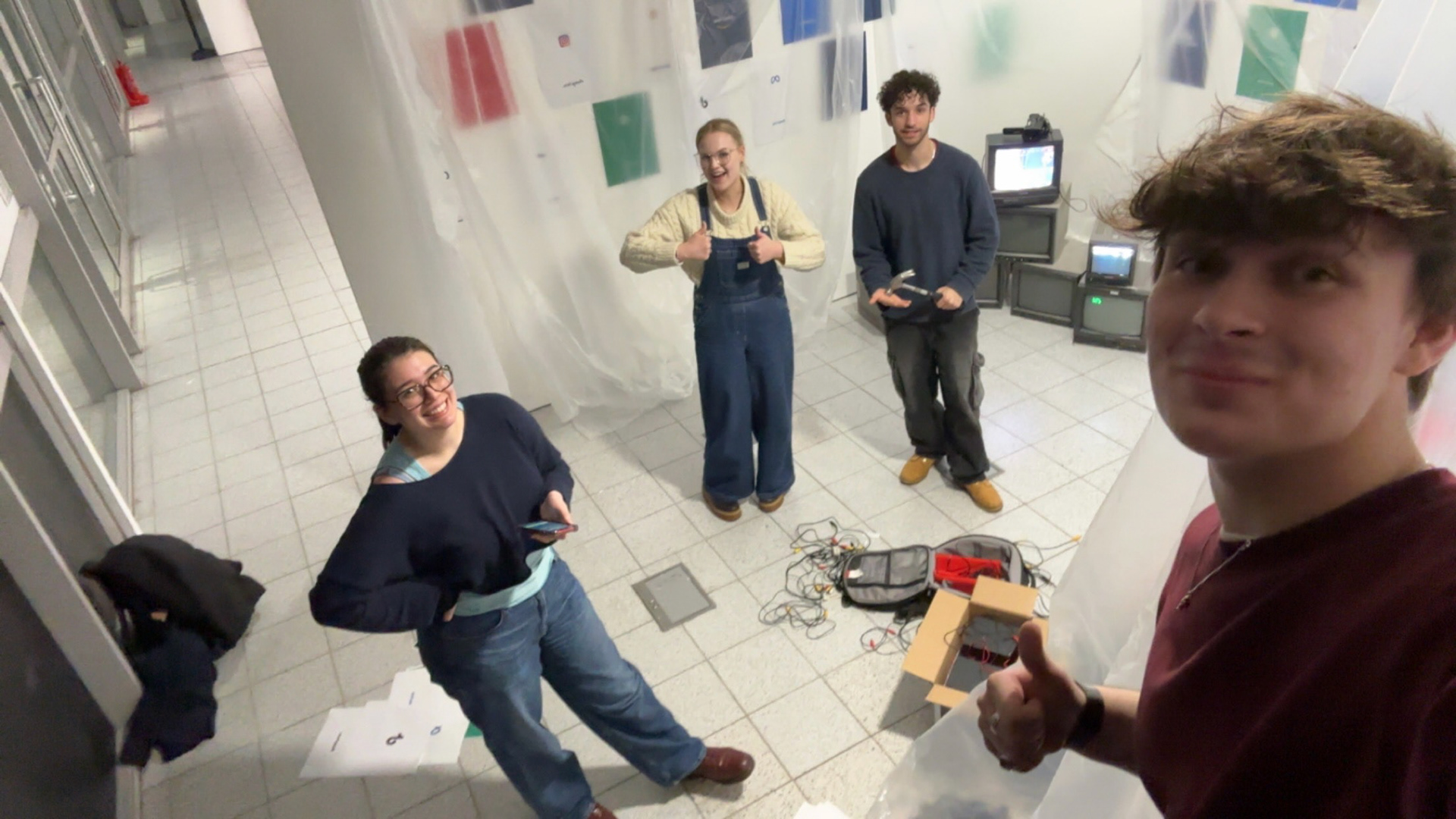
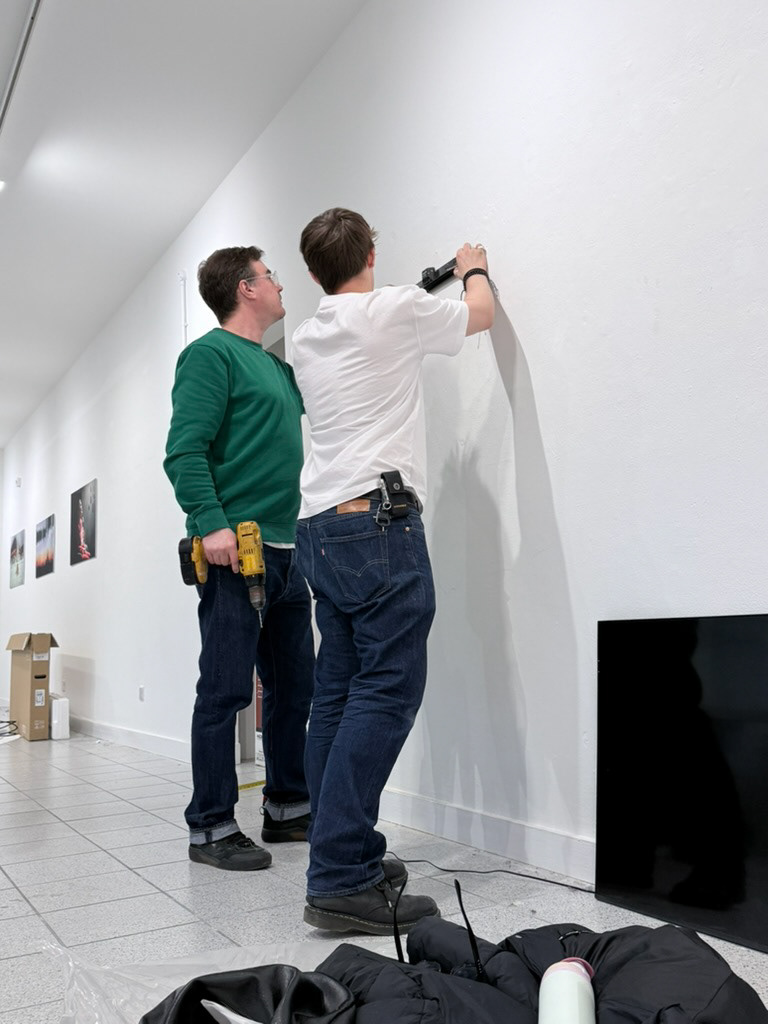
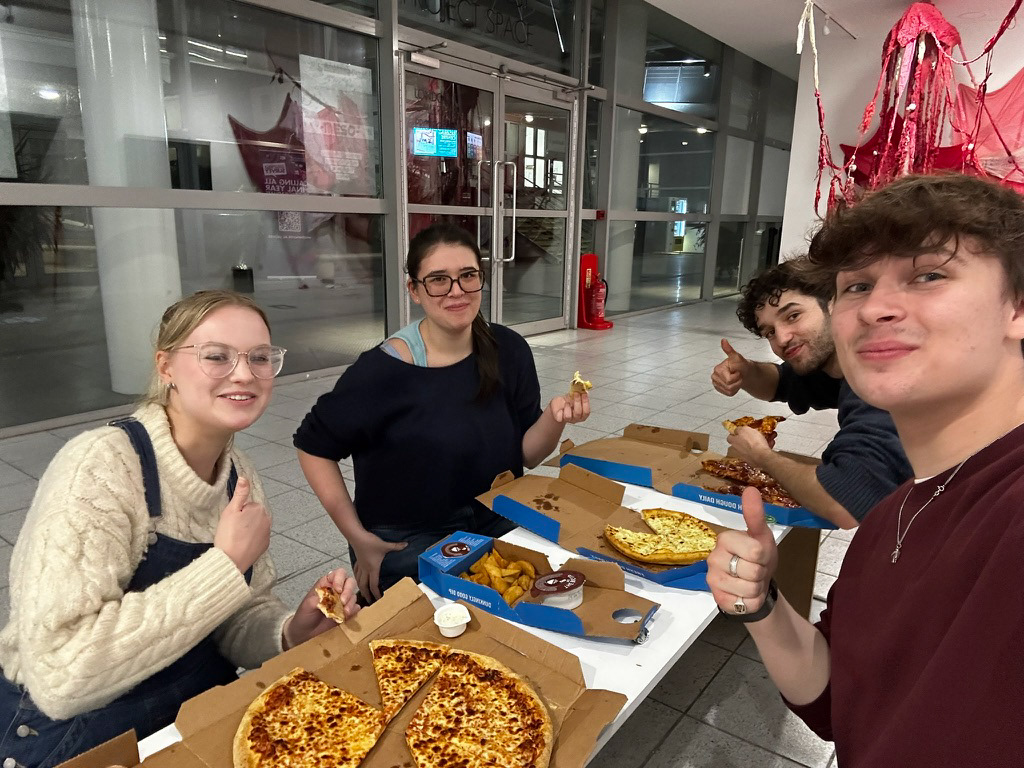
Another busy week, setting up for the interim show — where we exhibited an updated gallery-cut of Hell is Other People, with a reimagined installation, and my analogue/digital work Sunset over Thames, Corrupted. The interim exhibitions are always great fun, and I enjoyed advising on the poster for this as well, mainly designed by Ez and Jam, putting up TV screens with Chris, and pizza with Hannah, Peter, and Eliana!
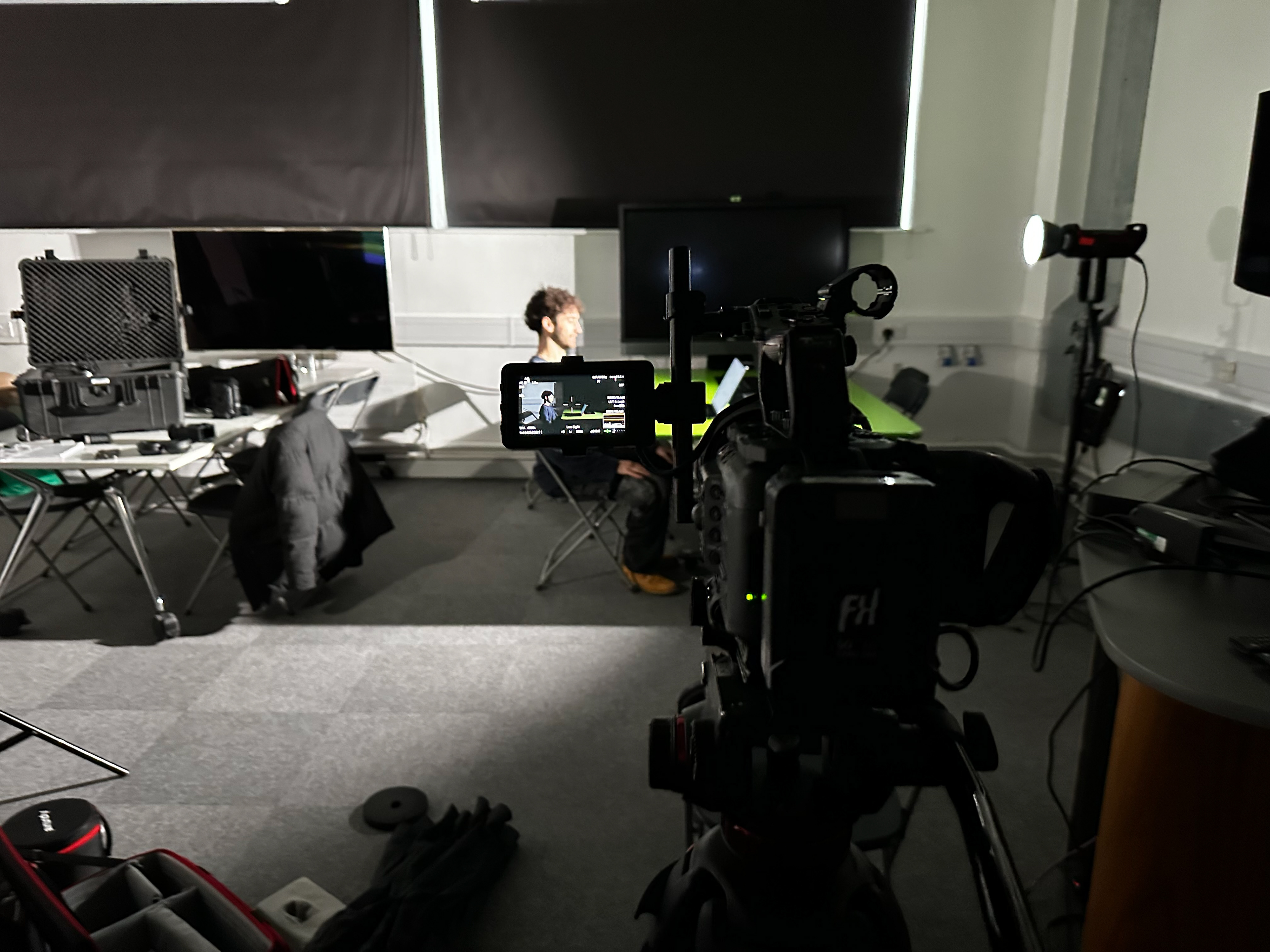
On Thursday, Peter and I booked out the FX6 for a test shoot, to test its low-light performance and check we could actually use it correctly! After trying to record RAW footage for about half an hour, we then remembered that the Sony cinema line only shoots external RAW, so we switched to SLog3 and shot a few test videos, including this one where Peter’s hand reaches through the screen he’s typing on.
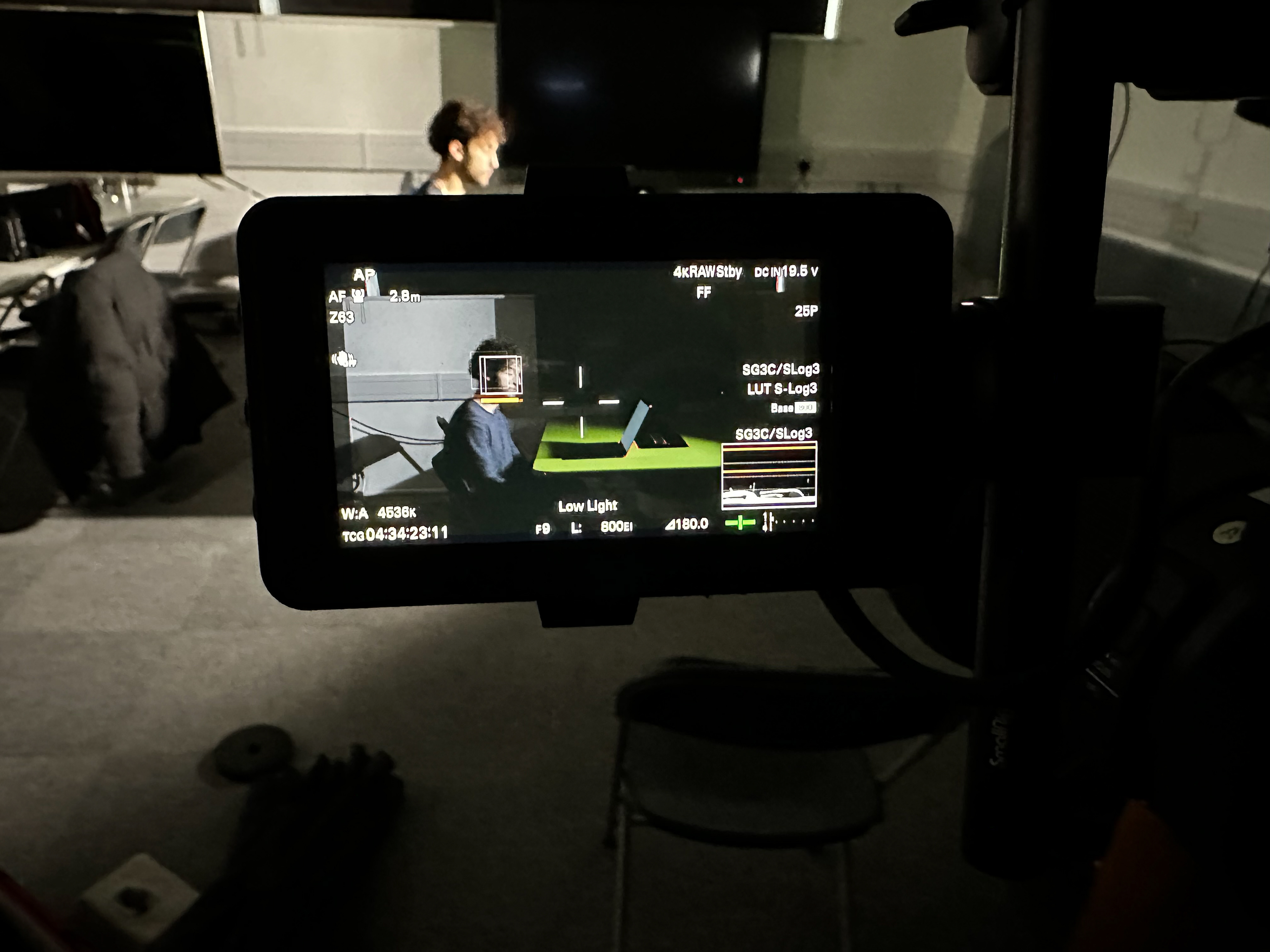
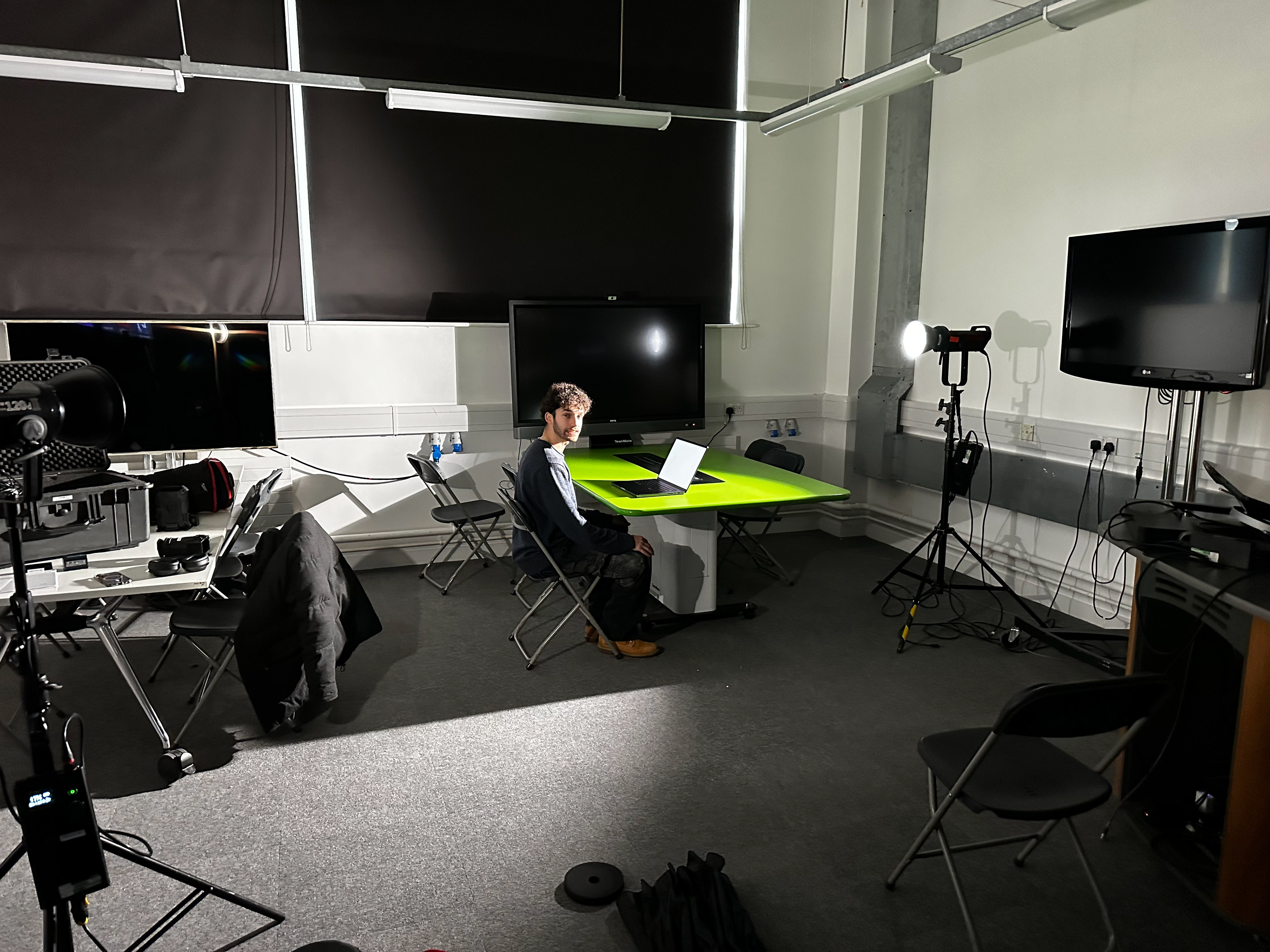
We both did an edit of this; in my version, I think the hand comes a little bit too far out form the screen, as where the sleeve starts to dissipate I think it breaks the illusion slightly. We did this by filming Peter’s reaction and the hand separately, then masking out his hand, making the alpha channel visible, inverting it so it shows just the white hand, then screening the whole layer over the reaction shot, before lining it up correctly. Next, I manually cut out the screen, ramped the exposure so it glows the same white as the hand, and then duplicated the layer, masked it again, so the hand can come through. Next, I made a copy of the hand layer, added a gaussian blur (and feathering the mask) so the hand glows slightly. Finally, I made copies of the reaction shot layer so that I could mask sections to get subtly brighter as the hand passes, as though the glow from it casts light onto the table around the laptop, and on Peter’s chest.
We also held our table read after after the Private View, on Friday, as this was the only time Neve could do, after drama school. I think this went well; everyone seemed to get on, and, most importantly, enjoy the story! Everyone read well, especially for their first time seeing the full script.
20 Feb: Pulp Fiction
After our table read last week, we organised a rehearsal for the 10th, where we looked at the first parts of the script and discussed character, voice, actions, and some minor blocking. Neve went through the main Stanislavskian questions — motive, emotion, underlying goad, etc. — for each moment. This was really useful, as it also forced me to make some actual decision on characters that had been quite ‘up to interpretation’ until now: for example, what actually happens? We discussed the characters’ backstories, and what actually went wrong in their relationship. The characterisation for Elias and Lucid was also really interesting, as there have to be some distinct similarities and differences between them: they must be similar enough that them being the same person isn’t a huge out-of-left-field twist, but not so similar it becomes obvious; different enough to show that it’s the same person but at different times, and yet not so different they seem worlds apart. Ultimately, we decided that the vocal quality will be a big difference — Lucid flicks from soft to harsh, slightly creepy (but, I was careful to say, not so much that it becomes hammy!!), and occasionally accusatory. Elias is calmer overall, with a sense of defeatism, or almost a slight depressive twinge, especially when recounting their relationship. Isobella is true to herself, mostly, but is a reimagined version of herself through Elias’ memories: she is harsher, but also kinder; more truthful and also more brutal. Above all, she is the only thing that inspires Elias’ ultimate introspection.
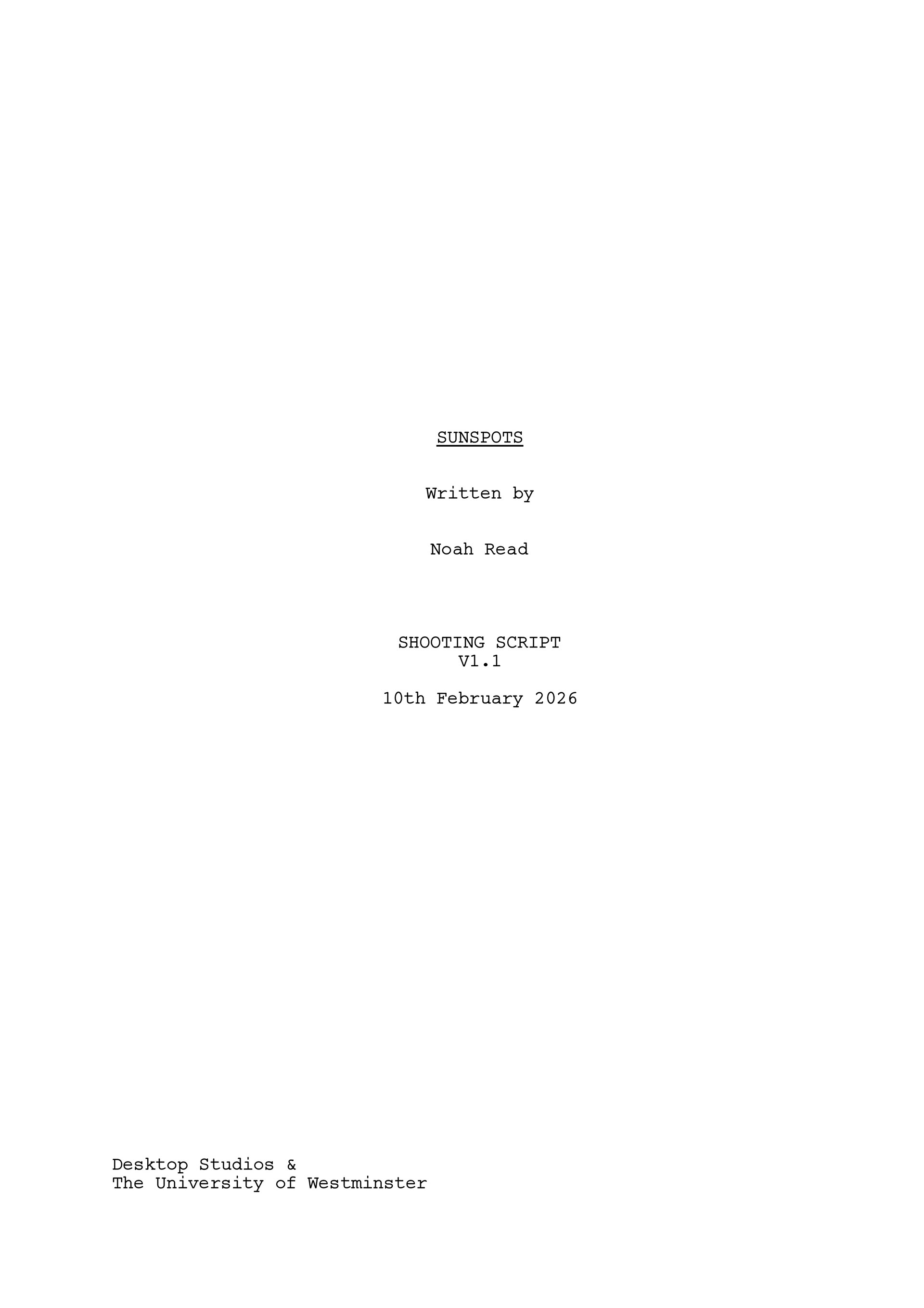
For this rehearsal, I also finalised the shooting script:
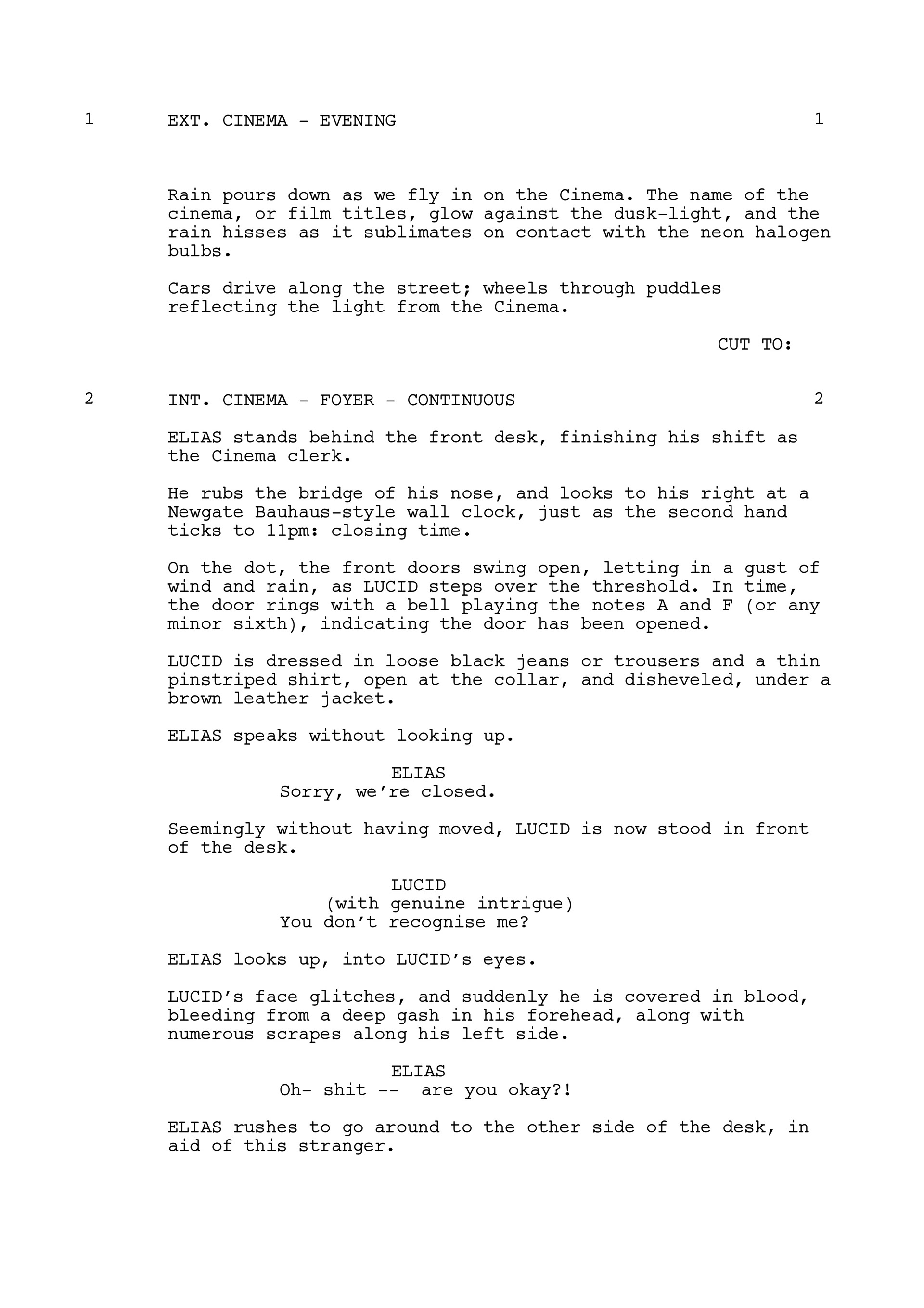
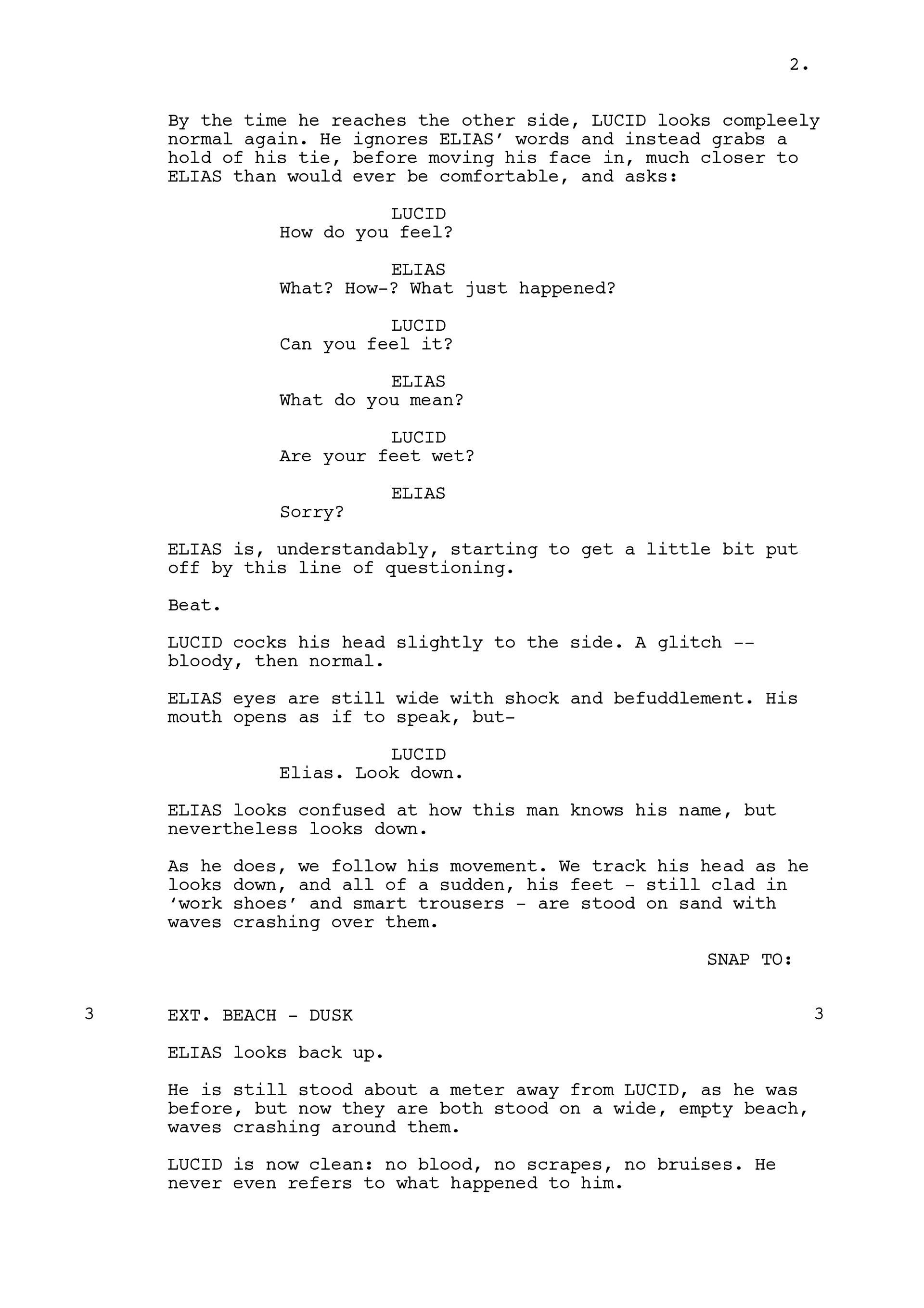
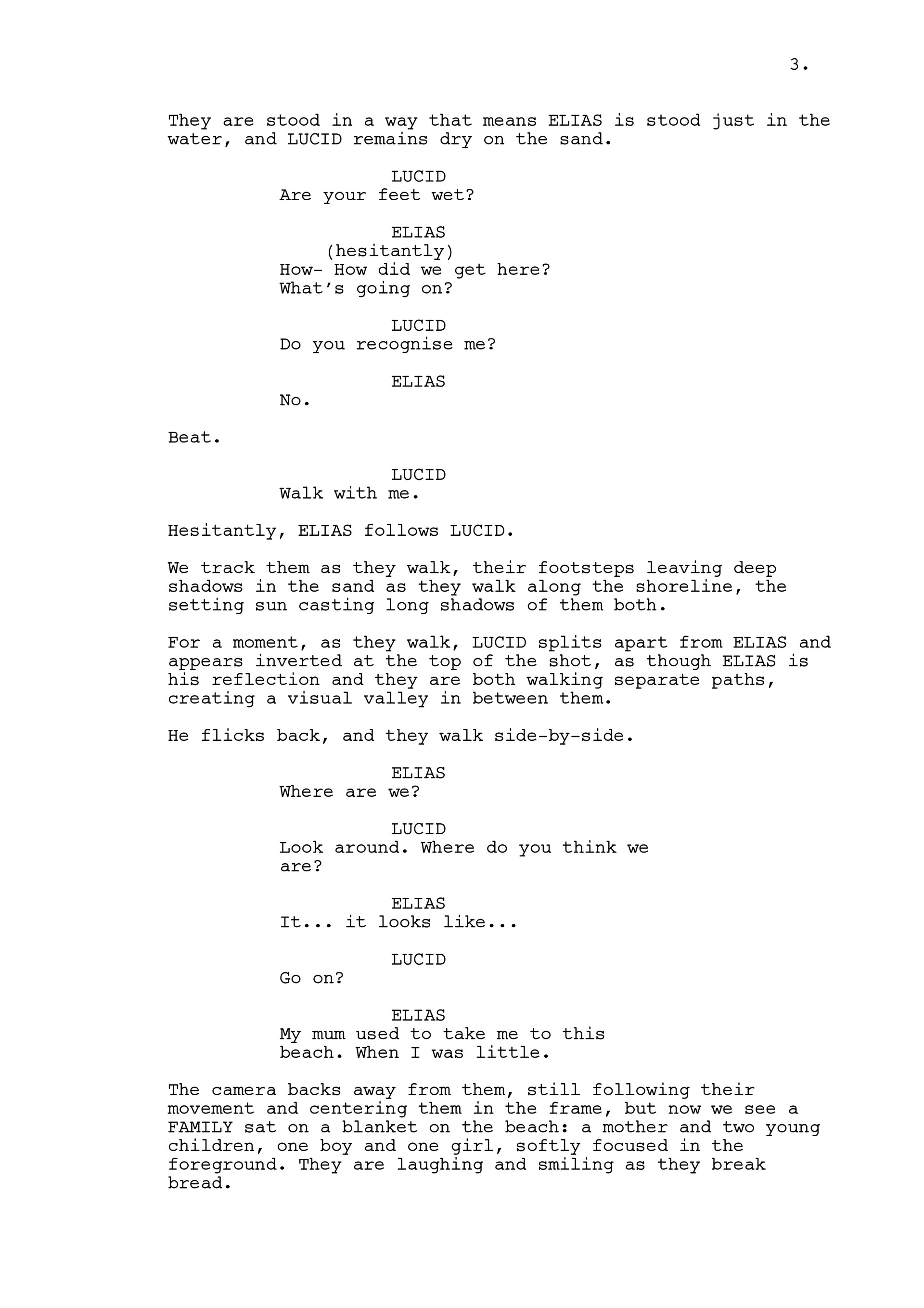
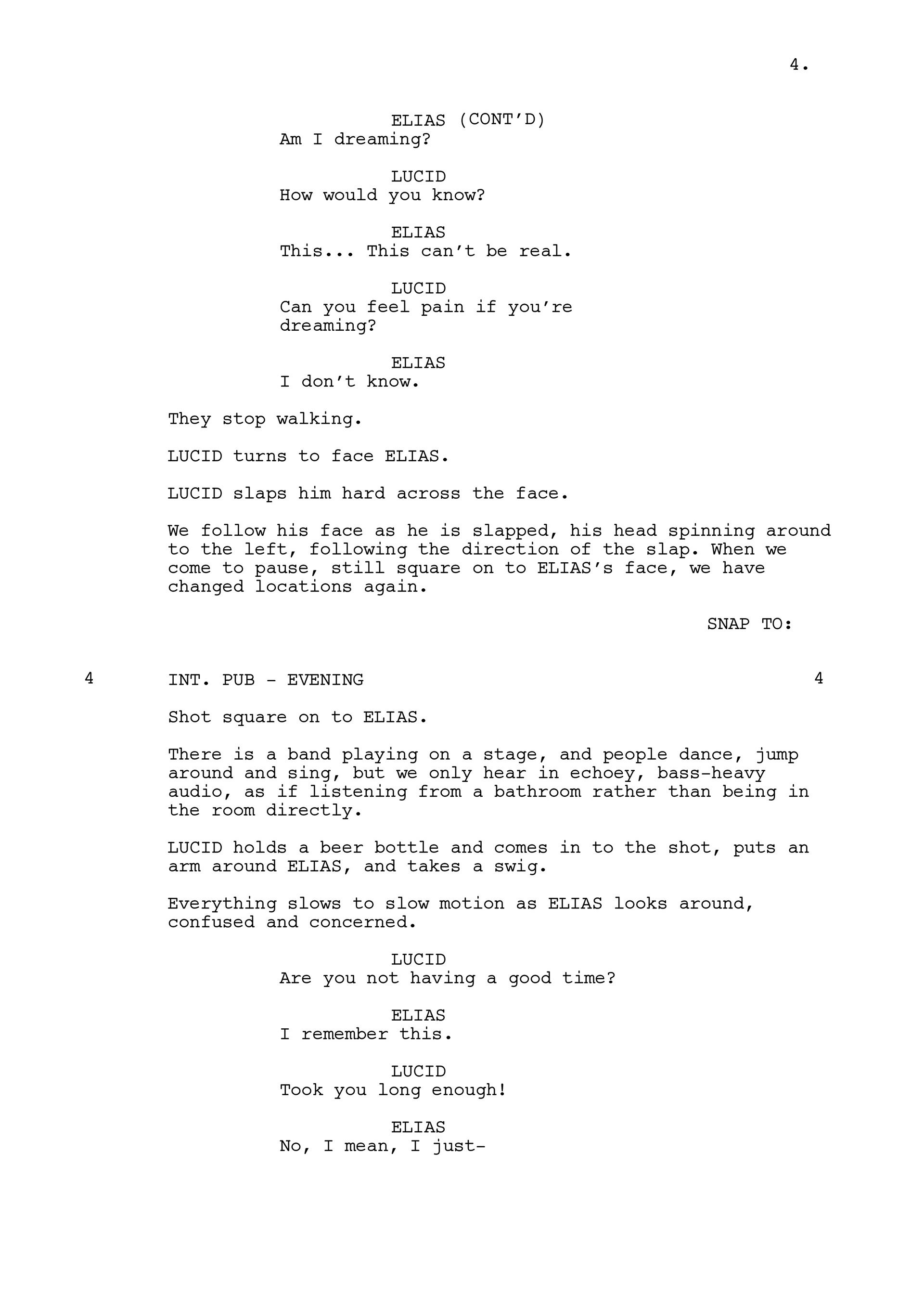
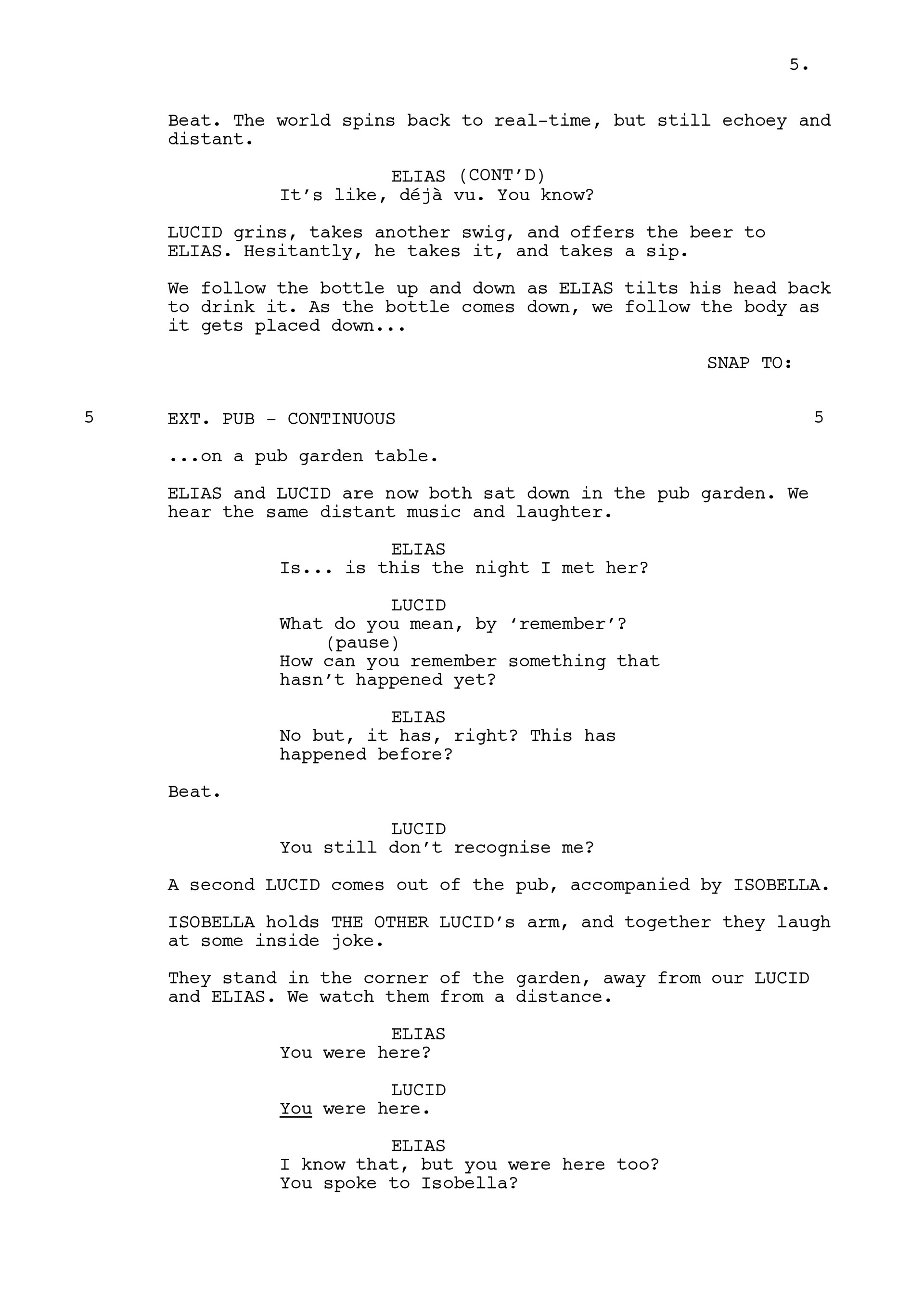
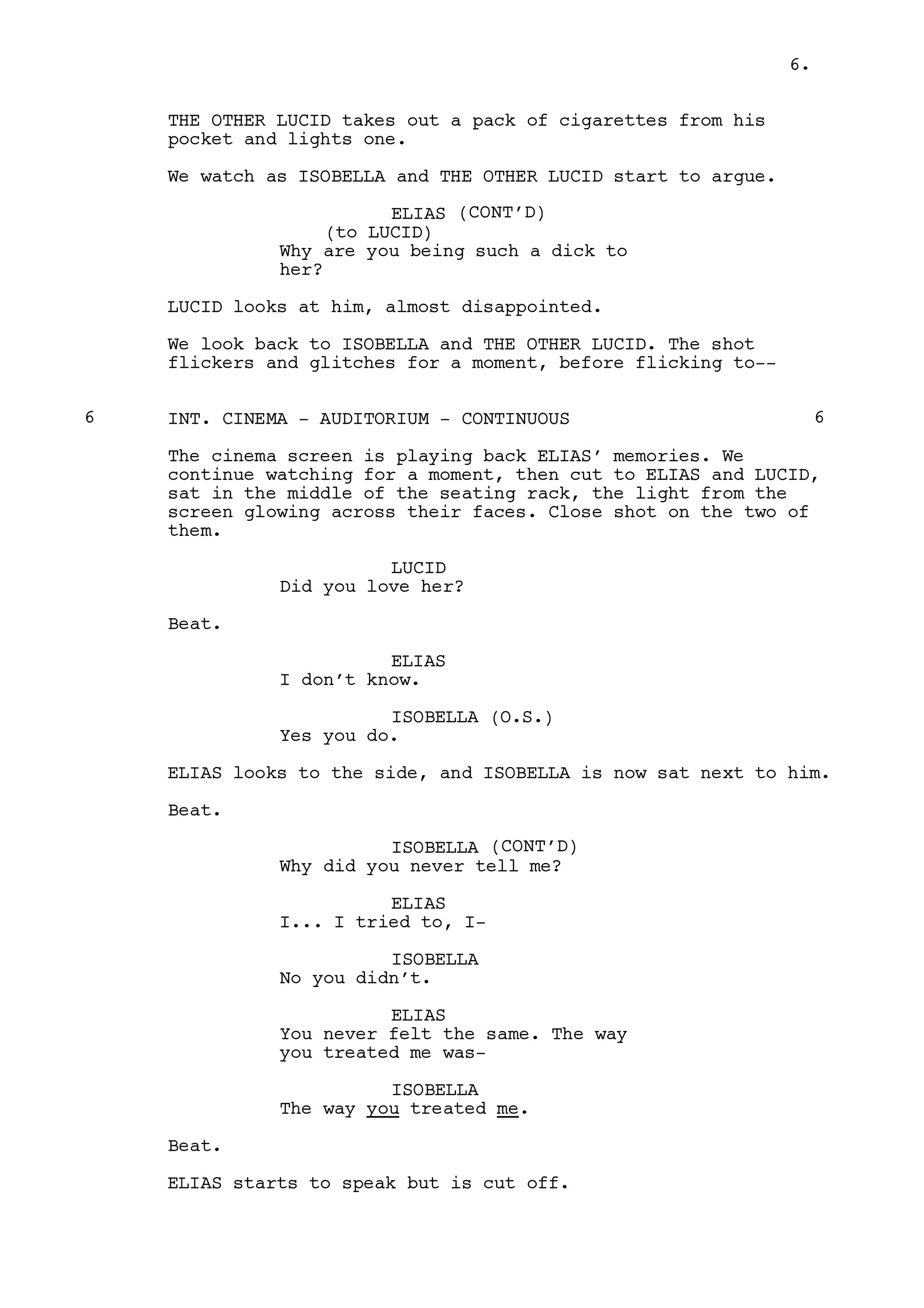
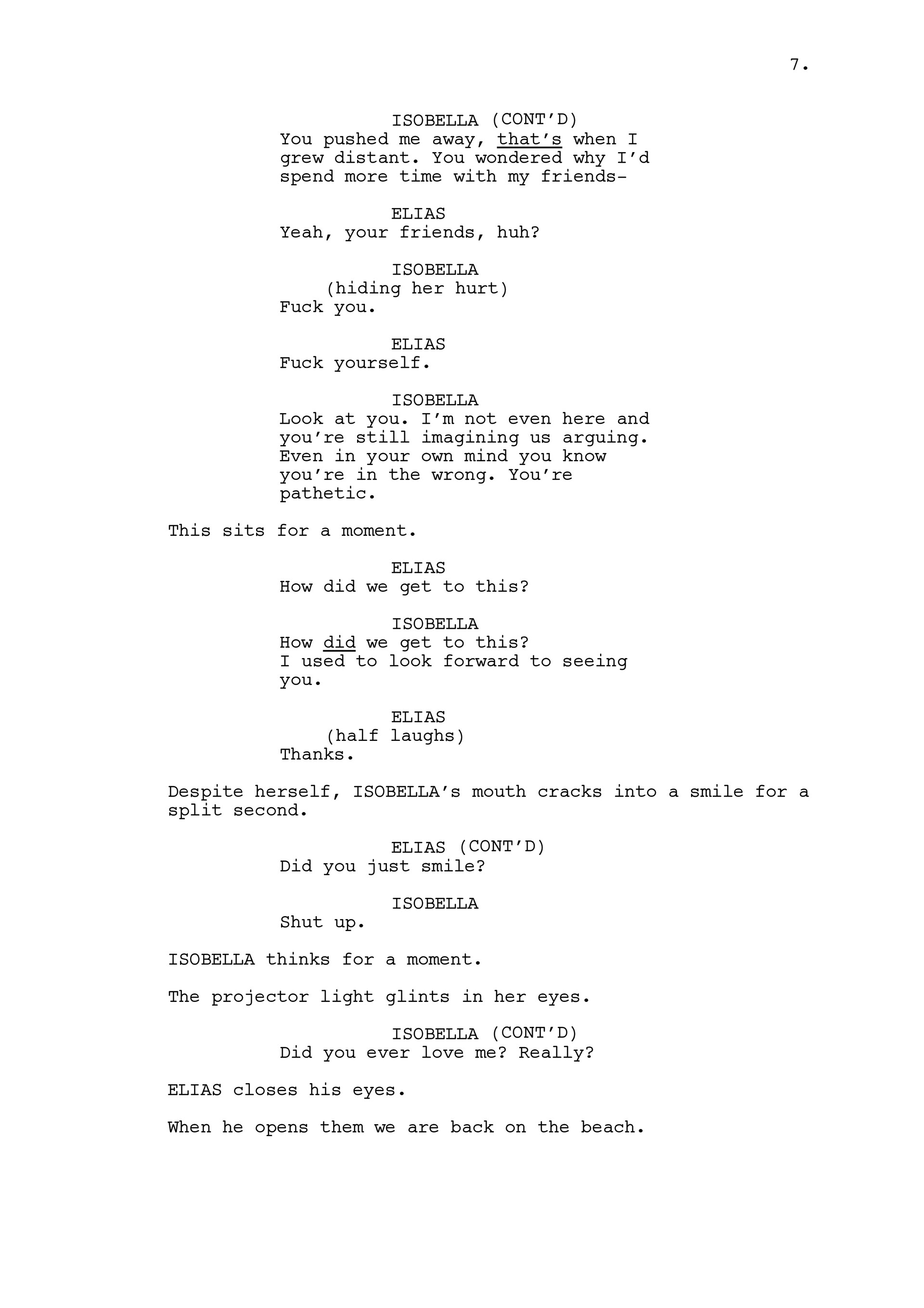
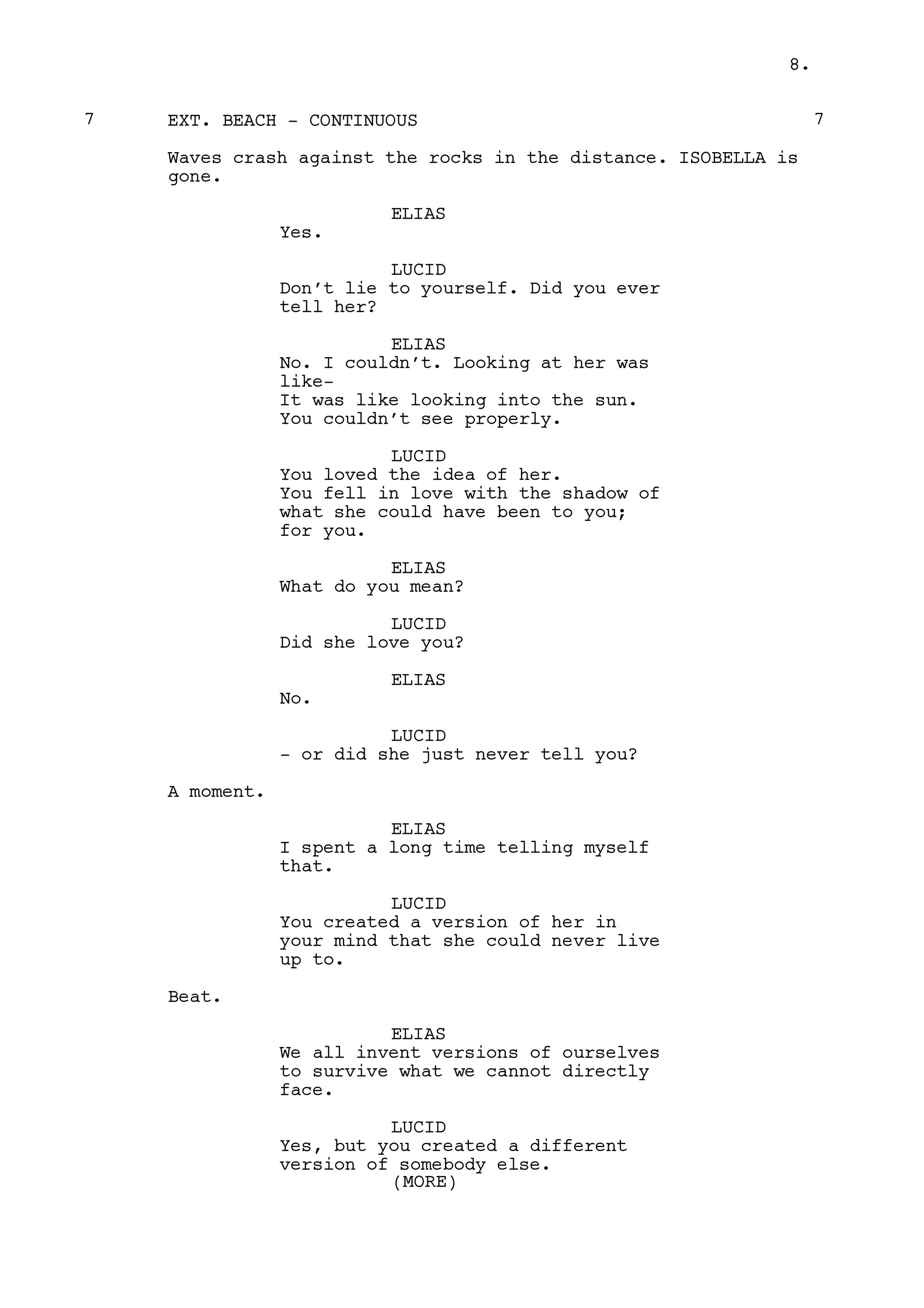
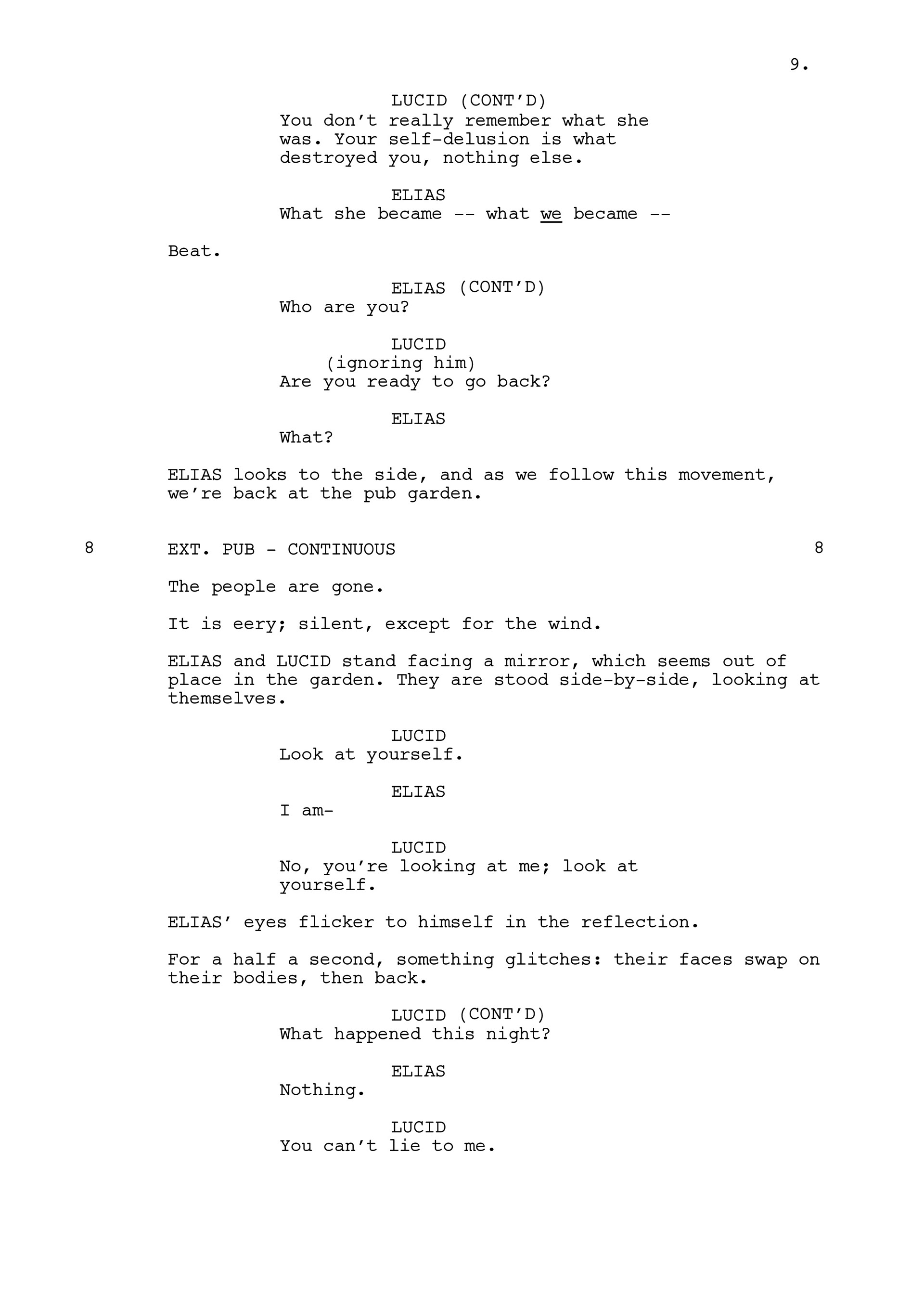
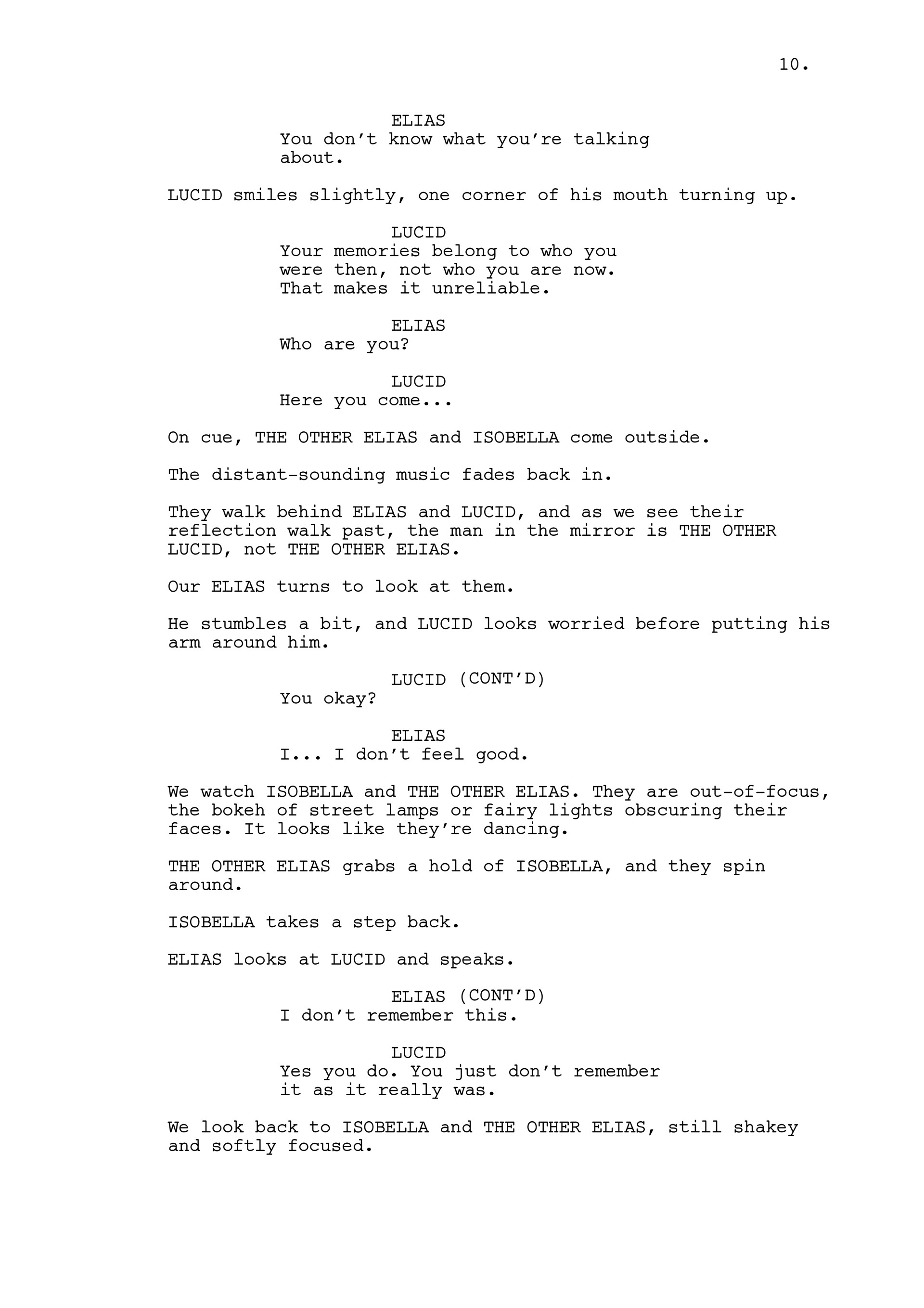
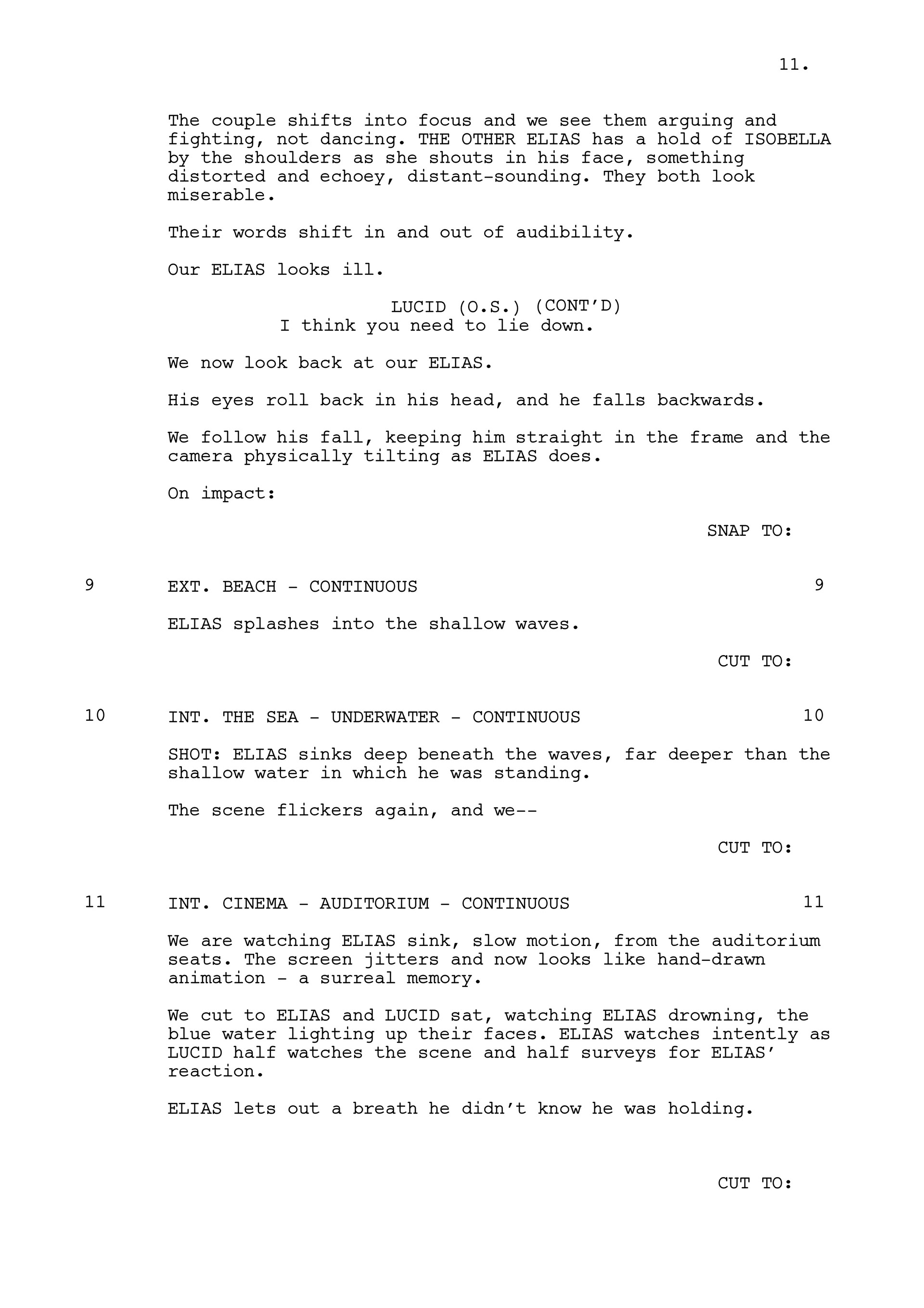
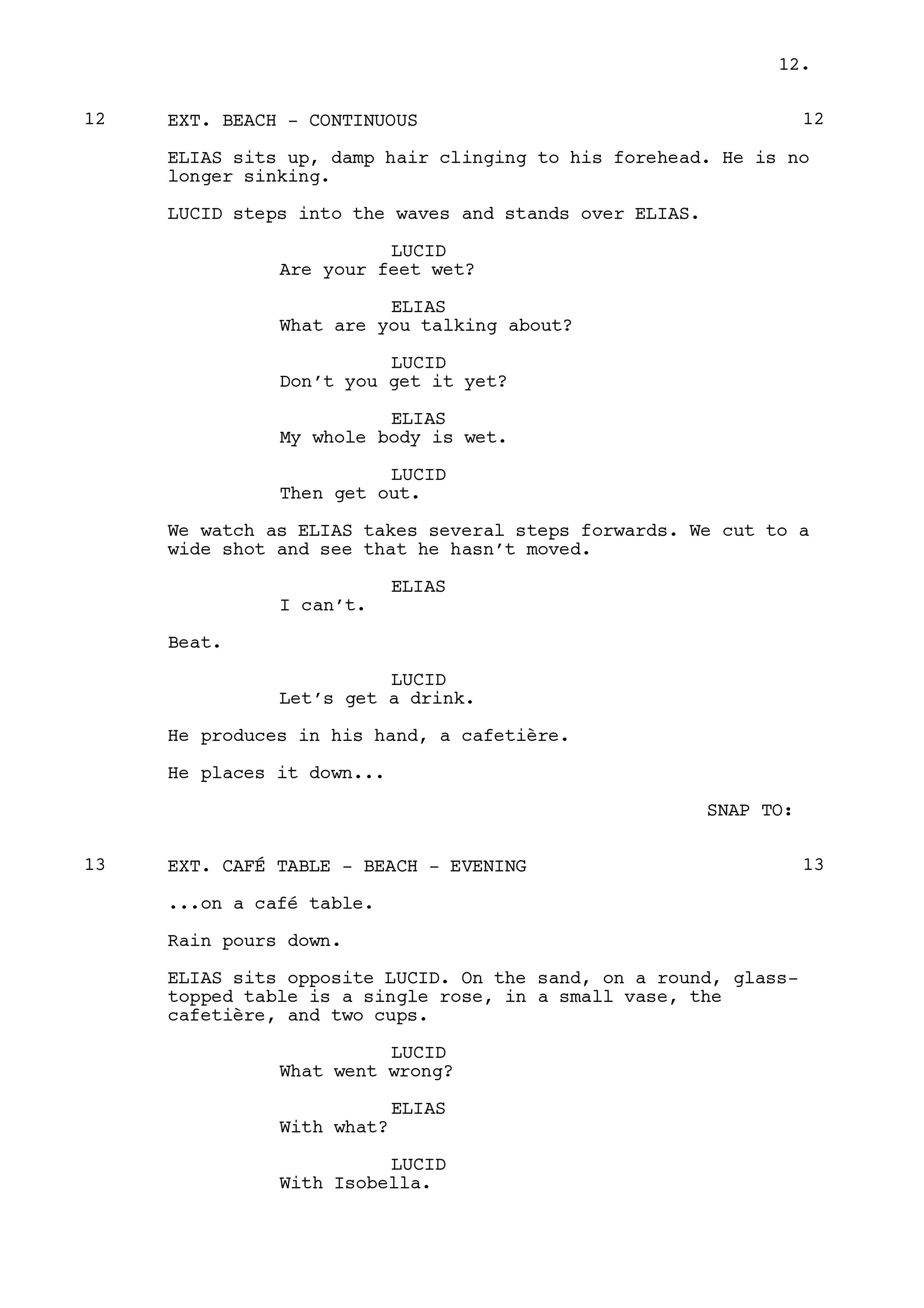
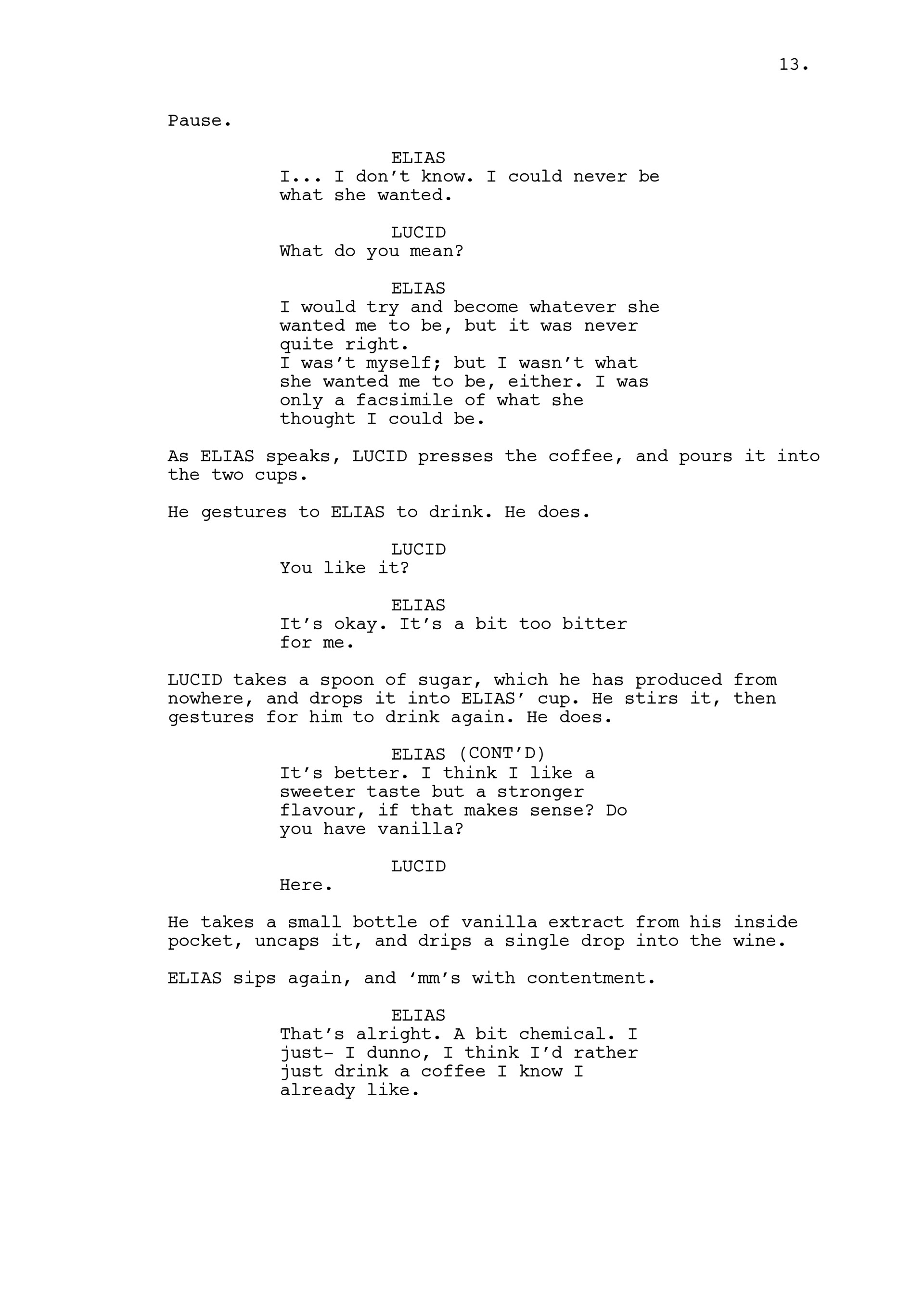
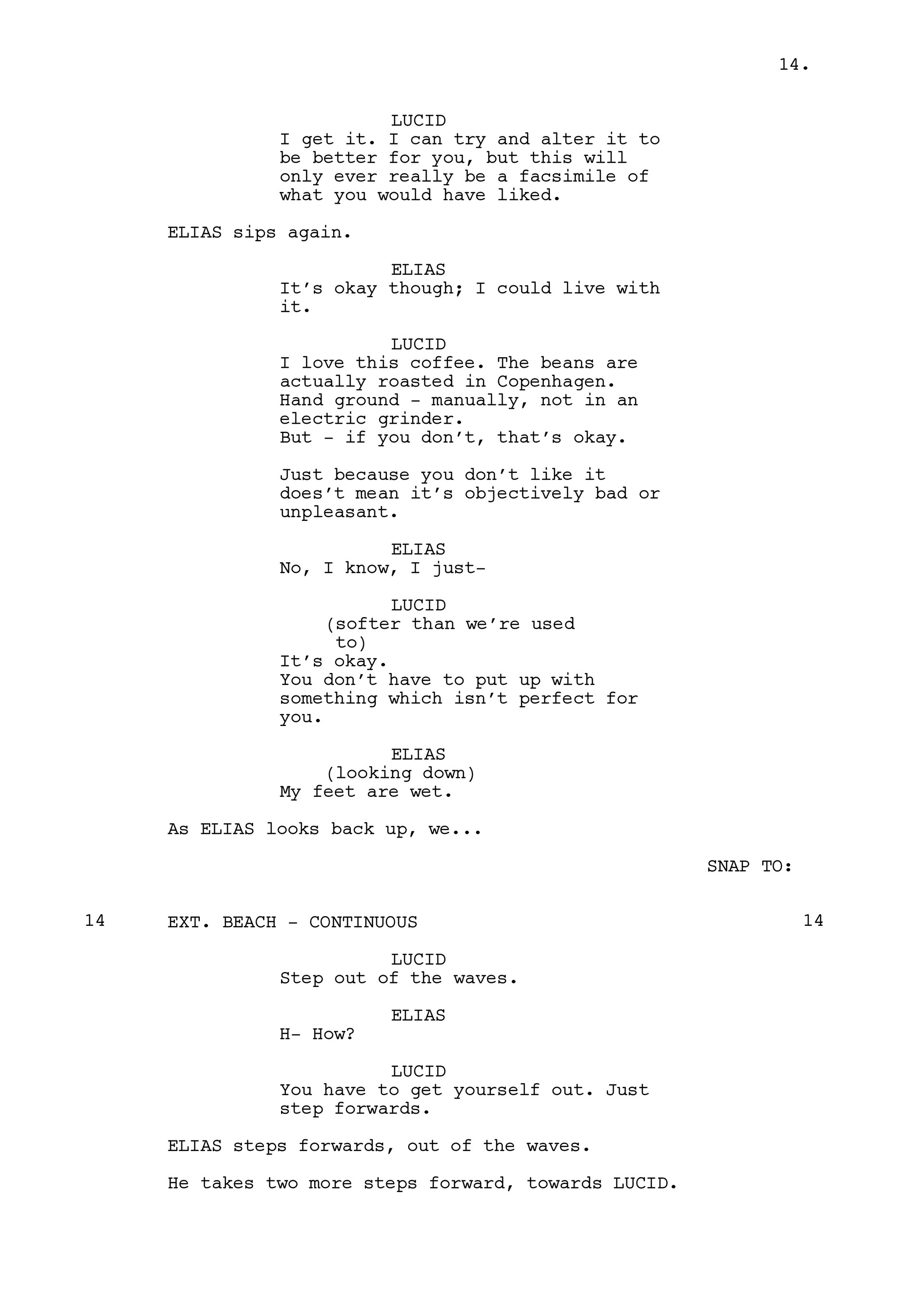
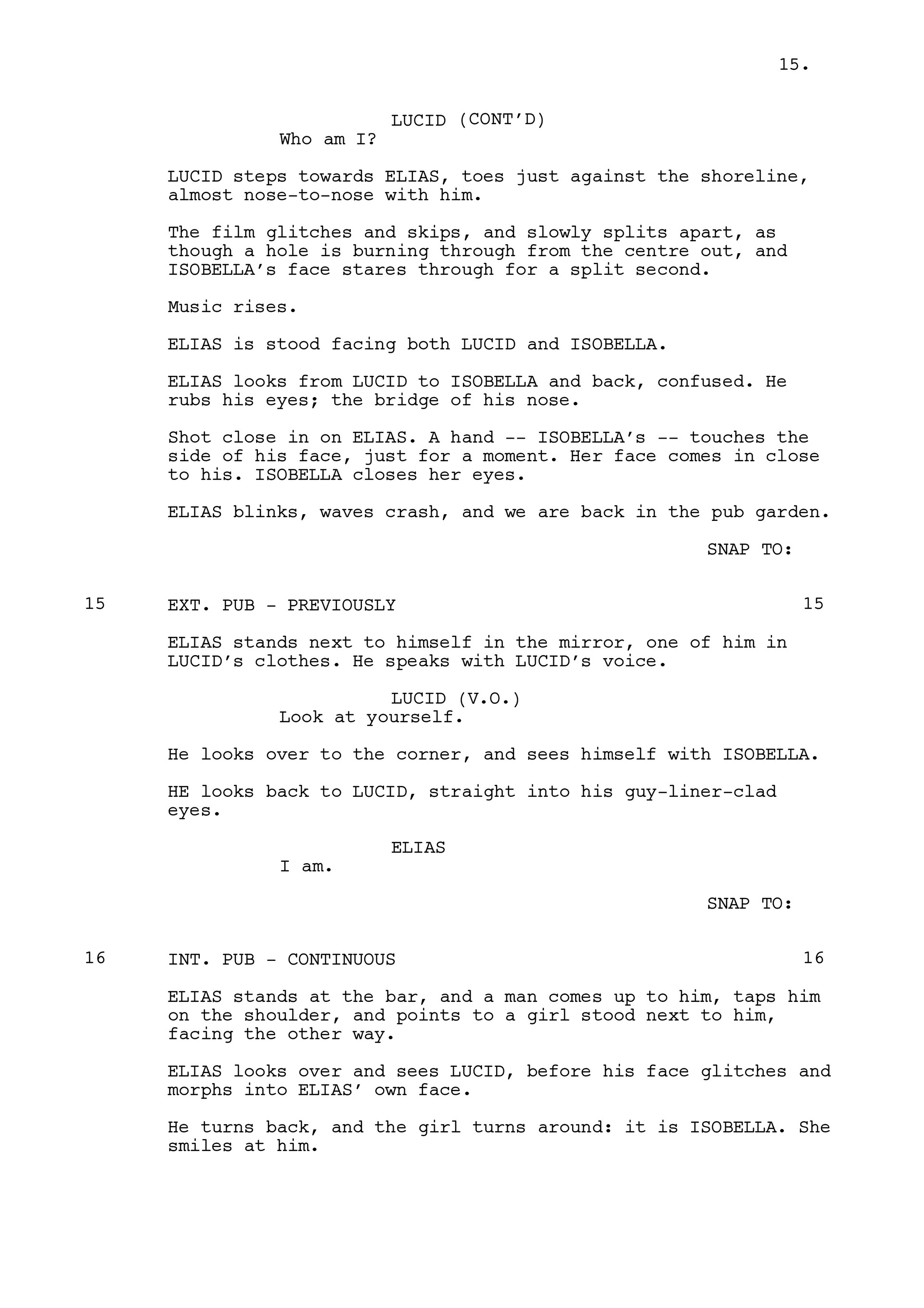
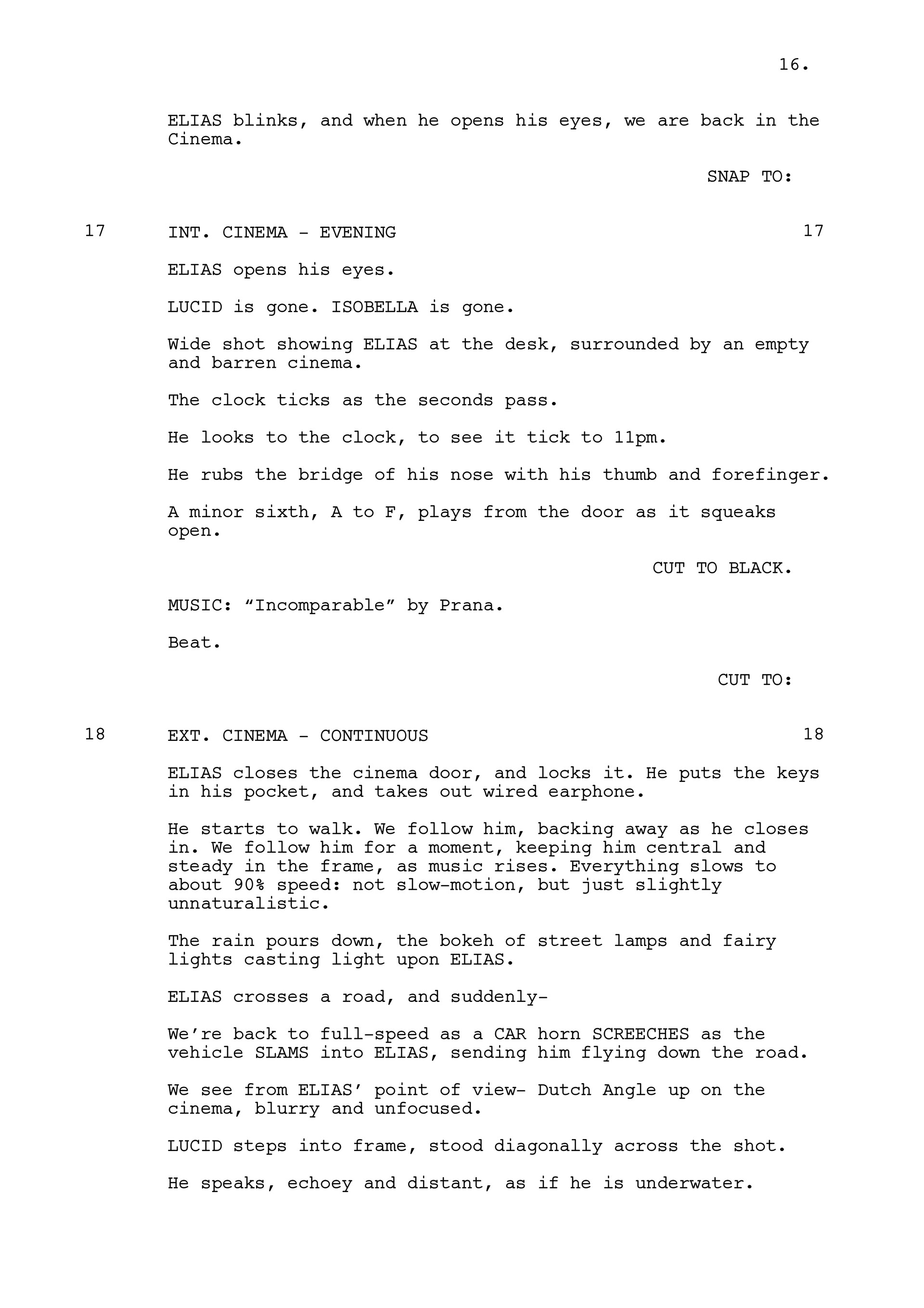
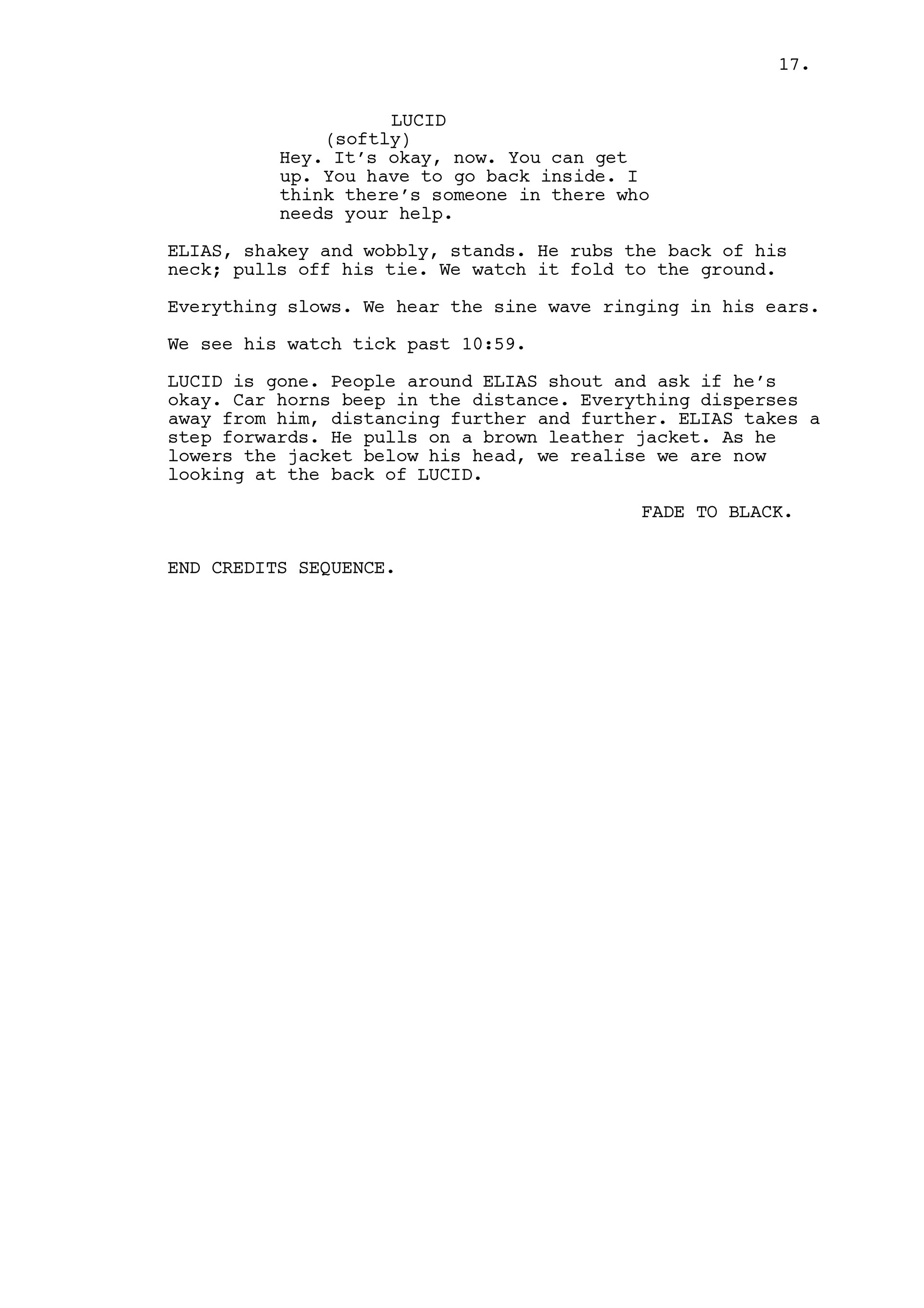
I emailed Nick, who was my lecturer for Scriptwriting For Media last year, in the hopes that he could doffer some script advice. Being the wonderful man he is, he made notes on my script despite being on holiday in Miami!!
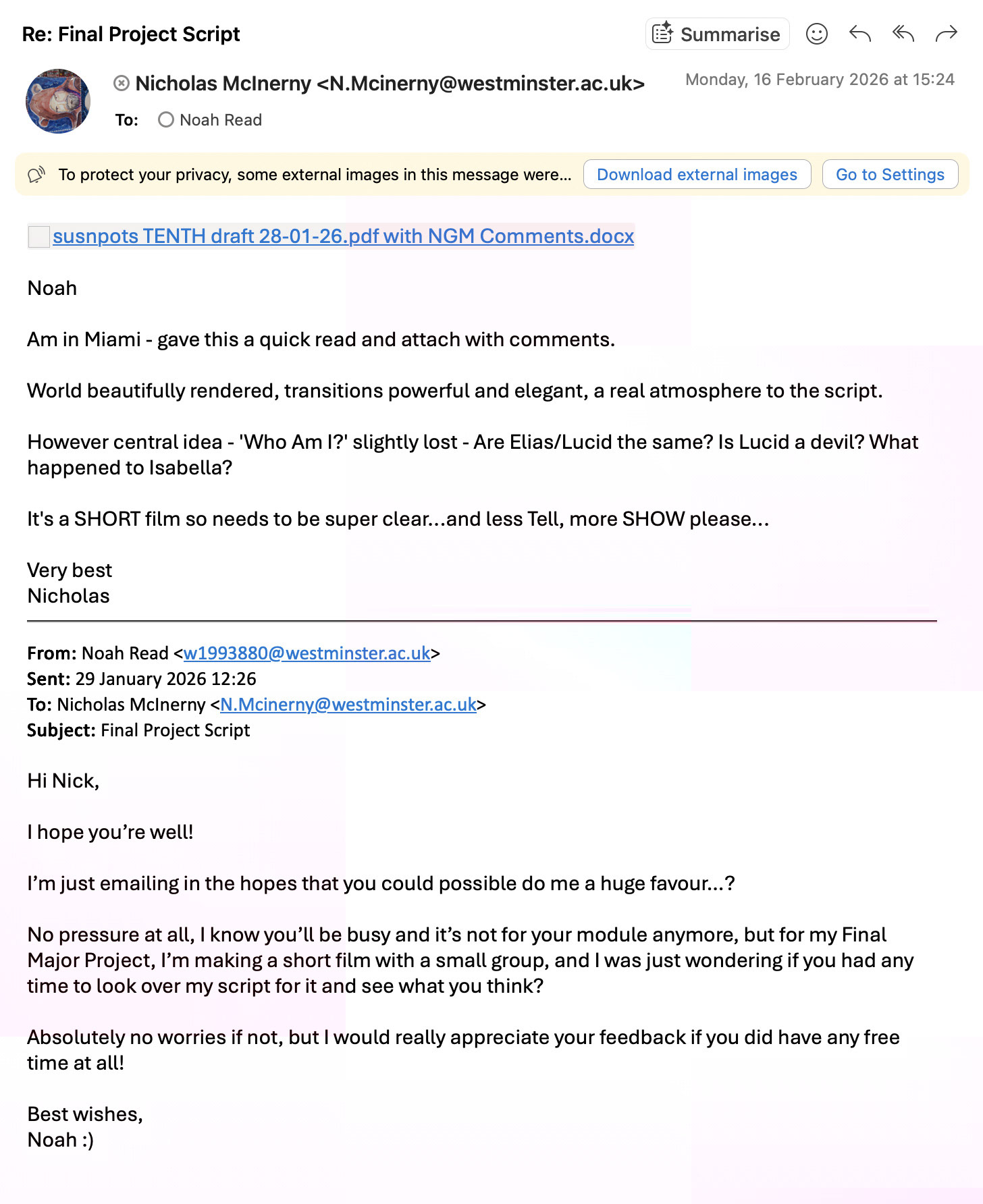
His notes are here, under ‘comments’! https://universityofwestminster-my.sharepoint.com/_forms/spfxsinglesignon.aspx
On the 13th, we tore down the interim exhibition, and organised a GoFundMe page, which Peter set live yesterday, and is now plastered all over our social media stories.
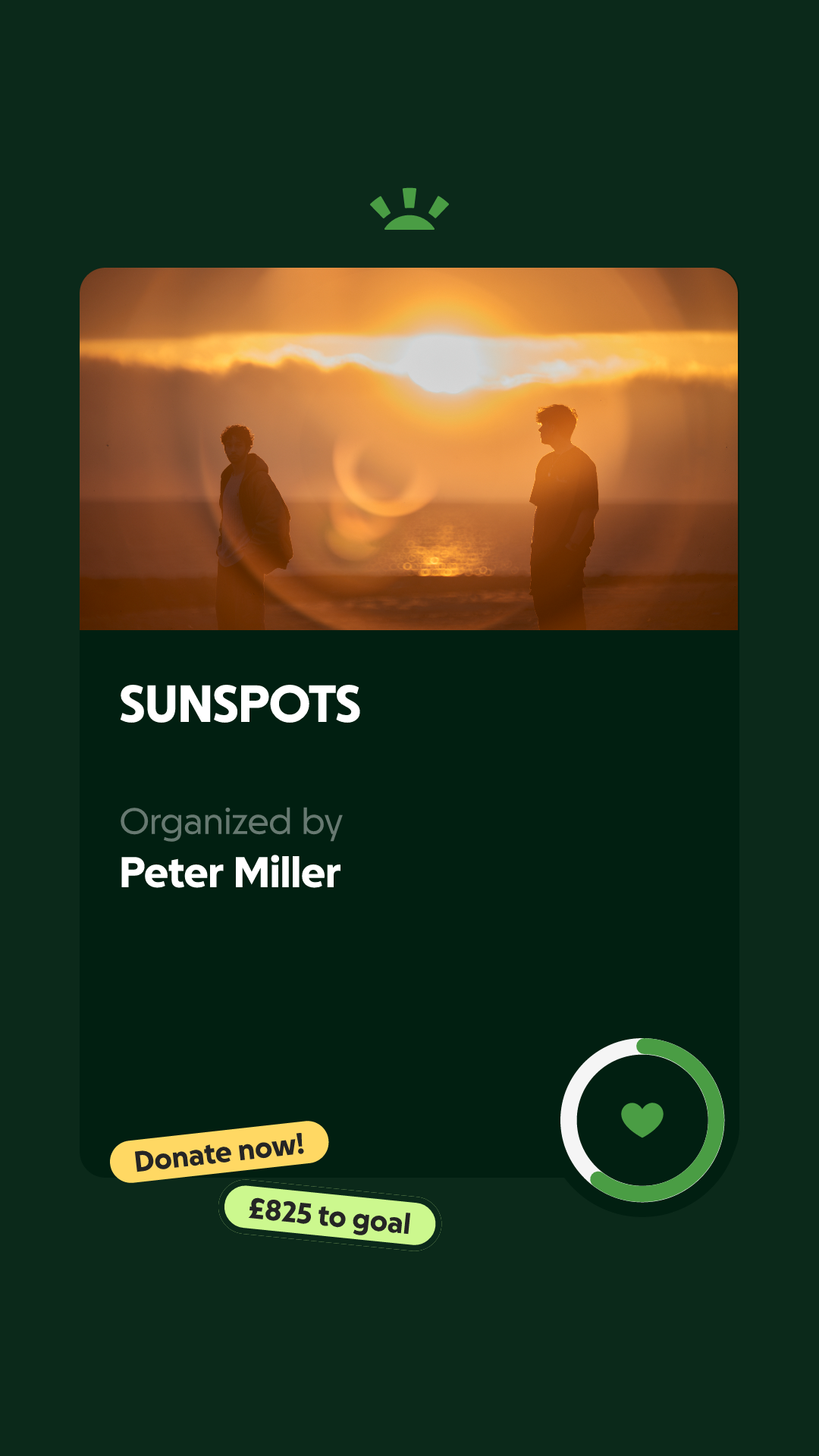
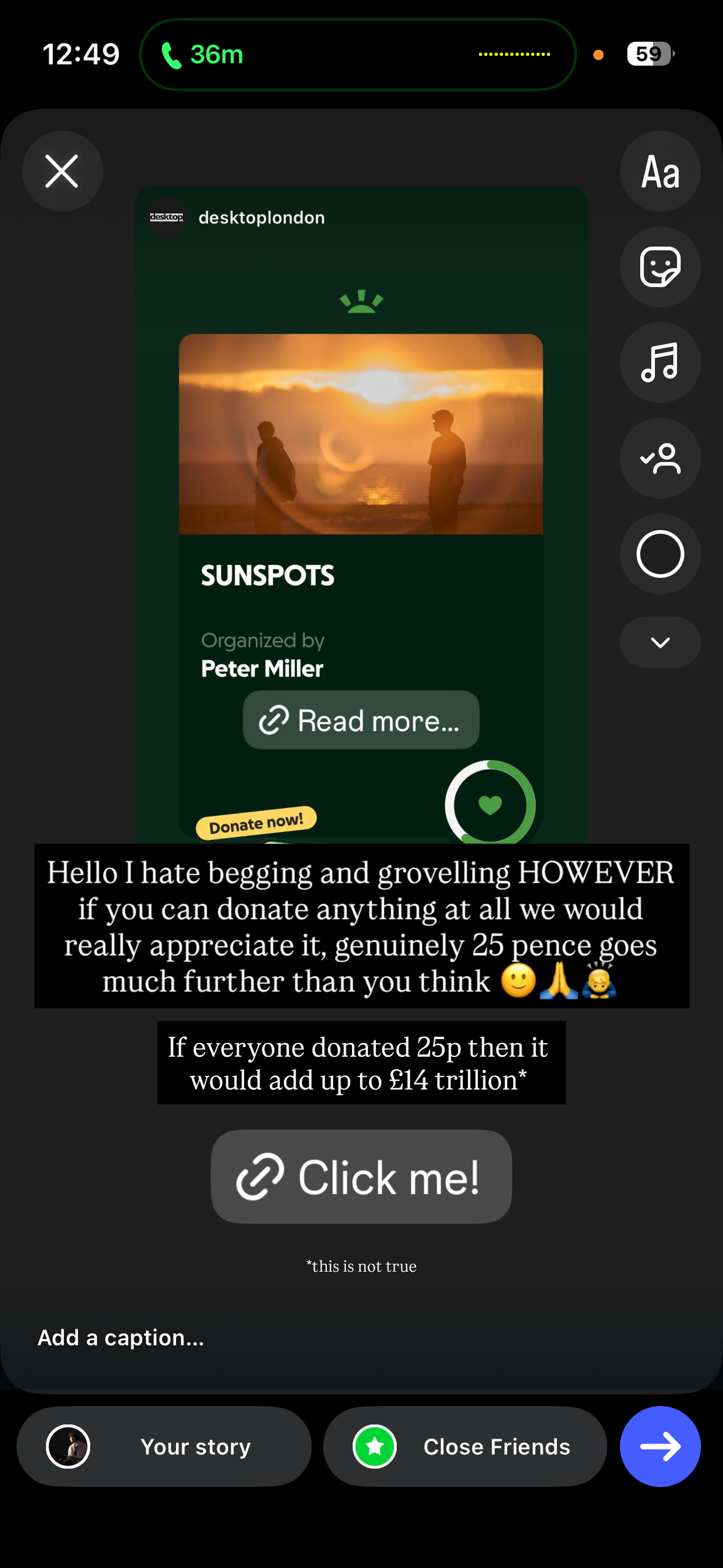
Then, today, we had a rehearsal in Harrow, after traversing to Regent Street Cinema with the cast to watch Pulp Fiction. It was ‘Tuesday/Chooseday’ at RSC so we were able to get tickets for £6 each for all of us. Unfortunately, Neve wasn’t able to make it as she had a drama school commitment, but Luca and Liam came with us. We thought this would be a great opportunity to see one of our locations, and a time to get to know them a little bit more.
At today’s rehearsal, we focused on the opening scene inside the cinema foyer, with Elias and Lucid. We went over blocking, setting up table in J1.01 to vaguely resemble the cinema counter, and I directed their line delivery and movements during the scene, with one of our lanyards as a makeshift ‘tie’ for Lucid to grab s Elias tries to leave.
25 Feb: Disaster Village
This has not been an especially excellent week. Yesterday, we received this email from Regent Street Cinema:
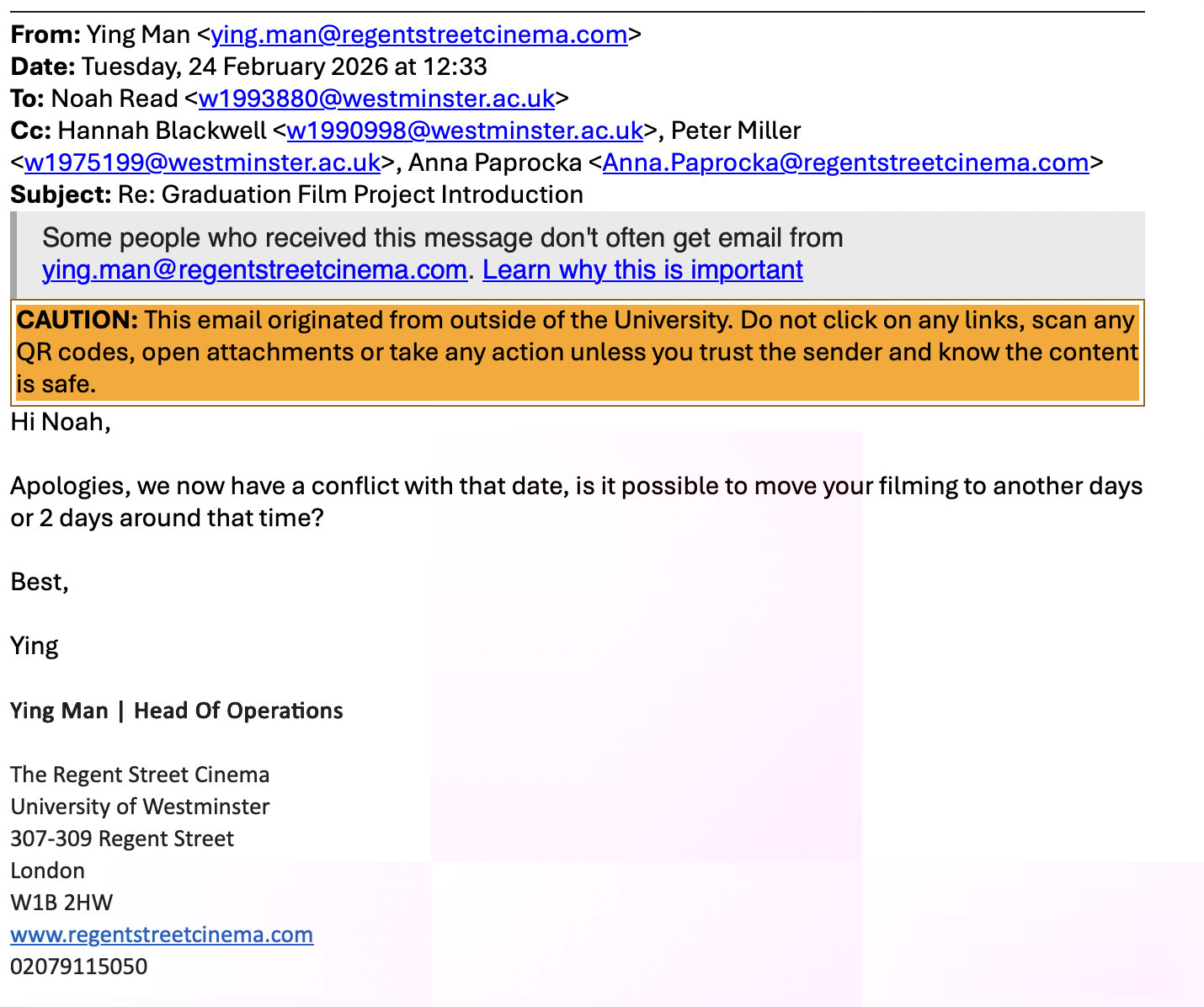
With our shoot set for four days time, this is — to say the least — significantly inconvenient. Of course, we are extremely appreciative of them allowing us to use the venue for no charge, but I really don’t know what to do or say in this situation.
Additionally, we received an email today from the Ignite Fund awarding us £1300. Again, this is excellent, and we are extremely grateful for anything at all — but, having asked Amar, it doesn’t seem there is any reason we weren’t awarded the full amount, especially considering the scale of our project, and knowing that others in our cohort have received the full amount. I really don’t want to seem ungrateful and I know, reading this, that’s how it will seem, but considering the time we spent speaking with th Ignite fund prior to our application, and the fact that we had initially been told we were able to apply for £1500 each — so £4500 total — this is a far cry from that. All this means is that we will have to adjust our shooting schedule, and most likely strip back scenes, costume, set, props, et cetera, in order to manage the lower amount. Of course, £200 is not the be all and end all, by any means, but it does mean we have significantly less wiggle room and absolutely zero contingency money now at all.
On top of this, the pub location we had been in communication with have gone radio silent, and when we go to speak with them at the location, they are rather uncooperative. They were going to charge £300 for the use of their function room — perhaps the slight Ignite Fund blow is a blessing in disguise: we’re now thinking we’ll scrap off the pub location and try elsewhere, hopefully for somewhere more affordable.
When it rains, it really does pour: and nowhere is that more true than in England’s favourite Garden County. The sun had moved since our recce before Christmas — as the Sun tends to do, what with all that ‘orbit’ nonsense! — so we looked at SunCalc.com (which I always use for shoots and is invariably brilliant), and found a beach called ‘St. Mary’s Bay’, about 10 minutes around the coast from Joss Bay, where we were before Christmas. The plan was to get there for sunrise: so, I set off from Milton Keynes at about 2am, picked up Peter at around 3, Hannah at around 3:30, and then headed to Kent, where we arrived at St Mary’s Bay about 6am — right in time for a 6:45-ish sunrise. When we arrived upon the shores of The Garden of England, we were greeted with rather less ethereal-sandy-beach than we were expecting, based on last time. We spent a good half hour or so wandering about, and trying to actually get to a beach. When ti was clear this wasn’t going to work, we decided to cll it quite and head back to Joss Bay, where we would see how far out he sun actually would be — if it was only just around th ecorner, perhaps the sun would still be pretty enough to work, even without the direct sun behind like we had liked.
We were somewhat taken aback when, having piled back into my car, Maps said the journey to Joss Bay would taken over an hour, rather than the ten minutes it should have taken. Only then did we discover — very much the hard way — that there are two St Mary’s Bays in Kent: one, about ten minutes down the coast from Joss Bay, and one over an hour away. So, with nothing else we could do, we made the journey to Joss Bay. To amend the words of Douglas Adams: “I love [sunrises]. I love the [blinding light] you [see] as they go by.”. Needless to say, when we arrived at Joss Bay, the sun had well and truly risen. Our trip was not completely in vain, however, as we were able to find a location here the sun did rise directly over the sea — the actual St Mary’s Bay! We took some test shots here, and most excitingly, tested out Peter’s new Nikon ZR: we’ve both been looking at it for a while, since we went to the talk at BFI, and him getting it has definitely persuaded me that it’s an extremely capable camera. As we’re only able to take out one FX6 at a time (apart from rare situations, Hasan said), having an extra cinema camera or two is extremely useful for multicam shoots.
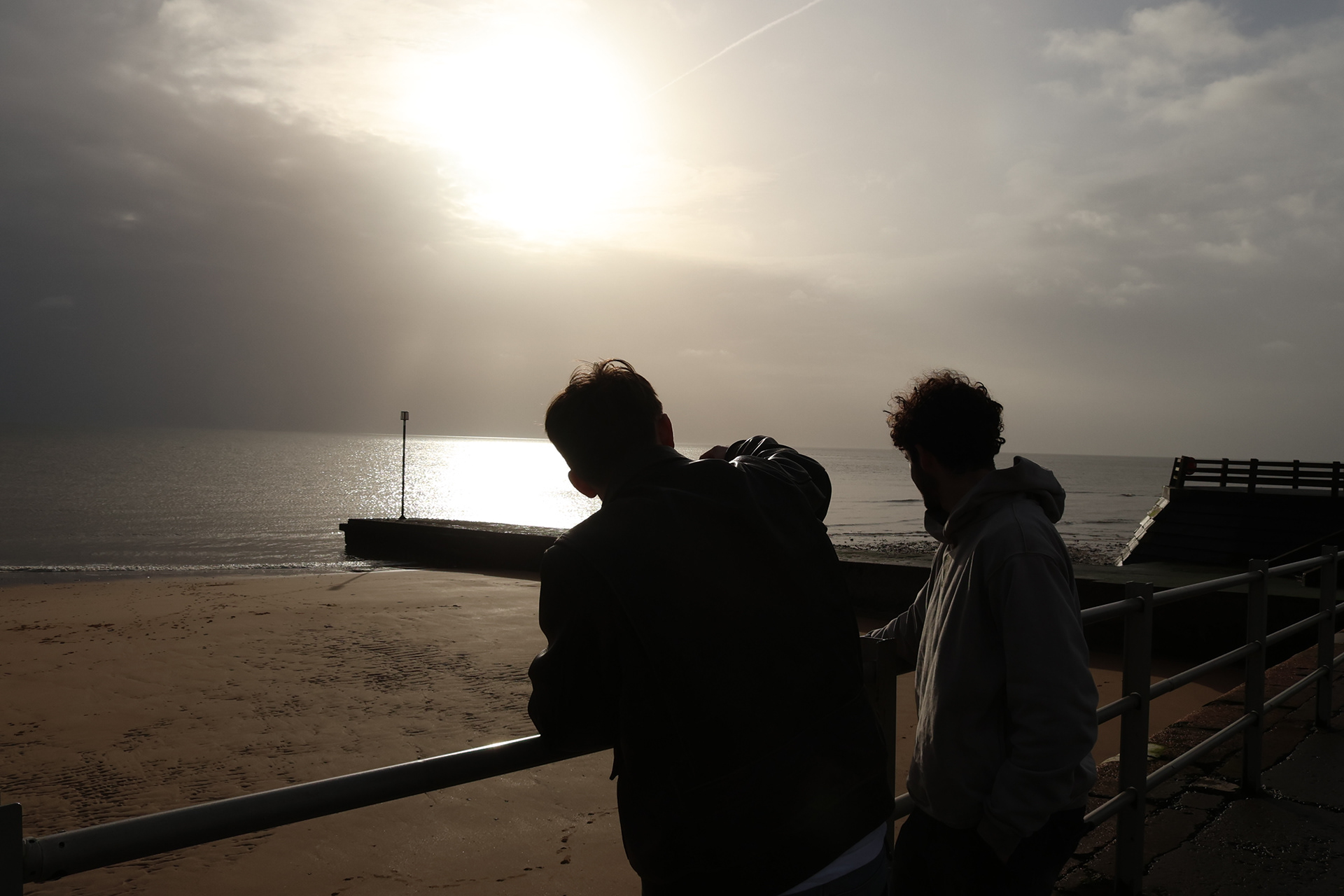
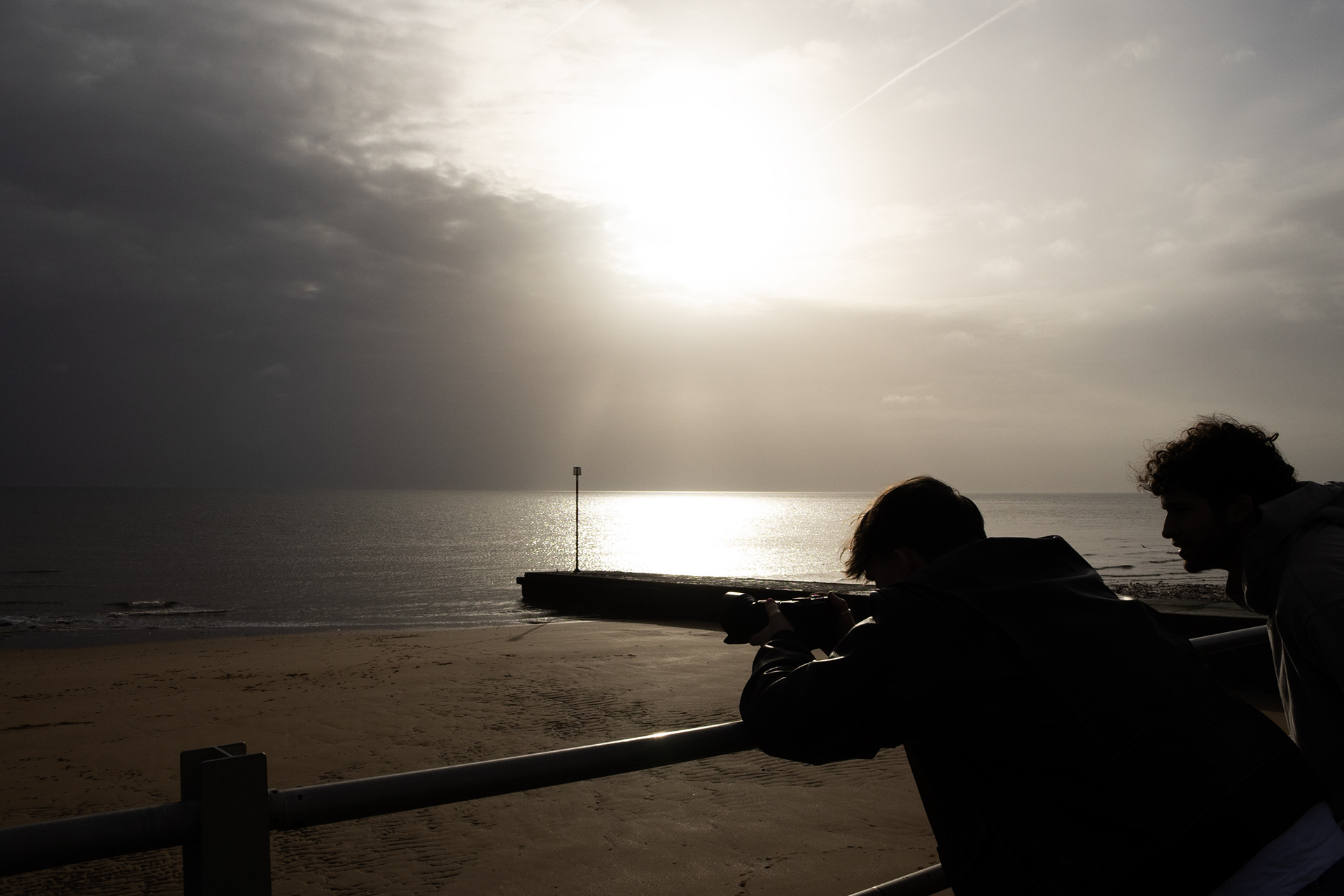
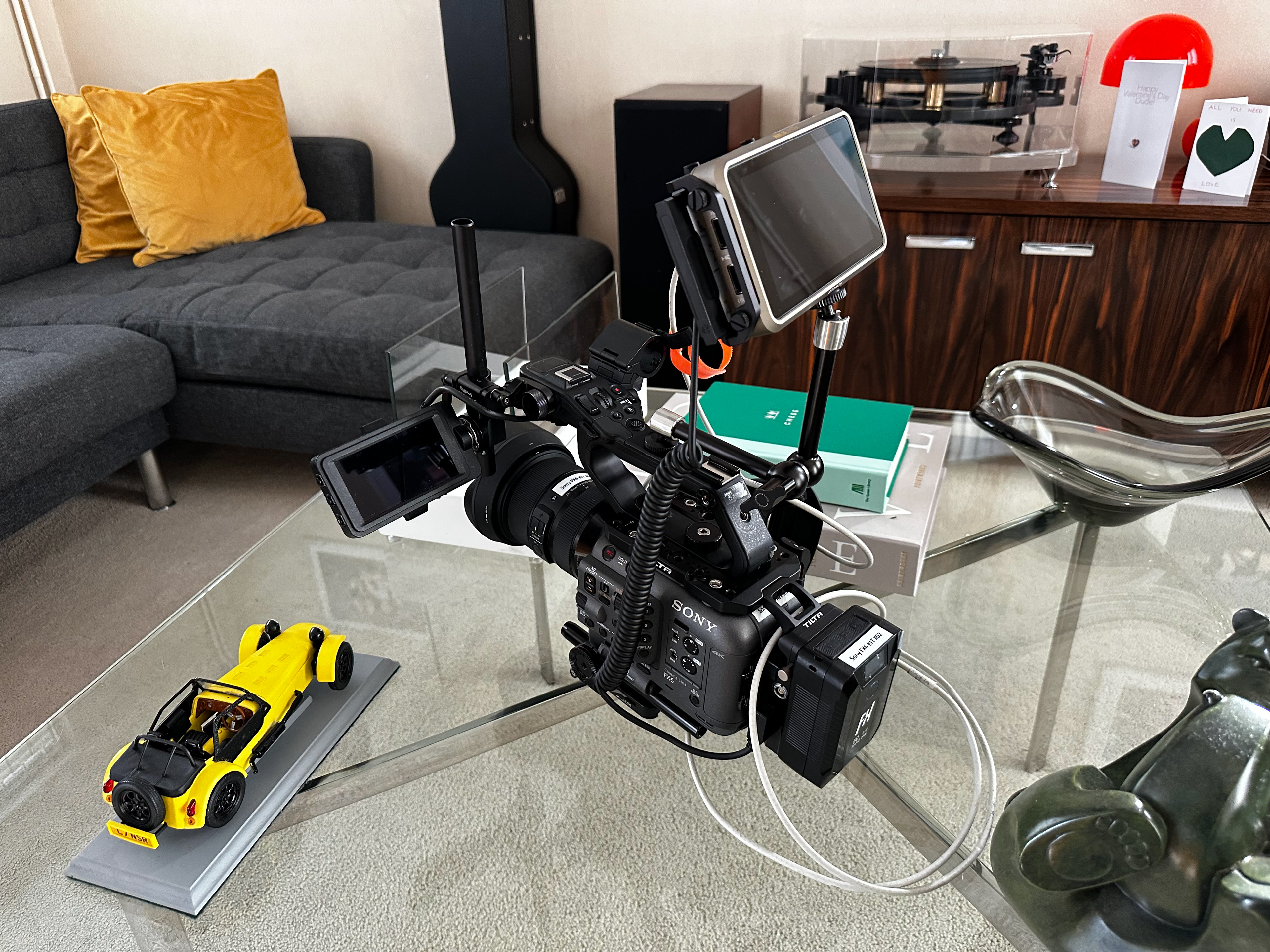
I set up the FX6 at home, with the Atmos external RAW SSD Monitor, so we would be able to shoot RAW for our test shots at the beach. As it happens, we didn’t end up even taking it out, as we obviously didn’t arrive for the scene we wanted to shoot, so we decided to use the ZR for test shots instead. We also looked at colour grading in DaVinci Resolve, for those test shots. It’s clearly an excellent program, but I ultimately decided that I am already so familiar with the Premiere Pro layout, pipeline and processes that to change lanes now would be quite a significant additional strain.
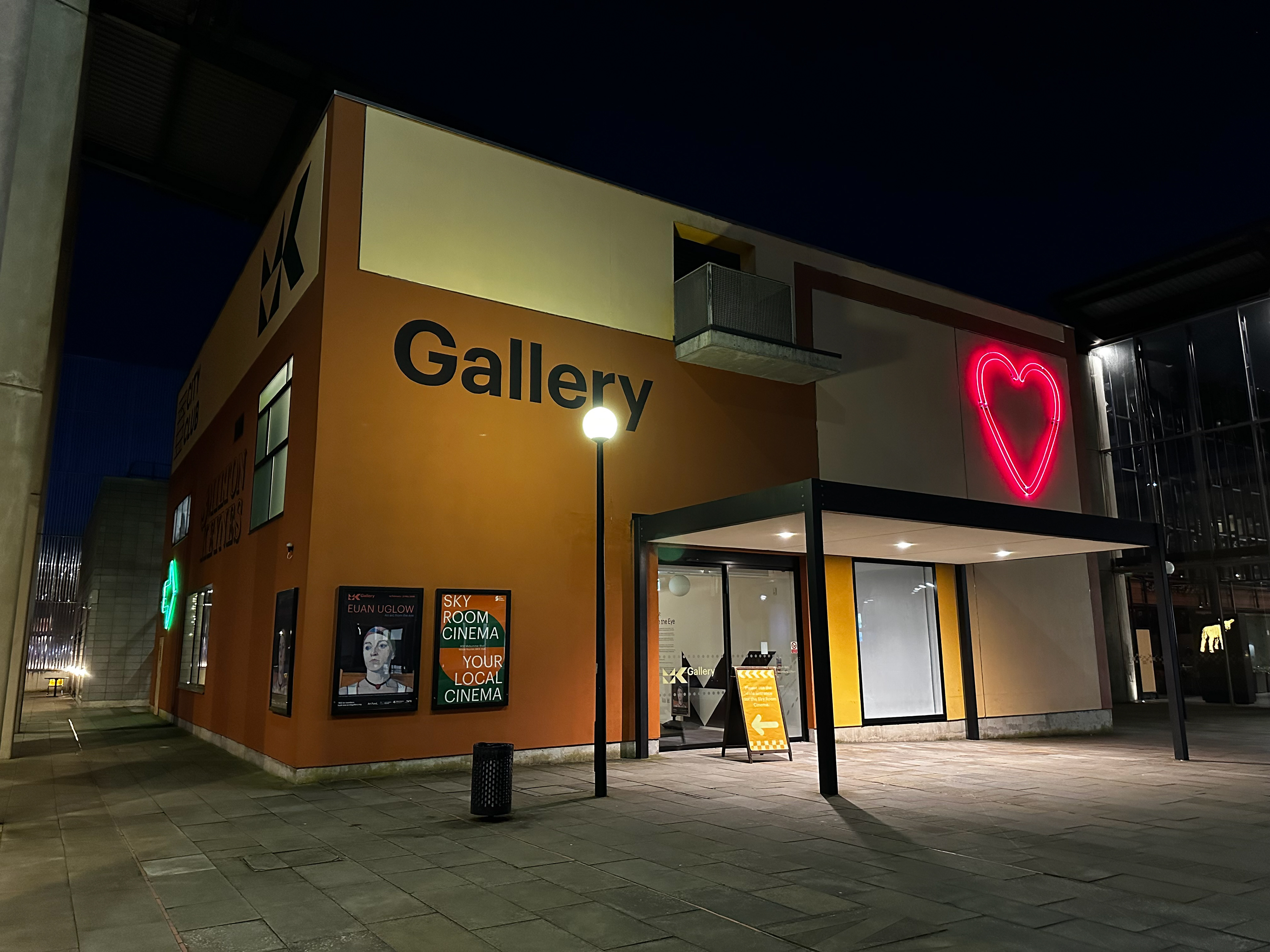
However, there is a light at the end of the turbulent tunnel: today, I spoke to a pub that’s actually fairly close to where I live, and by completely coincidence, I happened to know both of the people working there! One was an old friend of my mum’s, and one was a girl in the year below me at school, and the daughter of my old LAMDA director. They took my details and said they would speak to their head manager, but that — fingers crossed — we should be able to film there next weekend! I also spoke to a local gallery cinema, who said we would “probably” be able to film there, if we could find a suitable date. I have a friend who works here, too, who said she would put in a good word for me, but it looks like we might only be able to do Thursdays, which isn’t great as Hannah works all day on Thursdays. We could make it work, I am sure, and it is a lovely place, but not quite as regal as RSC.
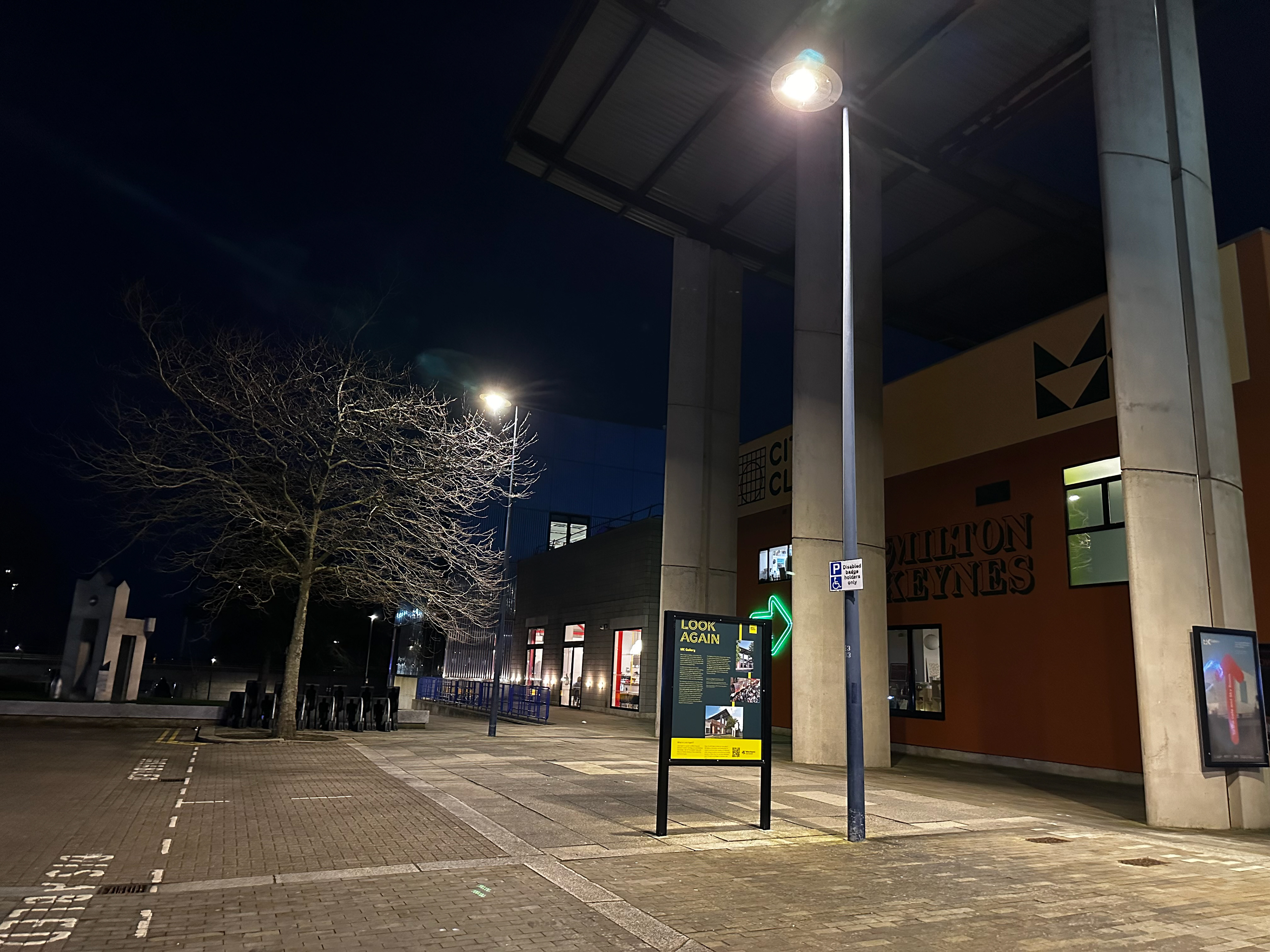
I also spoke to a swimming pool, who gave me the email for their events department, who I emailed this afternoon.
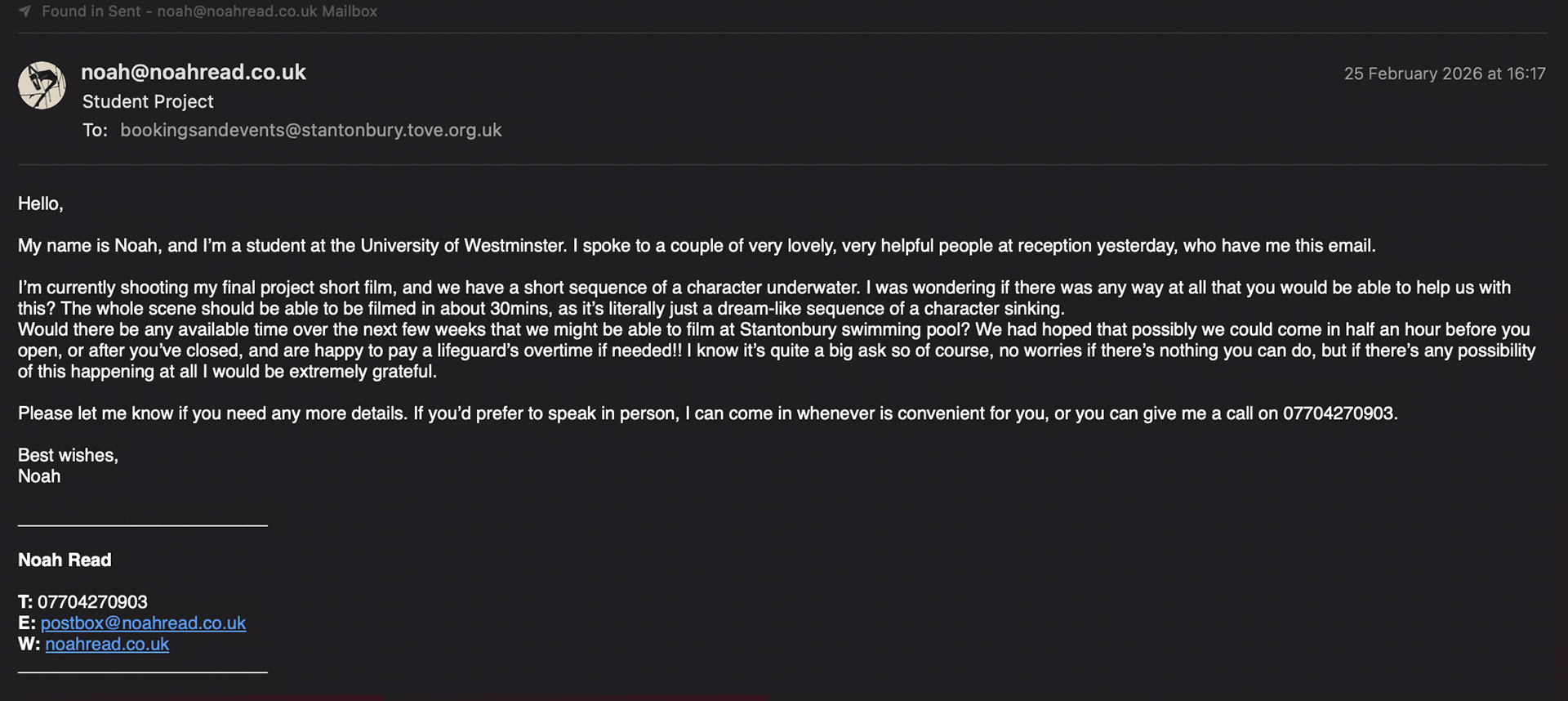
Hopefully I’ll hear back in the next couple of days.
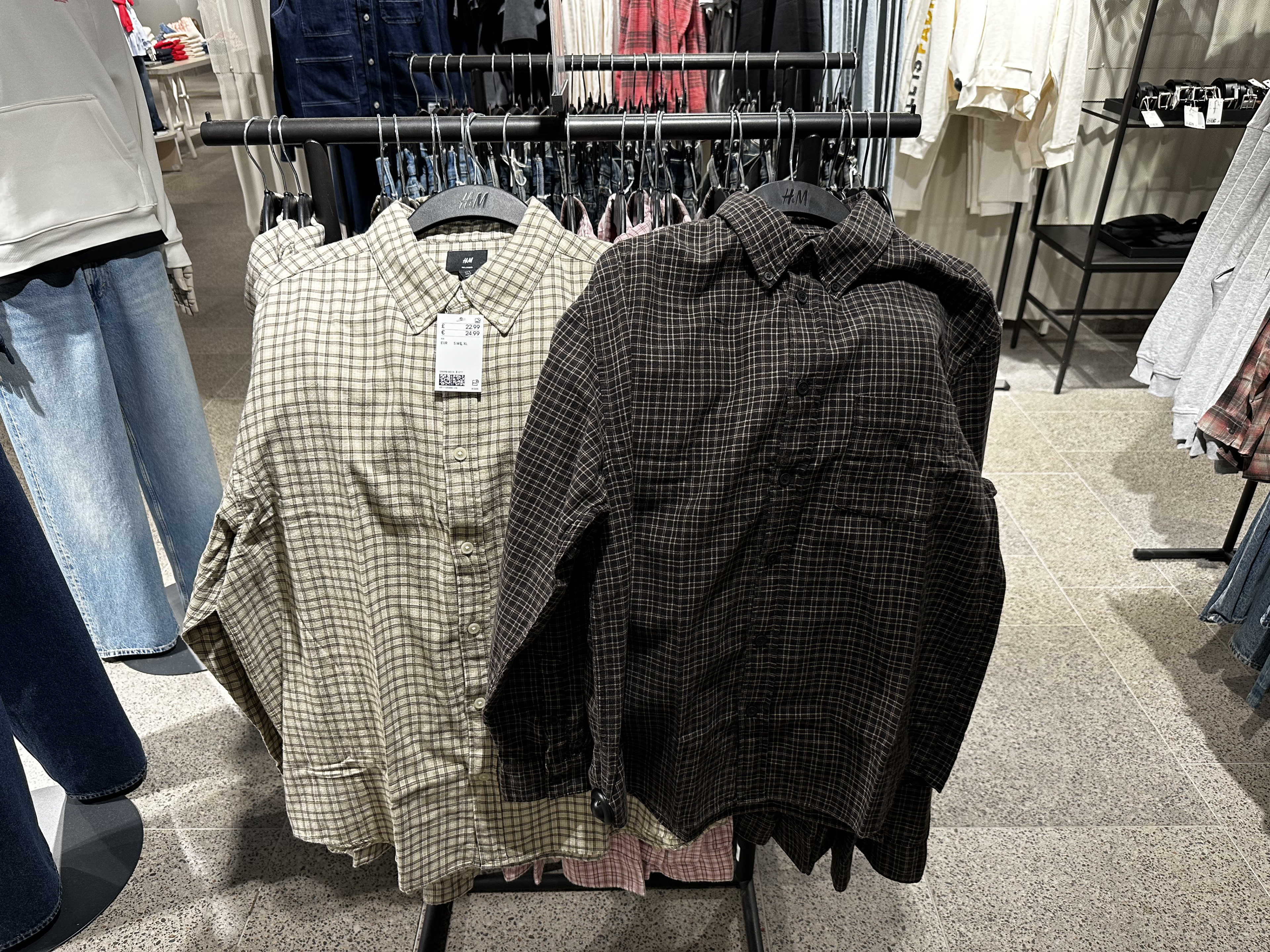
I also went to H&M to have a look for some costume bits. We discussed the idea of having Elias and Lucid’s costumes being either complimentary or contrasting, so to that end, I found these shirts for the ‘Other’ versions of them both, in the pub exterior scene.
3 Mar: Pub Exterior
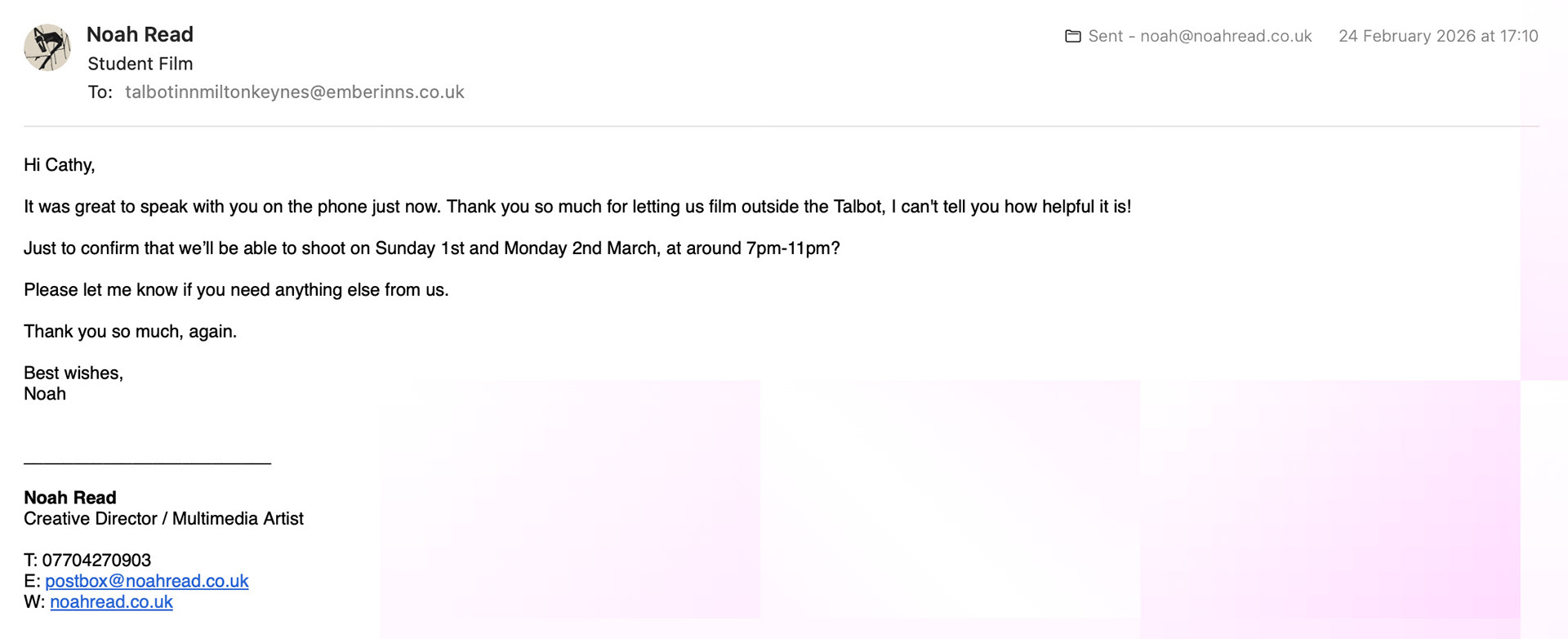
This week has gone well; certainly better than last week! I received a call on Tuesday, saying we would be able to film at the Talbot this weekend. This is excellent news, and means we can actually start practical work! I emailed Cathy to follow up, just to try and get it in writing, but have received nothing back yet.
We also received the following reply from Stantonbury Leisure Centre, where the pool I contacted is:
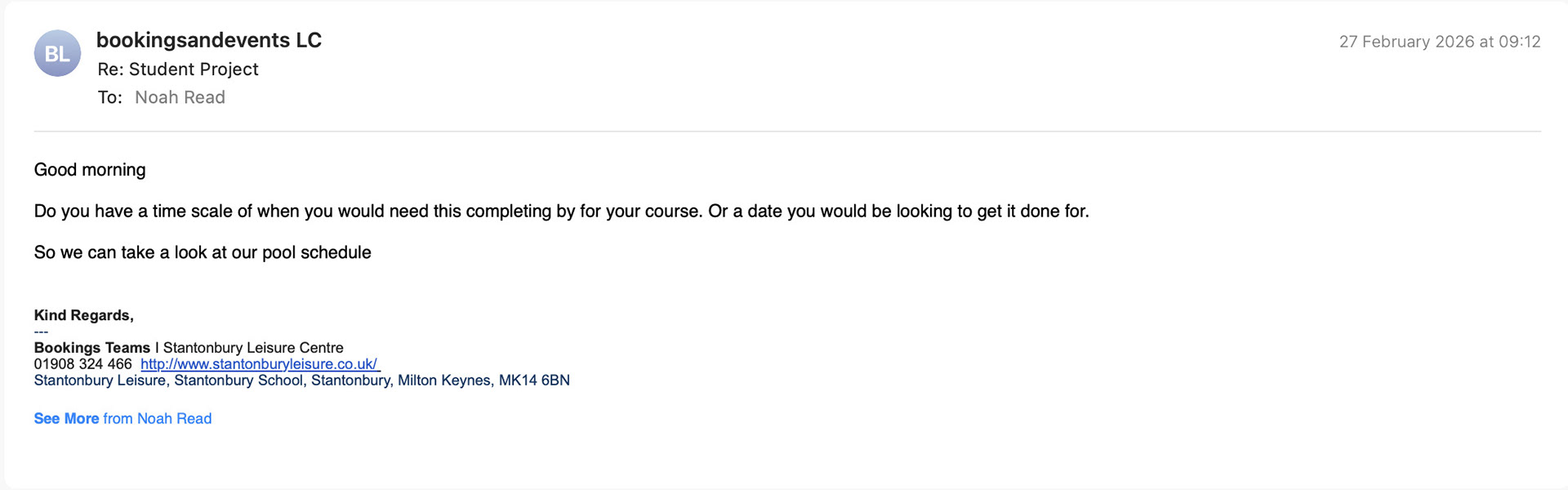
I don’t want to jump the gun, but it looks like this should be okay…! Hopefully we can get an idea of costing, and I got the impression when I spoke to them that we might be able to pay for the lifeguards’ overtime but not for the actual location, which would be really excellent.
On the 27th, I drove in to collect all the kit for this weekend’s shoot.
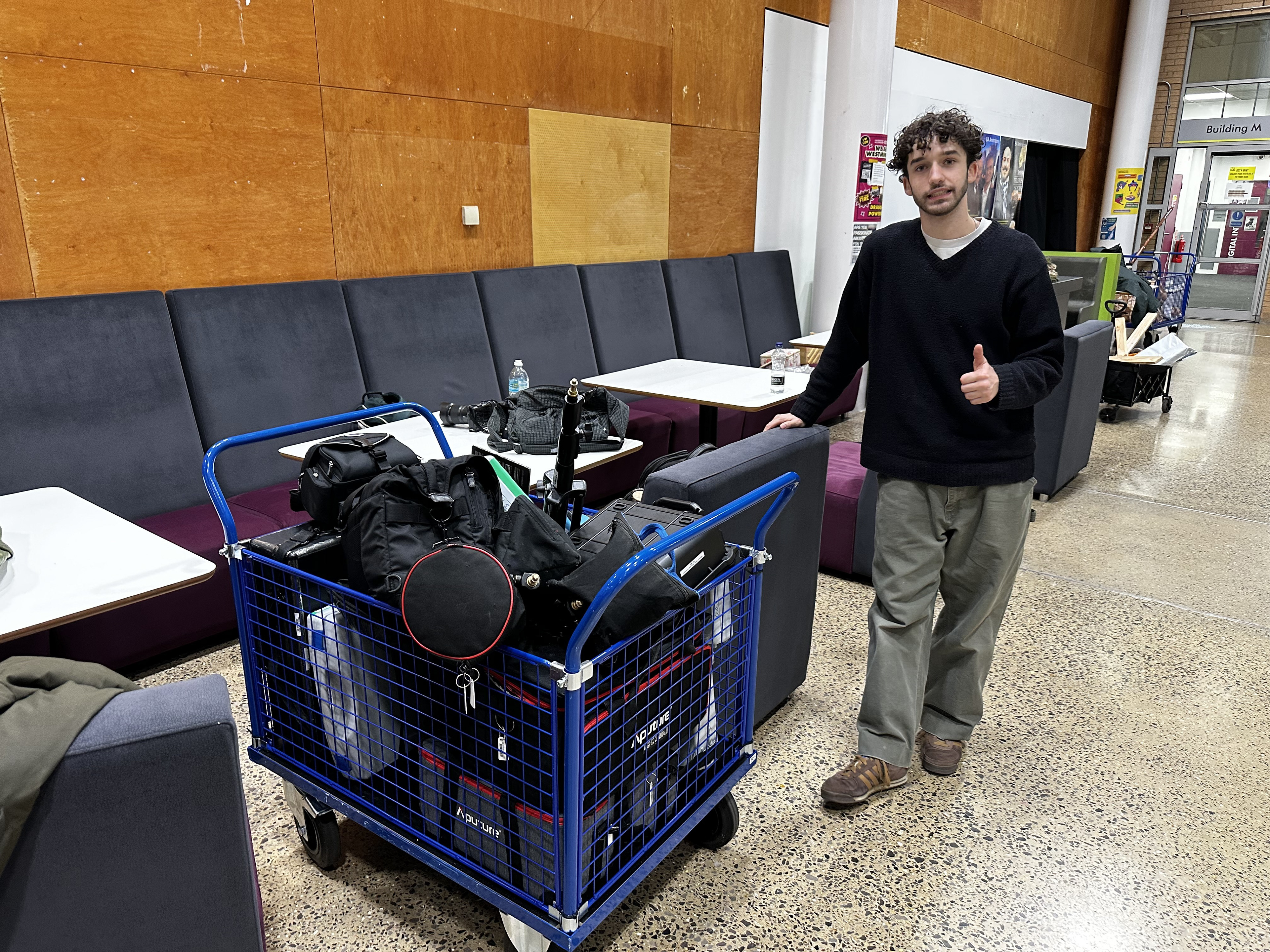
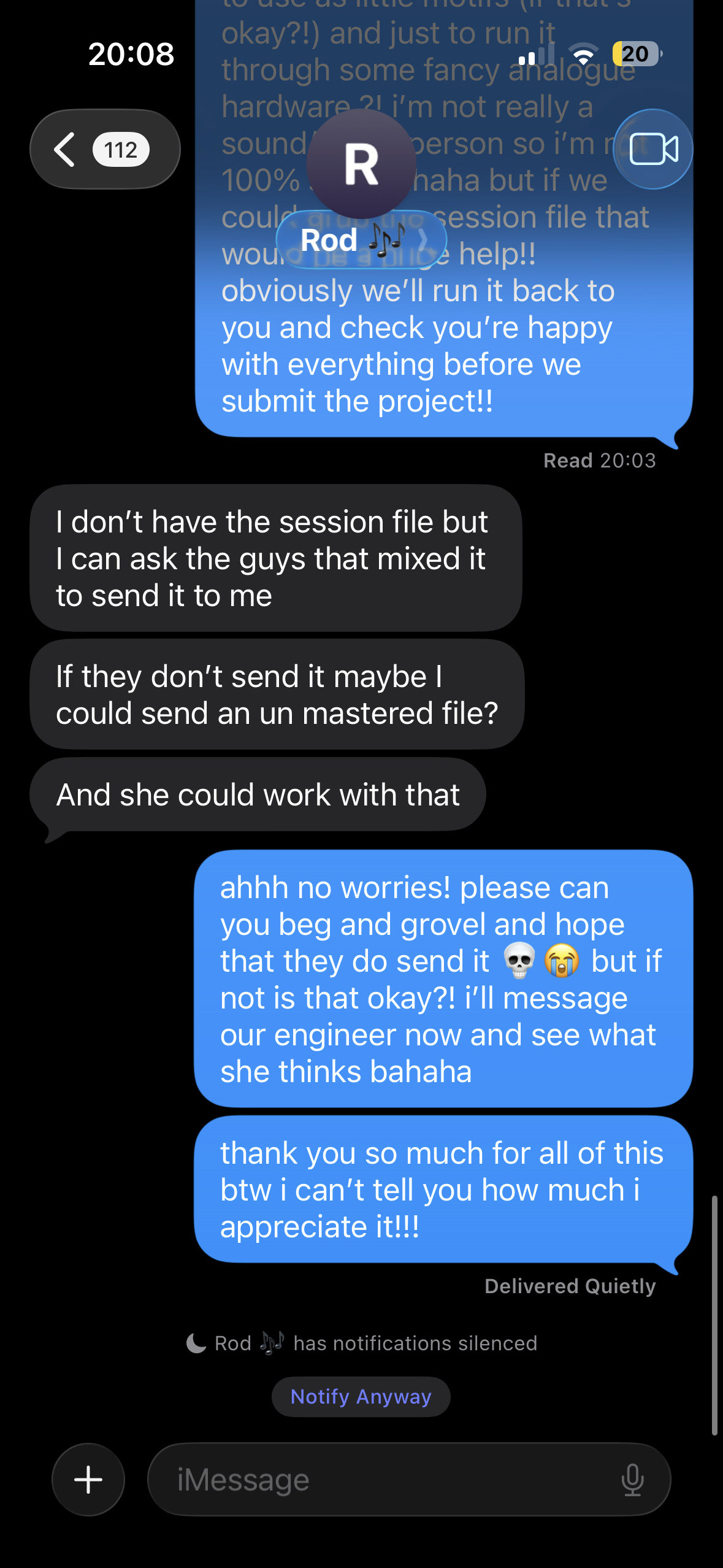
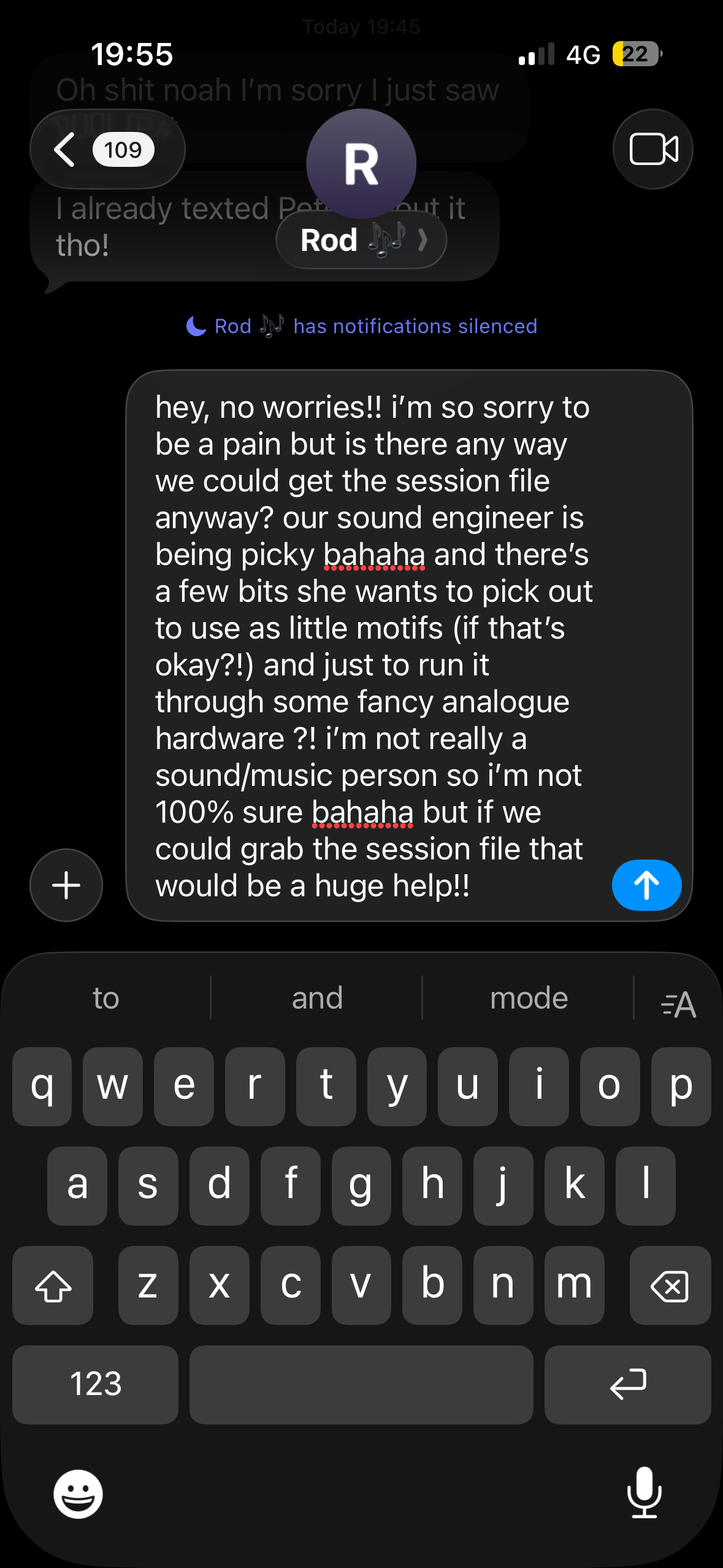
I also spoke to Rod, who wrote the music for us, as Ellie, who very kindly agreed to be our sound engineer once again, wanted the get the session file so we can pick out motifs to use throughout, and just properly master the whole track. I asked him for this a little while ago, and it has proved difficult so far, so I’ve tried again.
On the 28th, we bought our actors in to test our costumes:
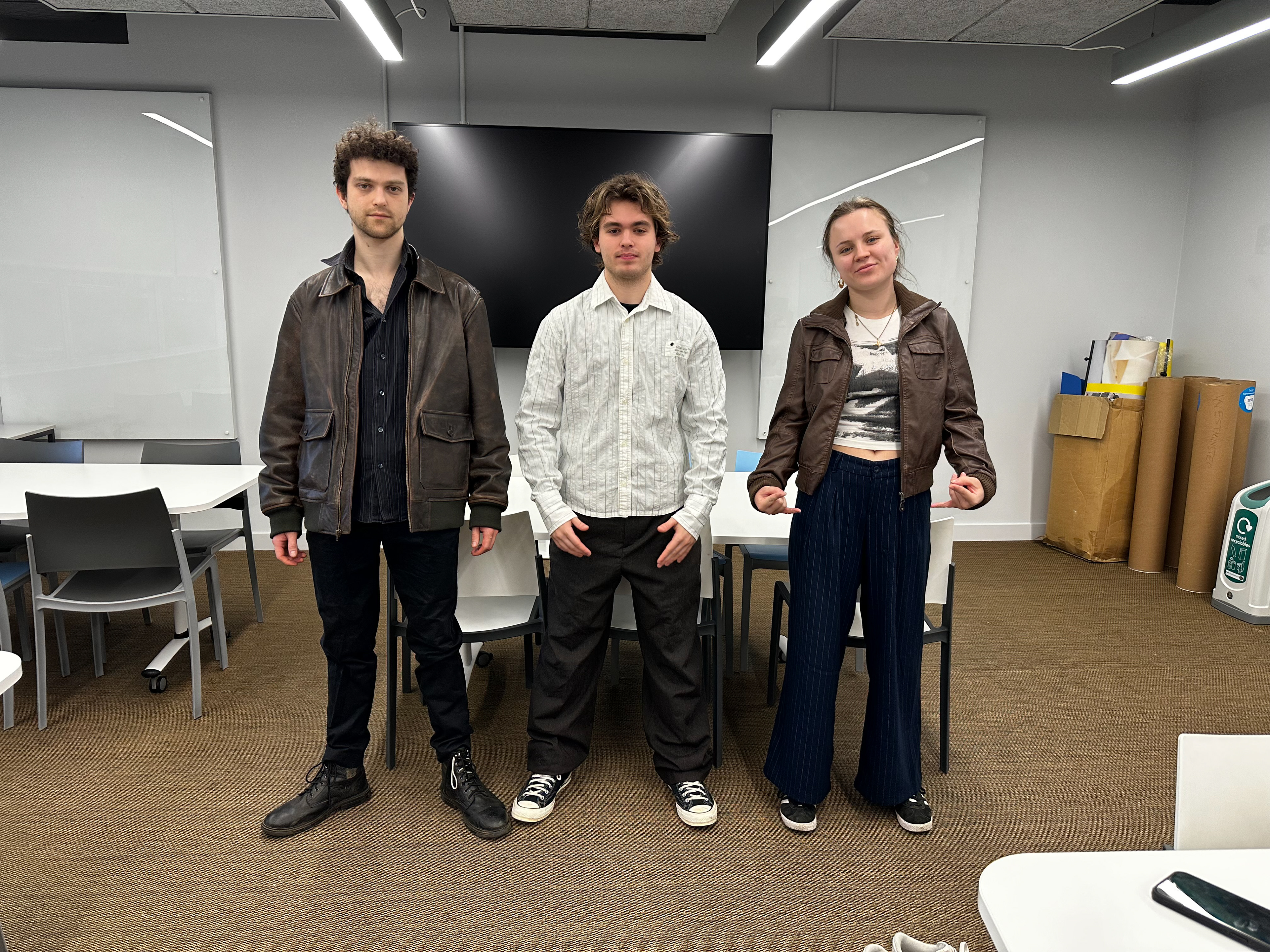
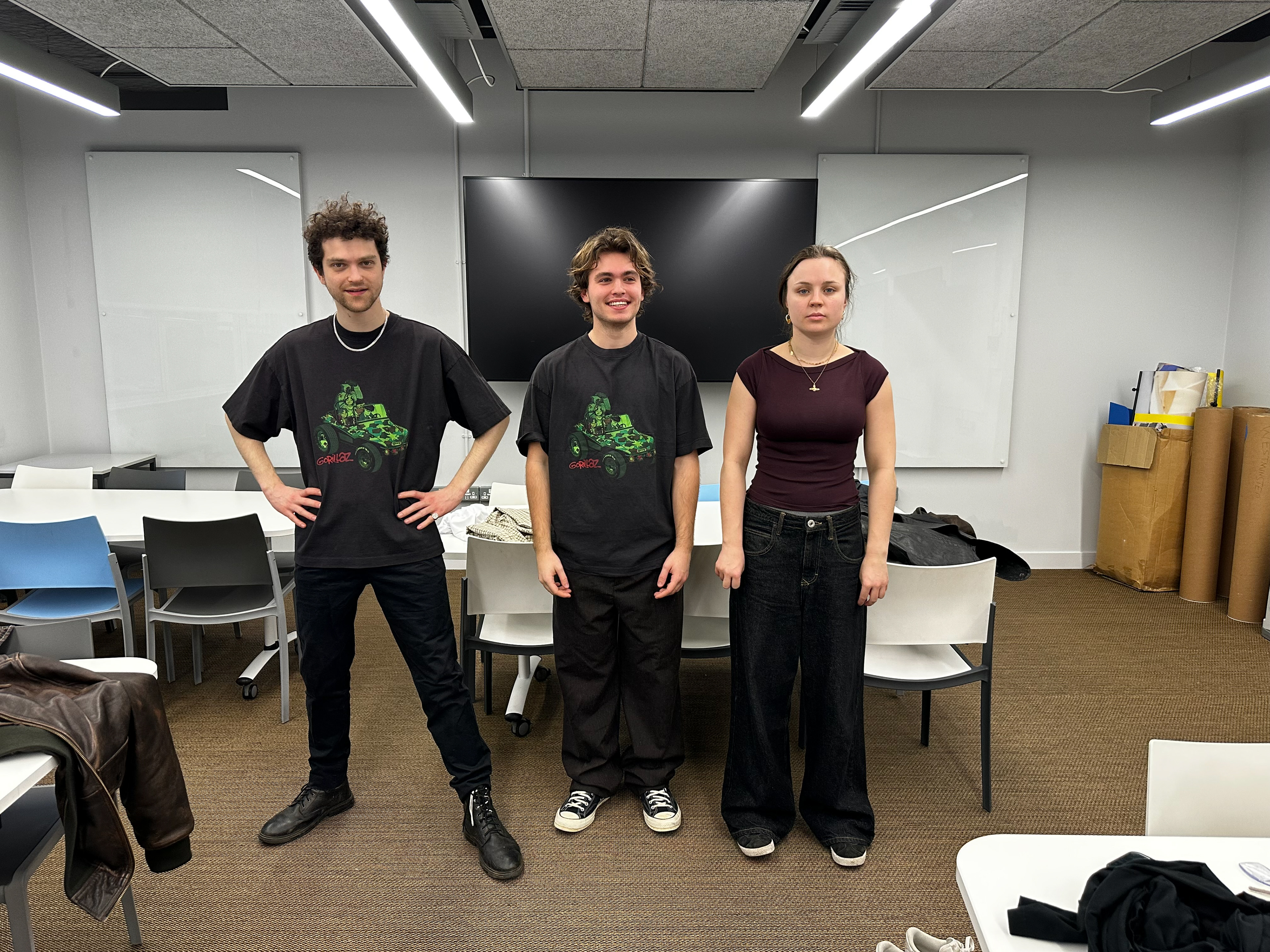
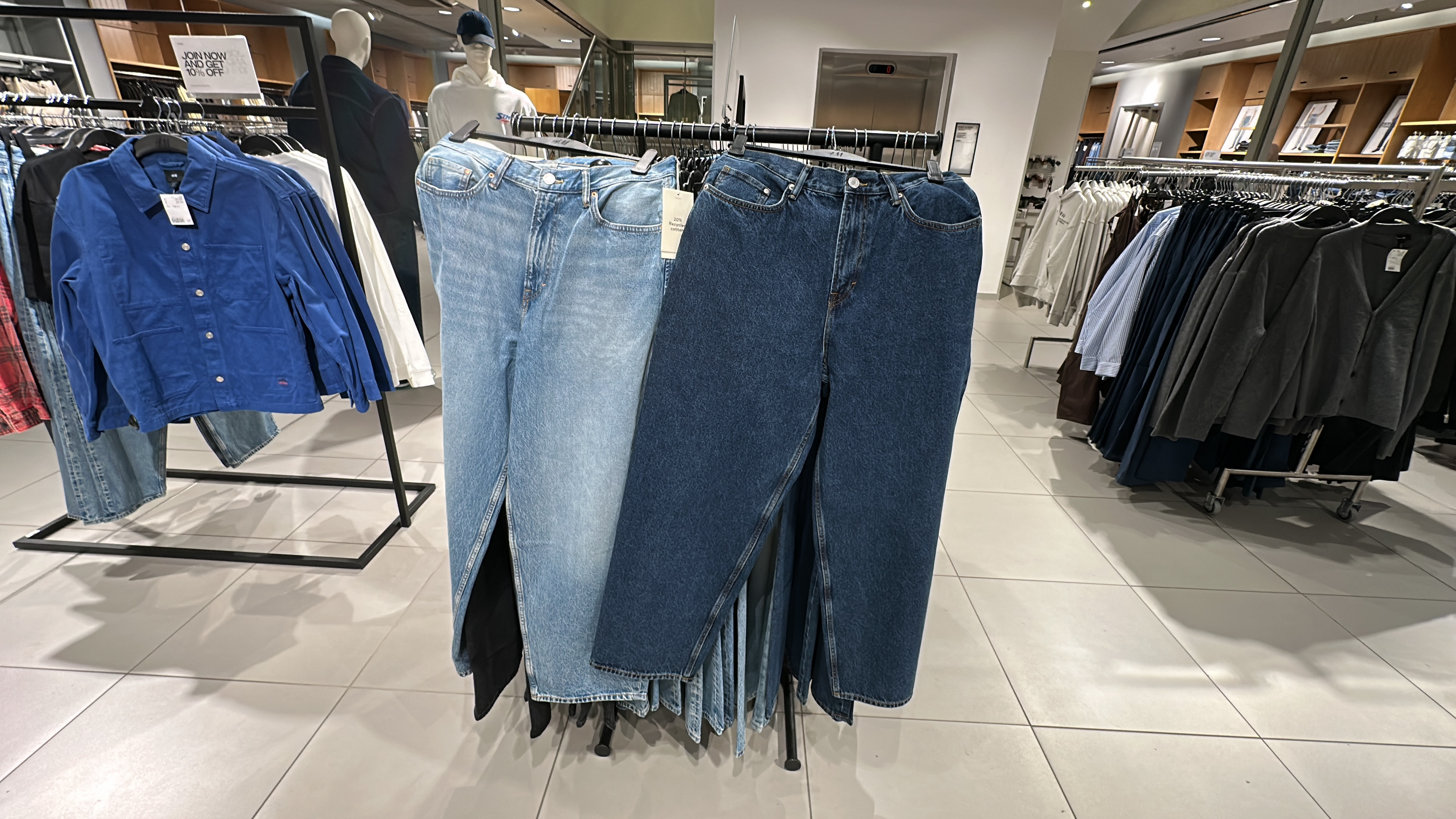
On the left is the ‘standard’ present-day costume for Elias and Lucid, with their contrasting pinstripe shirts. Peter found both of these on Depop, and they work really well — I don’t know how he managed to track down such perfect pieces, I really had thought we would need to buy most of our costume brand new! Both pairs of trousers are also Peter’s, and Lucid’s jacket is mine that we thought worked well for the character. Isobella’s costume is all Neve’s own clothes — luckily she was more than happy for us to use her own clothes as costume, and sent over many options (and bought some with her to try!) On the right, is the ‘flashback’ costume for all three characters, where Elias and Lucid need to actually be the same. Luca had a pair of blue jeans that worked perfectly, and so I said I could pick up second pair for Lucid the next day. Unfortunately, due to an emergency situation at Milton Keynes Central shopping centre, the entire centre was closed. I tried to go to one the next area across, but I could see from the main road that the entire carpark was gridlocked, so I elected instead to drive to Luton shopping centre on the way into Harrow to pick everyone up for the shoot, where I was able to confirm the jeans with Luca (the ones on the right, below) and pick them up!
We arrived back at my house for about 5:30-6pm ish; I’d been shopping earlier in the day for catering supplies (pasta and pizza!), and my mum had very kindly offered to cook for us so it would be ready when we got back. Once we’d eaten, the actors got changed so we could pretty much start when we got there, and we headed over to the pub, about 10-15 minutes away.
I am by no means a sketch artist, but these are my storyboard sketches for this shoot: the main hero shots of Elias, Lucid, the pair of them at the table, and the shot form the back where we see The Other Lucid/Elias and Isobella, in the flashback. Next to my sketches are the annotated pages from my script, showing initial blocking, characterisation and shot ideas.
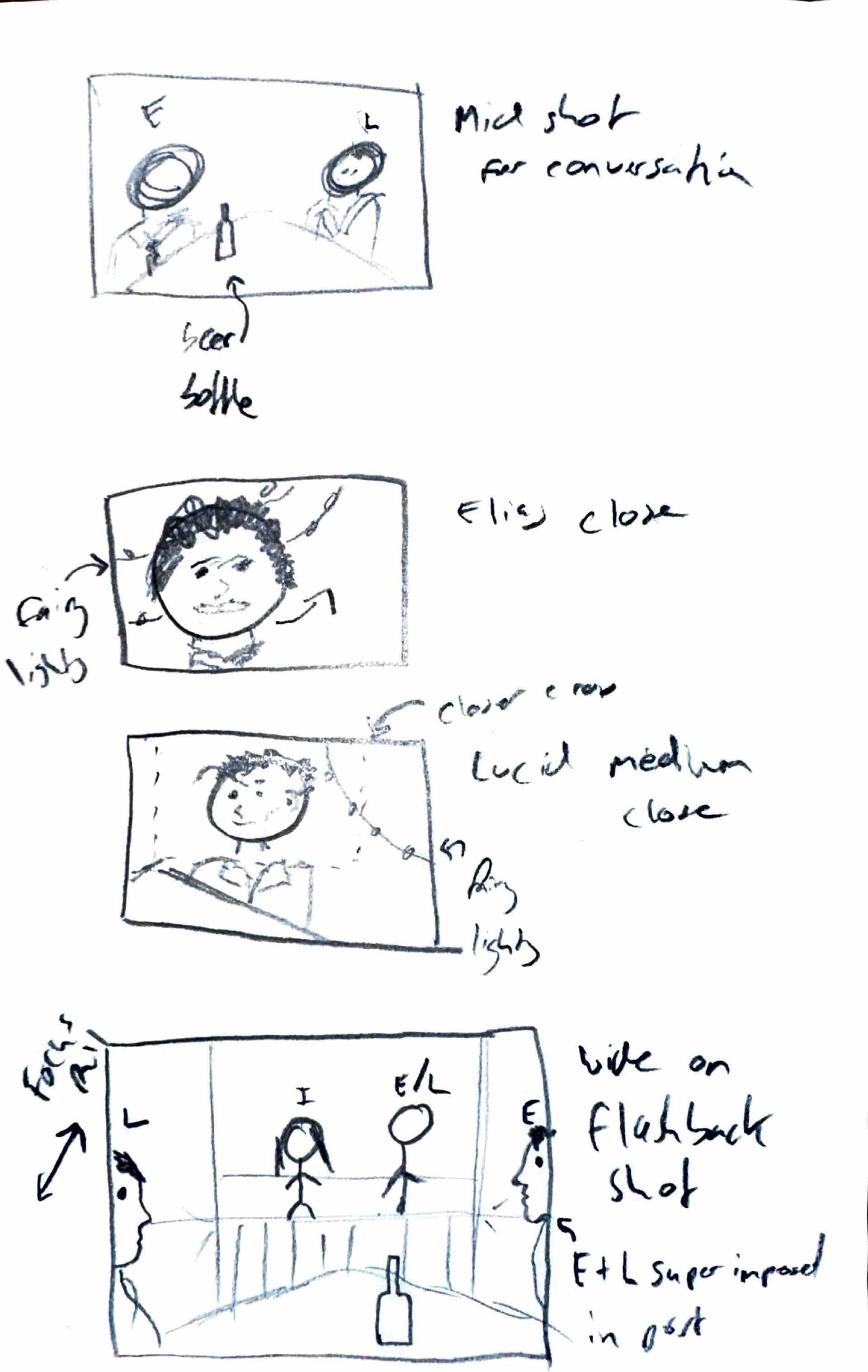
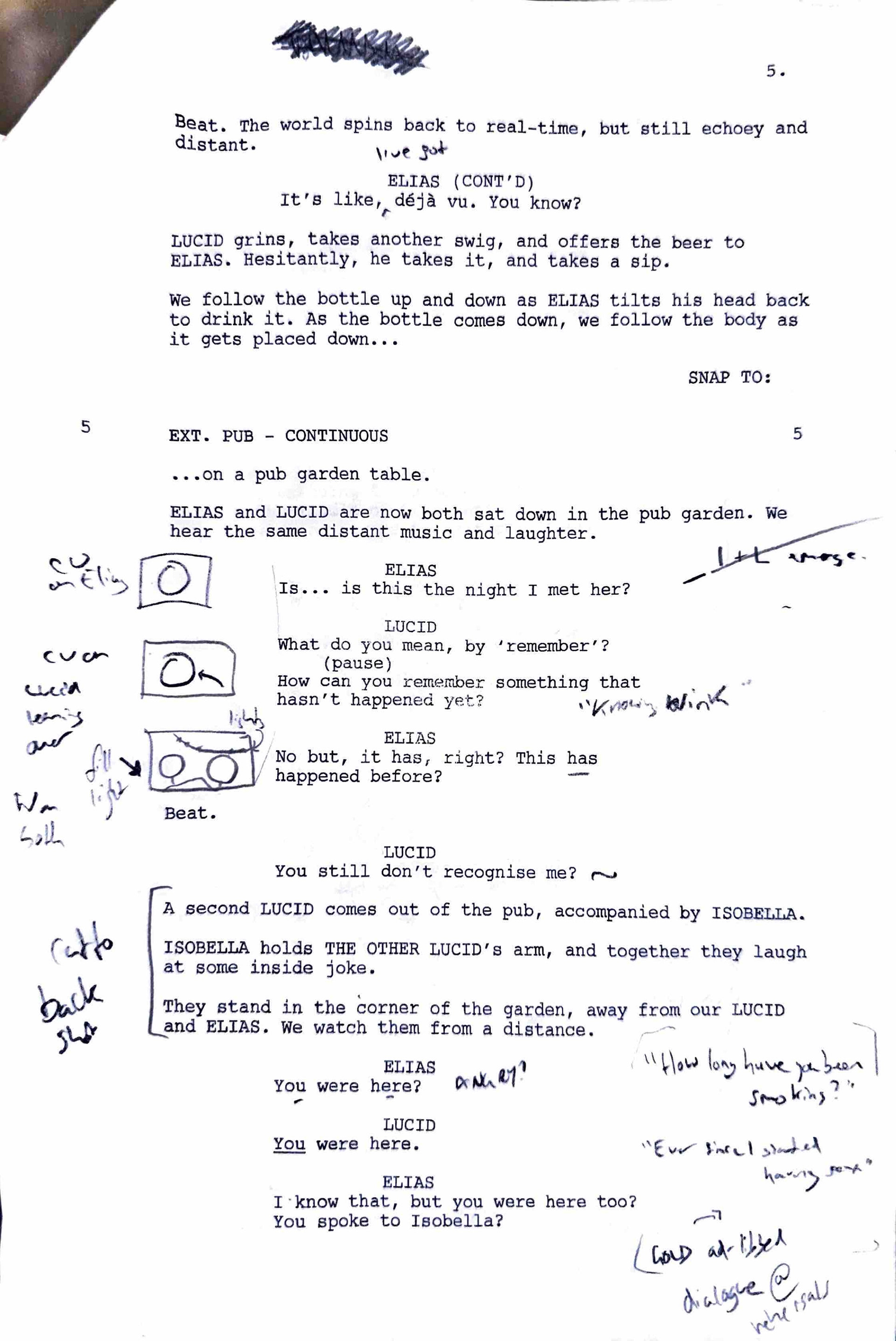
The flashback shot will be the hardest, and so I decided to do that first. After sorting out sound, micing everyone up, and moving tables and chairs around in order to get the shots we wanted, I first shot a blank slate of the pub, with the FX6 on a tripod behind the table. Then, we shot the flashback sequence with both Luca and Liam in the role of ‘The Other Lucid/Elias’, so we can glitch between eh two, and use the shot of Elias for the very end as well. Then, we shot Luca and Liam as the ‘present tense’ characters our story follows, sat at the table, and watching it happen. We recorded the dialogue around the moment so we can chose when and where to cut to in post. Finally, I focus-pulled from the characters in the foreground to where they will be in the background, just so we have some more options in the edit. I would love to be able to focus push from the foreground to the background, but once we’ve comped in the foreground characters, I don’t know how easy or difficult that will be. In theory, it’s perfectly doable (masks, bokeh blurs, and that’s basically it), but I suppose we’ll find out…
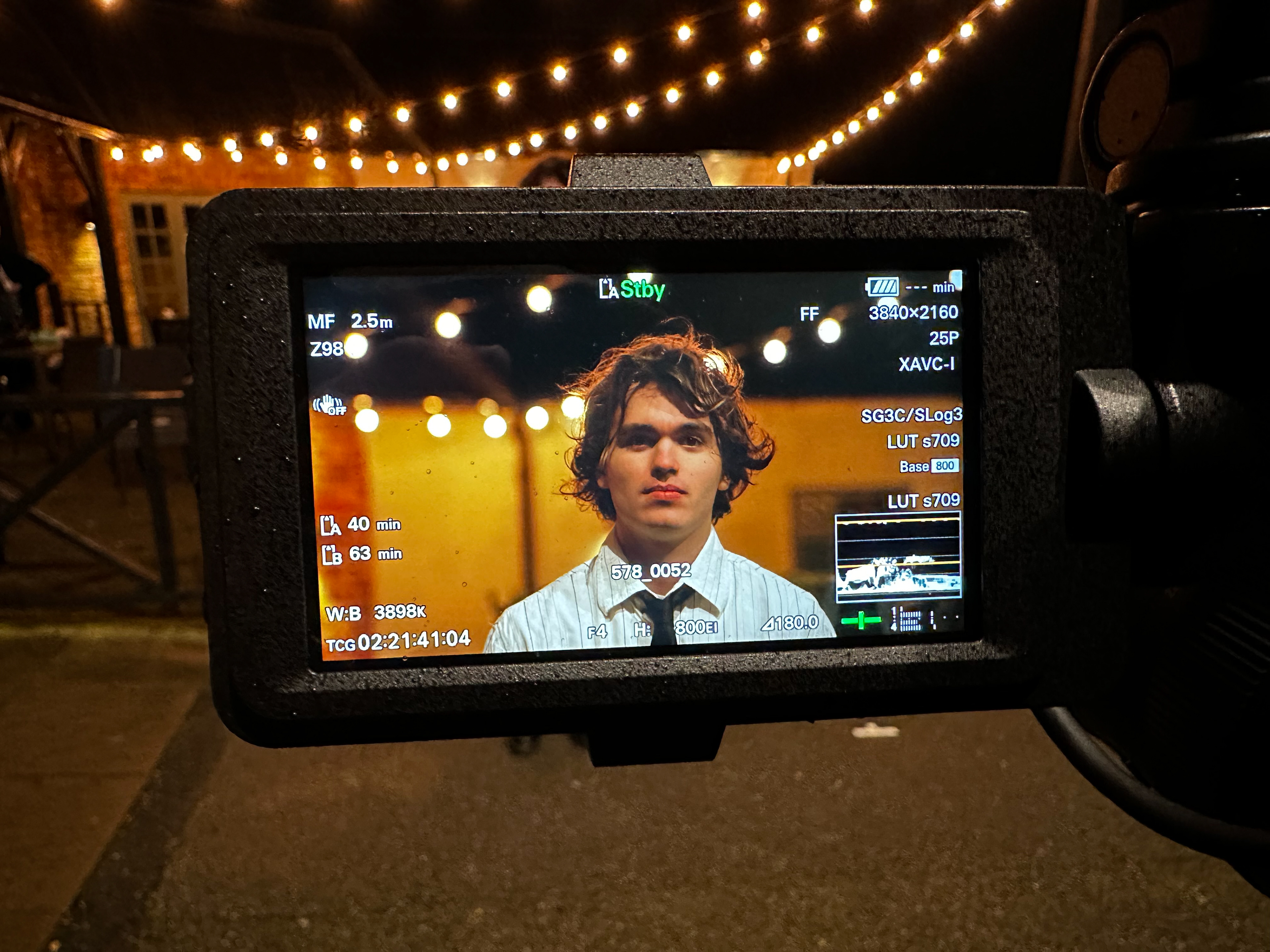
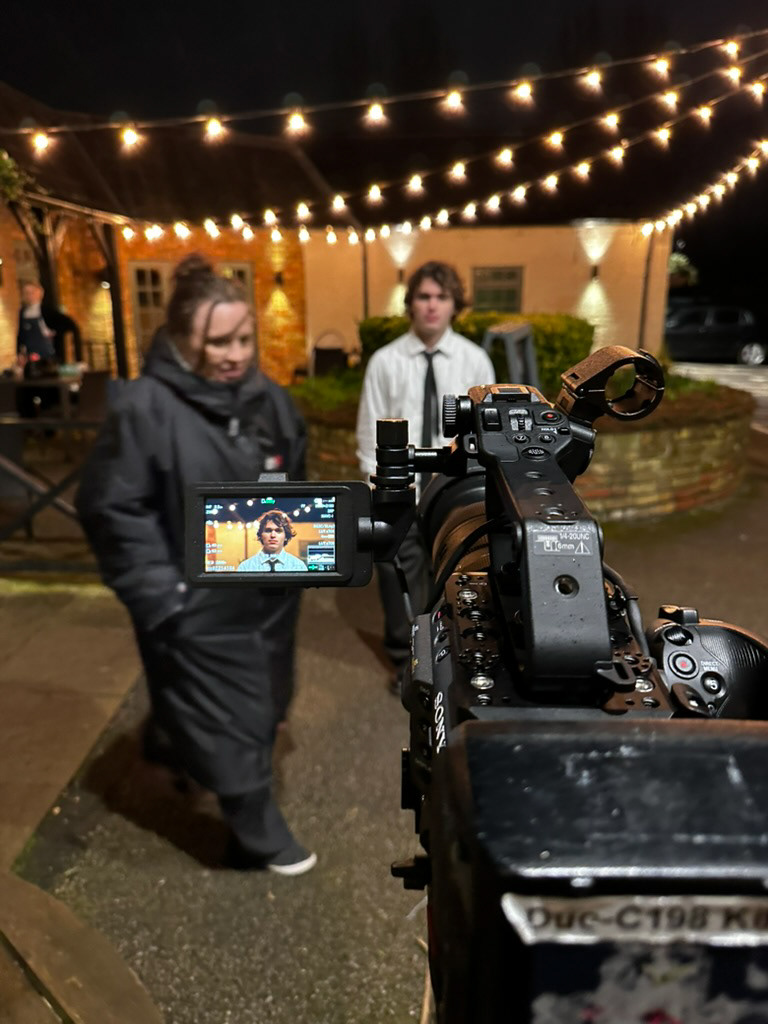
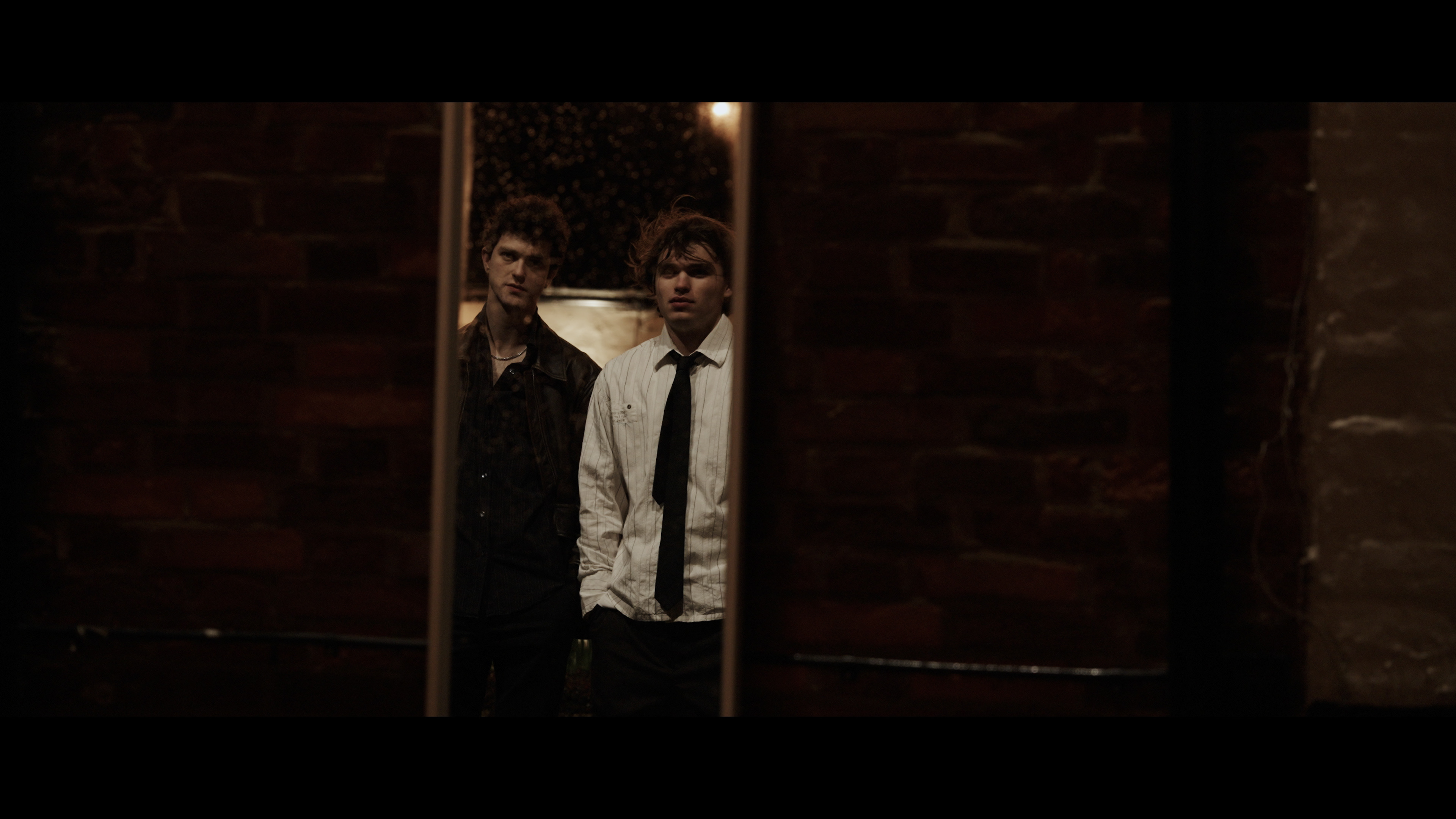
Overall, the shoot went well. We shot almost all of scene 8 (with a mirror borrowed from Ellie!) and started on scene 5, so all we needed to do yesterday was the rest of scene 5, the first time they’re int he pub garden. Peter’s friend Vanya came to both shoots, and was genuinely invaluable. He helped rig lights, set up tripods, and held a reflector to bounce some fill light back at the guys in yesterday’s shoot.
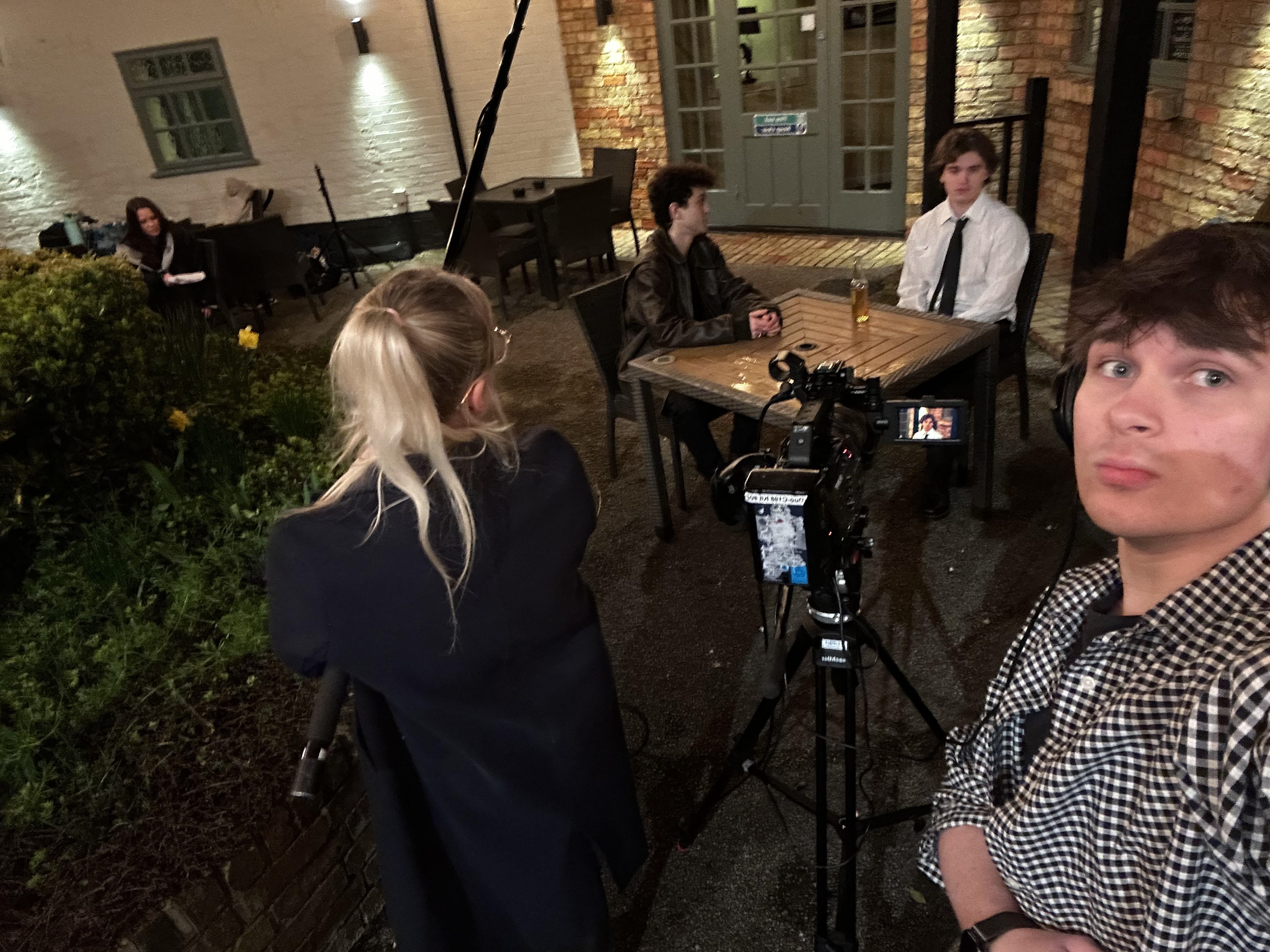
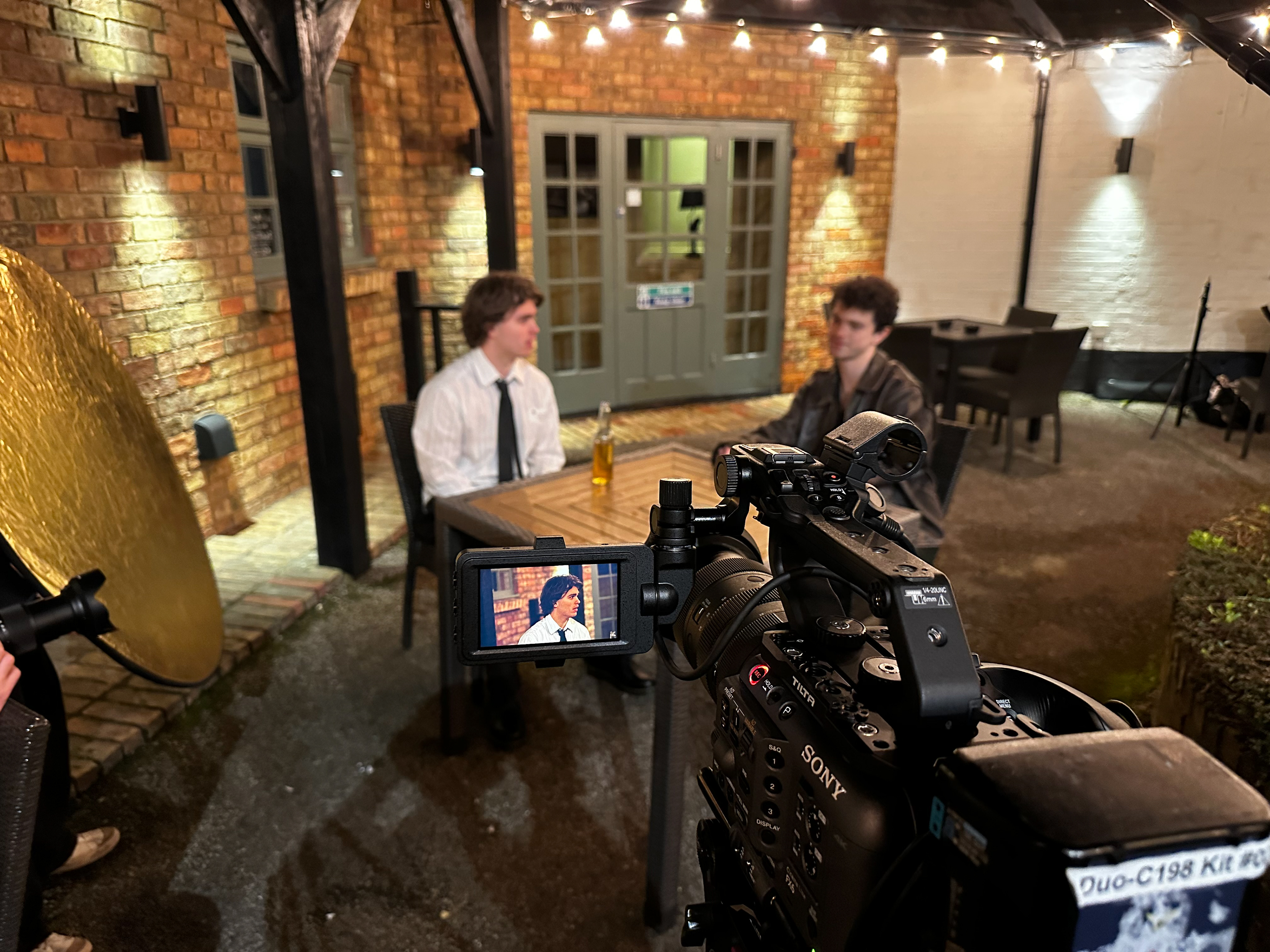
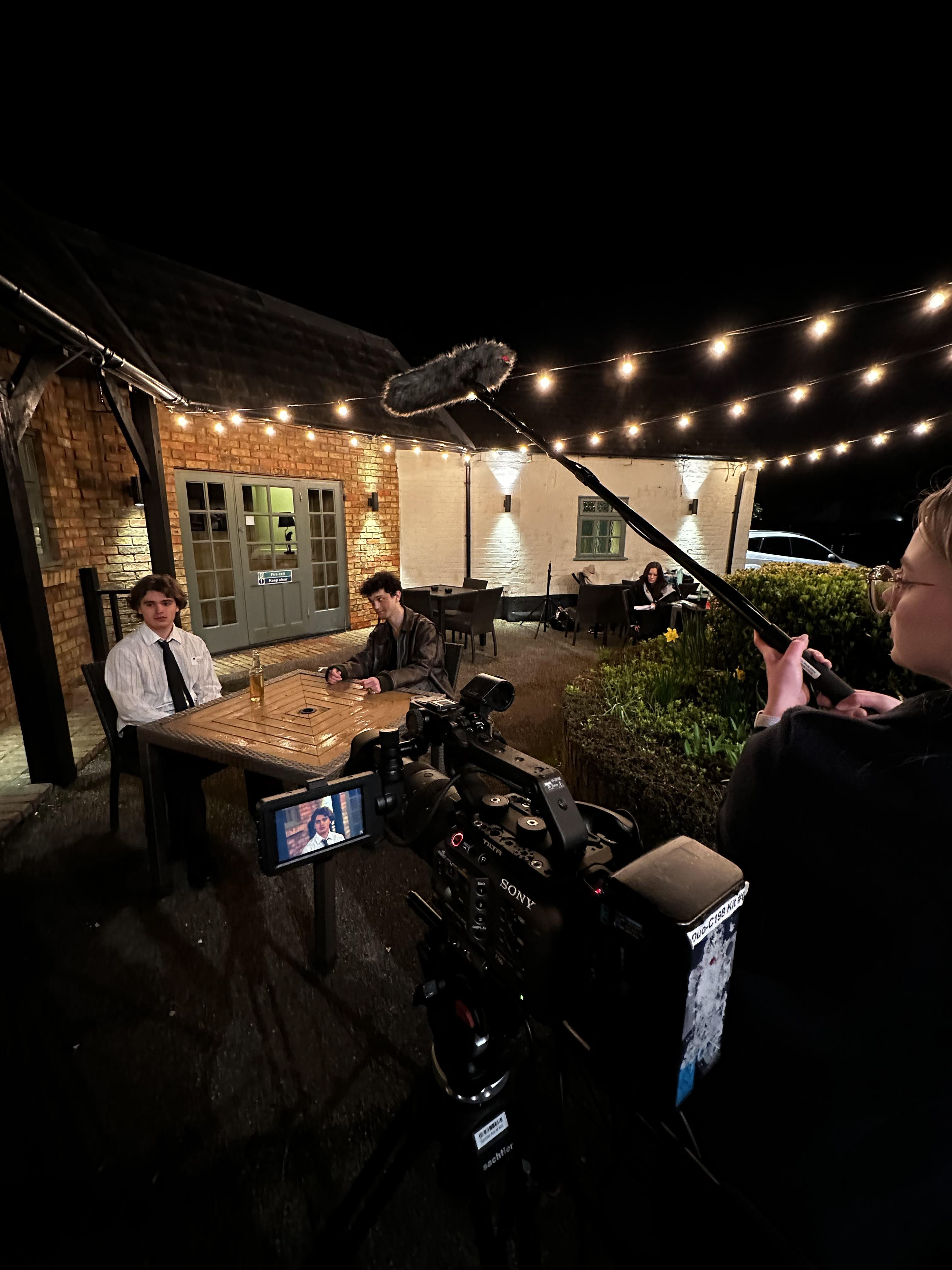
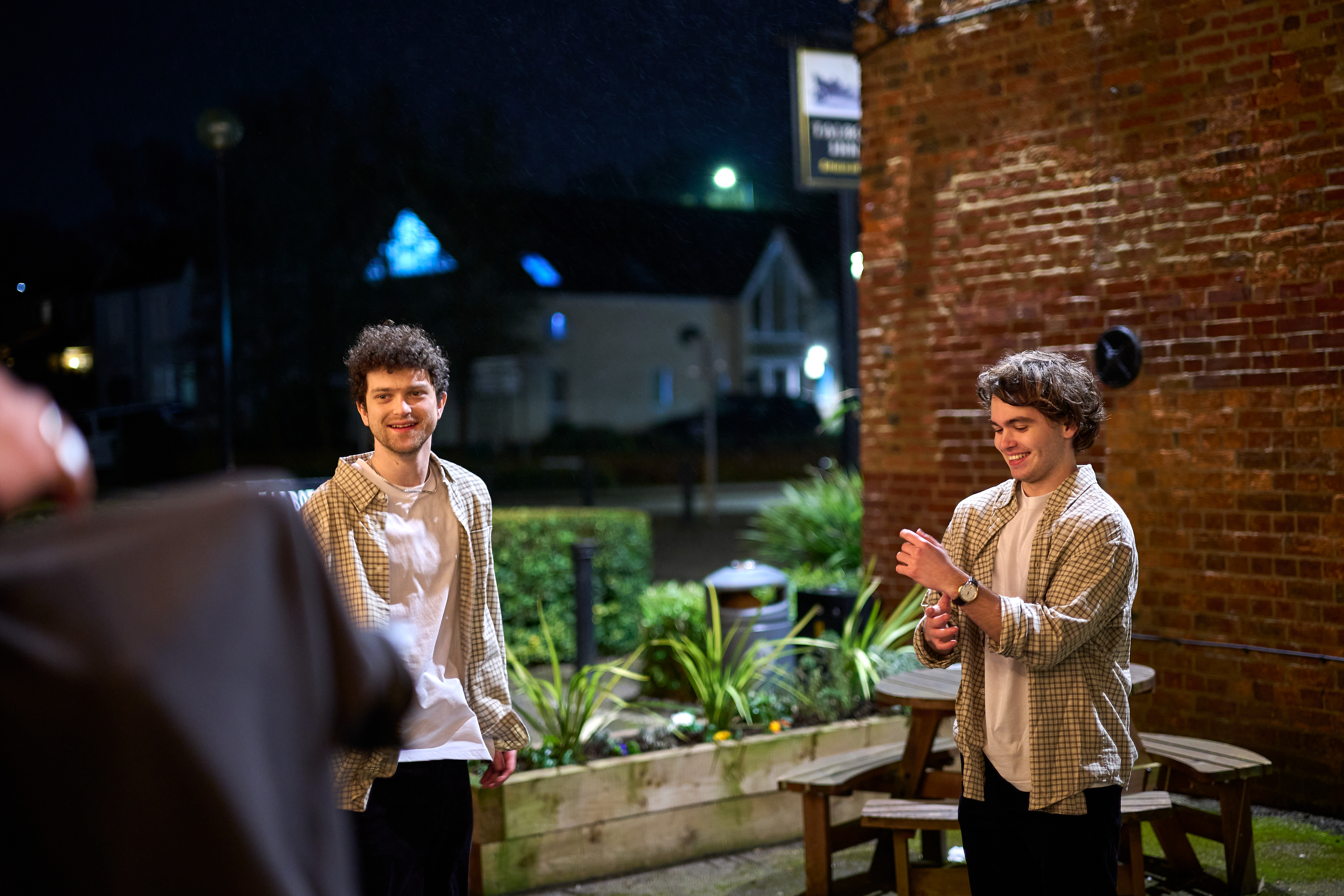
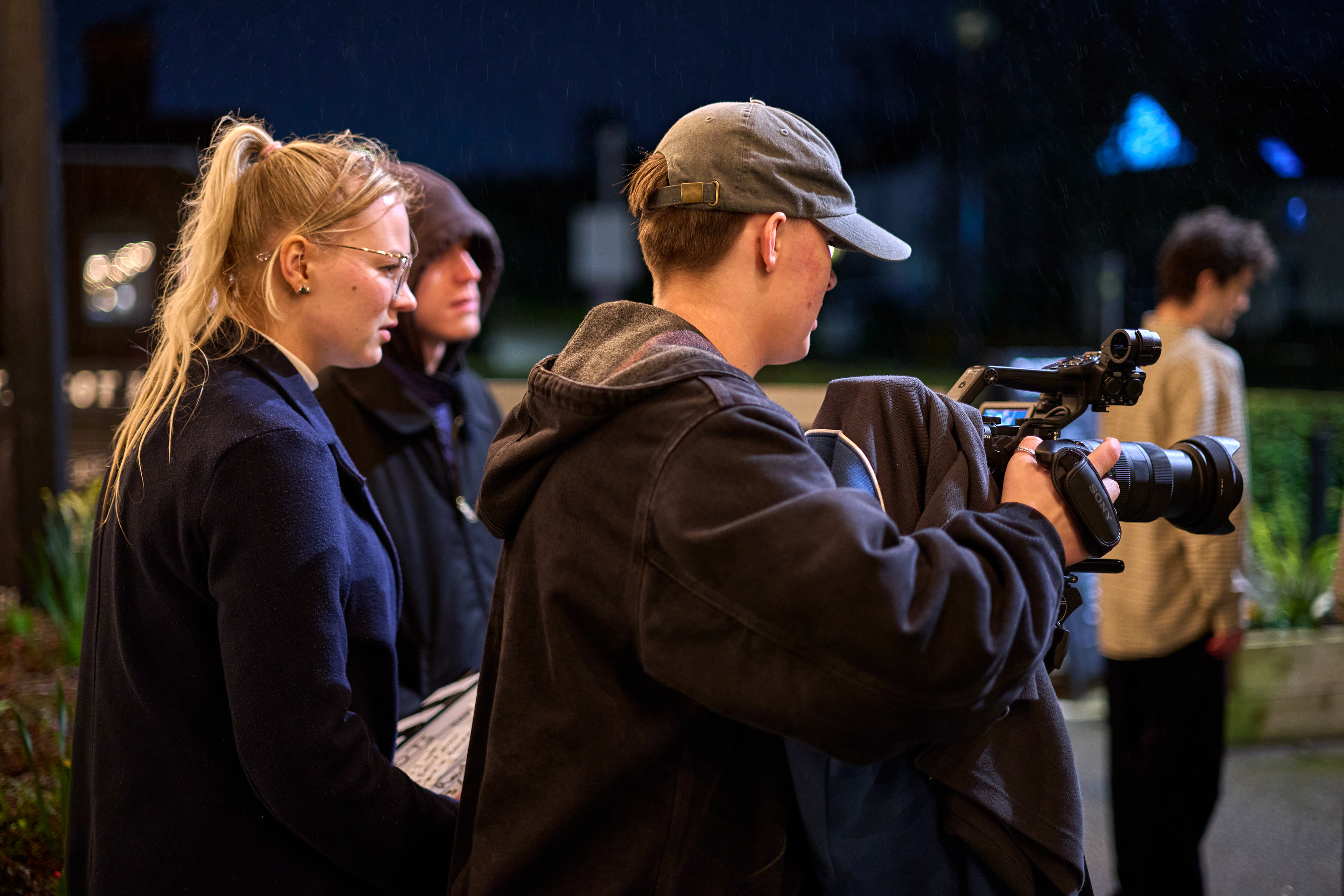
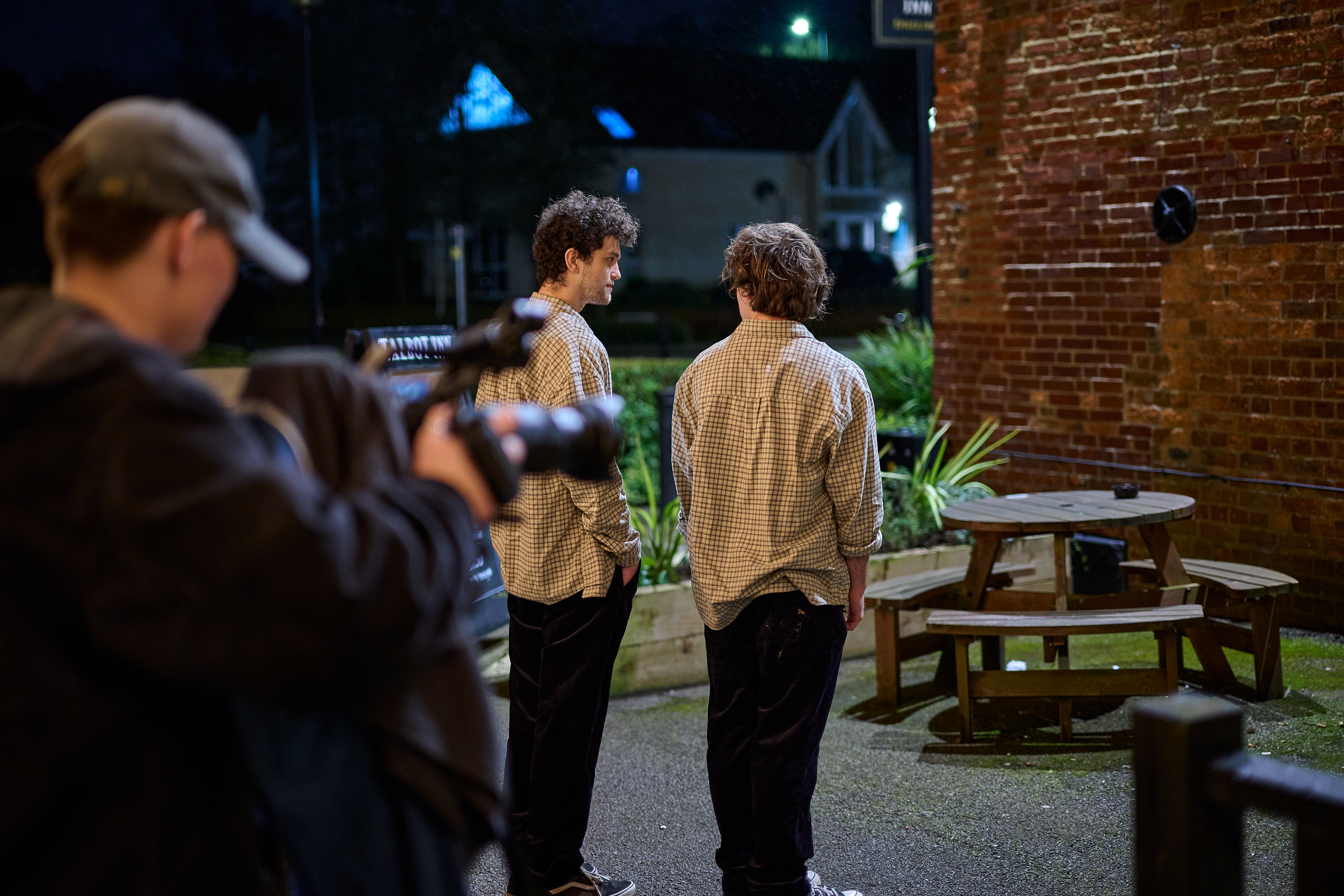
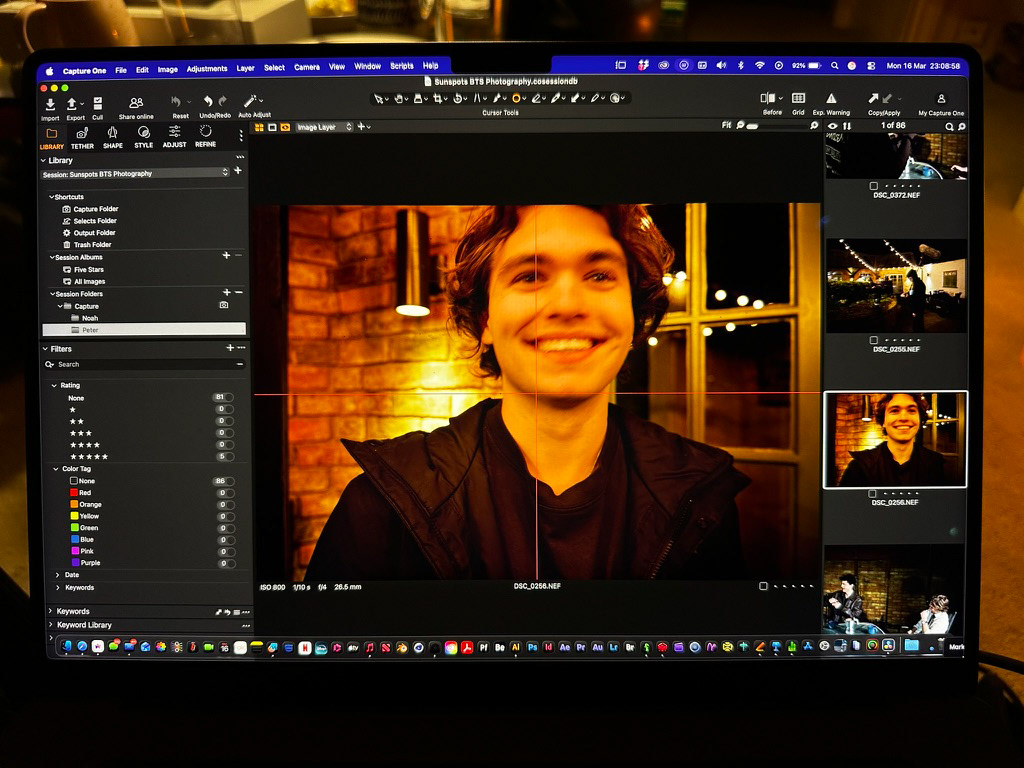
These are some of the BTS shoots taken this weekend, almost all taken by Peter on the ZR (which I am increasingly falling in love with the almost Leica-esque colours of!). I gave them a once-over in CaptureOne just to adjust the exposure and colours a little bit, but even out of camera, I think they look lovely.
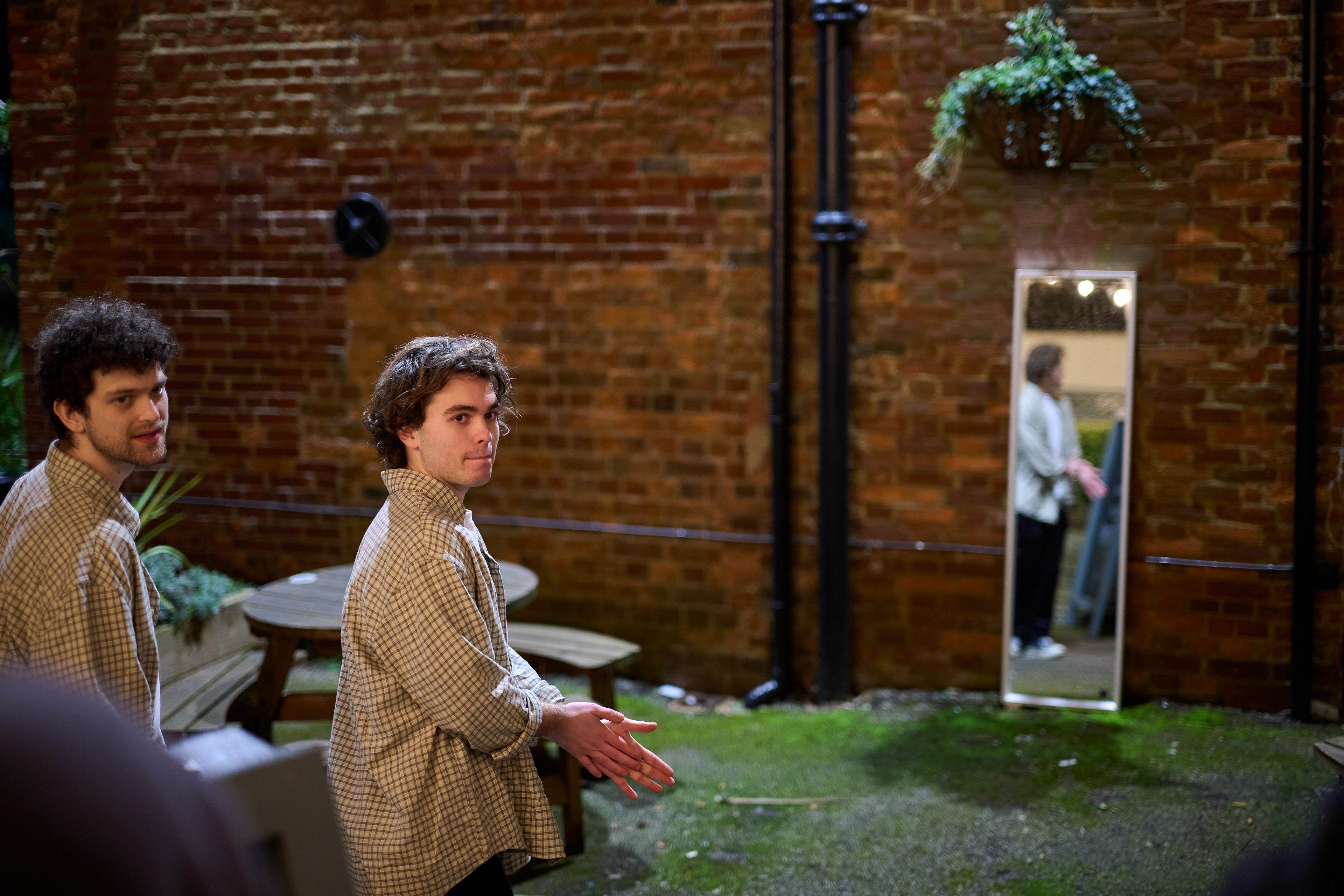
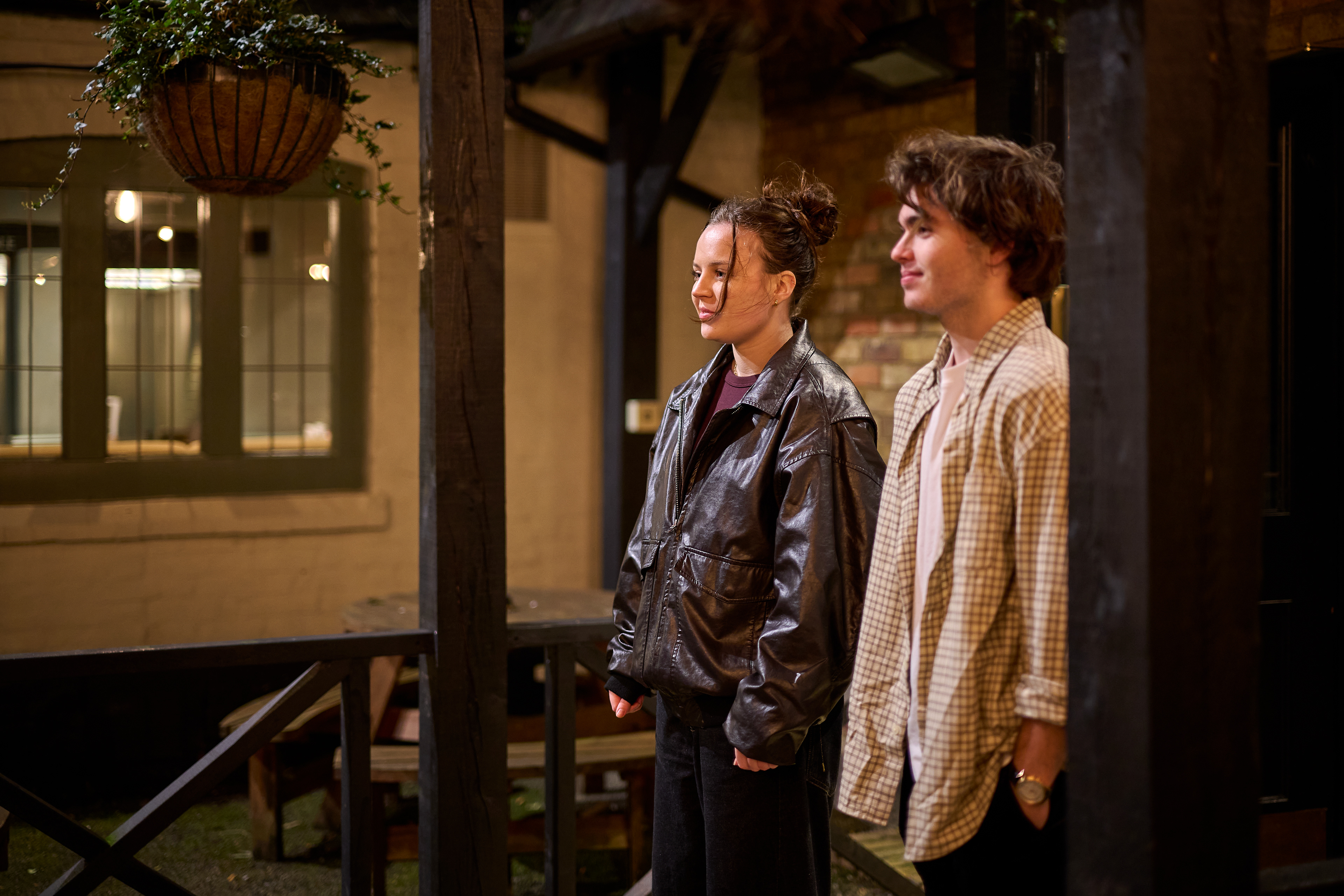
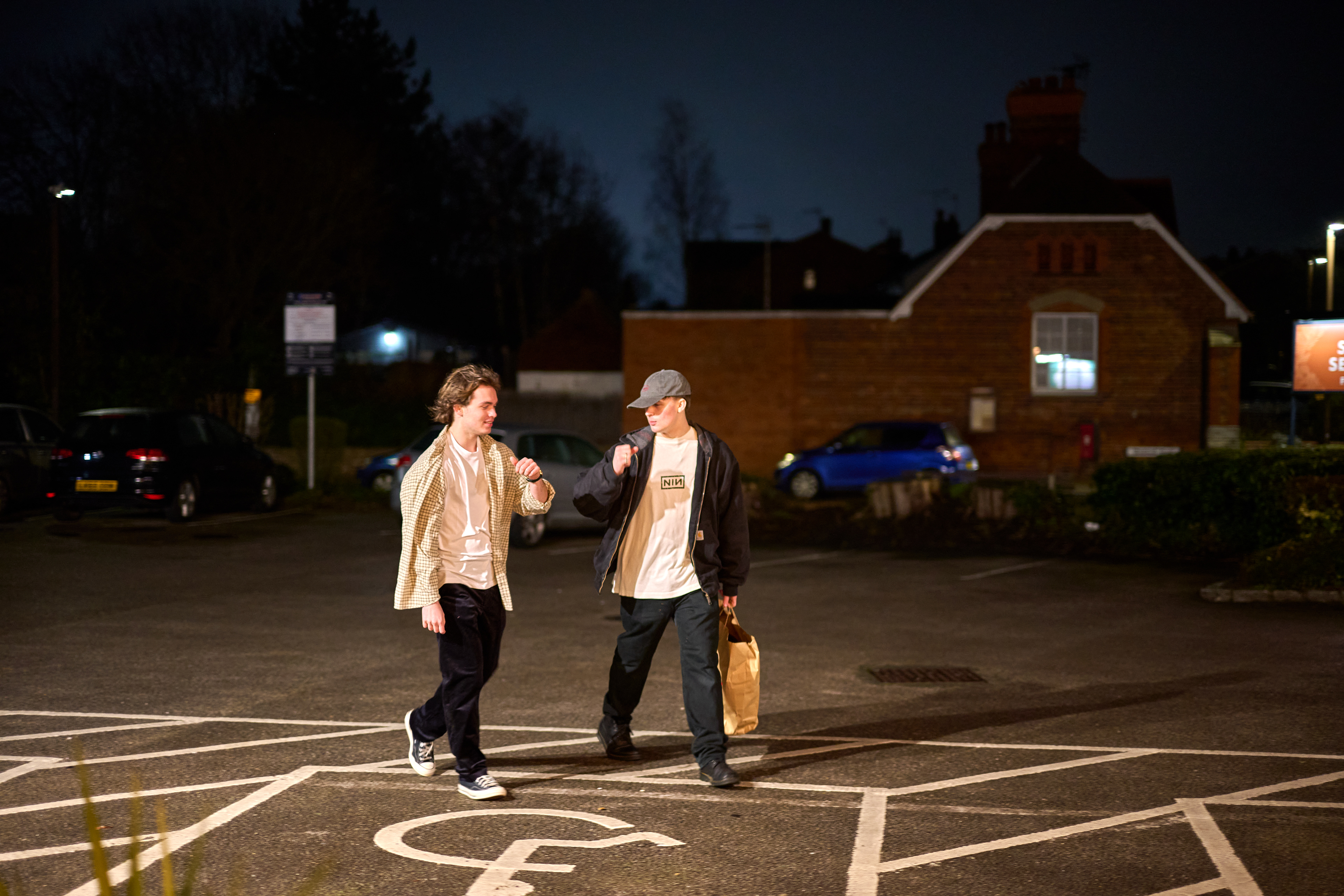
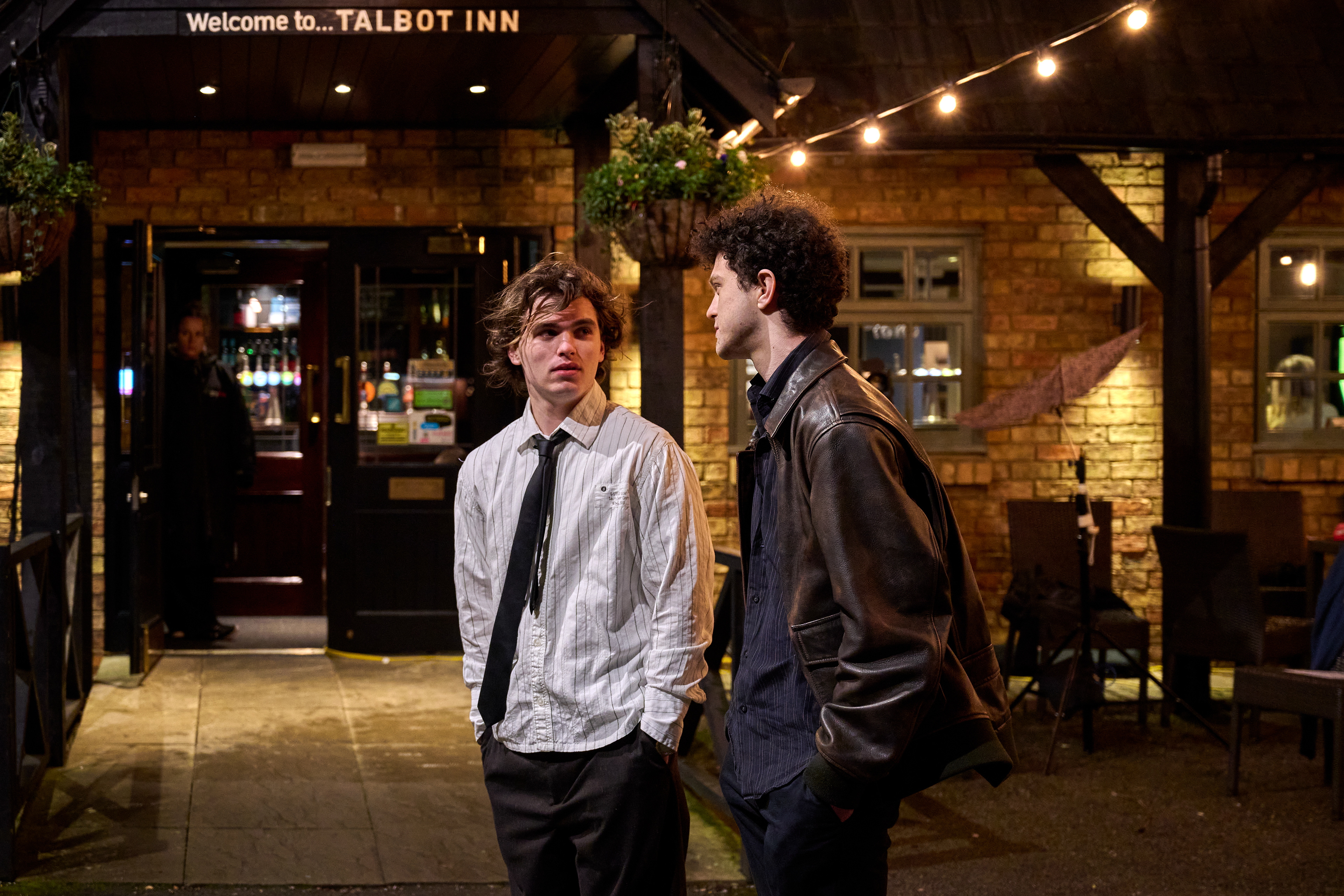
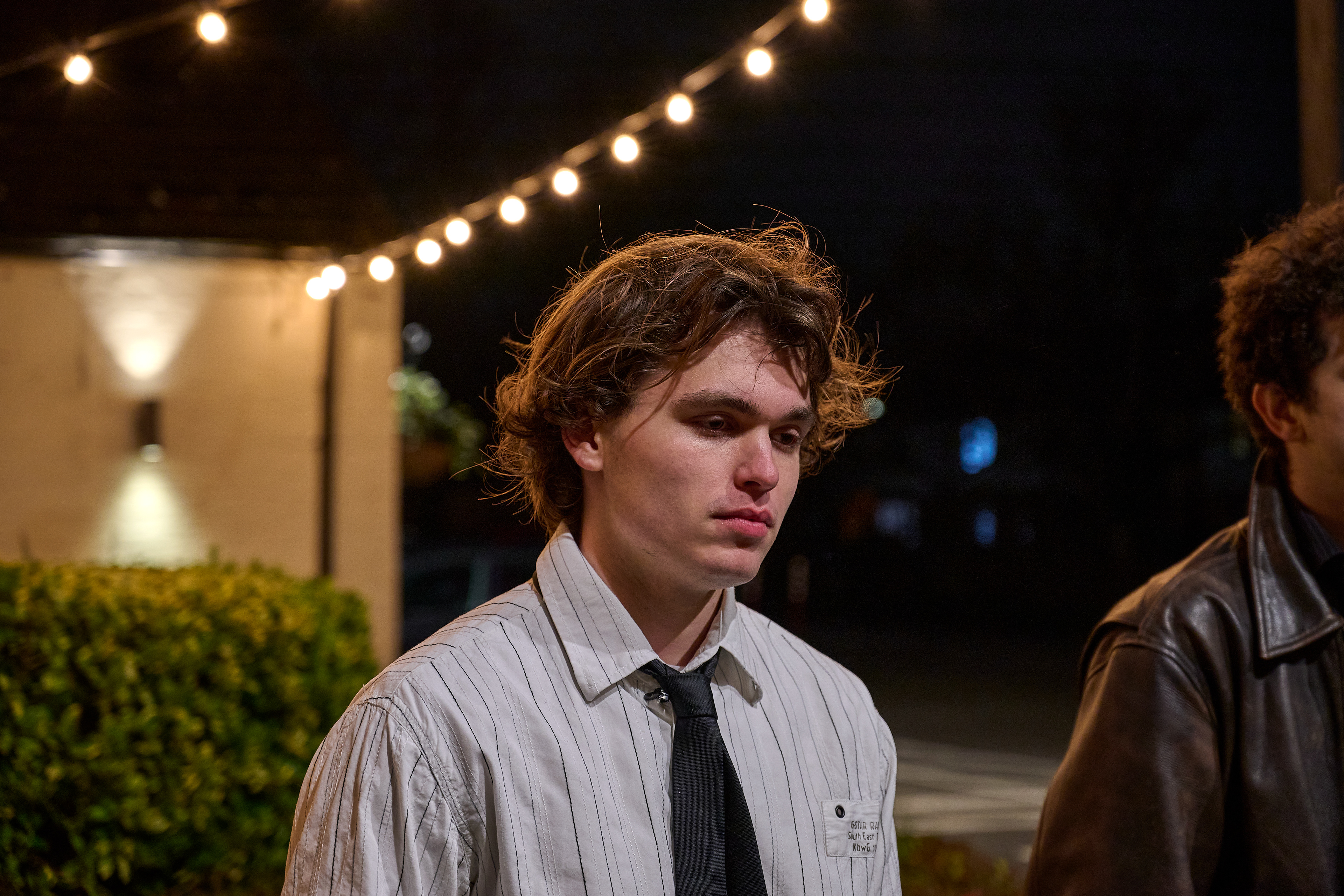
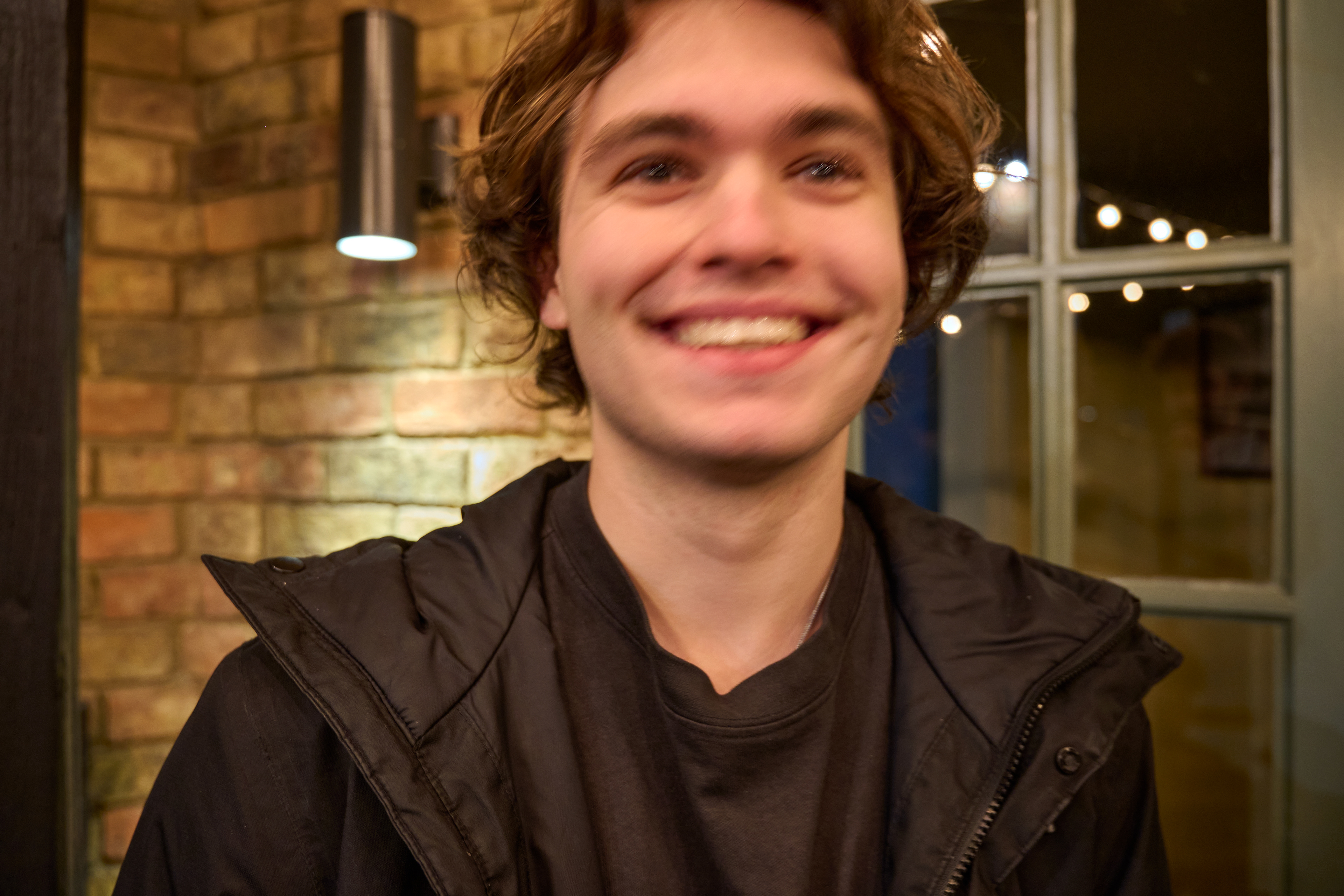
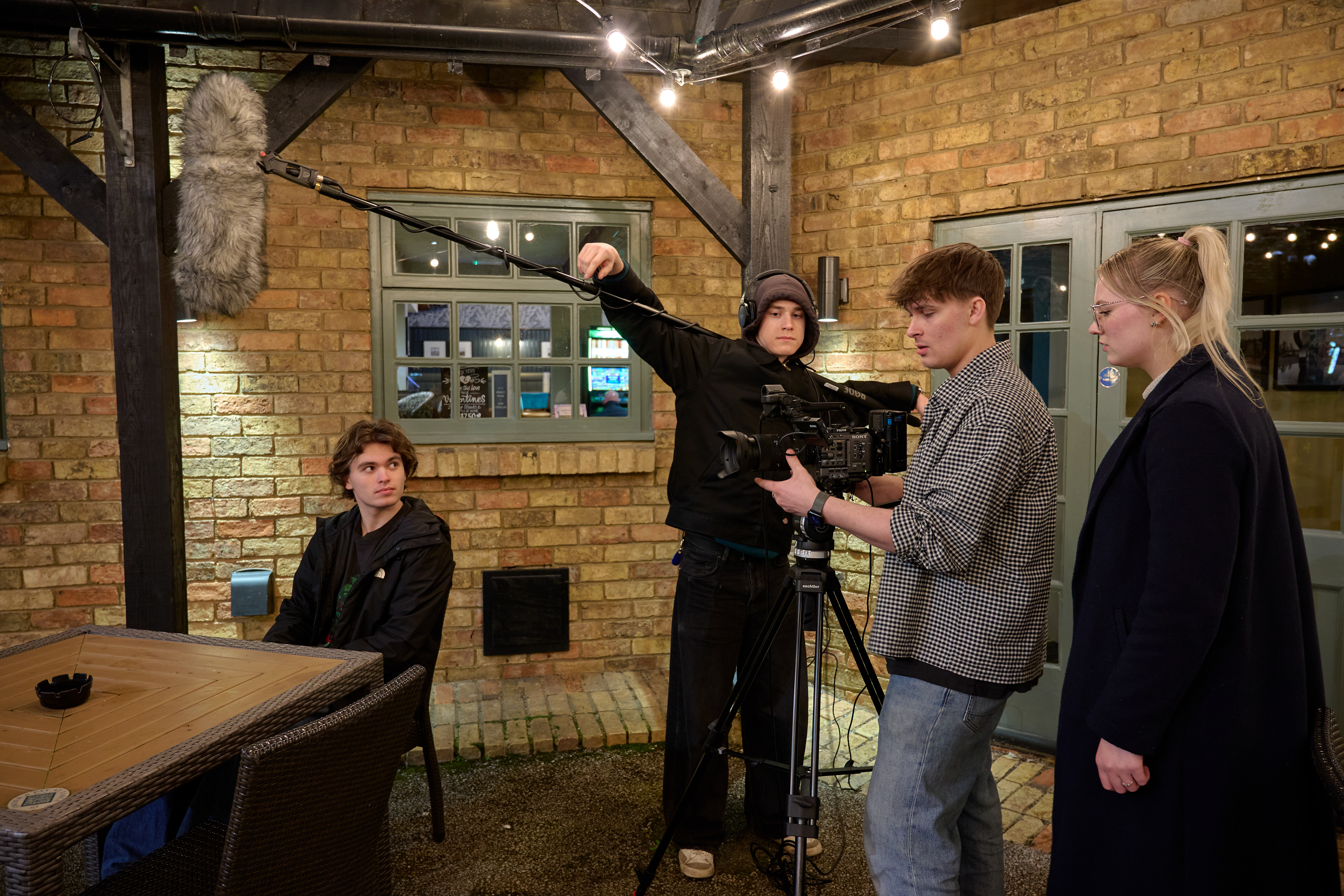
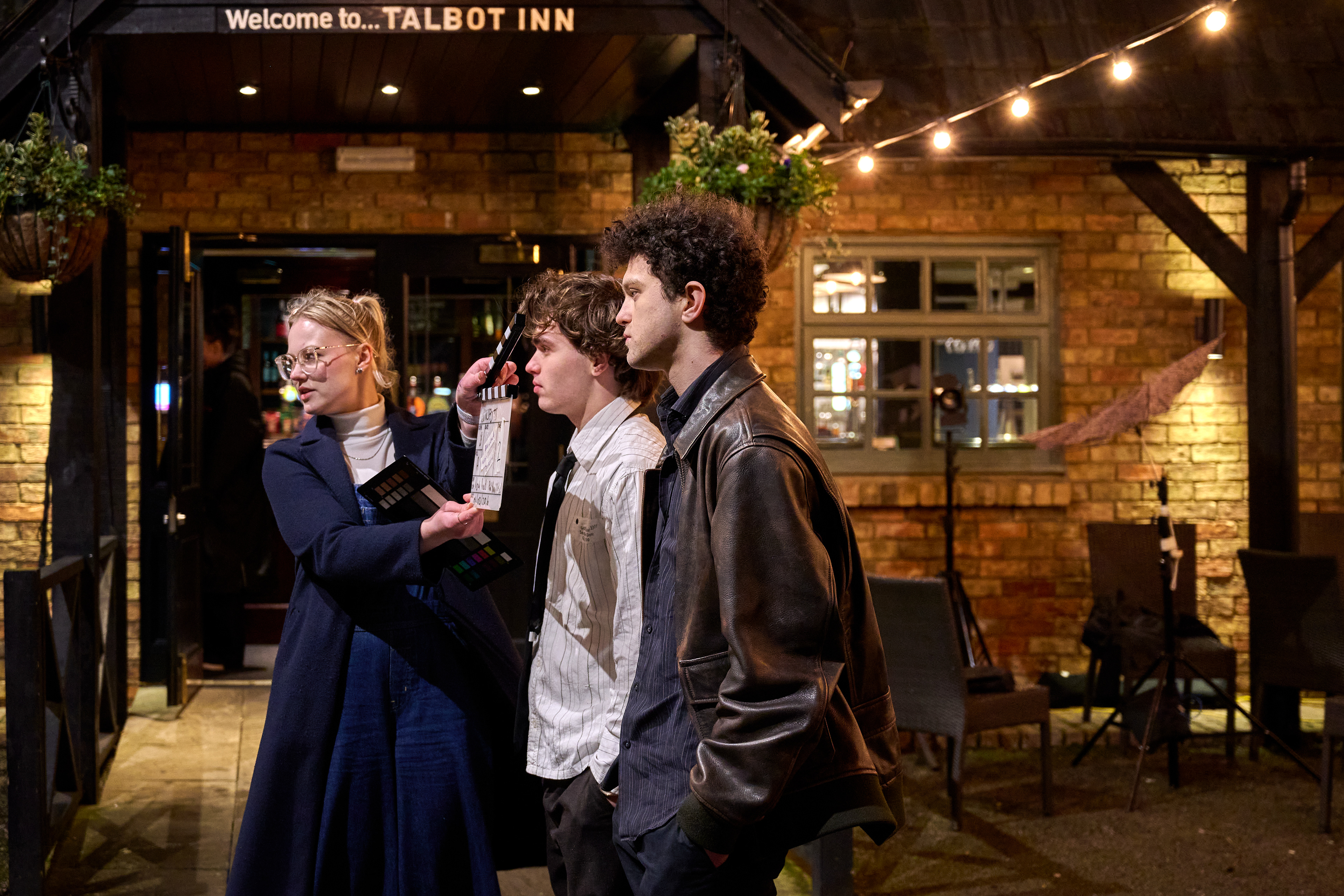
9 Mar: The Beach of Doom and Gloom
Friday marked the end of a slow week: and the beginning of a rather speedy weekend. We’ve spoken to Regent Street Cinema, who have yet to confirm a date we can shoot… they offered us the 28th, but one of the actors cannot make that due to prior commitments (and we had already told them about the 29th, of course). Ying has said he will give me a call tomorrow, so hopefully we can sort something out then. On Monday, Tuesday and Wednesday, I was working on an Under Armour shoot for Robin from M3 Labs, who was one of Zak’s guest speakers for professional launchpad. This was a really cool experience, albeit long, draining days, but most importantly I met a photographer, Paul, who asked about my final project, and said he has an underwater rig for a Canon R5 that he would be happy to lend us. I need to check around if I know anyone with an R5 — my friend Oliver has an R7, so I have asked him if he thinks that will fit okay. I’m sure we can make something work: worst case, we can put an iPhone inside the rig, as that will at least shoot 4k log… alternatively, I have a DJI Osmo Pro which, while quite a small sensor, may well be enough for the short underwater sequence we have. On Tuesday, my own ZR arrived — the mixture of full-frame stills and R3D 6k video, as well as seeing how well Peter’s performed, was enough to convince me it was worth it. I spent a long time looking at the Sony Cinema line (FX3/30/2) but from what I can tell, and what I’ve seen in person with comparisons, the ZR blows it out of the water in everything, except perhaps super low light. I also always shoot Nikon for photography, so I’ve also got a ZtF mount adapter so I can use my F-mount lenses with the new Z-mount body.
I digress. As I already had the kit at mine, the plan was for me to head down straight to Kent from MK, while everyone else met at Harrow, for Luca to drive them down. As Neve couldn’t make this weekend, it’ll only be the five of them in his car, meaning we don’t need to worry about any extra transportation. We both filled up before leaving, so that when we get back, we can fill up again, and the cost of that petrol will be exactly the difference, meaning we don’t need to do any calculations for how much we spent on fuel. I arrived at about 6:30pm, and promptly locked myself out of the Air BnB. After a slightly award phone call with the owner, I tracked down the spare key, let myself back in, and made sure the door was on the latch while I unloaded the kit.
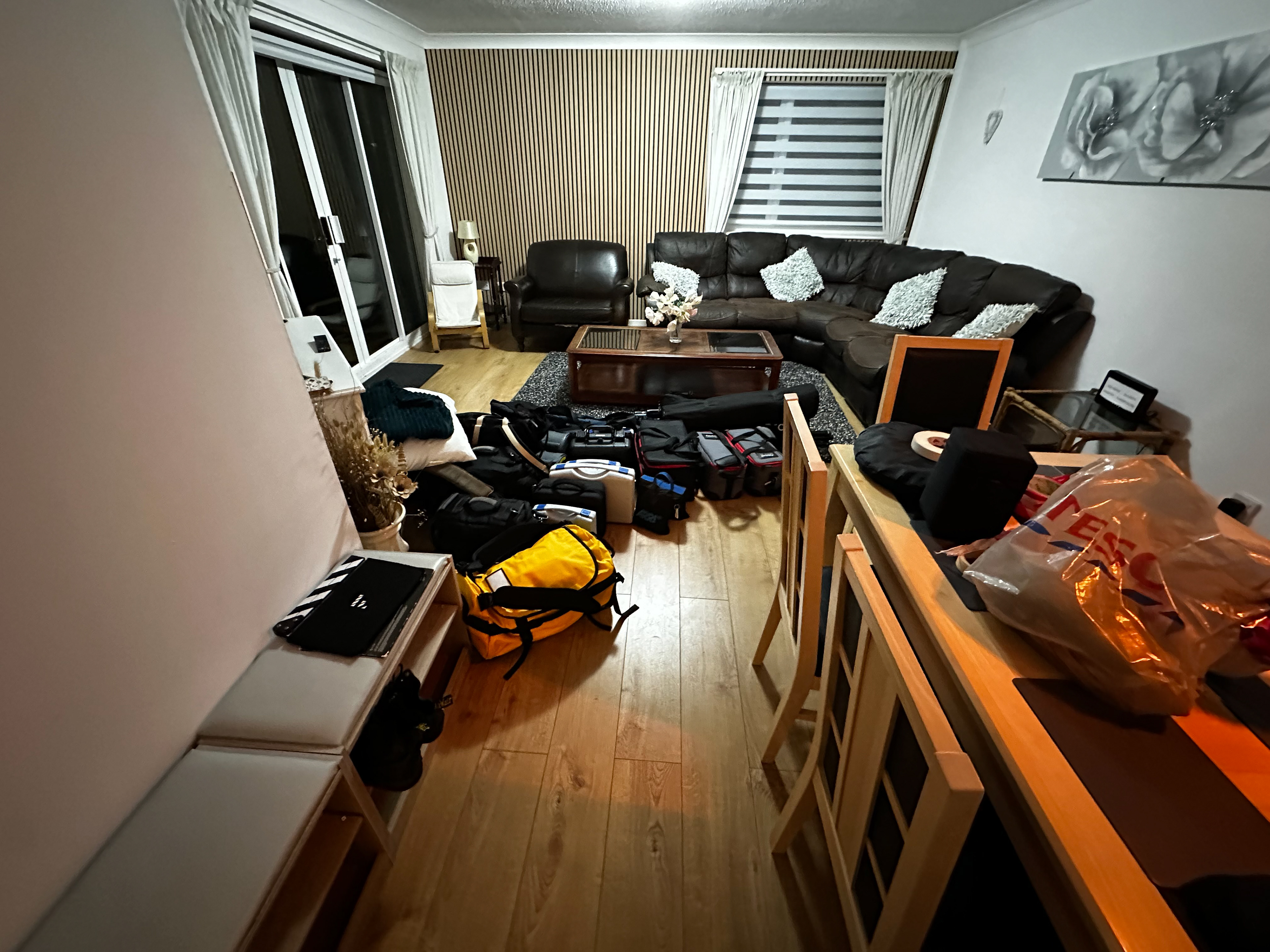
My aunt and little cousins had very kindly offered to also drive down, to be Young Elias’ and his family for the beach shoot on the first day. They arrived at about 8pm and headed straight for bed, as we all had a 5:30am call time the next day.
Once everyone else arrived about half an hour after I did, we made plans for the morning. Peter, Hannah, and I would get up for about. 5am, pack the cars, and then make sure everyone else was up and ready to get down to the beach, which was luckily only about 5 minutes away. Then, we organised sleeping arrangements — I pulled the short straw of the living room sofa, but it meant I could keep an eye on all the kit — and took some ZR test shots. Ever since I first came across David Fischer’s test shot on the RED One, as a favour to RED founder Jim Jannard, with Leonardo Dicaprio lighting a cigarette with the entire scene lit only by a single match at ISO 2000 (which you can see here: https://thefincheranalyst.com/commercials/2010-red-one-m-x-the-match-camera-test/), I wanted to recreate it. So, I took Luca outside (we didn’t have quite the set that Fincher did!), shoot a short test.
The audio from the shot wasn’t great, as mostly you could hear the continuous autofocus clicking softly away, so I also stripped the audio out, added a low wind noise, and recorded myself lighting a match, using that to light another match, and then blowing it out.
The morning rolled around, and we headed down to the beach.
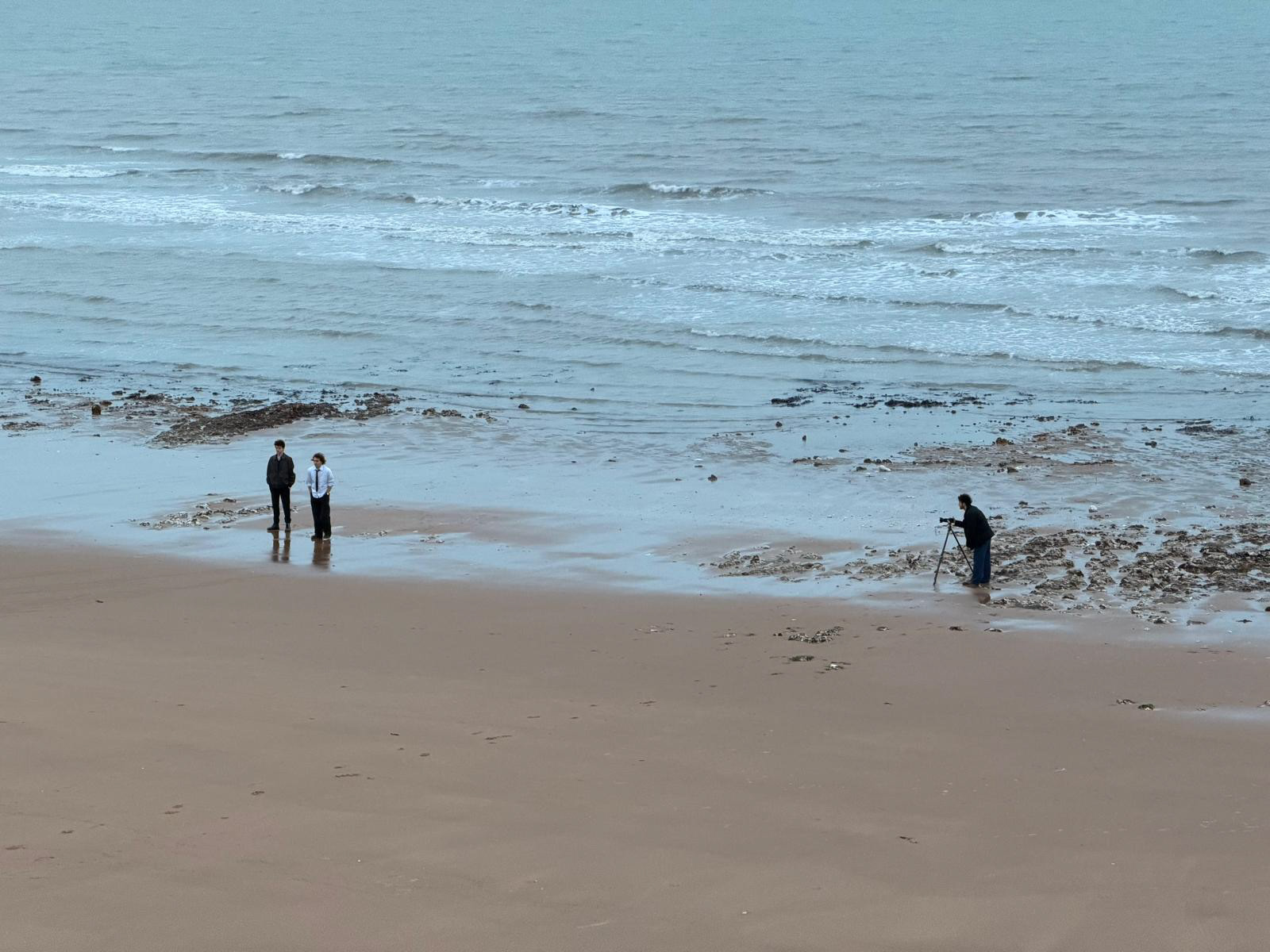
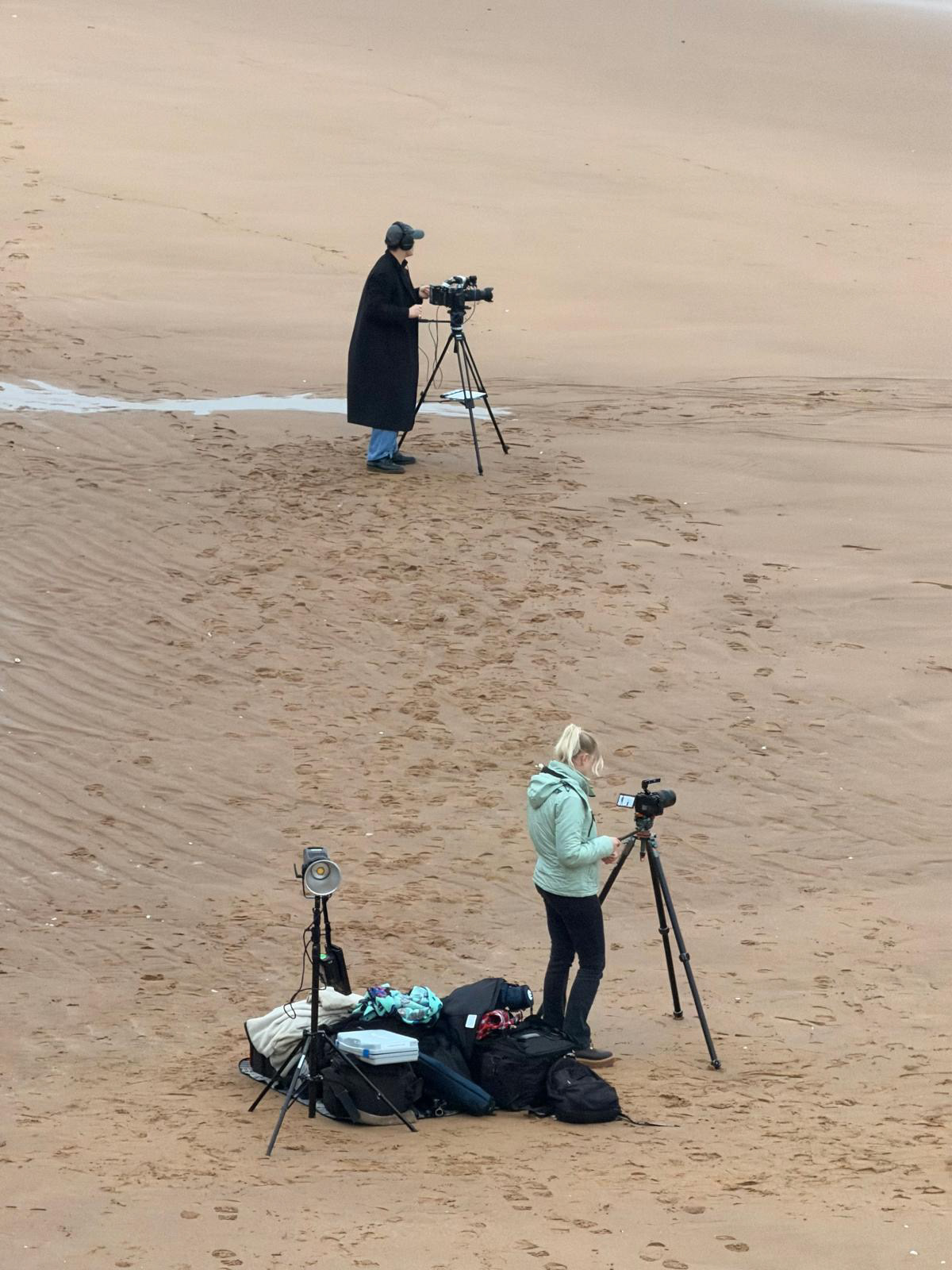
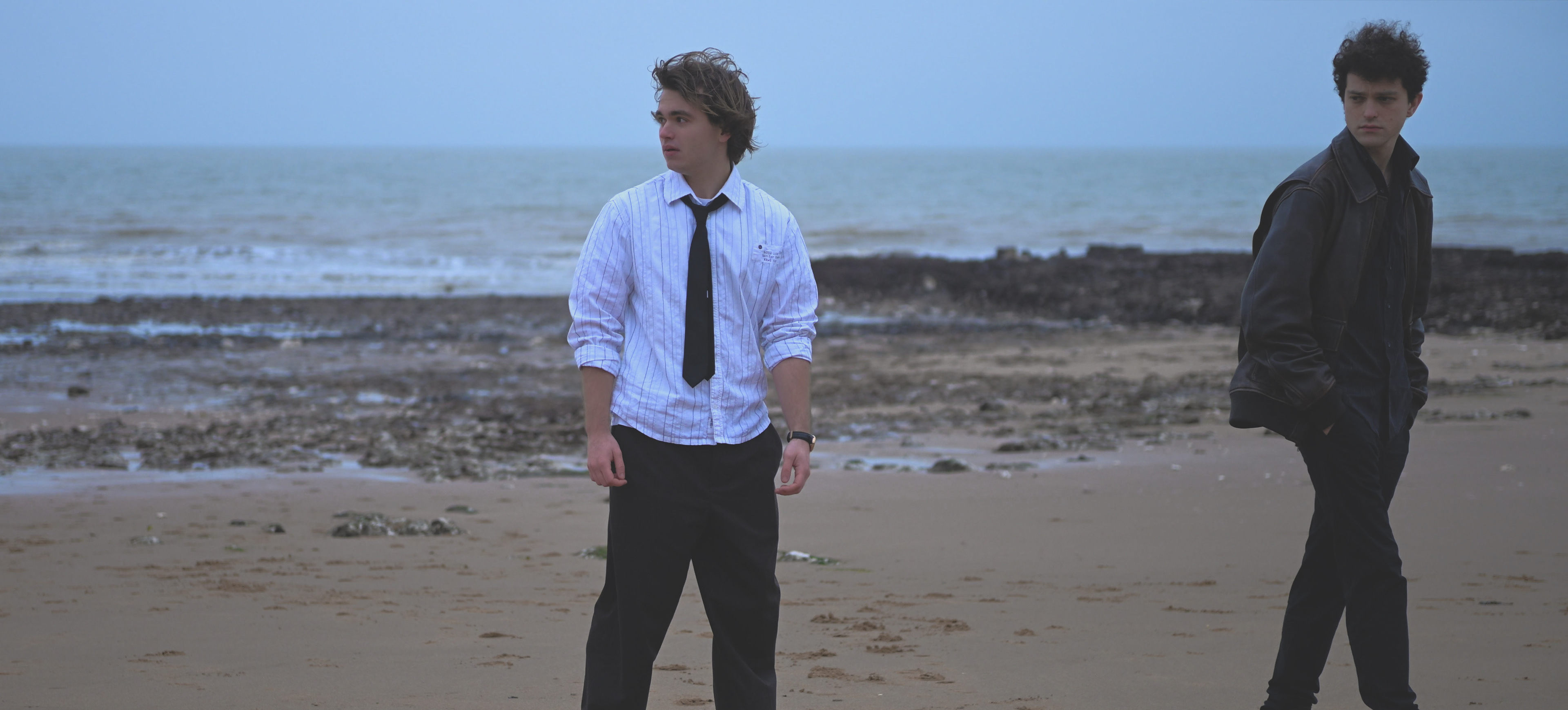
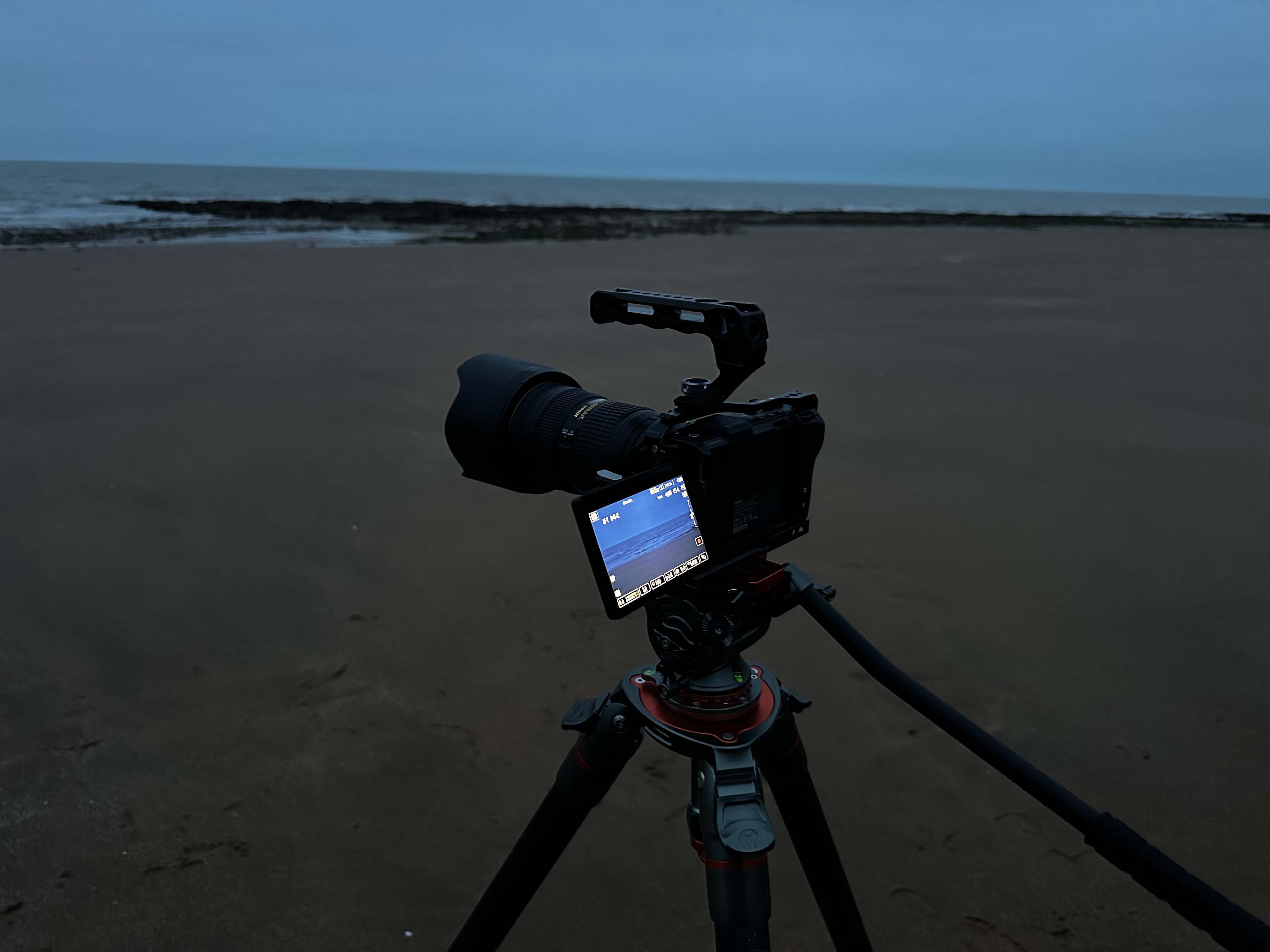
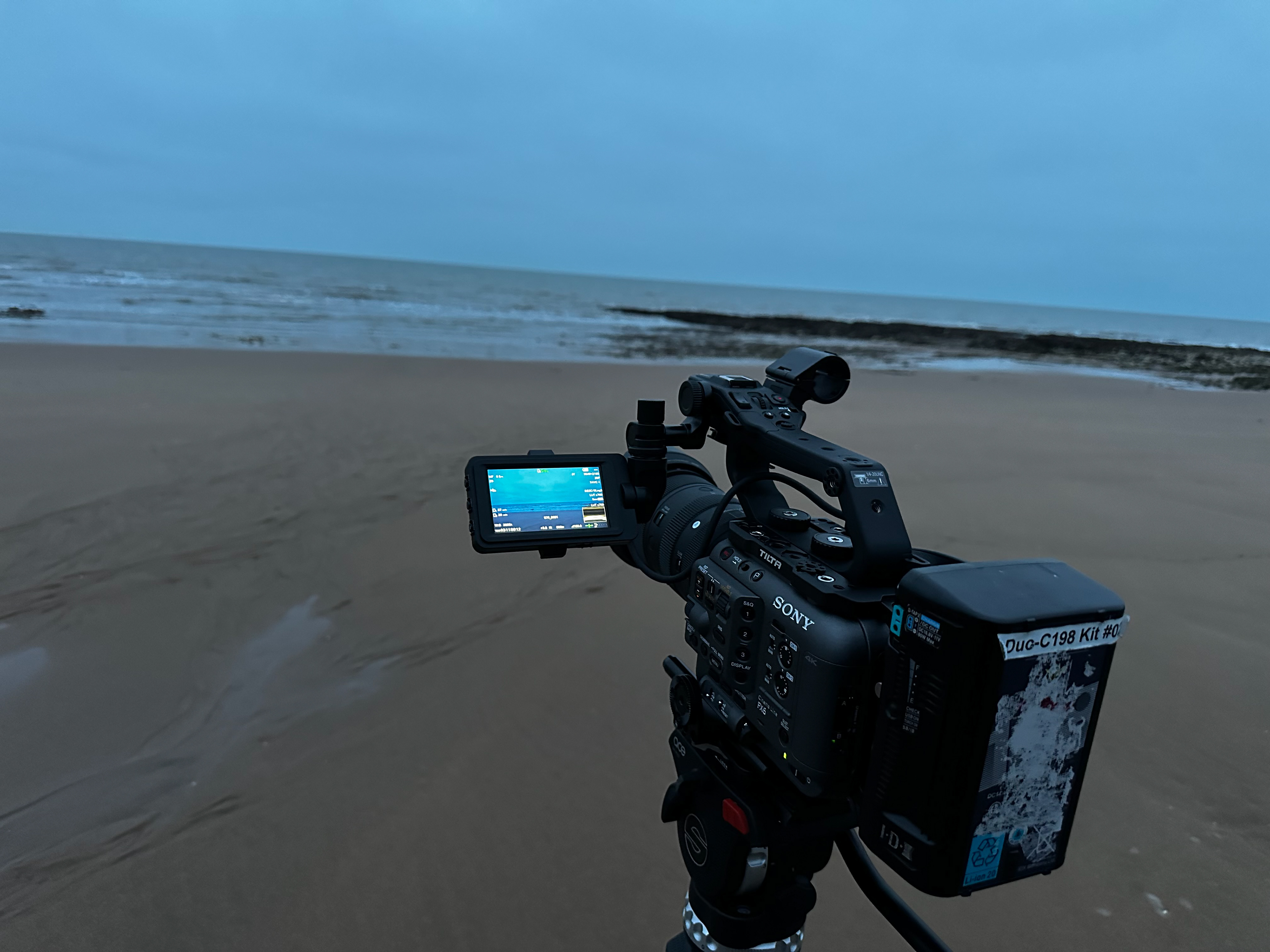
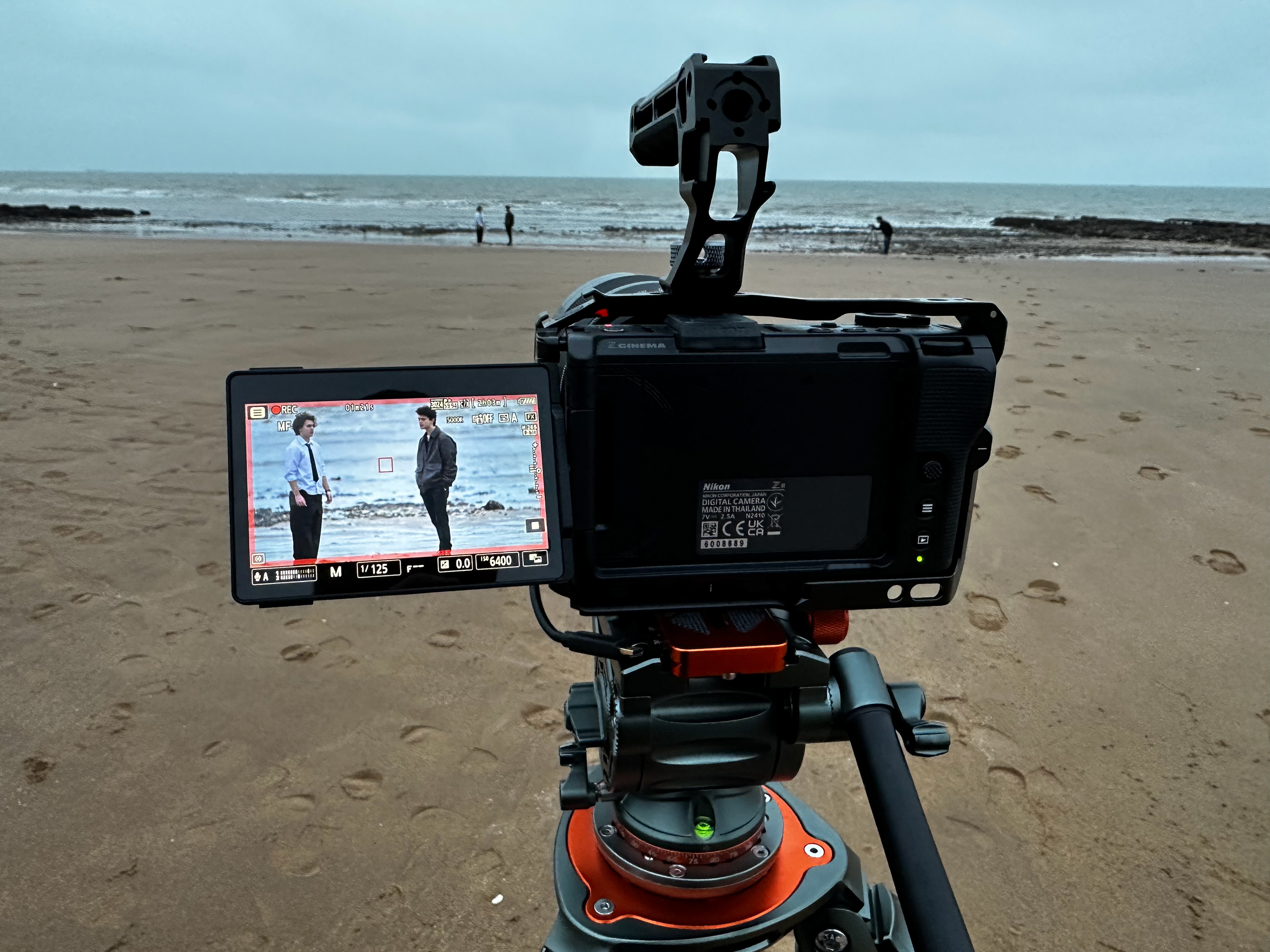
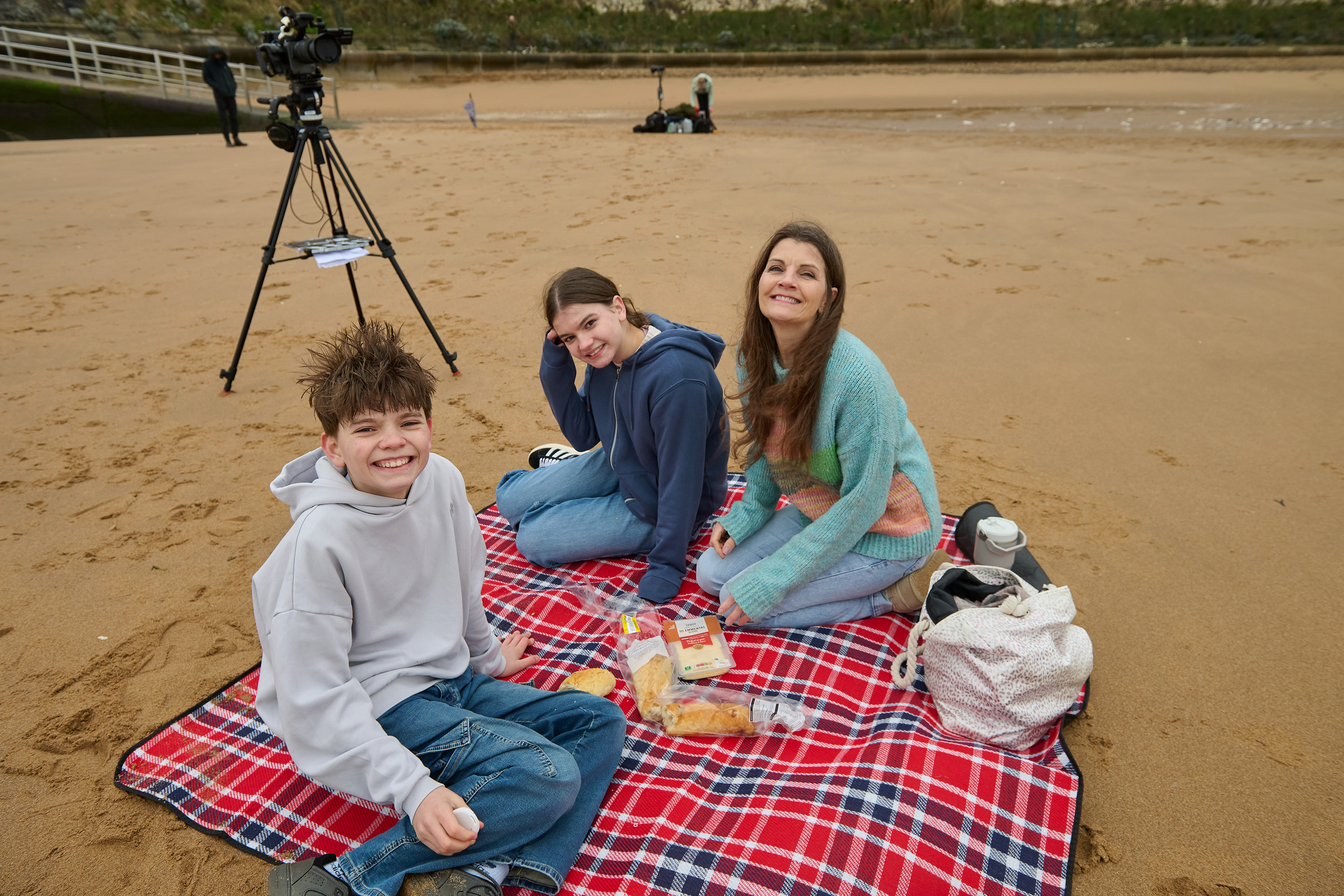
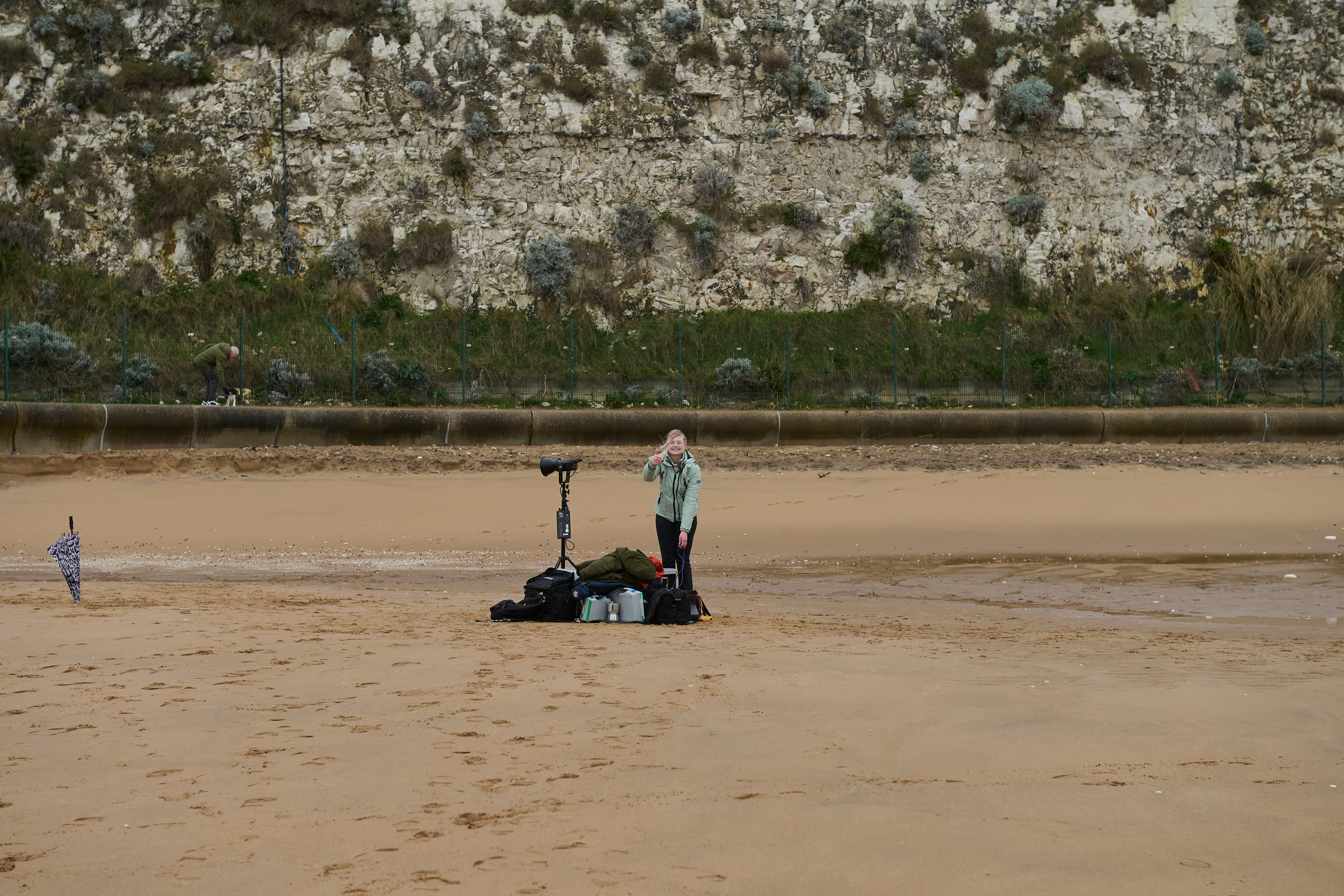
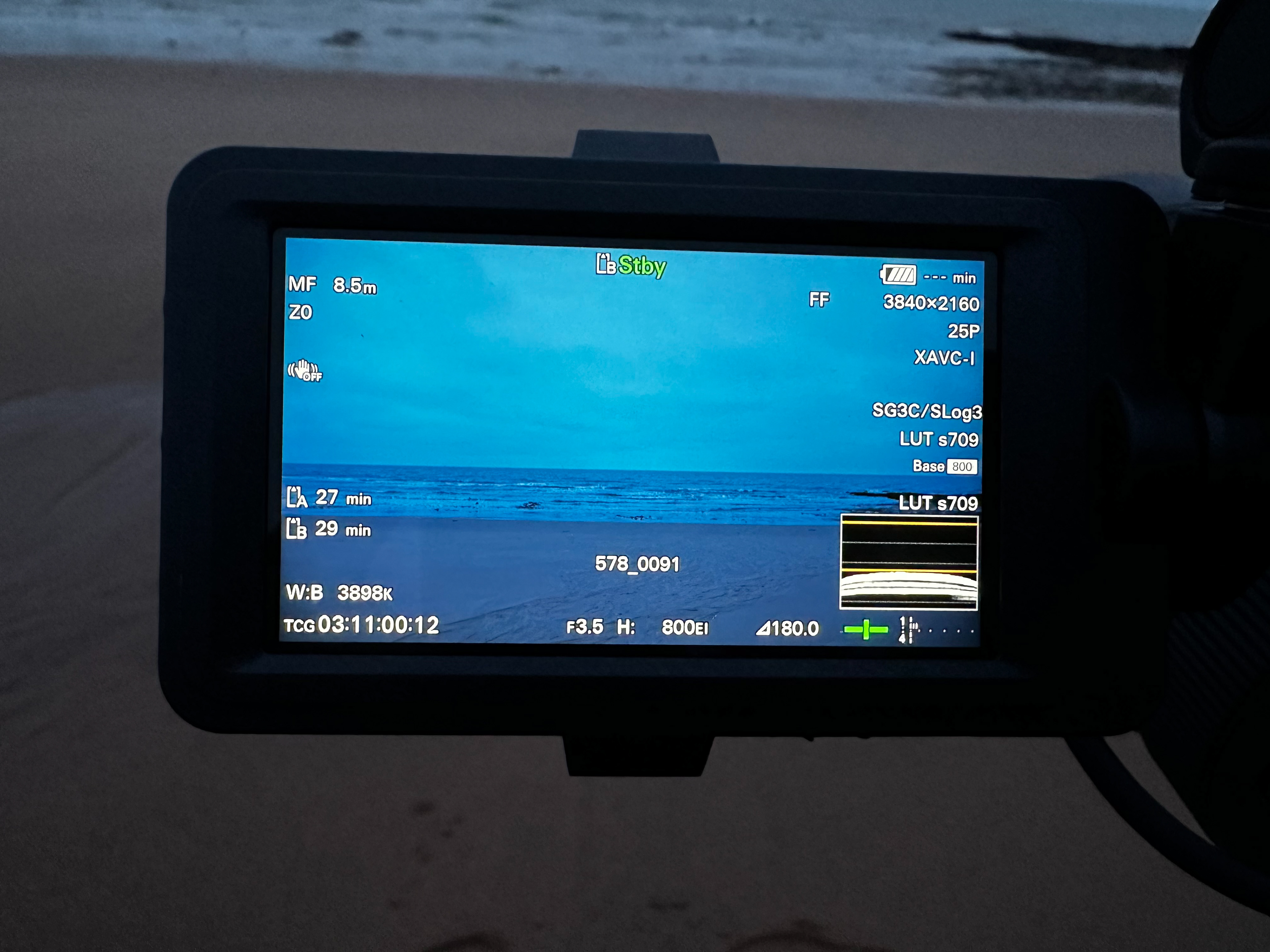
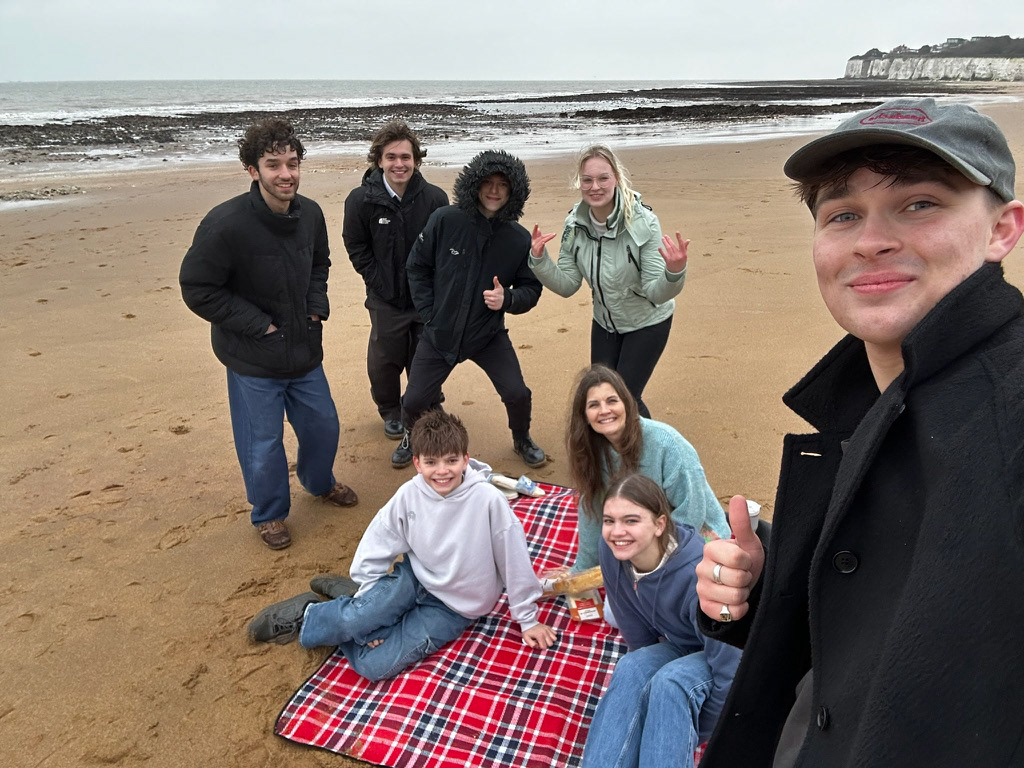
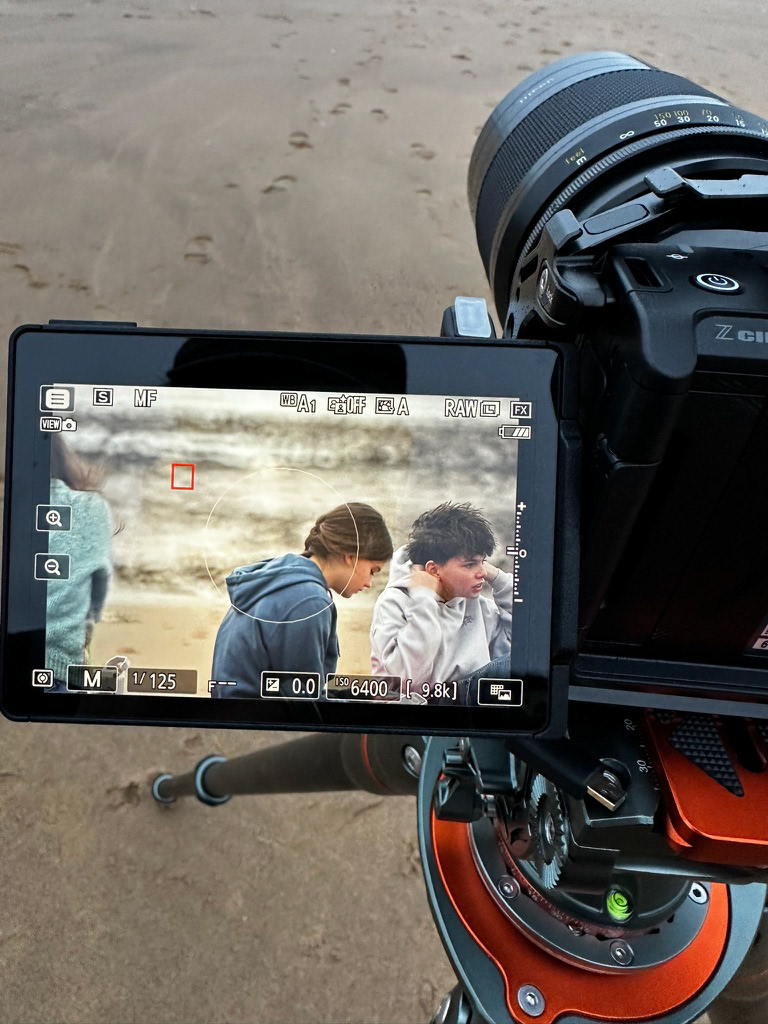
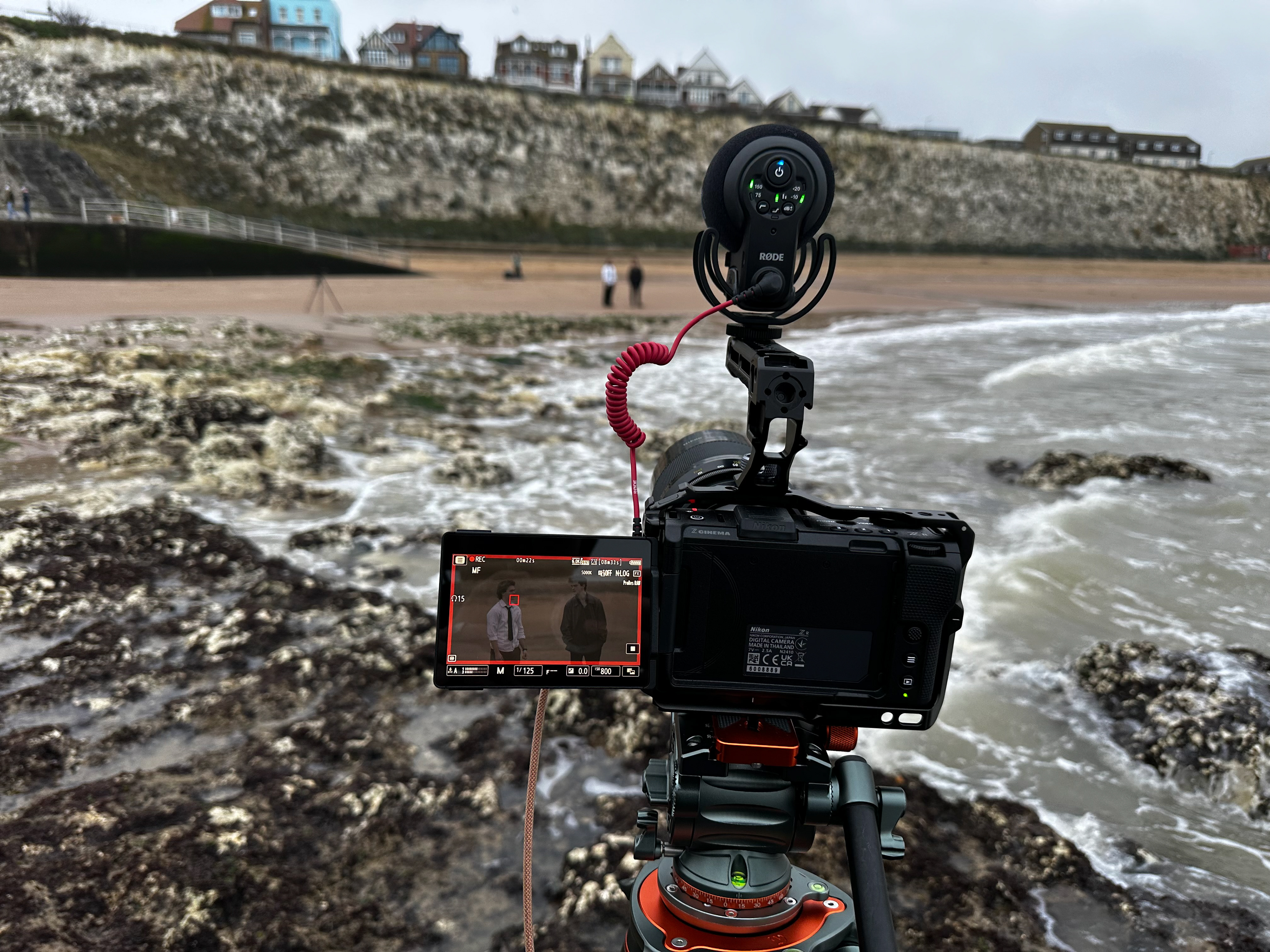
The shoot went well, despite the fact that there was not a single sliver of even the faintest idea of a streak of the sun — despite this, I think the ethereal look of the completely clouded-over beach actually works quite well. It’s very different look to what we were hoping for, but I think it will work okay. My dad’s 500mm F-mount lens was a genuine godsend, and I think that has given us some of the nicest shots so far.
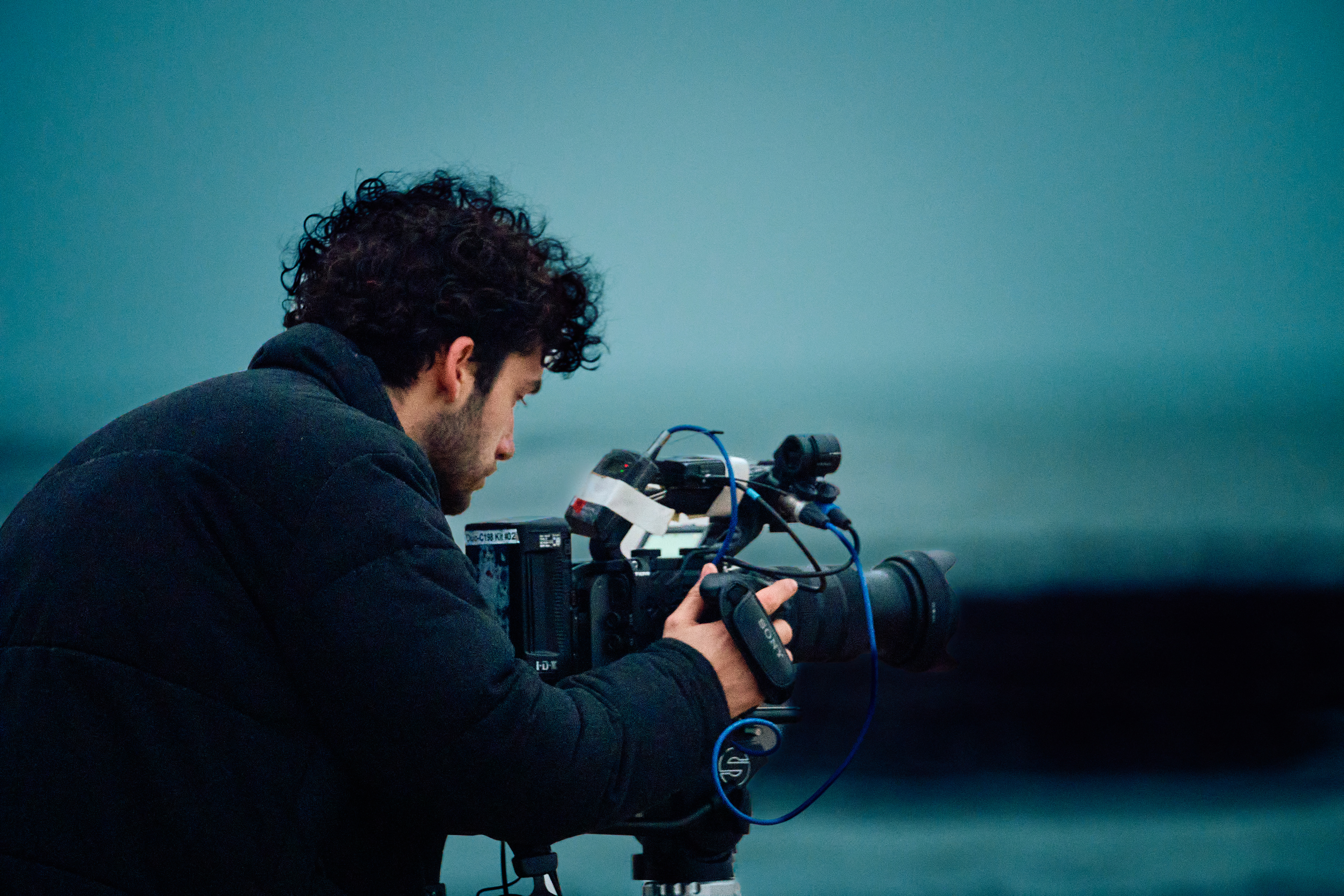
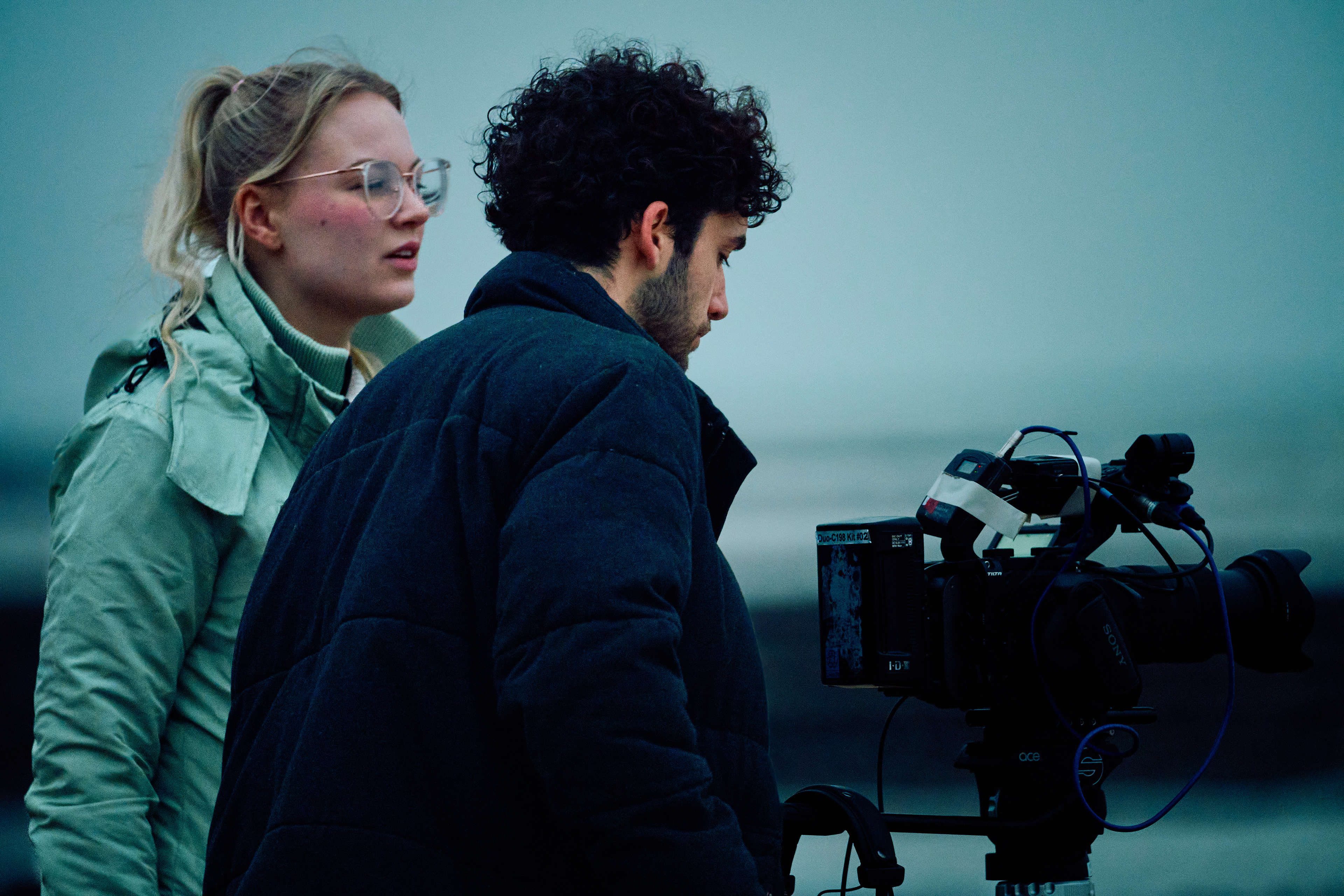
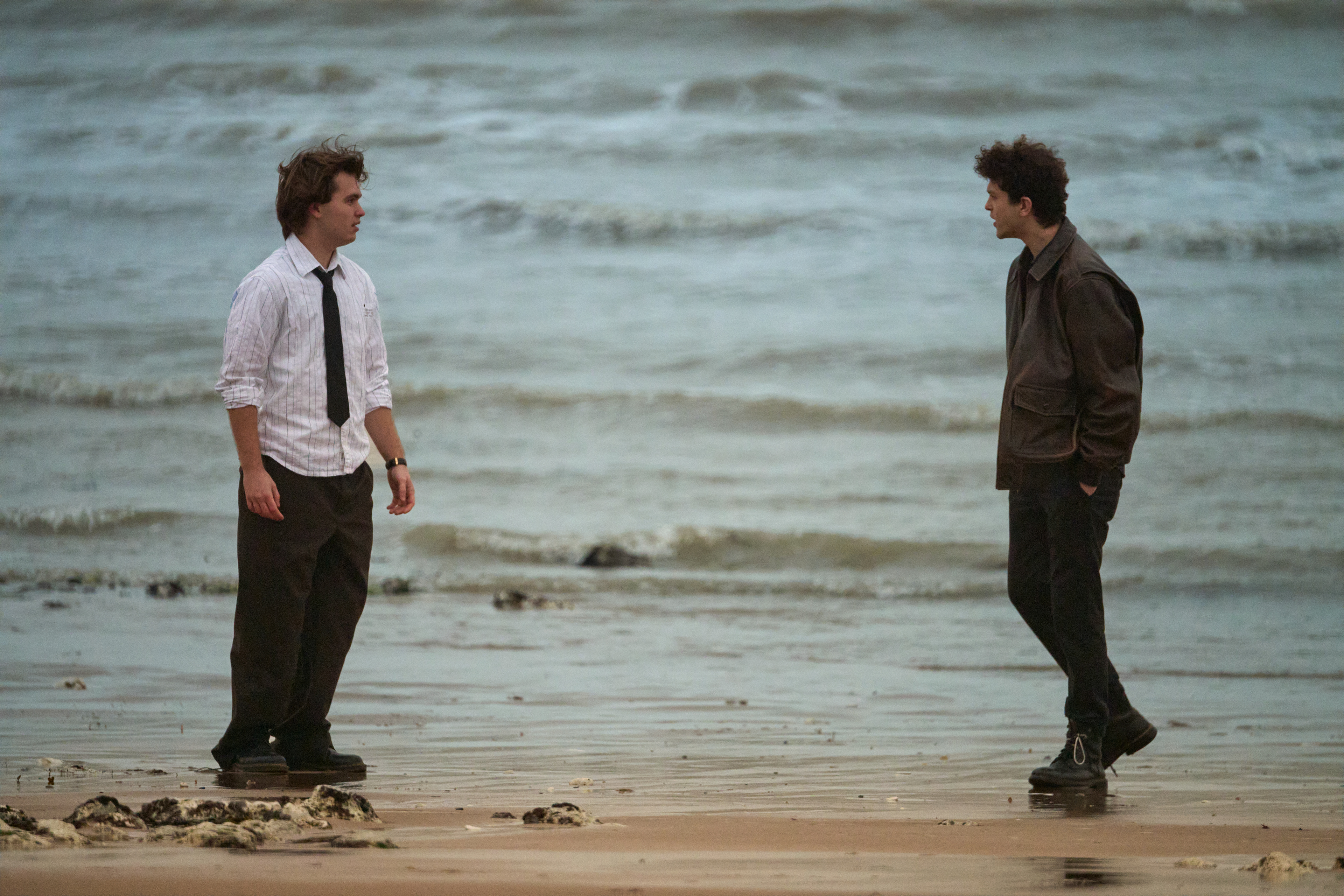
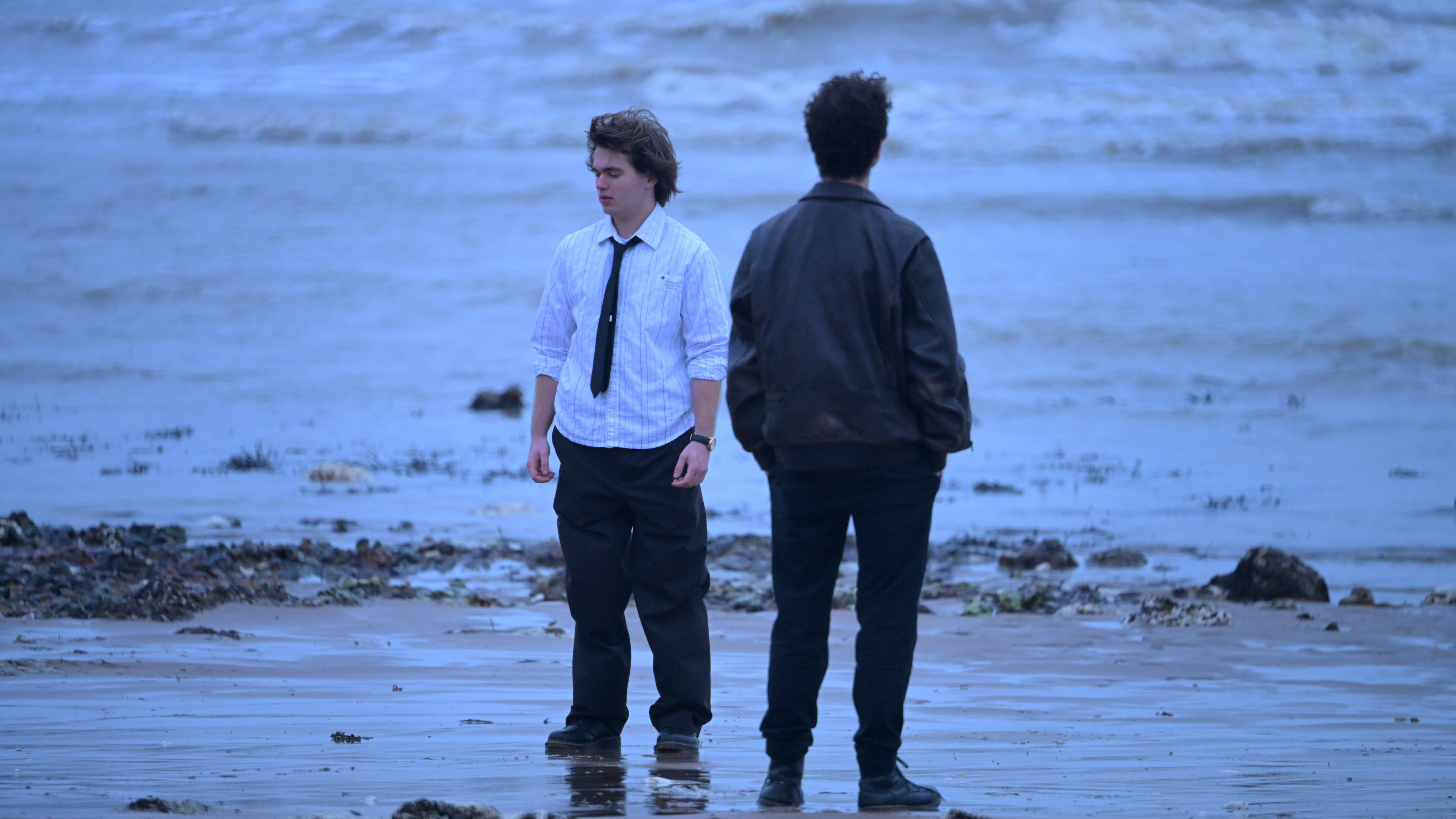
I think the turquoise of the sea behind Peter is the look we should try and go for when we’re colour grading, I think it looks really lovely and dreamlike. The issue is the to get that colour I had to cut Peter out to maintain his skin tones, and I would like to avoid rotoscoping as much as possible...!
We went for breakfast at my aunt’s Premier Inn, then headed back to base. We all tried to get some sleep — difficult, as people kept being in my ‘bedroom’! —
After lunch-ish-time, we decided we could get another scene done, as it looks like we didn’t actually need sunrise to get the shots we needed anymore. We’re still planning to get up at the crack of dawn tomorrow, in the hope that the Apollo’s golden chariot will make a cameo, but for now, we need to just work with what we can.
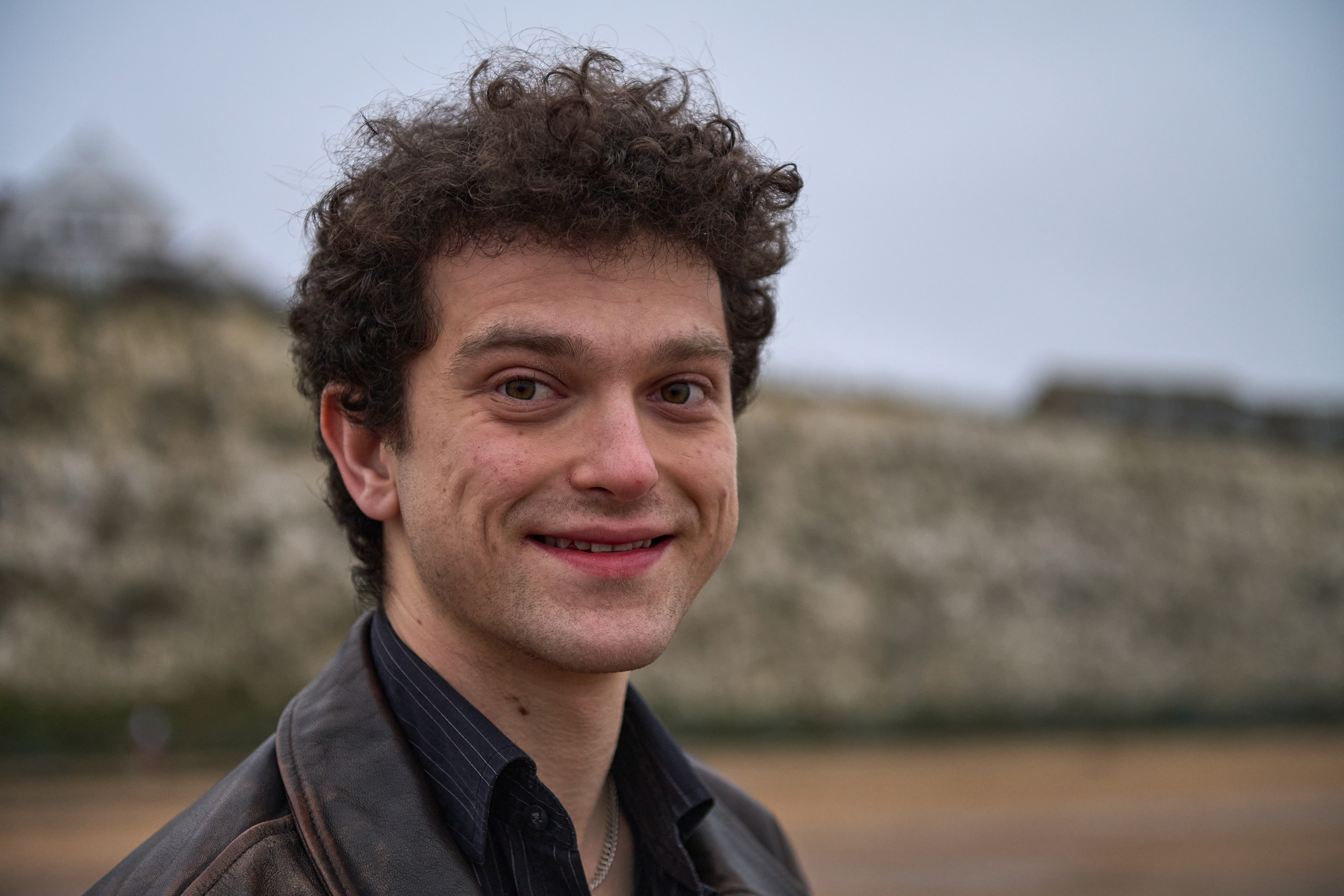
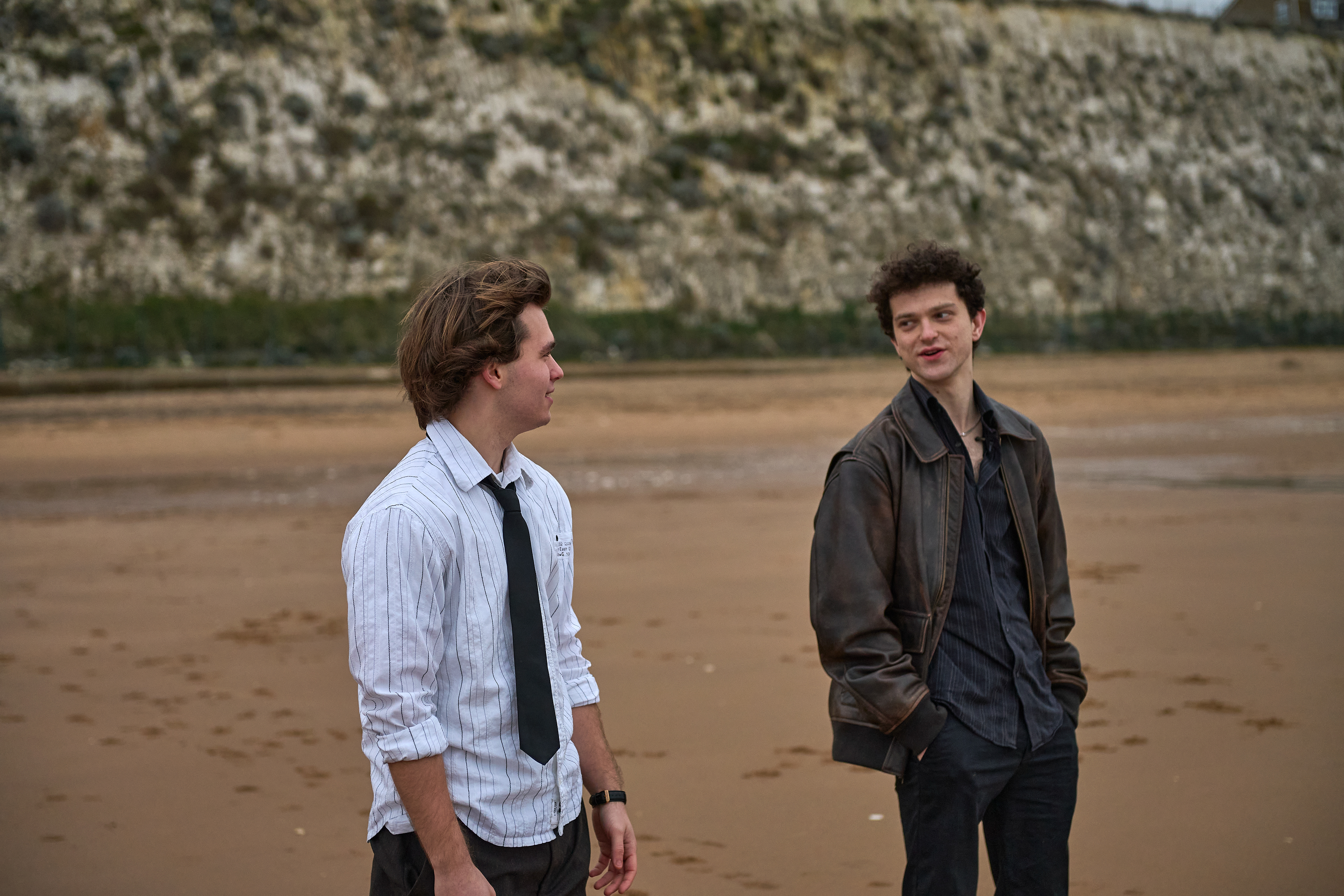
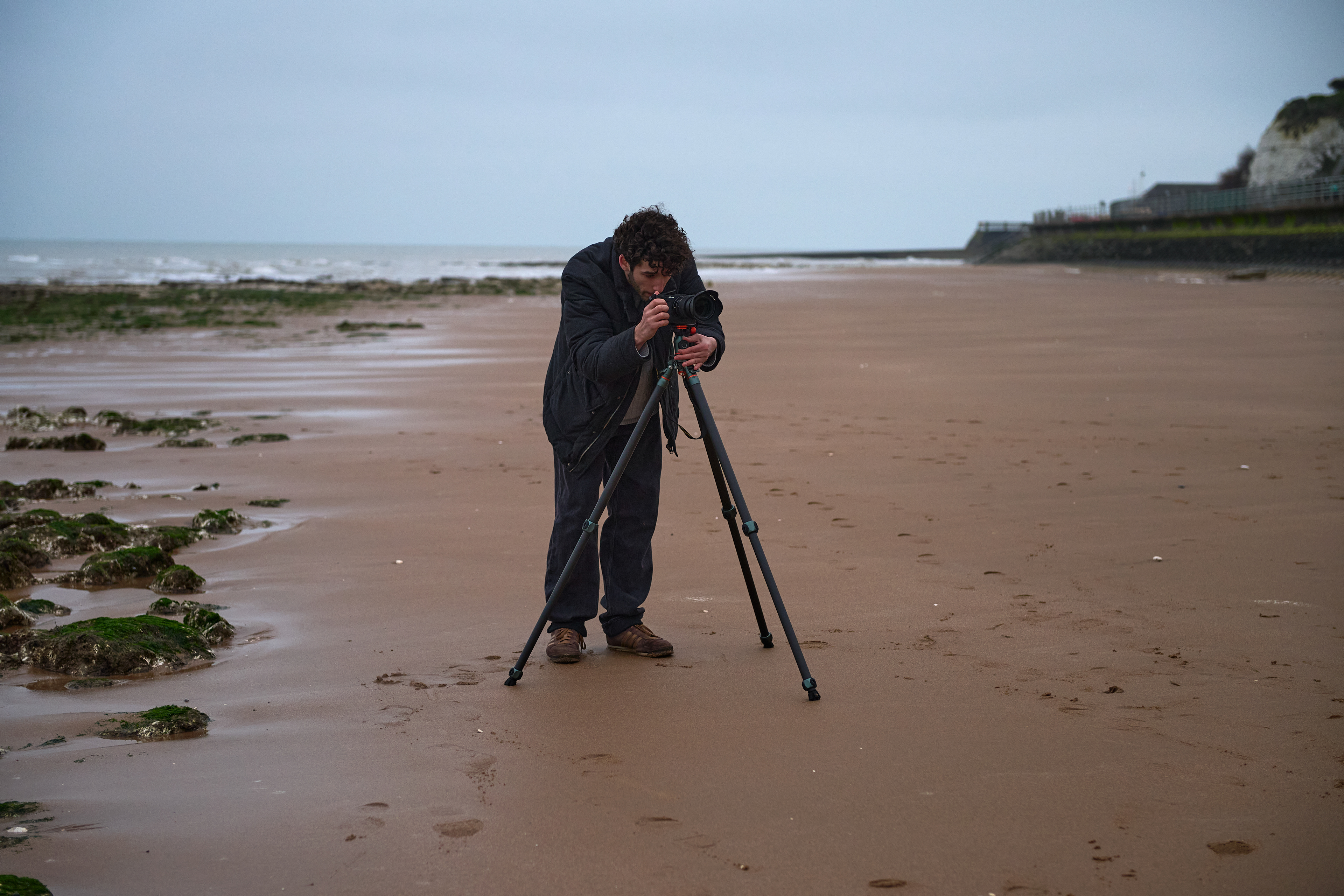
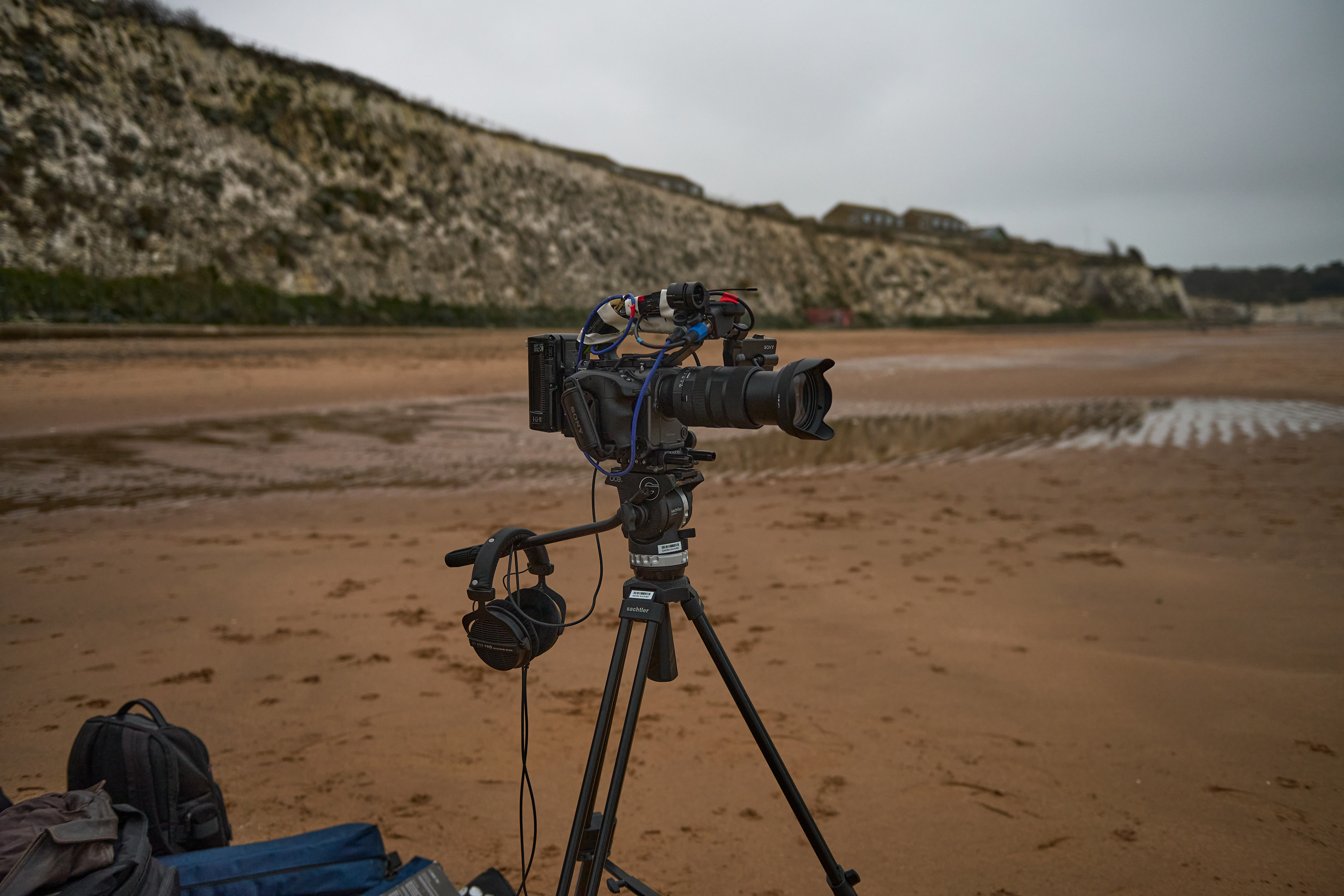
To round the day off, we also decided to shoot the cafe scene in the garden of the AirBnB. This probably isn’t an ideal location, but the shot of Elias, with the bush behind him, I do quite like. The background behind Lucid is a little bit grungier than I would have liked, but it isn’t dreadful. Also, there’s an outside light that can’t be turned off, so we’re having to work around that as much as we can with he lighting we brought with us.
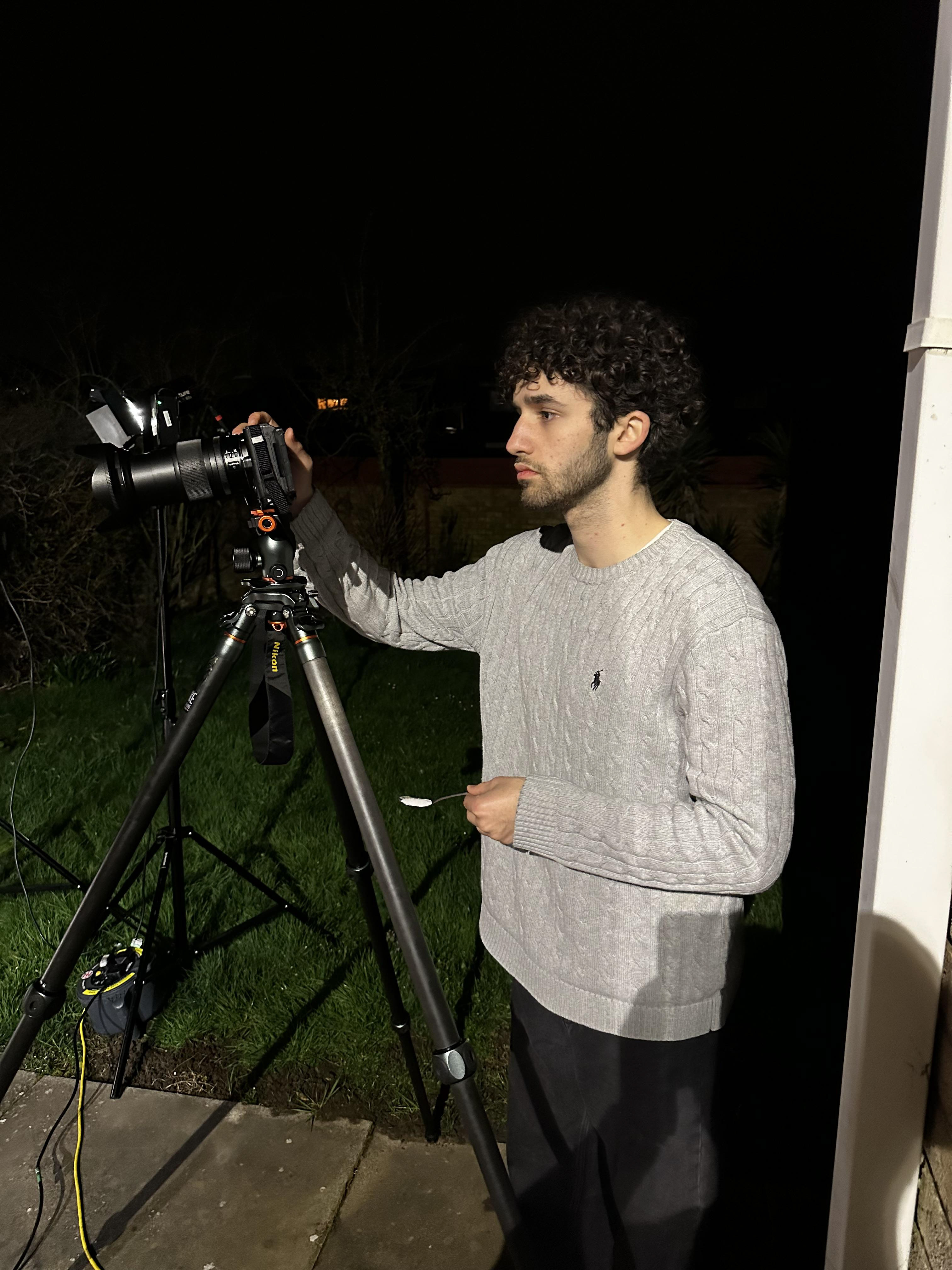
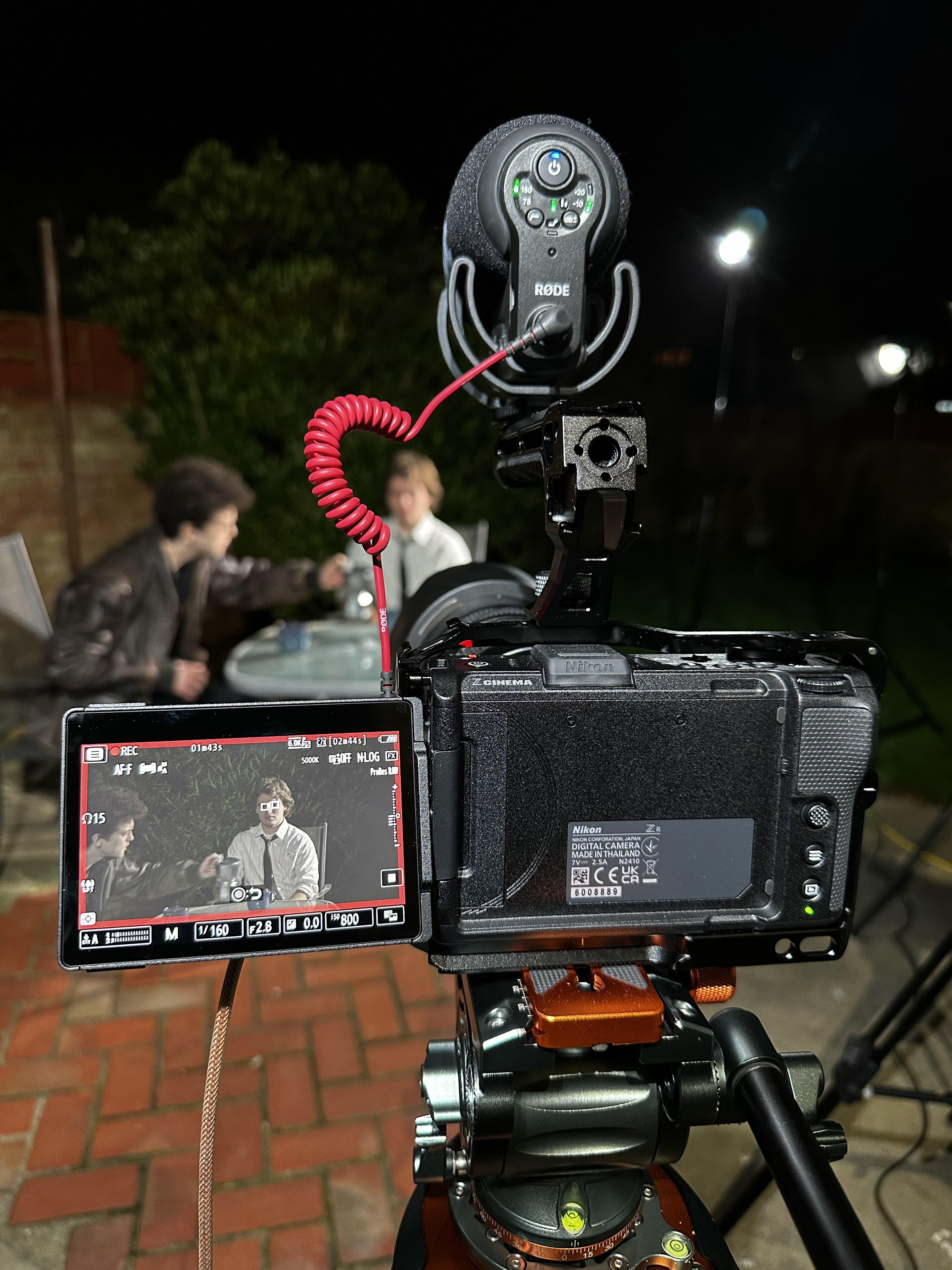
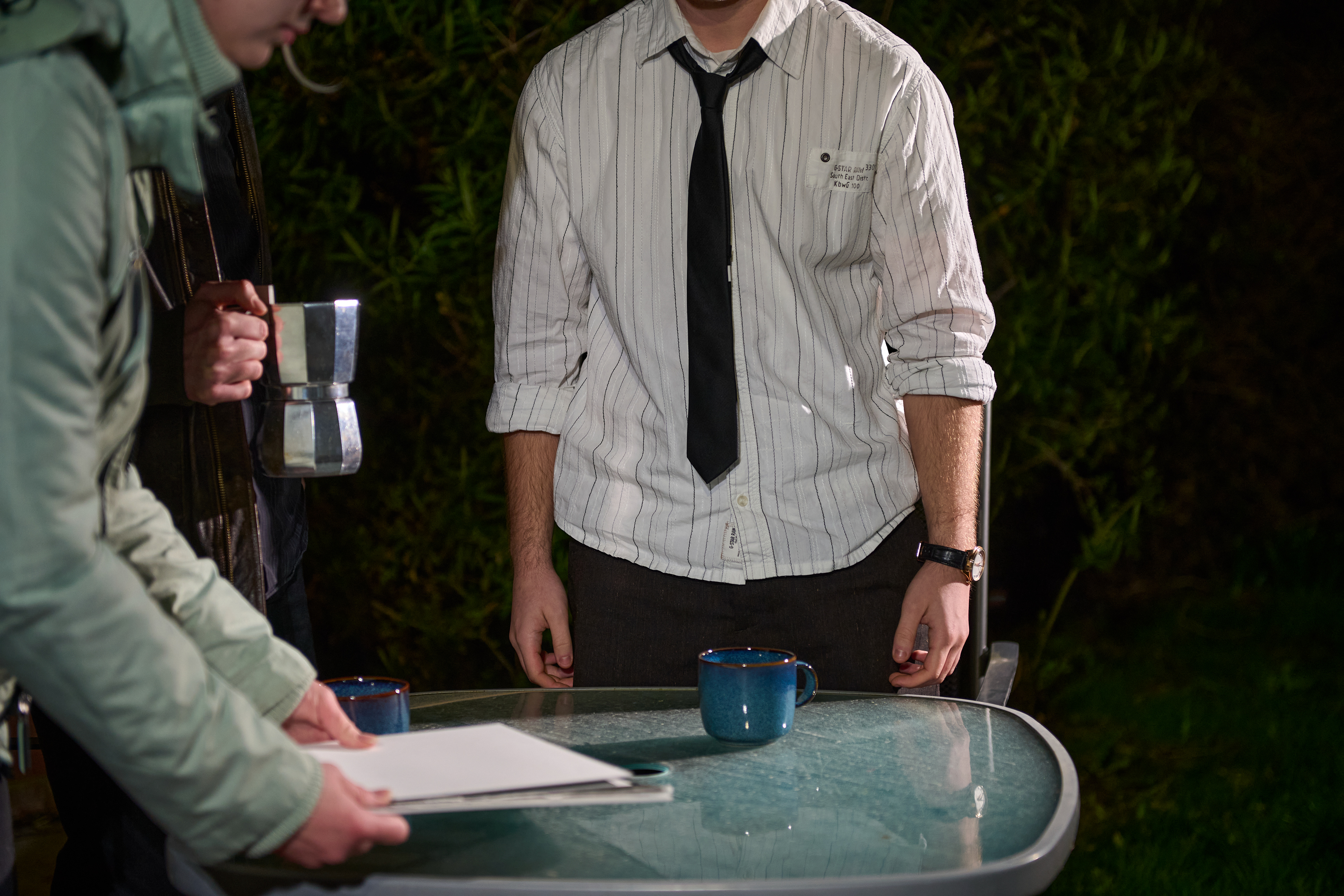
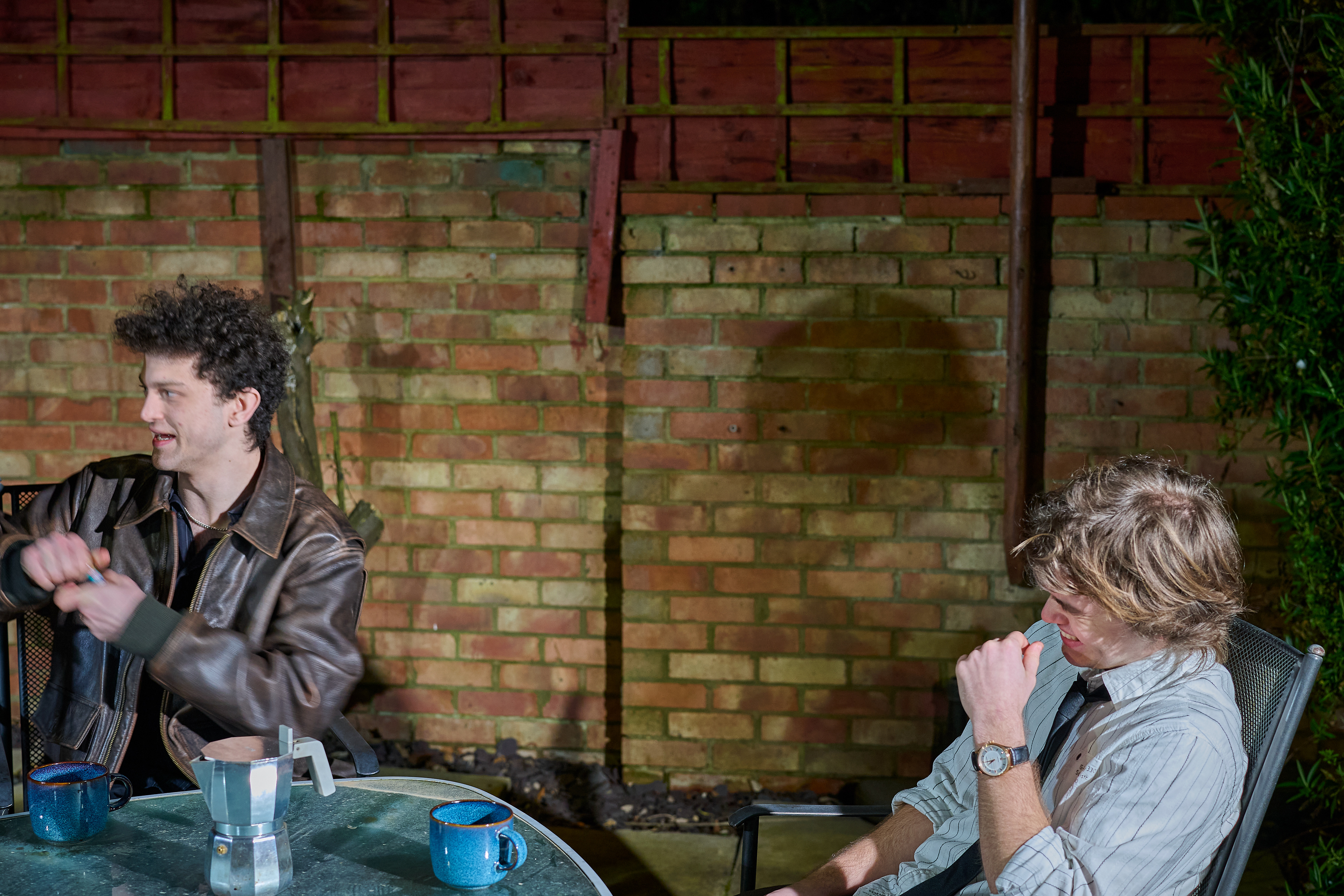
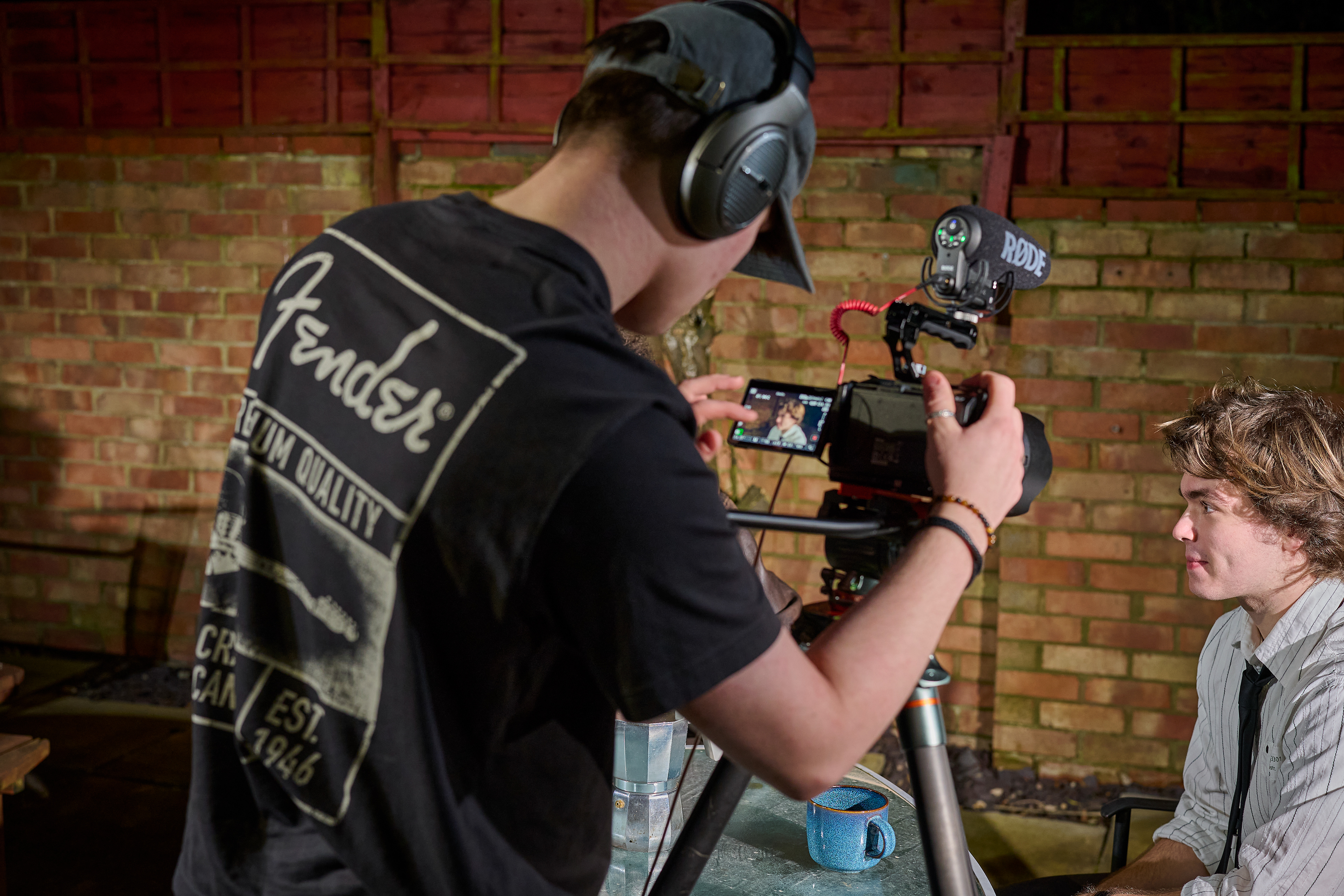
We were able to get a 3-cam set up, with the FX6 shooting the wide, and the two ZRs shooting the close-ups. Shooting on the ZRs at 6k means we can crop in to almost 200% without losing any quality whatsoever, which means we have quite a nice variety of shots even before we went over B-roll shot.
Another early start brought us to the beach for 6am again, this time to shoot the final “step out of the waves” shots, and Elias falling ‘into’ the waves, then walking out of them. This was cold and wet — the plan was that me and Luca would go in as deep as we needed to (the shot was from behind him, but also I wouldn’t ever direct an actor to do something I wouldn’t be prepared to do myself — so that meant going in too). Once that was done, I drove myself and Luca back to base so we could change out of our cold, wet clothes, while Hannah, Peter, and Liam packed up Luca’s car with all the kit. We rushed back in time to help them finish up the teardown, then headed back to the Air BnB.
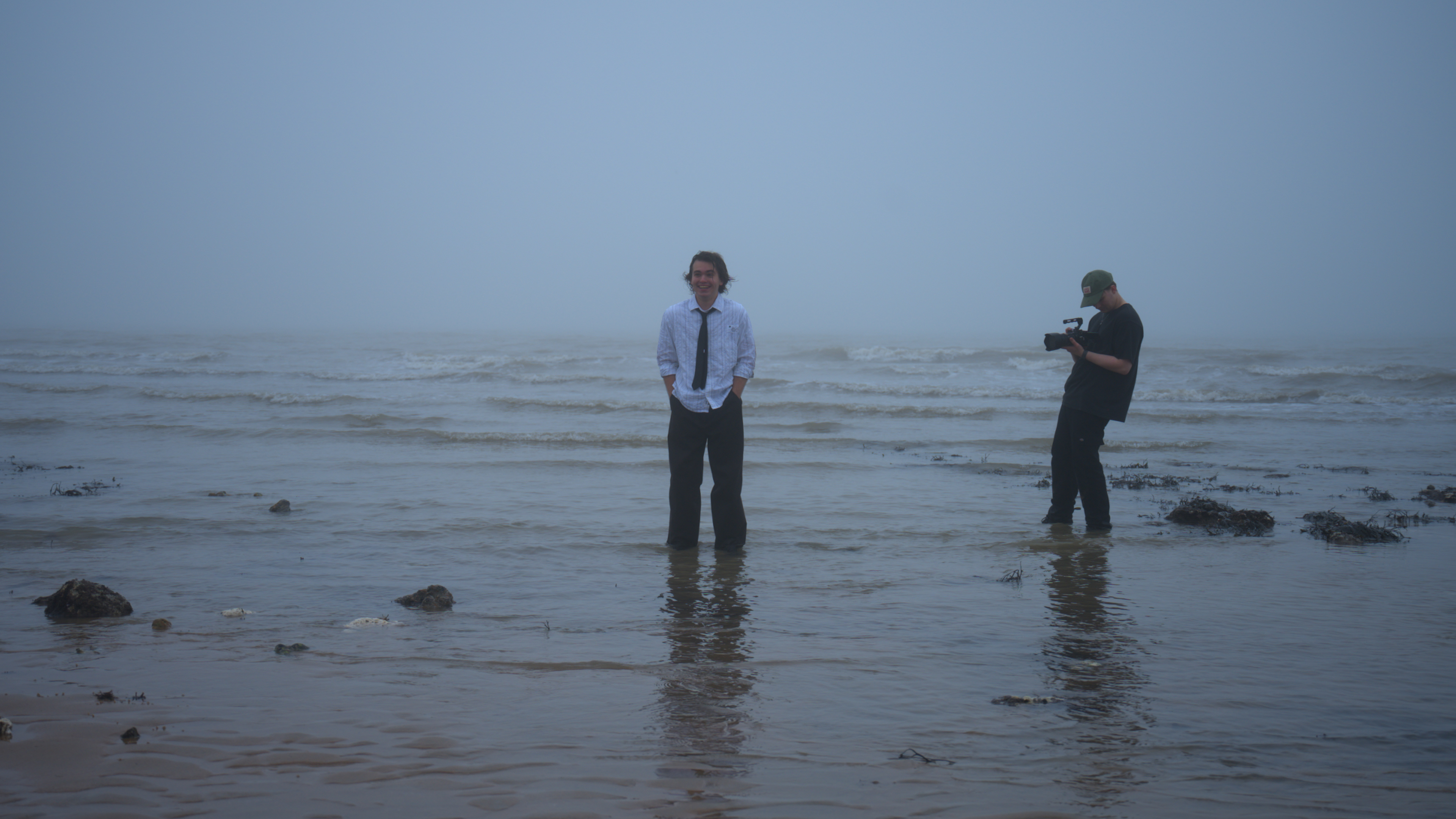
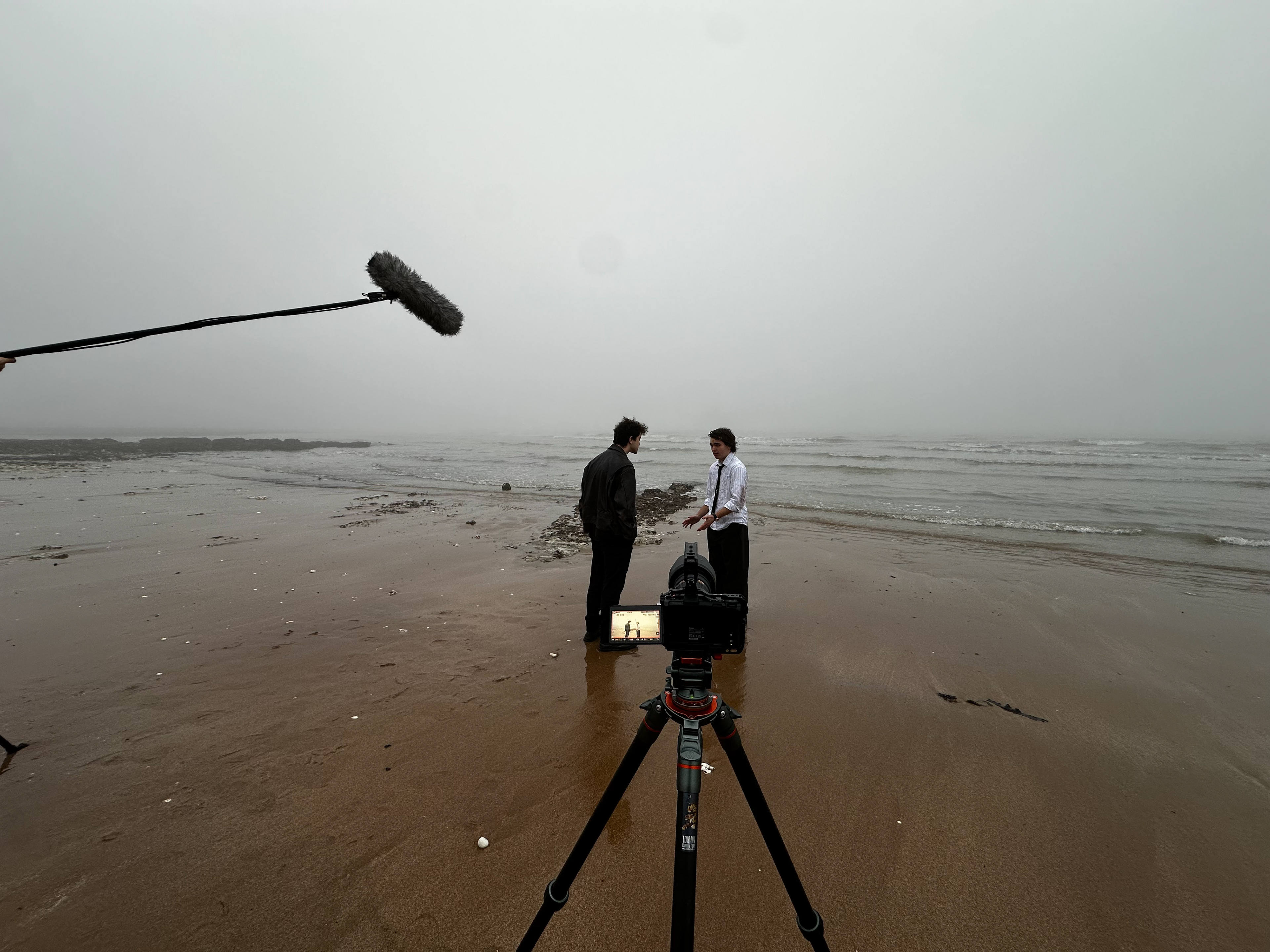
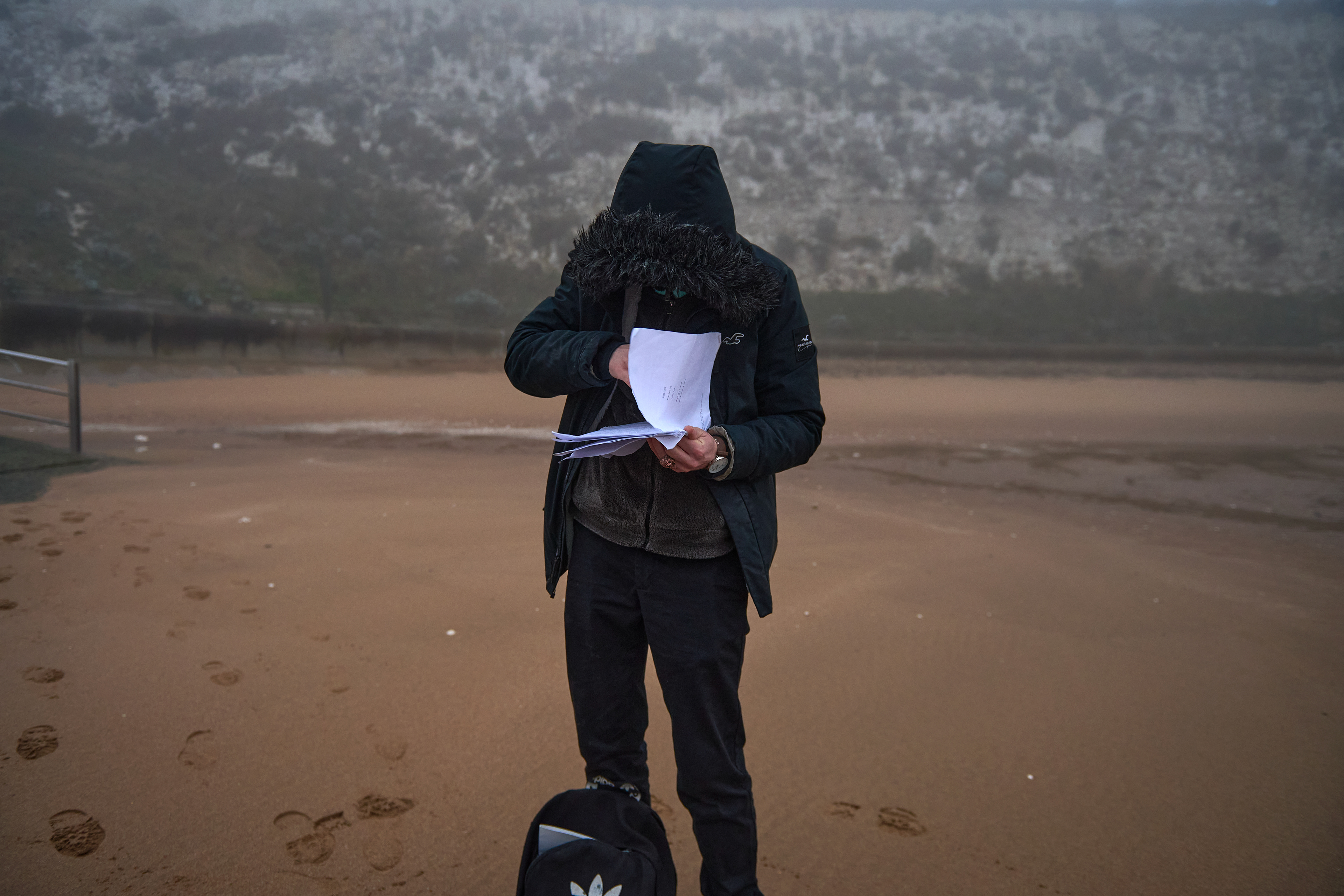
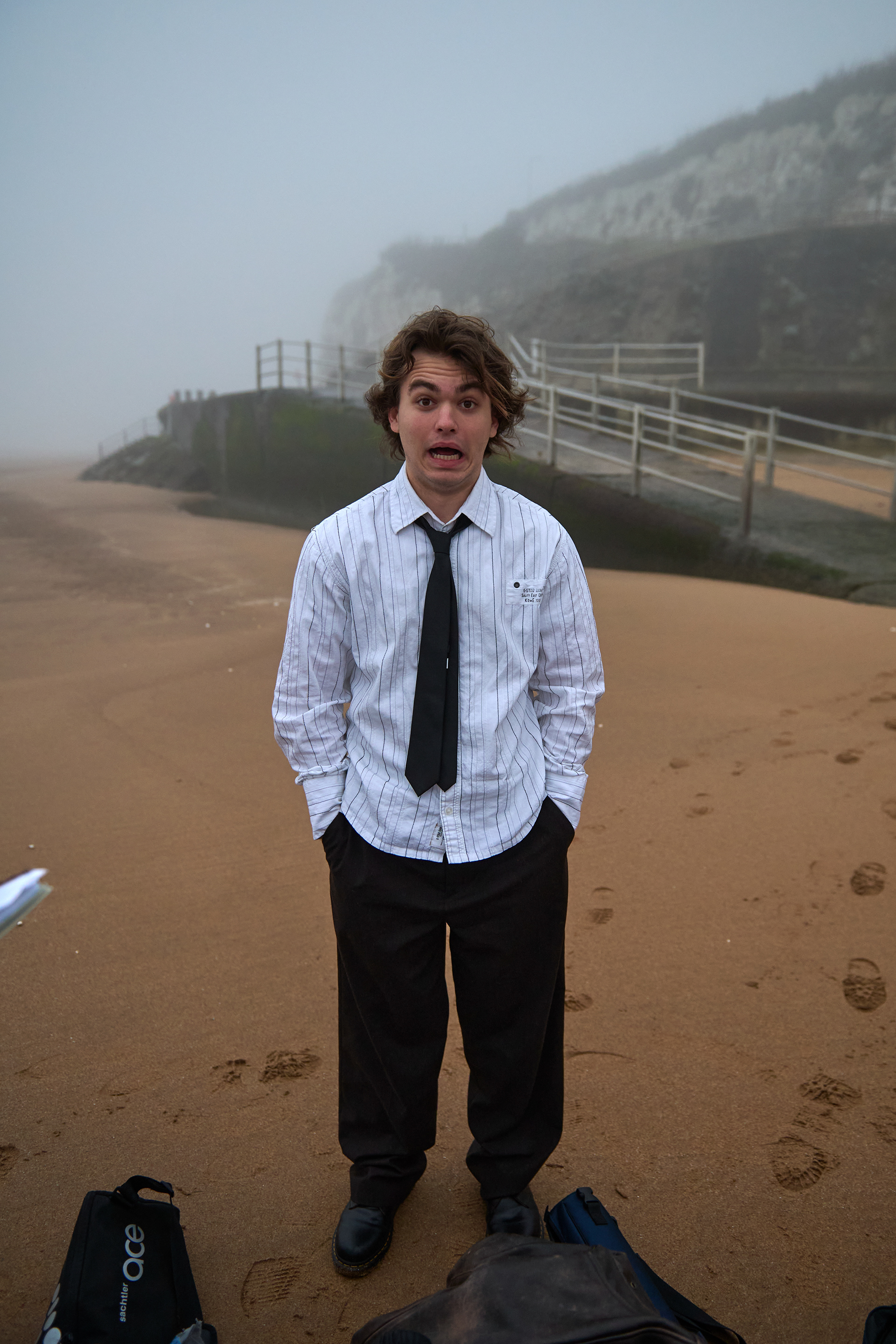
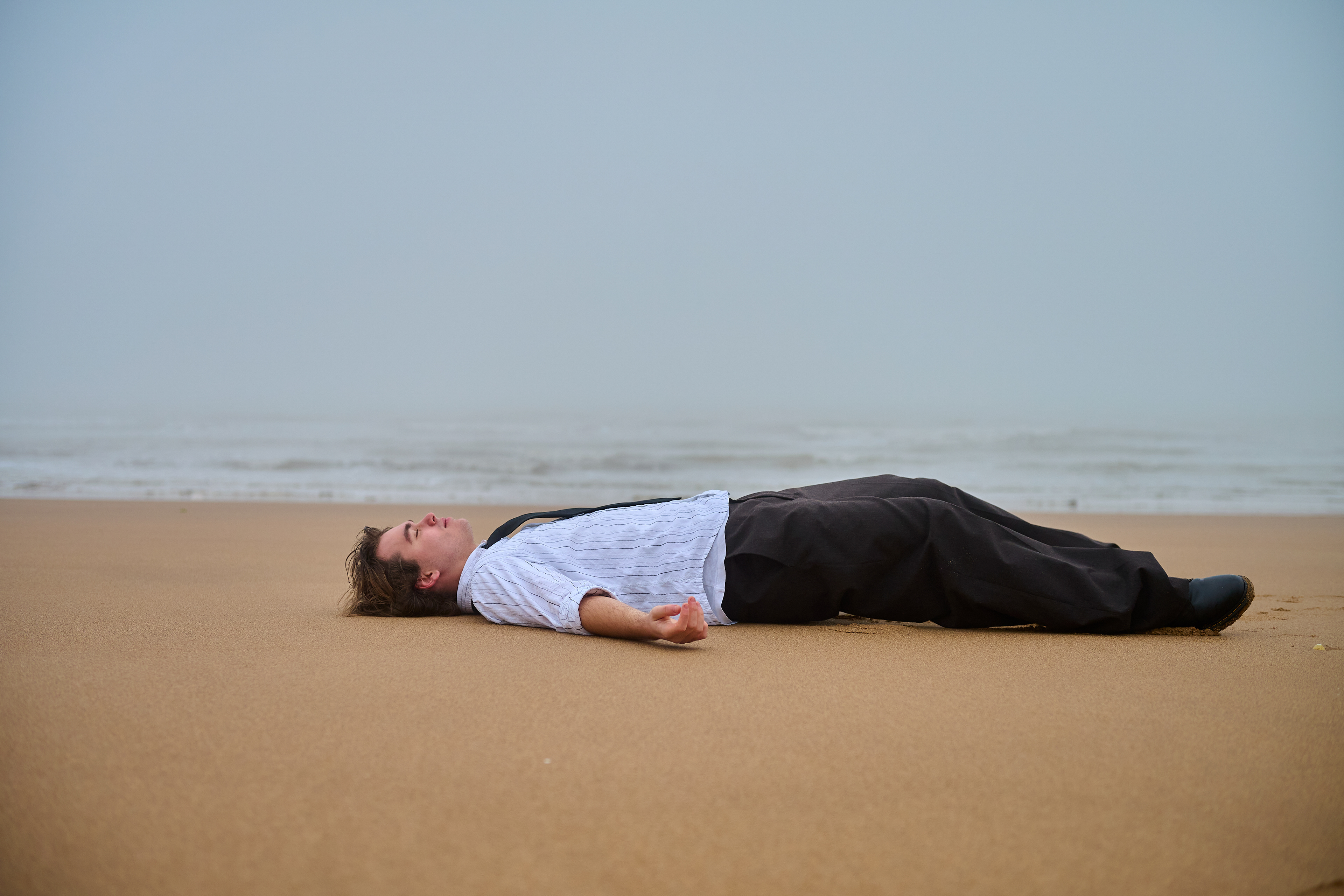
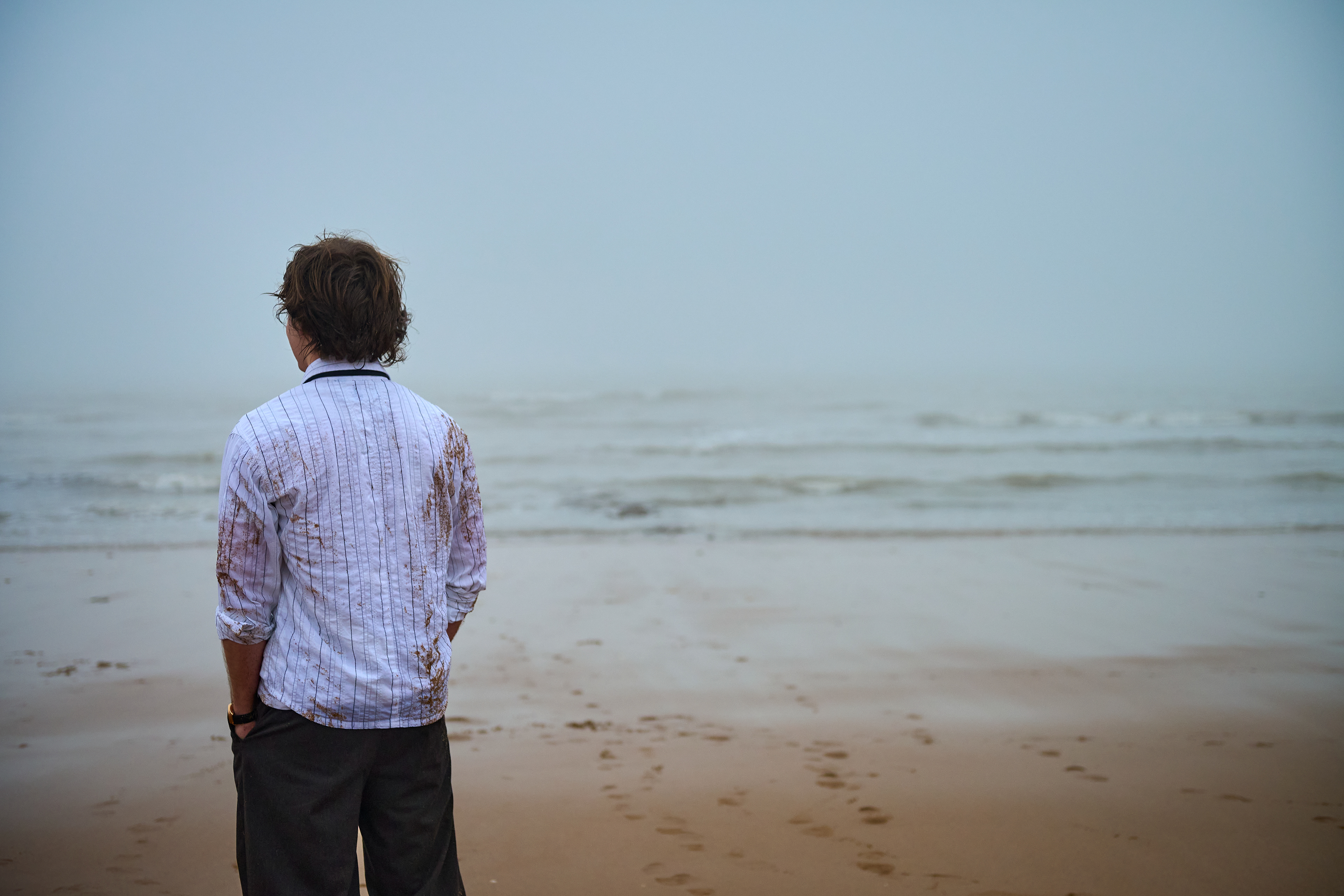
As an indication of just how wet and cold it was...
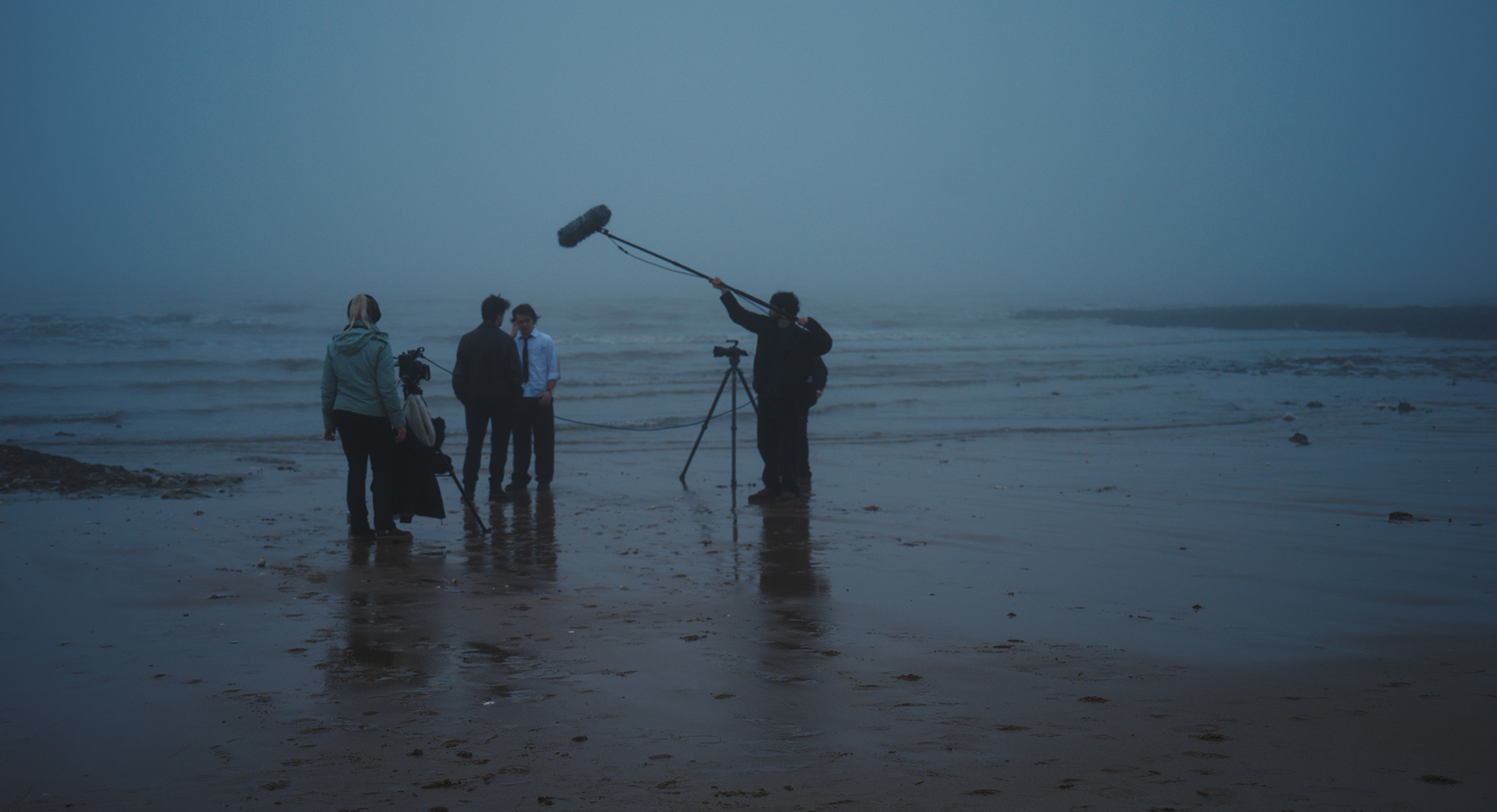
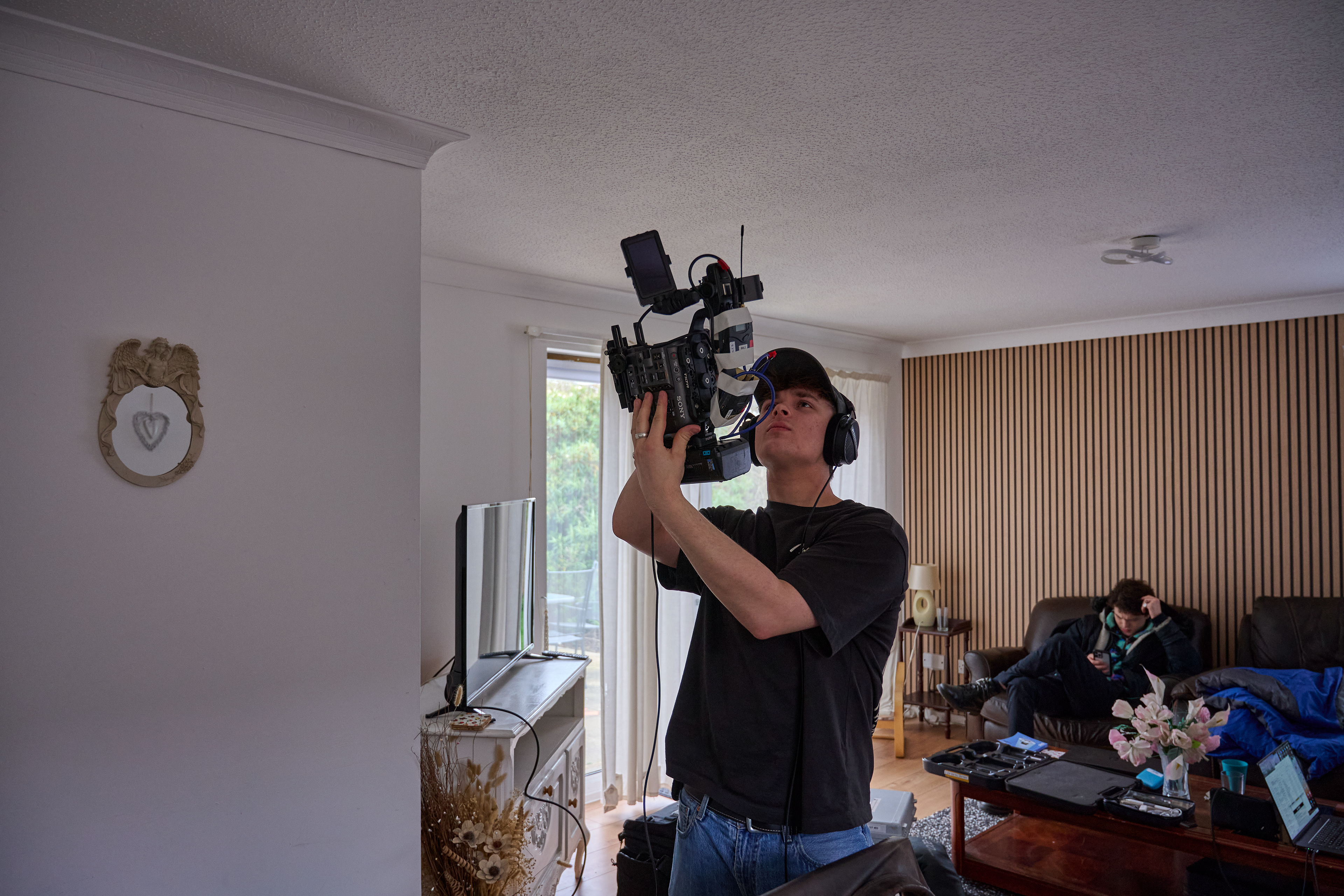
Additionally, we had had numerous sound issues on the first beach shoot, so before we left for the second, I tested every single part of the mic kits — the antennae, mics, transmitters, receivers, and XLRs — to make sure we had two complete working sets of radio mics, and then gaffer taped them to the camera s there was no way it could stop working.
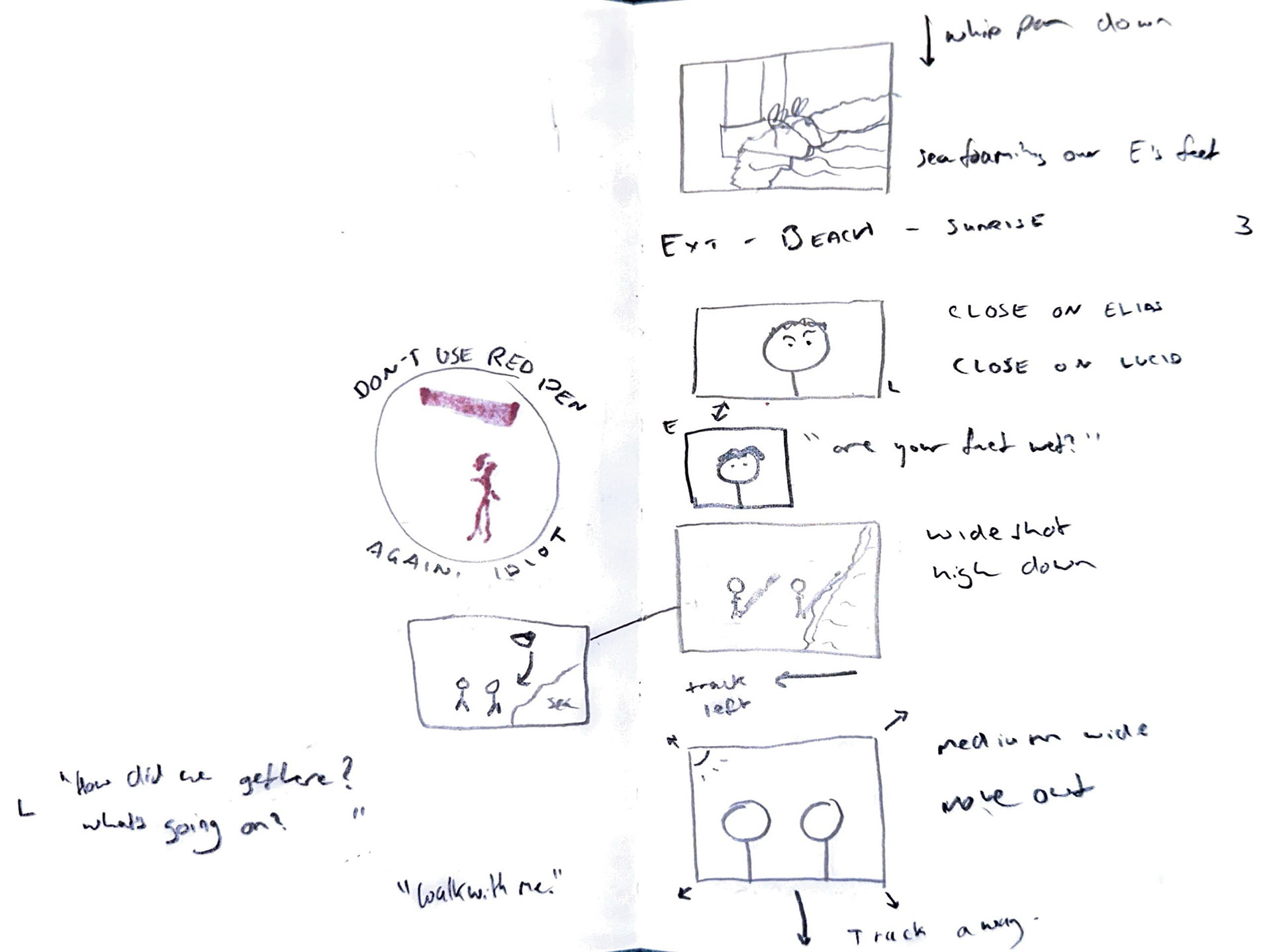
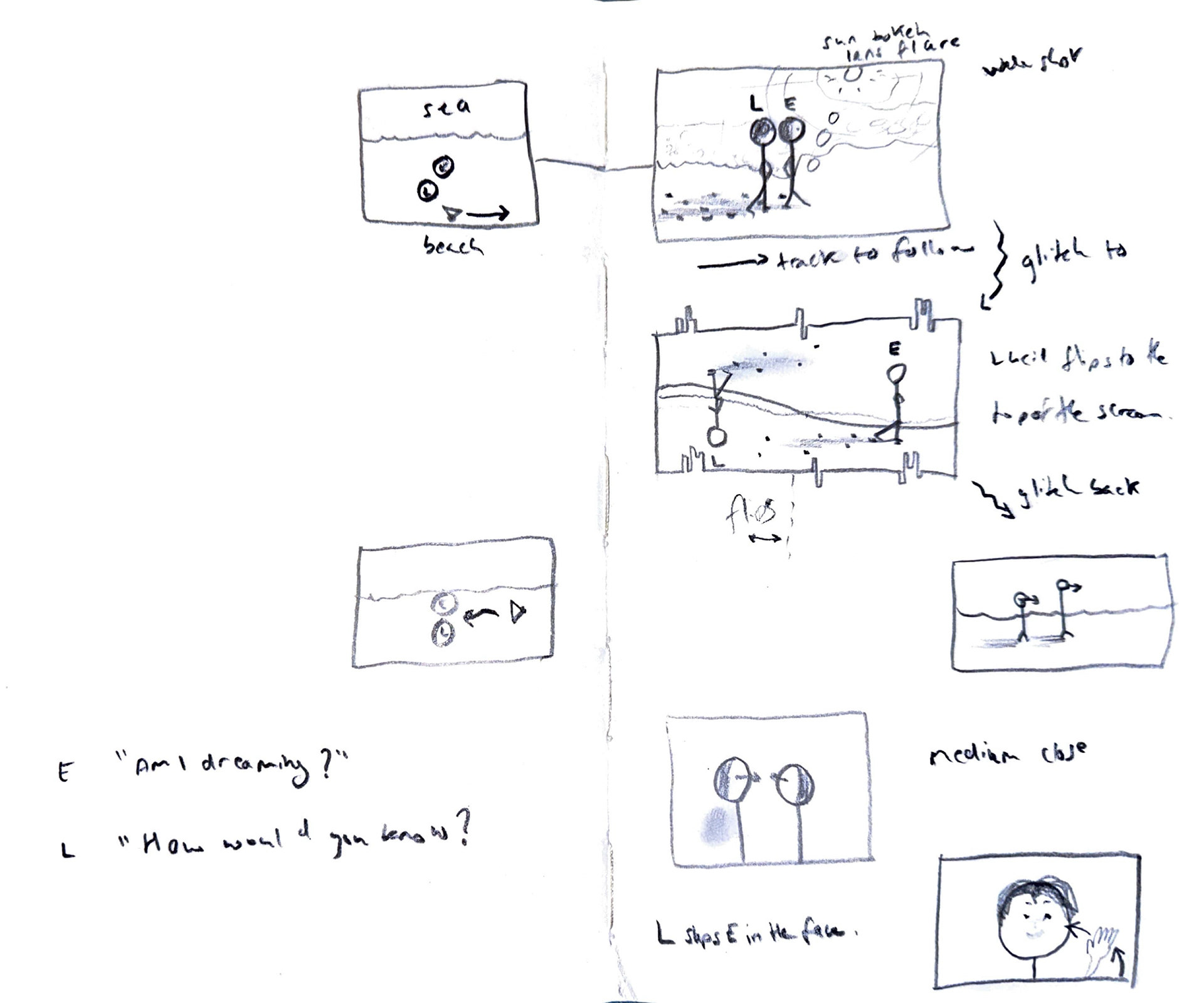
This is my initial storyboard for scene 3:
After a quick power nap when we got back to base, we packed everything away, I backed up all the rushes, and then we tidied the whole place up ready to go.
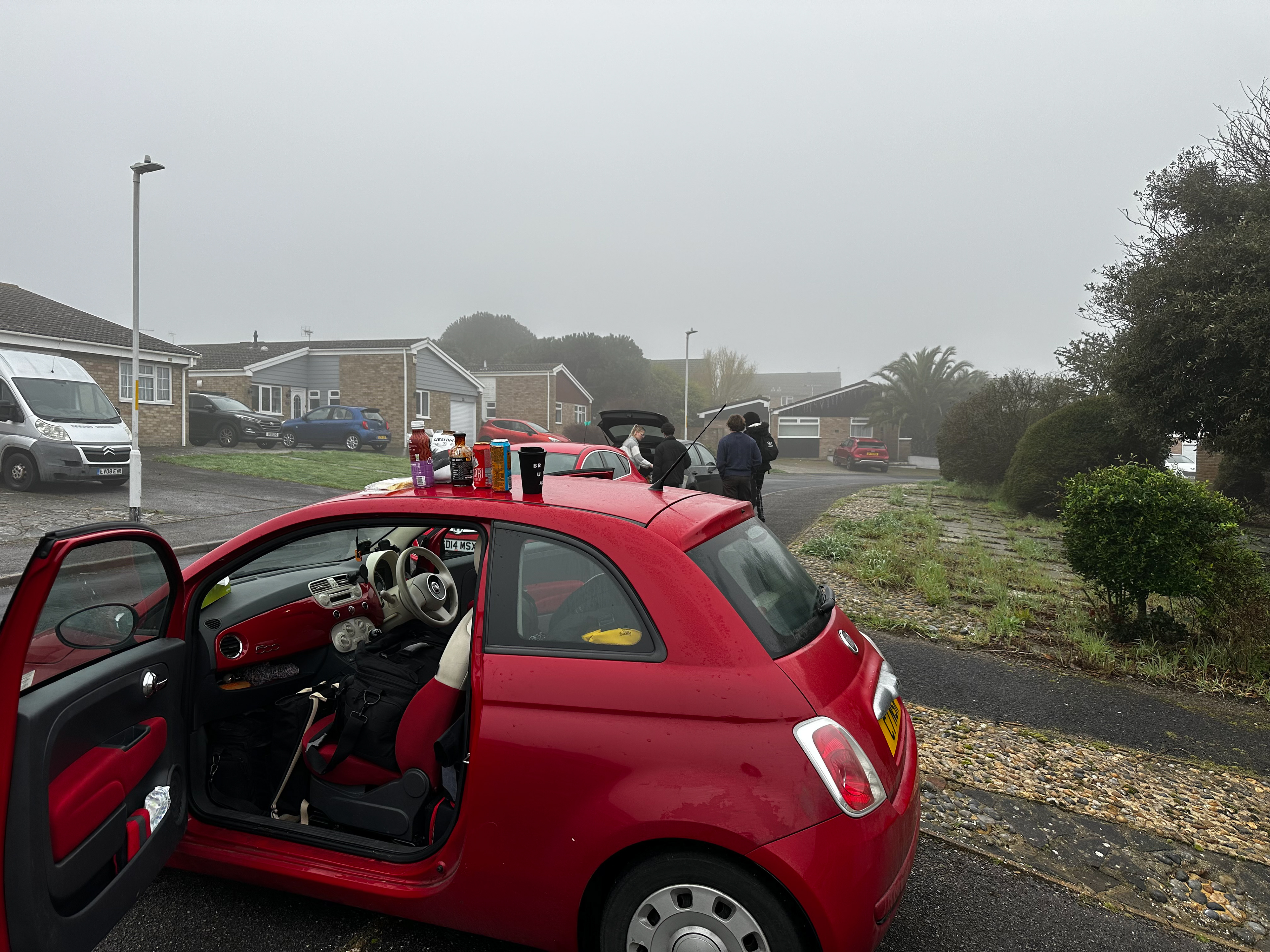
We were about 20 minutes down the road, me with the kit and Luca with cast and crew, again, when I got a call from Peter, who had just realised he had left a plate of nachos in the microwave. No sooner had he said that, Hannah remembered about the plates we’d left in the dishwasher. Not wanting to risk any additional fees, I turned around and headed back, sorting out the microwave (Liam’s unmade bed!), dishwasher, and discovering that I had almost left behind a coat hanger! With the house rectified, I got back into the car and headed home after a relatively successful weekend.
20 Mar: Preliminary Assembly Cut
So, it turns out that a Canon R7 is quite a bit smaller than the R5, so I’m slightly concerned about it rattling about inside the underwater rig if we can’t clamp it down properly. I found a company that sells underwater ZR rigs, and emailed them to see if they would be able to give us any information about where to get one, or if they could potentially loan one out.
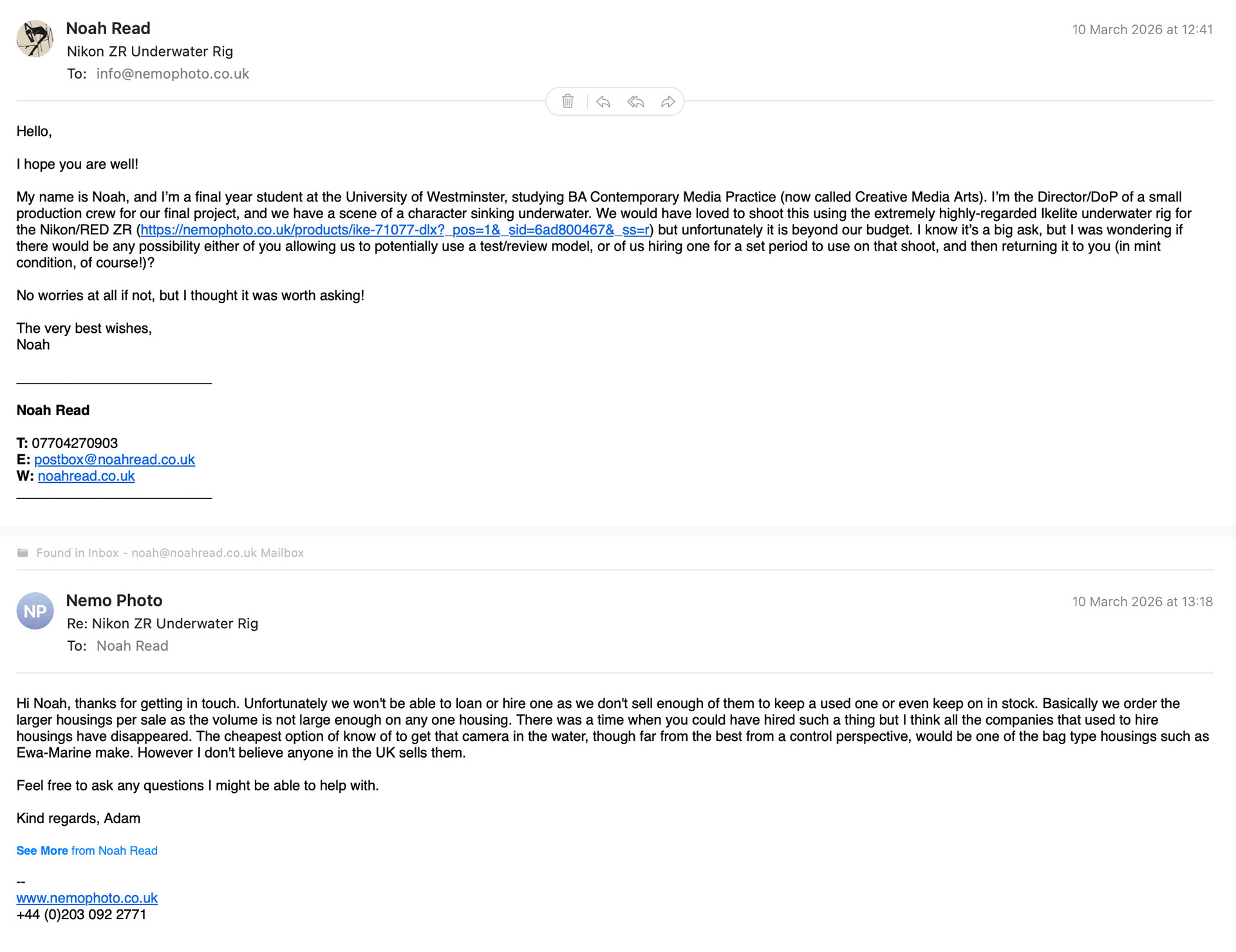
Unfortunately, it looks like that will be quite difficult, and to buy one would be several thousand pounds. Once we have the pool confirmed, we’ll have to just play it by ear. We managed to confirm a date and time with RSC this week too, which is the sam day we were initially going to shoot, but later on. This is actually better for us, as we have evening shots we wanted to get, that we were slightly concerned about perviously.
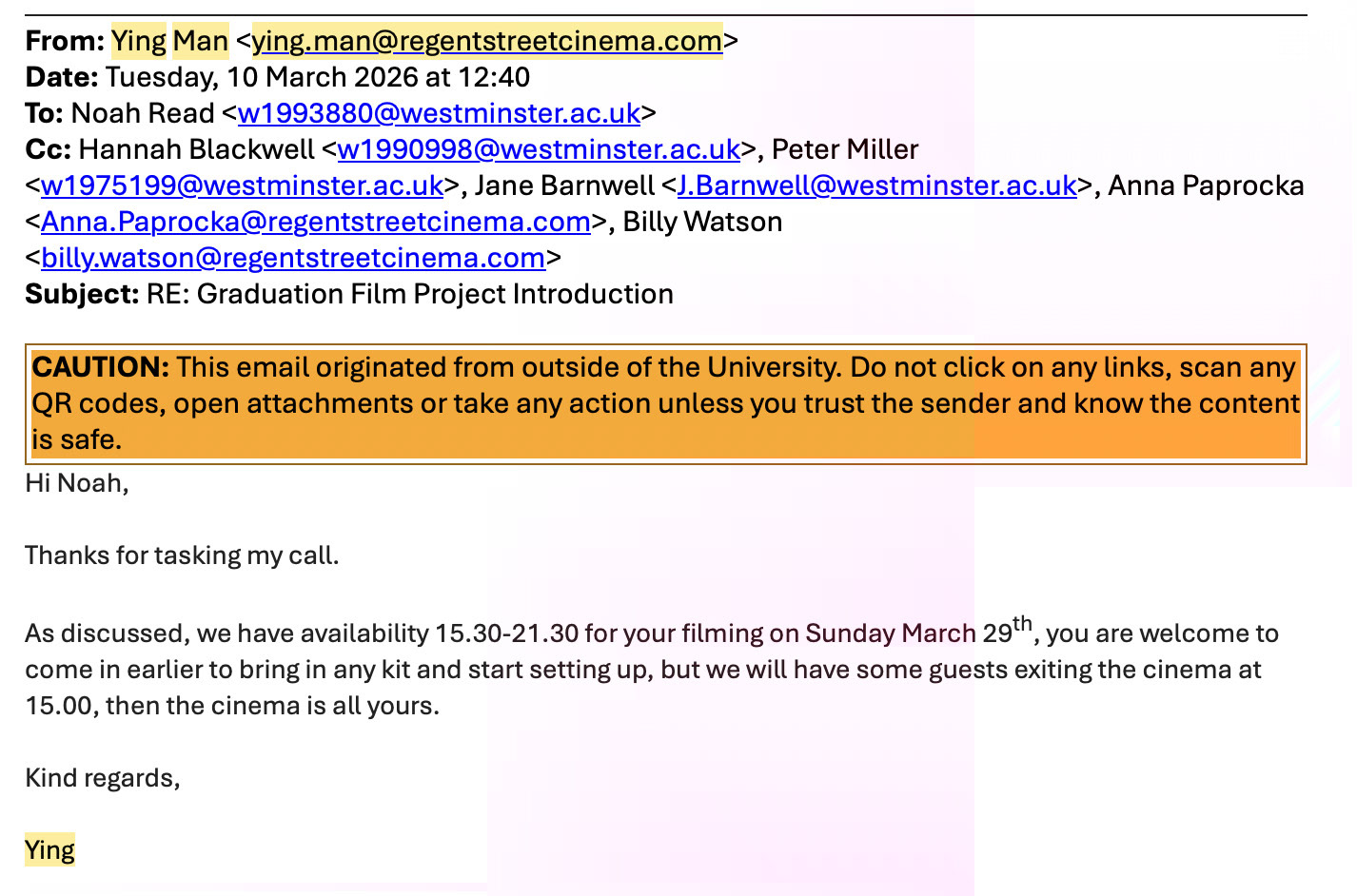
My birthday was on the 11th, and then on the 12 Peter and I had the Baker Street Hackathon, so last week was a bit of a breather compared to the last few.
On the 16th, we had a first look at editing, just putting some of the rushes into Premiere and seeing how to all looks. I was pleasantly surprised — all the things going not-quite-to-plan had made me a little bit worried, but I think that we’re okay so far.
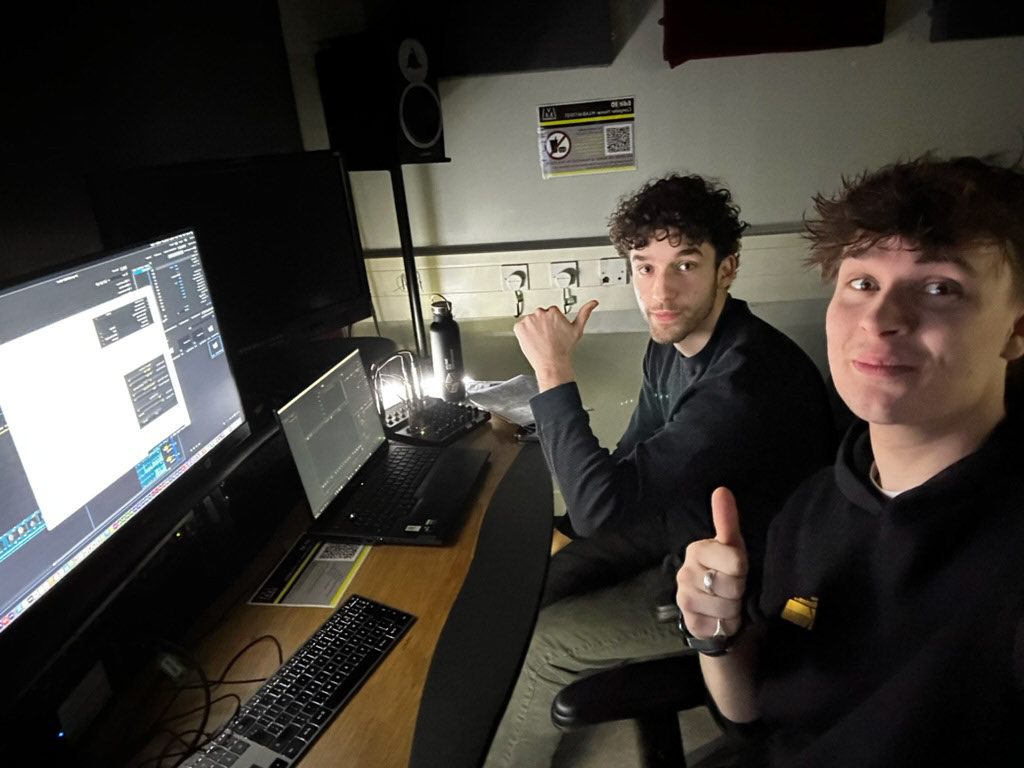
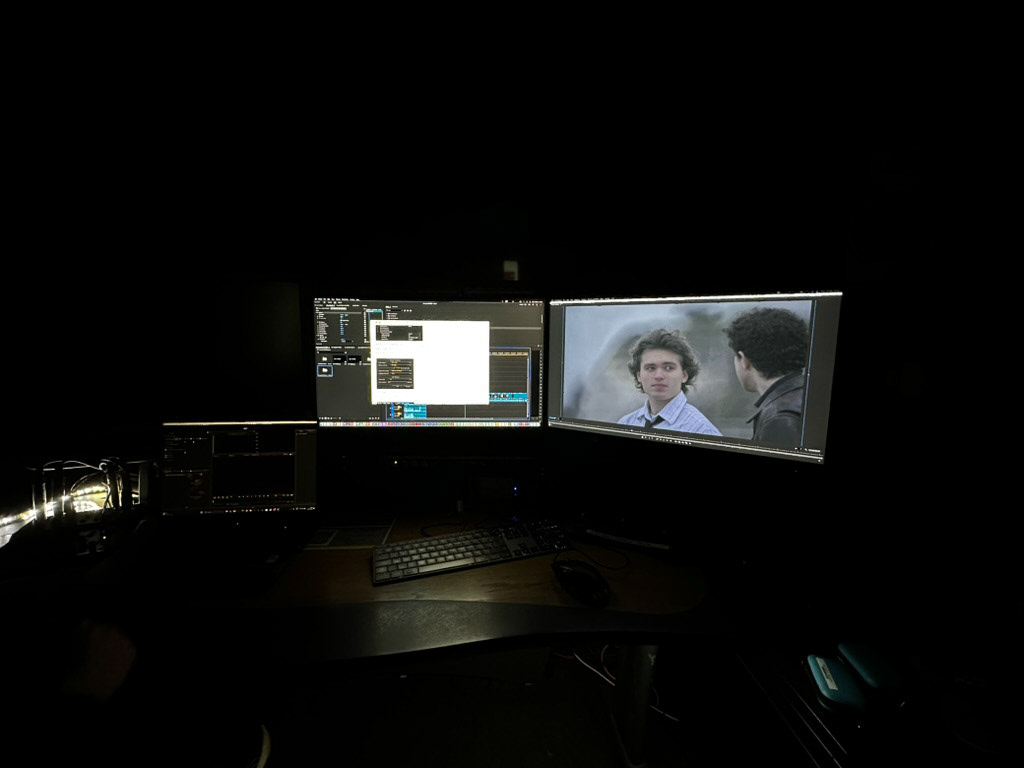
Then, today, Hannah came in to join us for a second edit session.
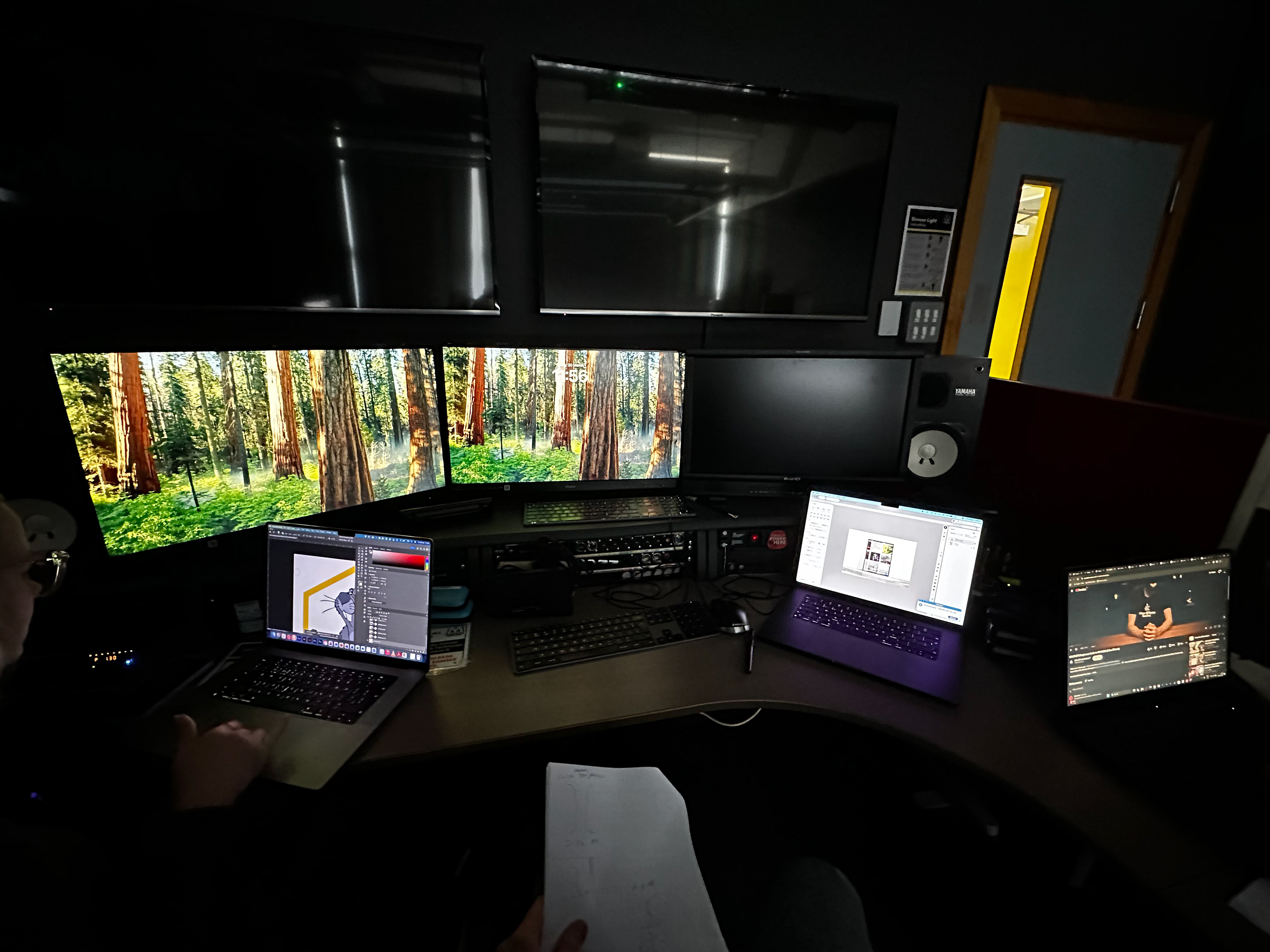
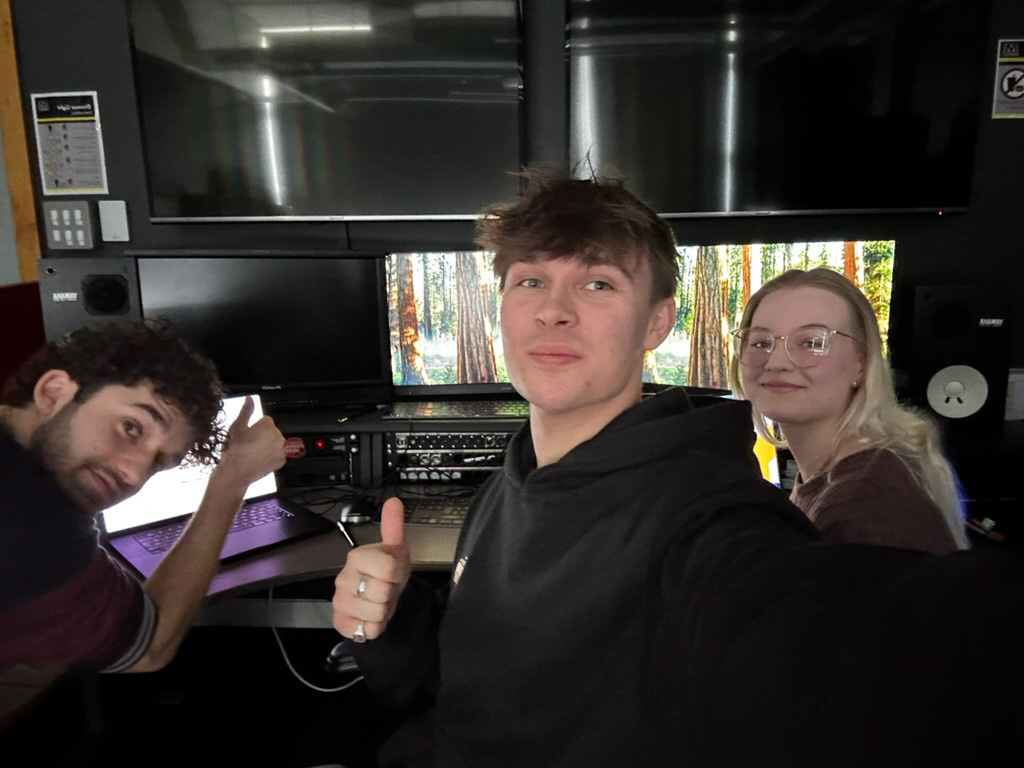
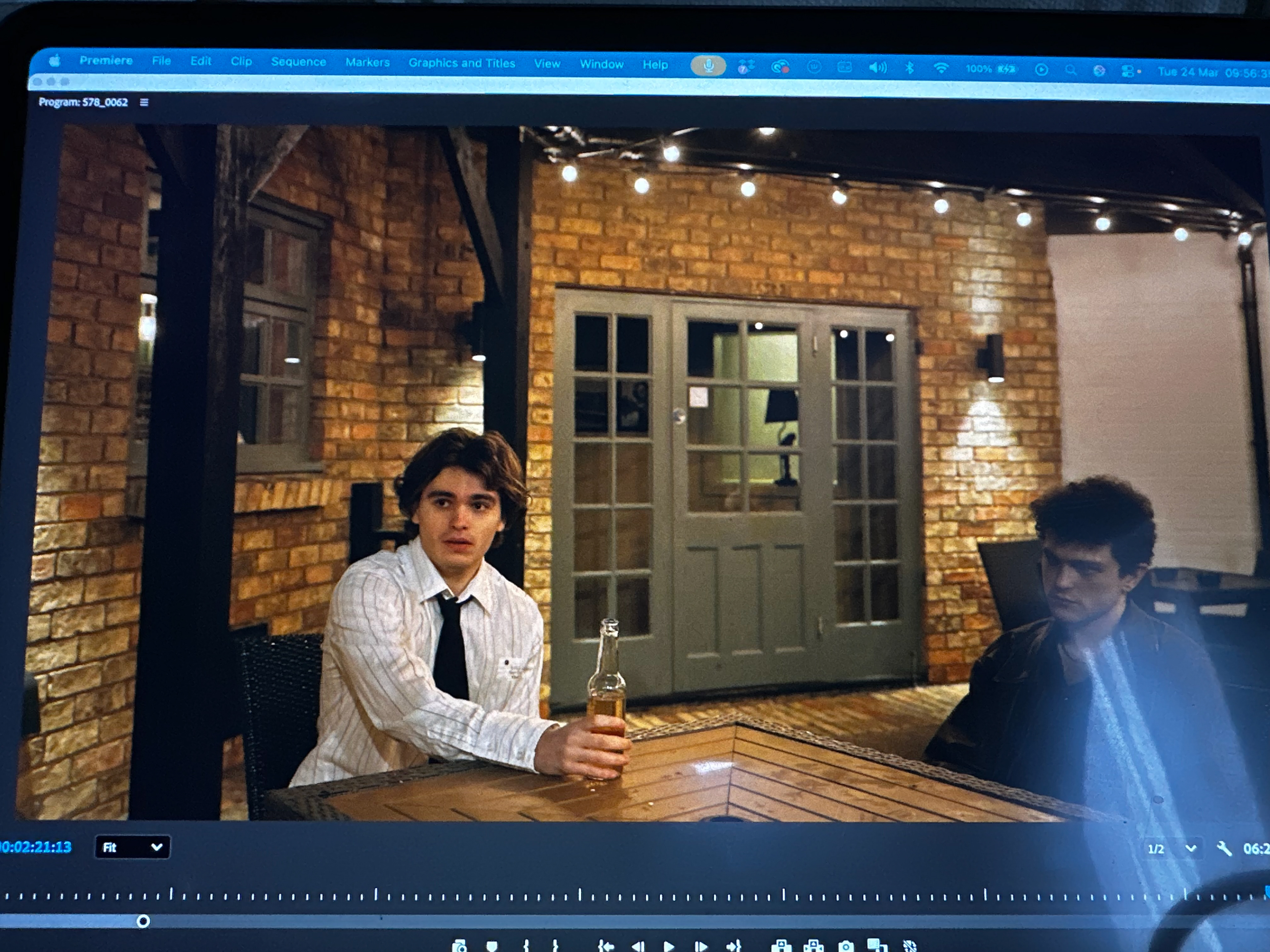
We had a first look at some slight colour grading (although the final grade will obviously come after we have all the shots at least in vaguely the correct place!), ordering of shots, and the crops we’re wanting to use so far.
26 Mar: A Pit-Stop in Disaster Village
This one isn’t quite as bad as last time, at least not for the project itself — Peter’s bag was stolen last night, and today we had our presentation on how everything is going so far. All Peter’s notebooks (he’d been mostly taking notes during all our meetings), his laptop, clothes and shoes, the bell he’d bought for the cinema, and M-Stores’ SSD, were all stolen. He submitted a police report, and hopefully will at leat be able to claim some insurance money, and we managed to do our presentation with relative success.
Prior to that, on Tuesday, I had a look at editing some bits together at home, and then designed the posters to go on the walls at Regent Street Cinema, which they say we would be able to do. I thought it would be really nice to have the posters we pass as Lucid walks in act as ad hoc opening credits. My initial idea was to have six posters, that we can go closer to for some shots, with the Hell is Other People poster giving me and Hannah director/producer credits, then making one for Peter as a mock-film called ‘The Production Designer’, and then having one each for Neve, Liam, and Luca, and then finally a Sunspots poster with all names on them.
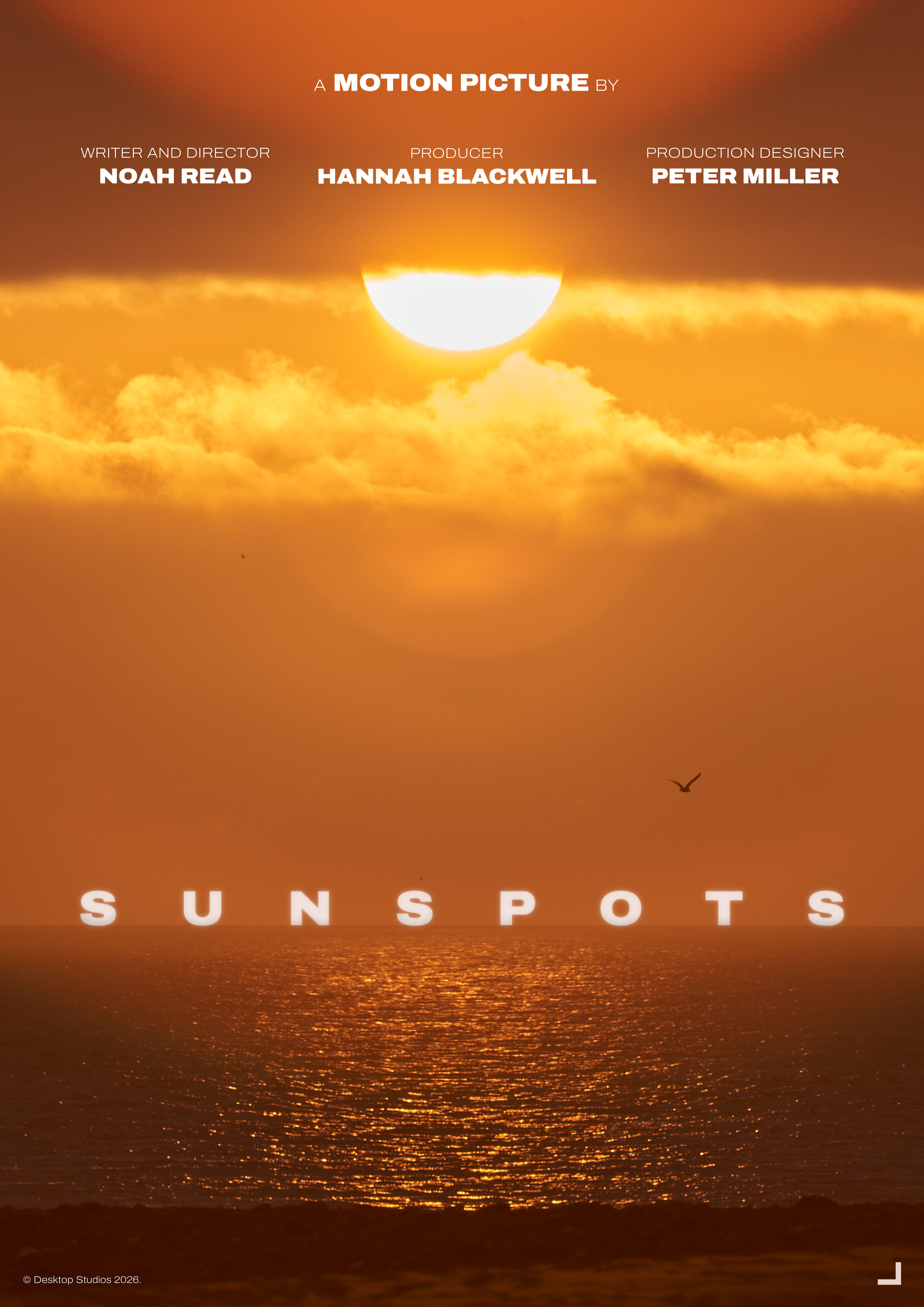
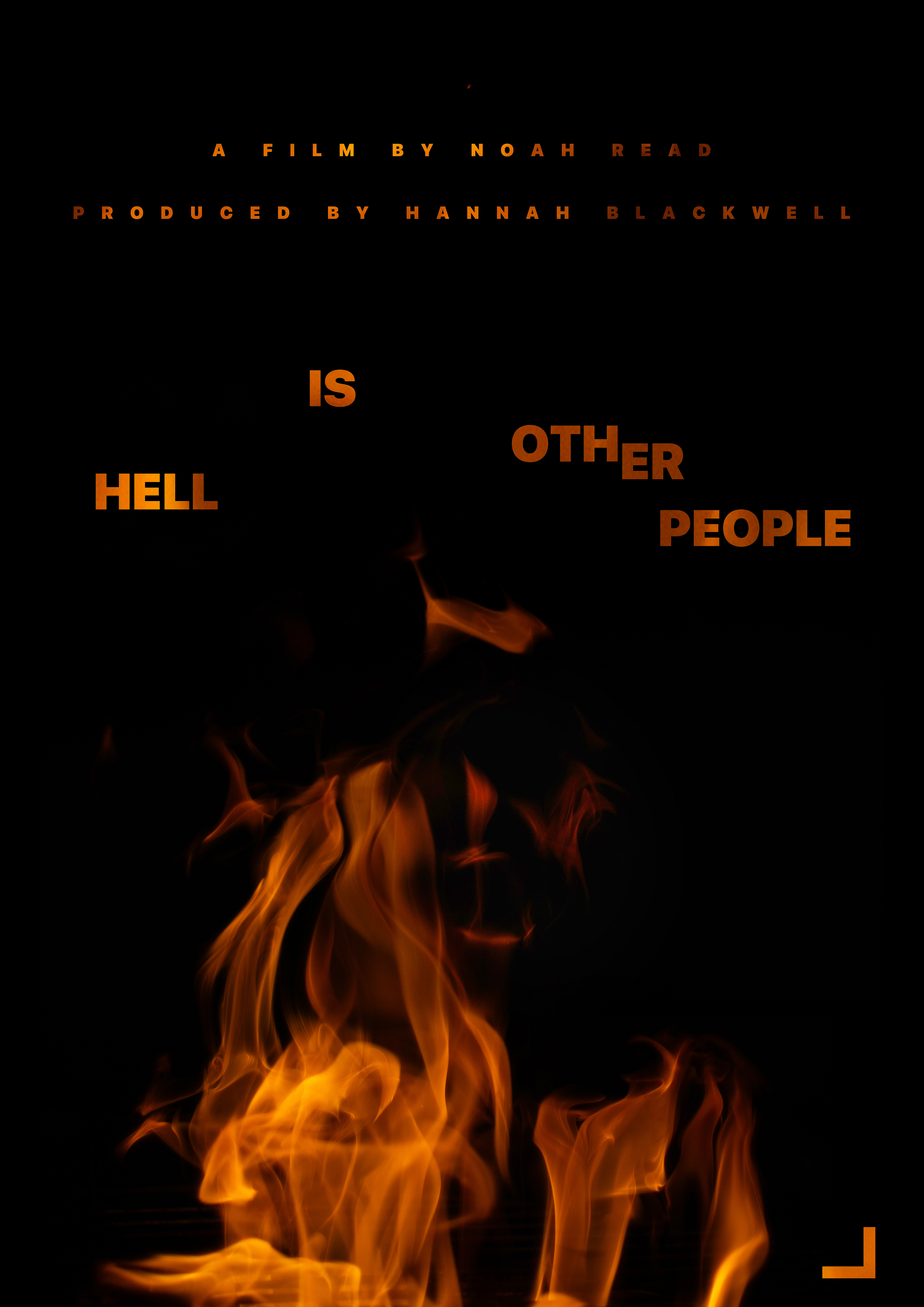
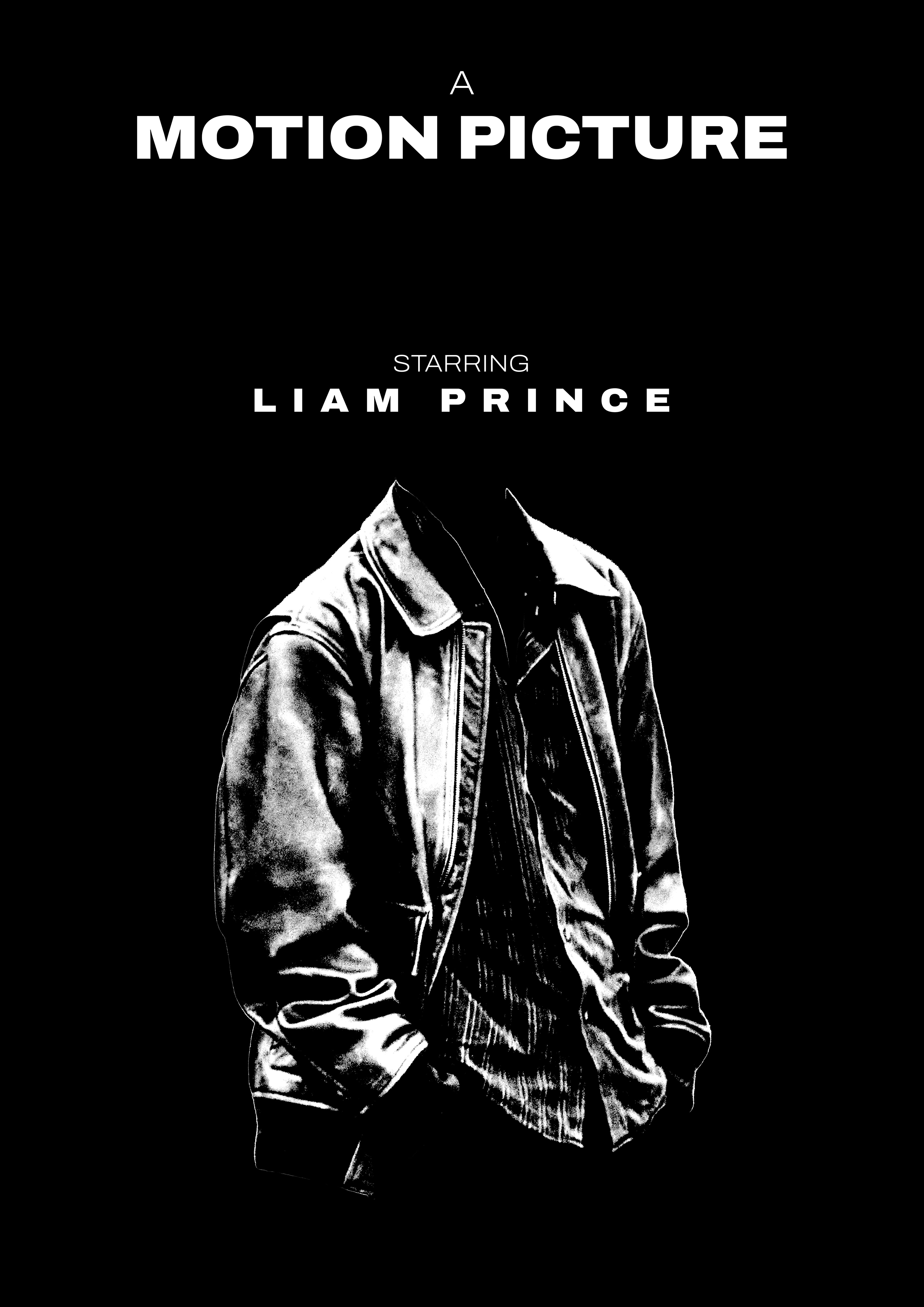
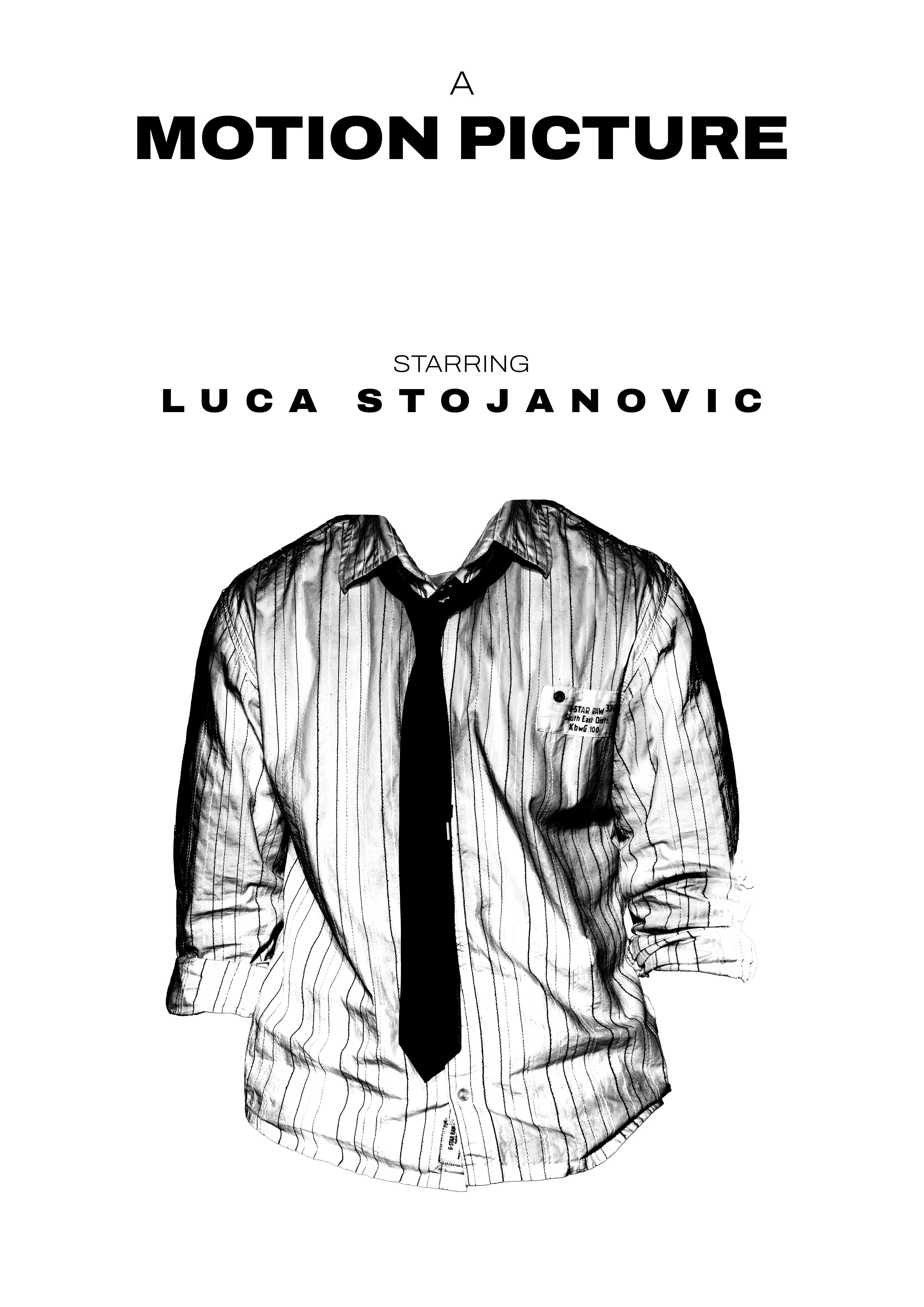
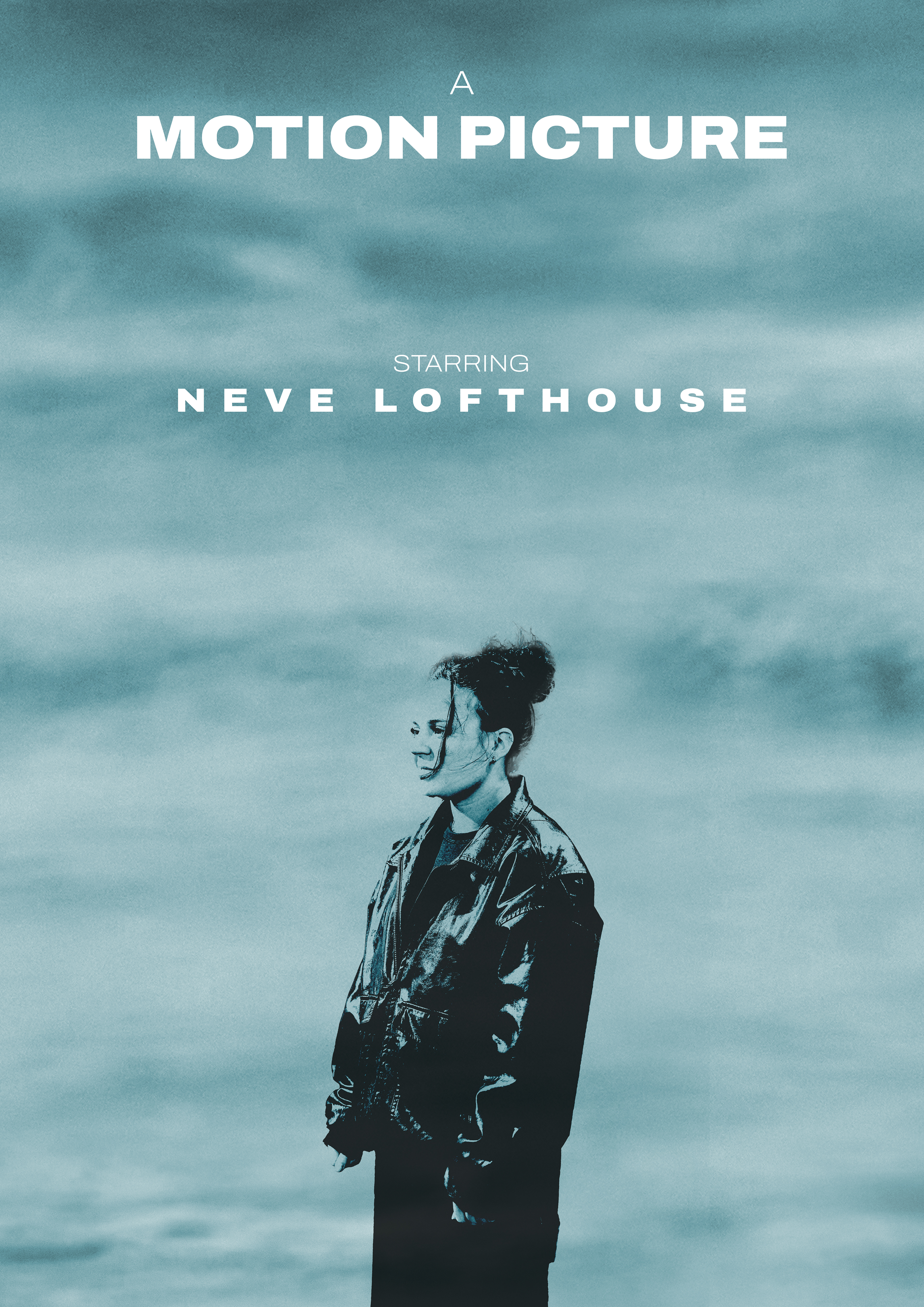
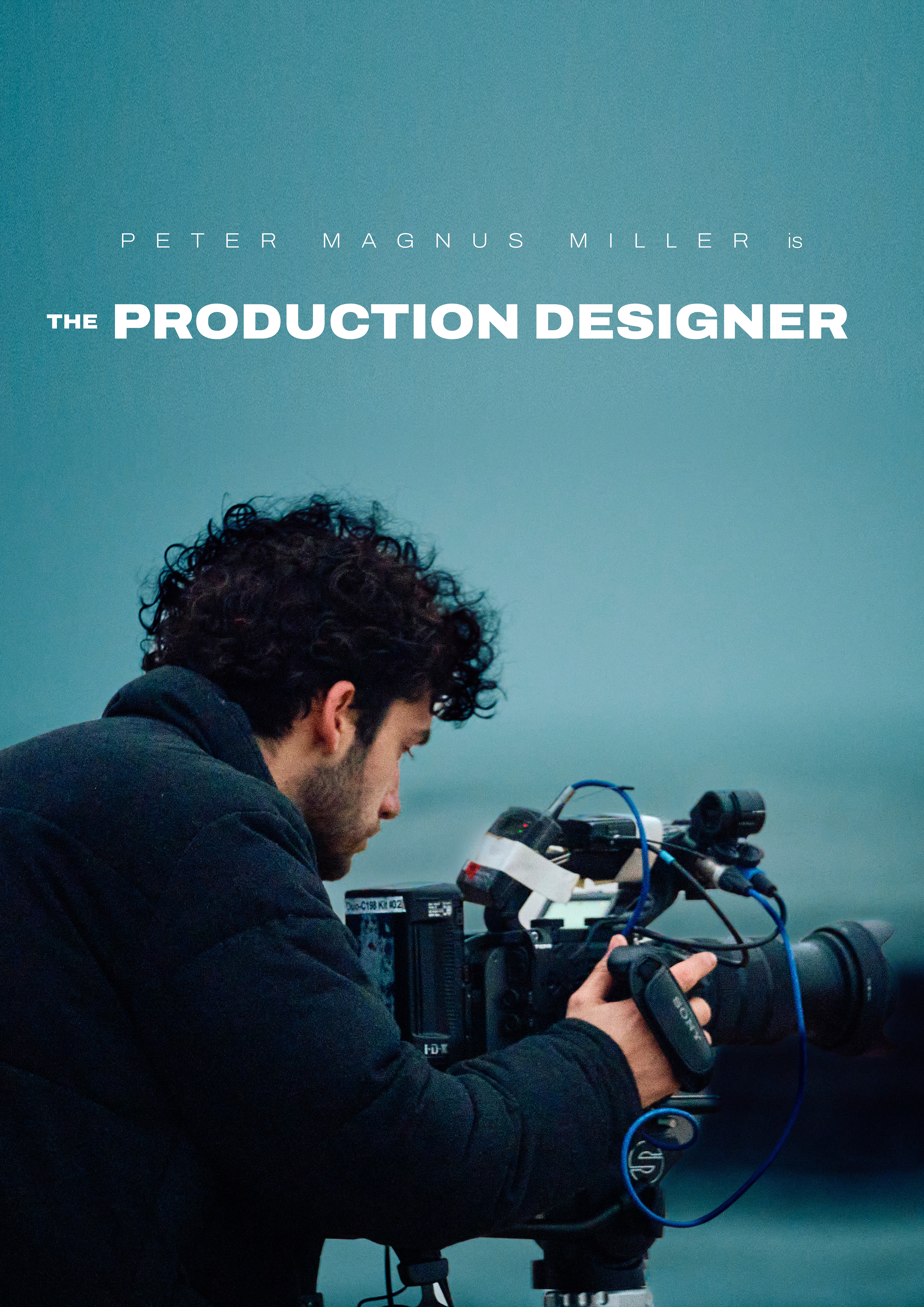
I especially like the black-and-white posters for Luca and Liam, and the contrast you get between the two characters. I also think it’s quite rare to have a poster where the predominant text is the starring actor, but with none of their head visible. I really liked this idea visually, and think it also adds to the concept of them being the same person, or alter-egos of each other.
These are the original photos I used to get the assets for the posters:
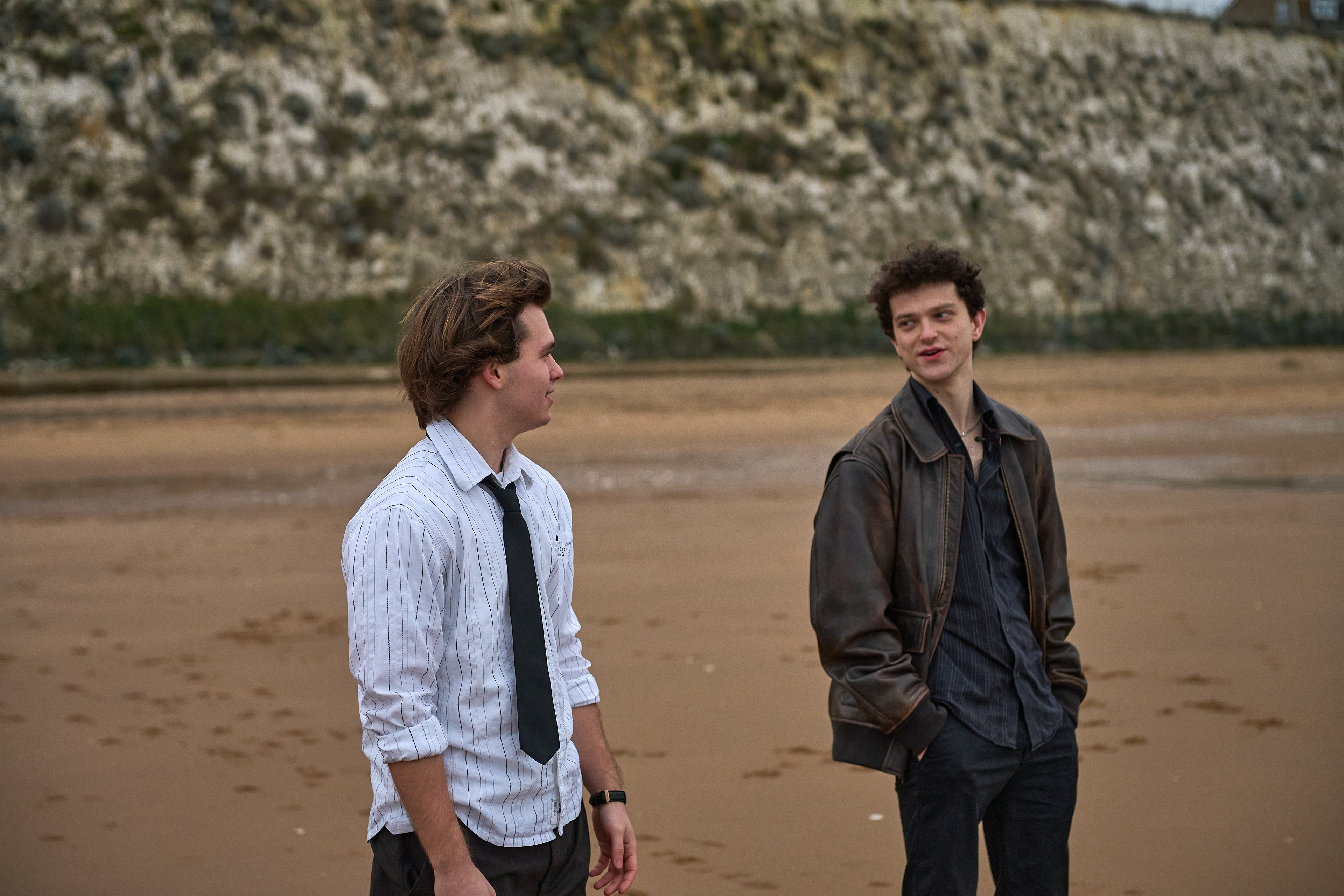
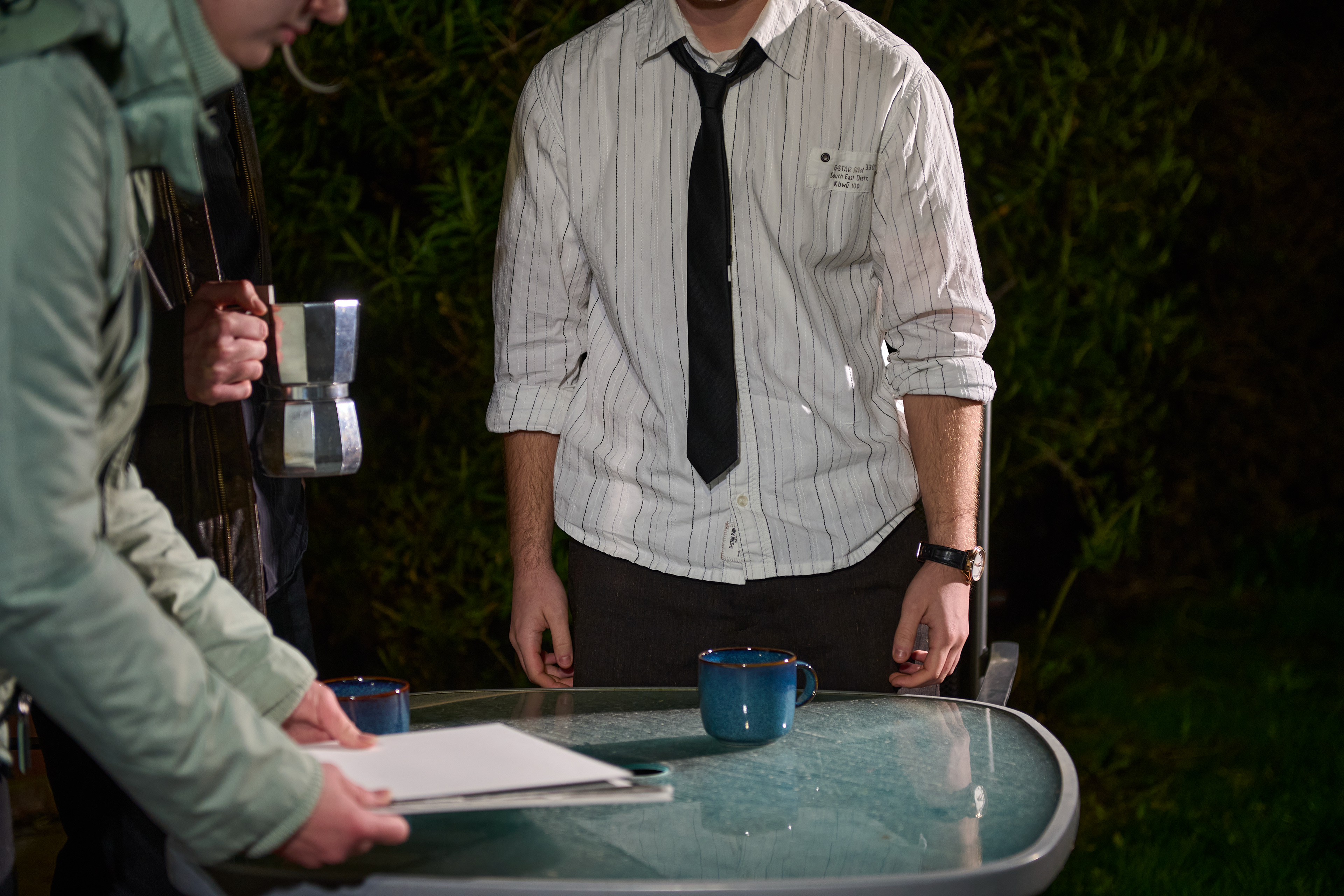
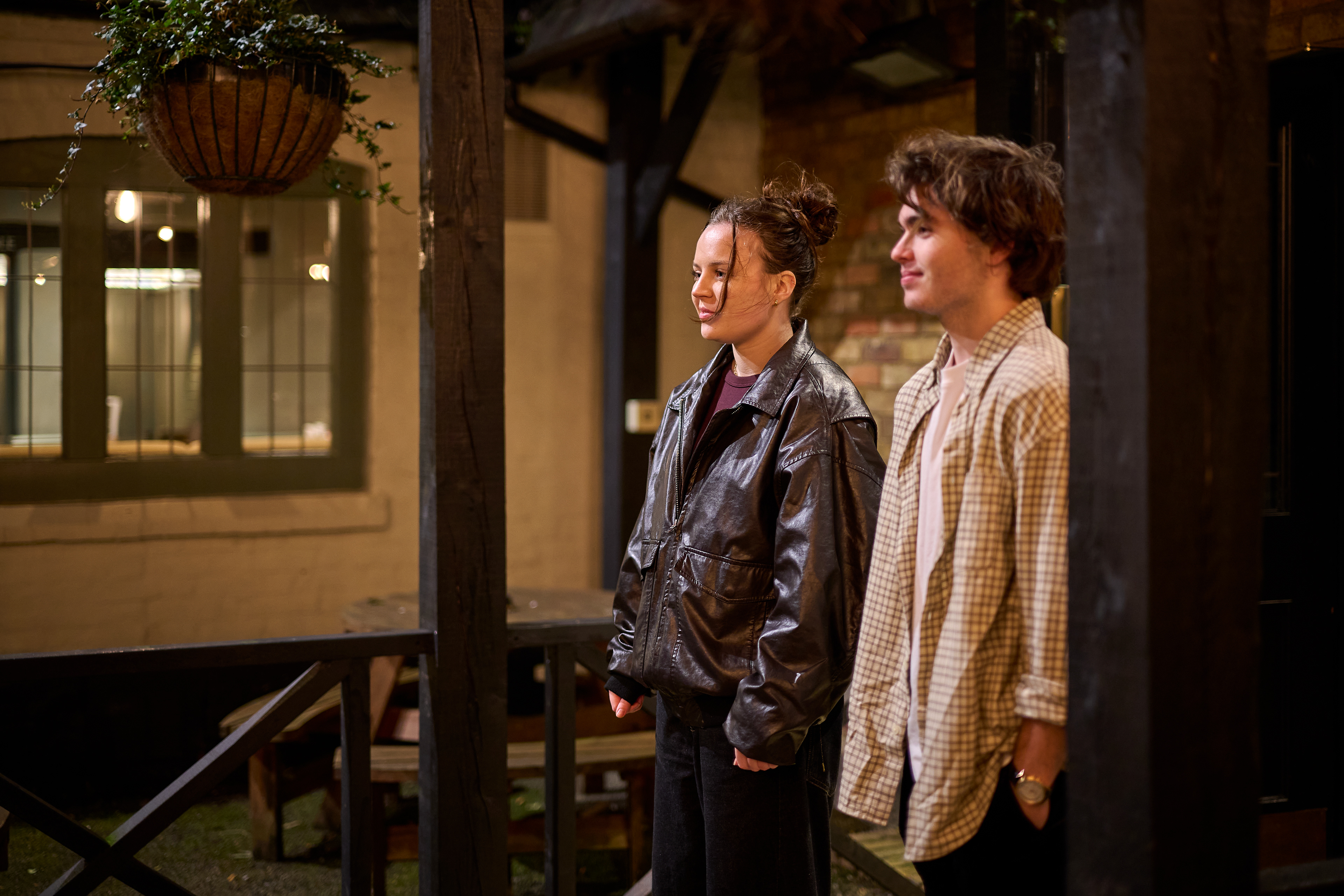
And these are some of the test designs I did before deciding on the final posters:
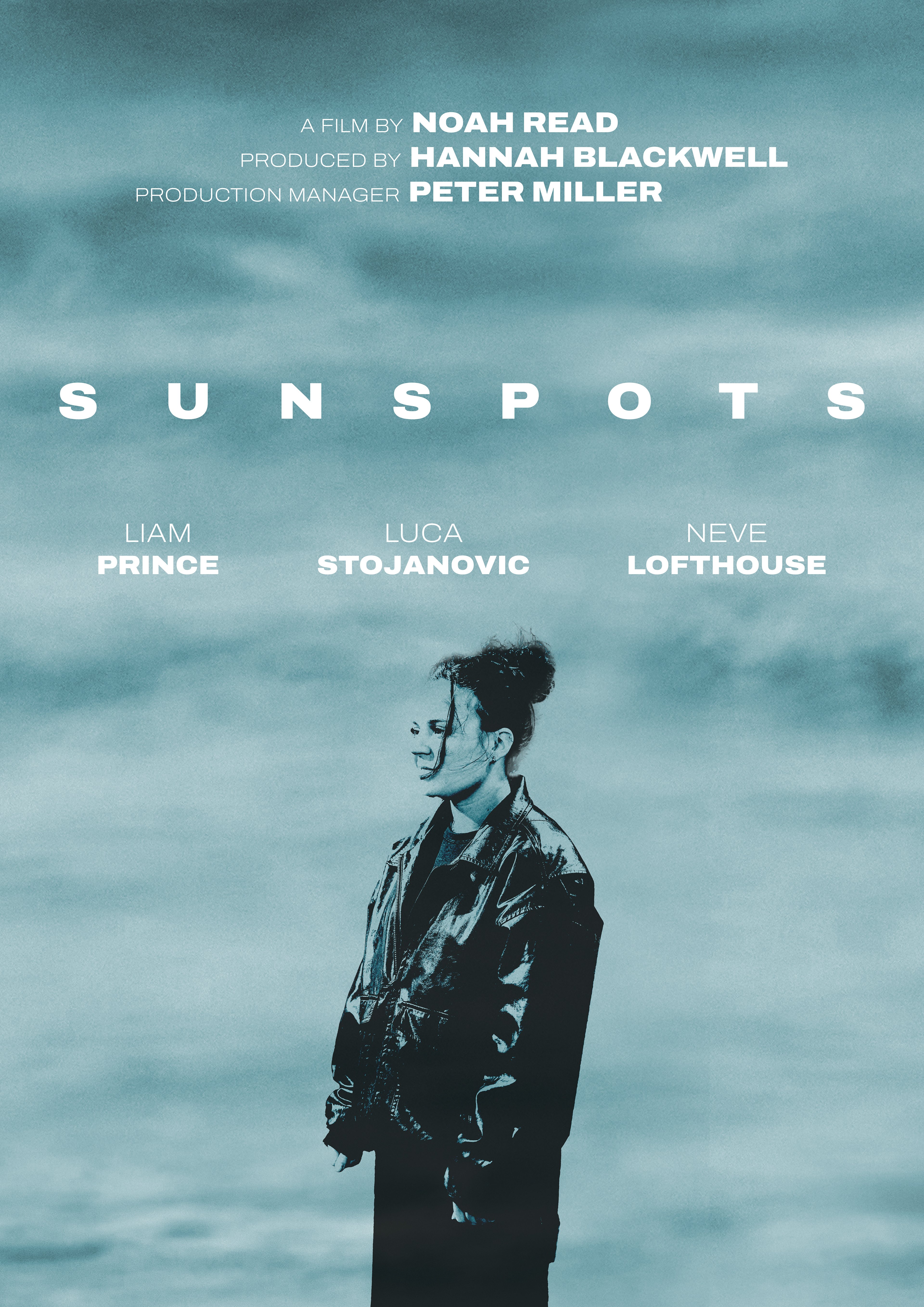
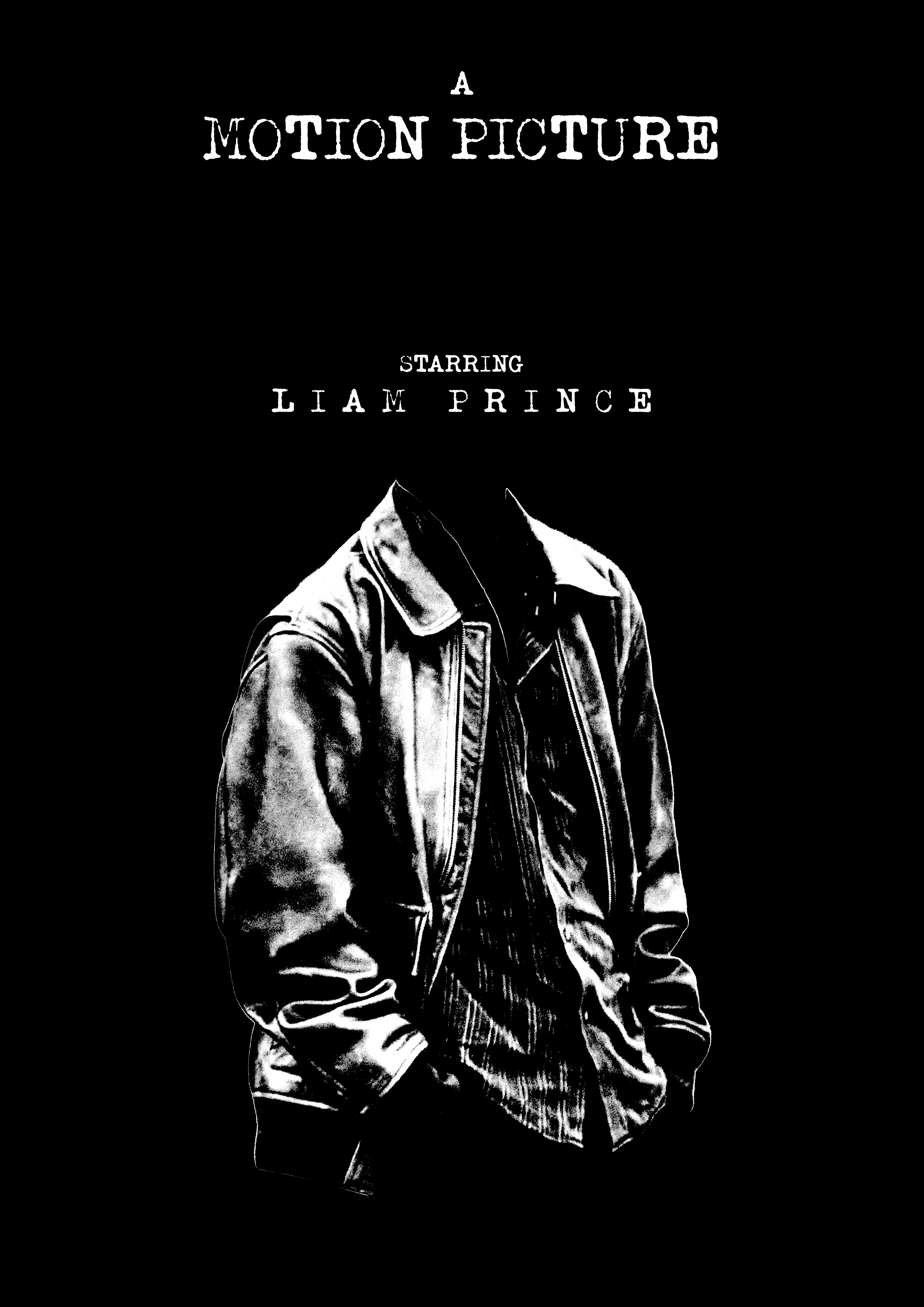
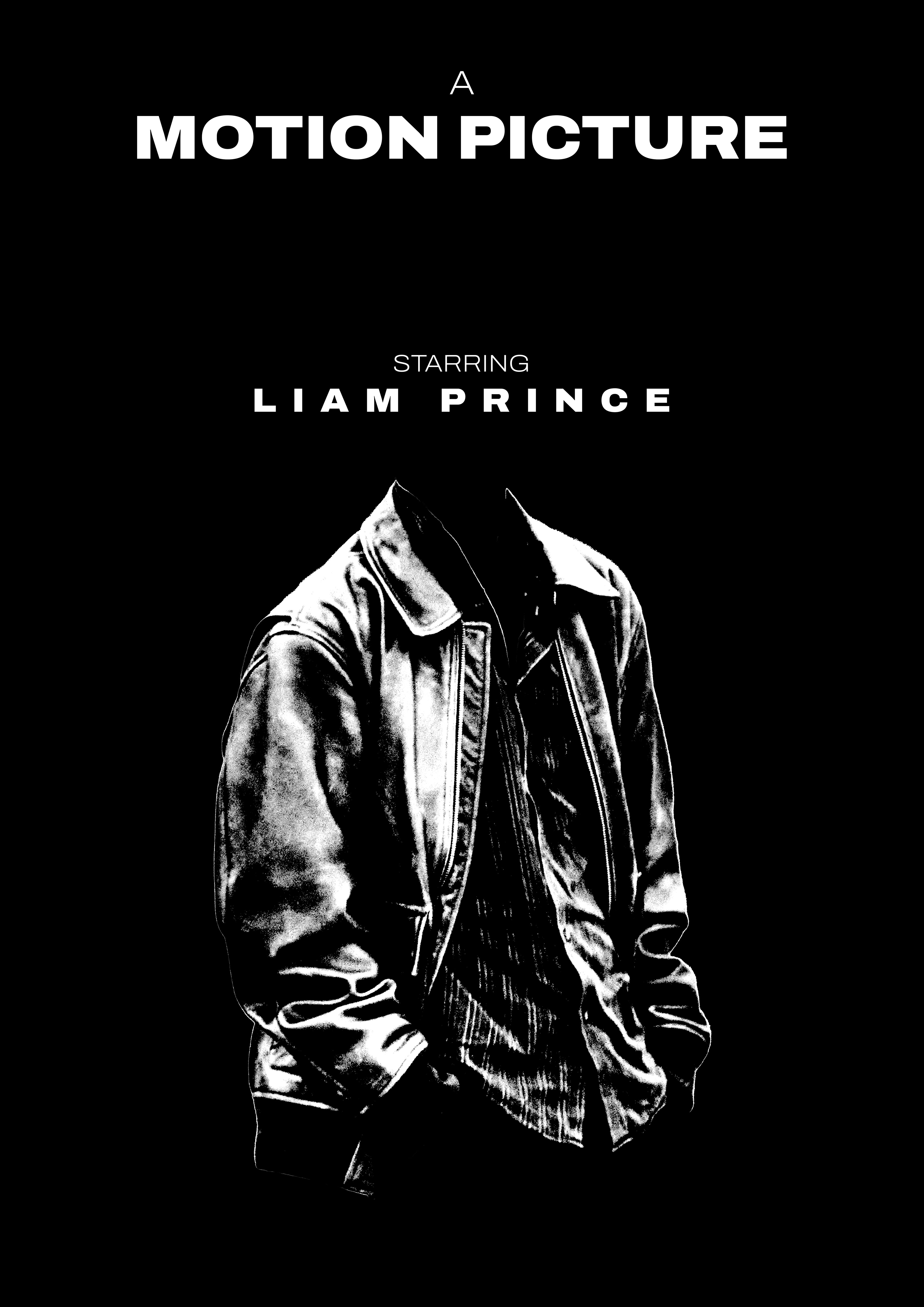
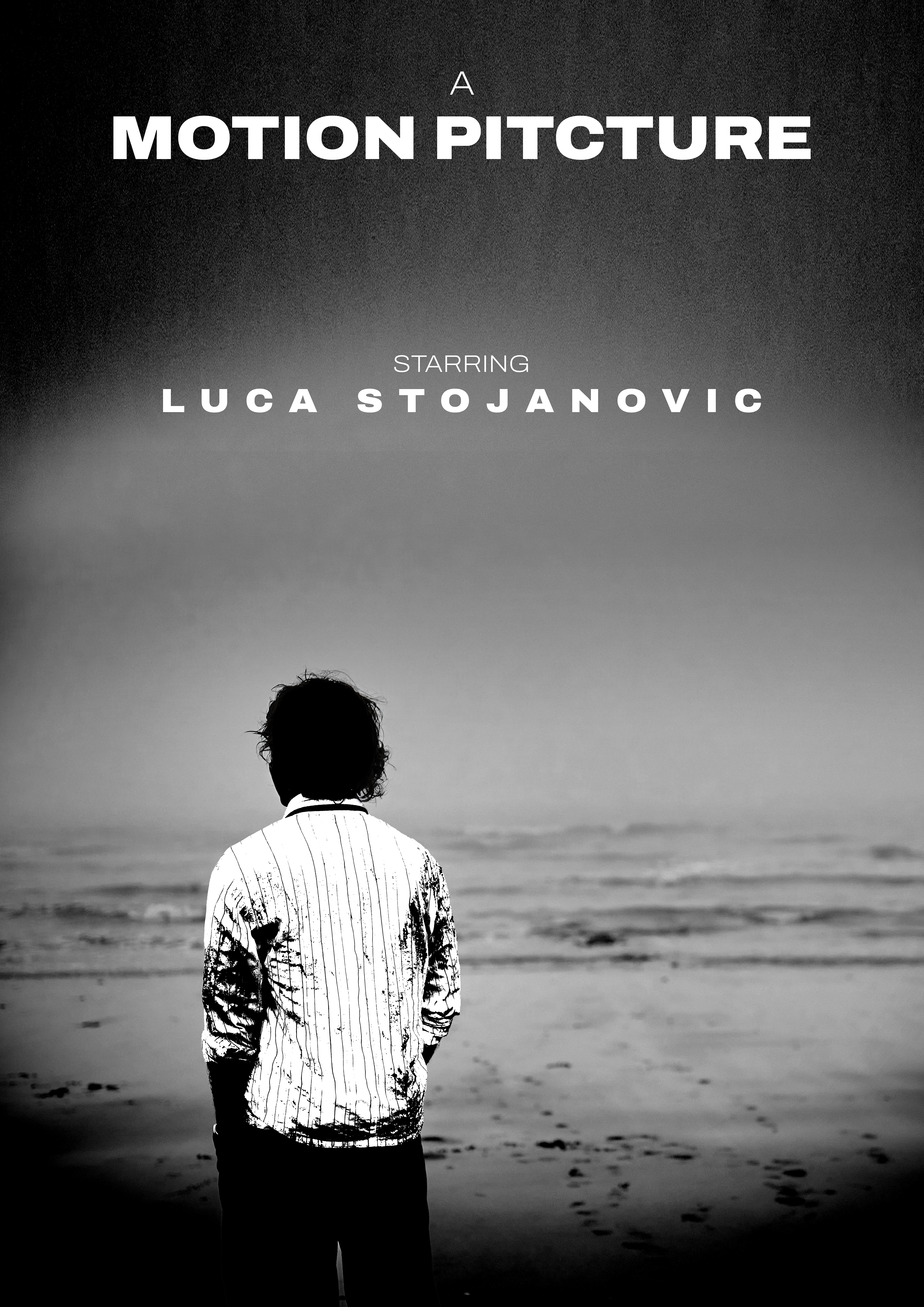
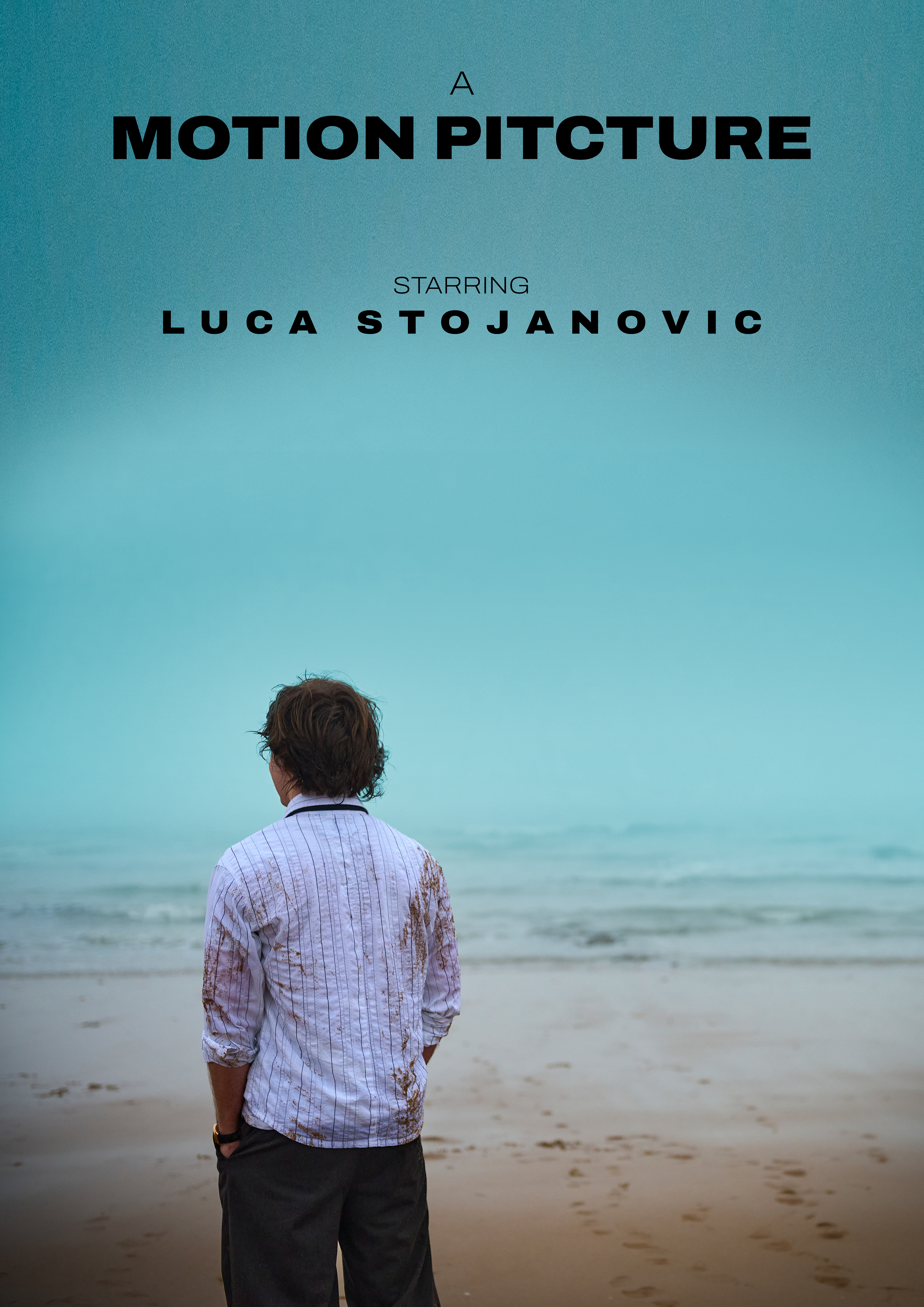
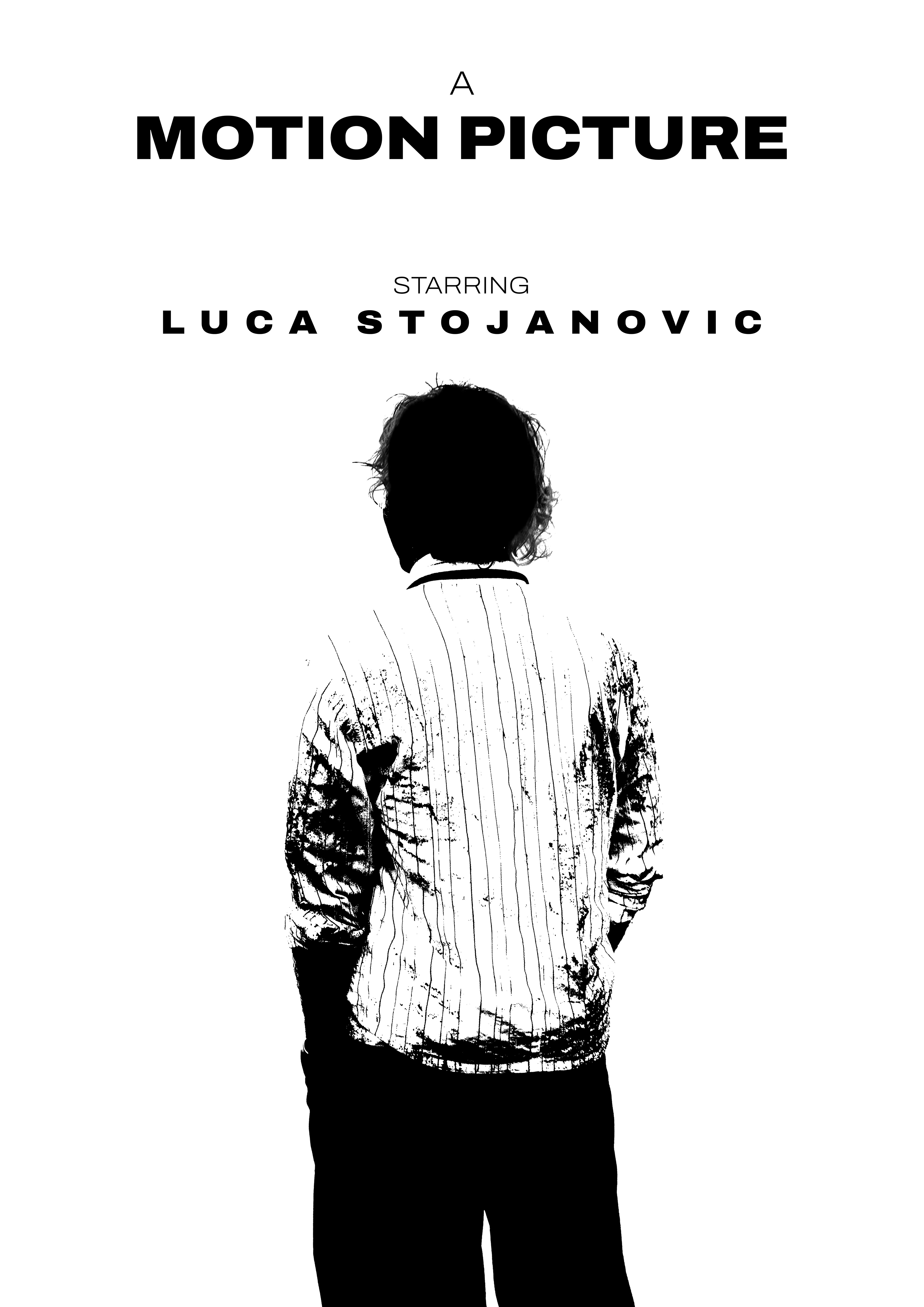
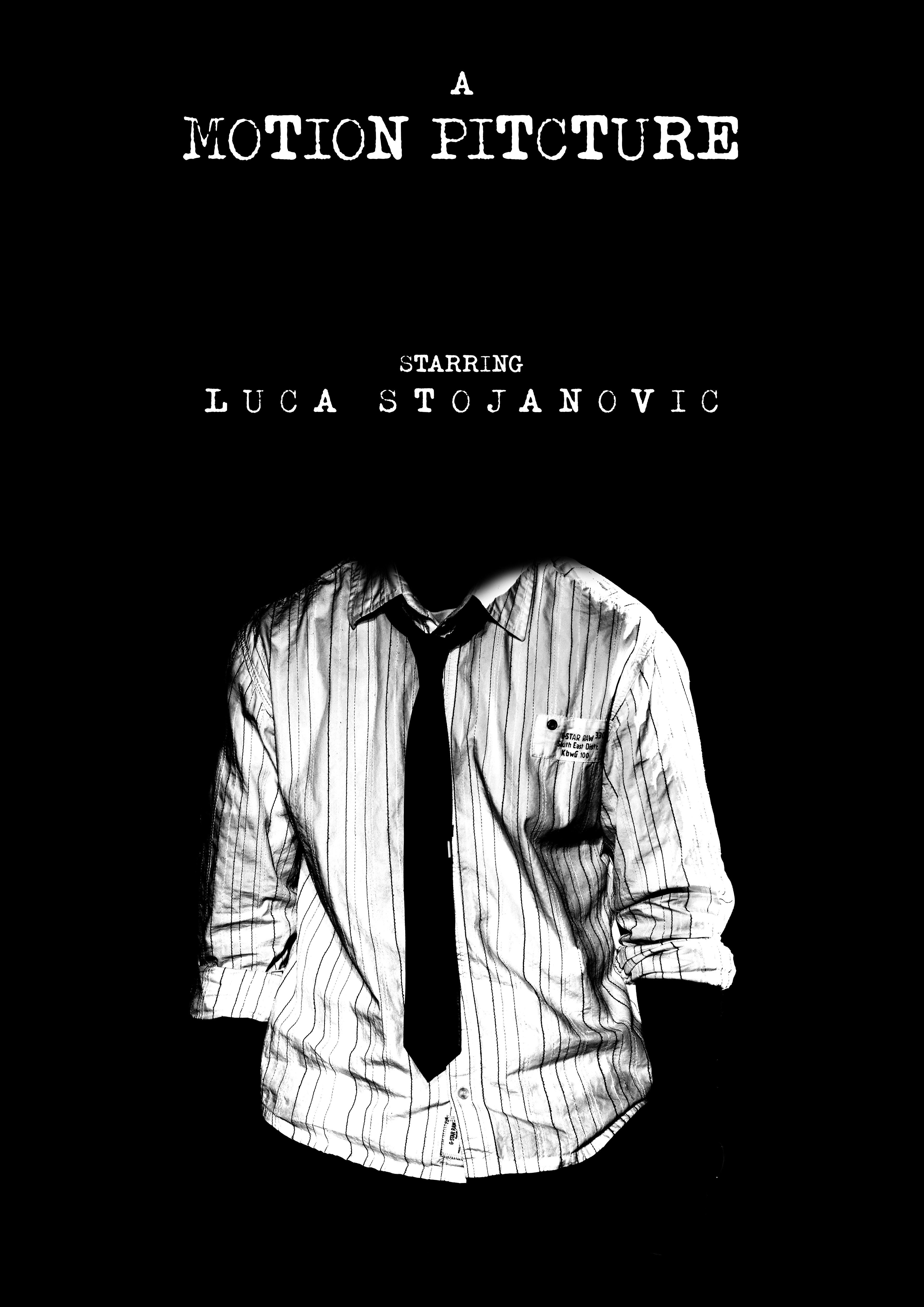
Luca’s was the most difficult to produce, as I had to re-draw the top of his collar and shirt, and once I had the duotone base images, I needed to completely remodel the shoulder on the right (his left) so it didn’t completely blow out. The shoulder on the right is actually mostly the same as the left, but the audience should be able to tell as I added shadows differently to the two of them, and changed kept the original rolled sleeve on the right.
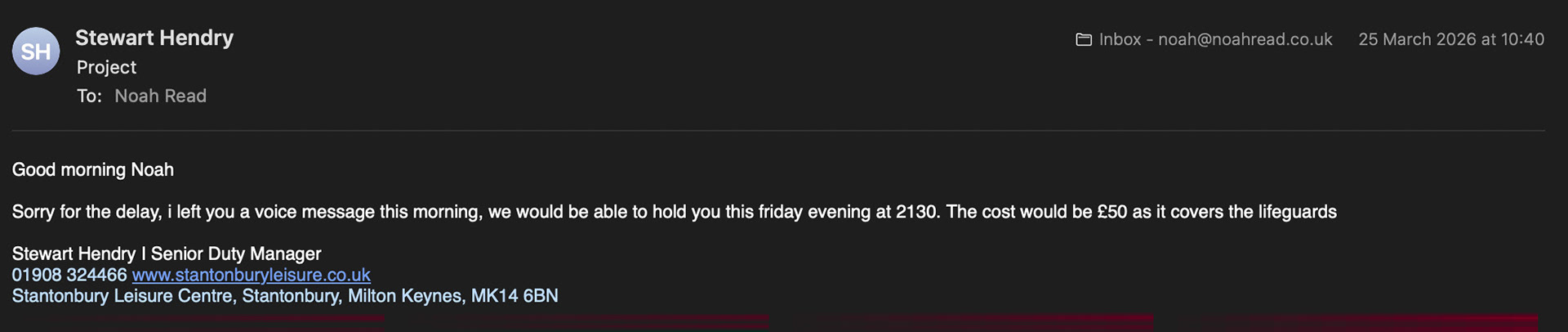
Some final good news: Stantonbury Leisure Centre have said we can film underwater!
28 Mar: Underwater
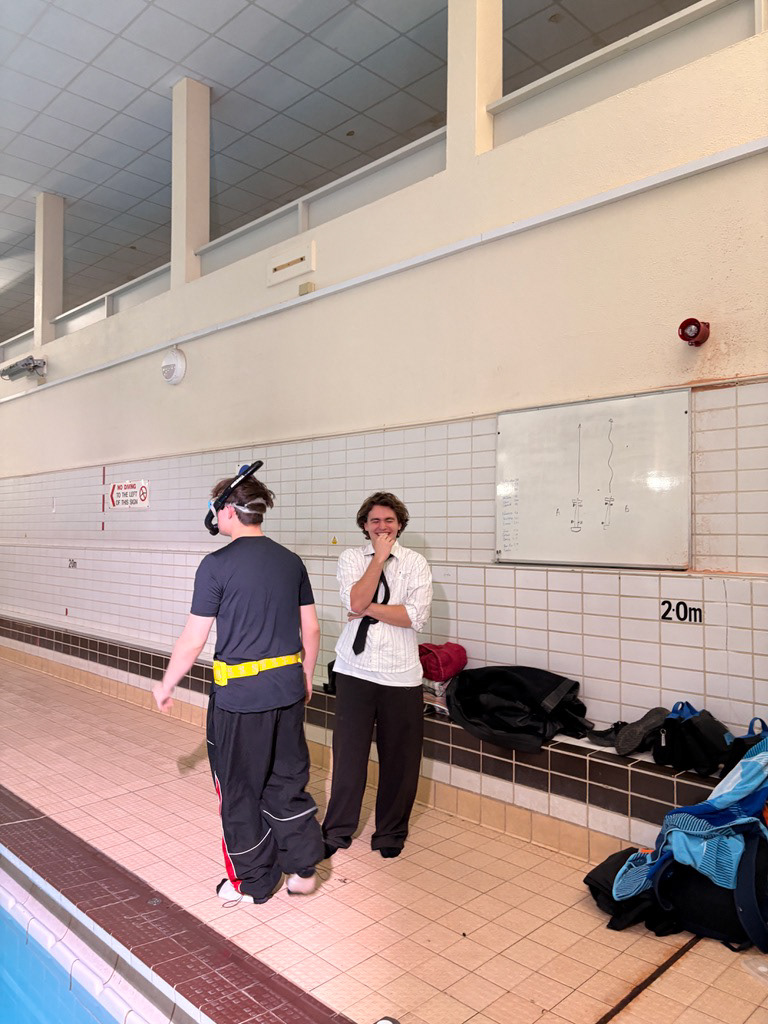
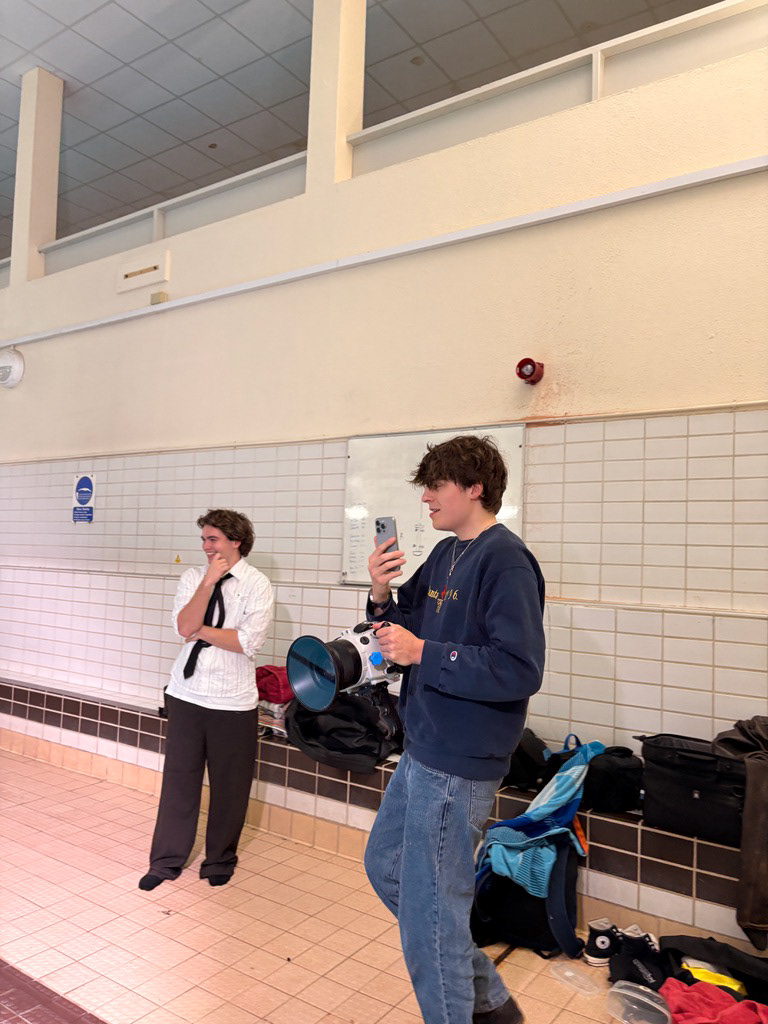
Yesterday, I went to Paul's to collect the underwater rig.
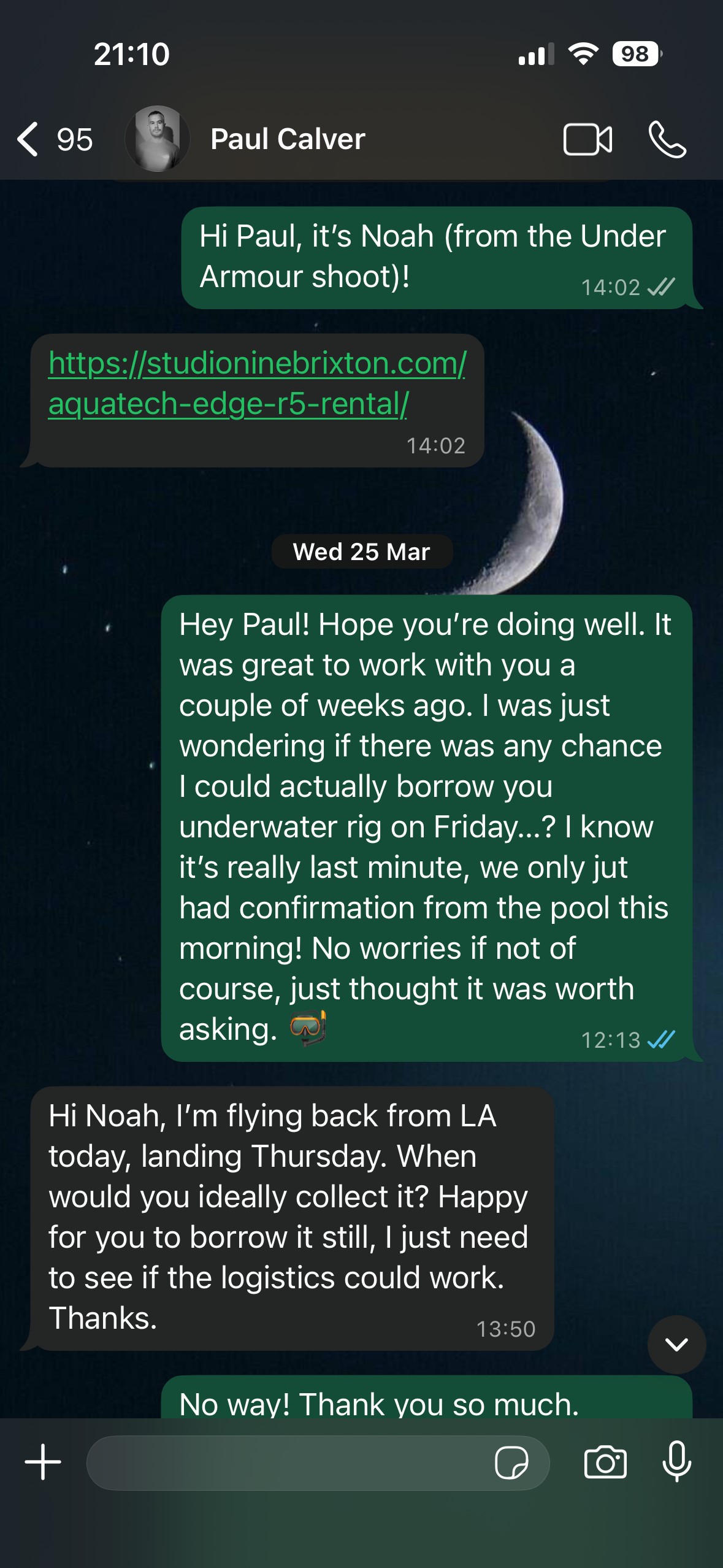
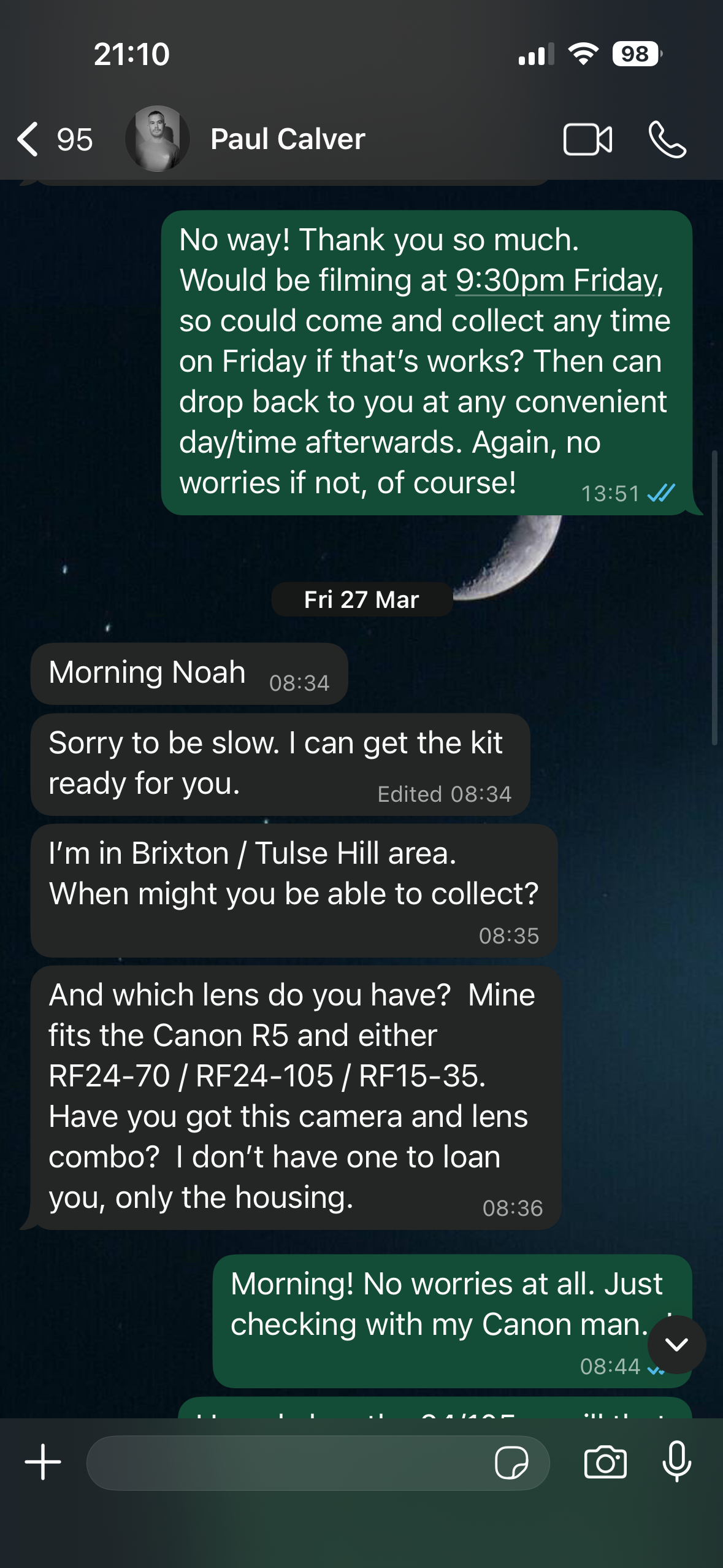
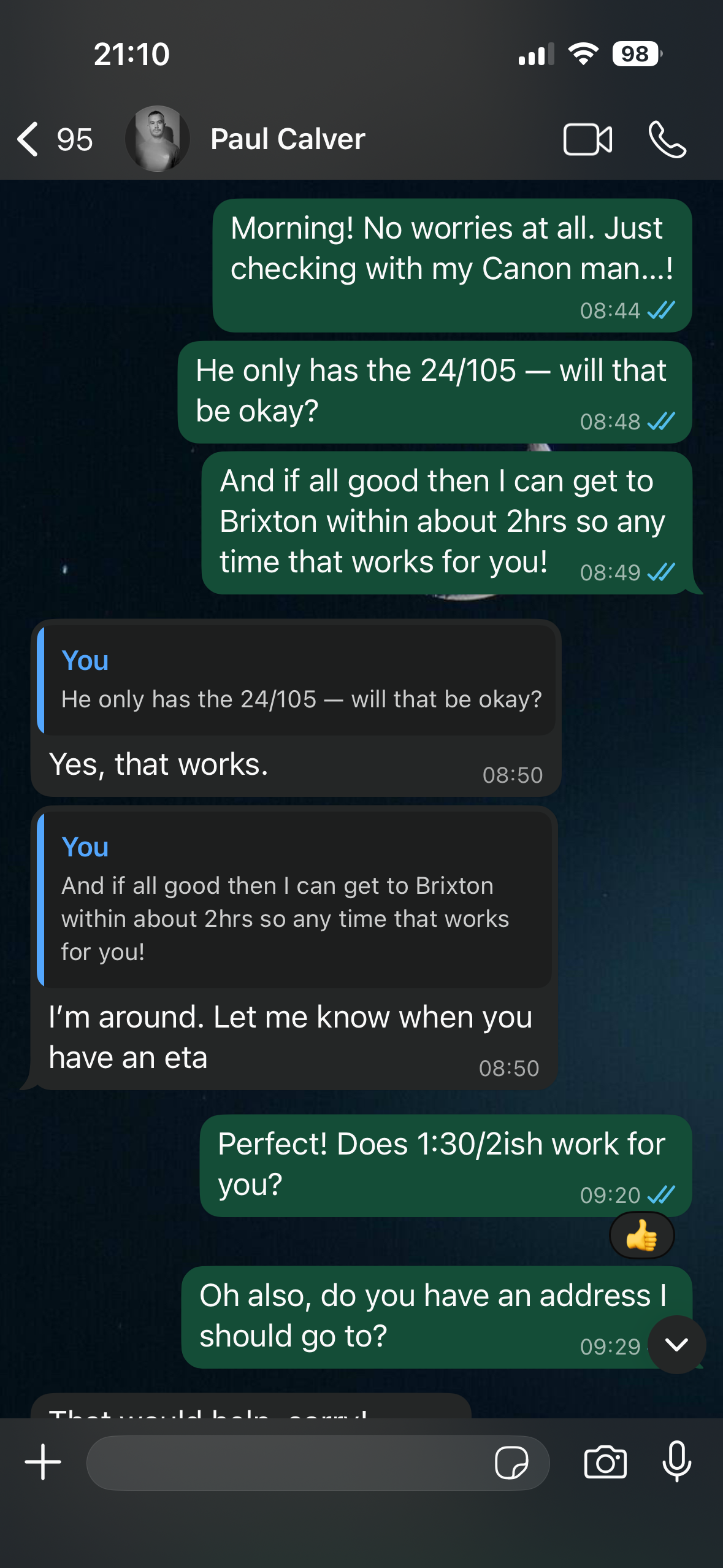
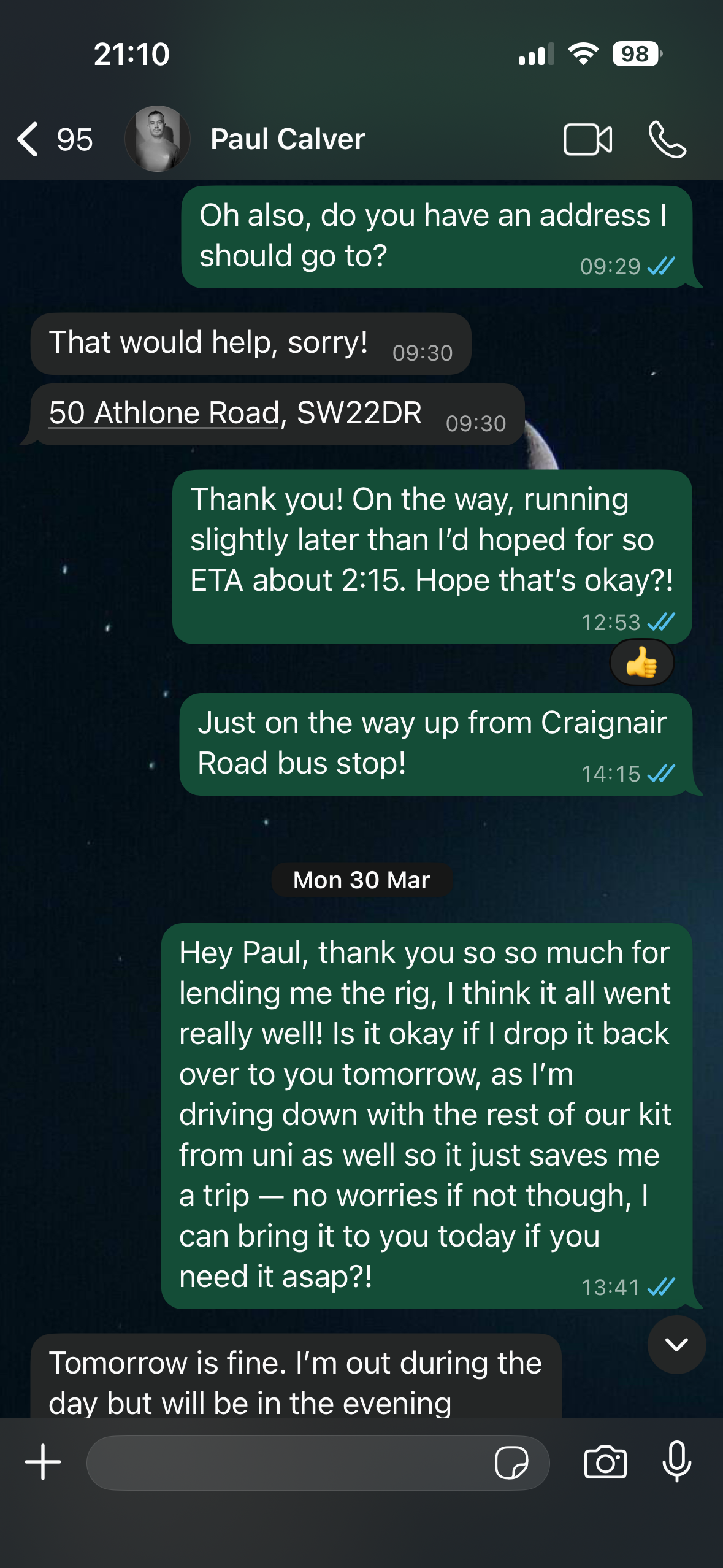
When I got it home, I had a quick look over it, and it probably would fit my ZR in it — the issue is that it would only go in with my 35mm cinema lens, which means it wouldn’t be able to autofocus. Using this would have ben a last resort, as we’d have to ramp it to probably f/22 to be same, and adjust everything else accordingly.
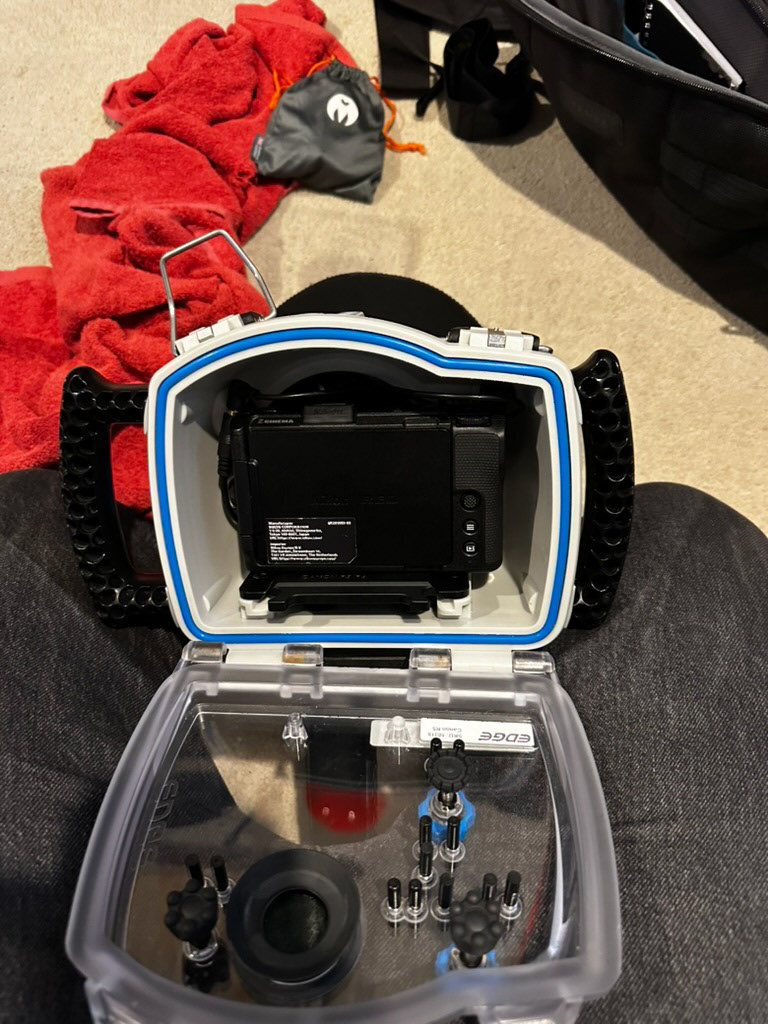
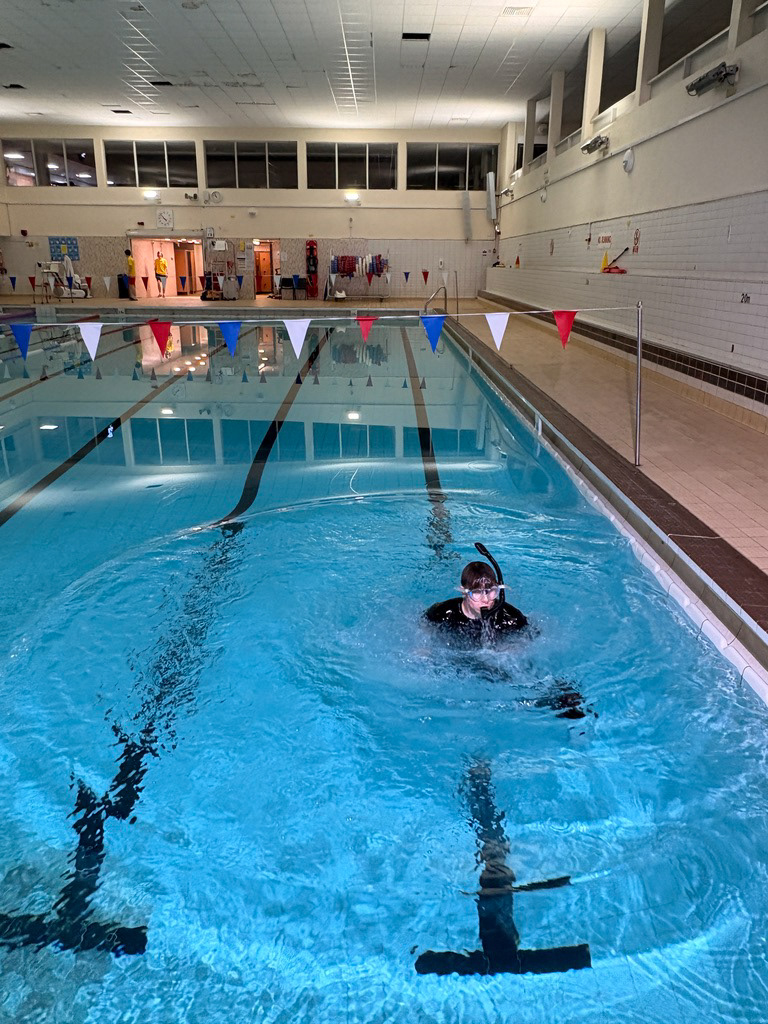
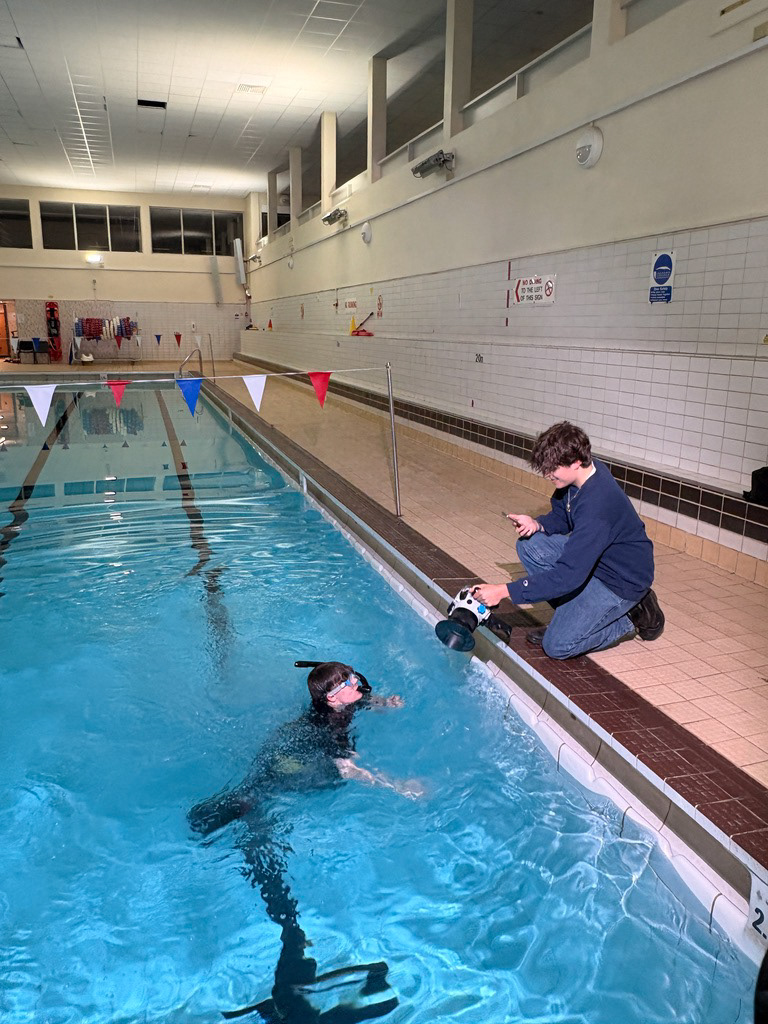
Luckily, Oliver’s R7 fit perfectly! By which I mean, once we padded it out with cloths, it fit snugly enough that I trusted it to stay still while under the water.
Without further ado, me and Luca jumped in, and Peter manned the light. We only had an hour, so we had to work quickly, and weren’t able to be as elaborate as I had hoped. My plan was to drape black cloth around the edges of the pool, and then light from the top, as if the sun were there, and with the black adding depth to the shot. As it stands, it does look quite ‘swimming pool’, but hopefully we can do some work in the edit to make it look a little bit better…
Then, today, Peter collected the printed posters from Mo and I picked them up form him so I could drive them down to Regent Street with the rest of the kit — Hasan very kindly let us borrow a tripod case to keep them protected in, and I had a tube at home for once I had brought them back.
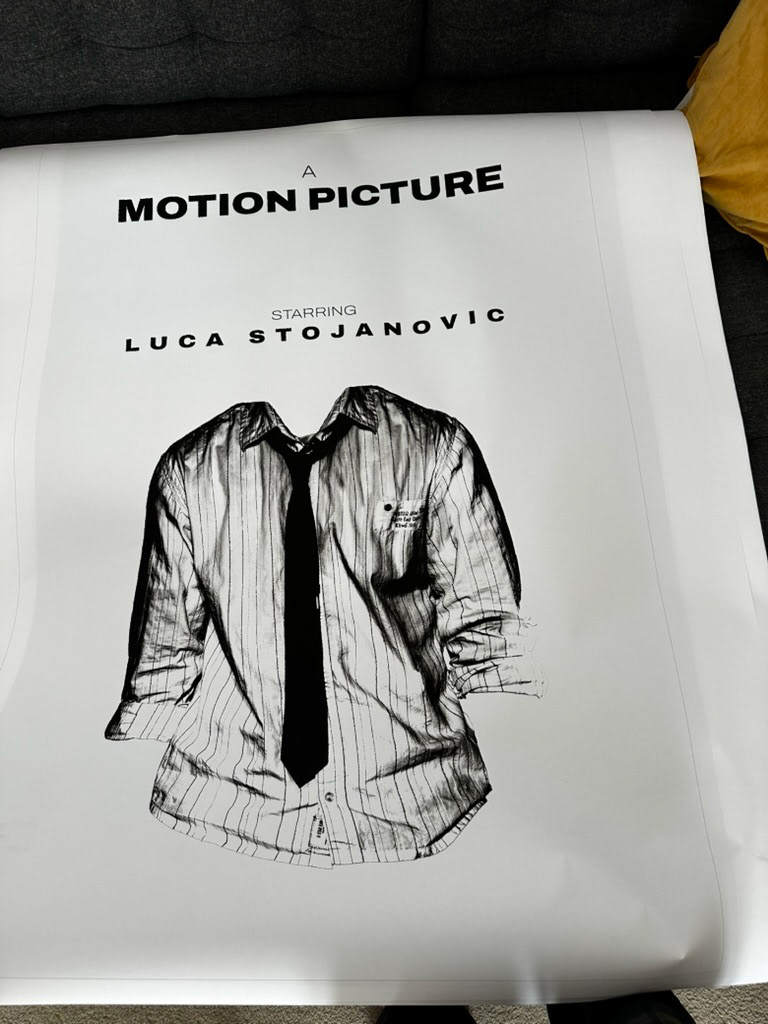
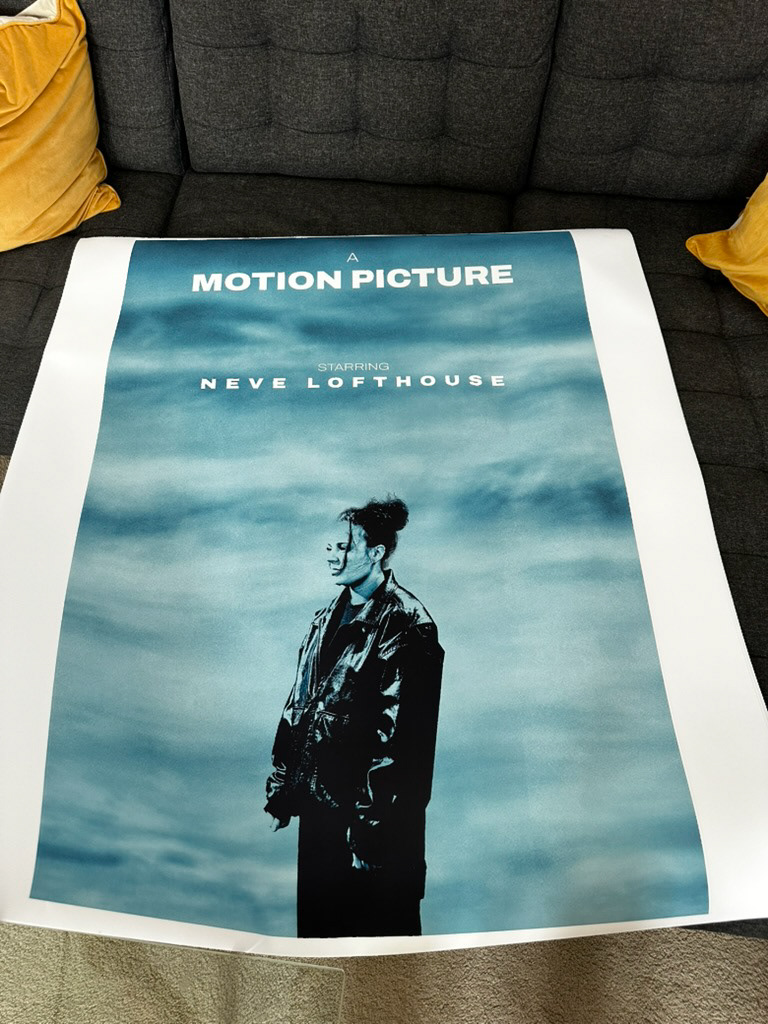
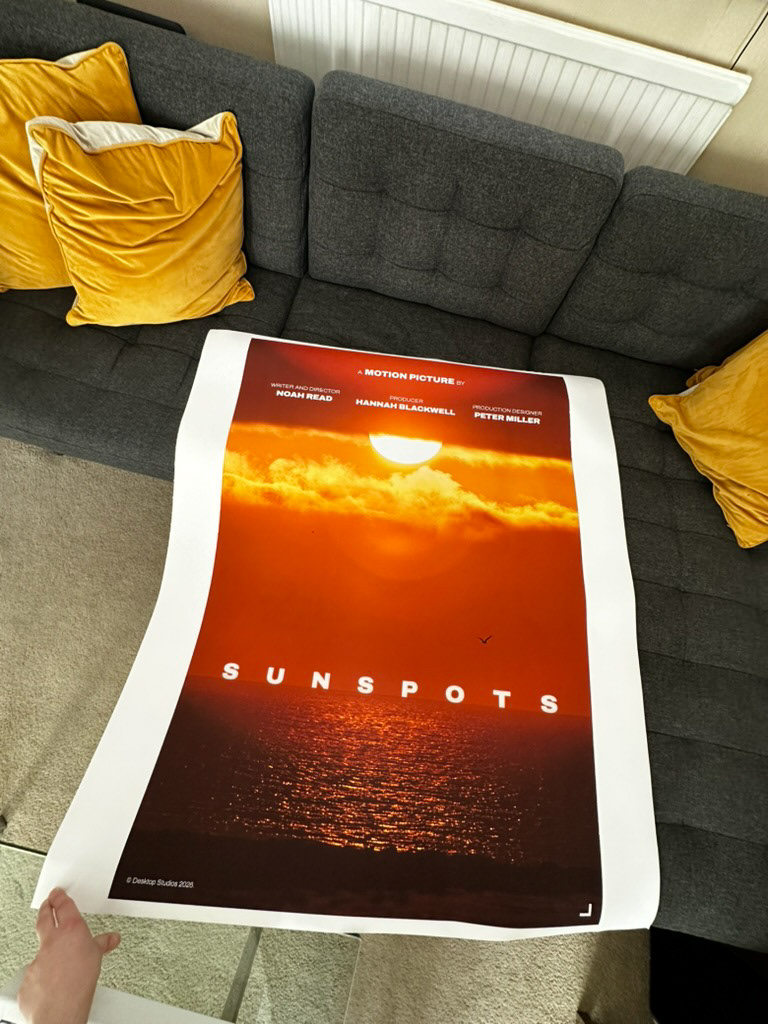
I’m really pleased with how the posters came out, and now I just hope that they actually fit!
30 Mar: The Beginning of the End
And just like that, all of our principal shooting is done. We still need to take Neve to a beach, and we have to shoot a few extra shots with Luca outside of RSC and then being ‘hit’ by a car or bus, but aside from that, we can start to properly put a cut together!
Yesterday’s shoot went well, if not a bit rushed! When we first got there, I set up the three cameras while Peter and Hannah sorted out the posters with Stefan, the man from the cinema.
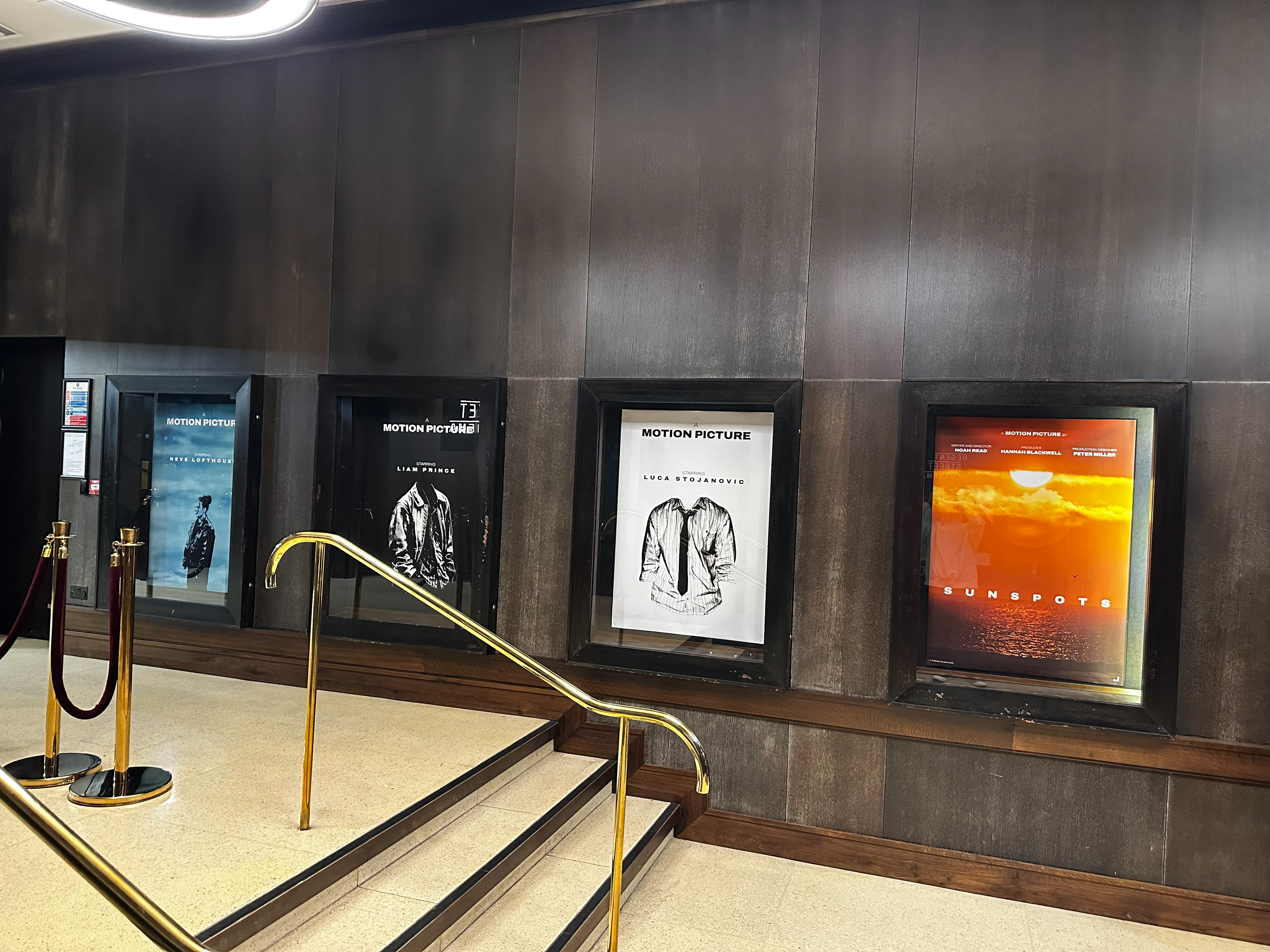
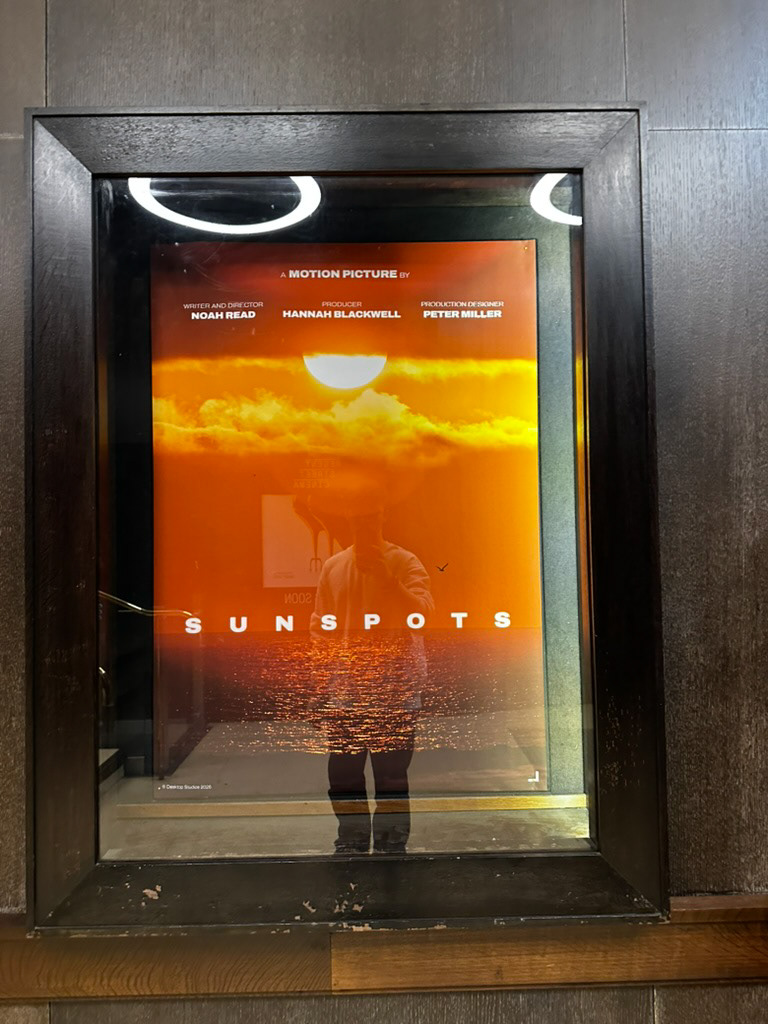
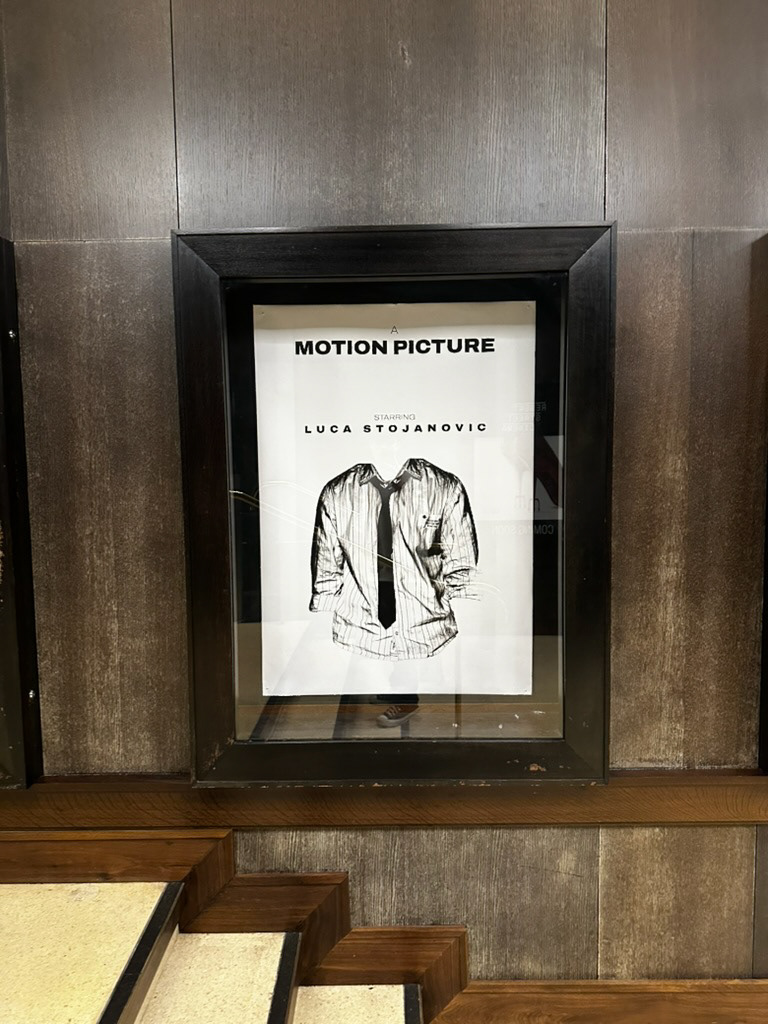
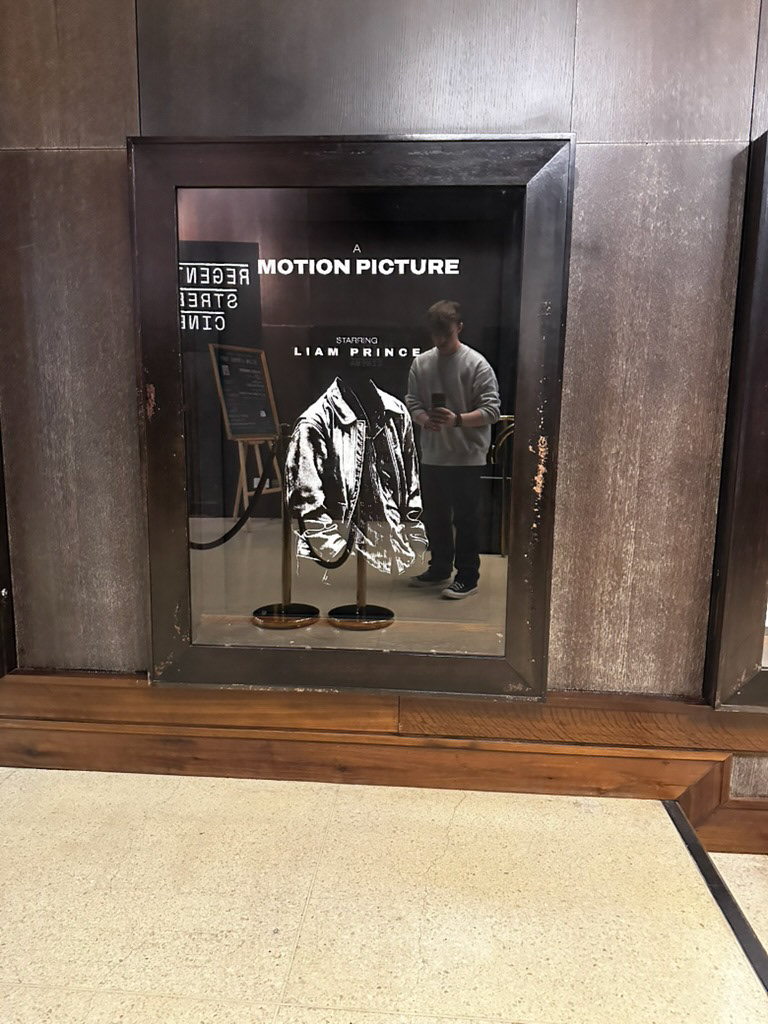
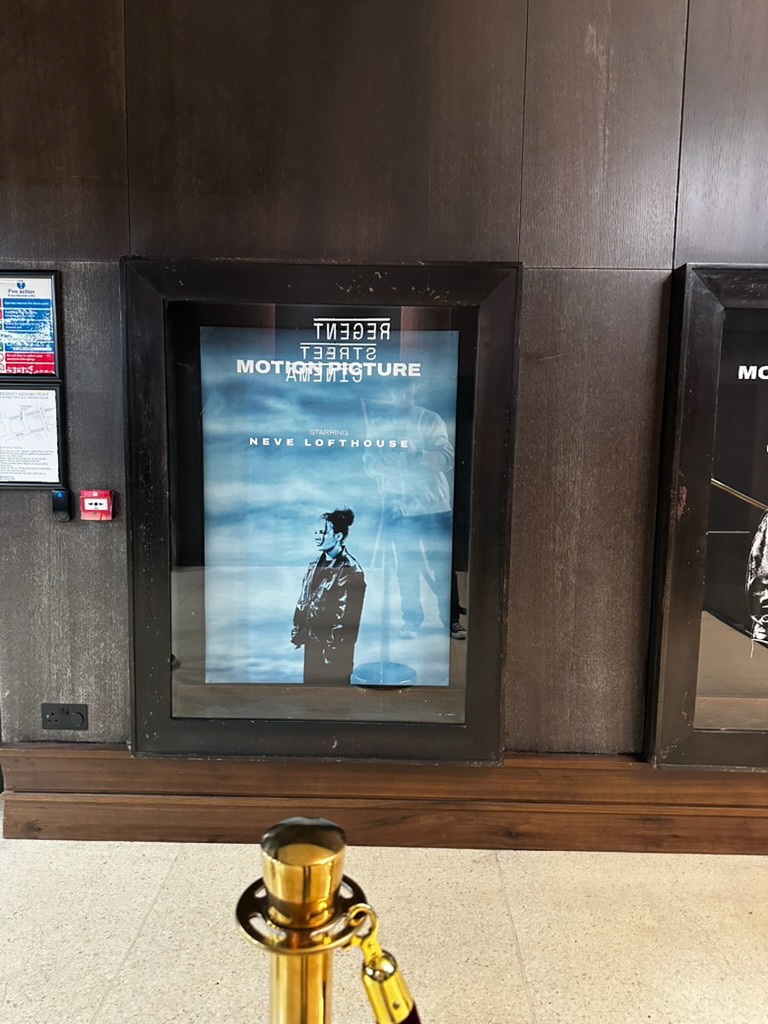
We just went with these four in the end, as they cover all we need them to and are slightly more thematically connected.
The actual shooting went well. Neve and Luca have excellent chemistry, and so I was able to direct them really easily and they both responded very well. For their conversation in the auditorium, I had them perform it a few different ways, with varying degrees of sadness, or anger, or apathy. The version I think I liked best was there they do actually get angry and shout at each other towards the two-thirds point of the scene.
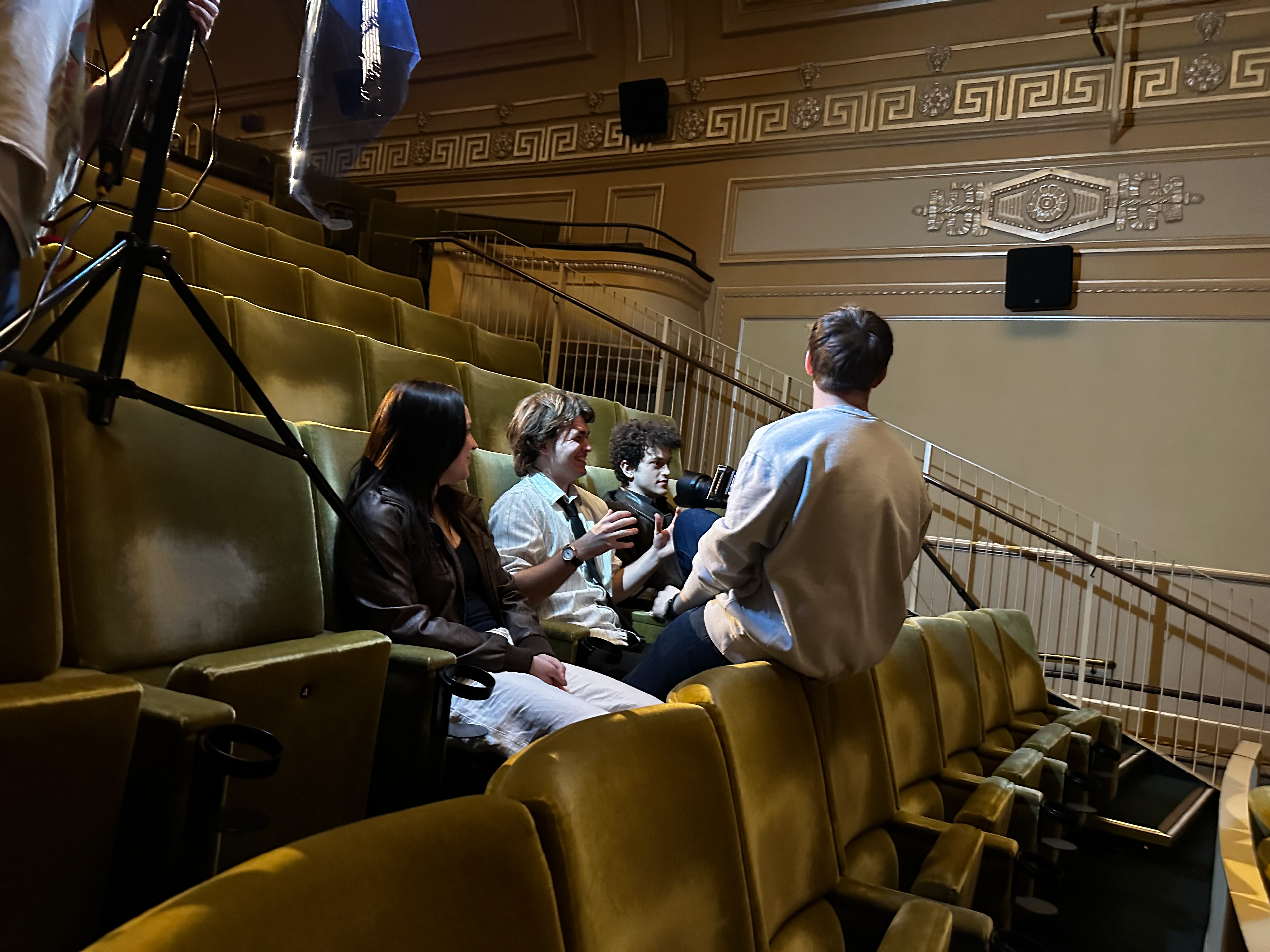
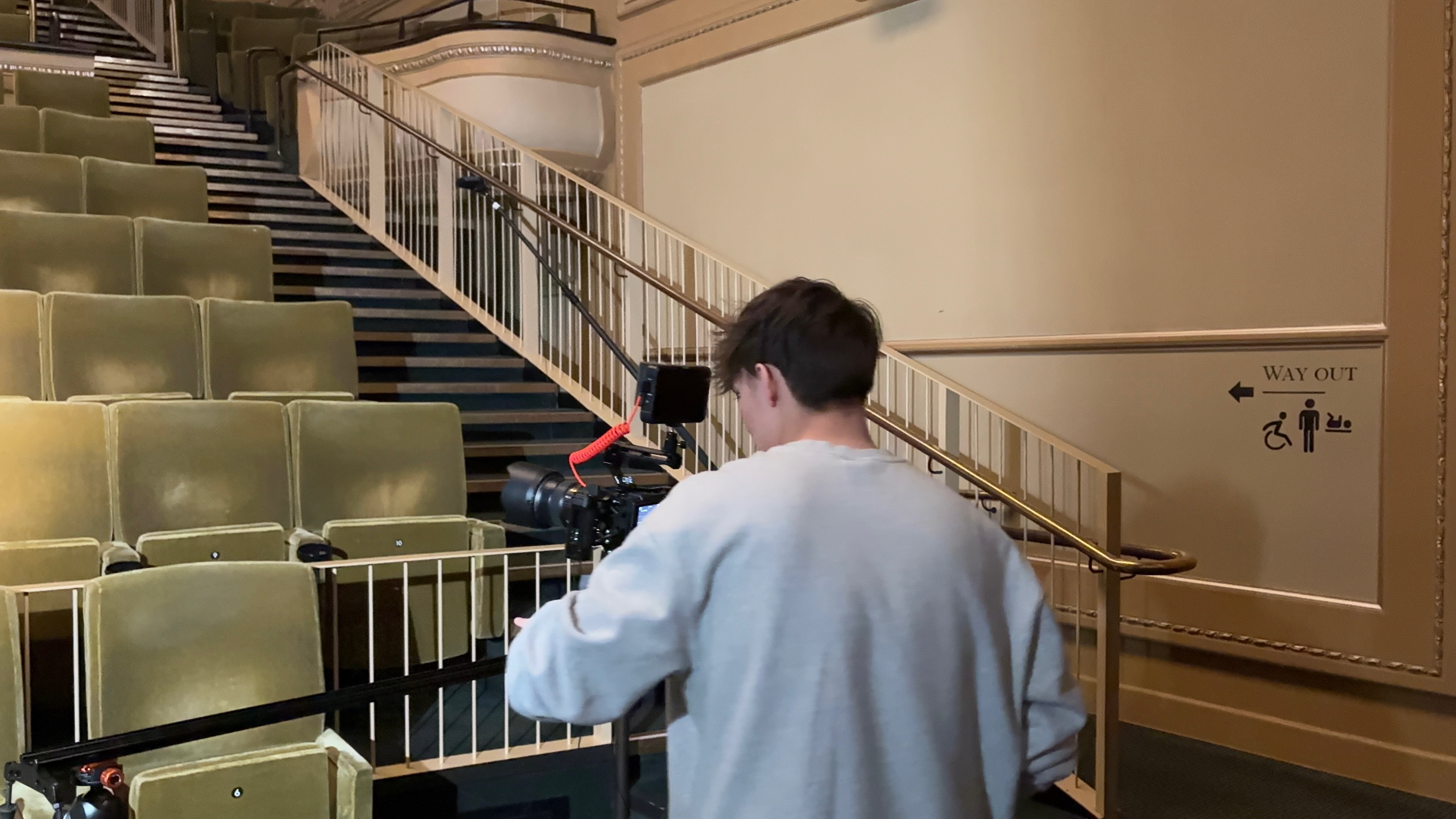
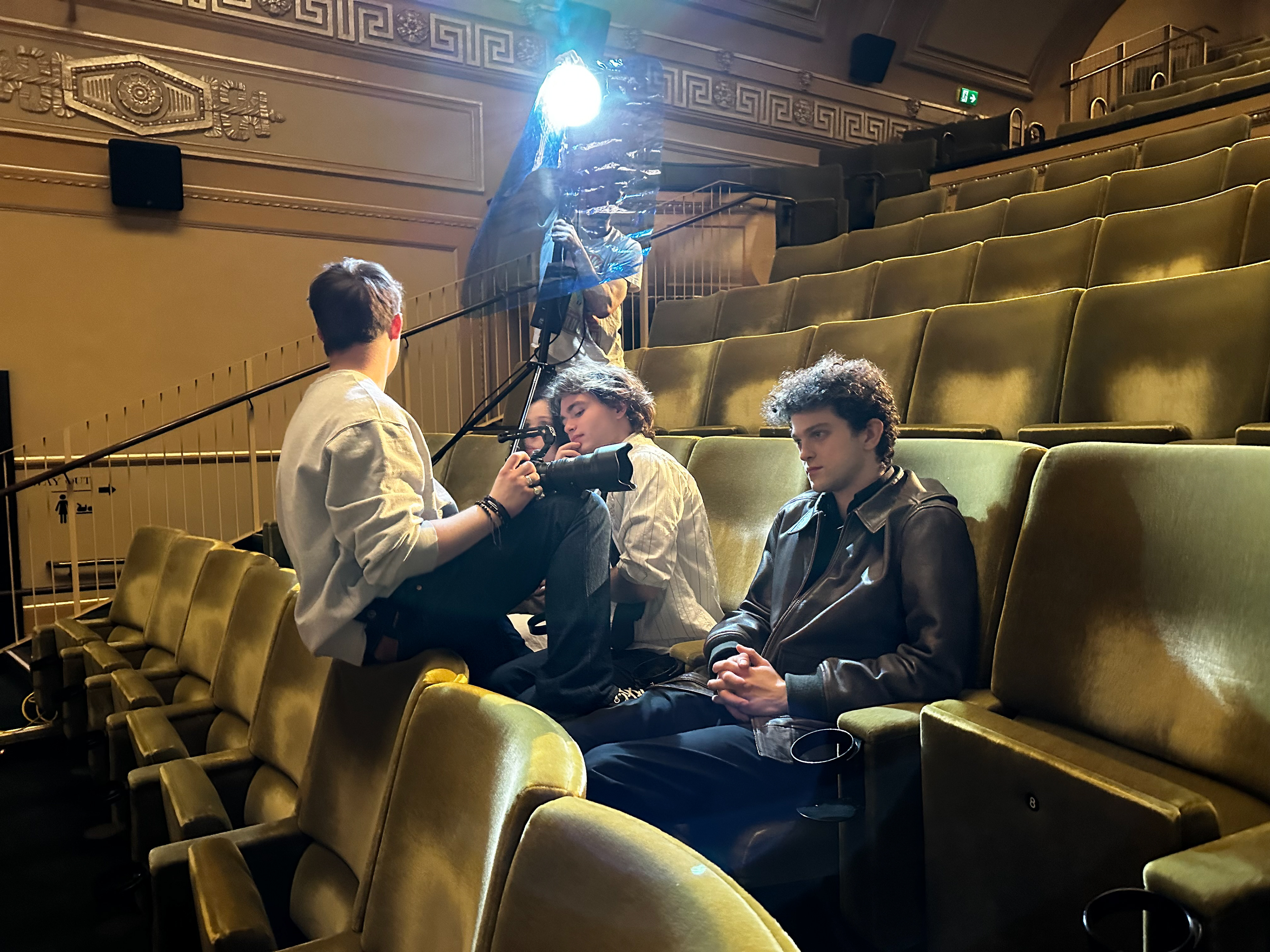
Next, we headed out into the foyer for the opening scene! While the actors were waiting, I took this Renaissance masterpiece of a photo:
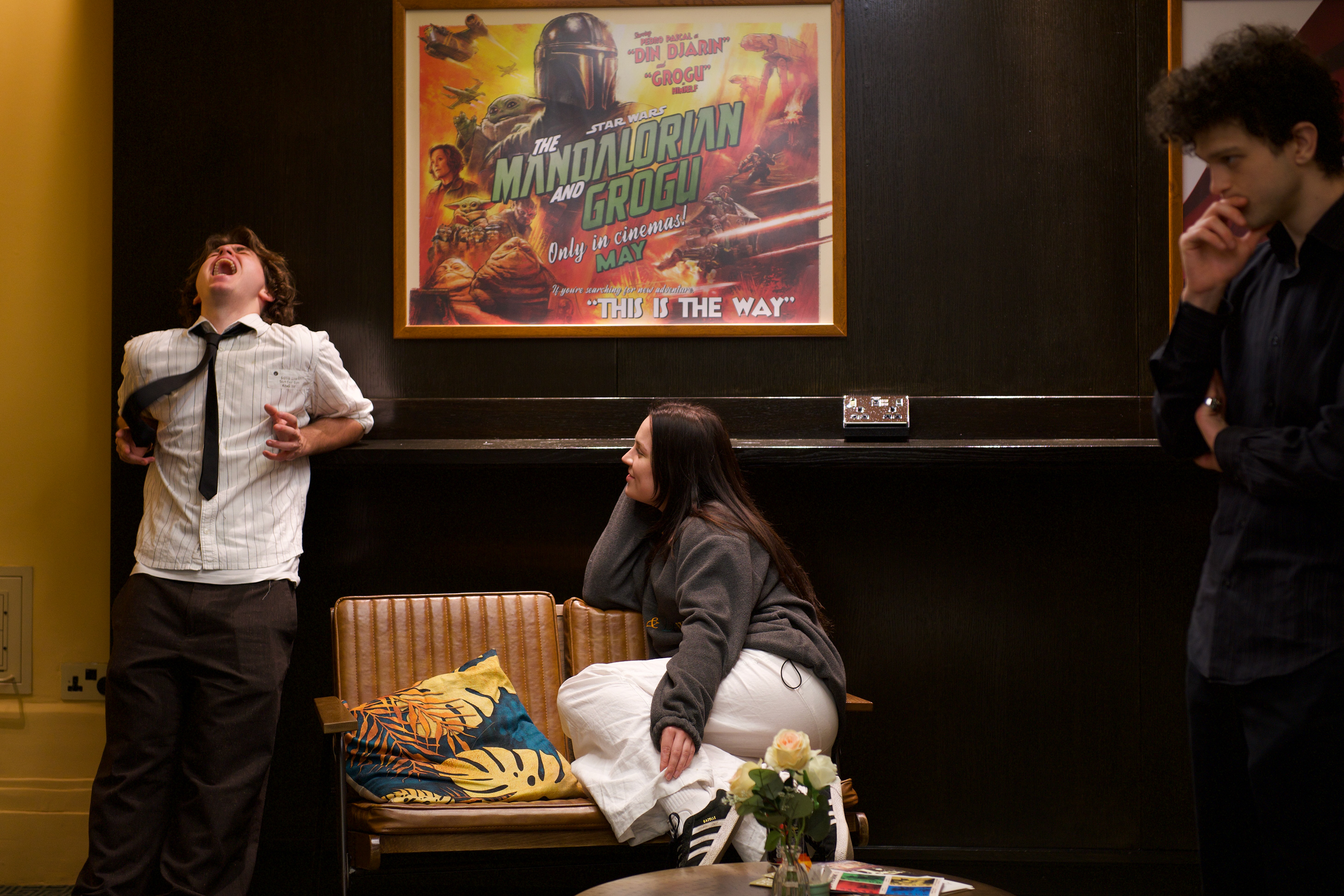
We set up the tracks to be able to move smoothly through the scene as Lucid walks up to the desk, and as Elias moves around it.
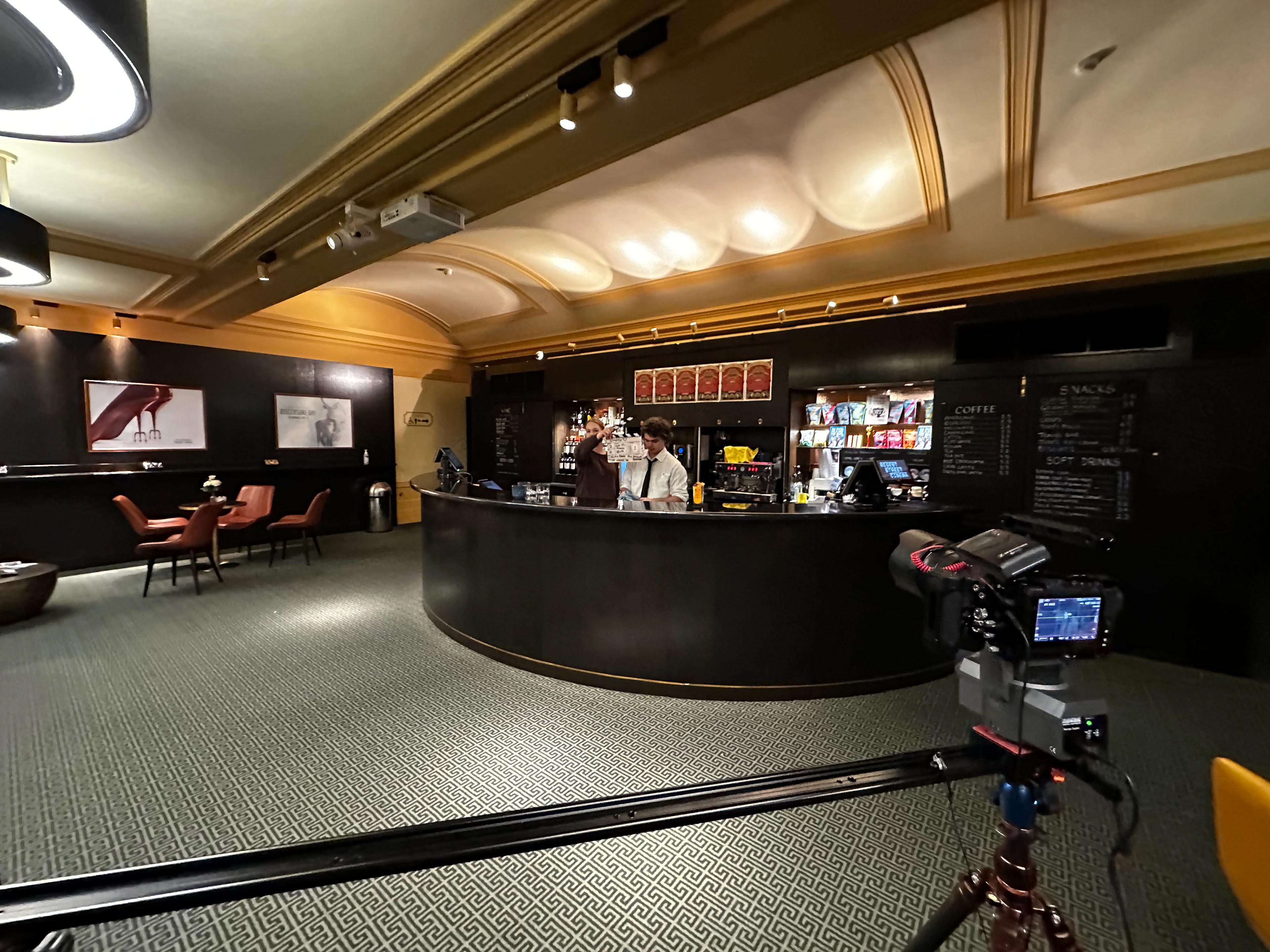
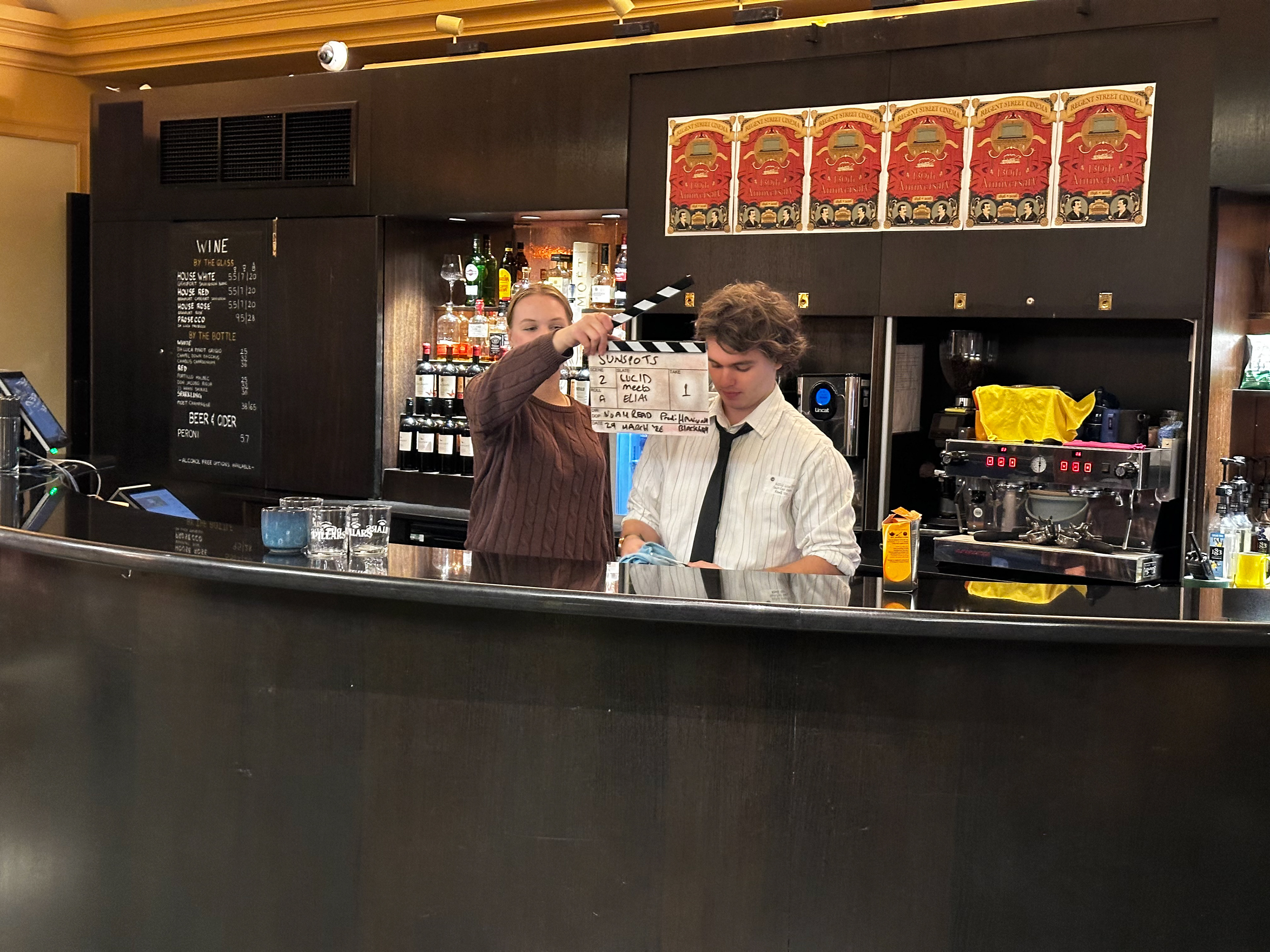
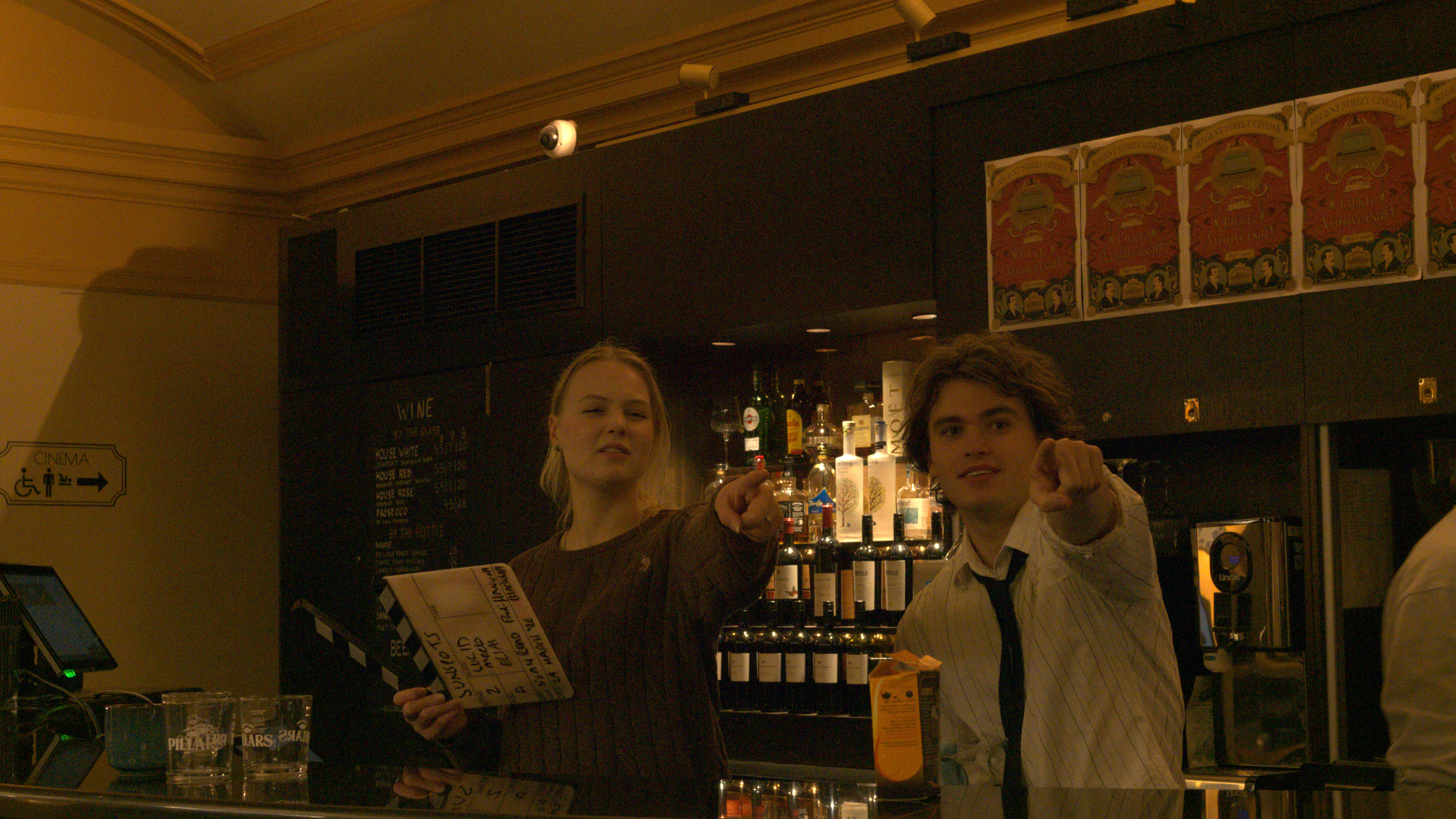
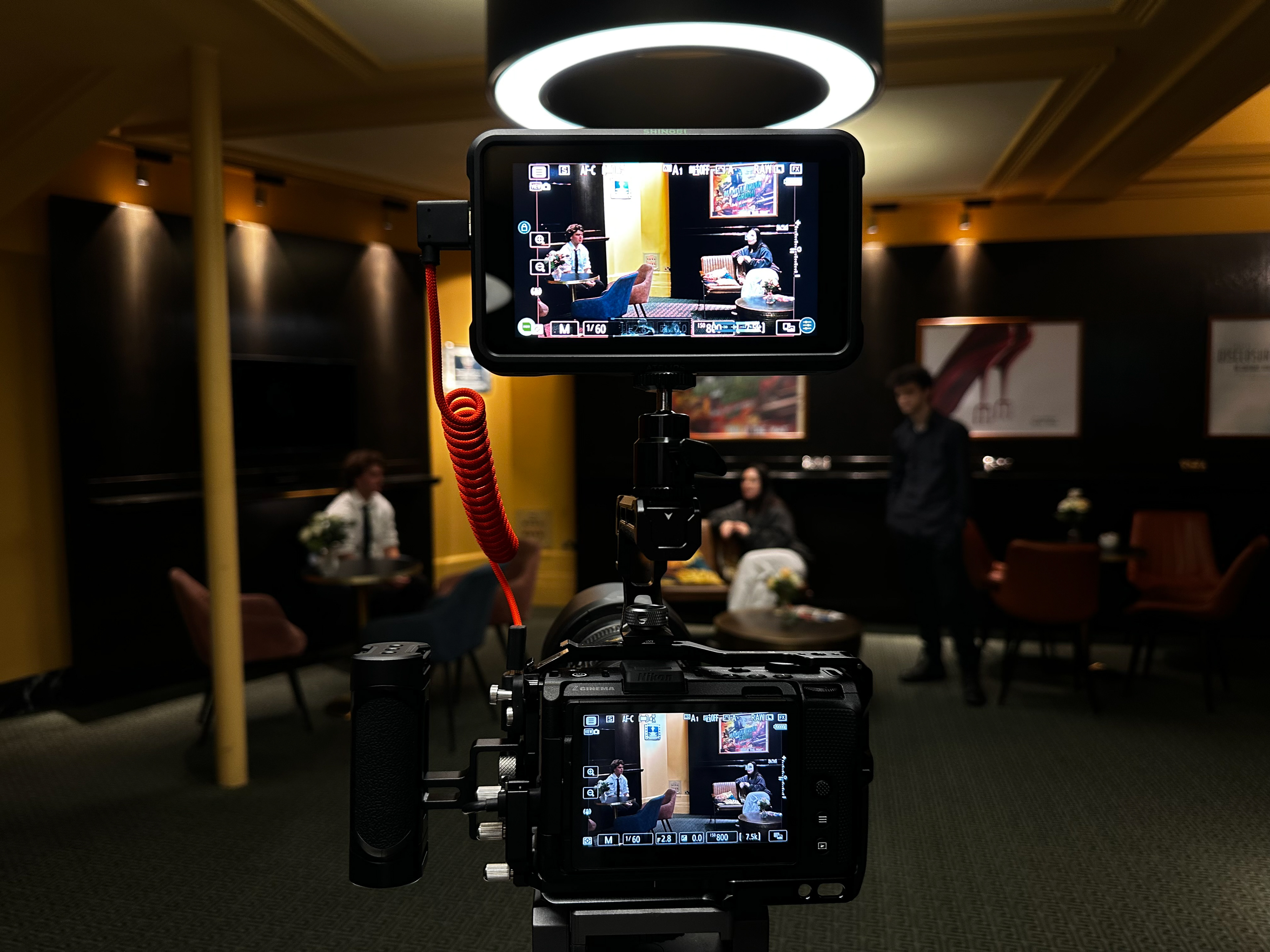
The penultimate scene, before we could bloody up Ludic, was outside. I set up the FX6 across the road, as Elias walks out, locks the door, and begins to cross the road, where he will get hit by a car — or if we’re lucky, a passing bus.
After that, we recorded the ‘handheld’ (on a gimble) shots of Lucid and Elias after the car hit. I wanted a hard Dutch angle up on Lucid as he steps over and speaks to Elias on the ground, and then we have a rising and spinning shot as Elais ‘transforms’ into, or becomes, Lucid. When we got back to Harrow, we put just this shot together to see how it works, and I think it will actually work really well.
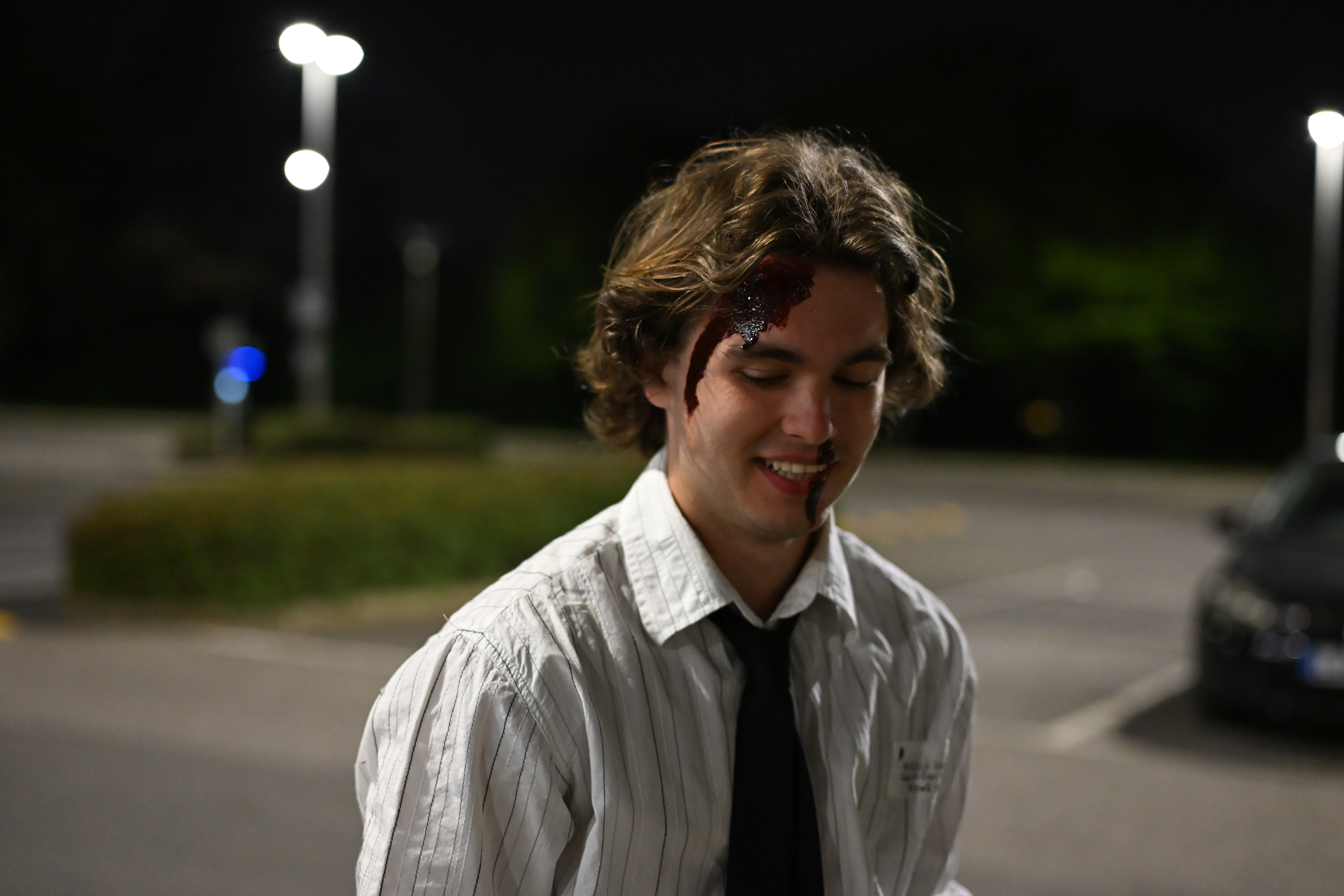
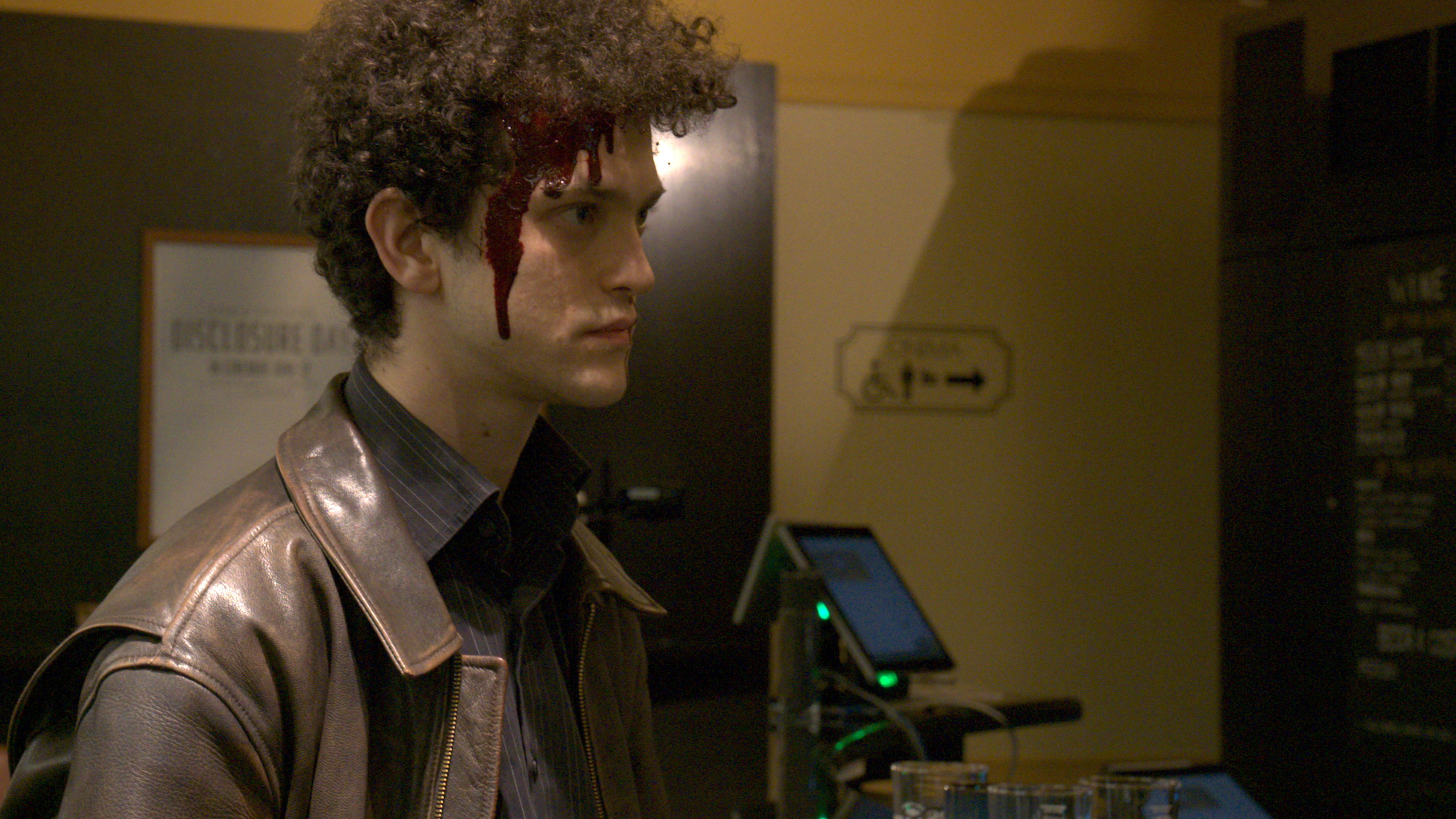
Once we had the ‘clean Lucid’ slates down, Peter added the blood to Liam, which I think looks really great.
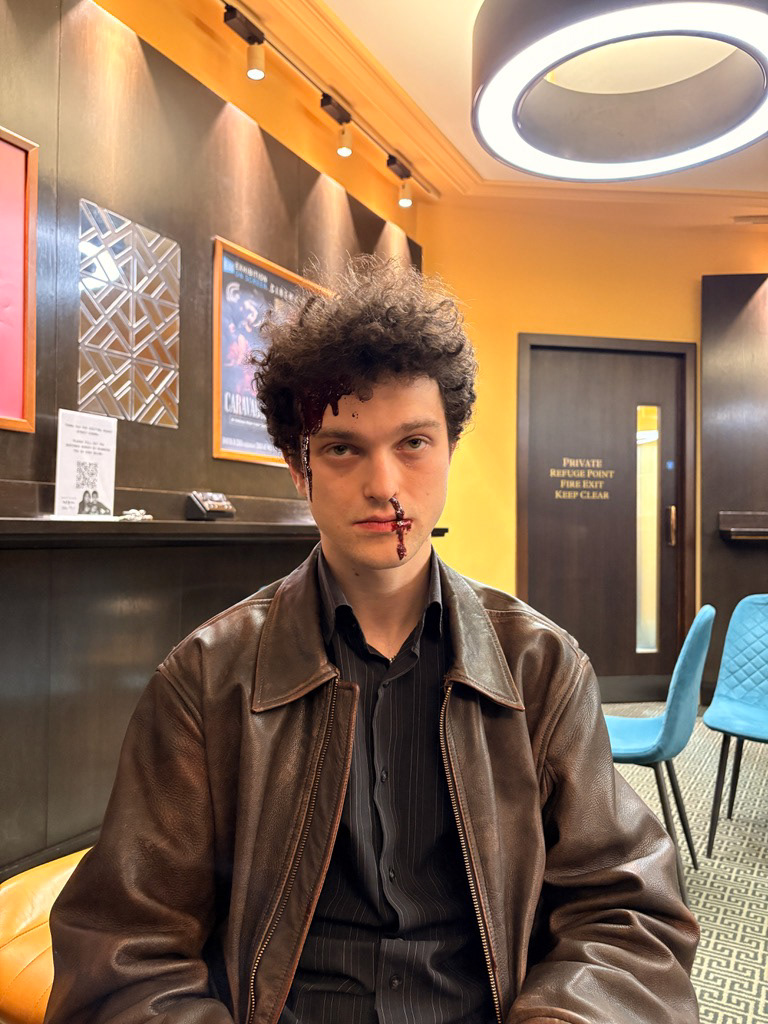
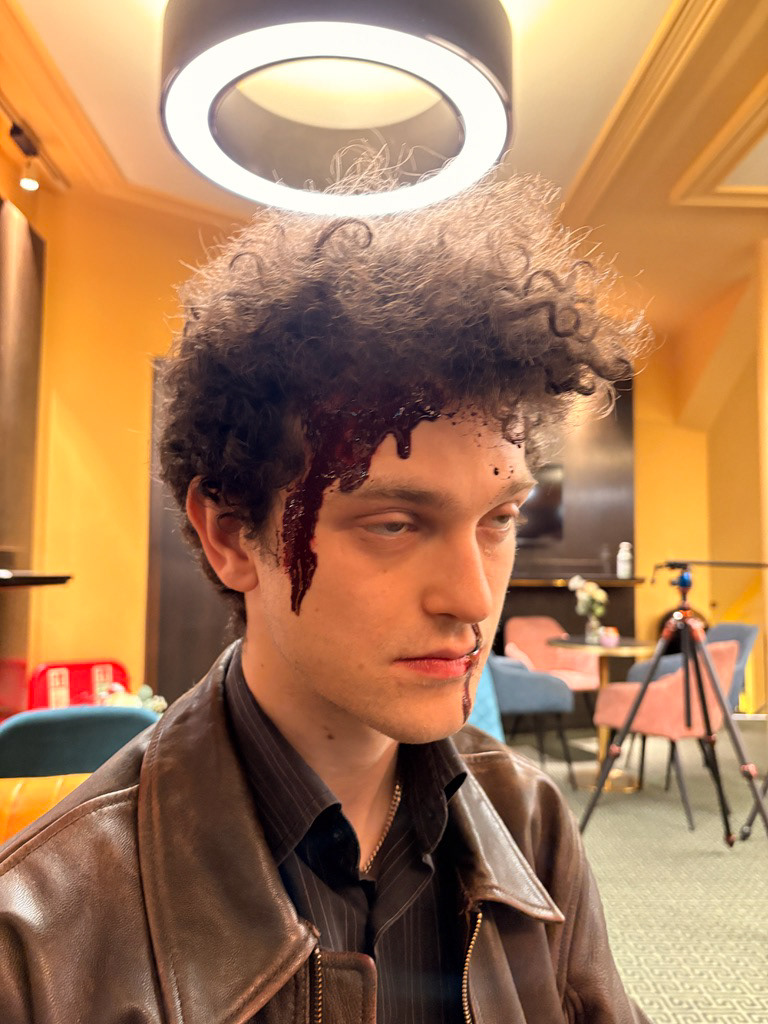
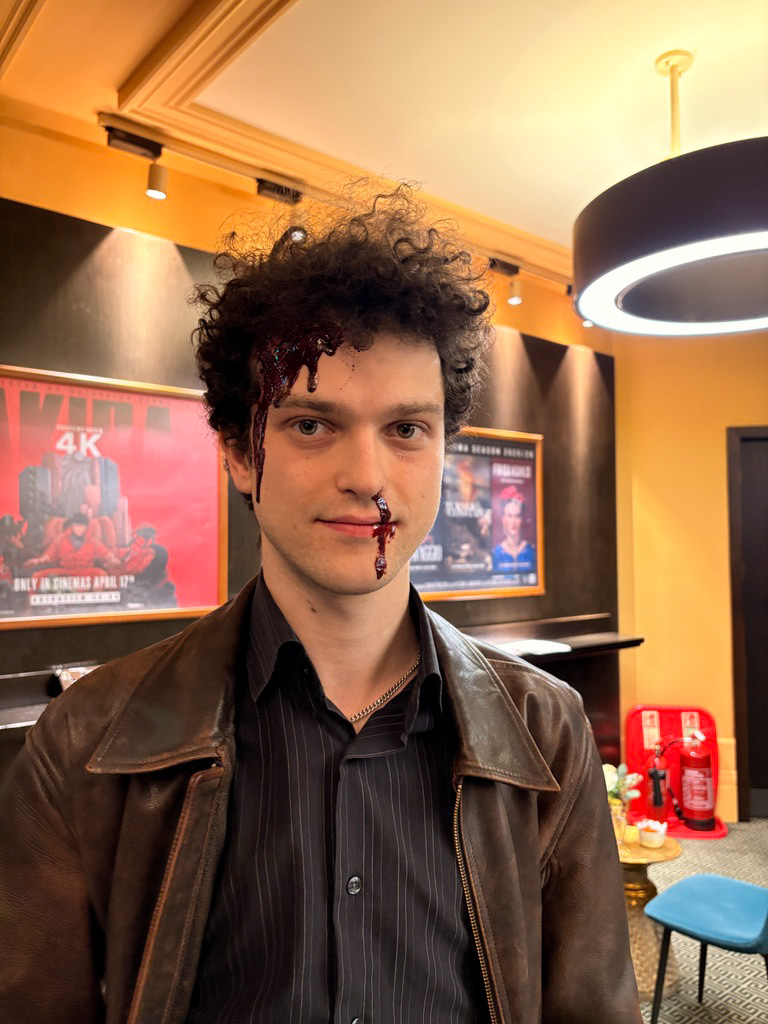
After this, time very quickly ran away from us, and we had to basically chuck all our kit through the door into Regent Street campus before the our time at the cinema ran out. Liam went to clean up in the bathroom, and Luca and Neve both headed home. Once Liam was wrapped, he headed off as well, and I ran to get the car, pulled up onto the kerb, packed into the car as fast as possible, and headed back to Harrow.
Then, today, we shot the interior pub scene, which had extremely warm lighting (as you can see below).
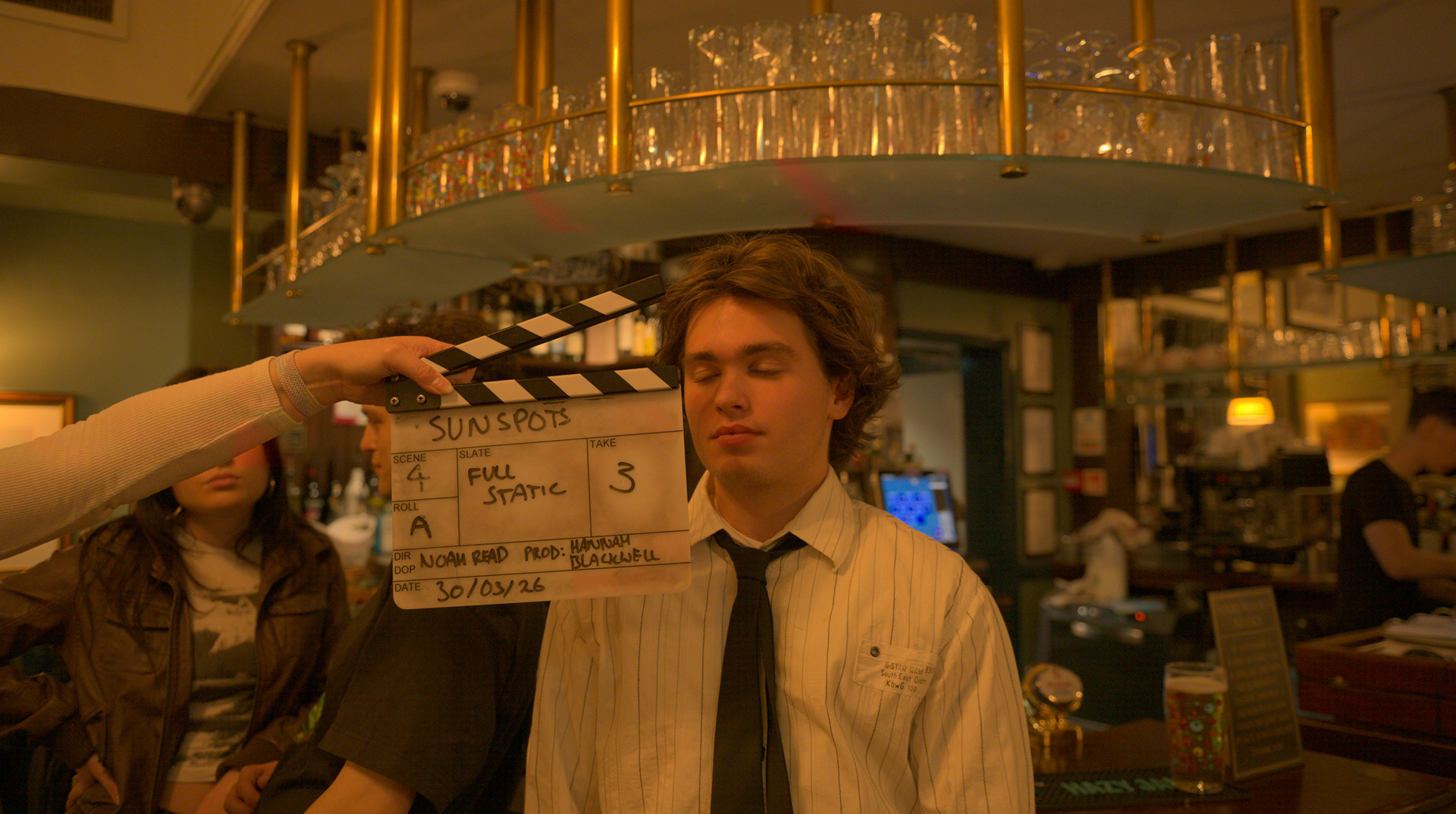
Peter found this location, and luckily they were happy for us to use almost the whole of one side of it. There were a few members of the public here, but no one seemed to mind us being there. This was a short scene, so we were only actually there for a couple of hours, before wrapping and heading home.
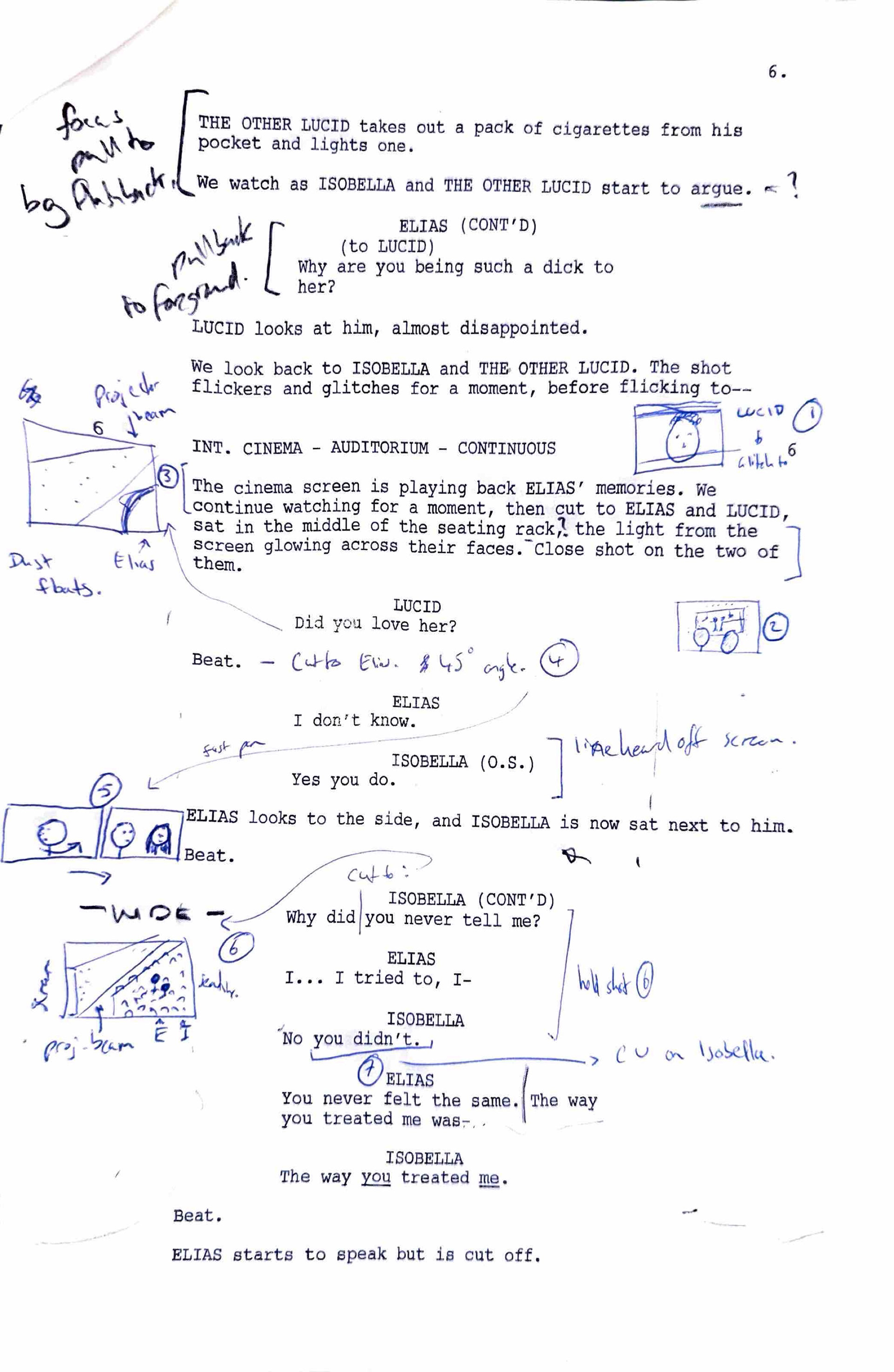
These are my initial storyboards/sketches and script notes for this shoot:
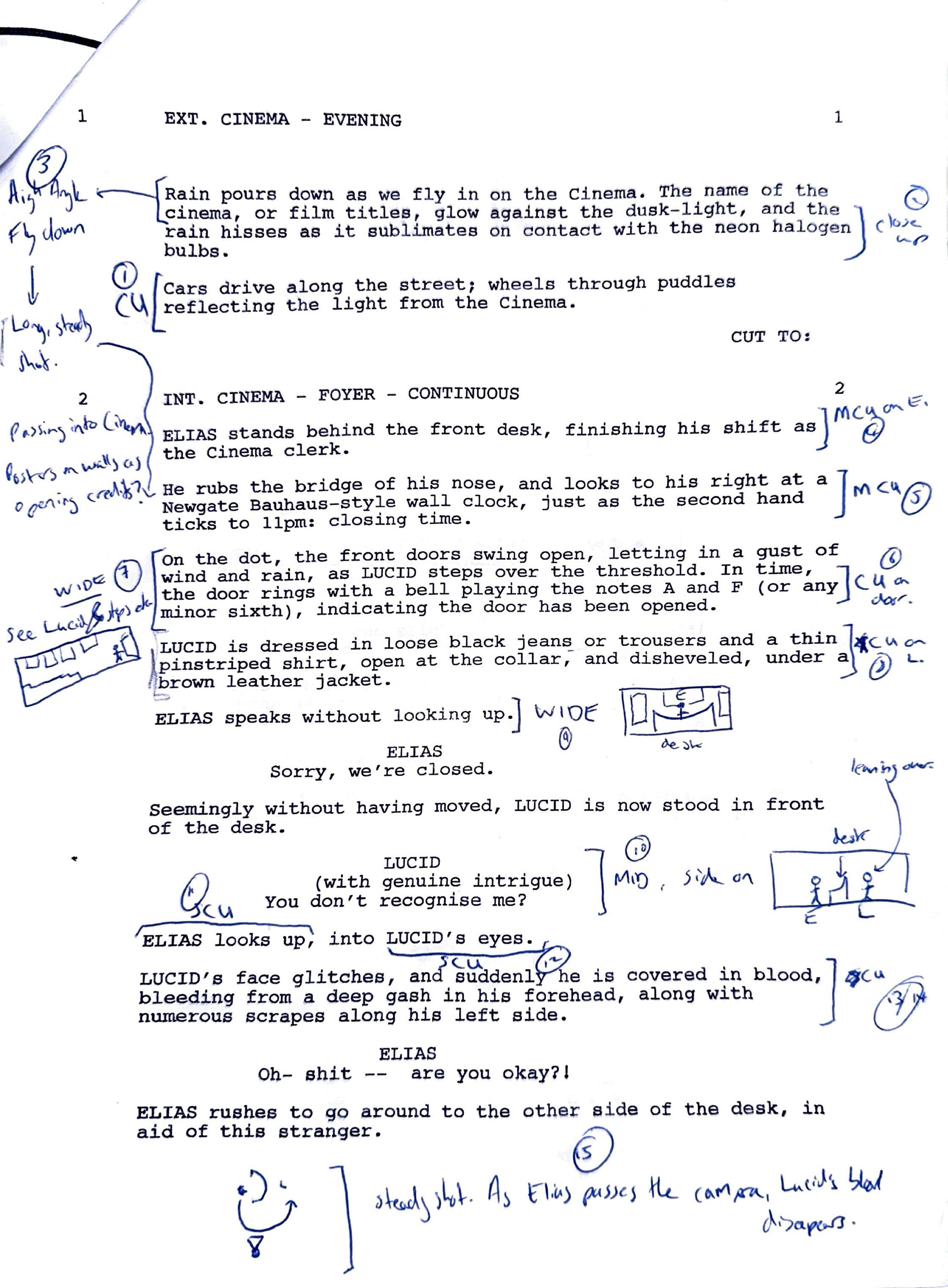
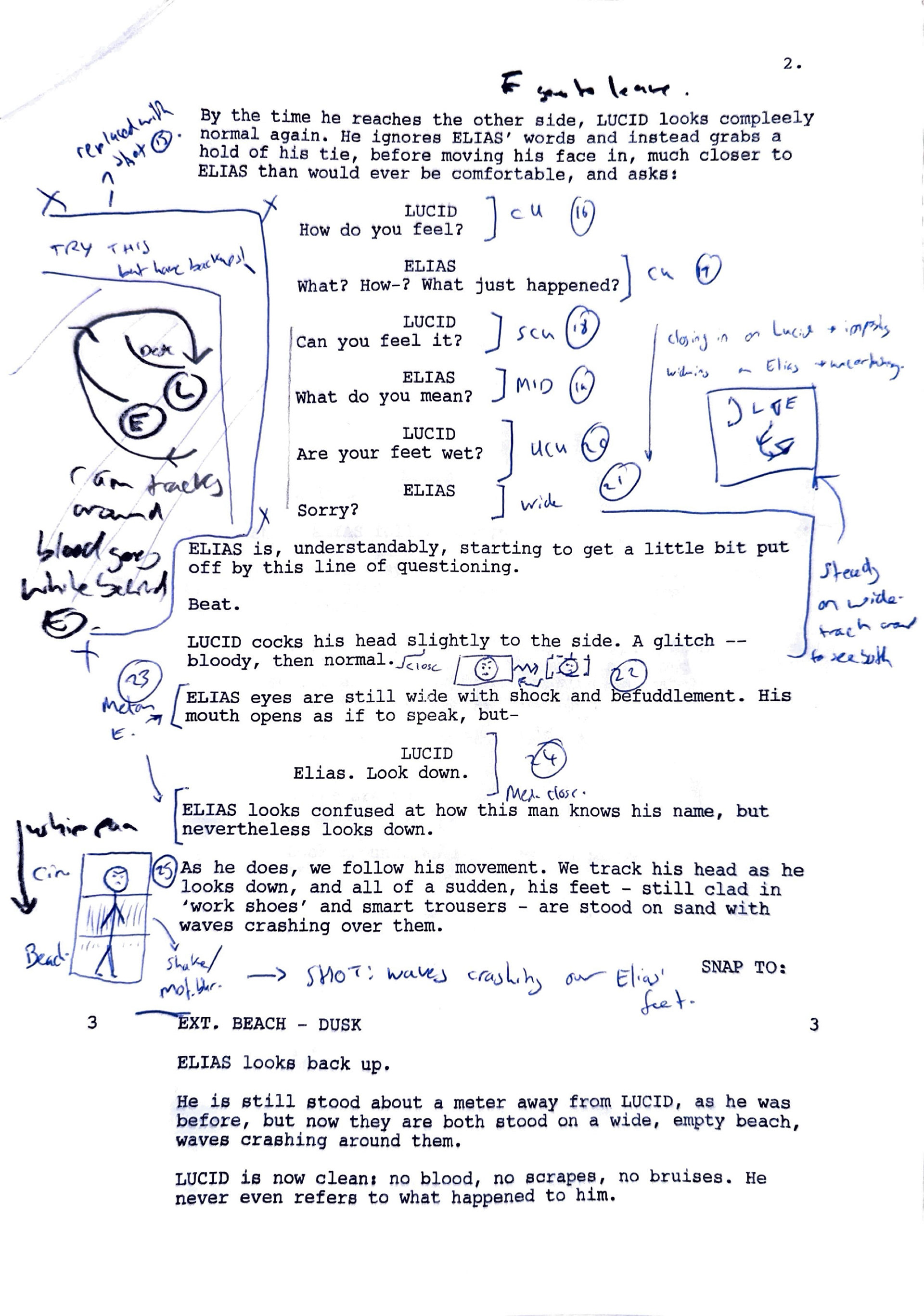
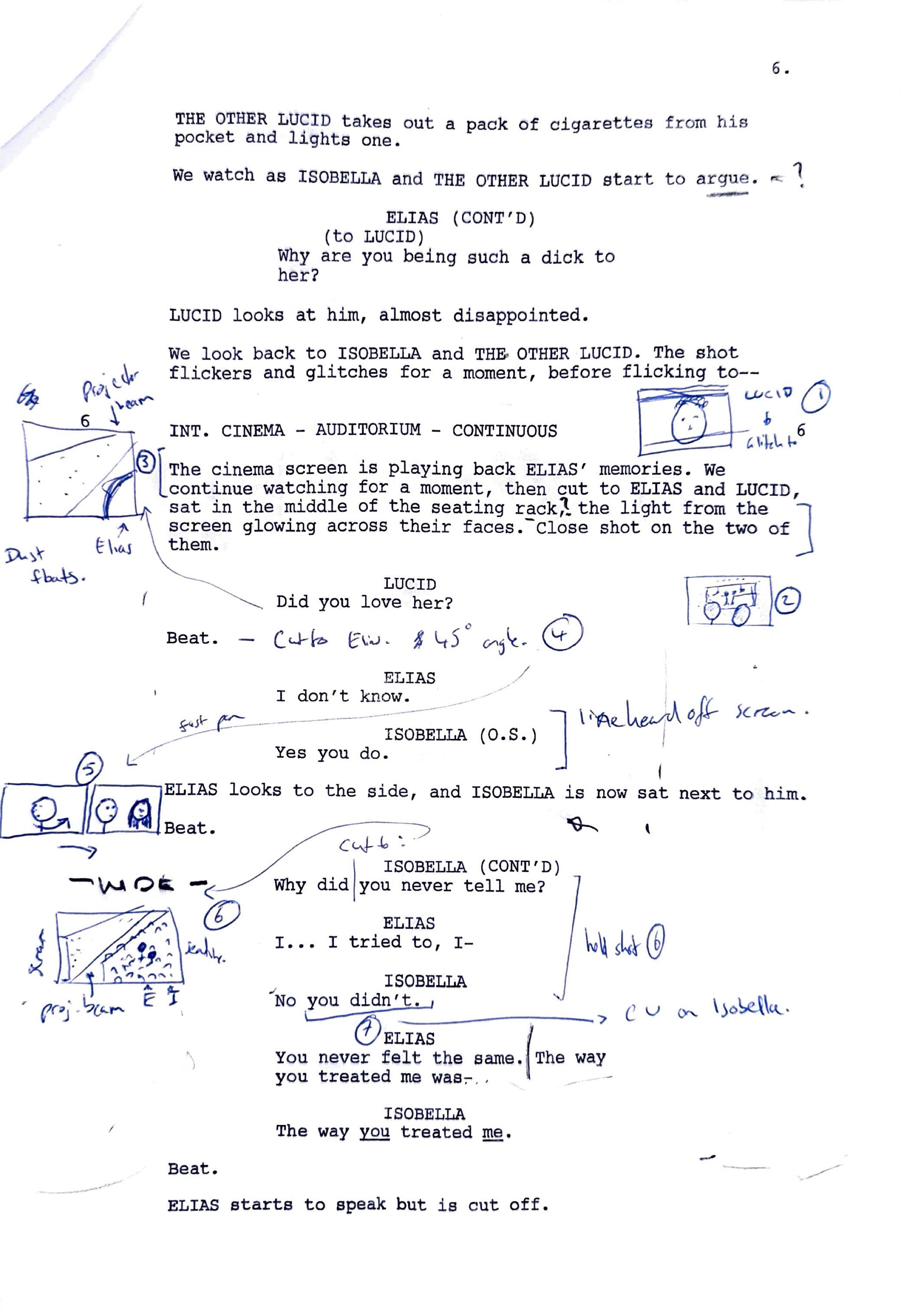
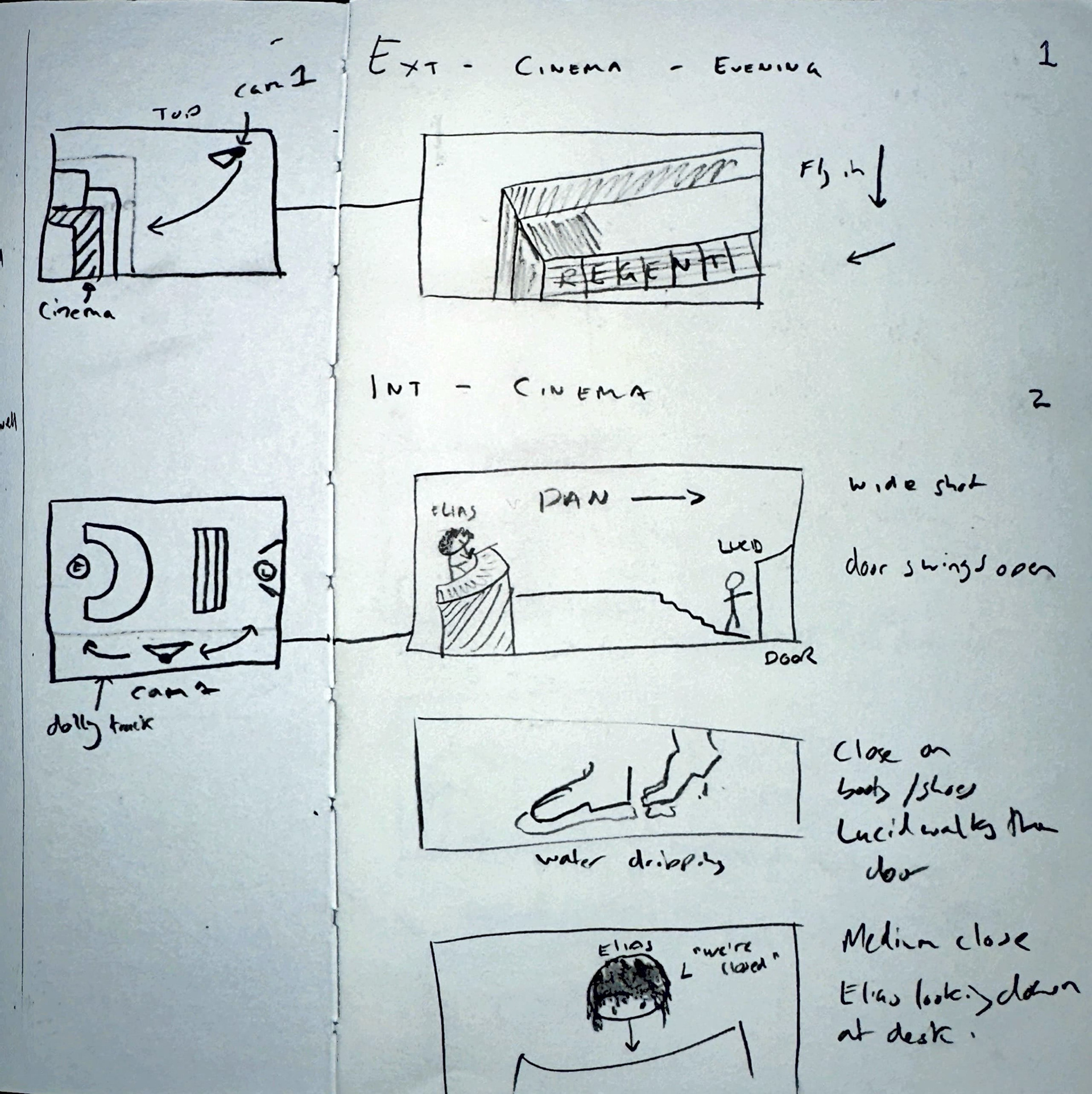
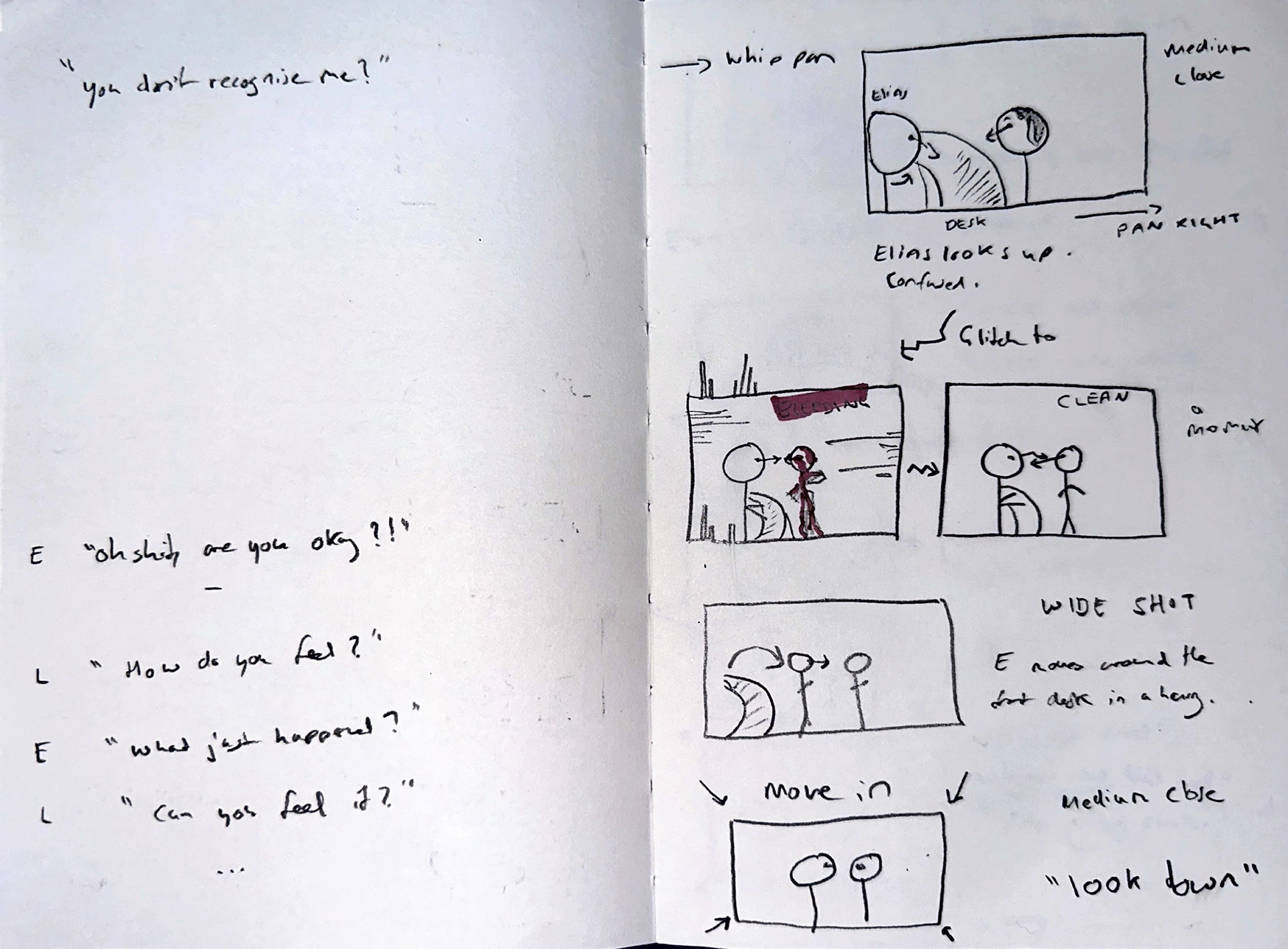
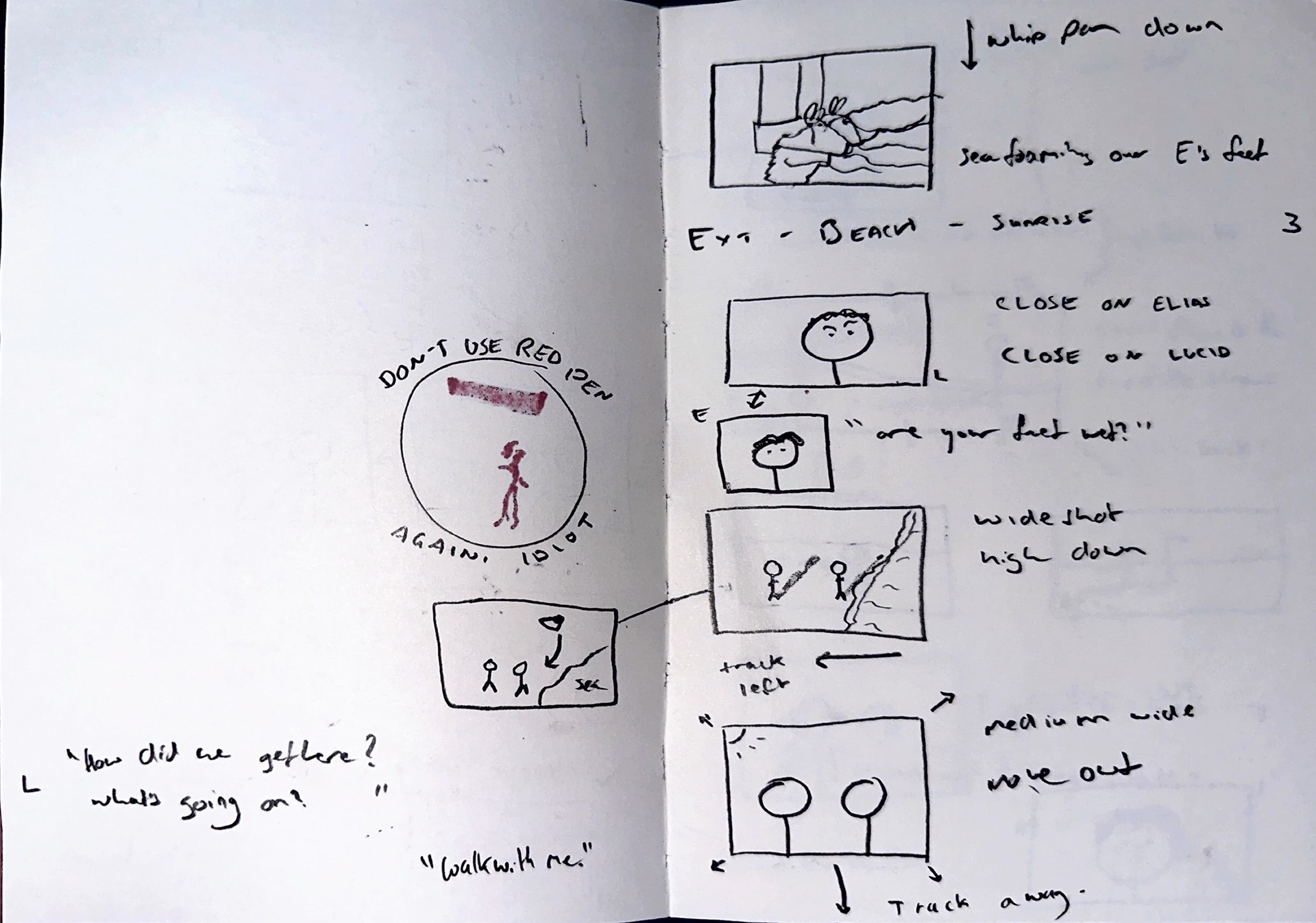
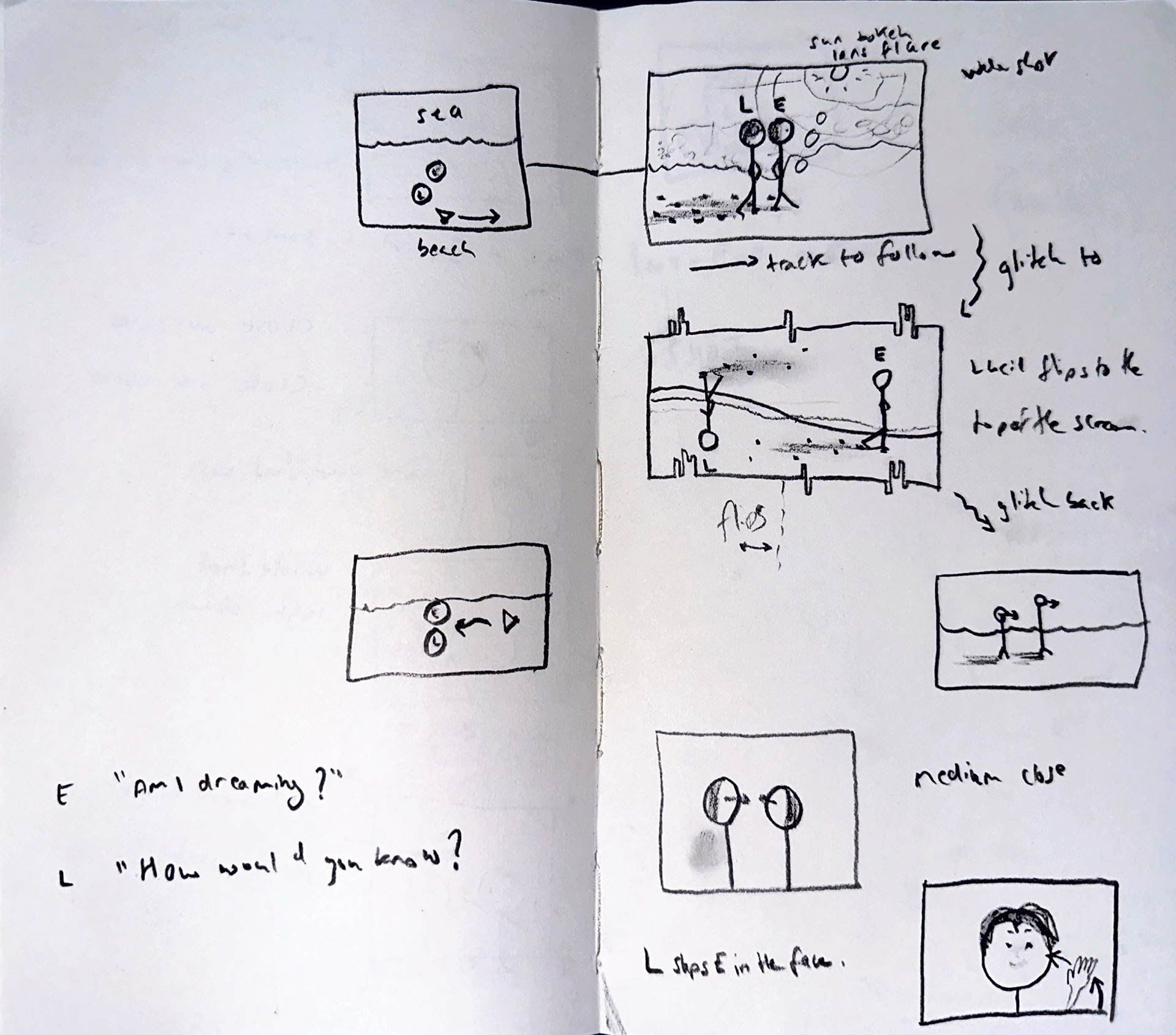
13 Apr: Edit in the Lecture Theatre
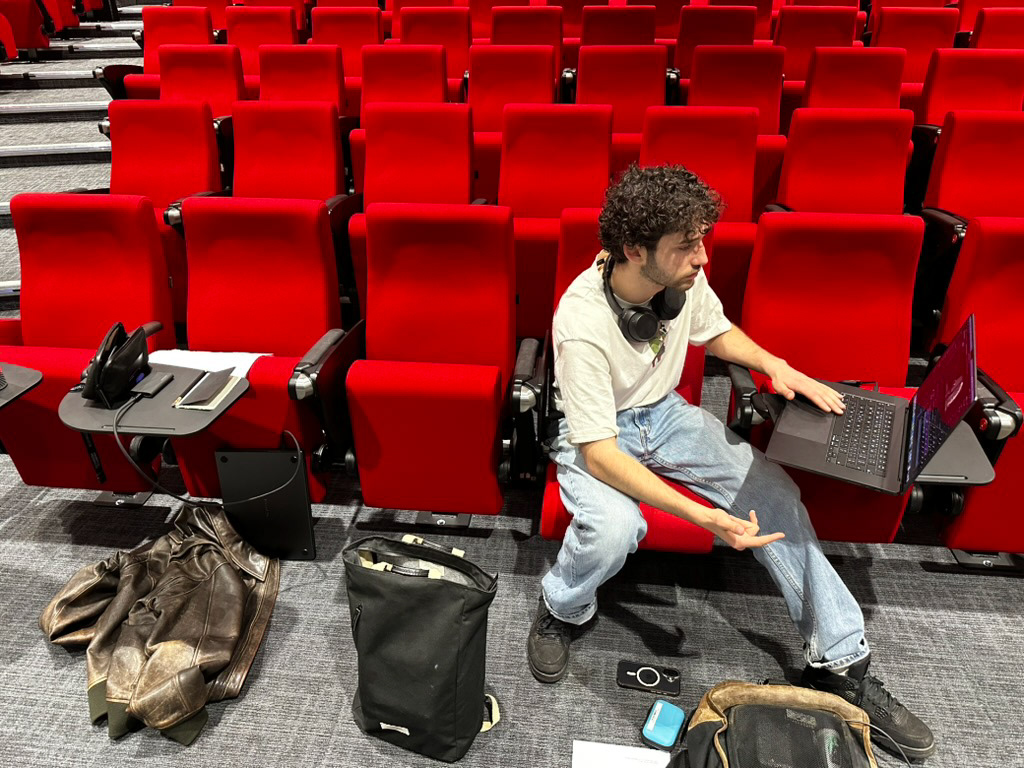
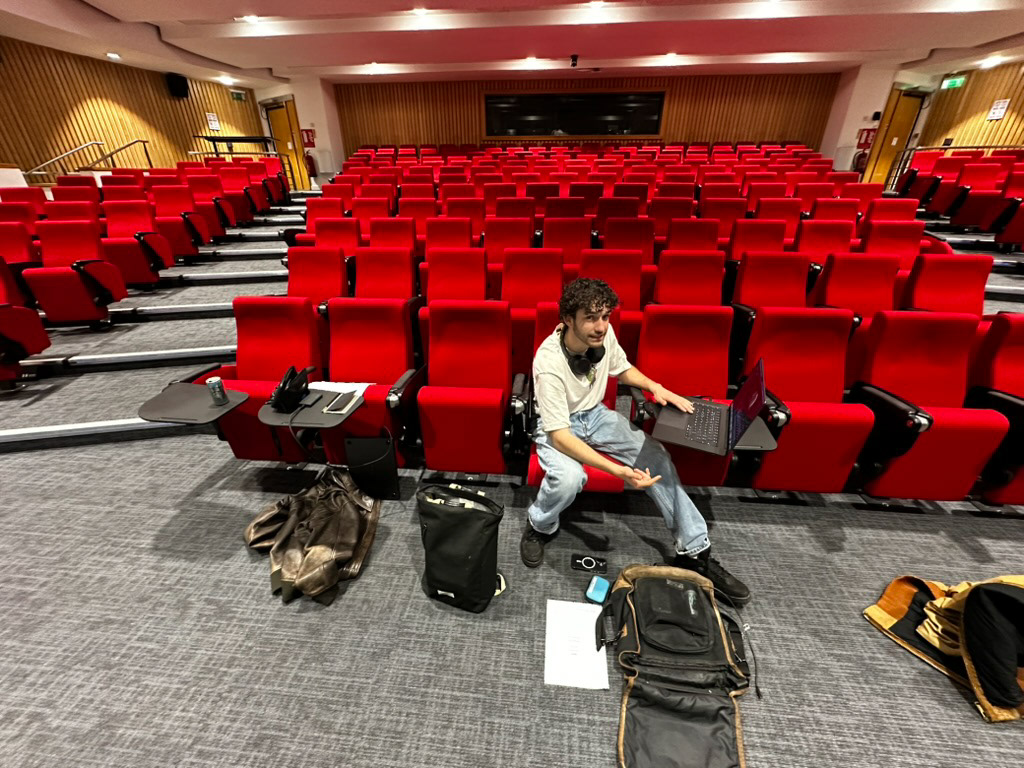
Today, Peter and I met at Harrow to go over some more editing. I’d done few bits at home on the 6th, after our final principal shoots, and Peter had started to edit the cafe scene at home as well.
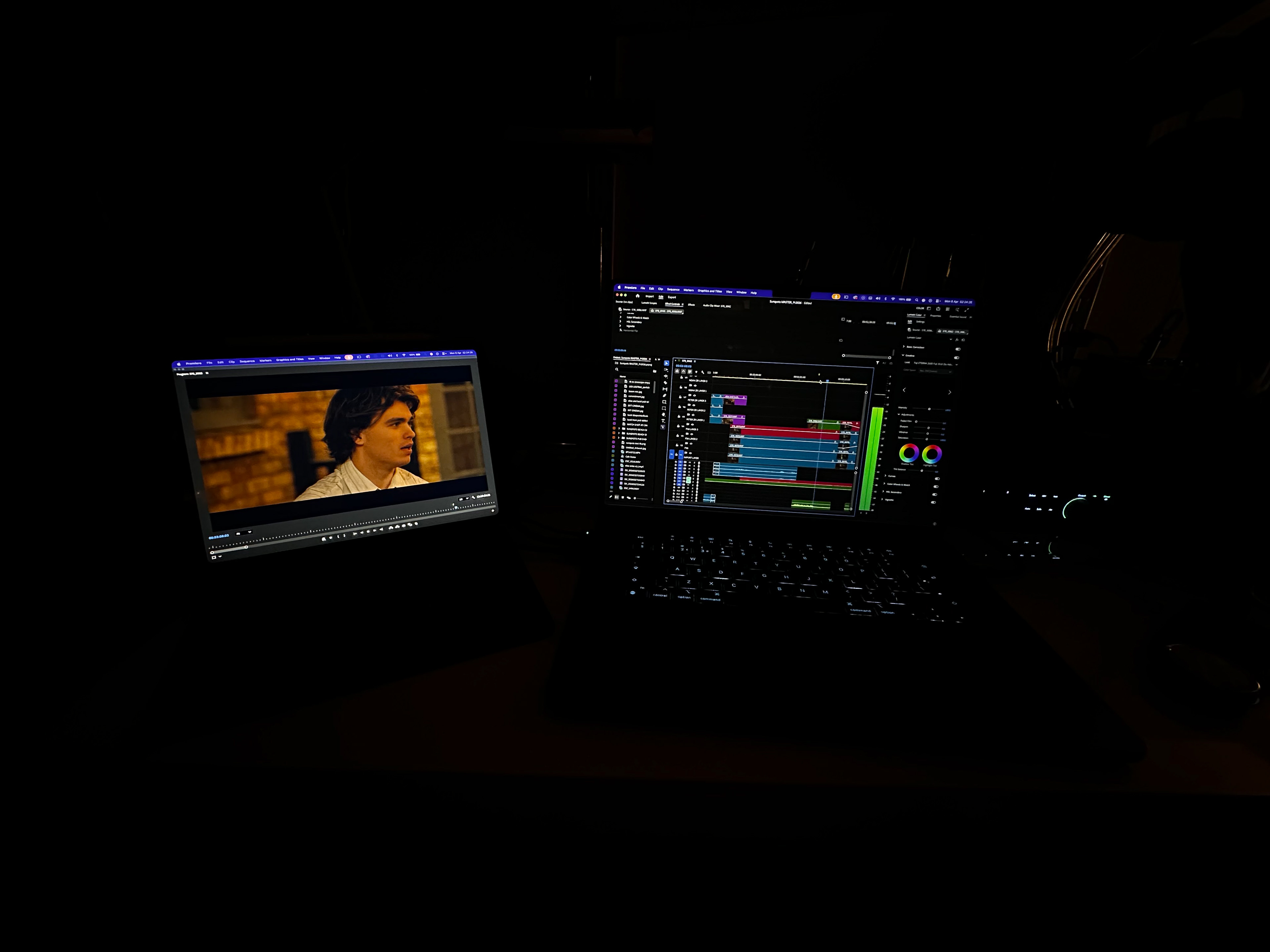
Also this week, I did a quick recce of a local place we could have reshot the cafe scene at, if we do decide to do that — although that will only be if we manage to get everything else done first.
As we’re now up to almost 4TB of footage, I decided to bite the bullet and get a 5TB HDD just to make sure we have a bakcu of everything. I think we’re all a bit scarred from Peter’s SSD being stolen with his backpack.
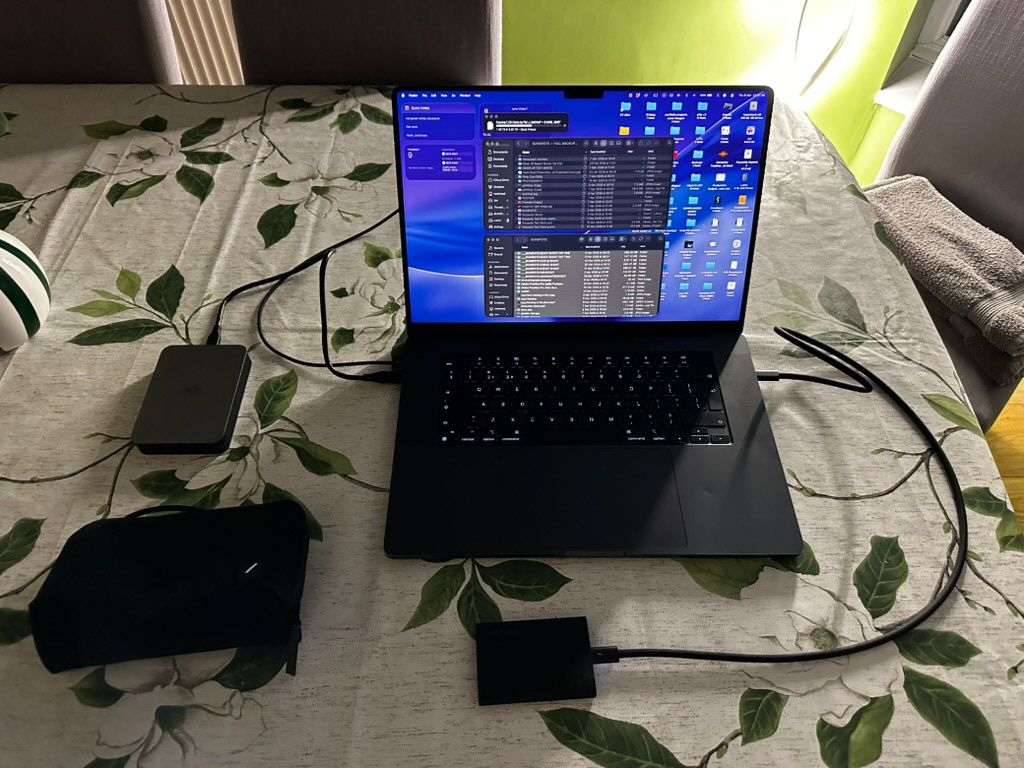
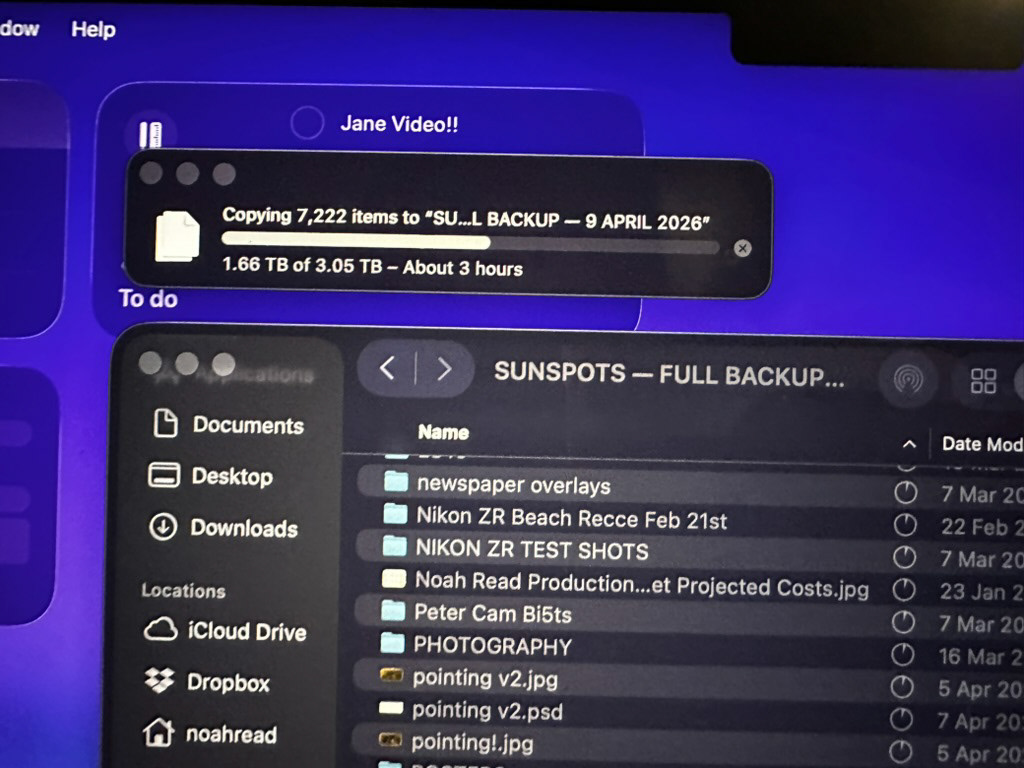
This is one SSD-worth currently backing up — it anded up taking almost 5 hours to do it all!
So — today, Peter and I went through the cafe scene to try and sort the pacing out a little bit, and then put his edit into my rough cut so far, putting us to about 14 minutes, meaning we need to slash at least three whole minutes.
I also started comping myself out of some of the shots where Luca needed catching for the falling sequence:
…which I think looks quite funny when we see him just pop back up again.
17 Apr: O Foley Night
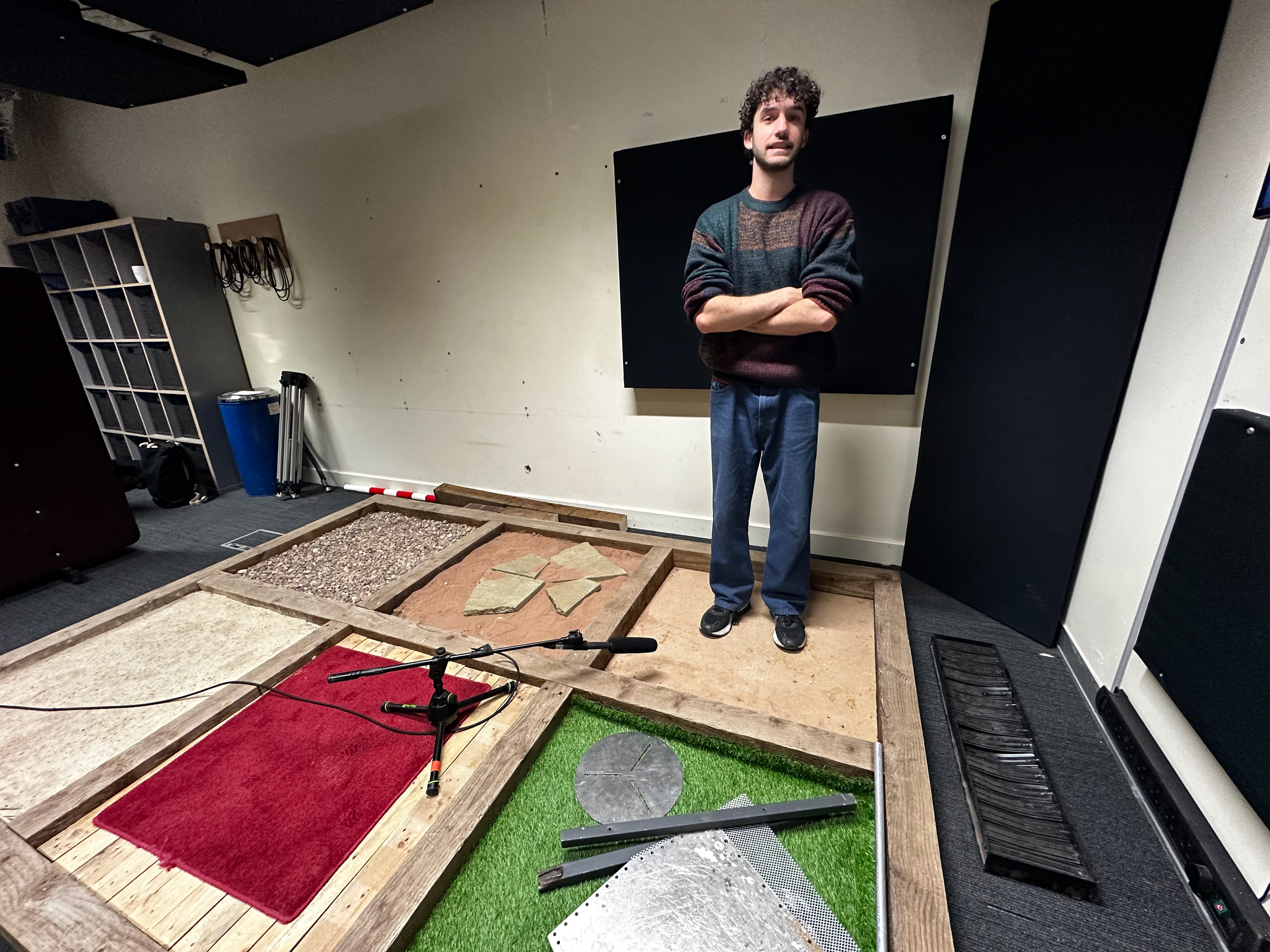
Ellie managed to book us into th foley studio at BCU, so with Peter, we set off early doors to get to Birmingham for 9am. We have a full cut now close enough to the final cut that all the foley audio we record today will work, and be moveable as and when things change from hereon out.
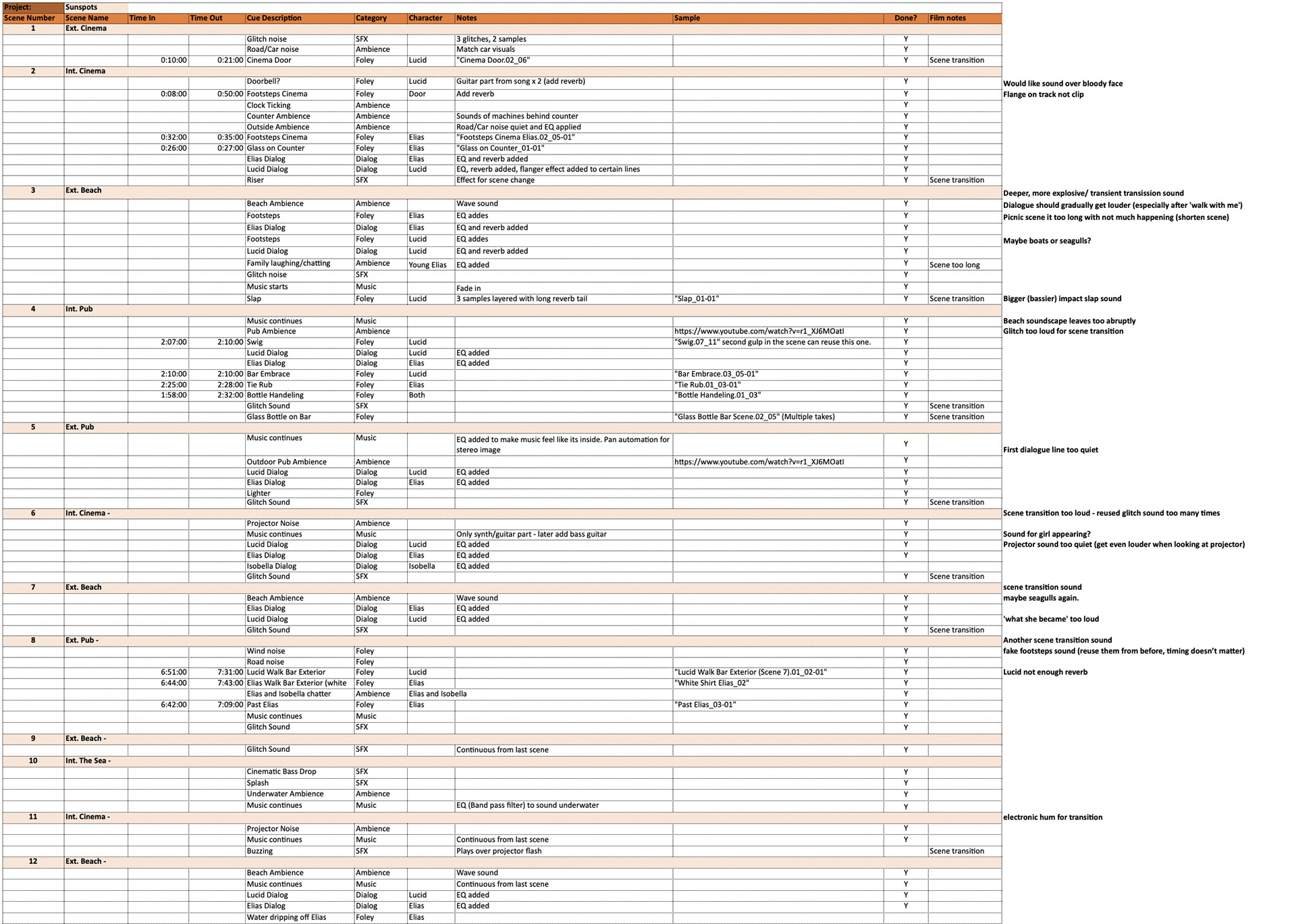
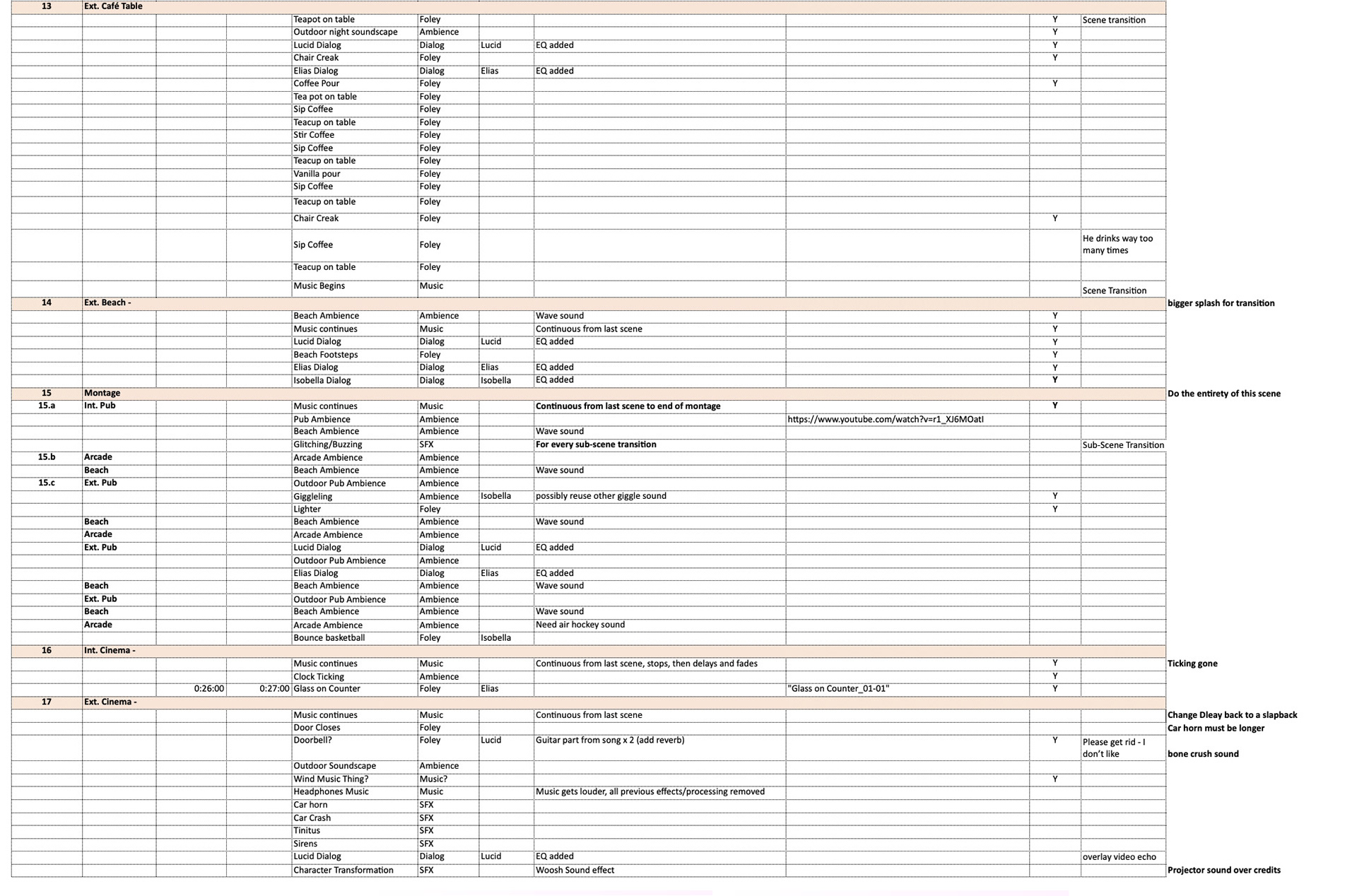
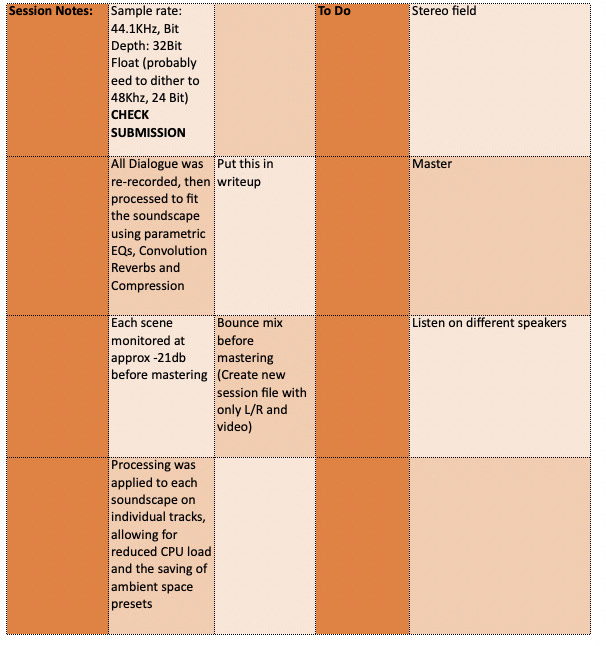
This is the spotting sheet I put together for the foley session — the notes in bold outside the sheet are from Ellie, just as some next steps:
20 Apr: -1 Backpack, -1 Wallet
If I had a pound for every time Peter or I managed to lose something… it wouldn’t matter that we lose things! Today, we picked up Neve and headed back down to Kent — this time, for a sunset, which made a pleasant change. We started off getting some of the flashback shots or Elias’ point of view looking at Isobella, so we started at an arcade. Which of course, is where my wallet was stolen. I made the mistake of turning my back for about two minutes while I went to pay for parking — and Neve and Peter were even still in the area — and it was gone.
Nevertheless, I think the shots from the arcade are beautiful: the colours are so nice, and they are a lovely contrast from the rest of the quite harshly-coloured beach, by comparison.
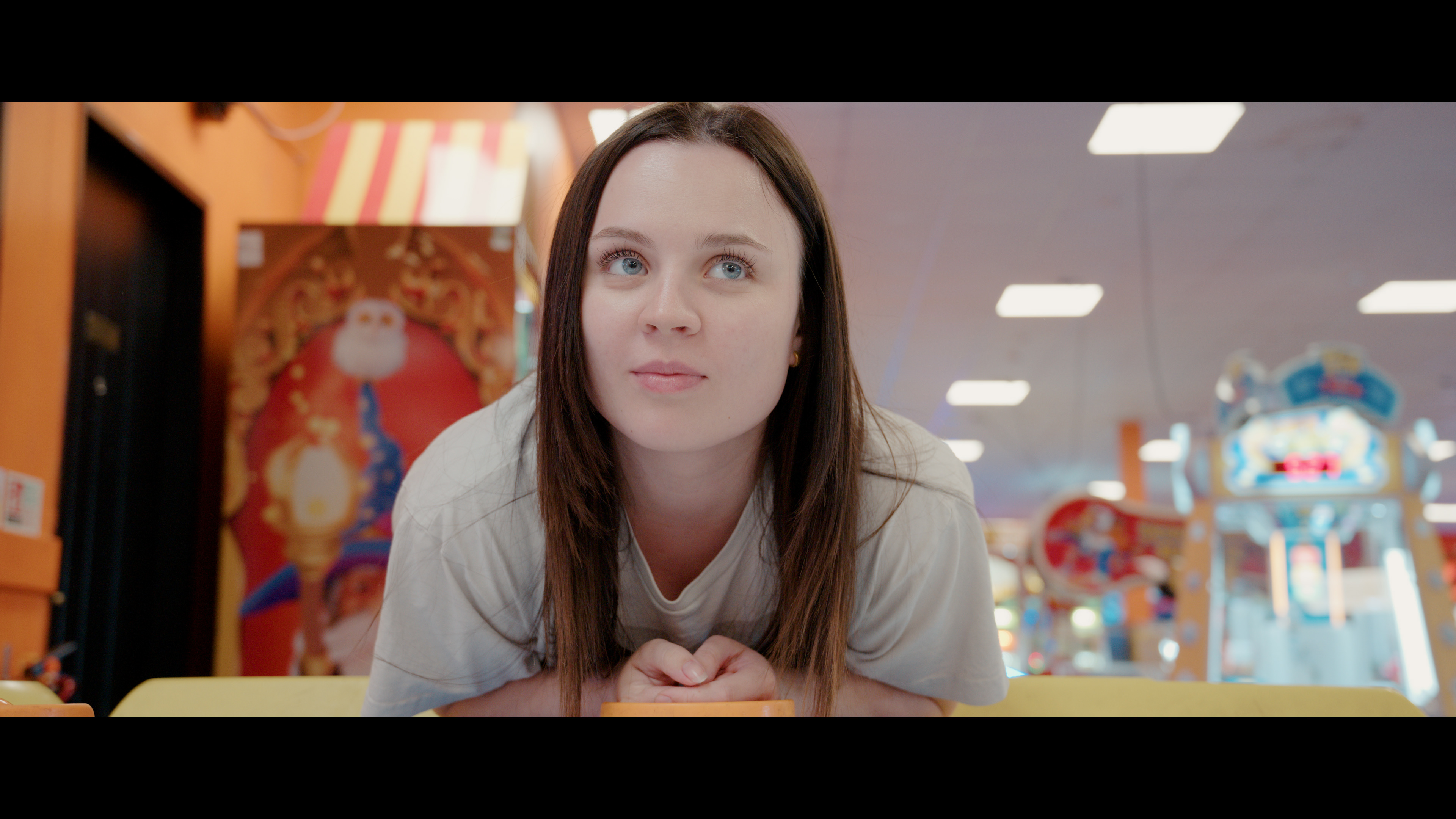
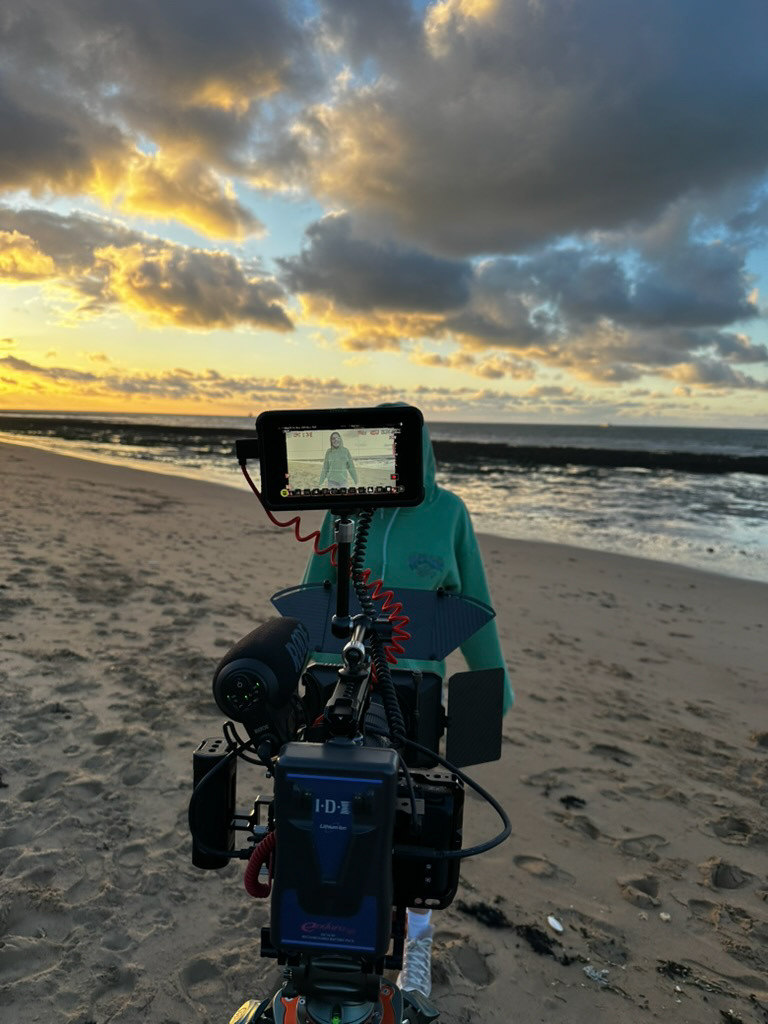
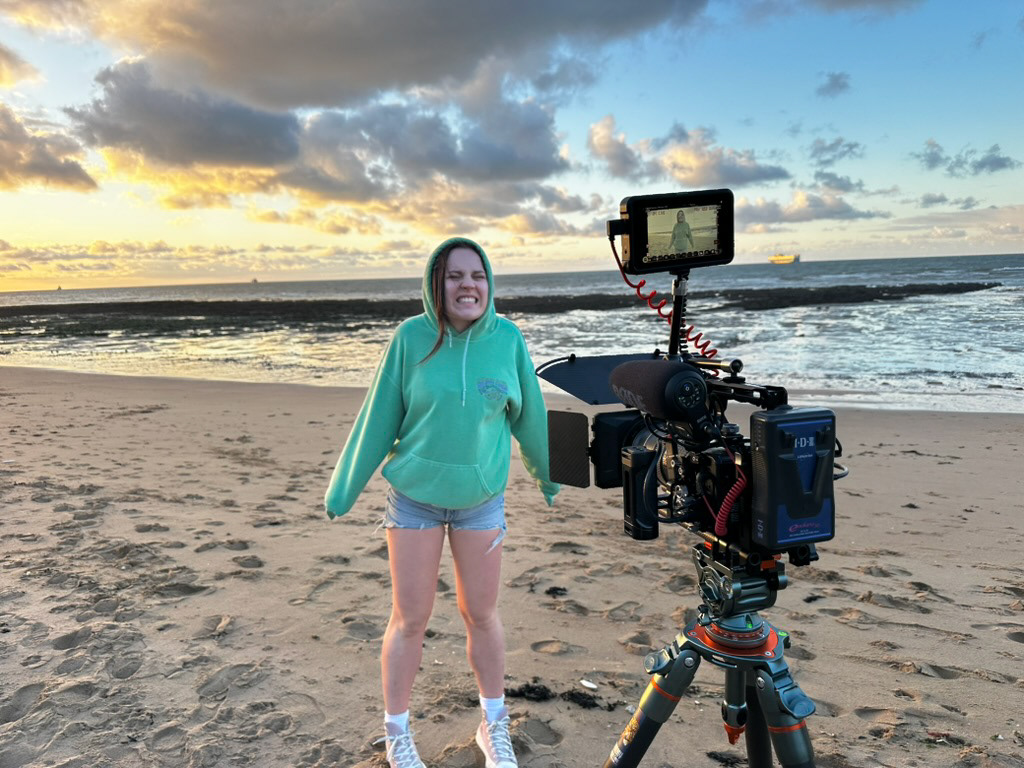
Then we headed over to the beach with the trusty 500mm, and recorded the final dialogue we hear from Isobella — and for once, the sun decided to be on our side, with the shot needing barely any colour grading once converted to Rec709.
22 Apr: ADR
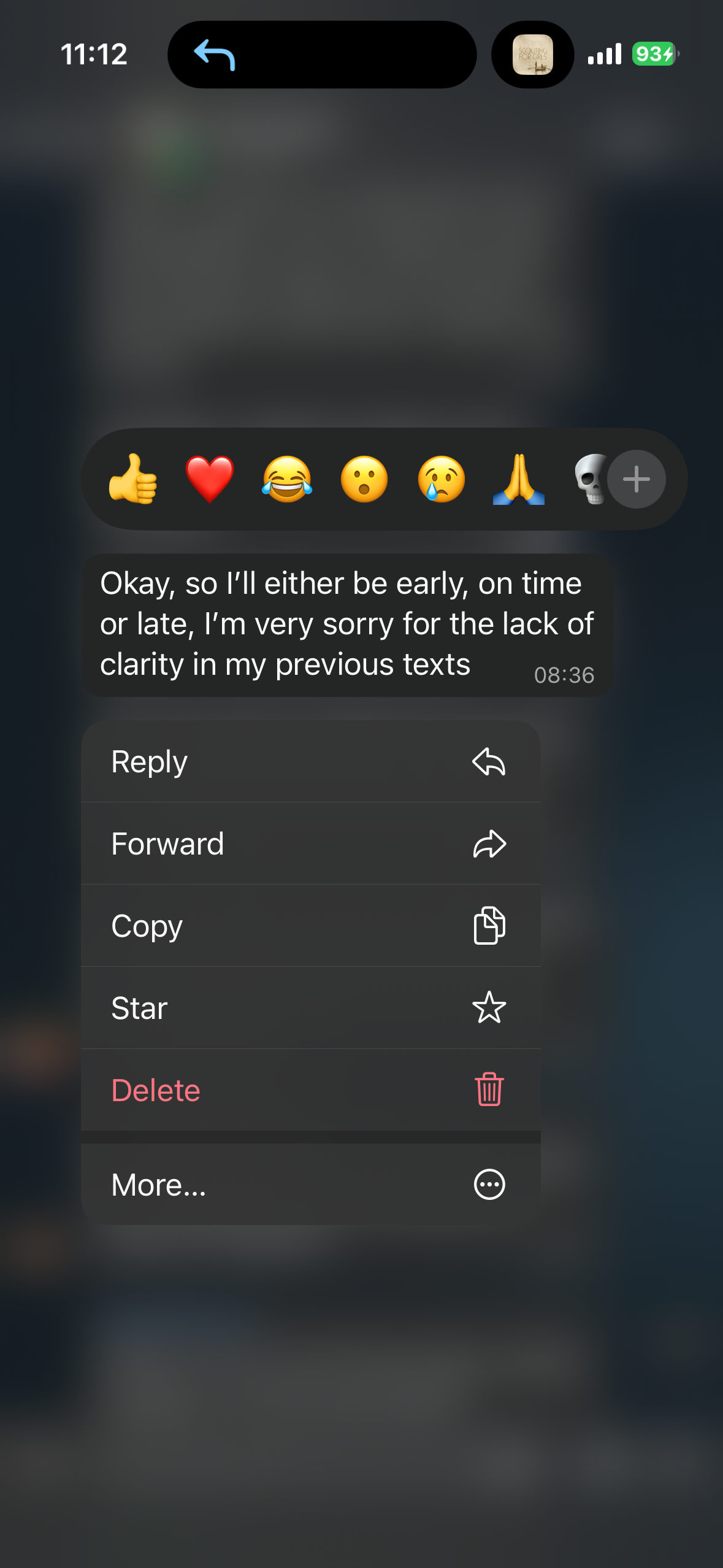
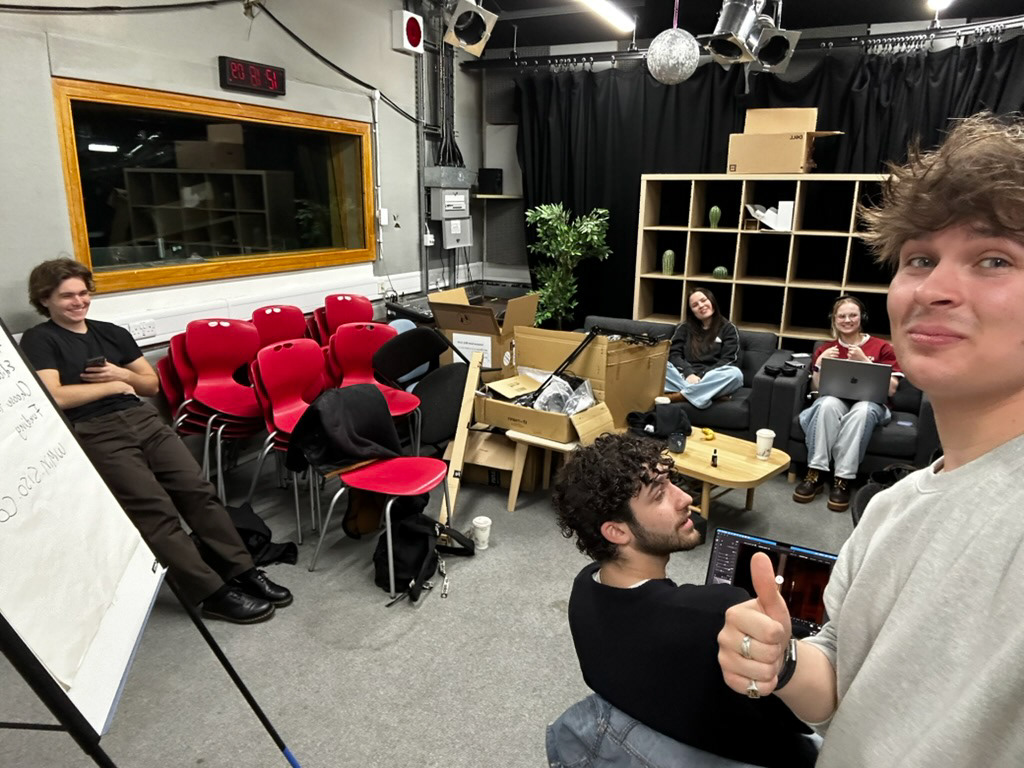
Today’s audio dubbing session was affected by the tube strike was going on this day, so I picked up Neve en route, and Luca drove in, with Liam saying he would get the bus, but then for some reason getting an overground train into central London, hoping to get a tube back out — no one really knows. But, everyone managed to get there okay in the end, and we had a very successful day. I brought my sound kit from home, and set up the Logic file to loop sections at a time, getting the actors to hear themselves and then immediately say the same line. When we were doing ADR for the fire pit scene for Hell is Other People, I found this to be the easiest method. It means having to move everything around afterwards, but it always lines up really well.
Today's session also elicited my favourite message I’ve ever received from Liam, after his various delays:
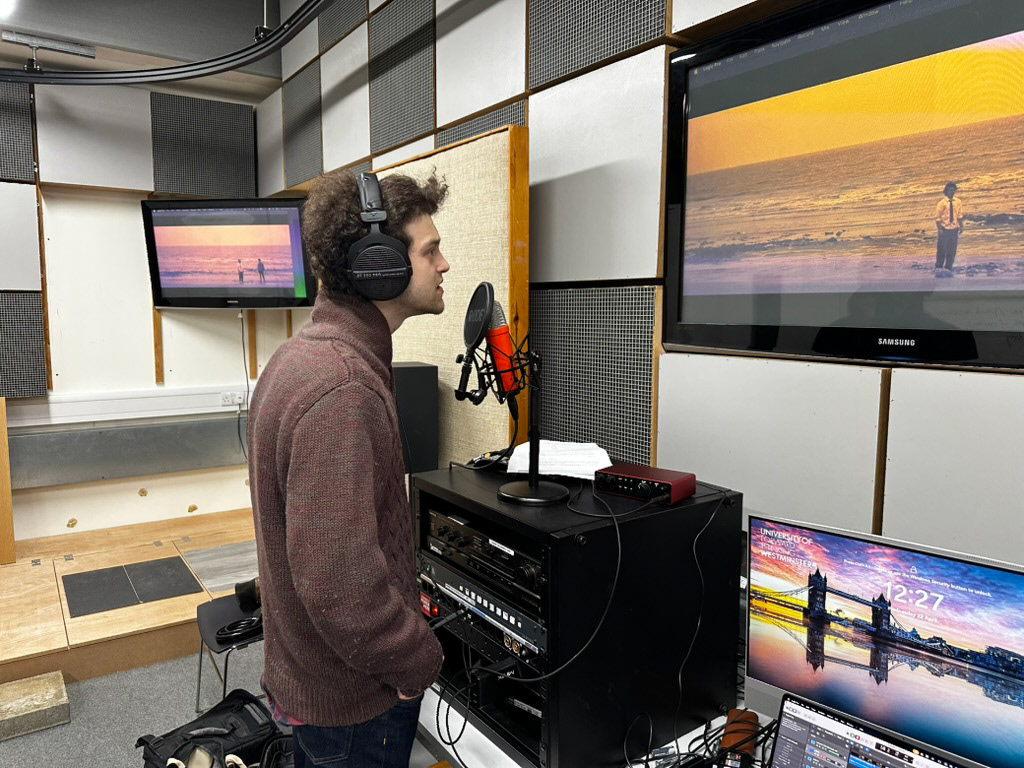
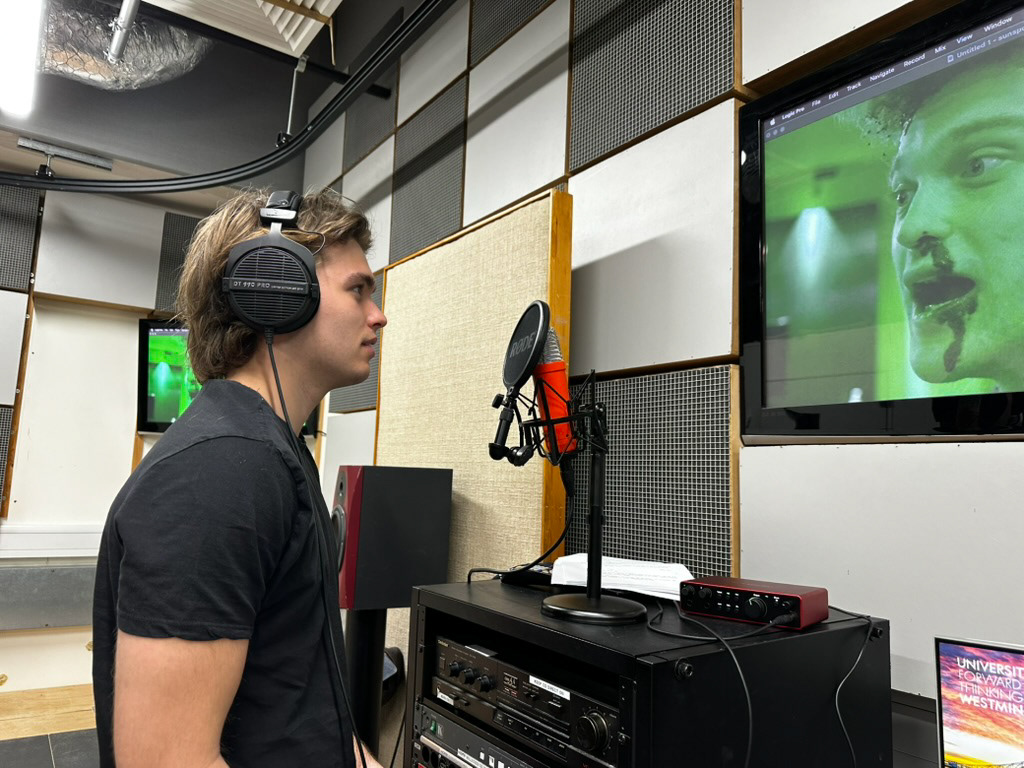
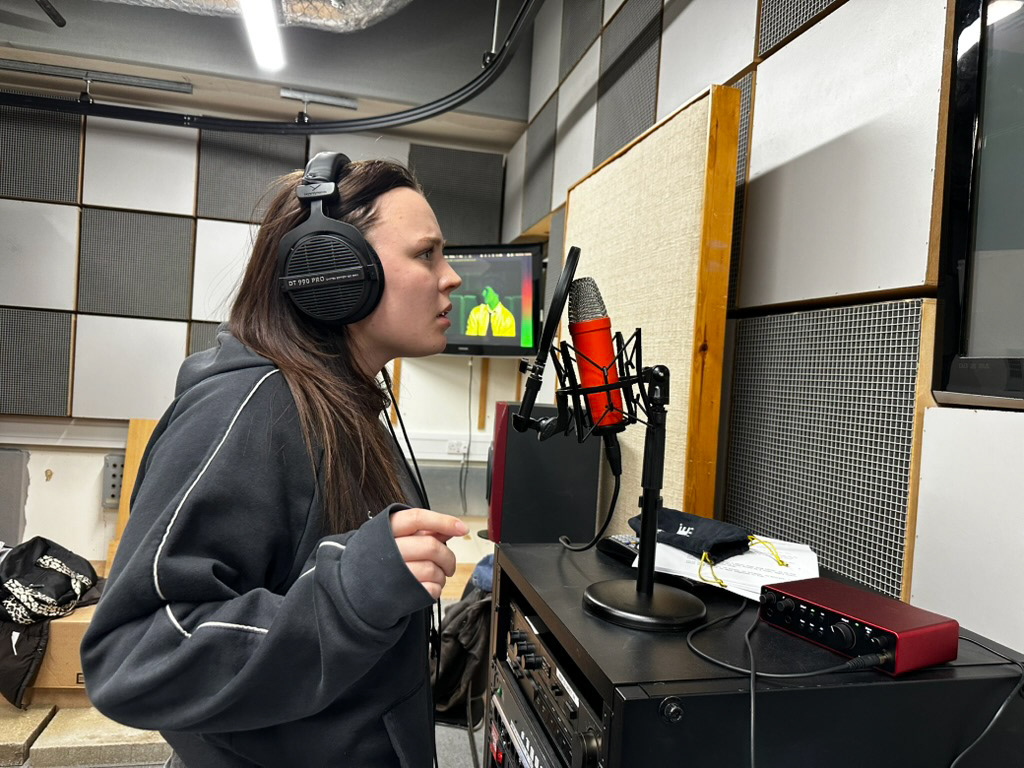
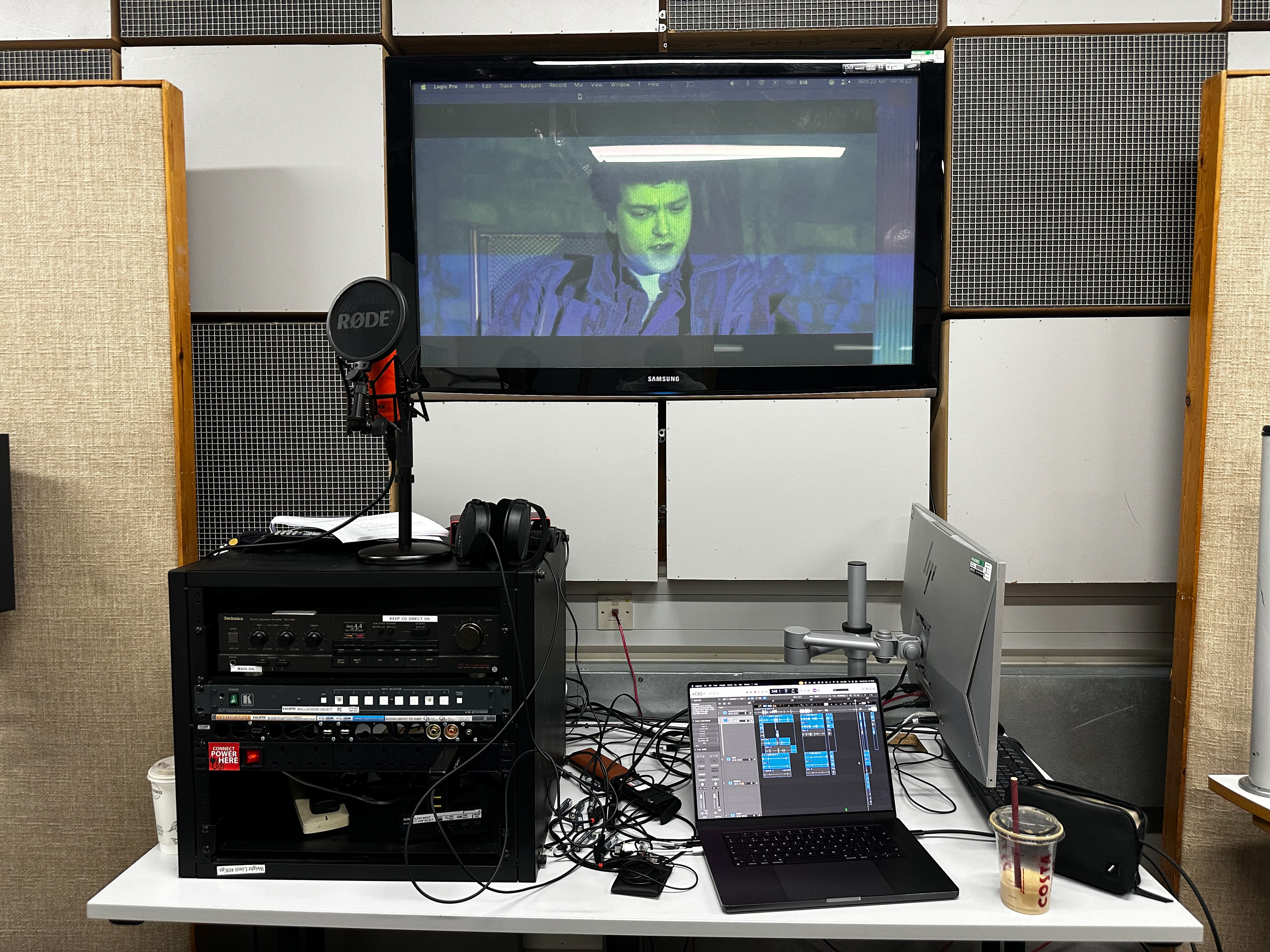
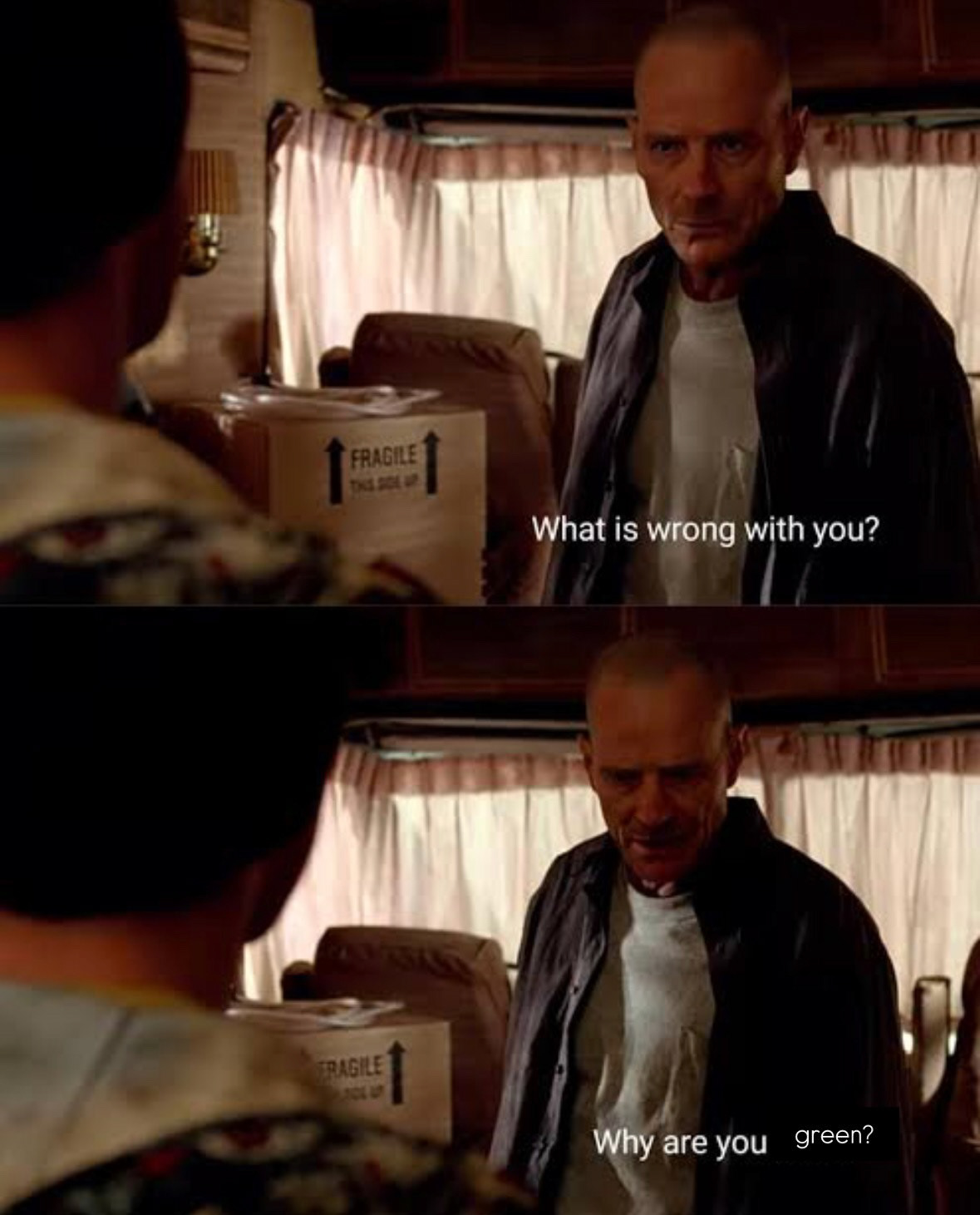
The only problem we had here was actually with the screens! As you can probably see, they were extremely green.
After assuring ever that it was an issue with the room and not my diabolical colour grading, we got to work, and managed to finish everything in just a few hours.
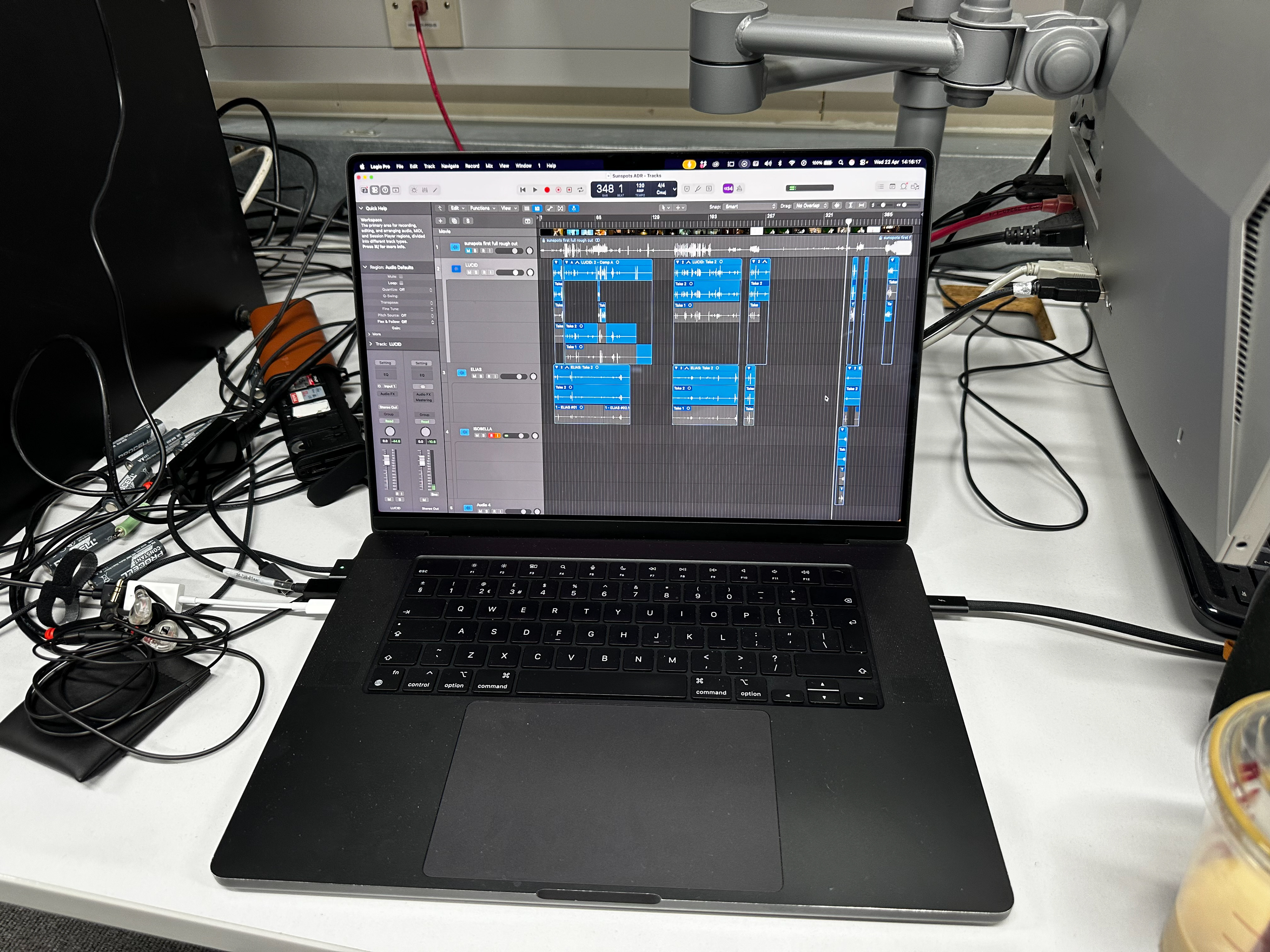
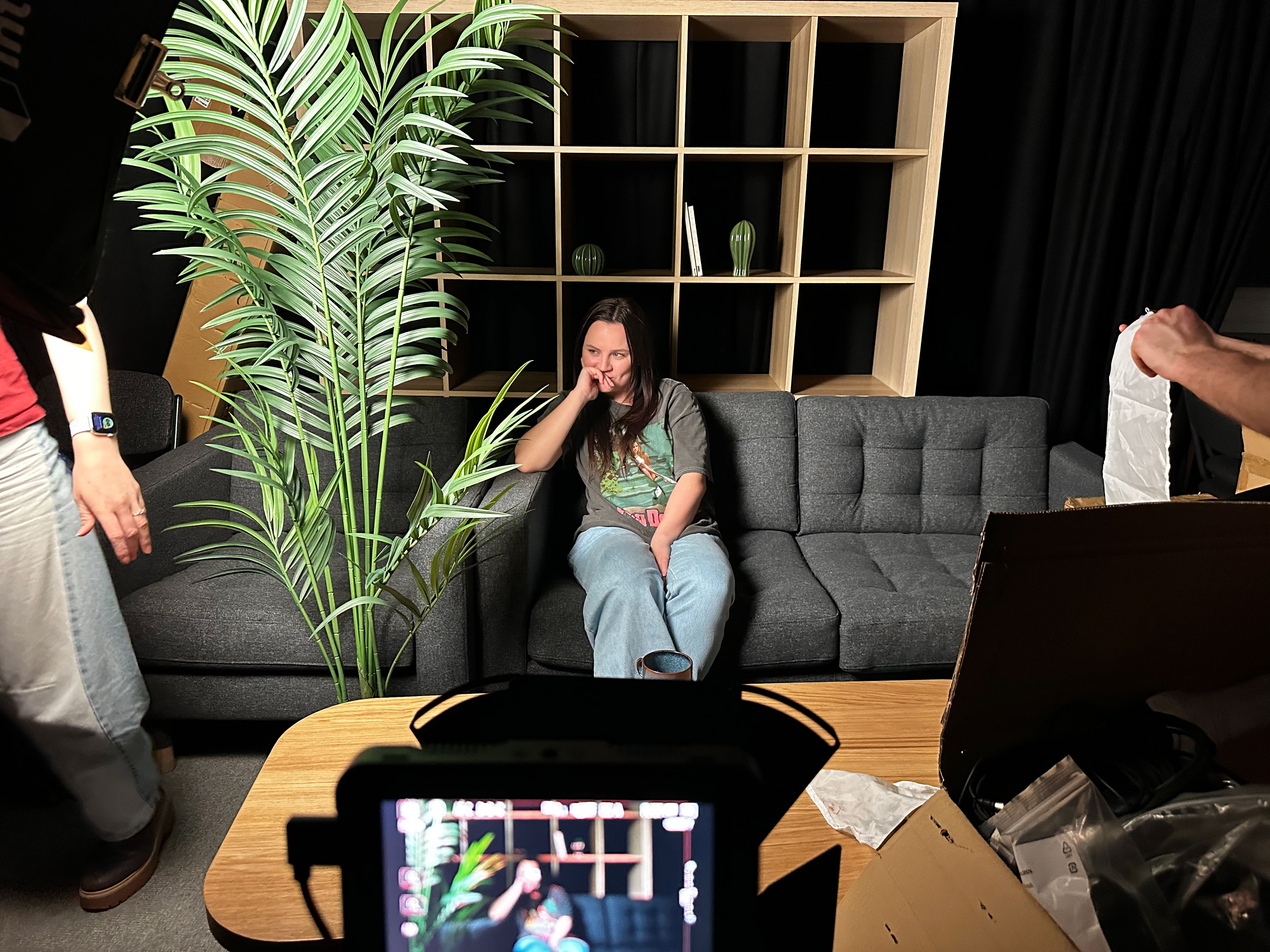
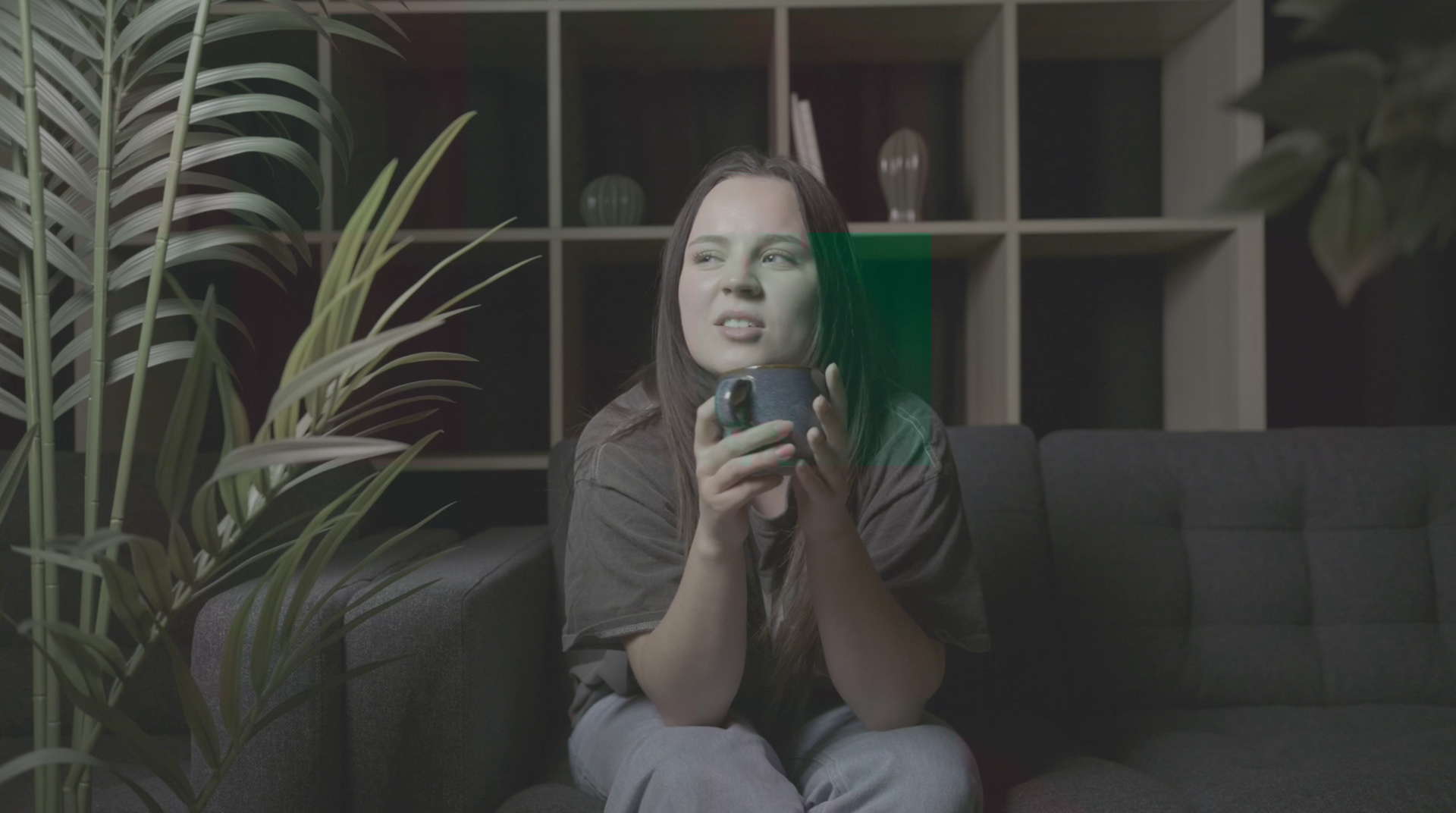
Once this was done, I decided we had enough time to shoot a single shot we wanted to get of Isoella drinking from a cup in a cafe — we shot one of her drinking from a straw at a Tim Horton’s in Kent, and wanted to match cut it to a different location and beverage. Instead of tracking about Harrow finding a cafe that would let us film, I decided we could build one instead. Without even having to leave the room, we set up a scene that would hopefully at least pass as being a cafe for a few seconds for a single shot. (The screenshot is obviously completely un-colour-graded currently!)
26 Apr: The World's Worst Car Park, and the Day Our Lives Genuinely Flashed Before Our Eyes
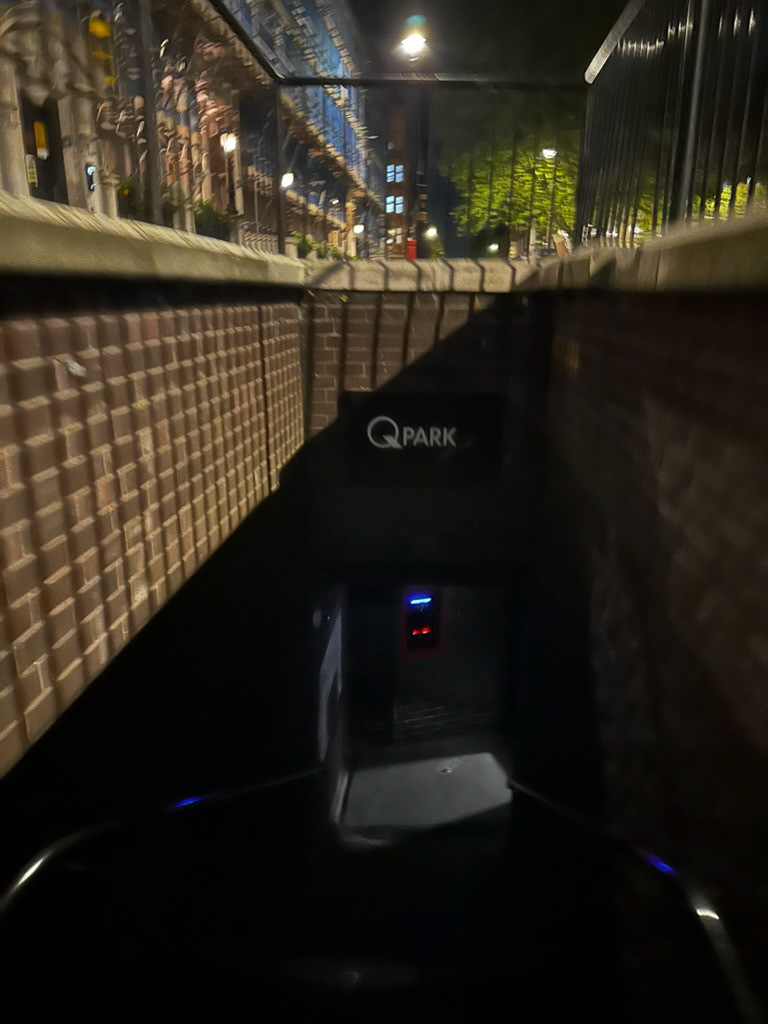
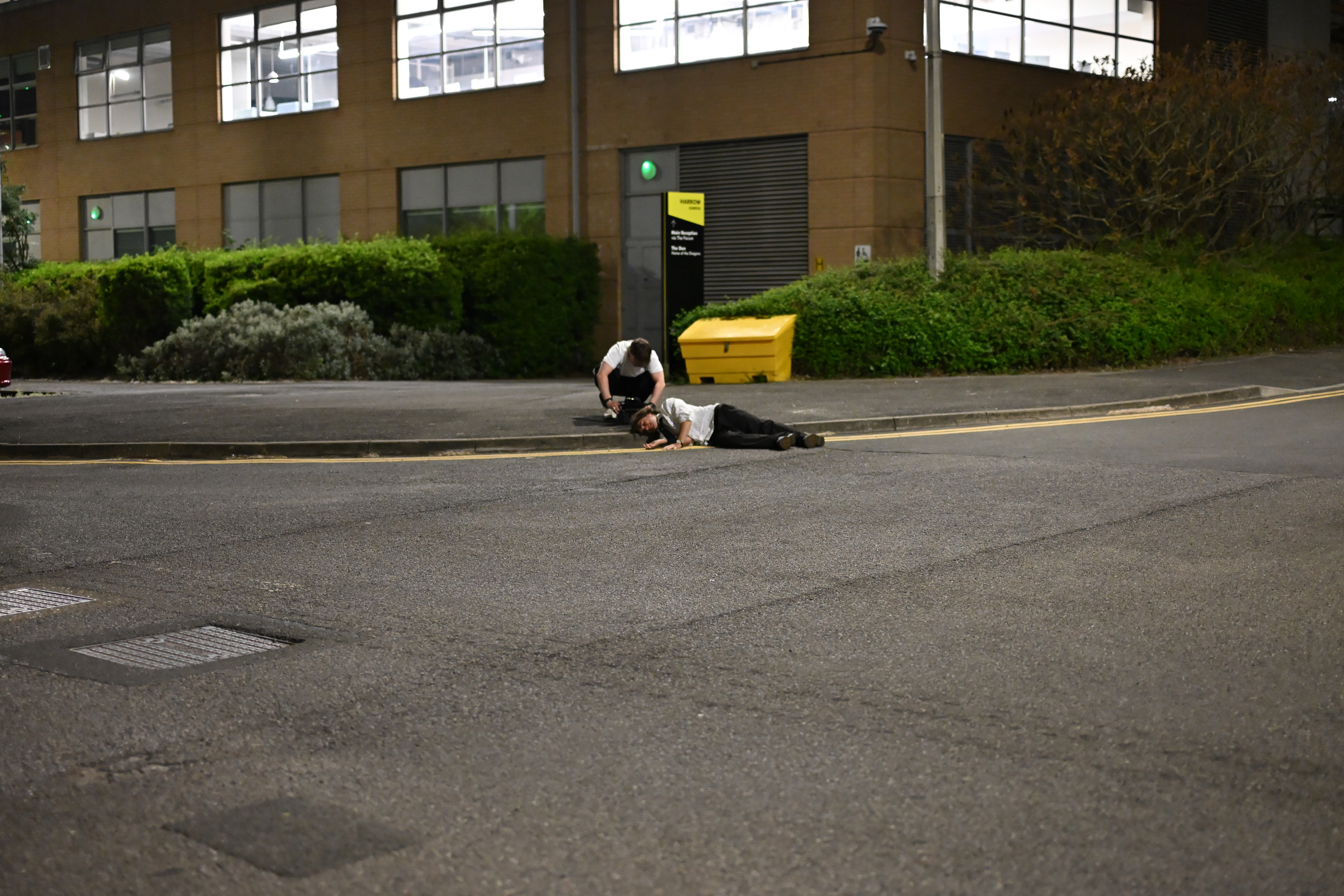
Today we are finally, actually, completely done with filming. We took Luca down to Regent Street Cinema to reshoot him walking across the road, and Peter got a lovely close up of him ‘locking’ the door, and then we went back to Harrow to film the aftermath of him being hit by the car. On the way in to Regent Street, however, as I was turning right onto Regent Street, already in the yellow box with my exit clear, a white car, clearly going more than double the 20mph limit, ignored his give way lines, ignored the give way signs and careered into the yellow box. I don’t know how it didn’t smash straight into us — and neither do Luca or Peter! — but I managed to somehow veer out of the why while also avoiding the bollards on the central reservation that must have been millimetres away. After we all took a minute to regain our composure (and go back around to check that it definitely was the other car who was in the wrong — it was), we parked in Oxford Street Q-Park, walked the five-ish minutes to RSC, and set up, We had a strict one-hour deadline, as parking for one hour was £11, but for 2 hours it was £27, not that that makes any sense. Anyway, the car park is set out in such a way that, once we’d finished shooting after 45-ish minutes, we literally could not get back in. No signs anywhere show you how to get in, and it was pitch dark. When we eventually did find the entrance, it looked like this…
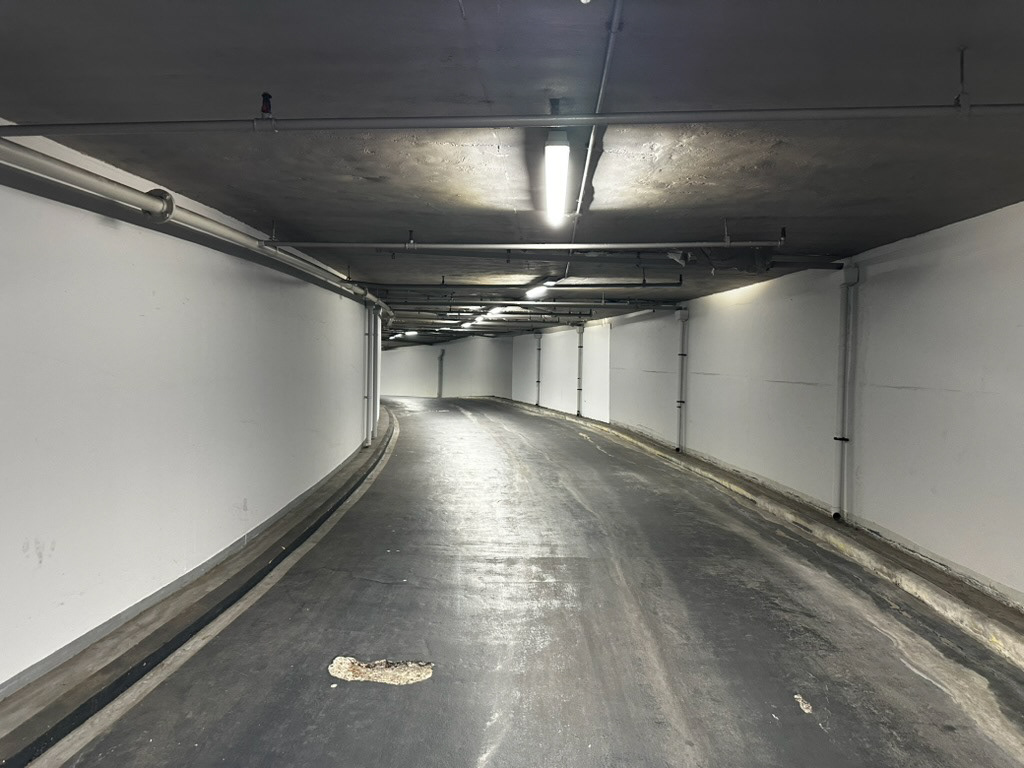
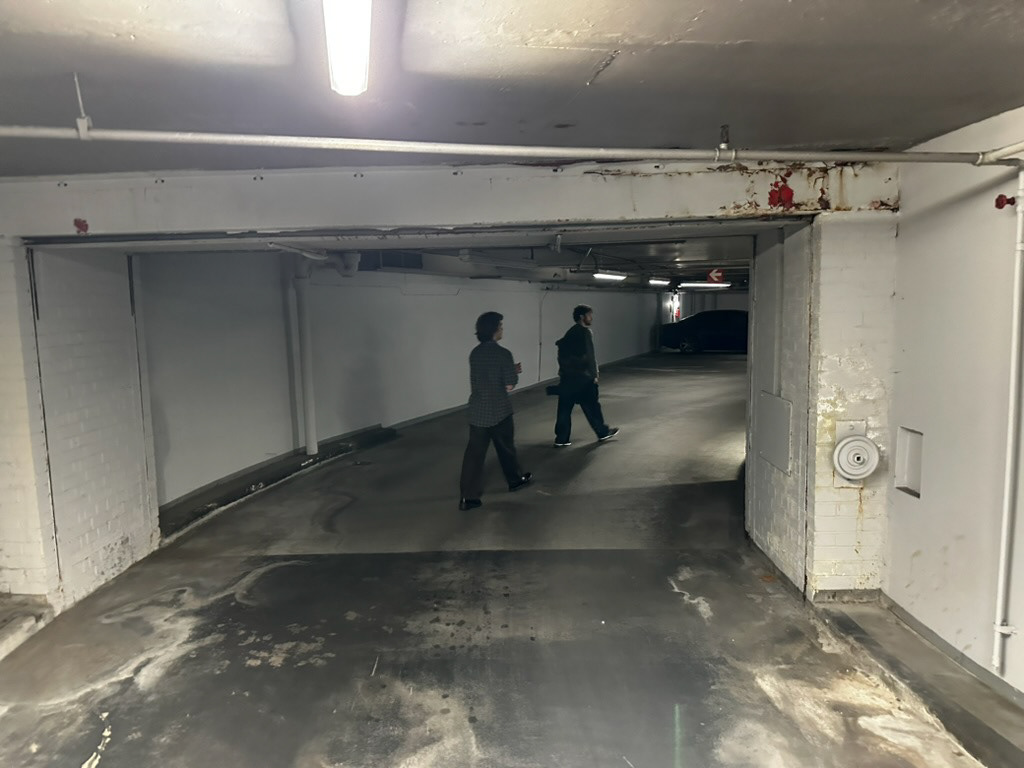
…and by the time we’d scanned our ticket to get back in, found the payment machine, and put our ticket in, it had just clicked over to 1 hour and one minute. I’ve never been more furious with an inanimate object — or location — before, especially as it was clear if we’d booked online instead it would’ve been half that for much longer. “Live and learn,” and all that…!
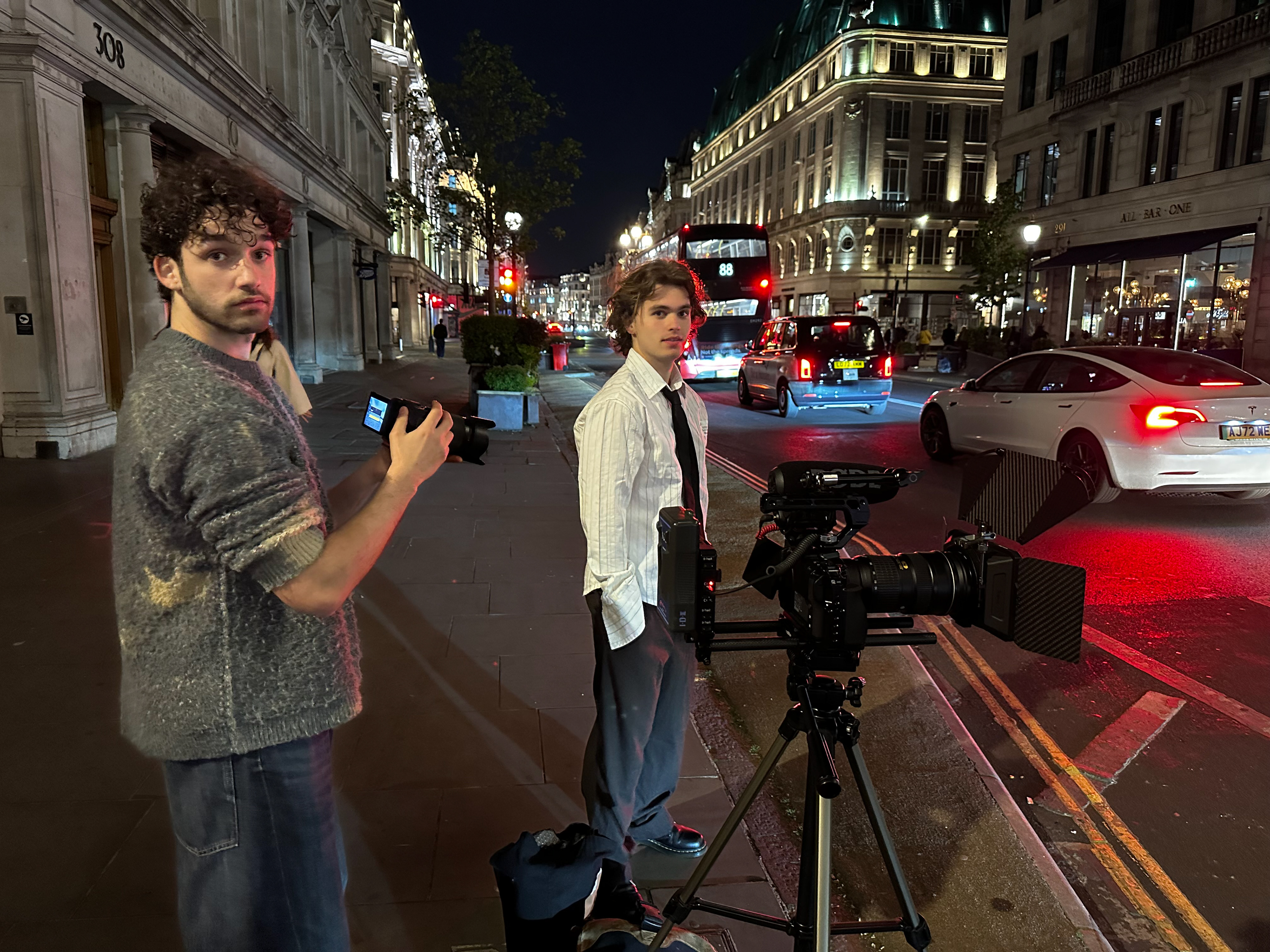
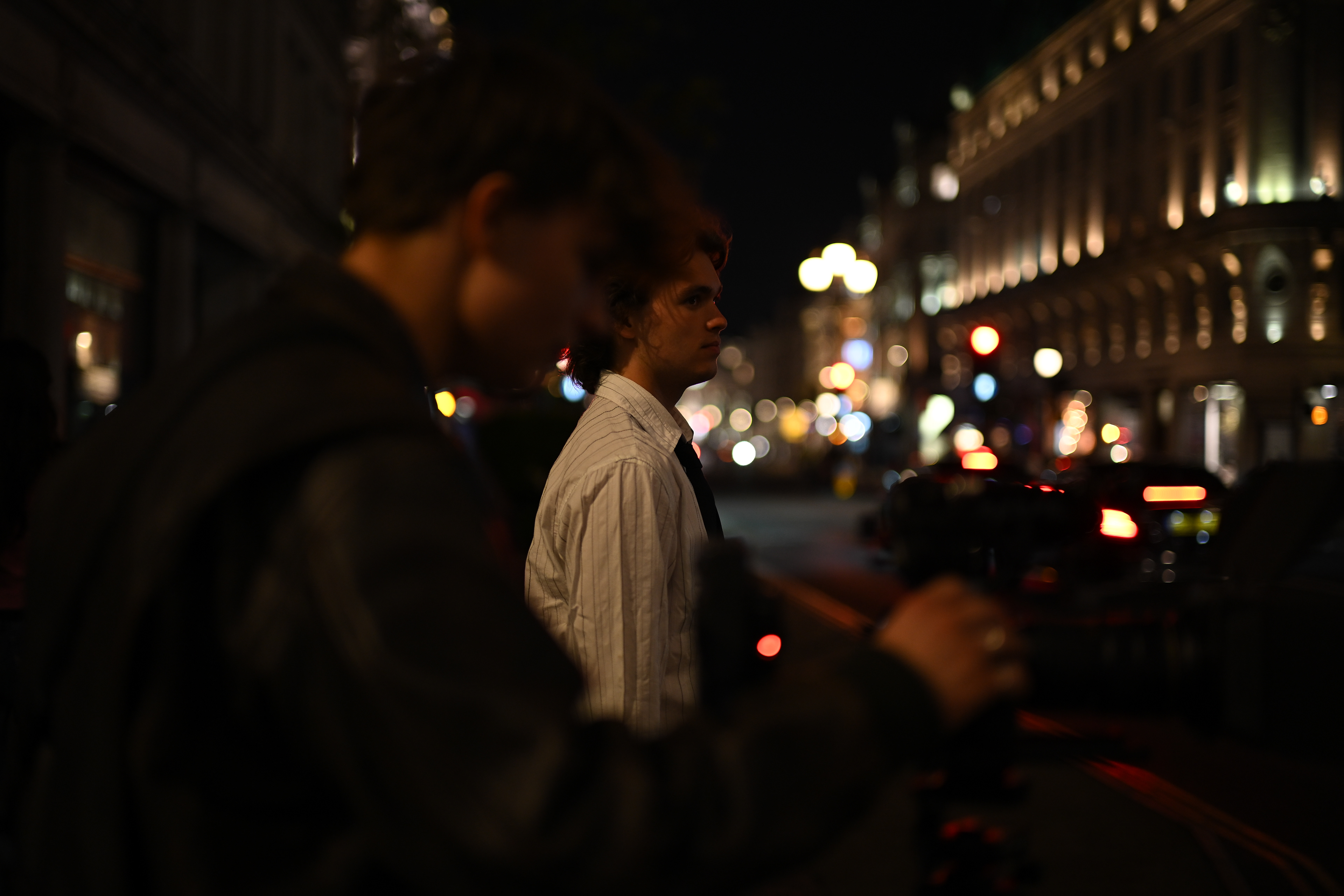
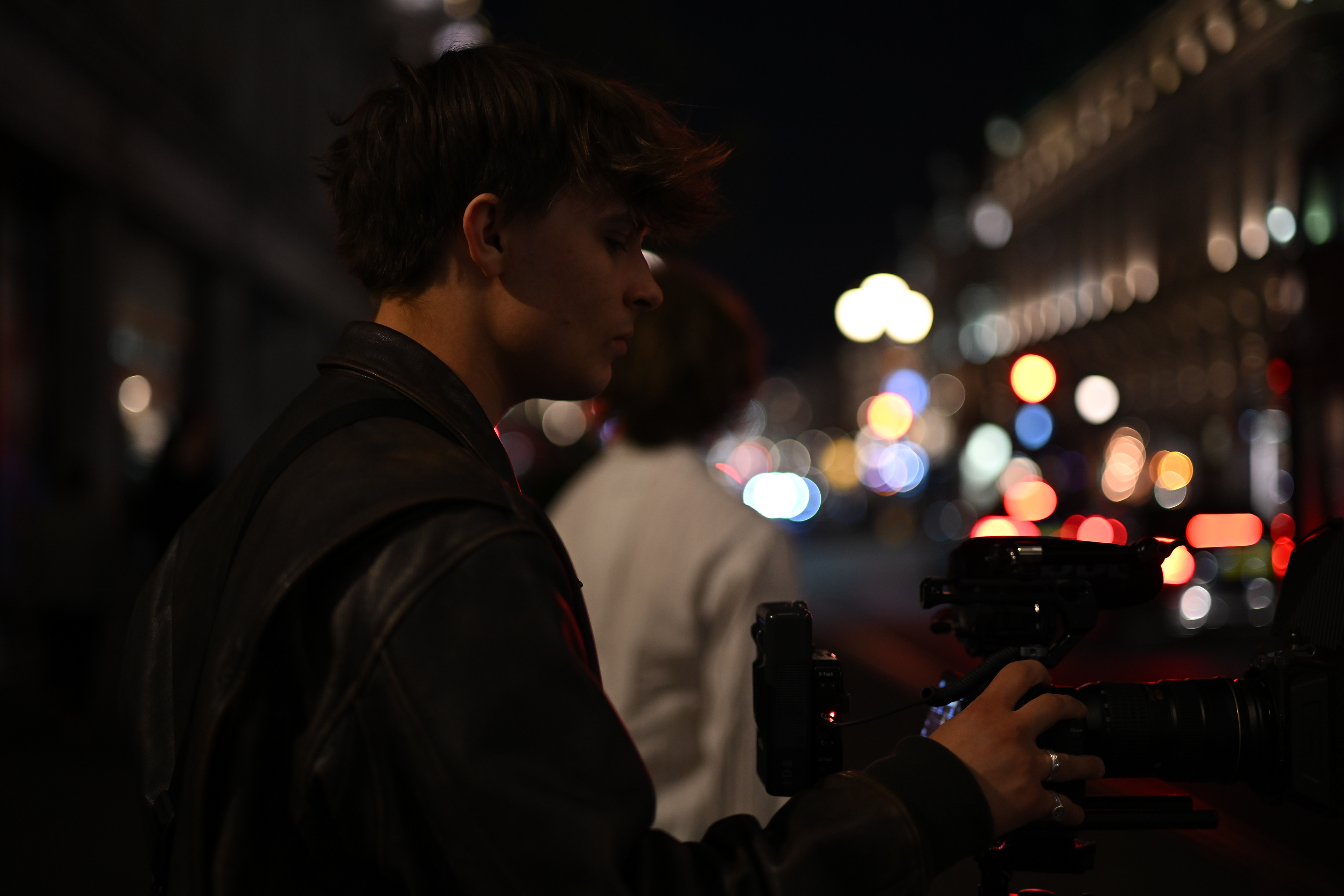
Back in Harrow, Peter applied the effects blood to Luca while I set the camera up, and we wrapped within about an hour.
Overall, despite the annoyances, this was a good and effective day.
6 May: Full Cuts
We’ve now had a few full cuts exported, still with a few moments to trim down. With foley and ADR pretty much all done now, our next big focus is colour grading.
We managed to miss Luca/Elias’ dialogue for the cafe scene when we did ADR at Harrow, so Peter and I went to Luca’s house today just to do that one scene.
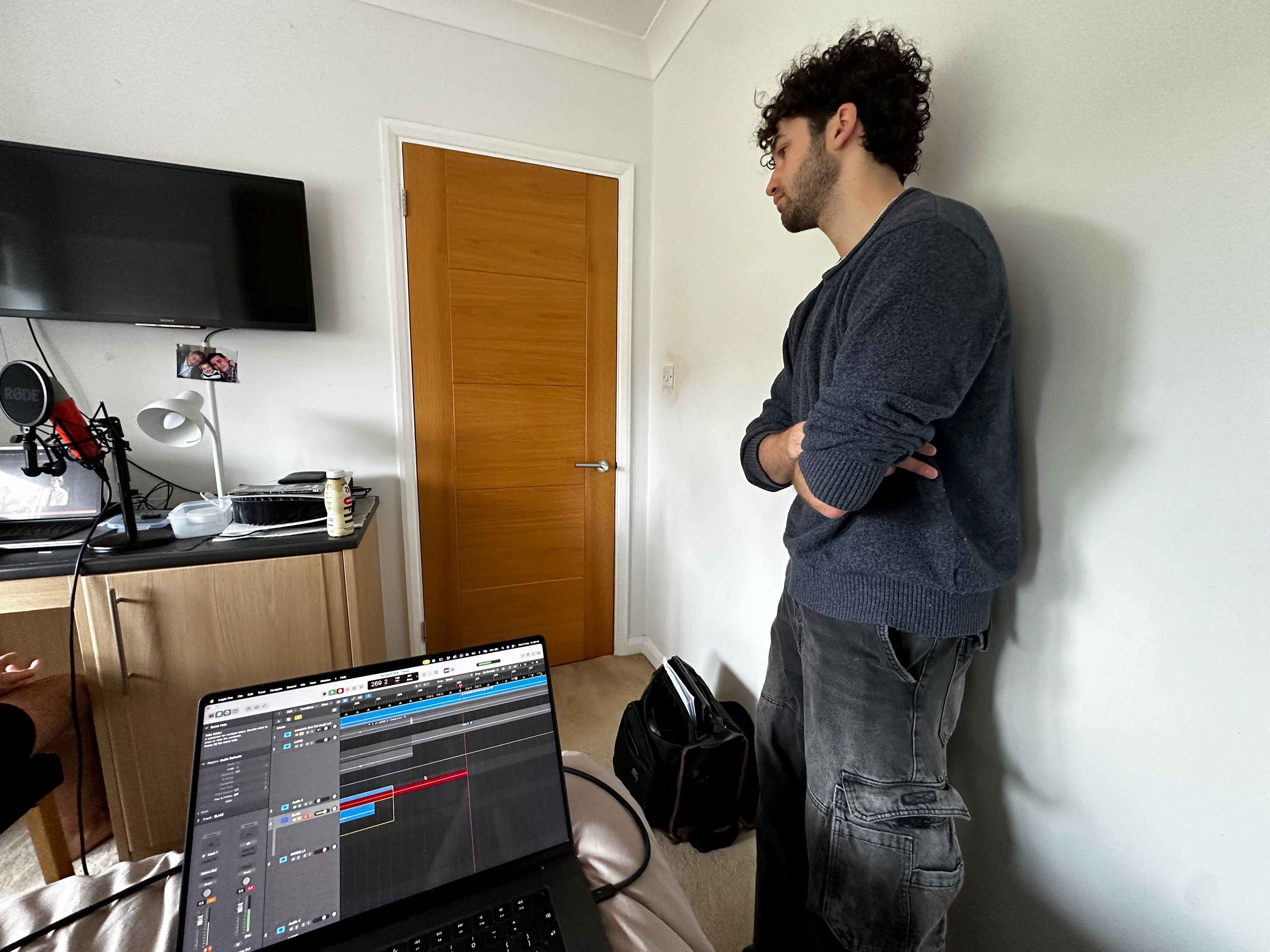
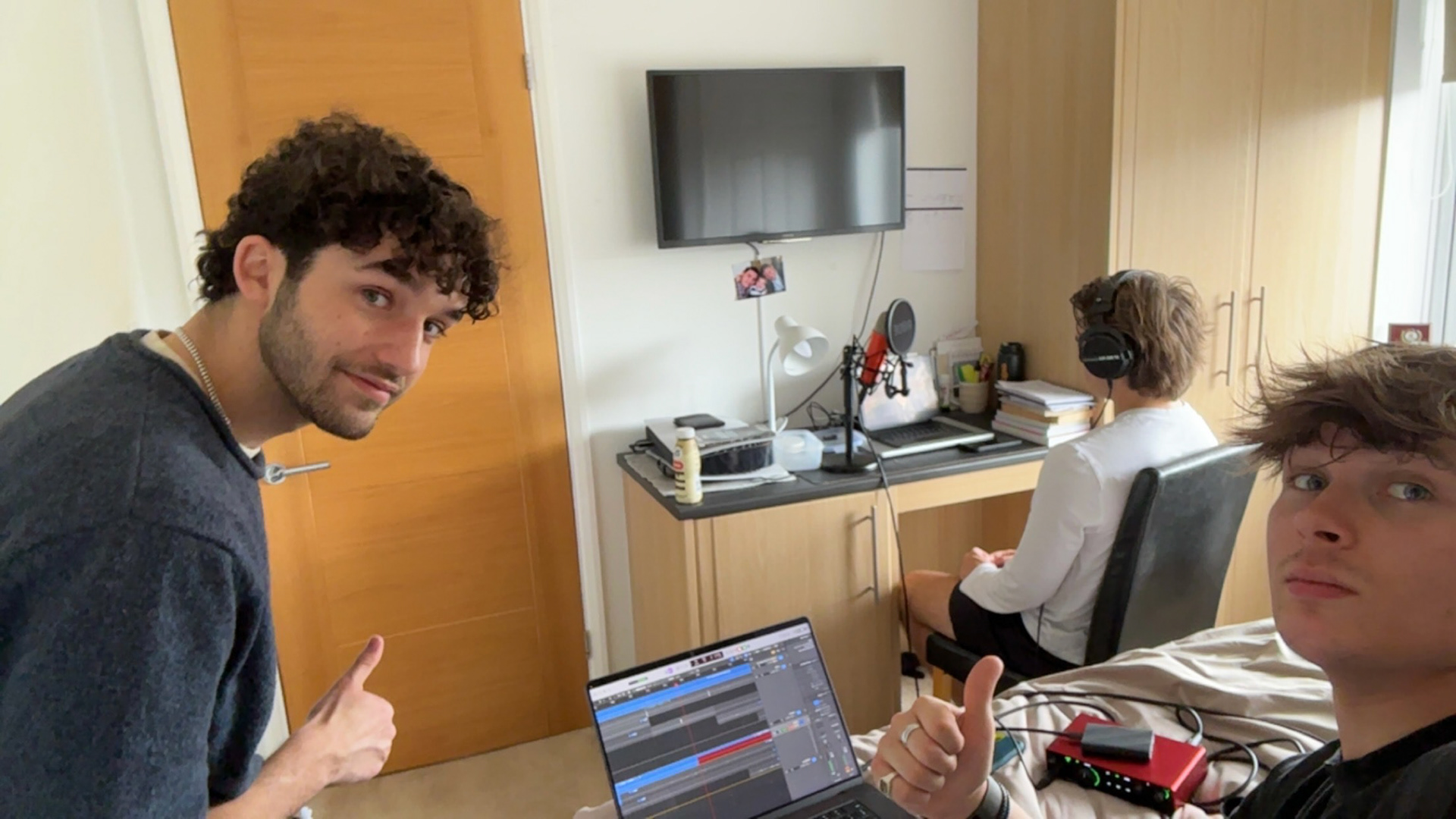
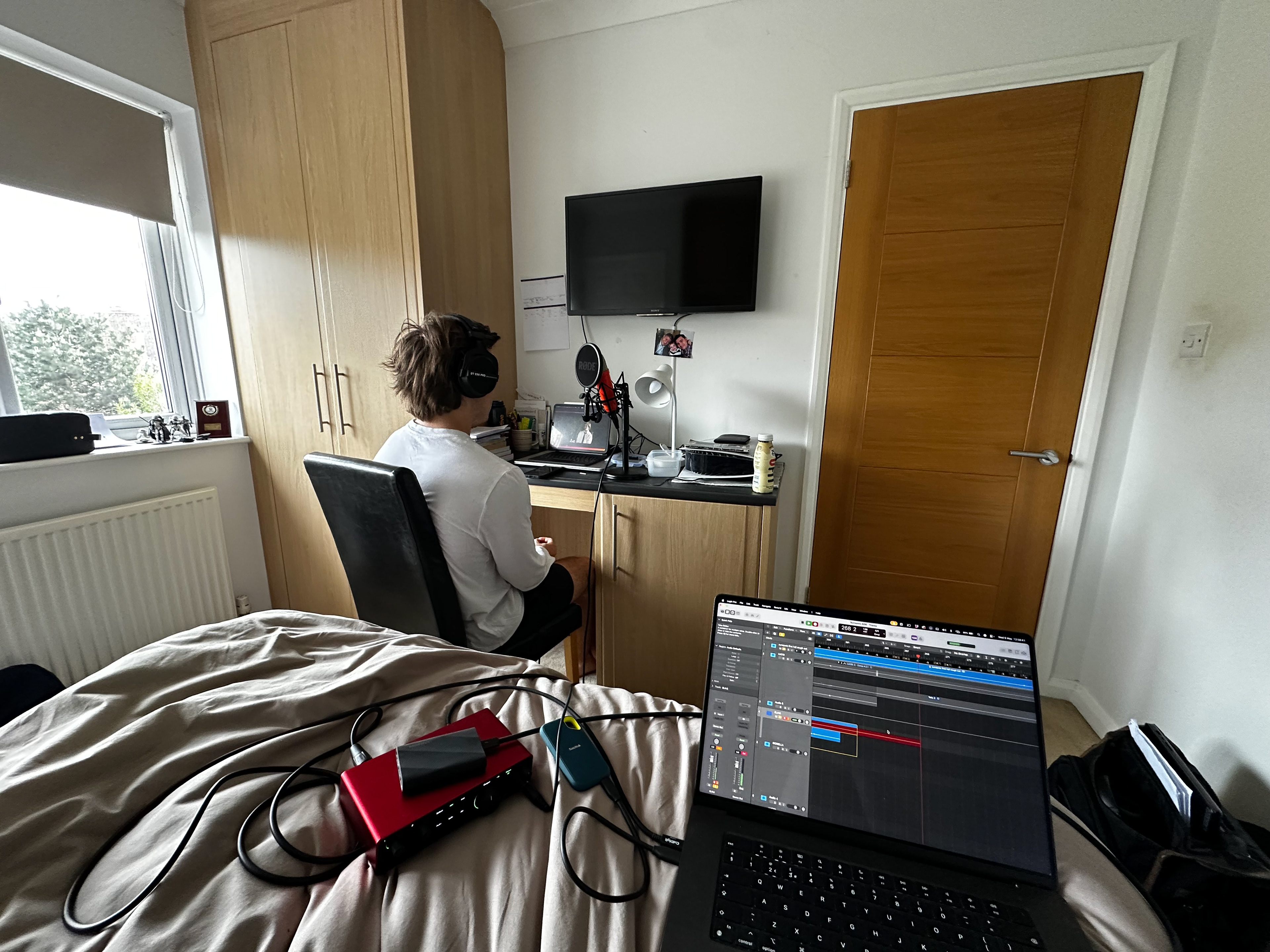
Then, yesterday, Peter and I met up to go over scheduling and documentation to make sure we hadn’t forgotten anything, along with a final look at colour grading.
This is the final mix from the foley and ADR combined, which I then bounced to six tracks: Elias Vox, Lucid Vox, Isobella Vox, Ambient/Room, Music, and Foley. This means that back in Premeire, if anything else needs moving around, I won’t have to redo all the audio again.
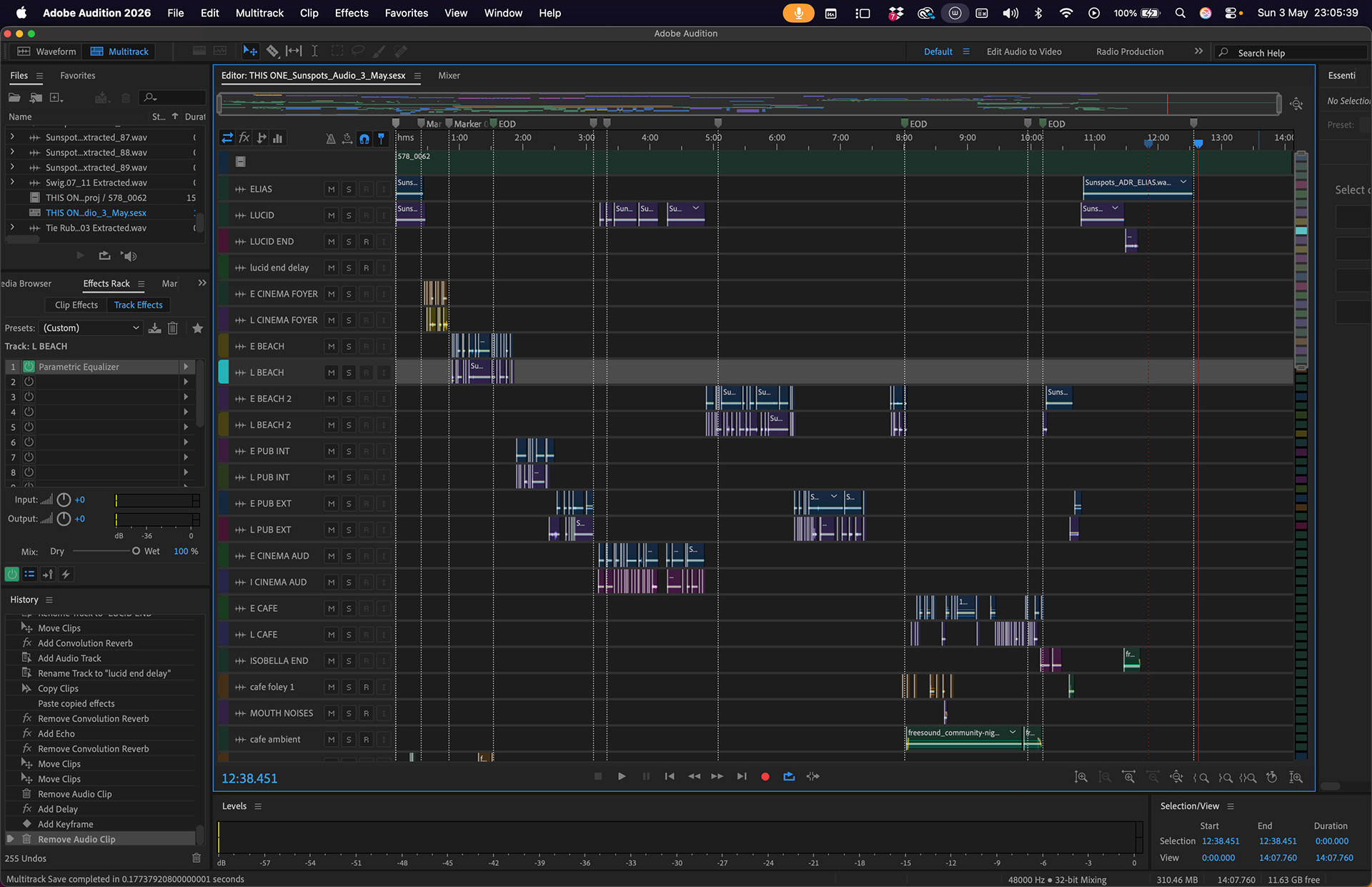
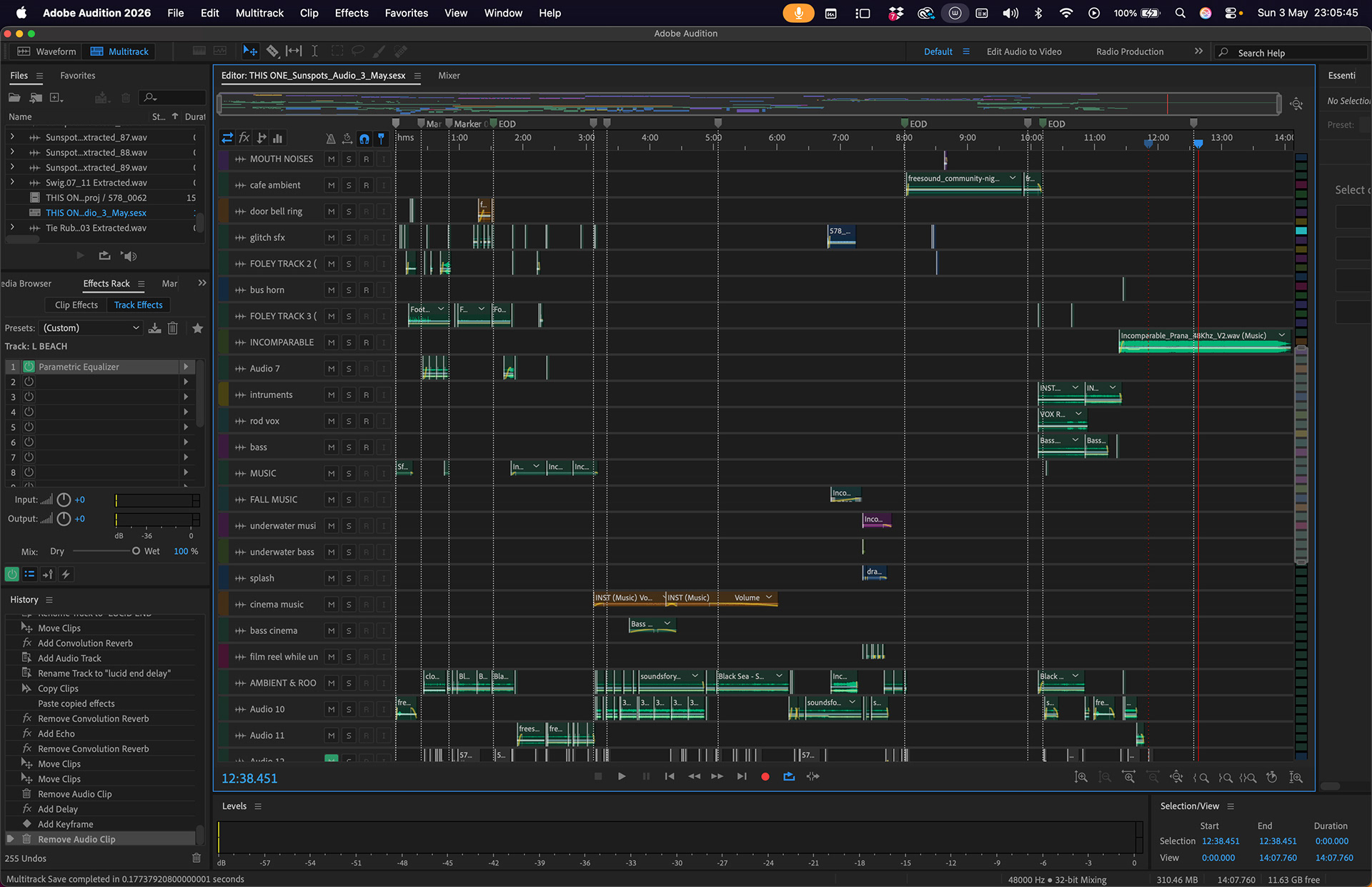
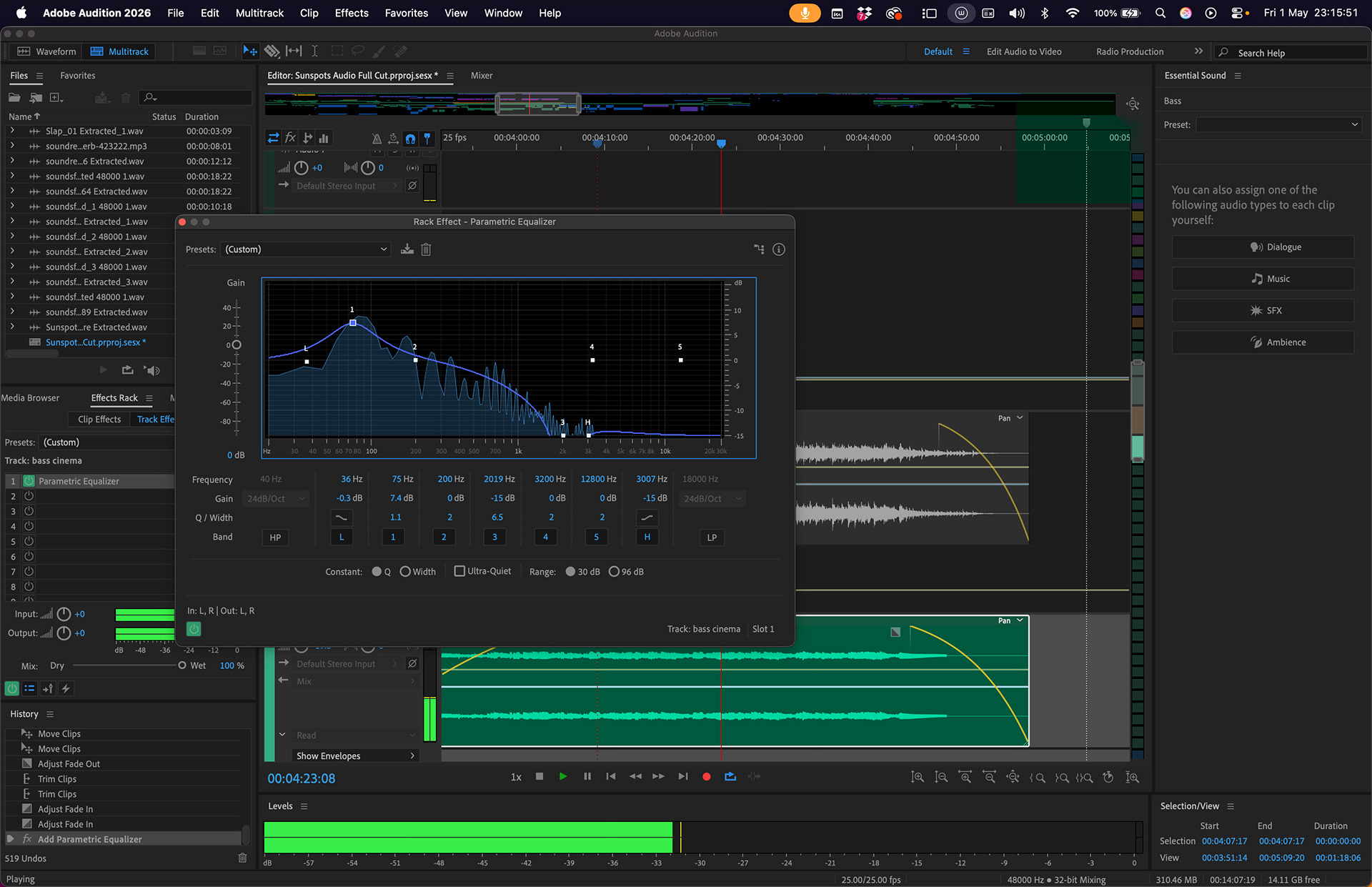
The EQ for Elias' voice:
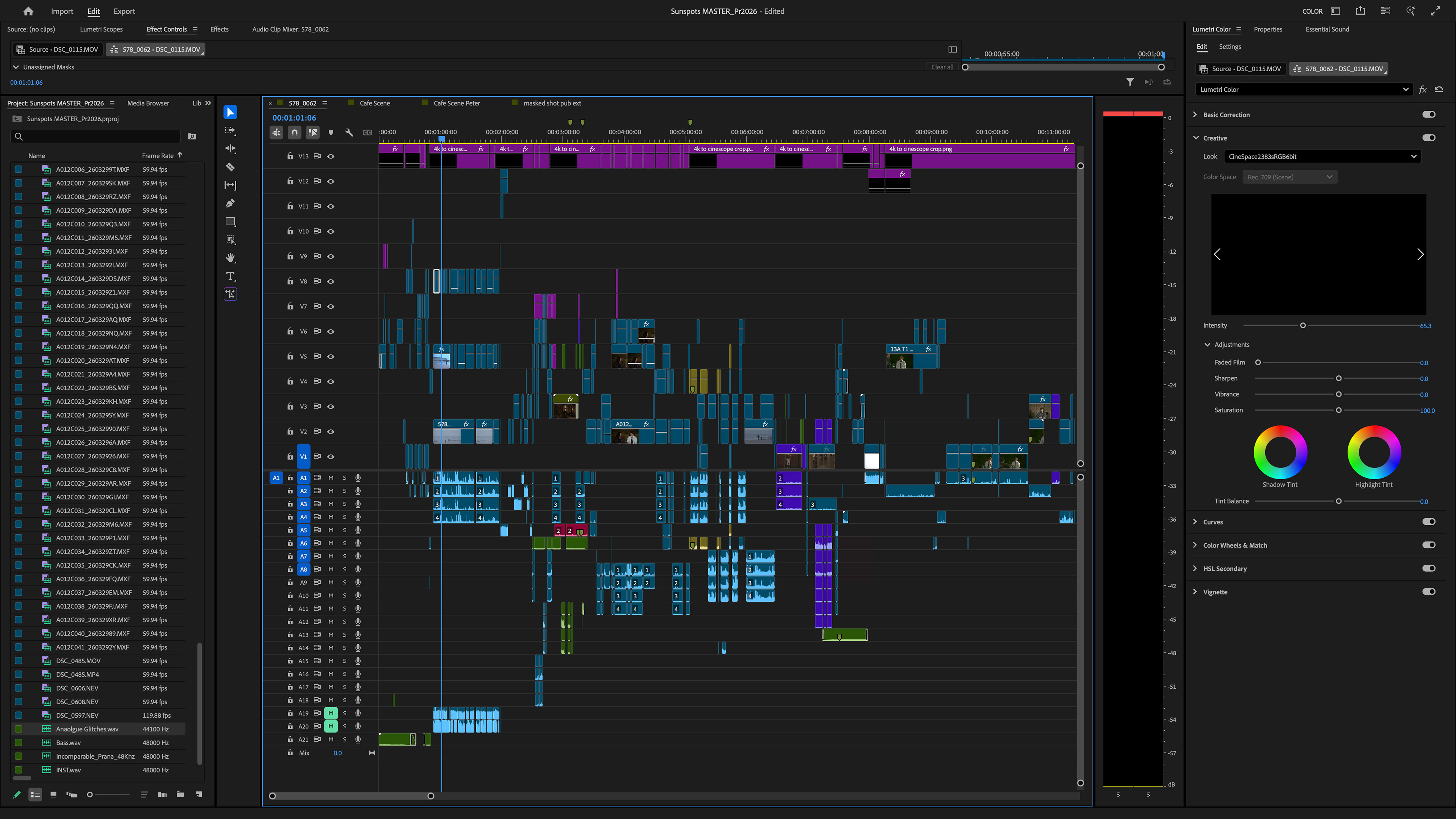
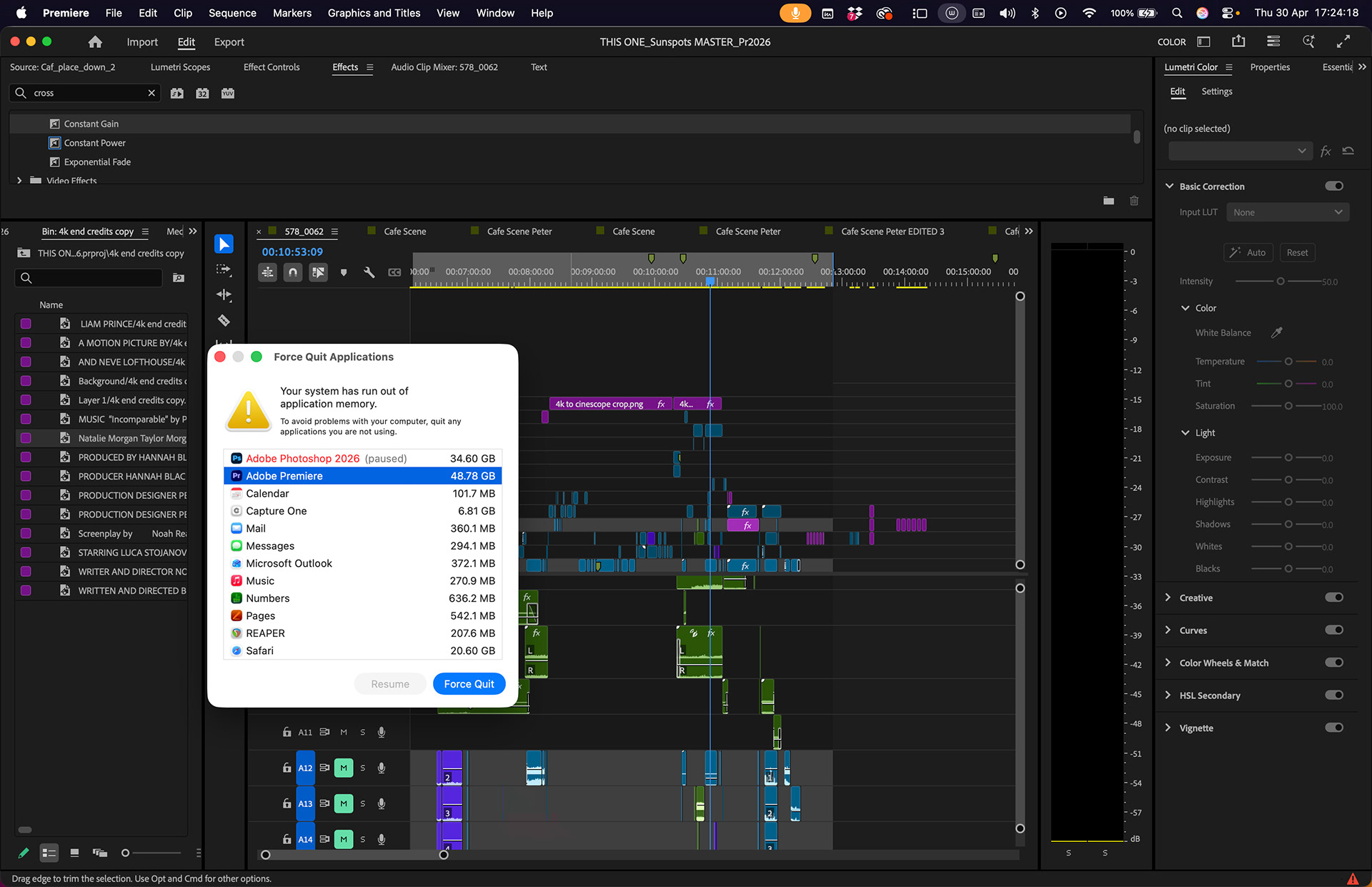
This was the timeline just before adding the final audio tracks, but shows most of the video tracks and how they will be for the final cut.
And, excitingly in a way, the first time I've ever properly maxed out the memory on my computer...!
10 May: Final Colour
Every scene is now fully graded, as such:
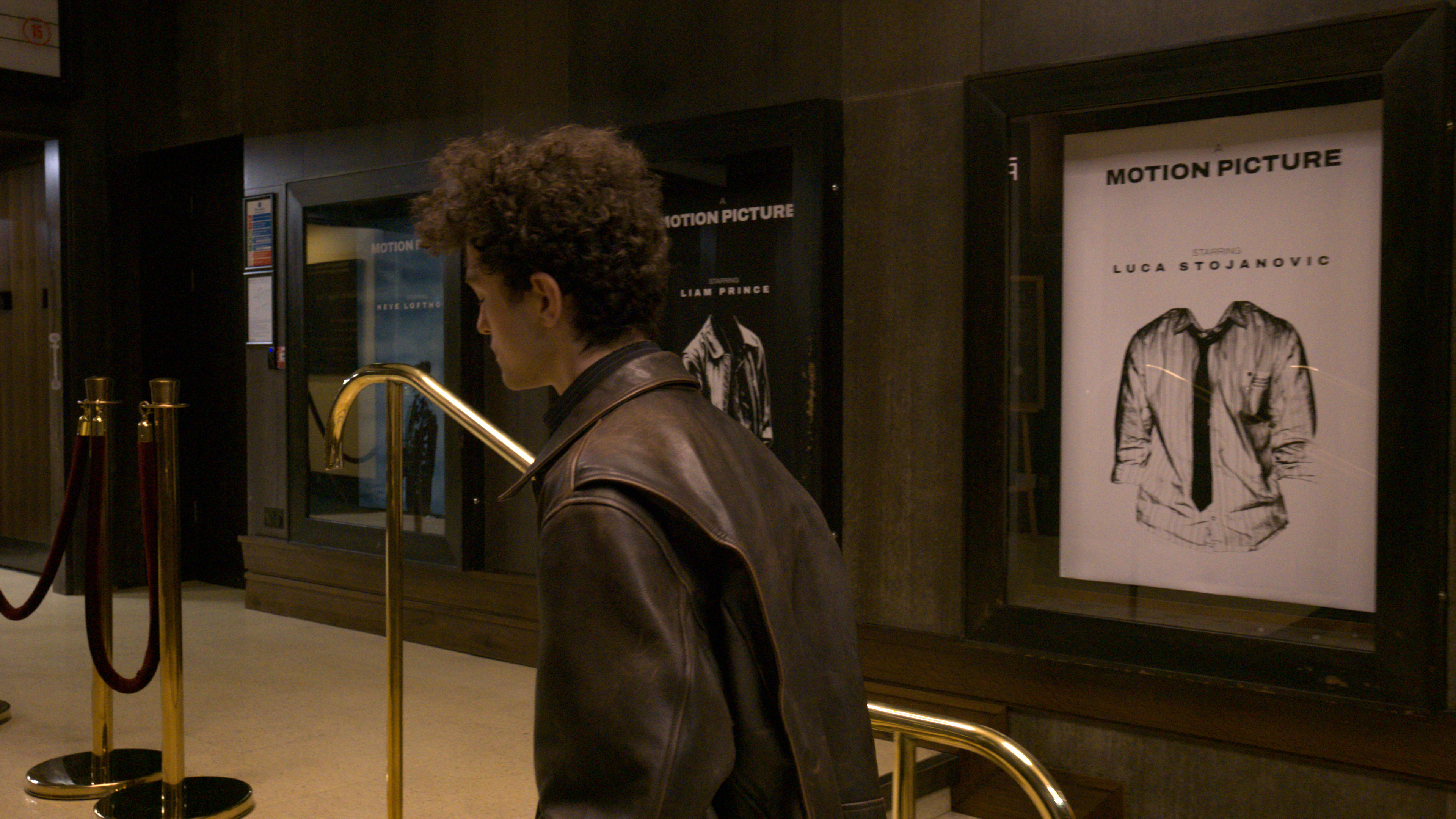
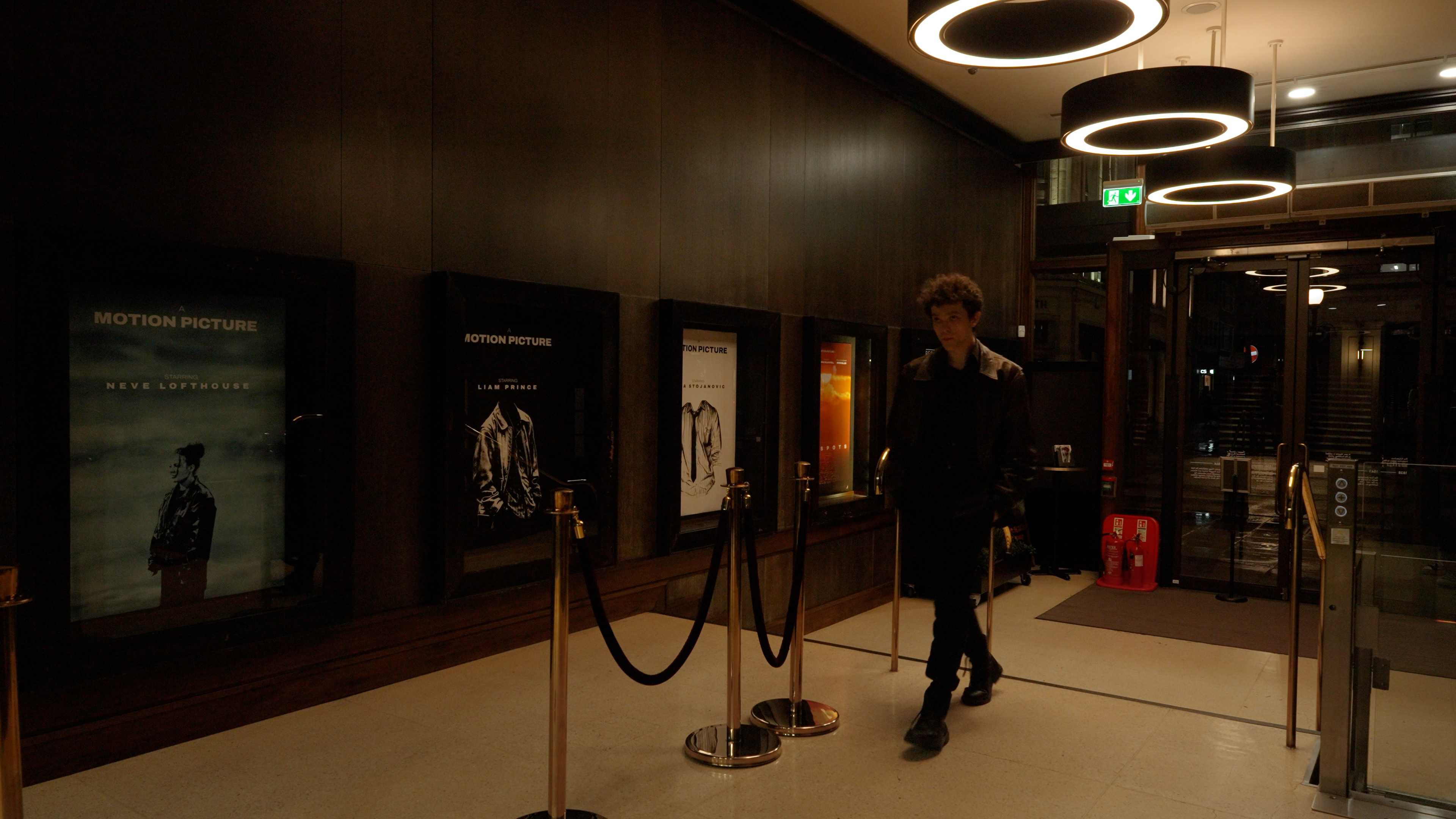
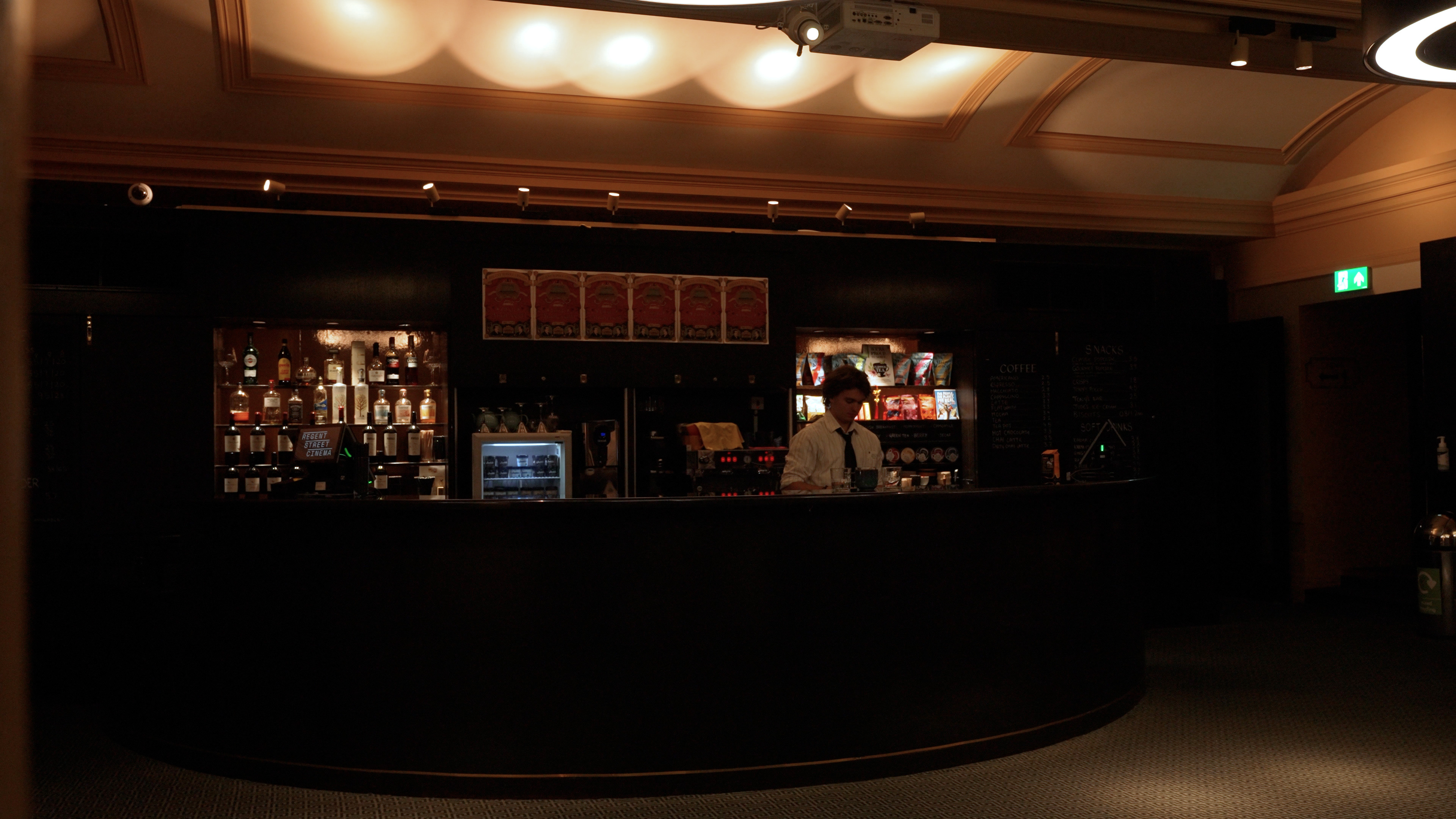
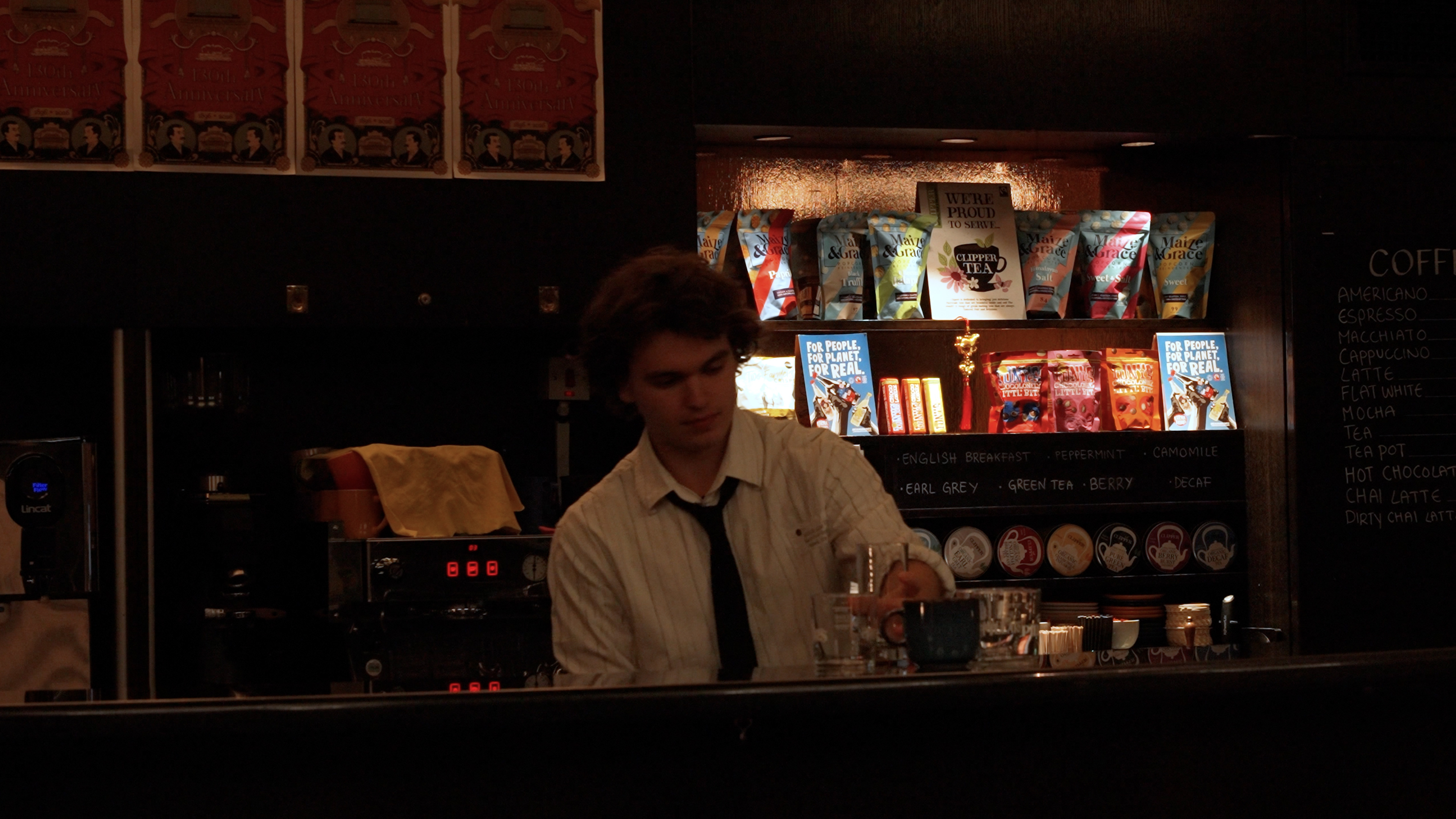
Cinema 1
The biggest challenge here was matching the floor colour between shots, as the temperature on the Sony was a little warmer. This meant masking the floor on the wide static shot, and cooling it down slightly.
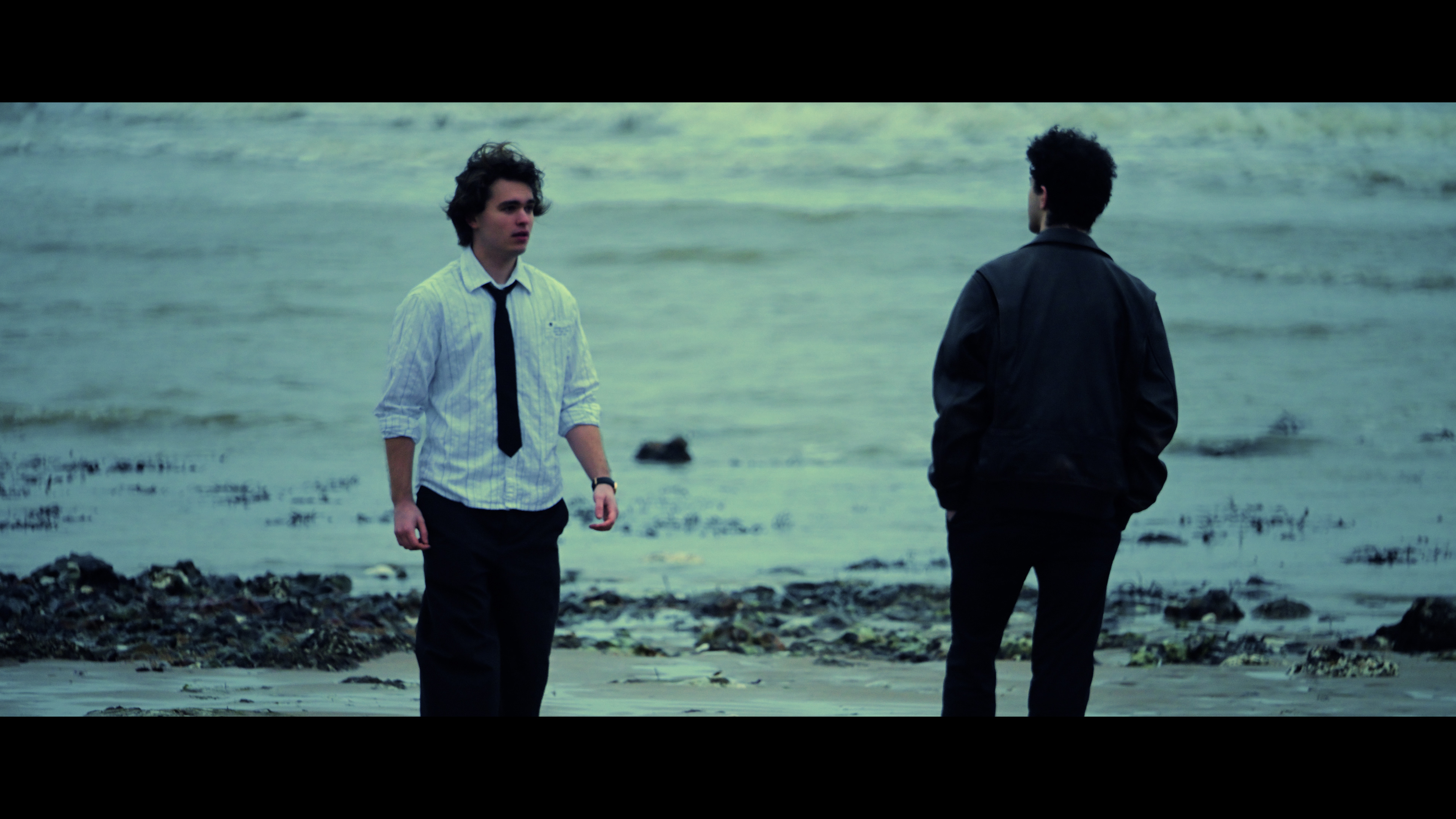
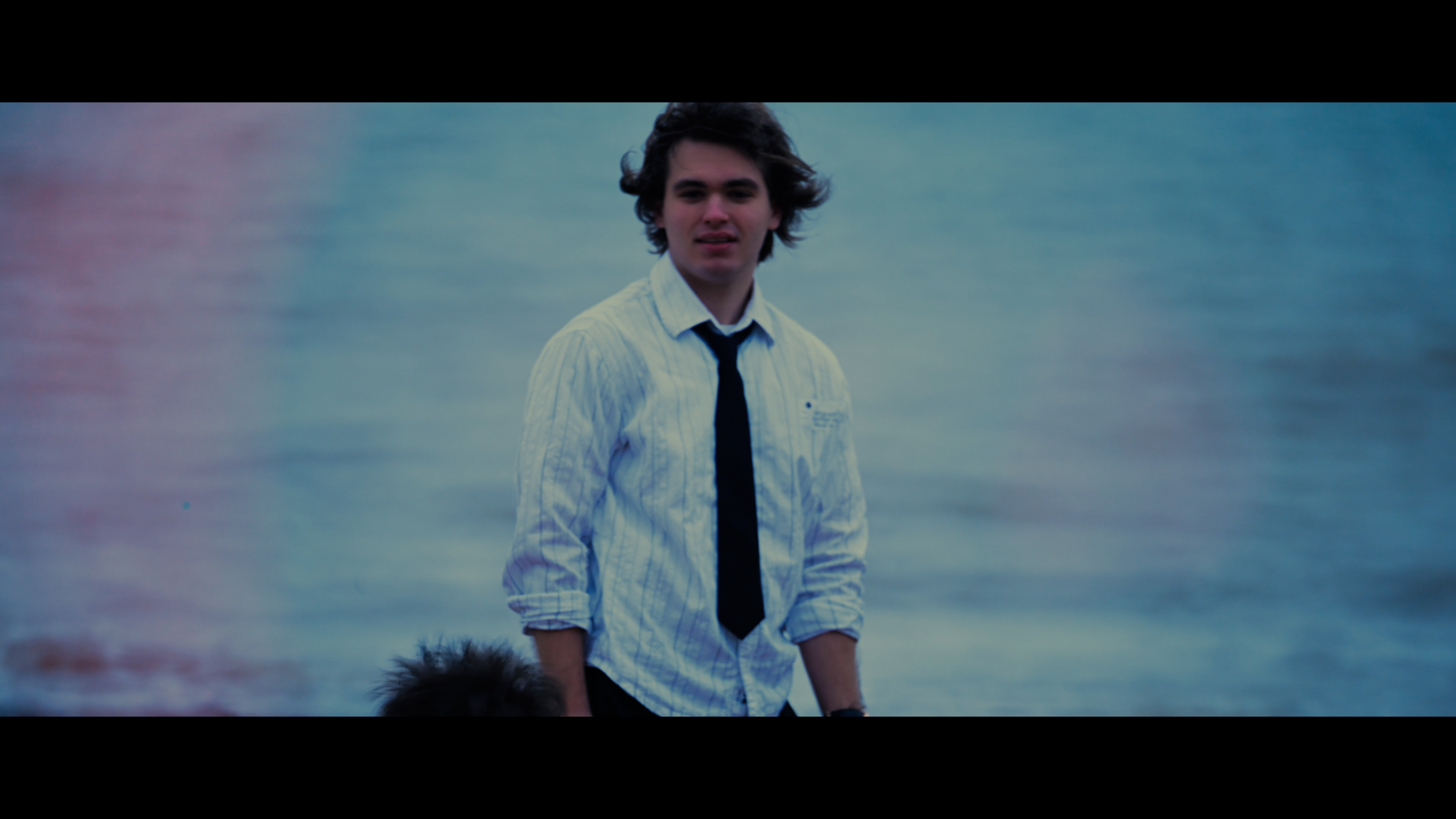
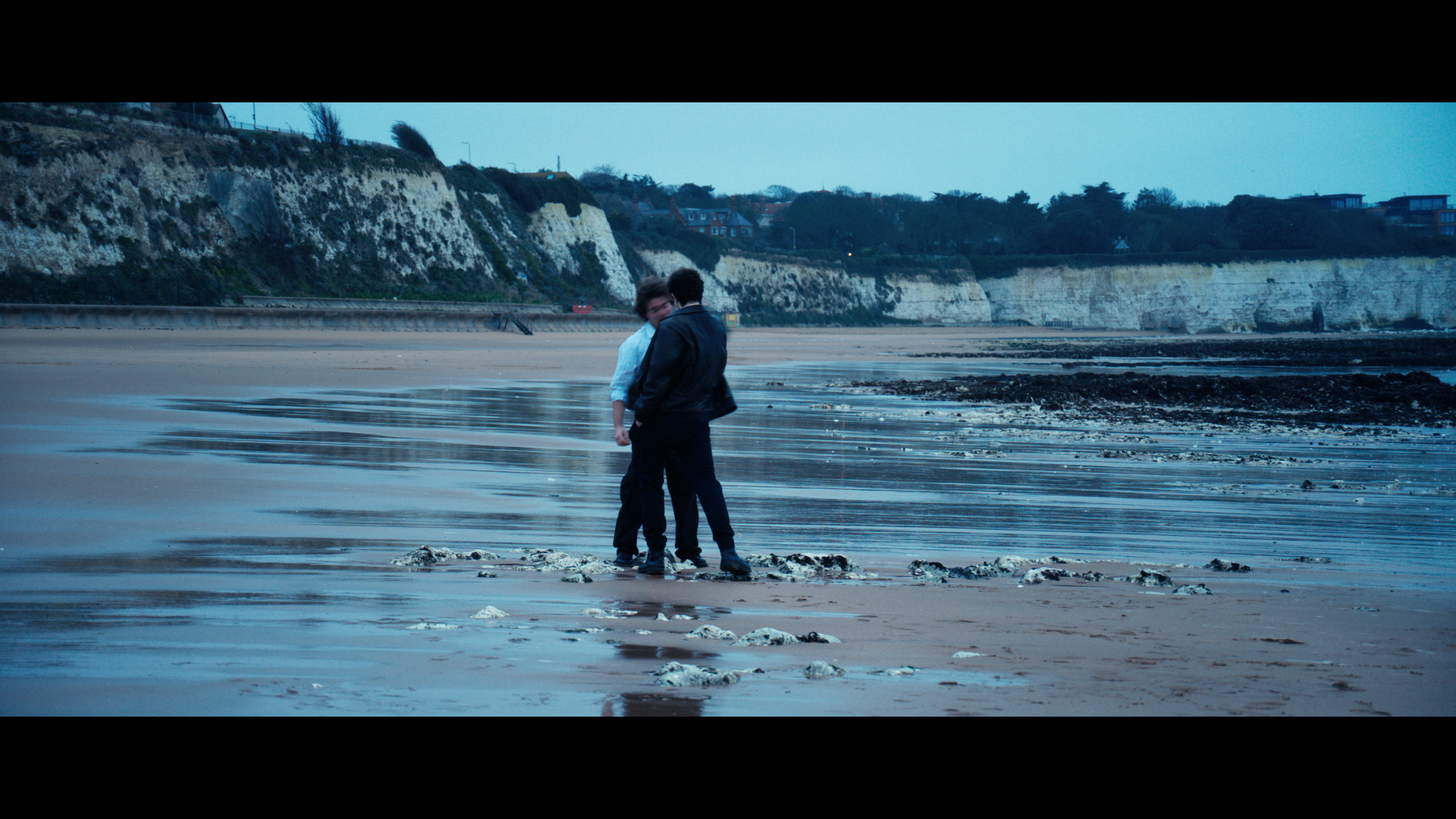
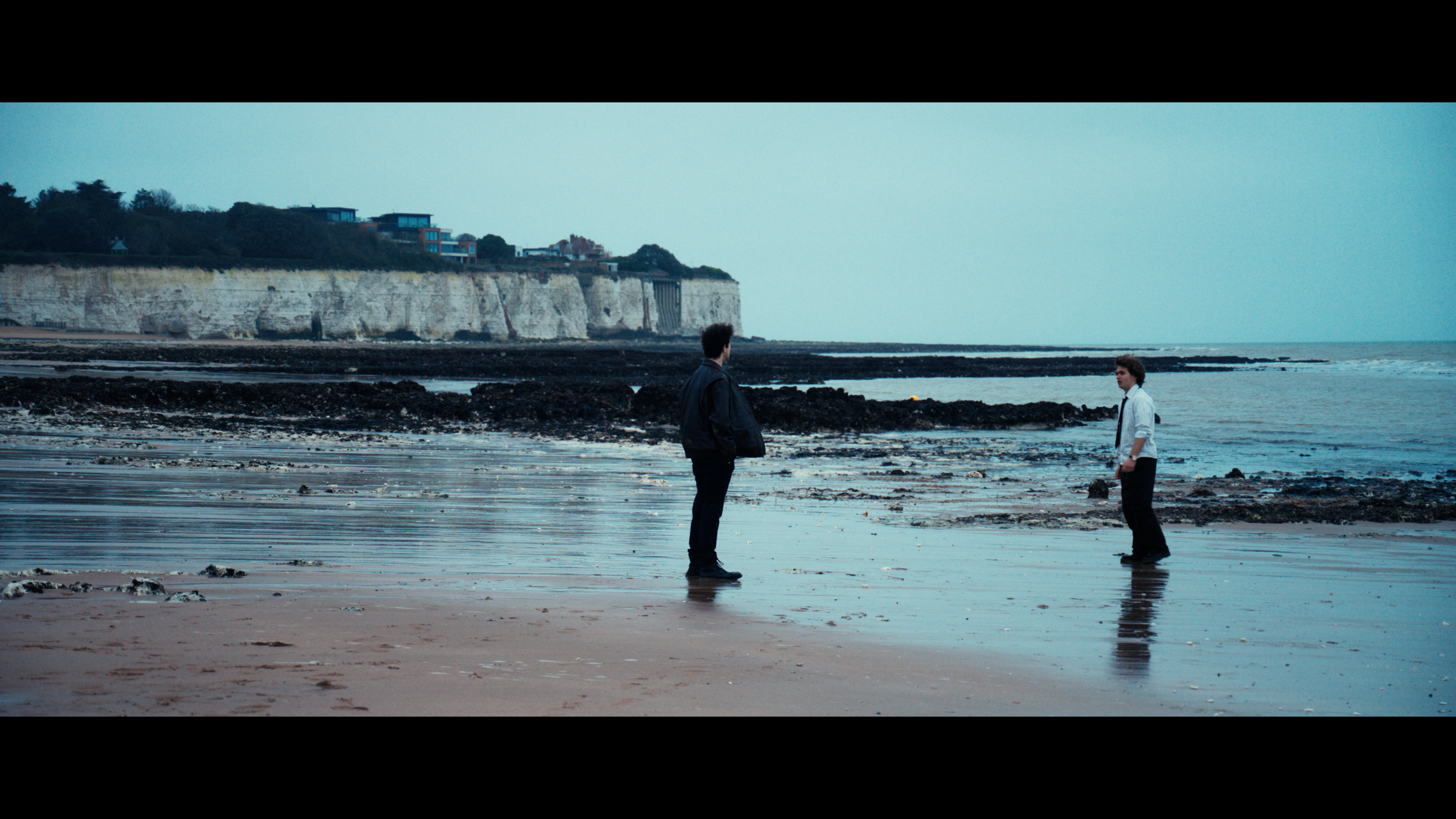
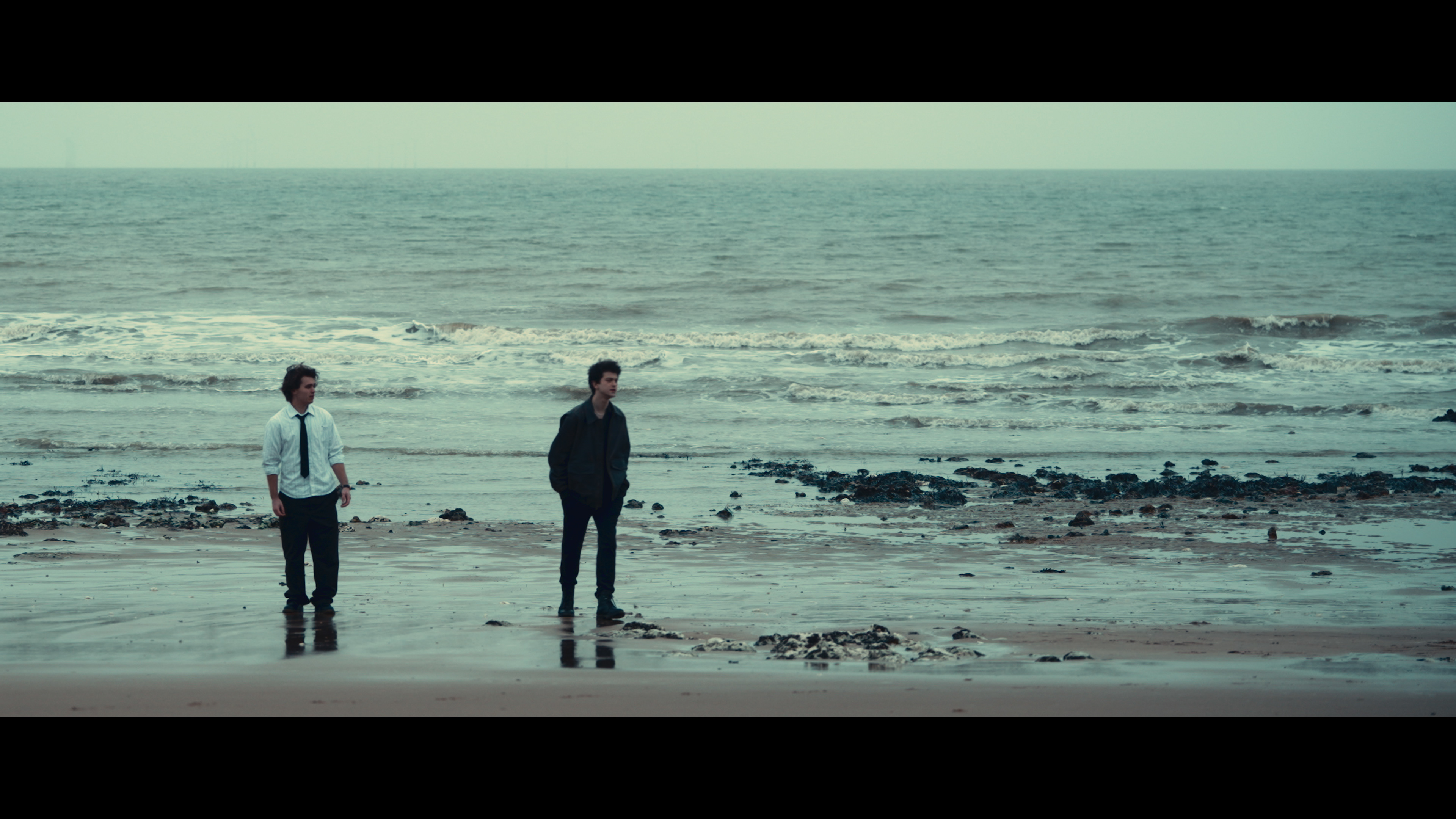
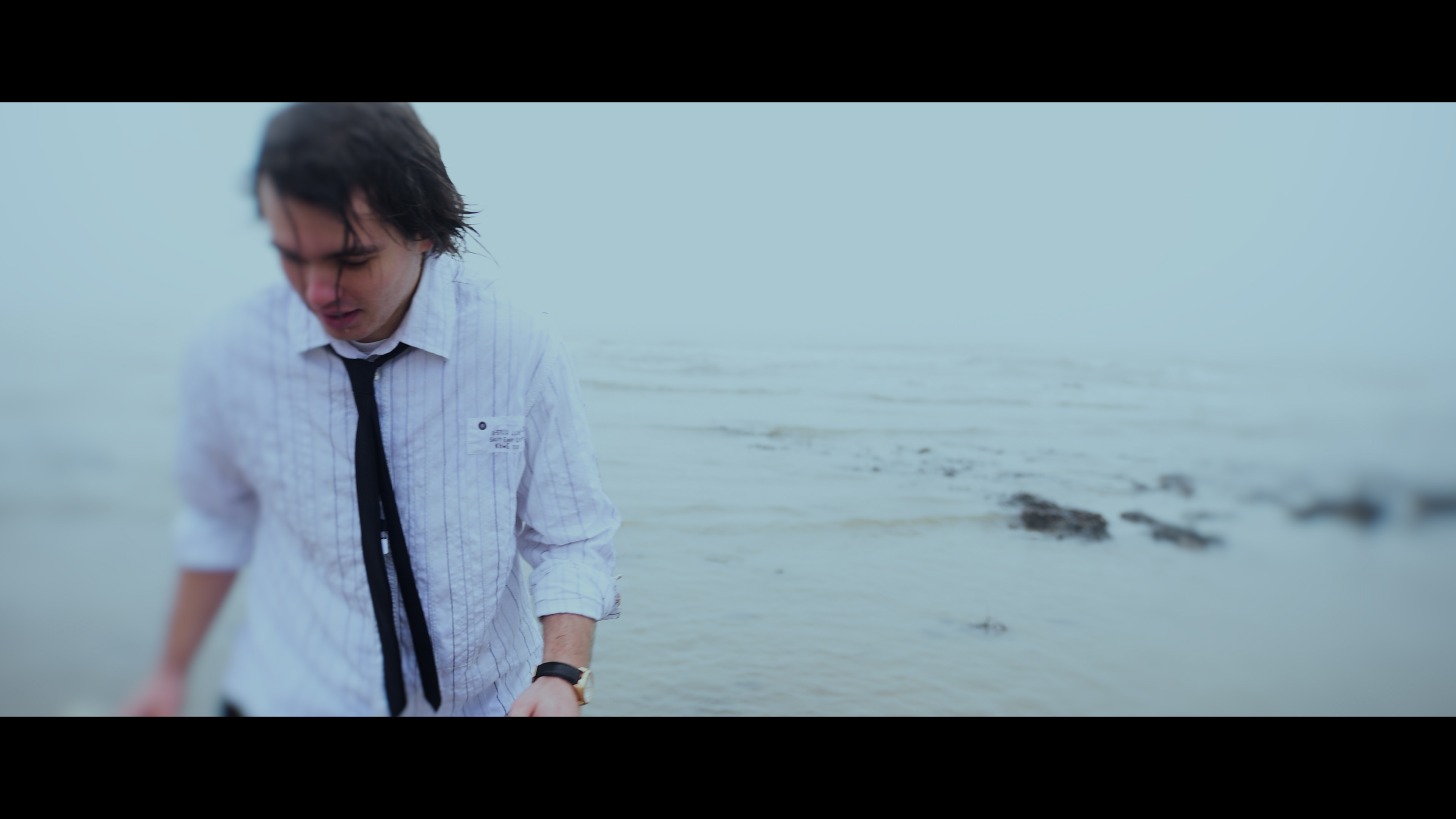
Beach 1
We made sure the colour of the sea, sand, and skin tones is as consistent as possible, with the turquoise-teal I really liked.
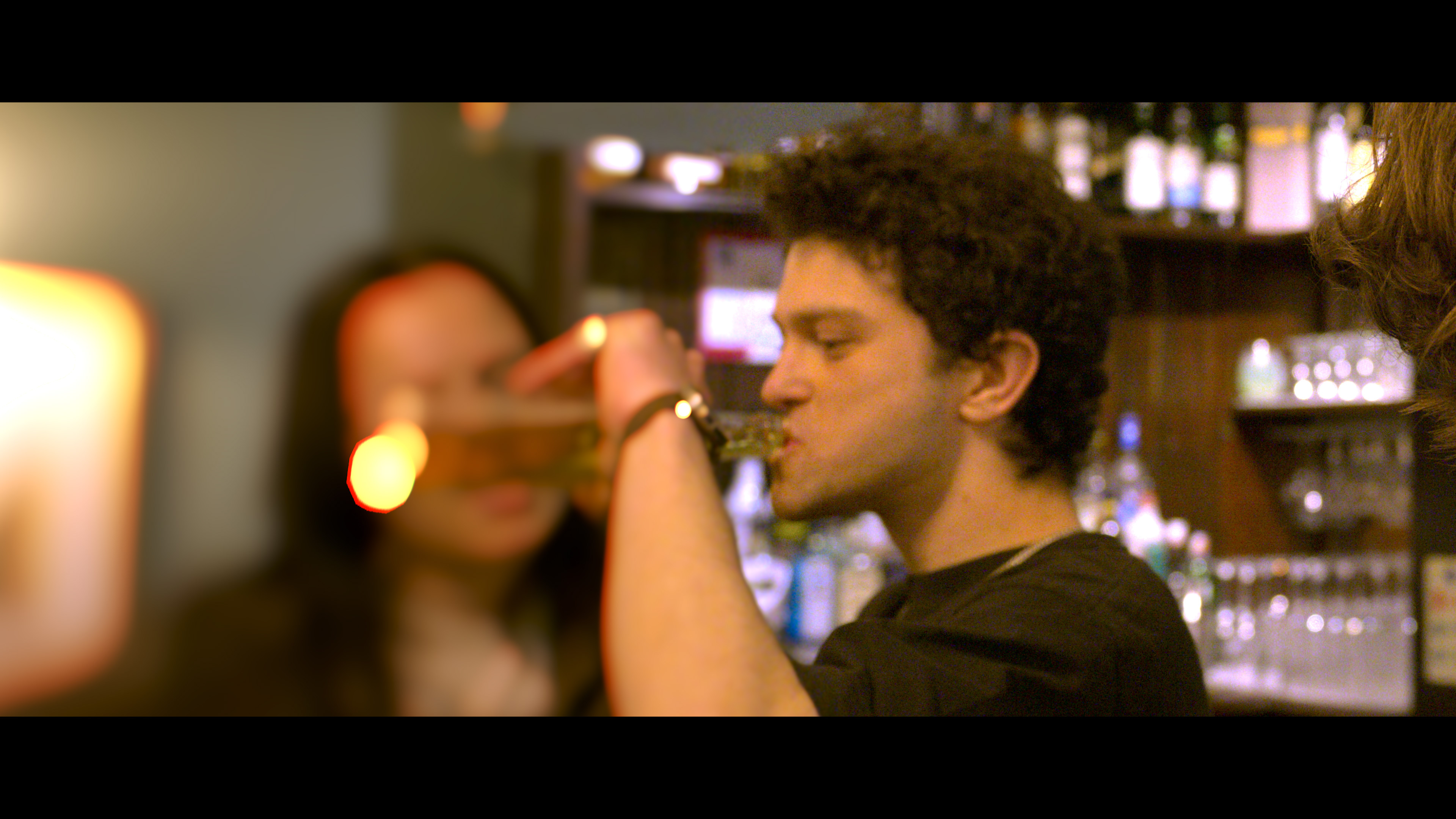
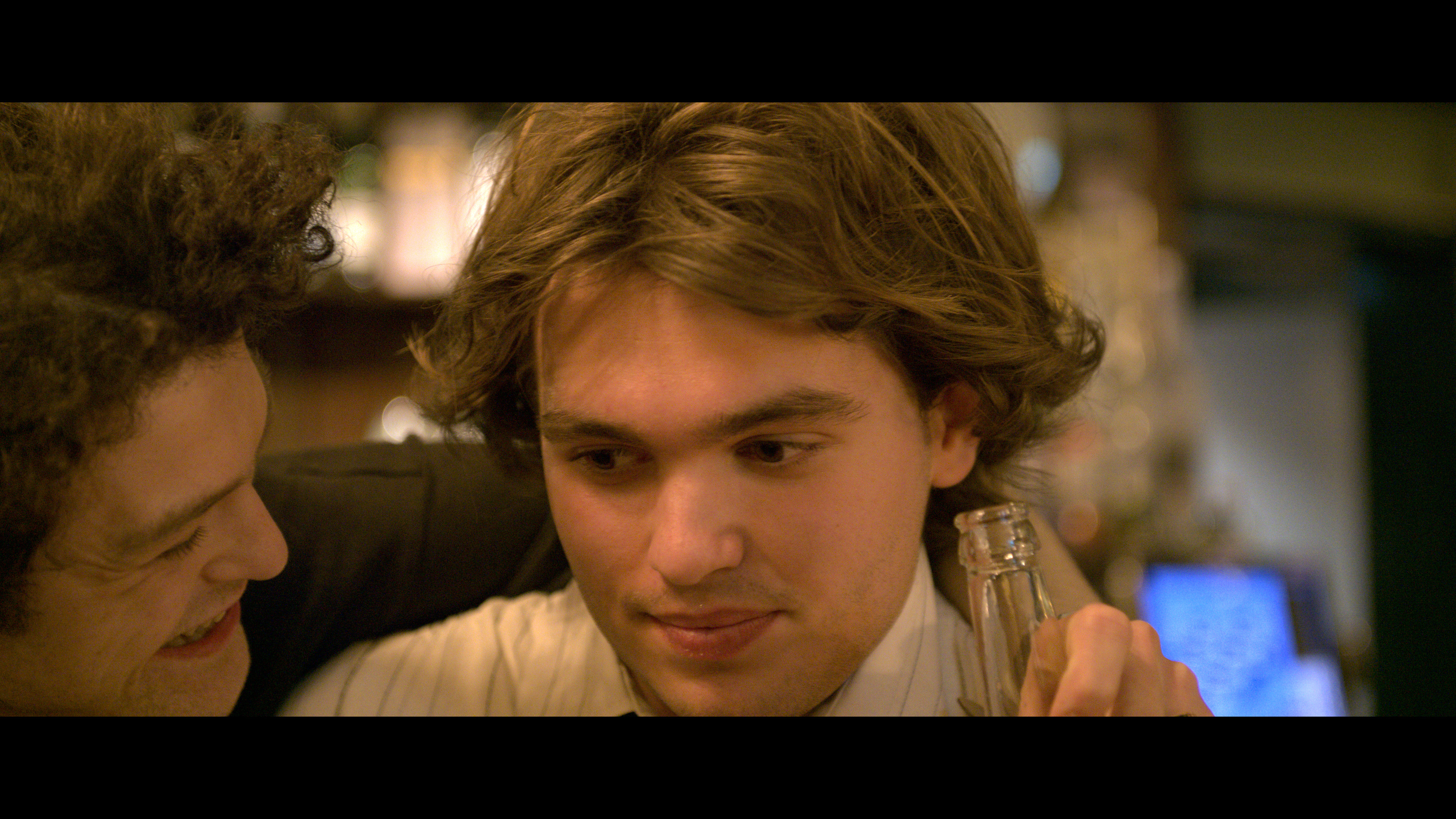
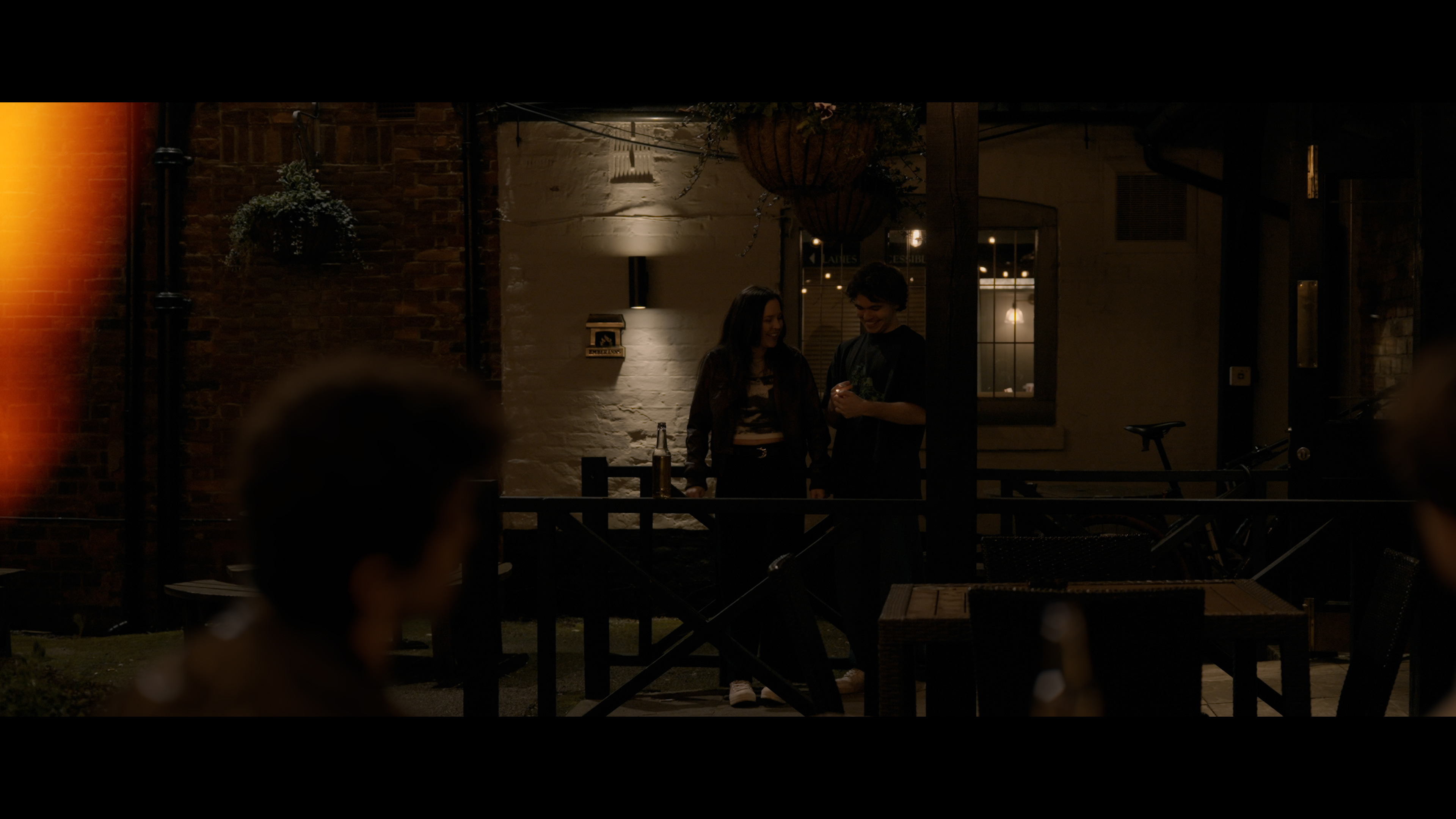
Pub Interior
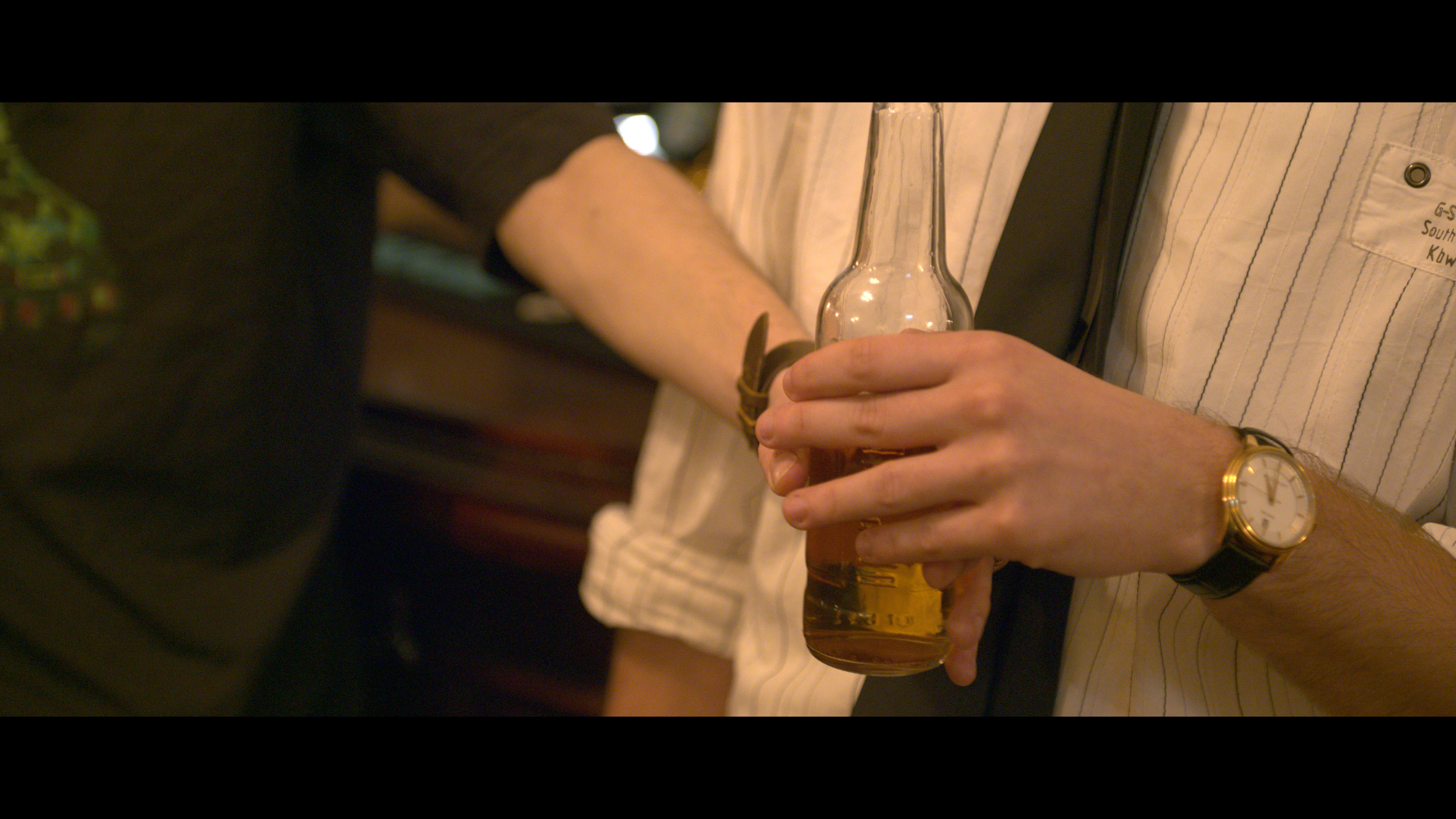
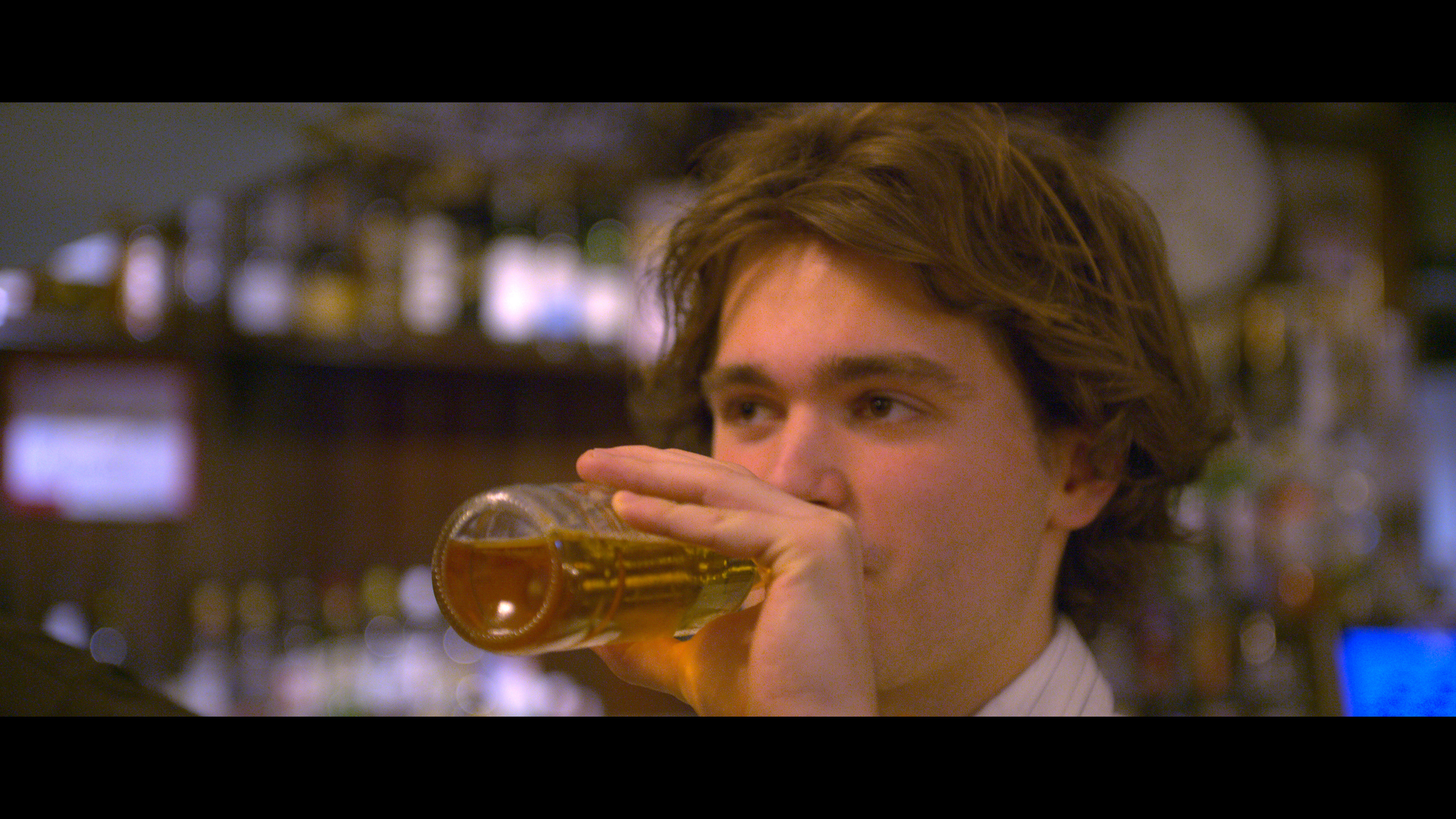
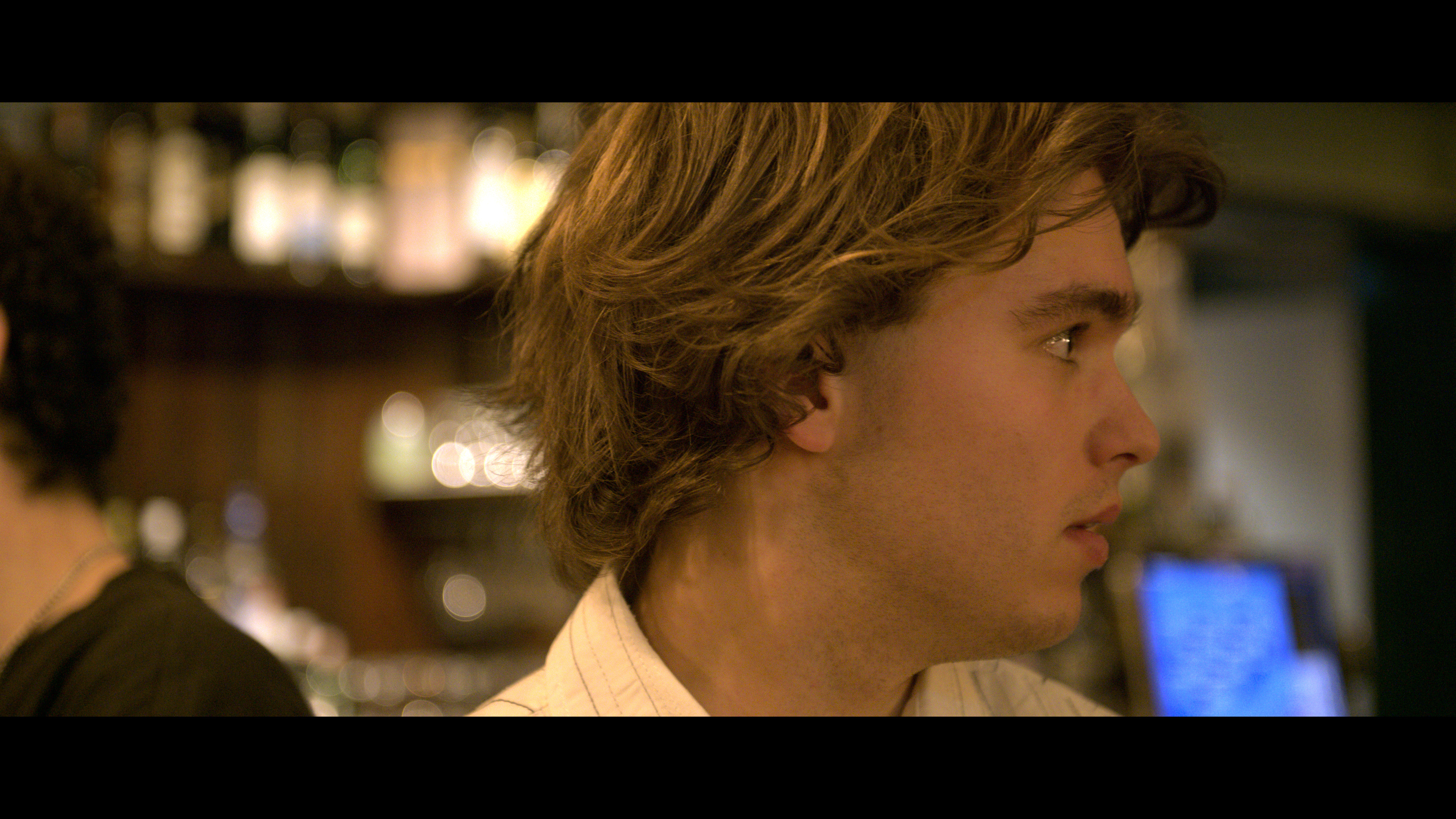
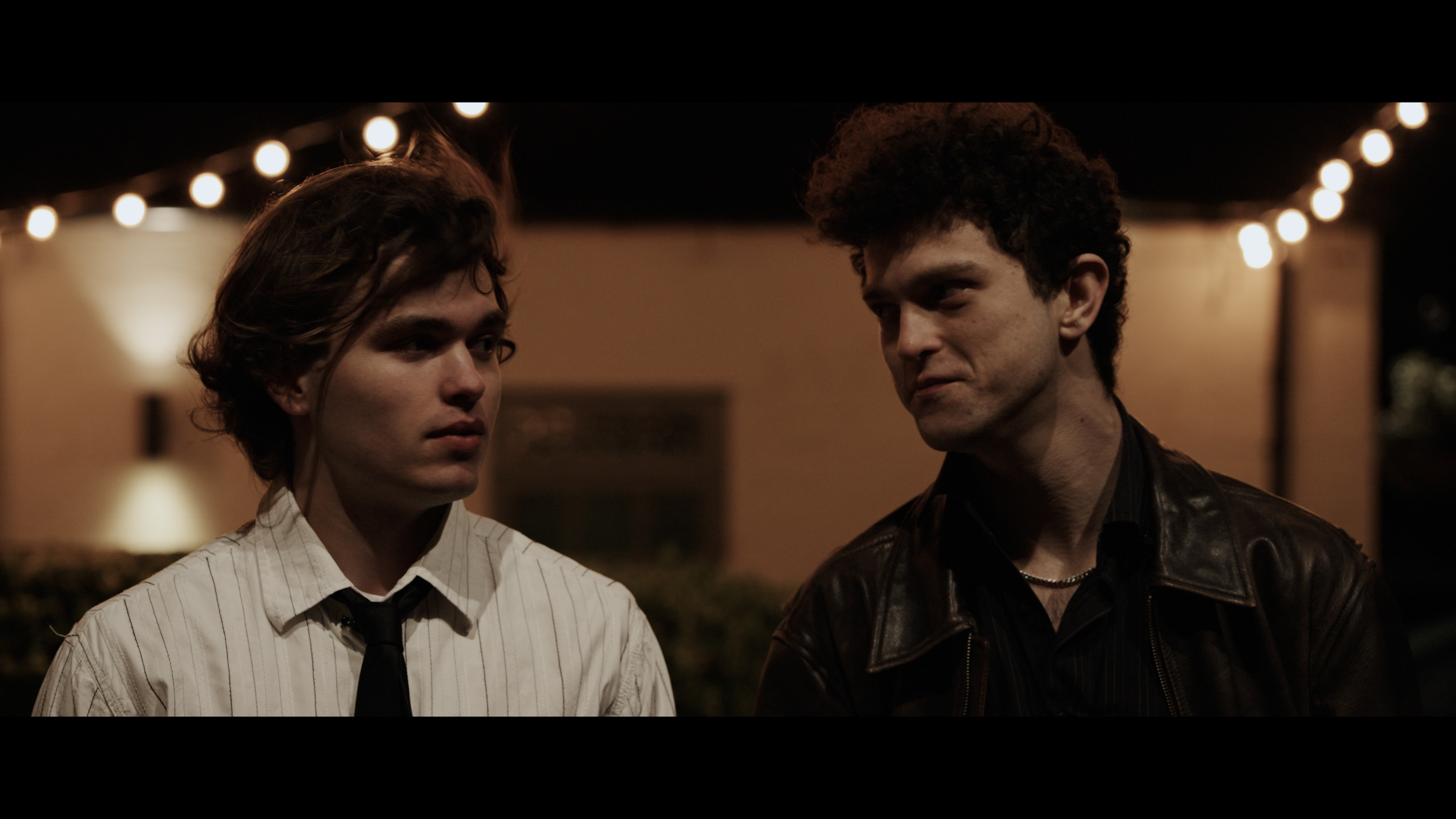
These shots were all extremely warm out of camera, so all needed quite a bit of work. For the shot facing Isobella, I masked out the wall lamp in the background with a large circle with a huge feather to lower the exposure as much as possible as it was totally blown out otherwise.
Pub Exterior 1
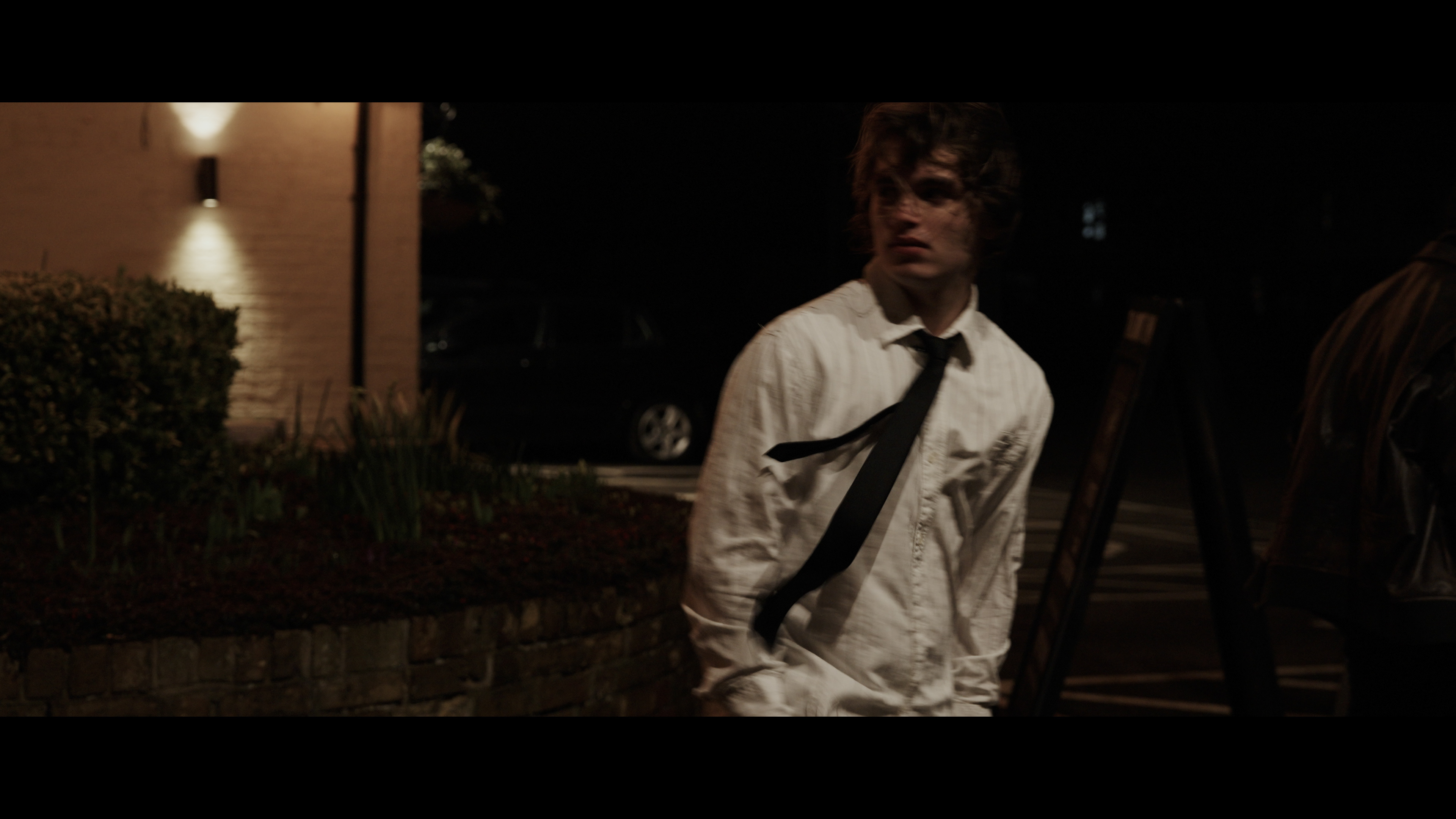
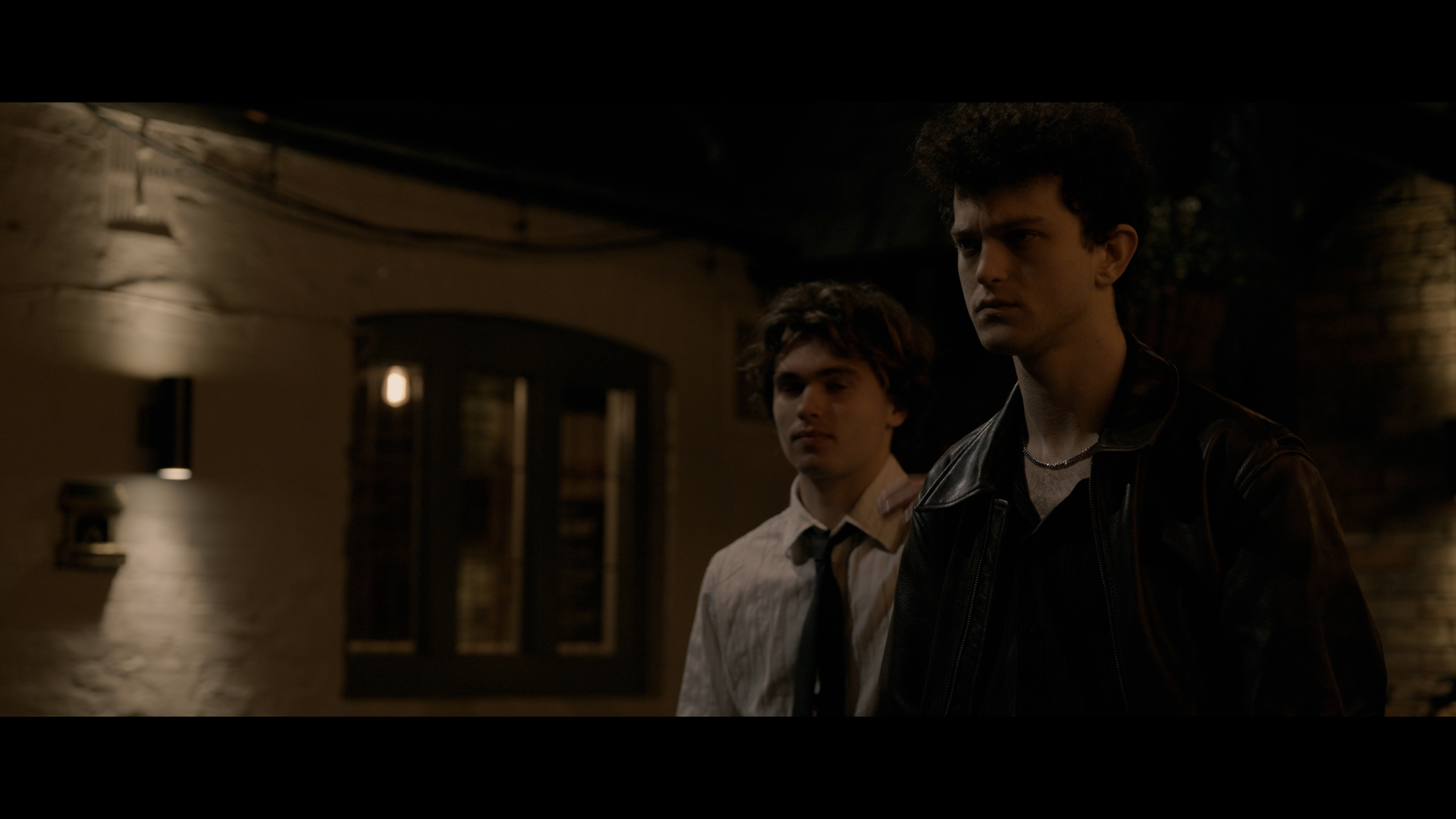
These were all Sony shots, and we wanted them to be visually darker with more contrast than inside, so the grade is more golden-brown than golden-orange.
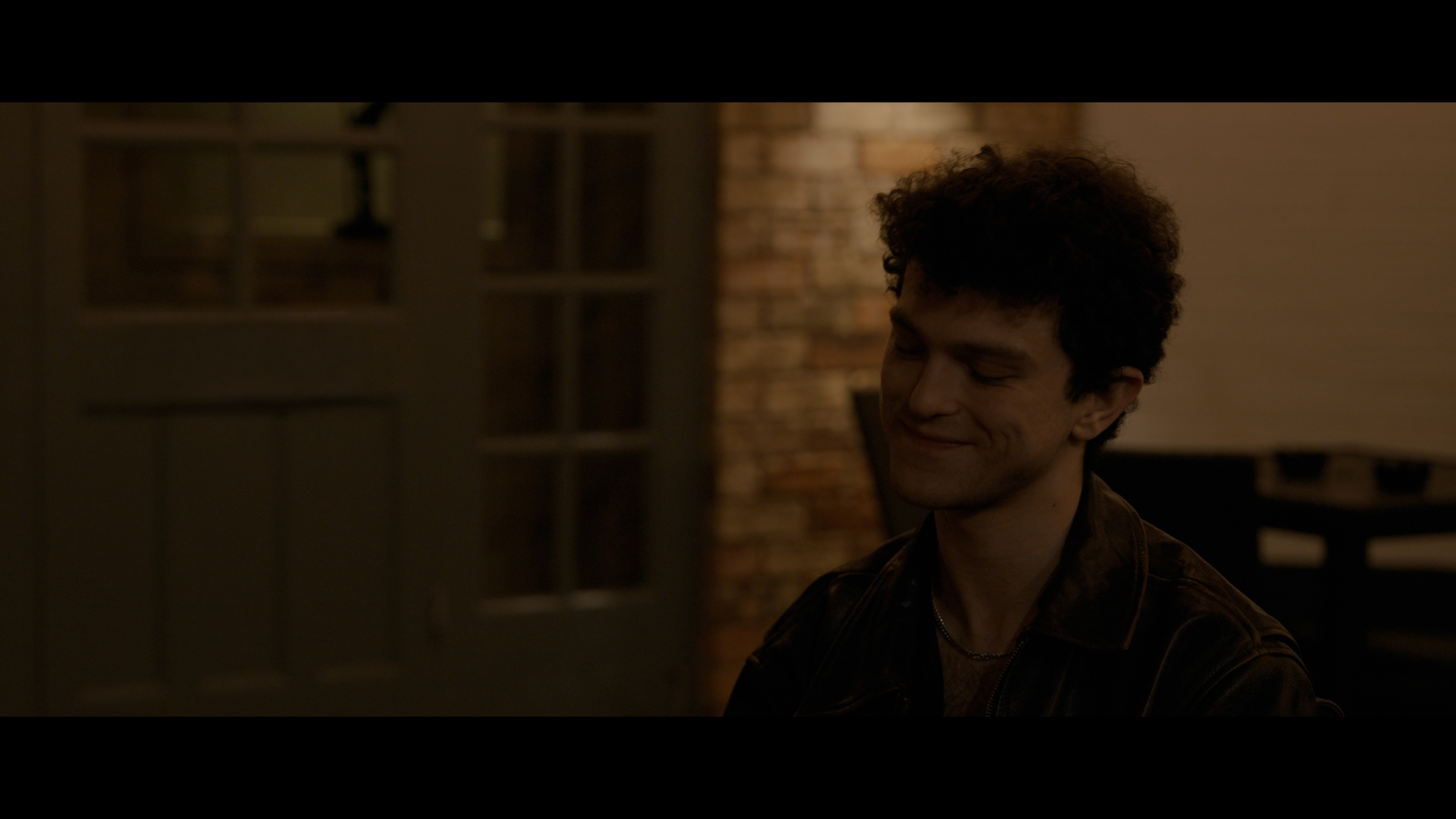
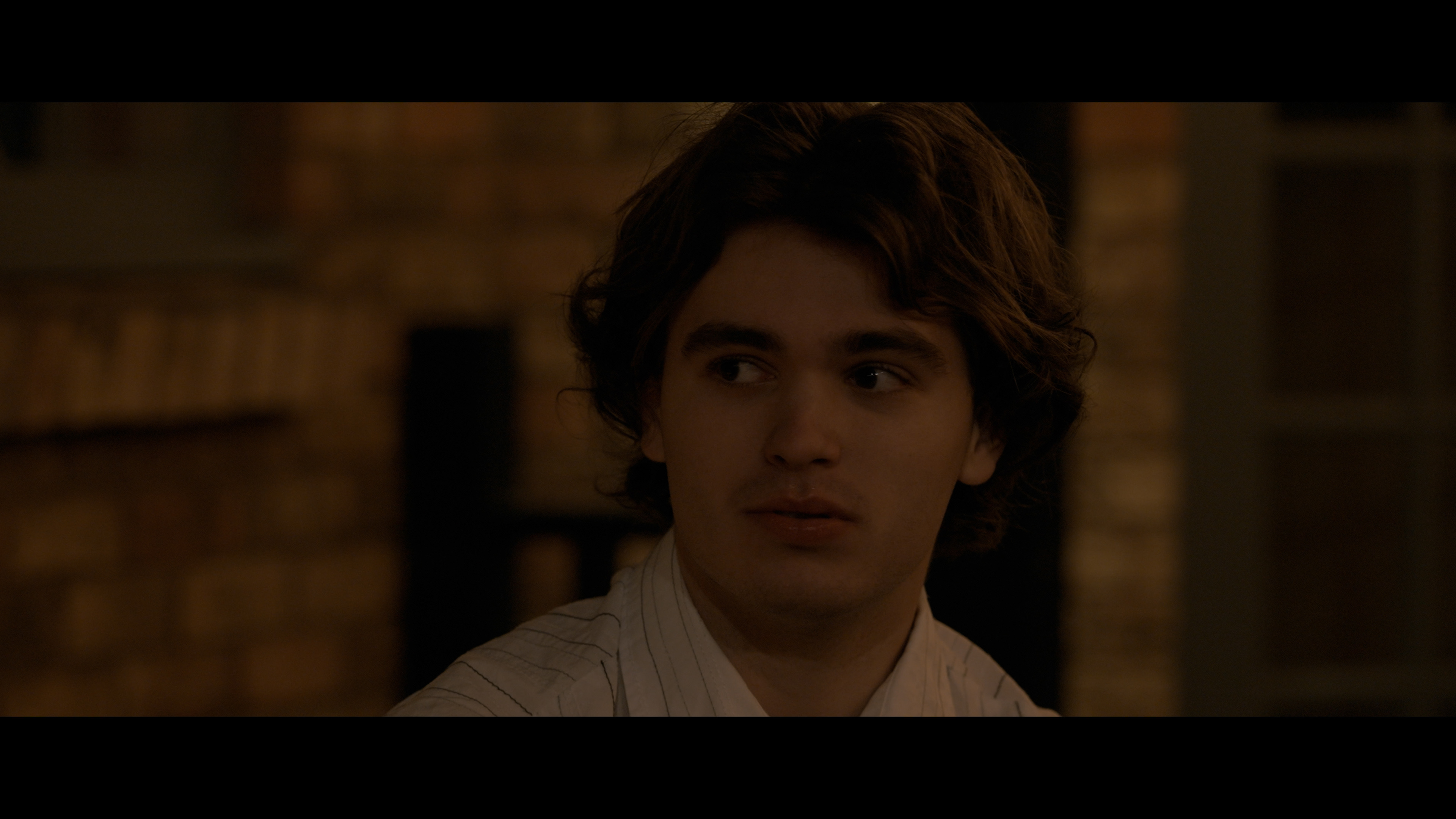
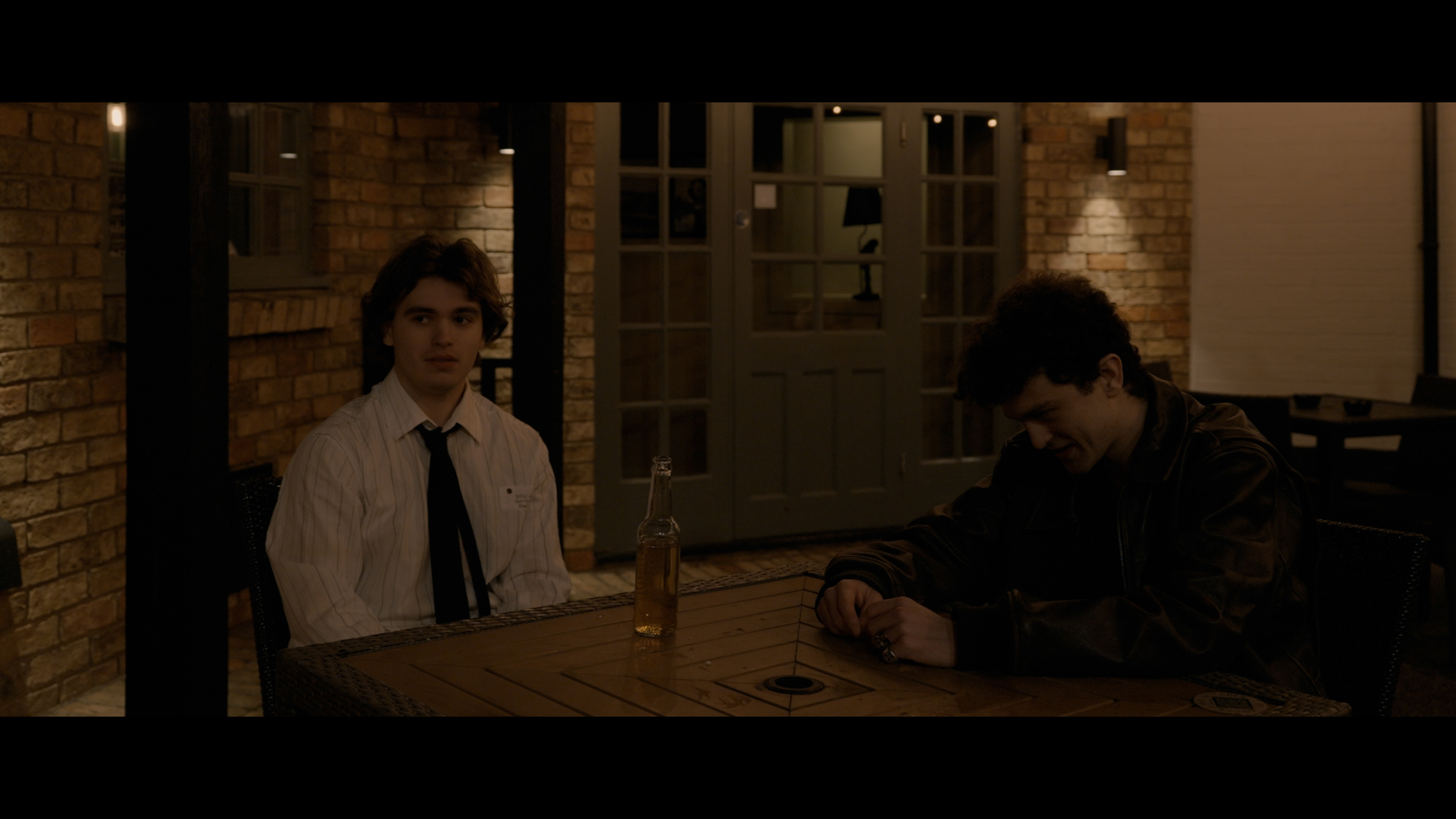
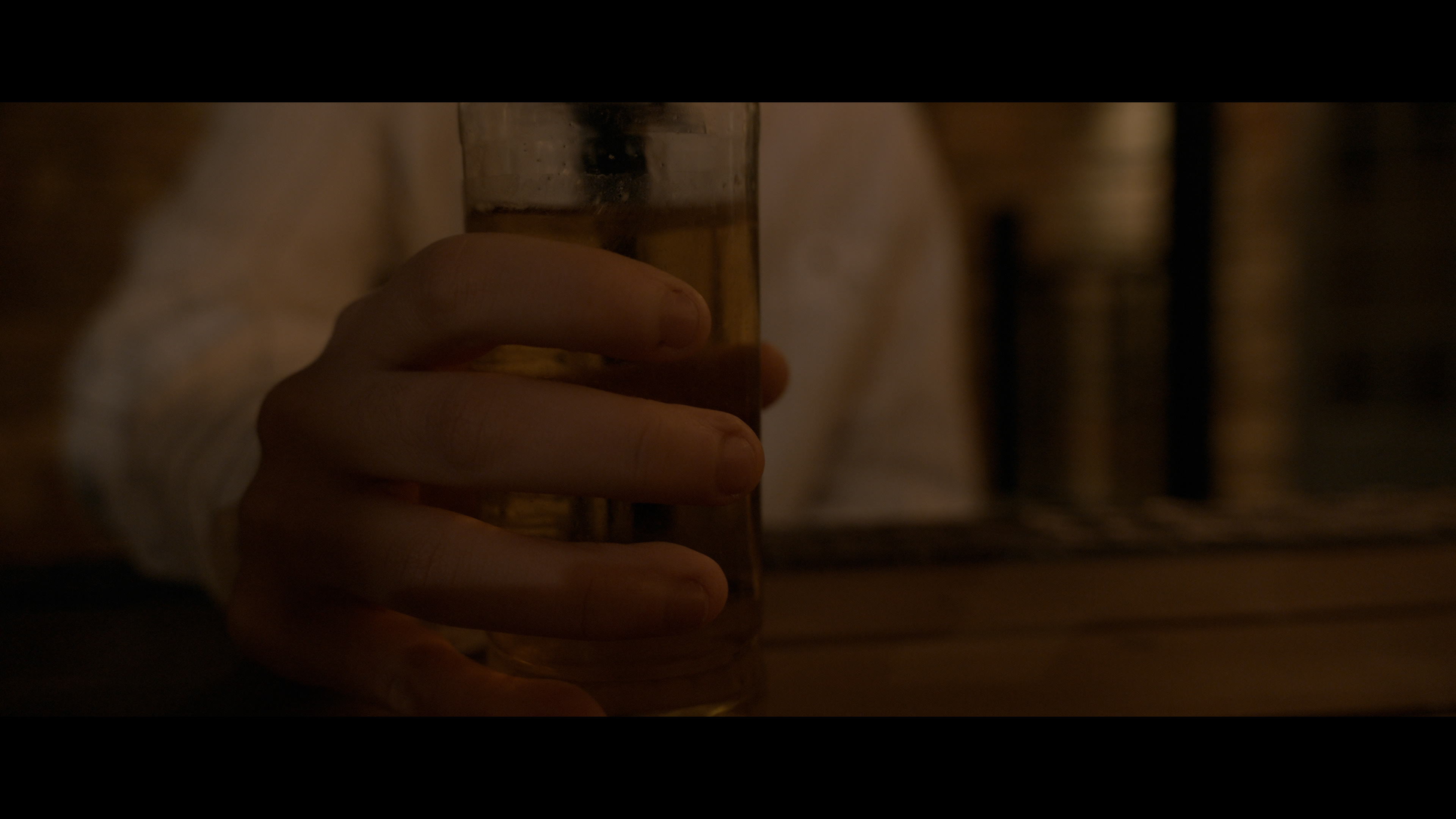
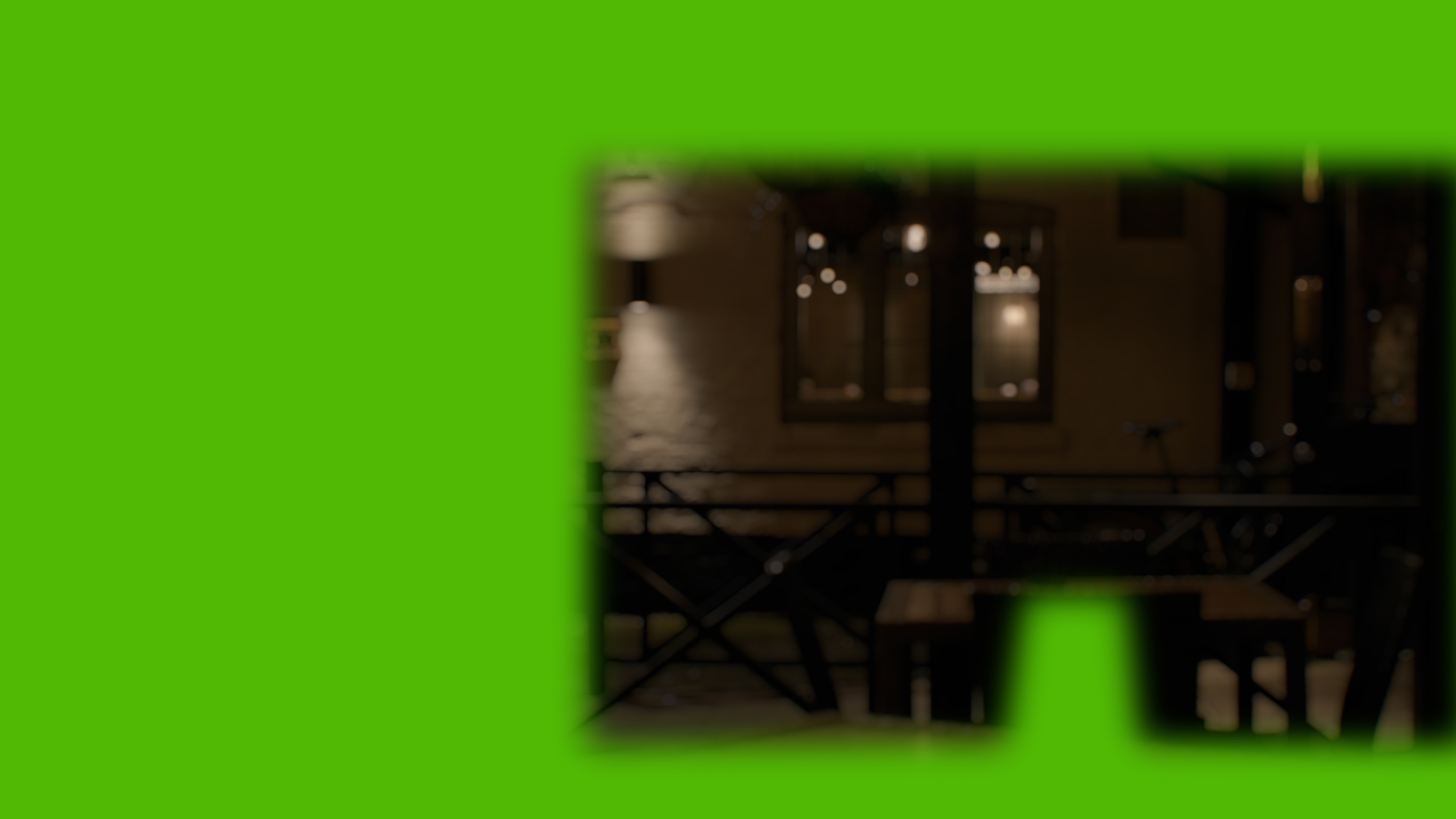
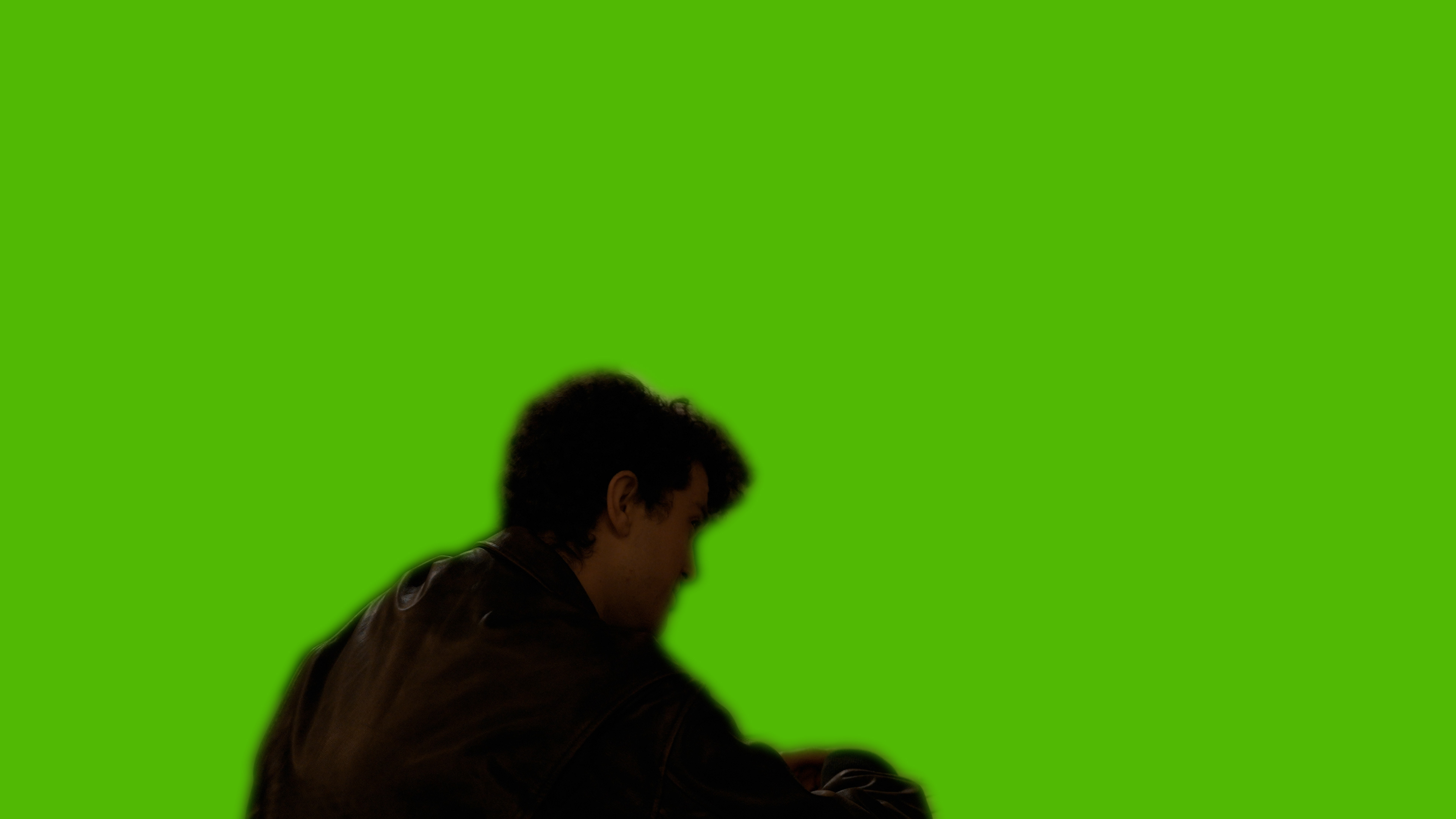
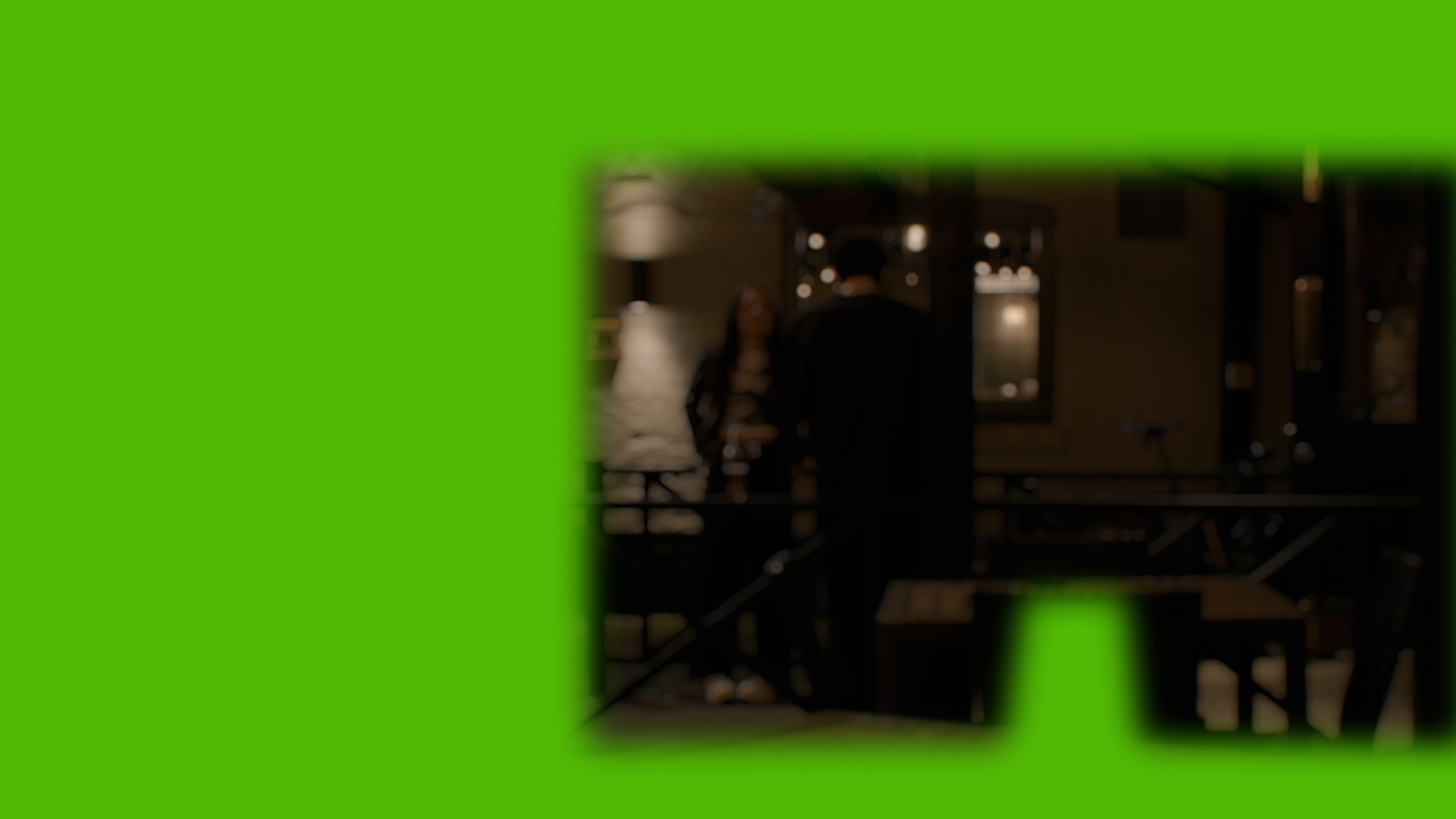
These are the layers I cut out for the scene where we see them watch themselves. I did the focus pull by adding a bokeh blur to both in-focus layers (as in, fore- and background), blurring the background to match the natural depth of field of the rest of the shot, then pulling between them, so the foreground shifts out and the background comes into focus.
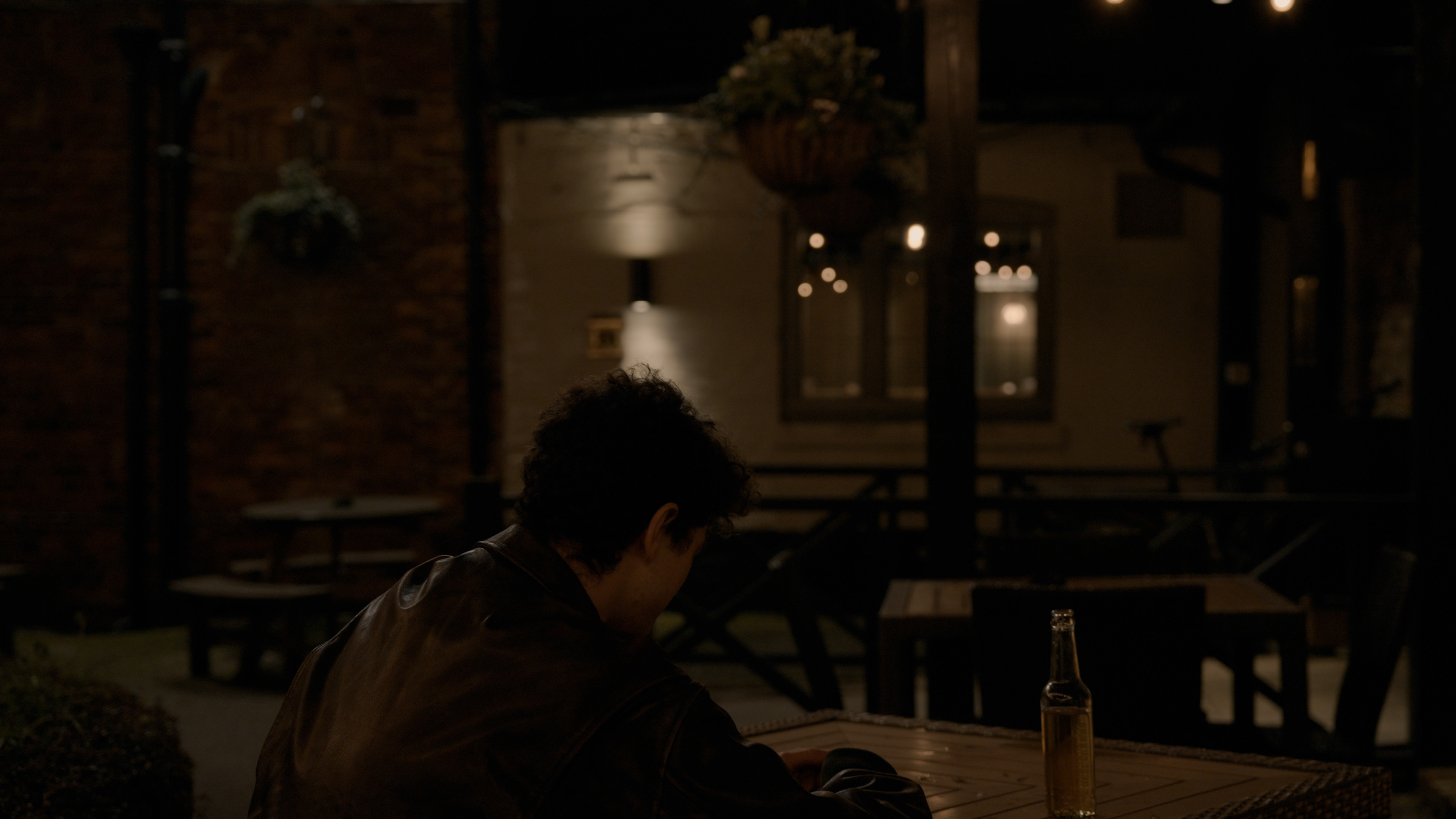
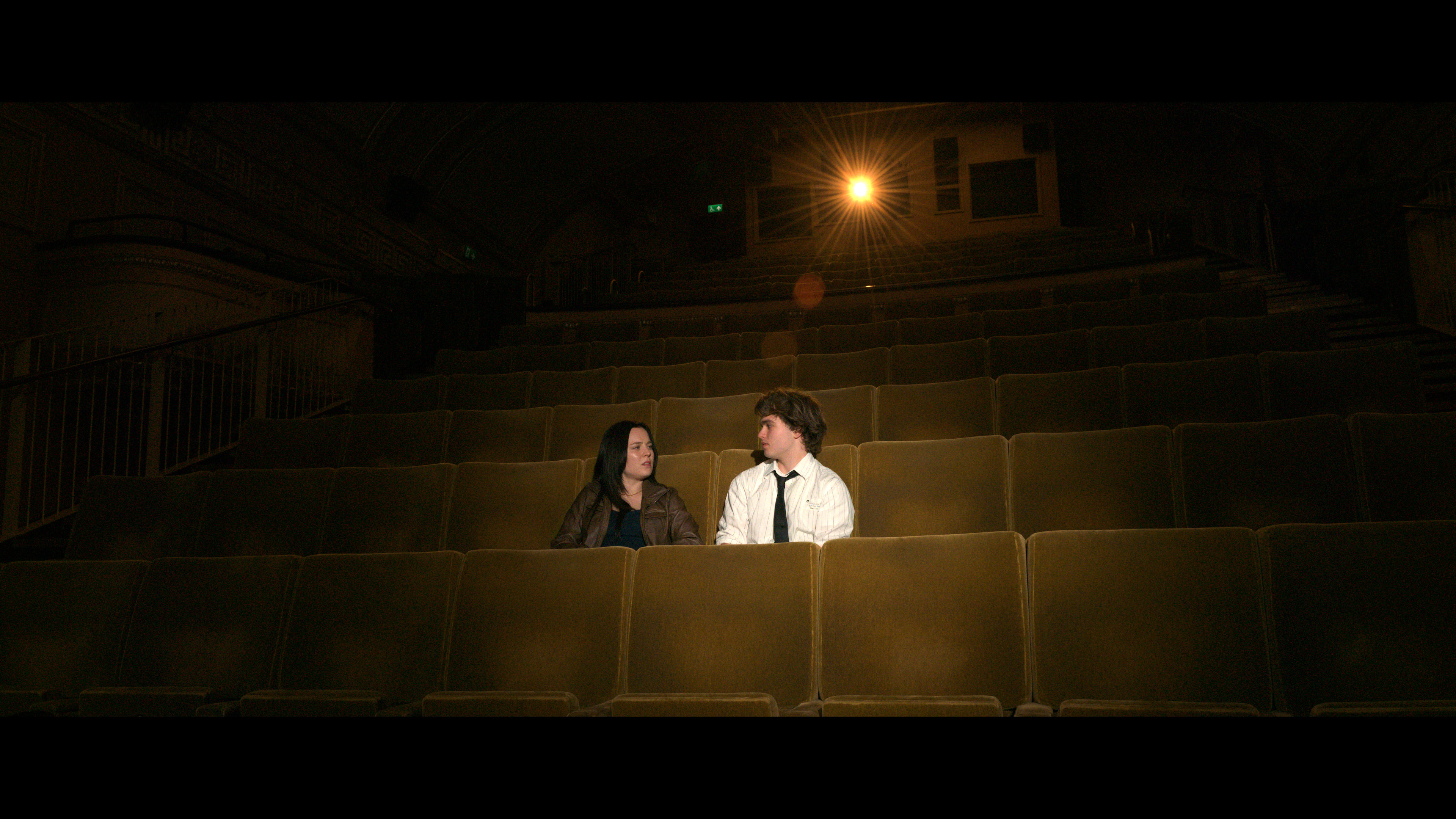
Cinema Auditorium
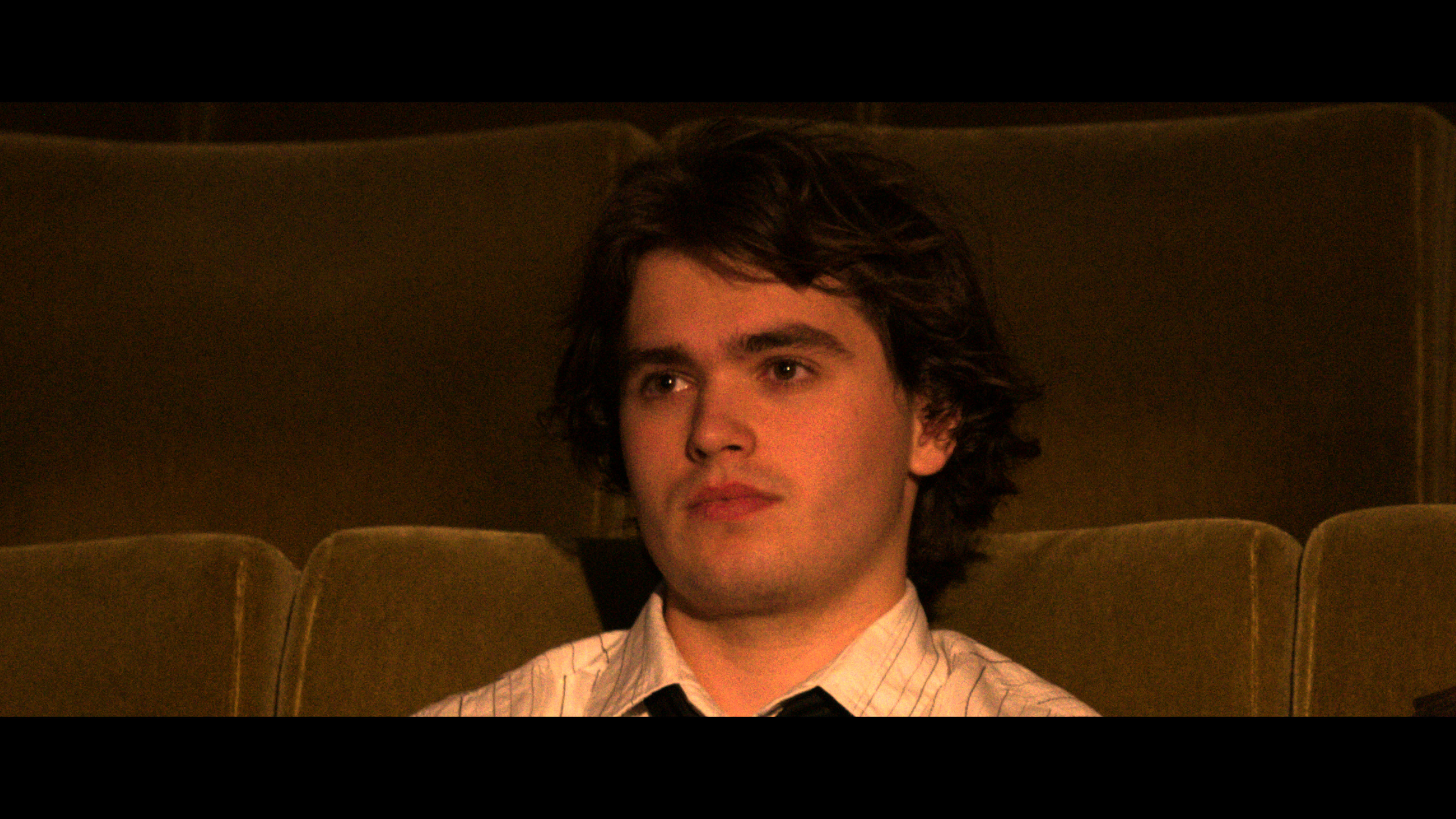
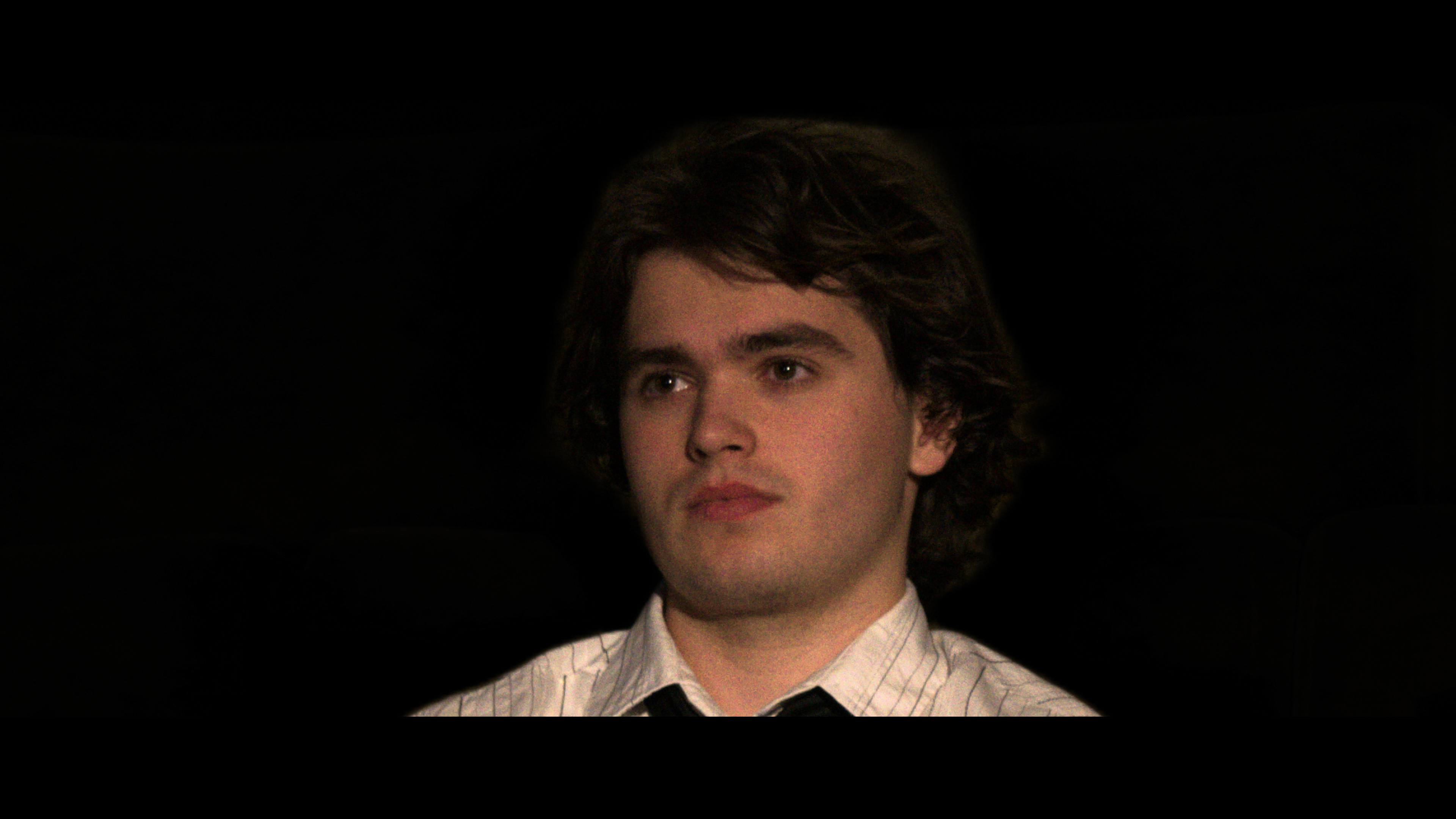
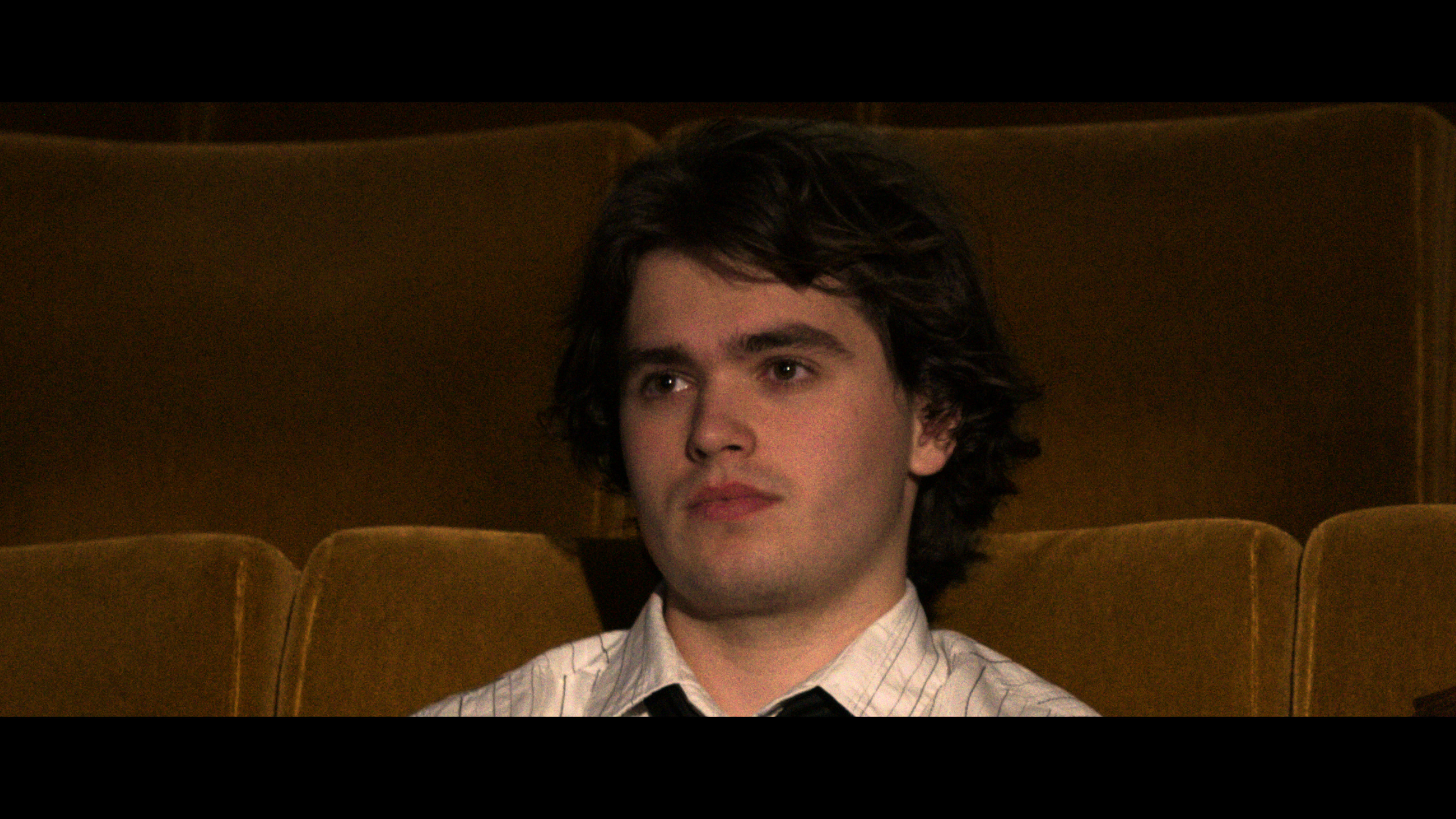
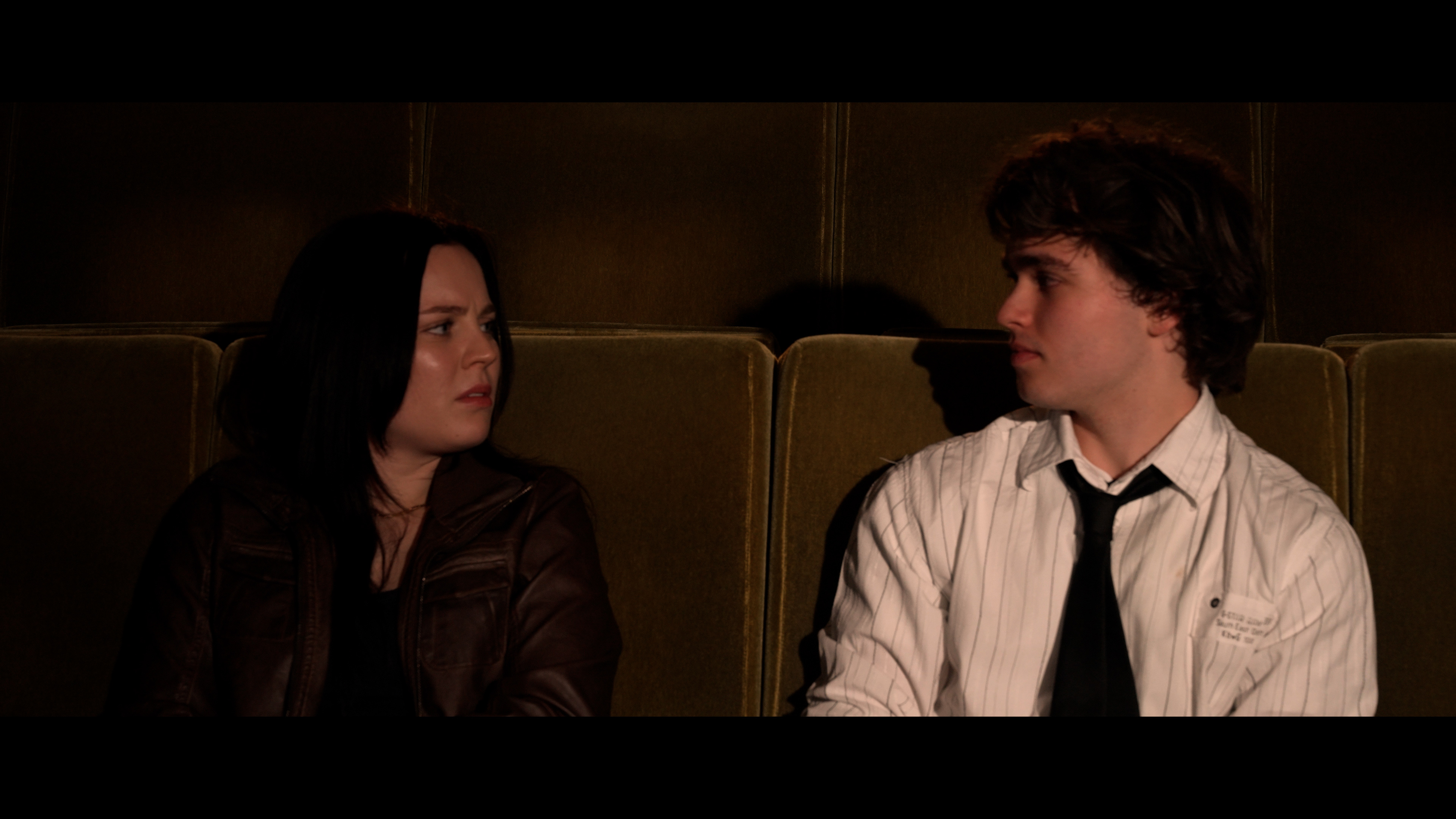
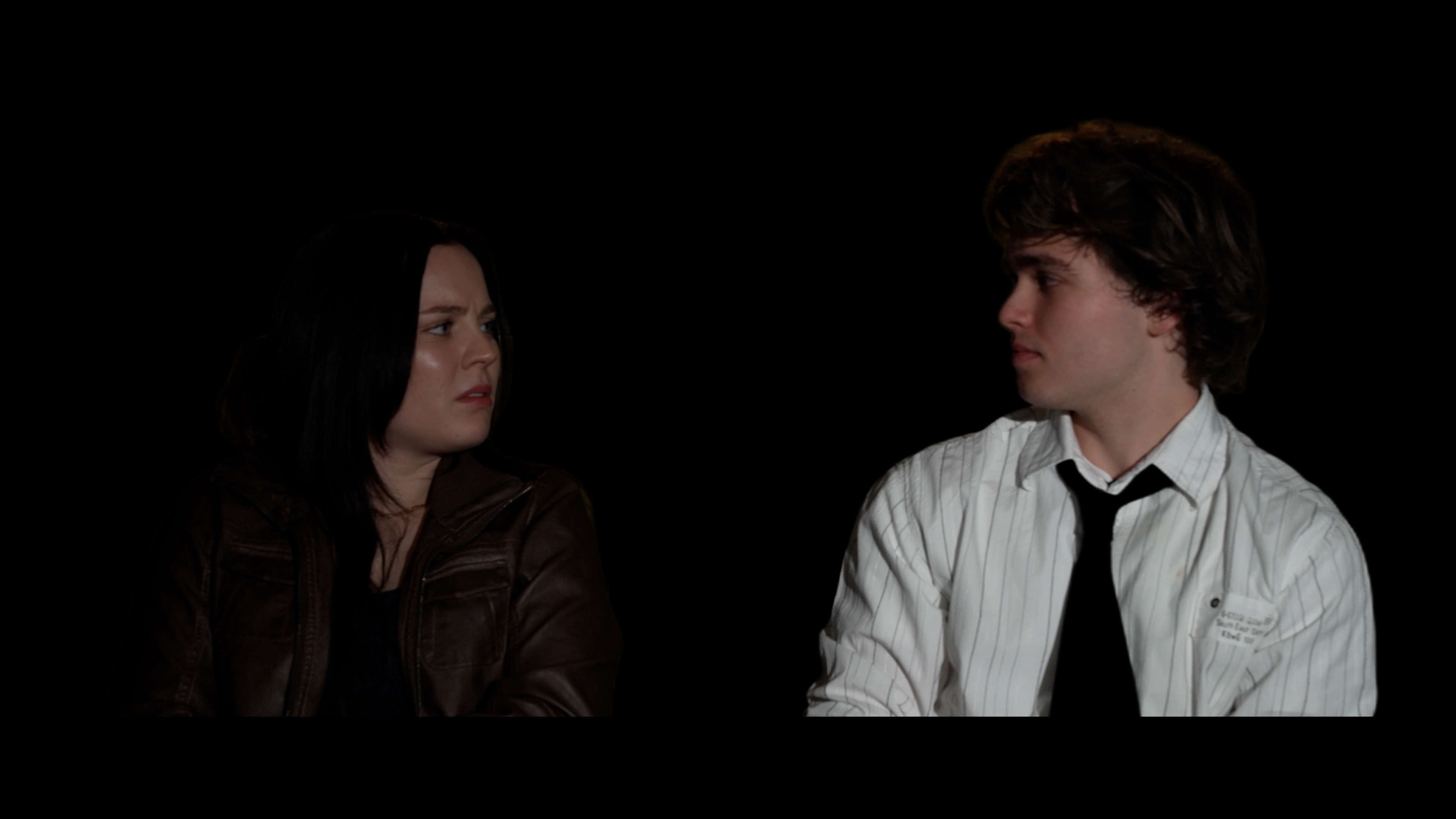
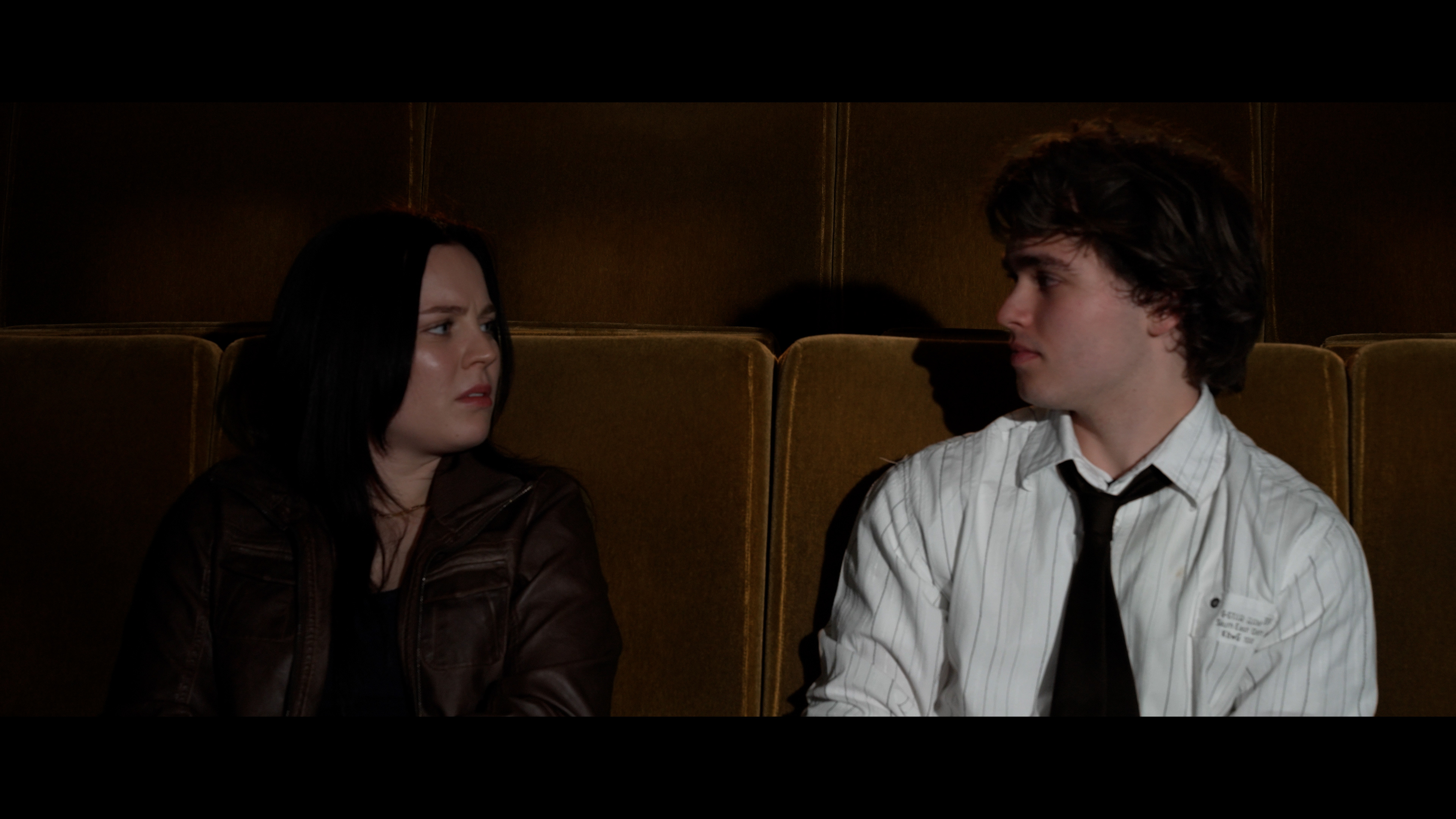
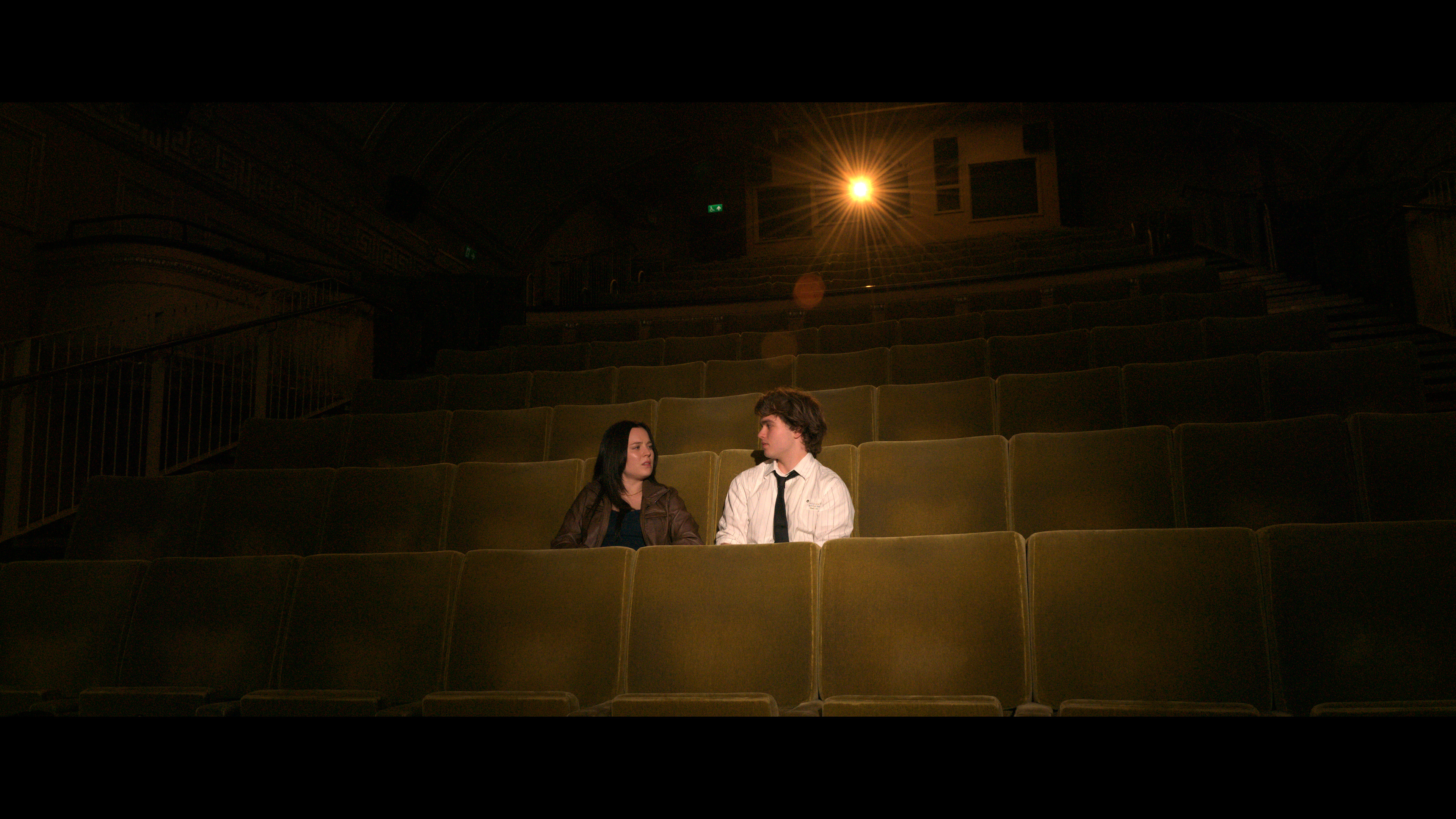
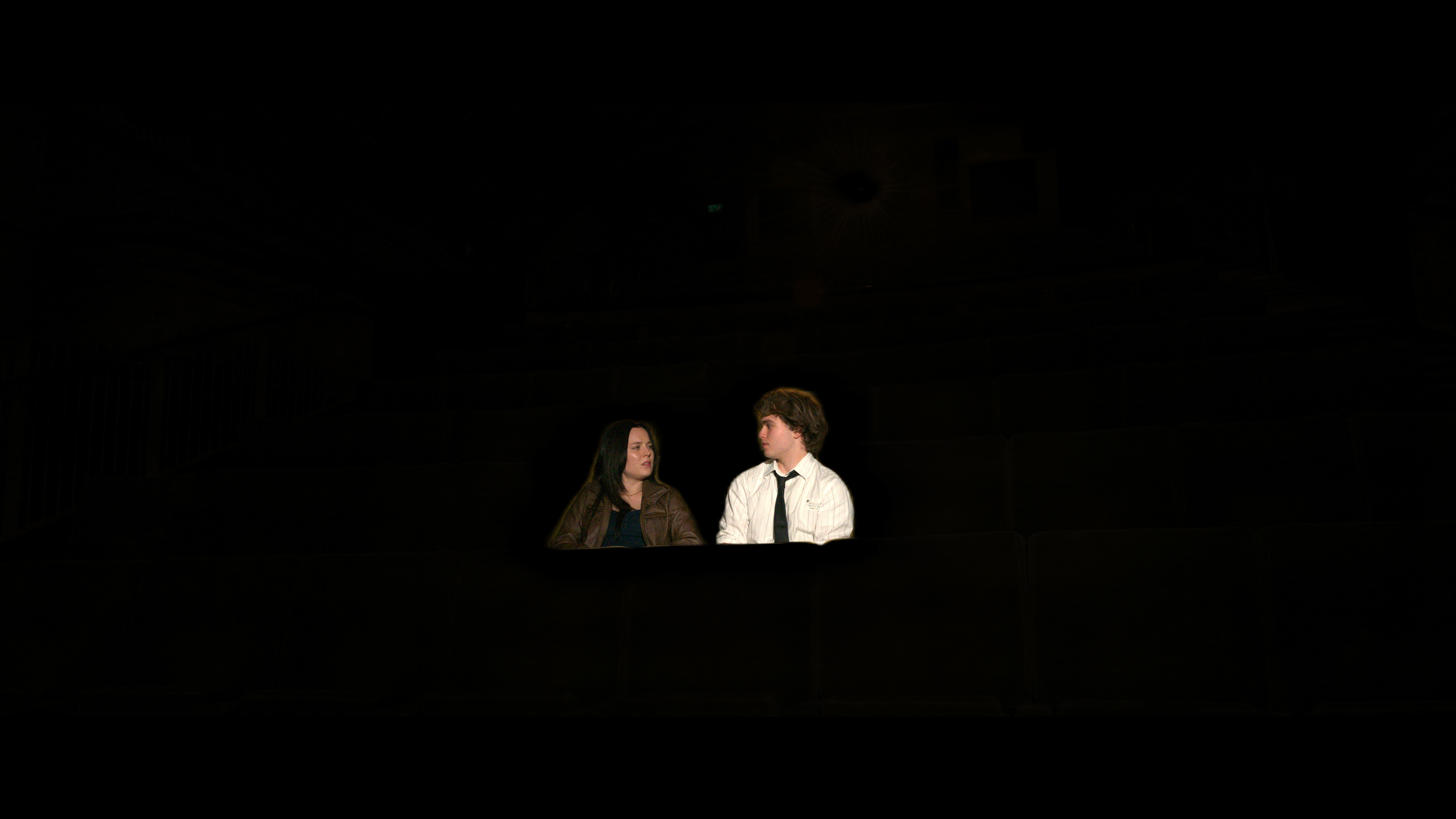
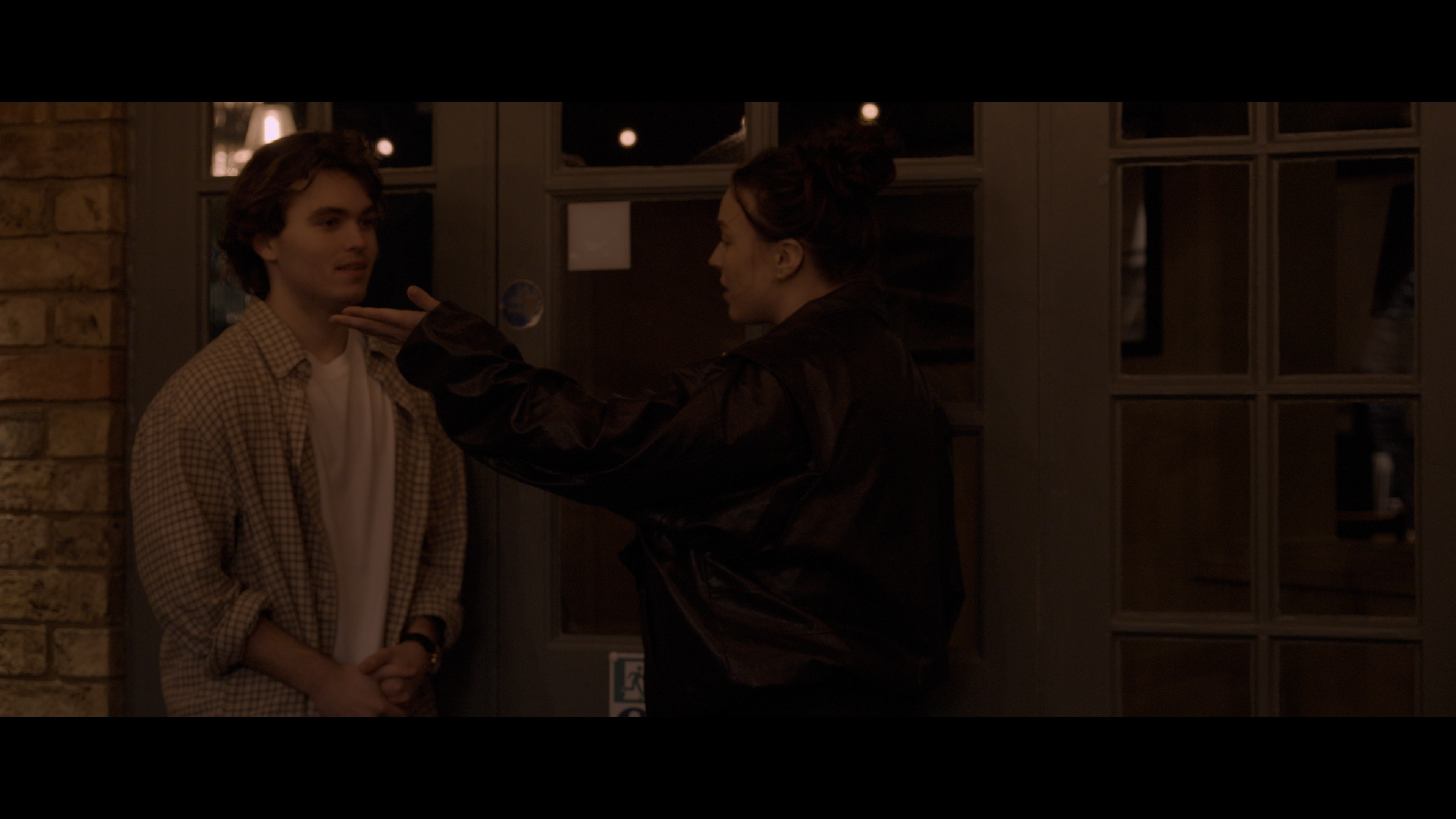
The biggest challenge here was the colour of the seats, and balancing that with the facial skin tones. I wanted the chairs to have that really lovely golden colour, and then very subtle get dimmer throughout the scene — not noticeably so, even, but just slightly as the seen darkens, for the chairs to physically darken with it.
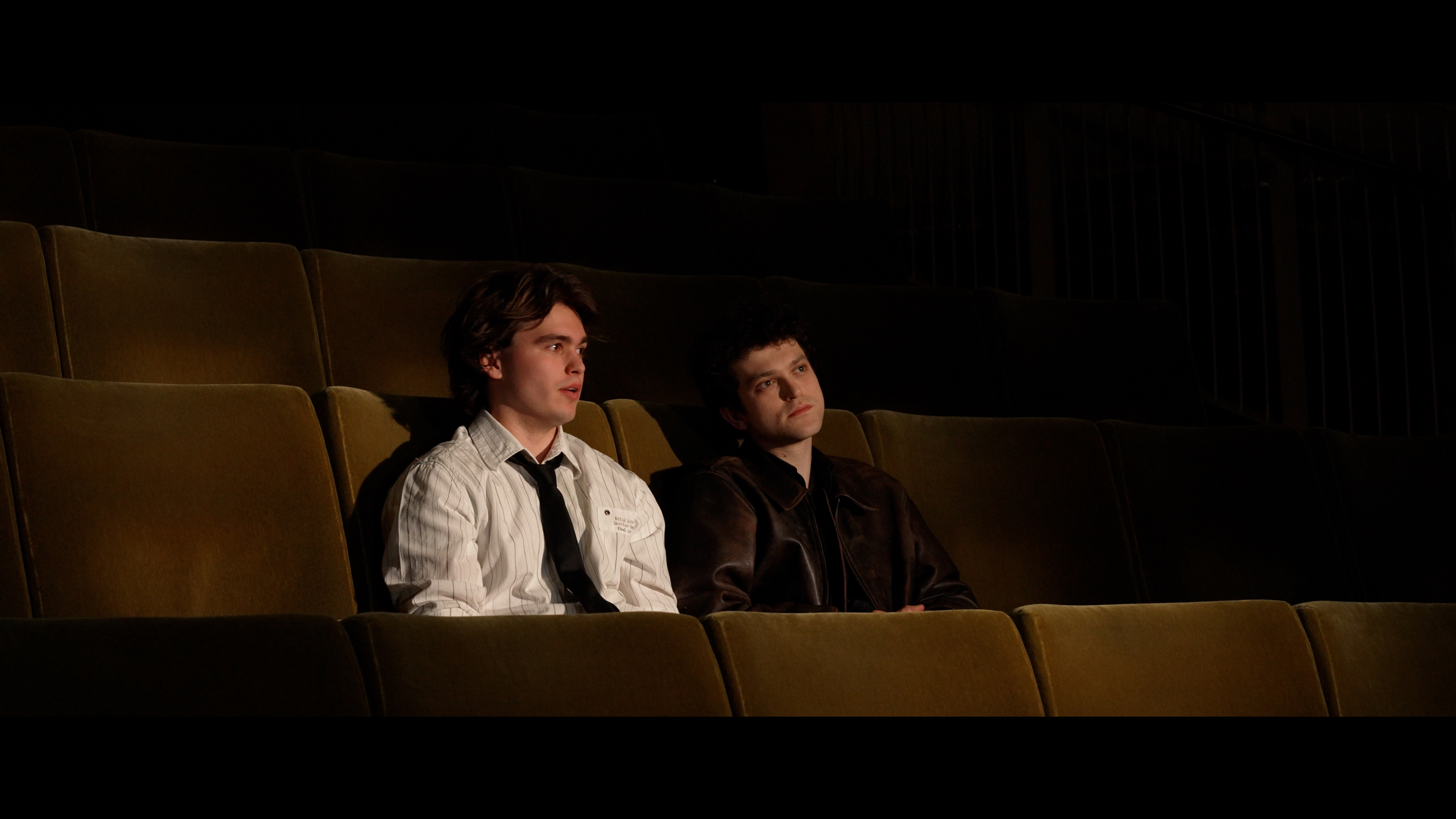
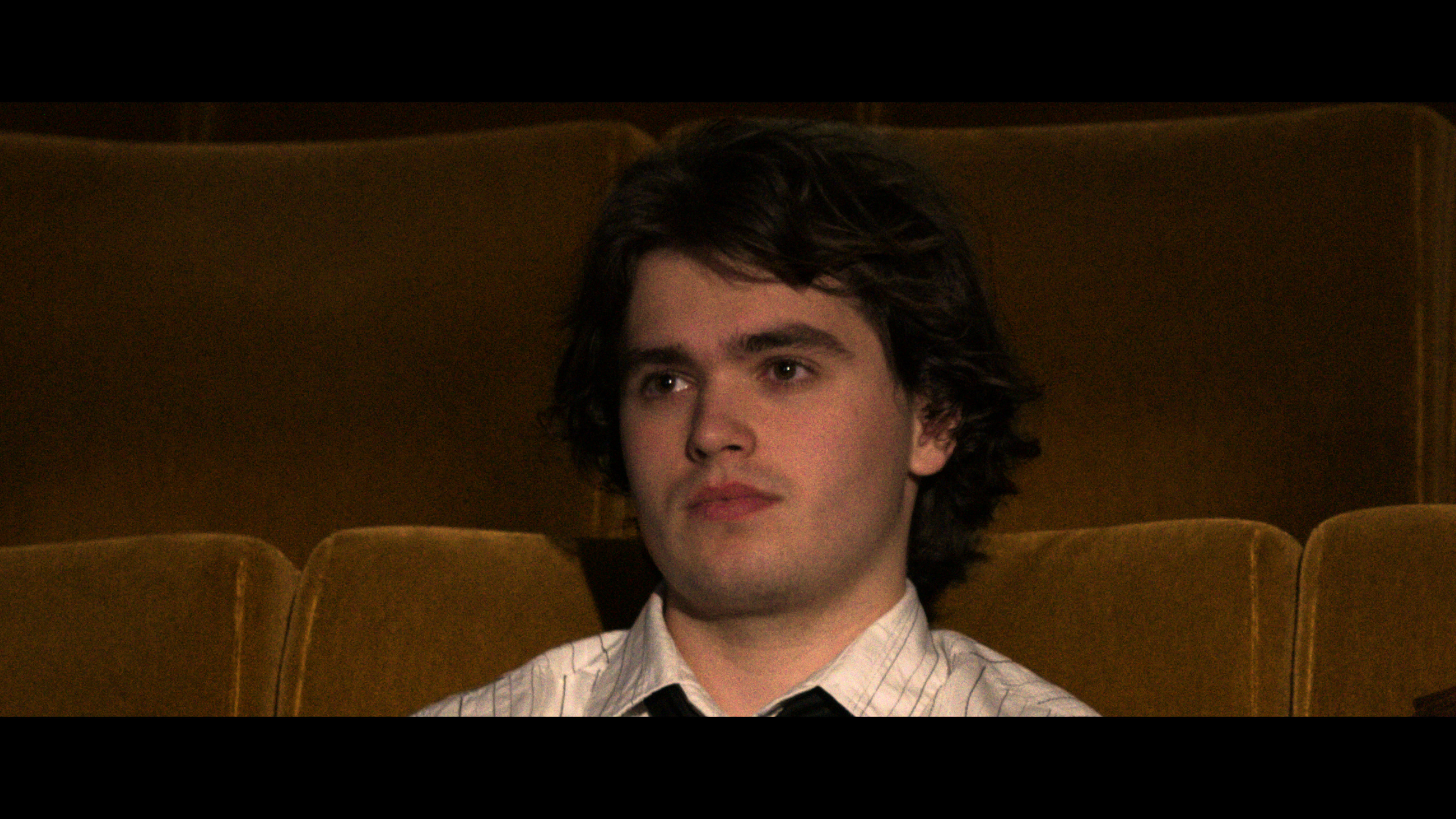
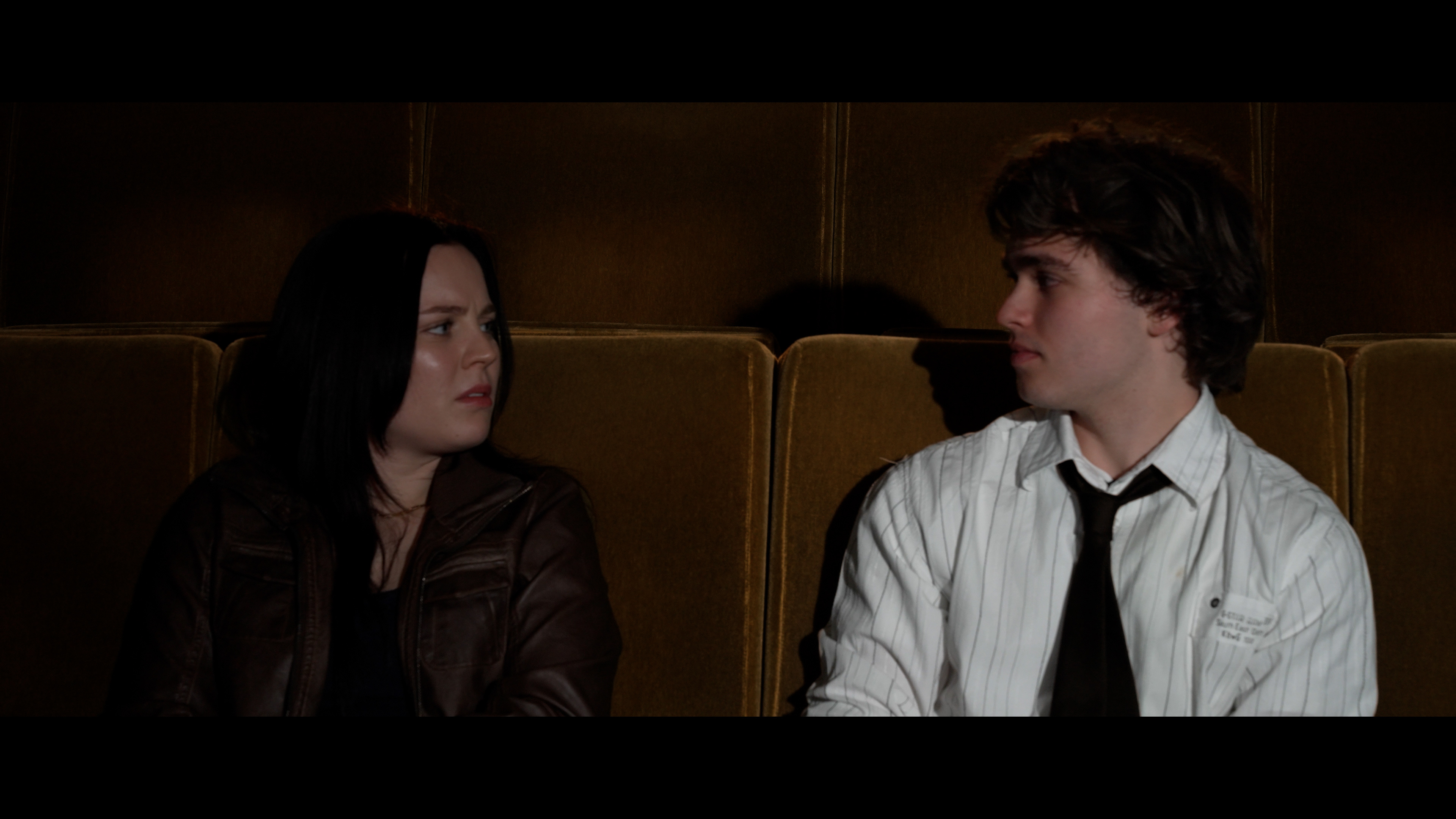
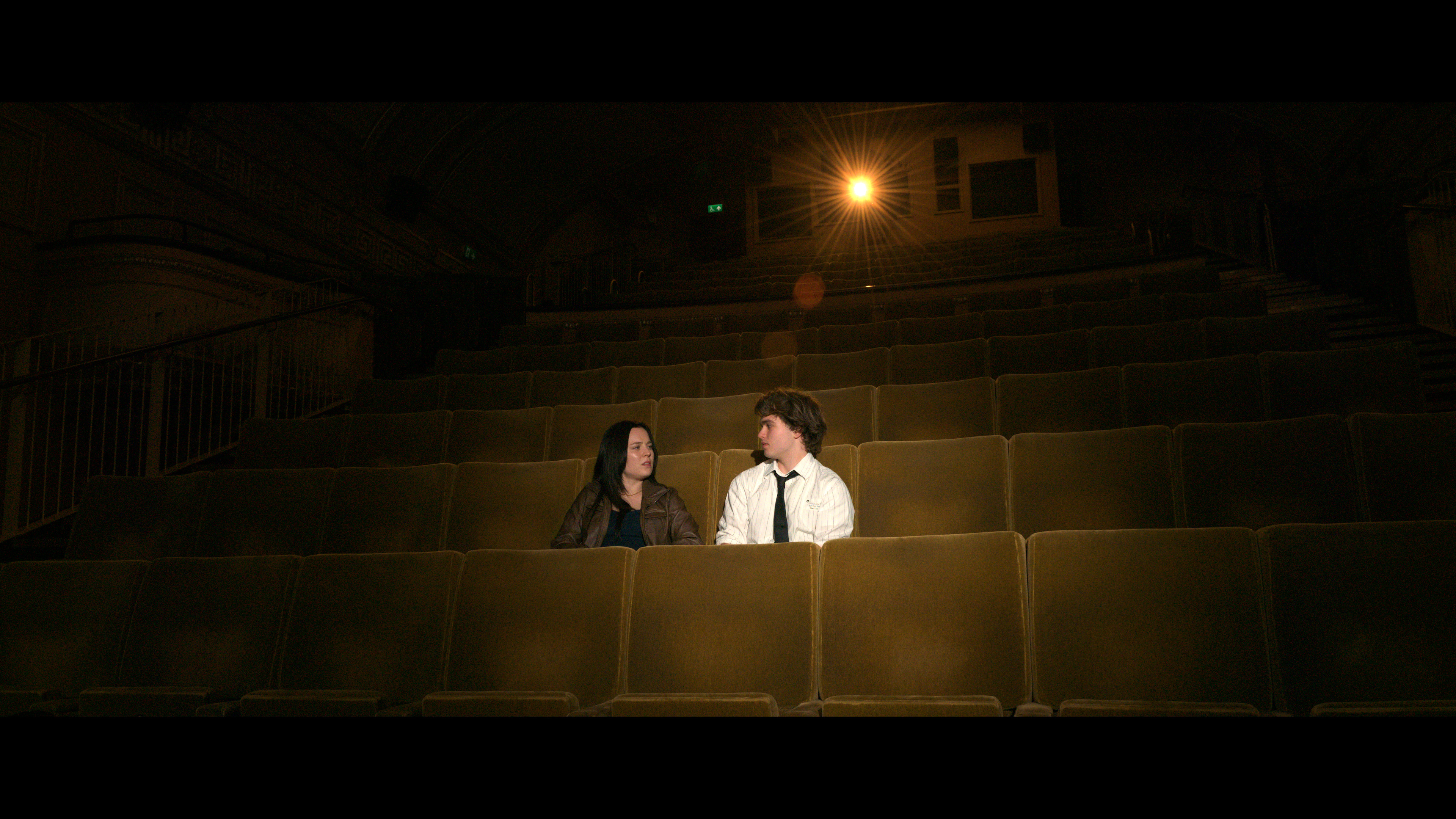
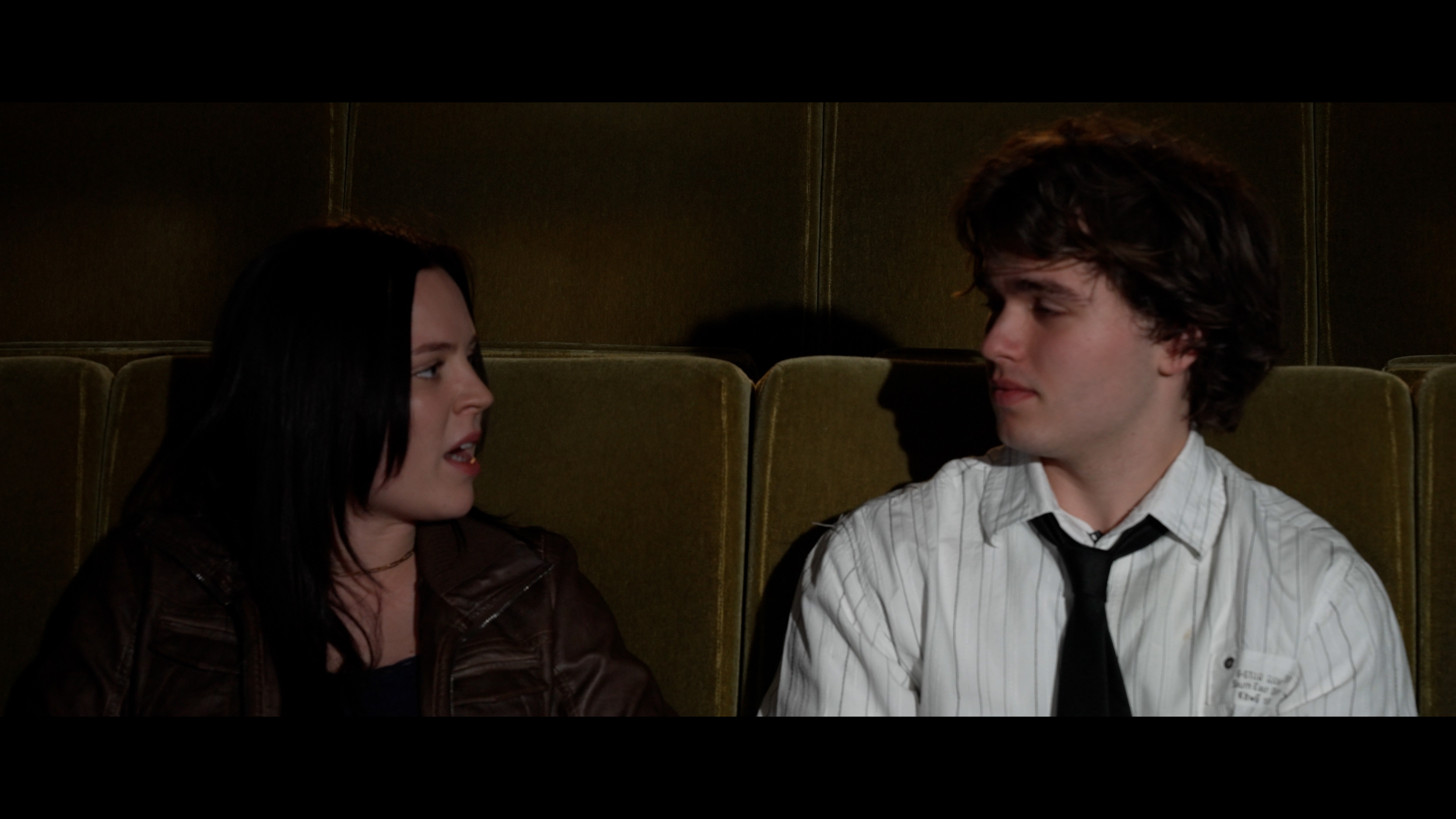
For the colour to remain consistent, while retaining their natural skin tones, I had to cut out each person to adjust their colours separates=ly, as you can see below.
This was my process:
Adjust entire image → cut out person and correct skin tones → superimpose the more natural-looking face/body/shirt over the image adjusted for the background and seating.
Beach 2
When we return to the beach, we have a little bit more sand, giving a slightly warmer overall image. The sea also has a more green hue to before, moving away from the colder sapphire tones to the more etherial turquoises.
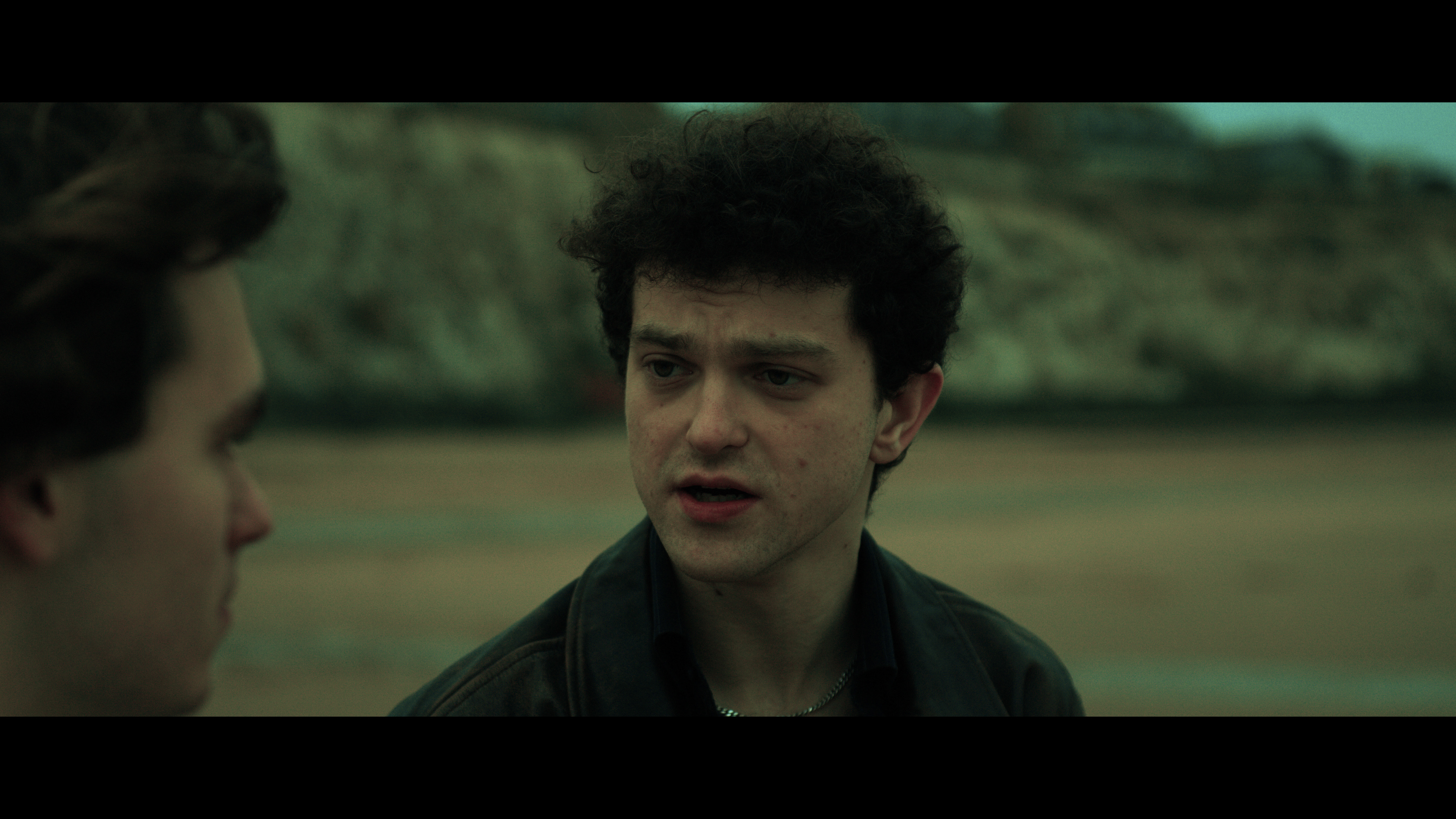
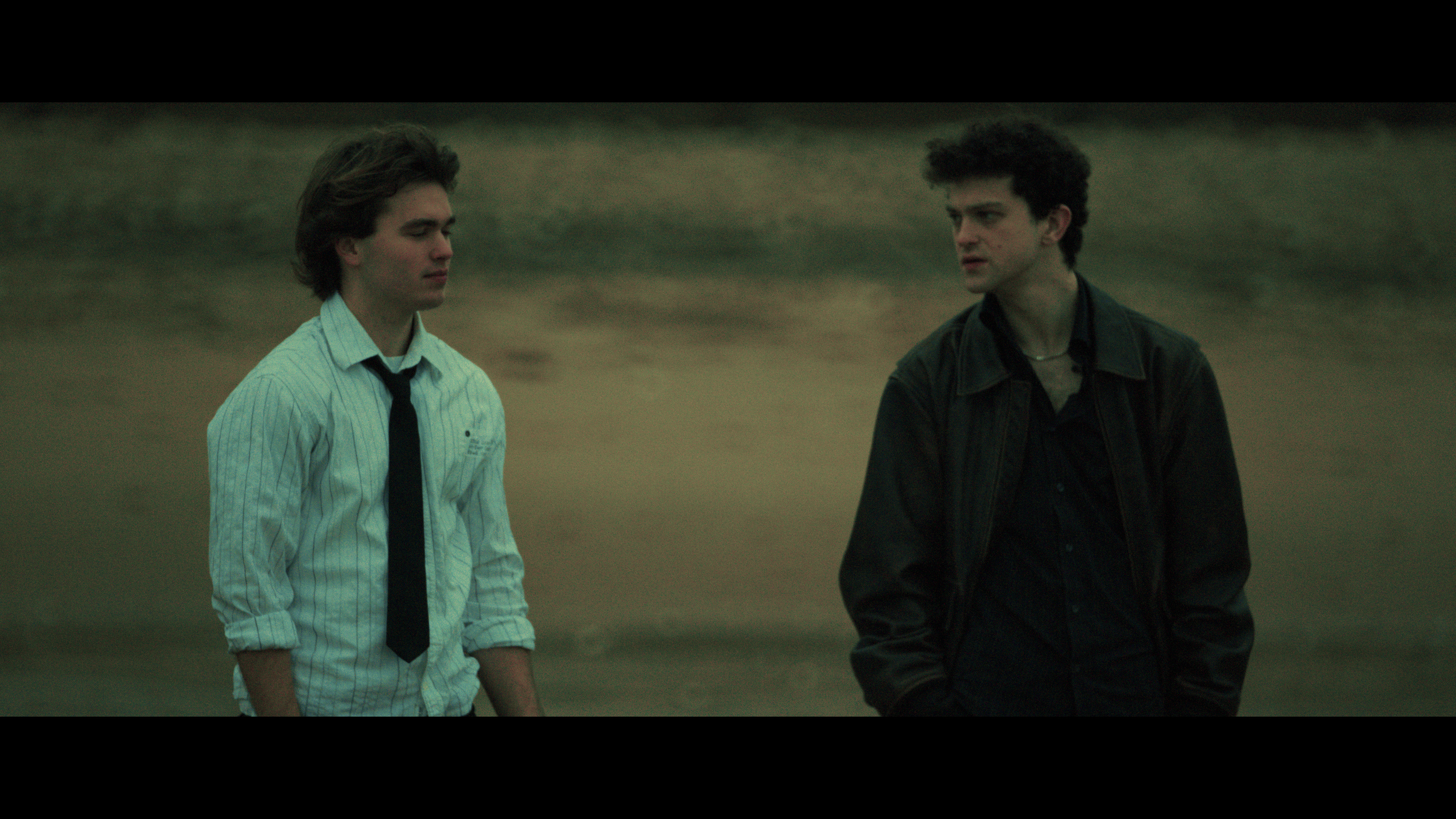
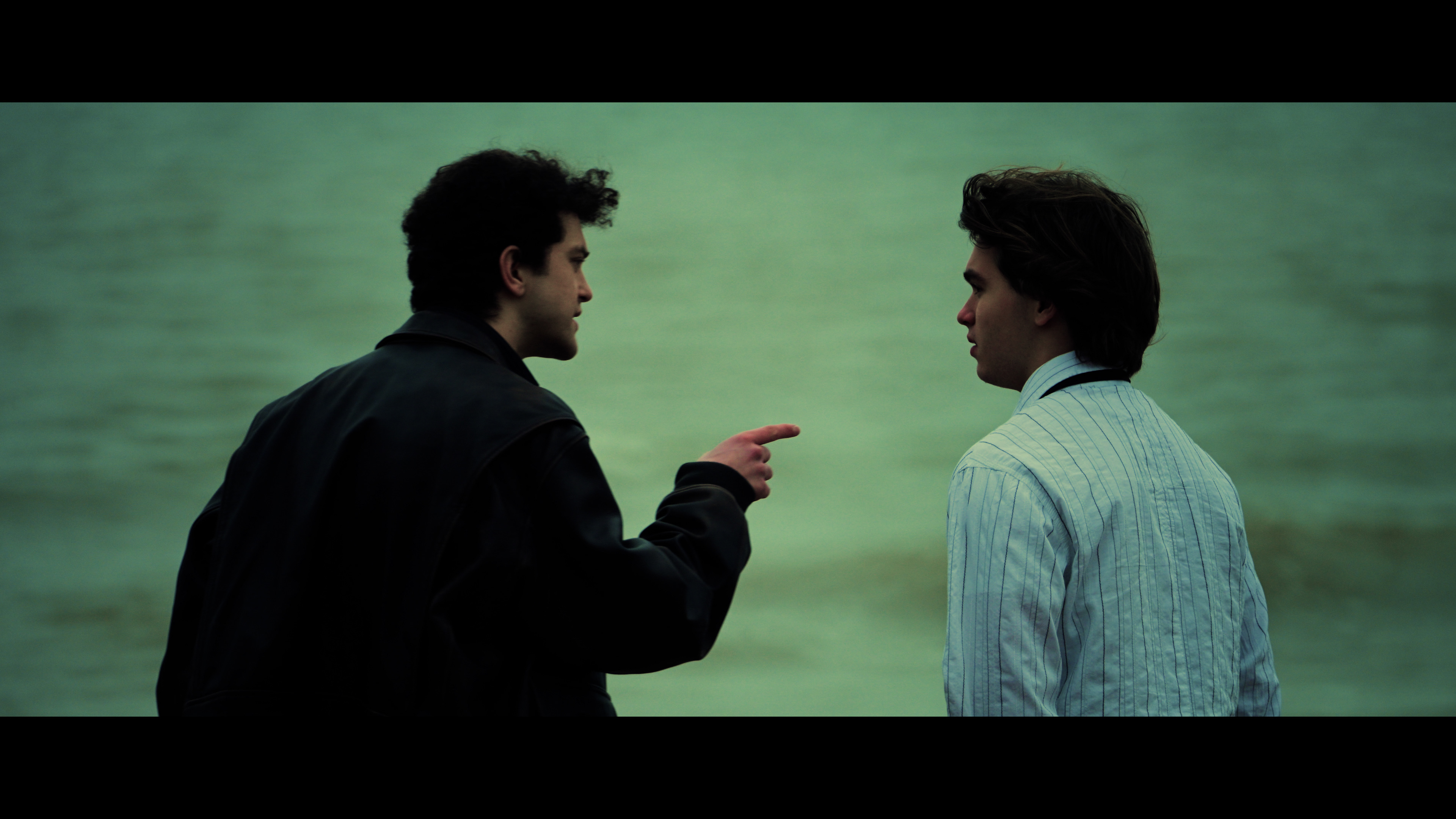
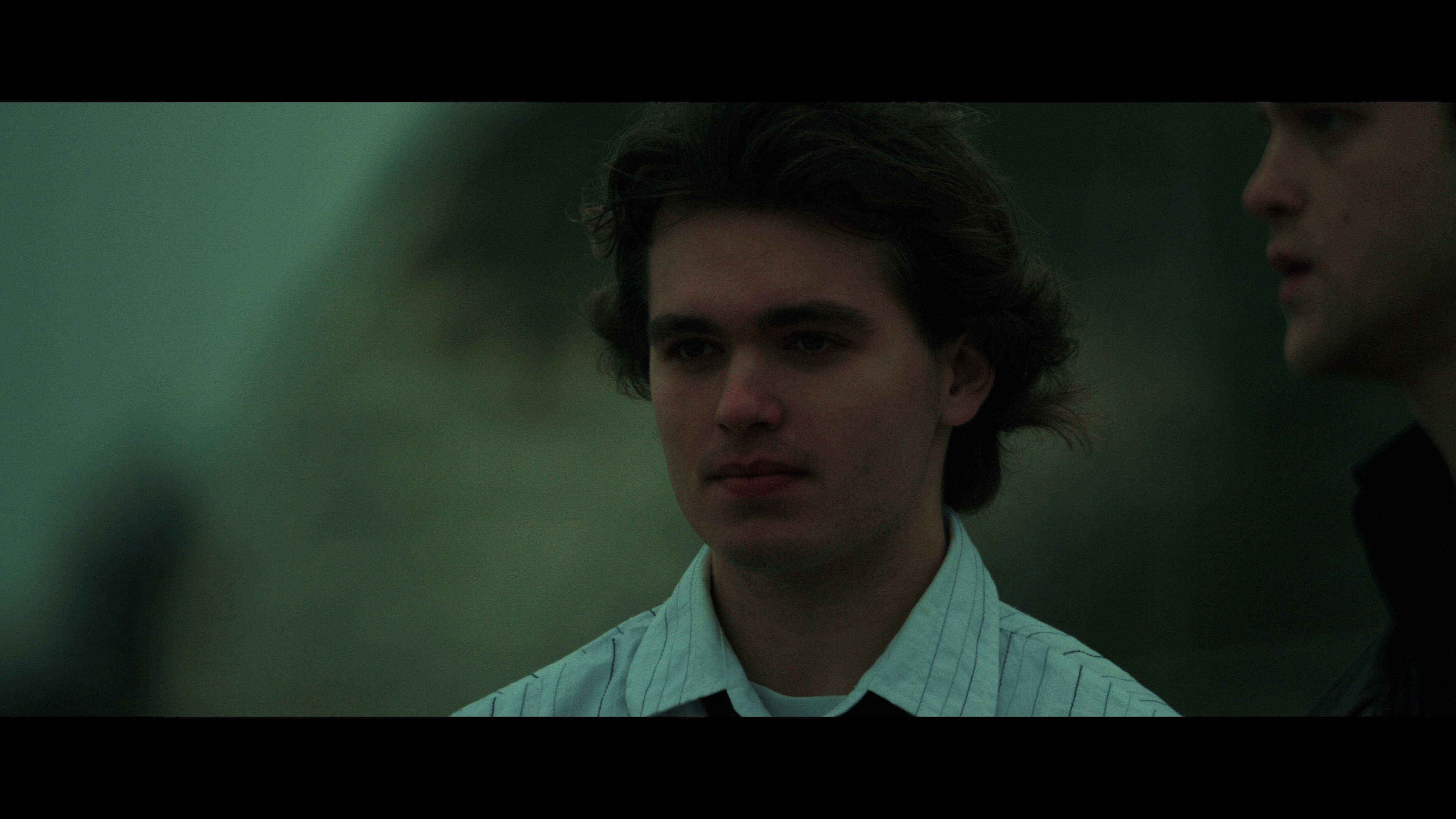
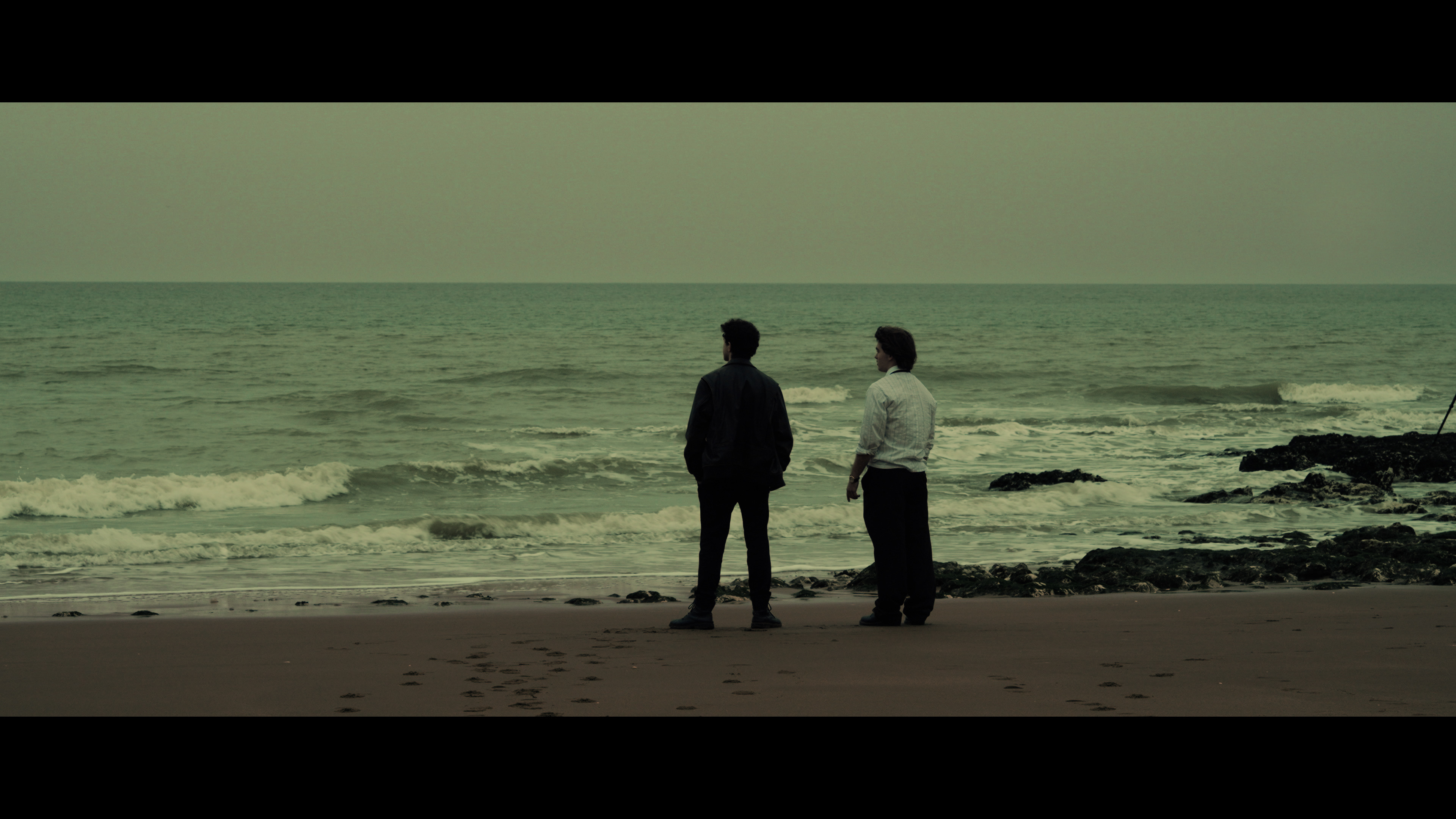
Pub Exterior 2
The outside of the pub returns us to the warmer hues, with the high contrast of the 'present day' and the slightly less harsh-looking flashback moments with The Other Elias and Isobella.
It is just worth noting that these are still frames exported from the Premiere Project just as jpegs, so they are all slightly darker and slightly flatter than the actually footage looks.
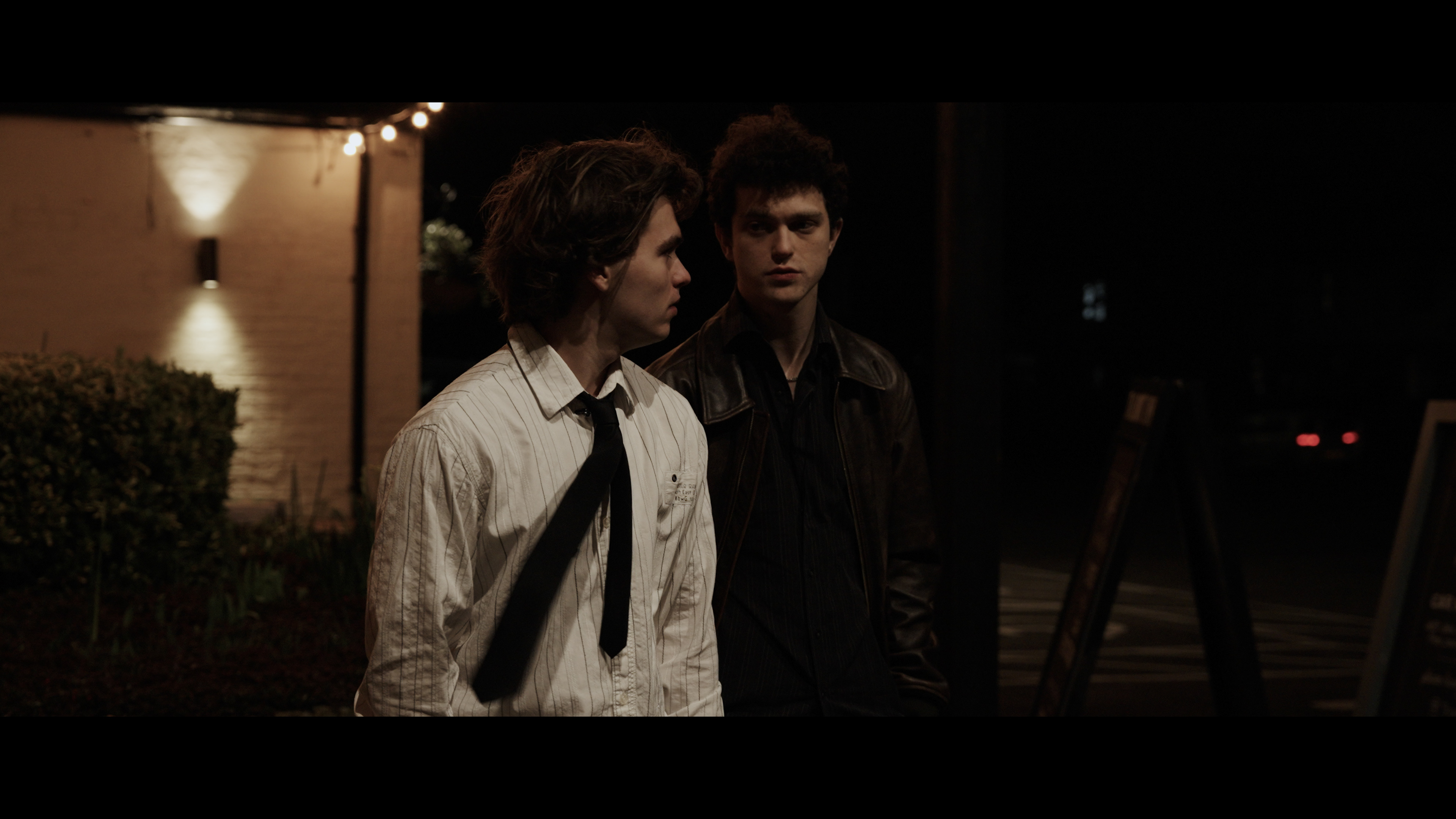
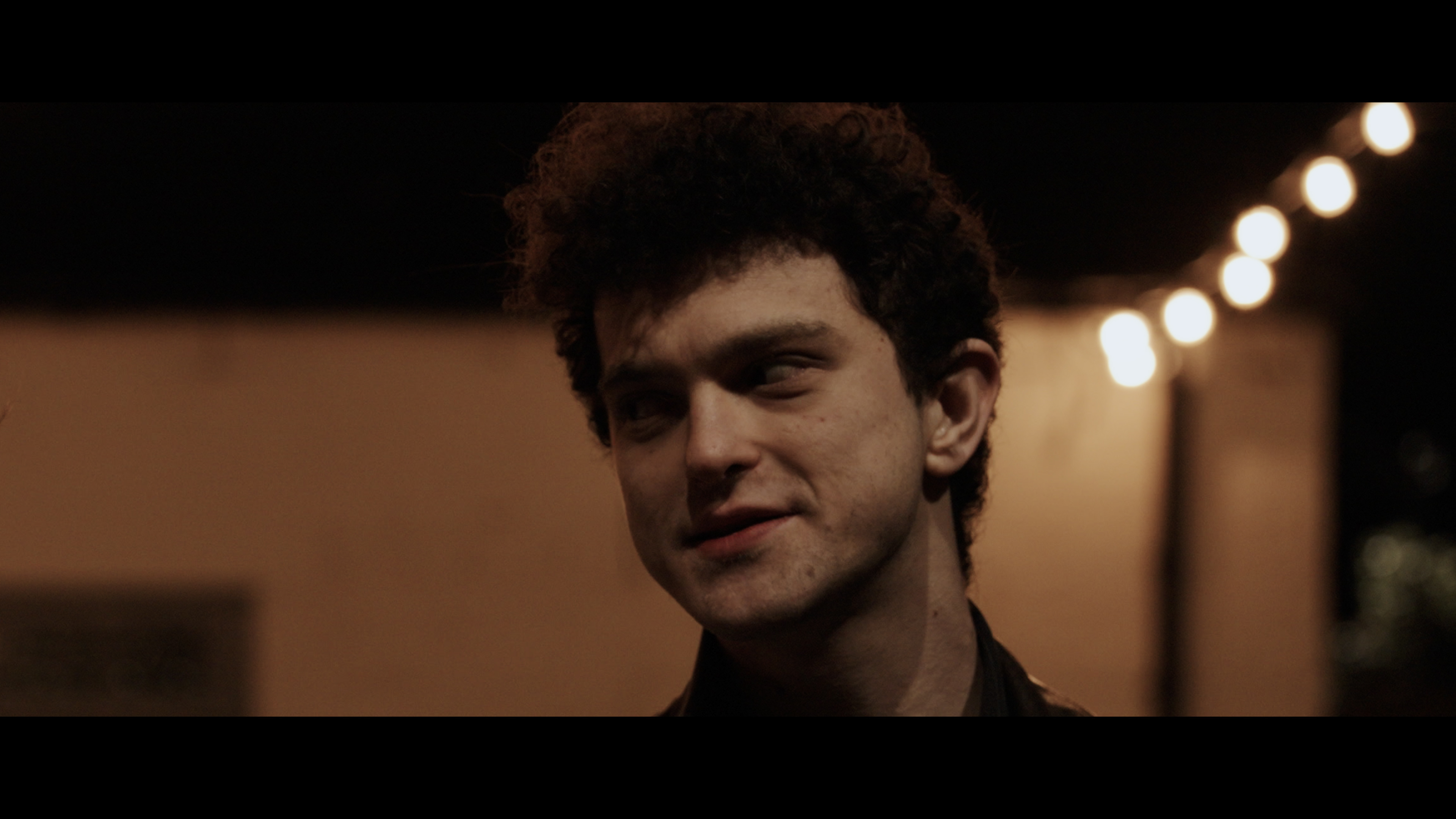
The Fall
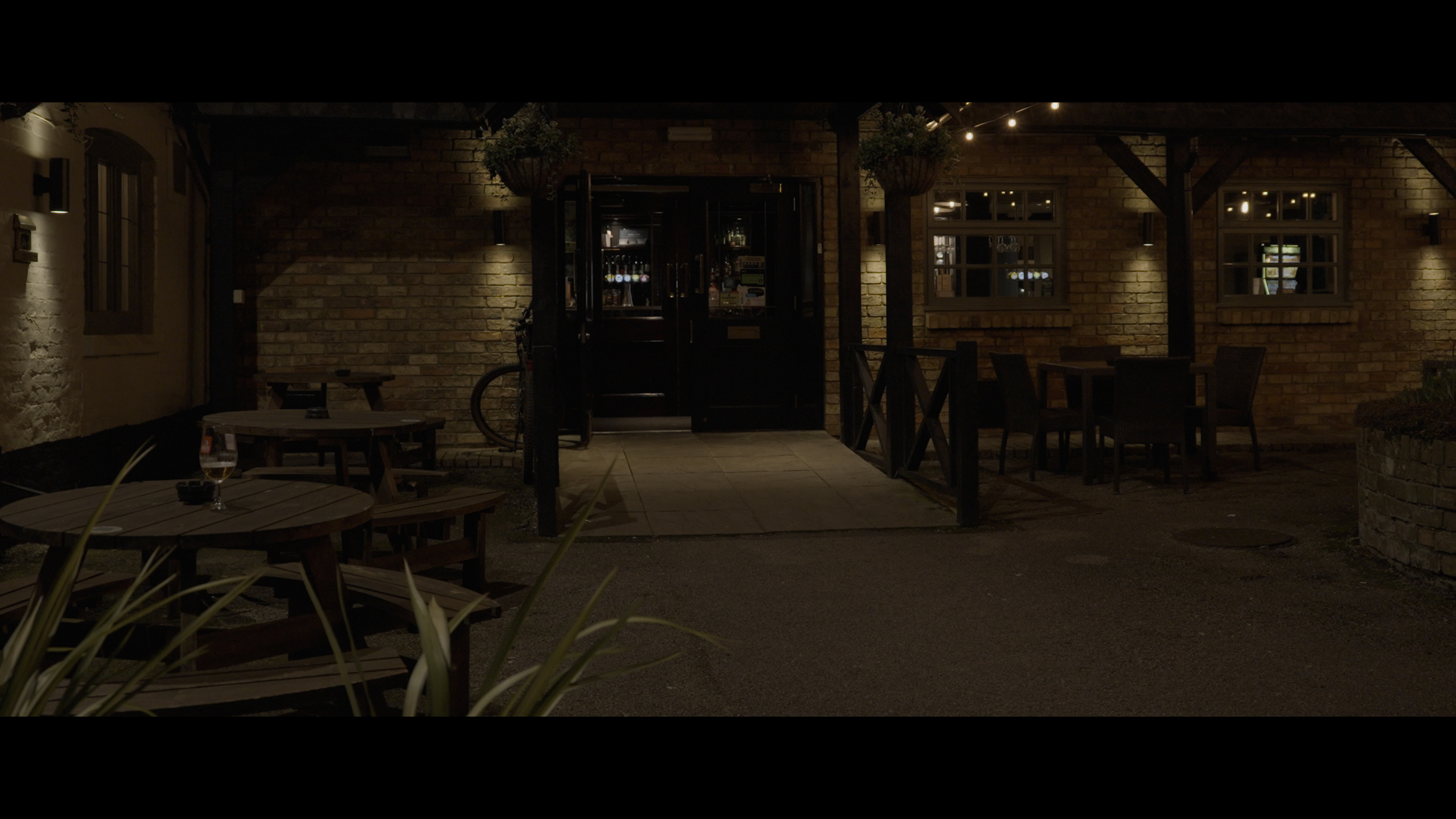
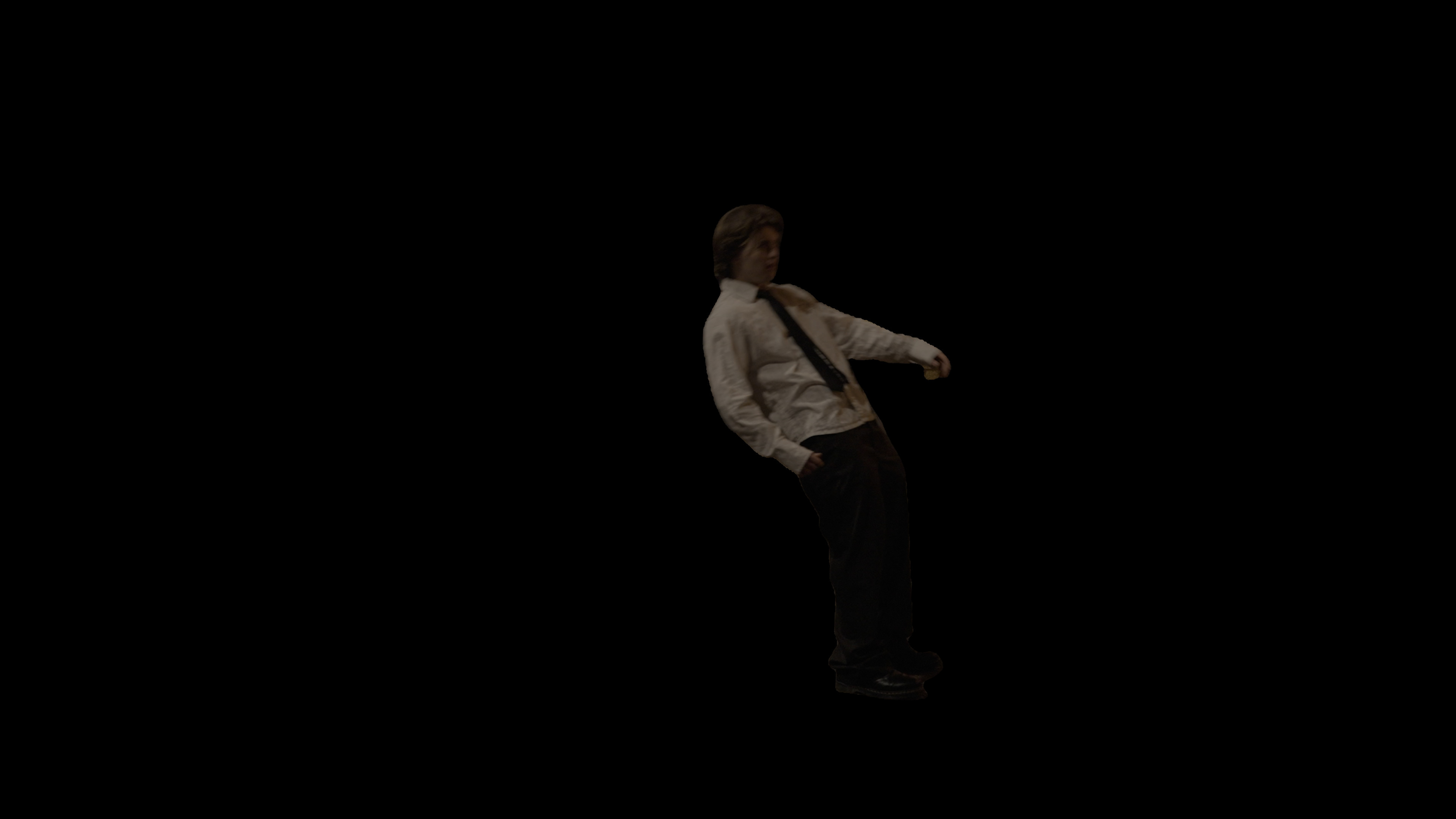
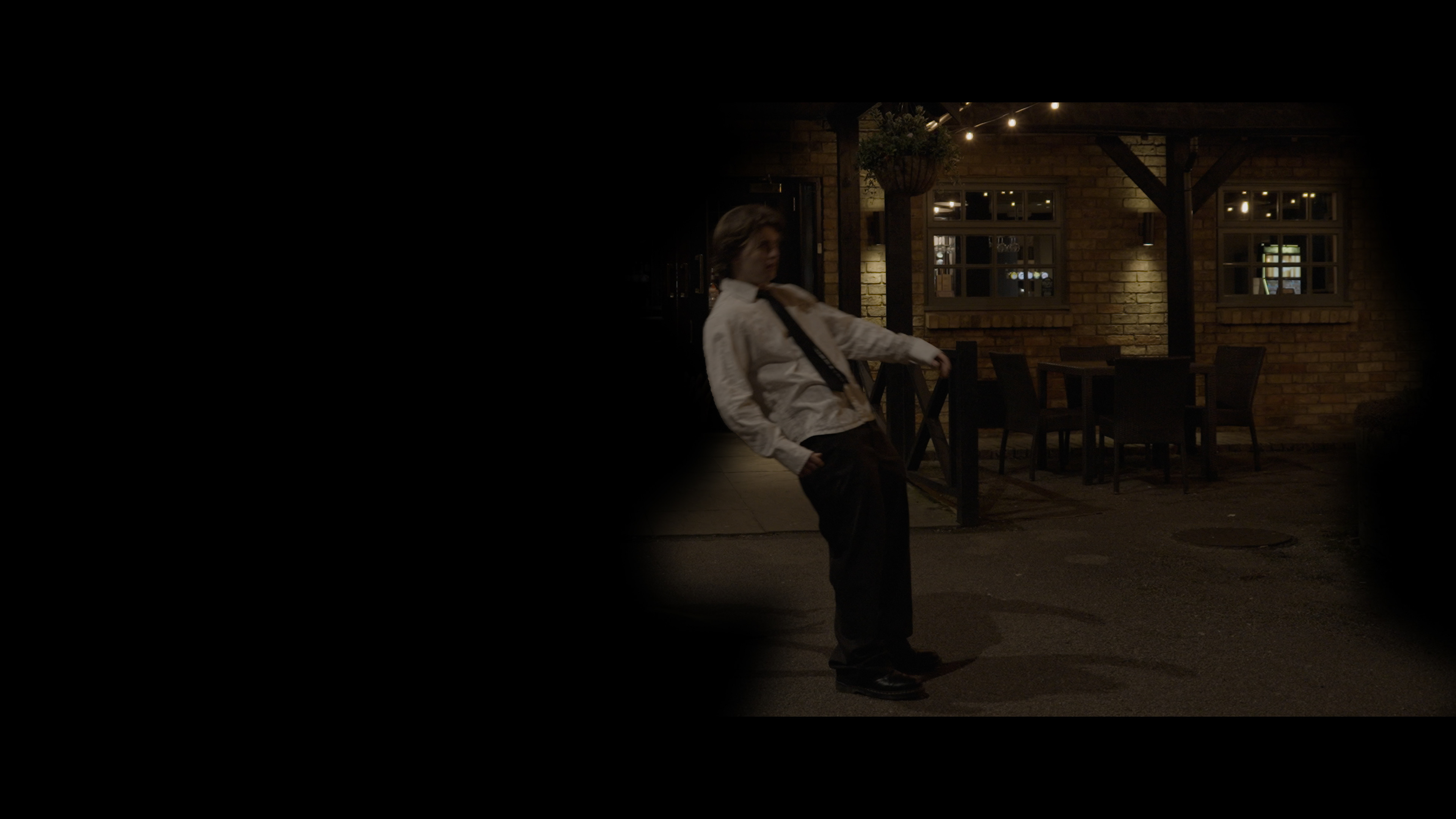
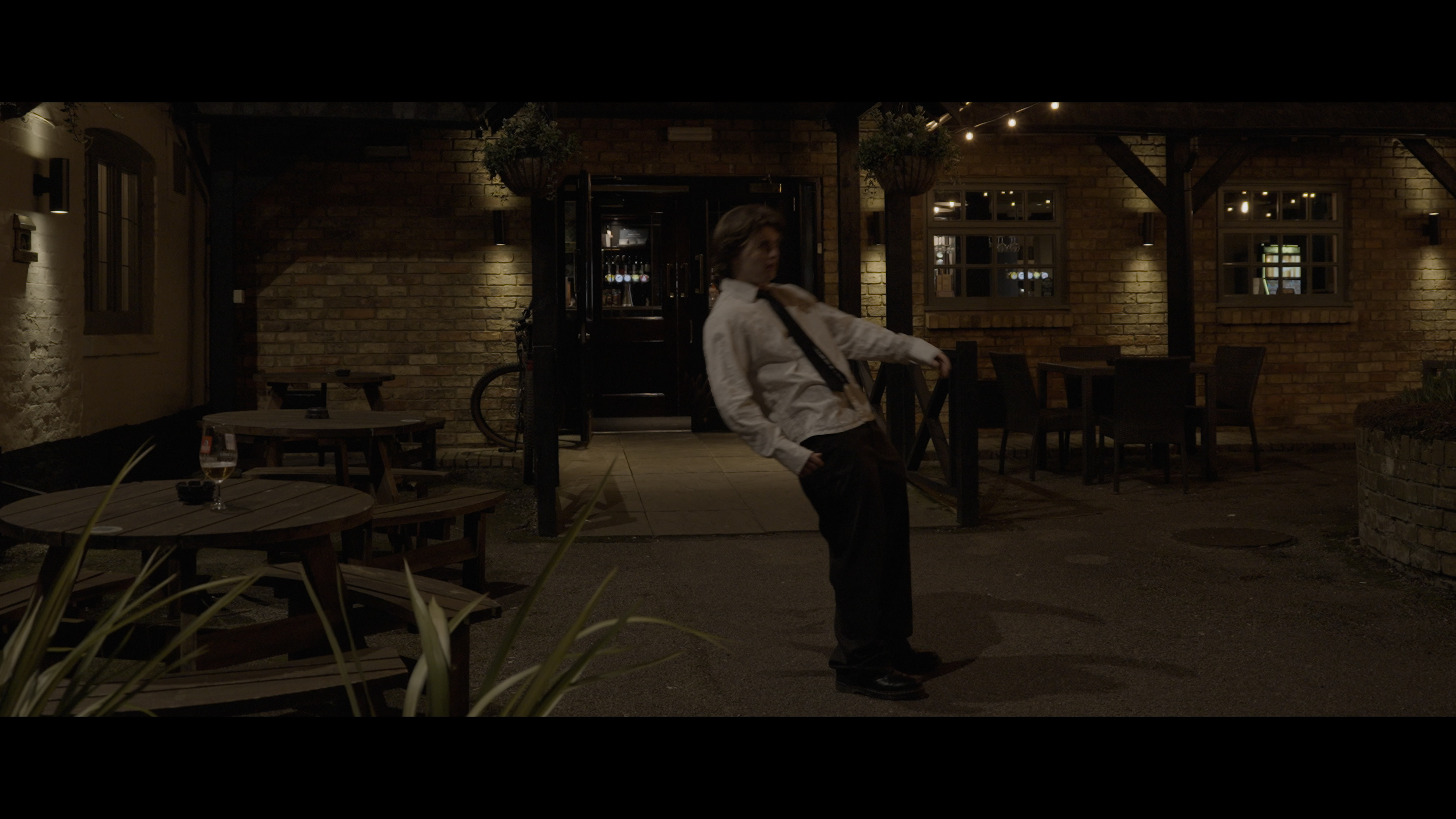
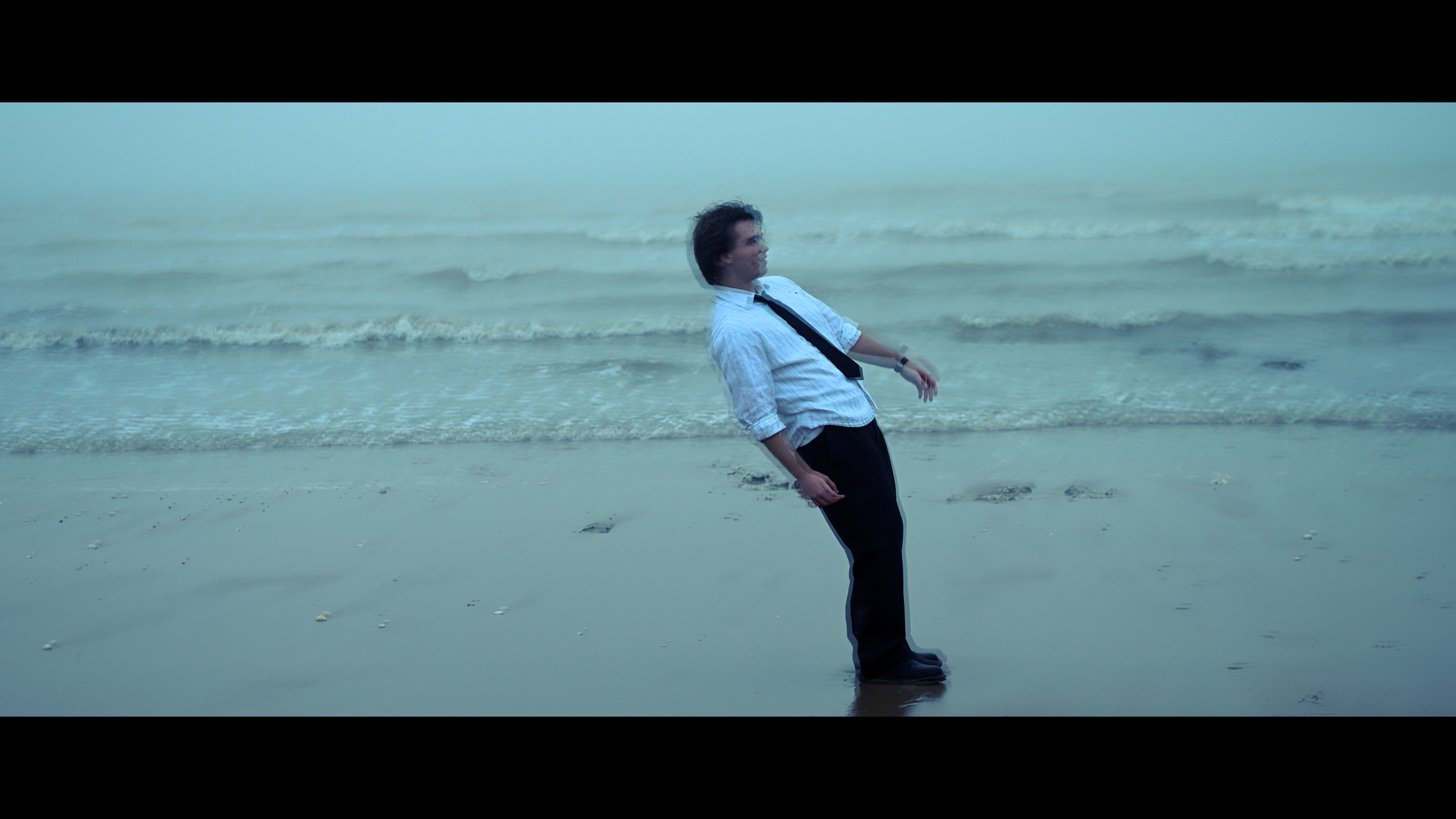
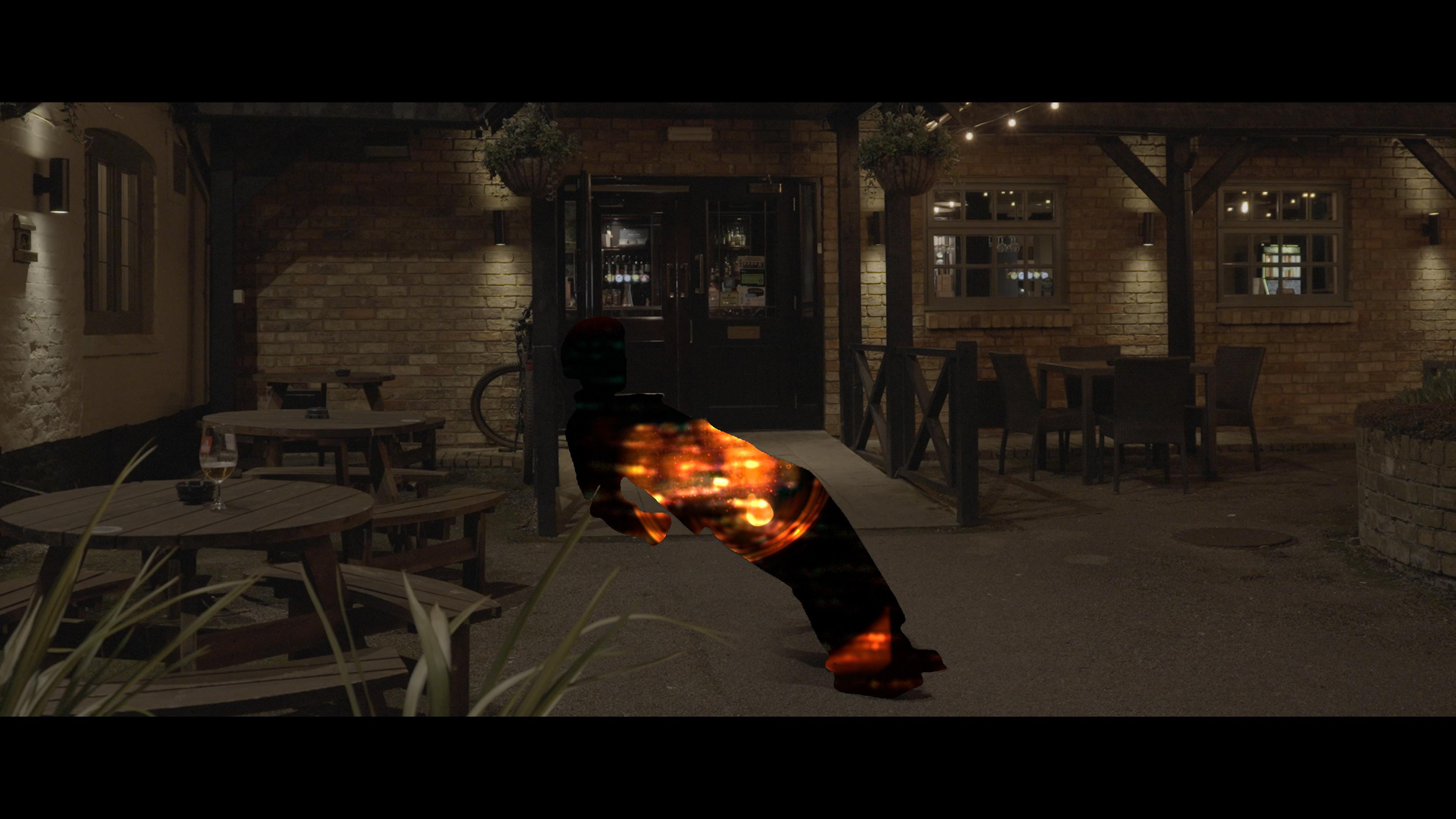
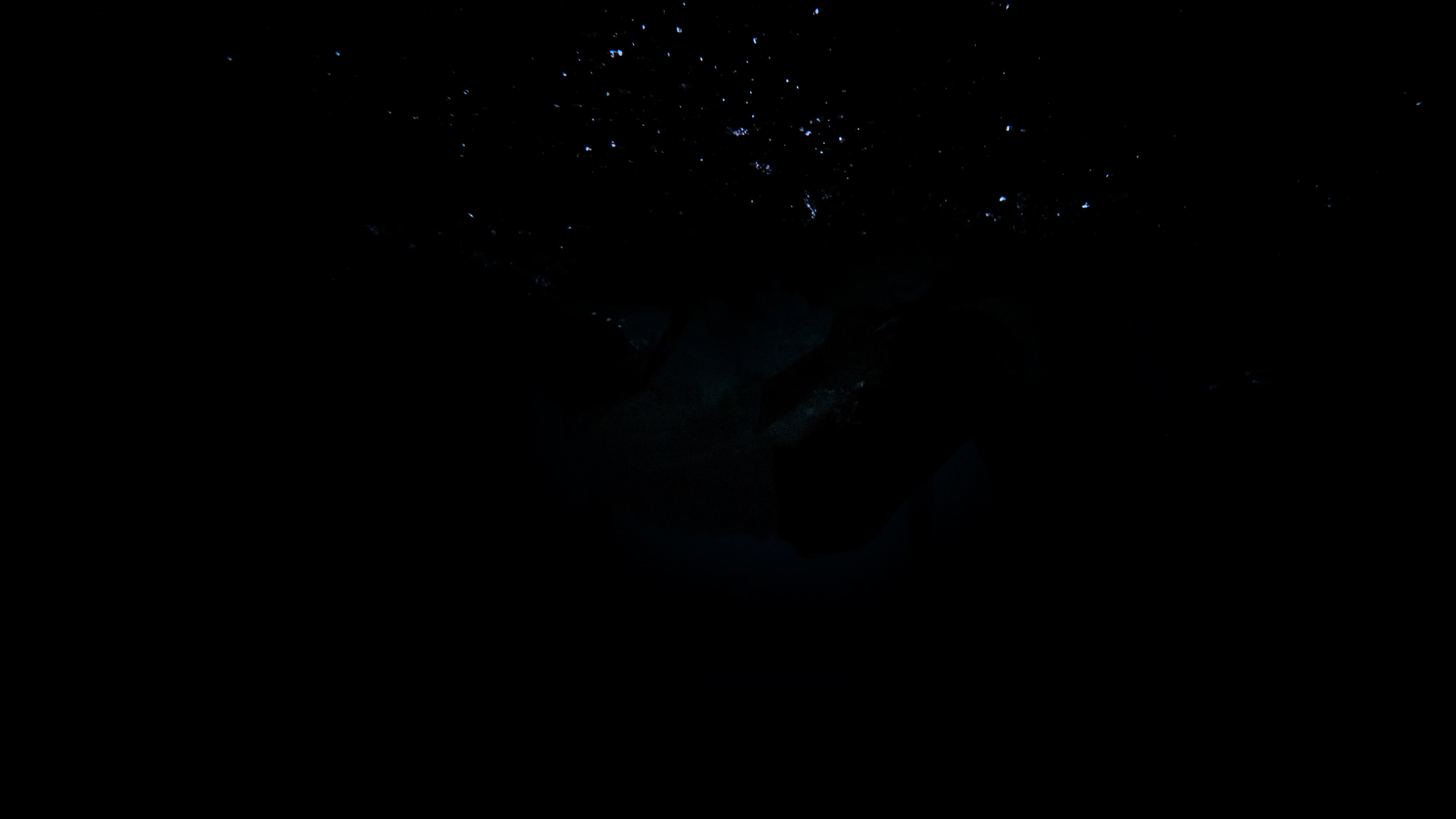
Elias' fall is made up of three main layers: the background slate, Elais' body, and the ground around and in front of Elias. Put together, they let Elias drop almost completely down to floor level, intercut with the match shot on the beach, which here has a much stronger blue hue than before to really contrast with the warmth of the pub. Then finally, in the last few frames before impact, we have a 'cutout' slate where the shape of Elias' body is projected through, showing us all the scenes so far, plus single-frame flashbacks of him and Isobella. Then underwater, where all the sound billows away, and we see Elias sink before the darkness overtakes him.
Beach 3
This time, the overarching colour is white. Elias is cold, and wet, and fed up of this whole nonsense. We overexposed in camera for some shot to give the effect of them standing in front of a soft box, and I think it works really well, asking as an etherial, un-earthy purgatory state: th thick fog helps add to this feel.
Additionally, this is the second point where we crop in form 16:9 to cinescope, acting as a metaphor for Elais' fluctuating perception.
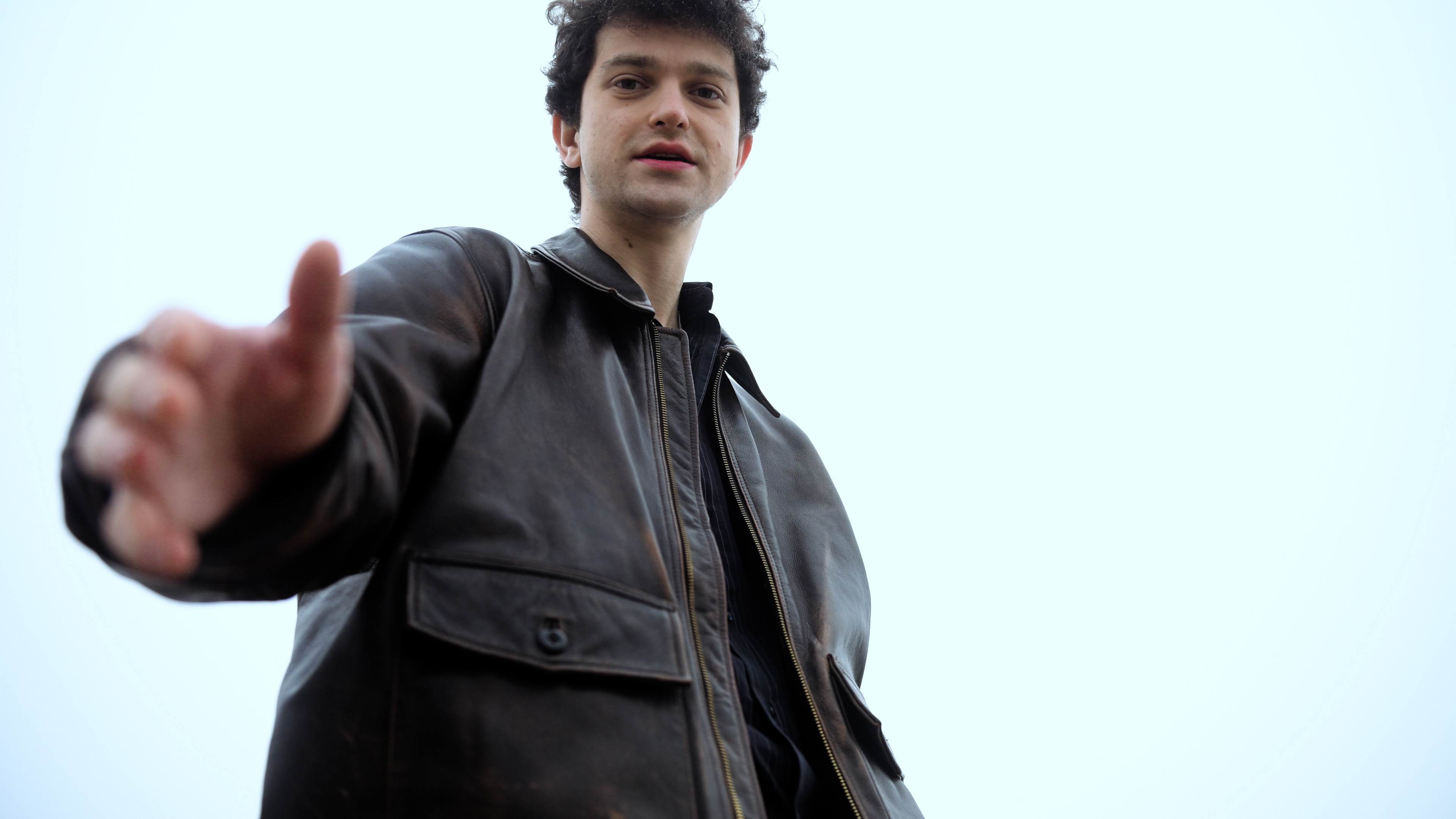
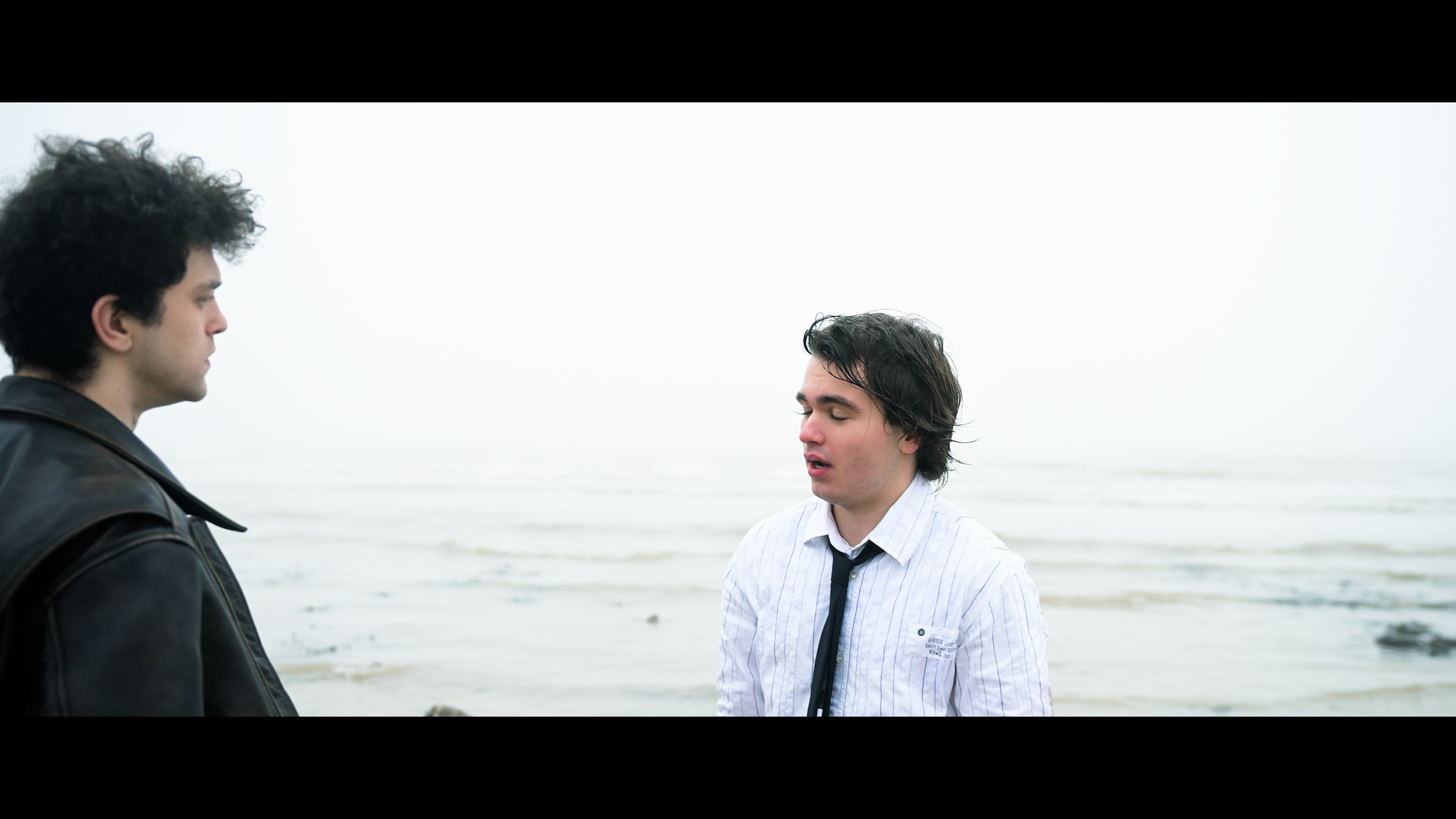
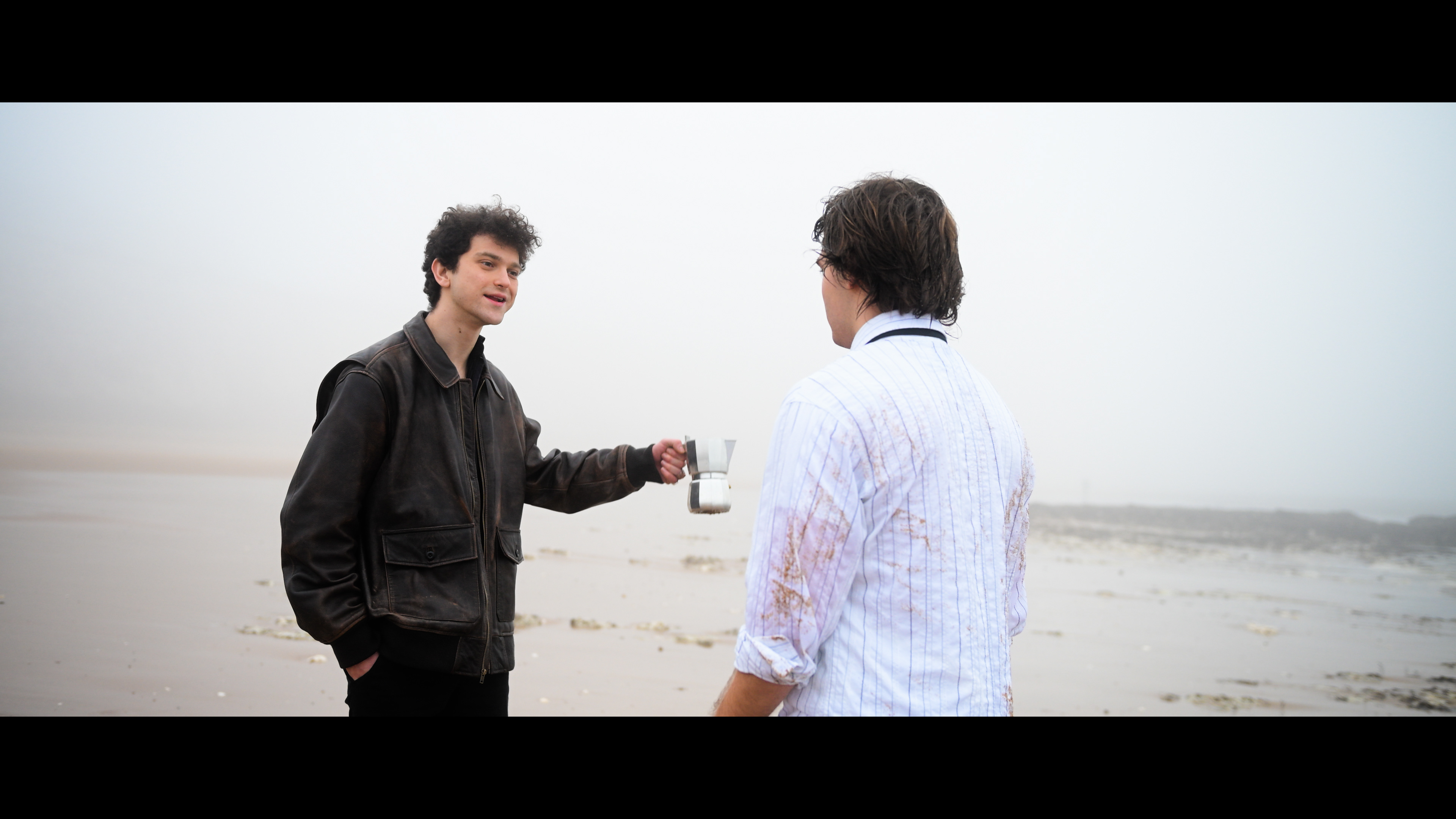
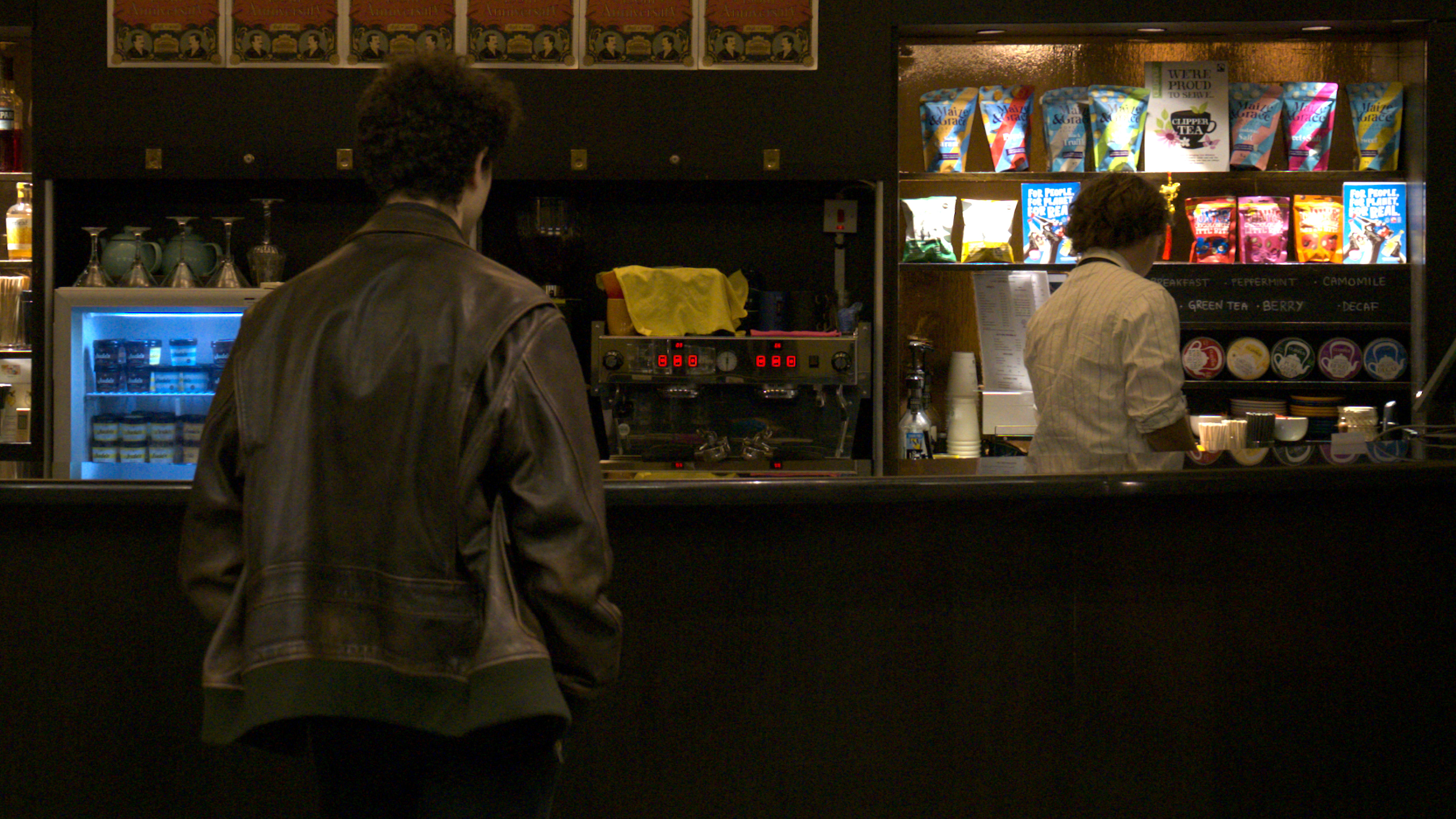
The Café
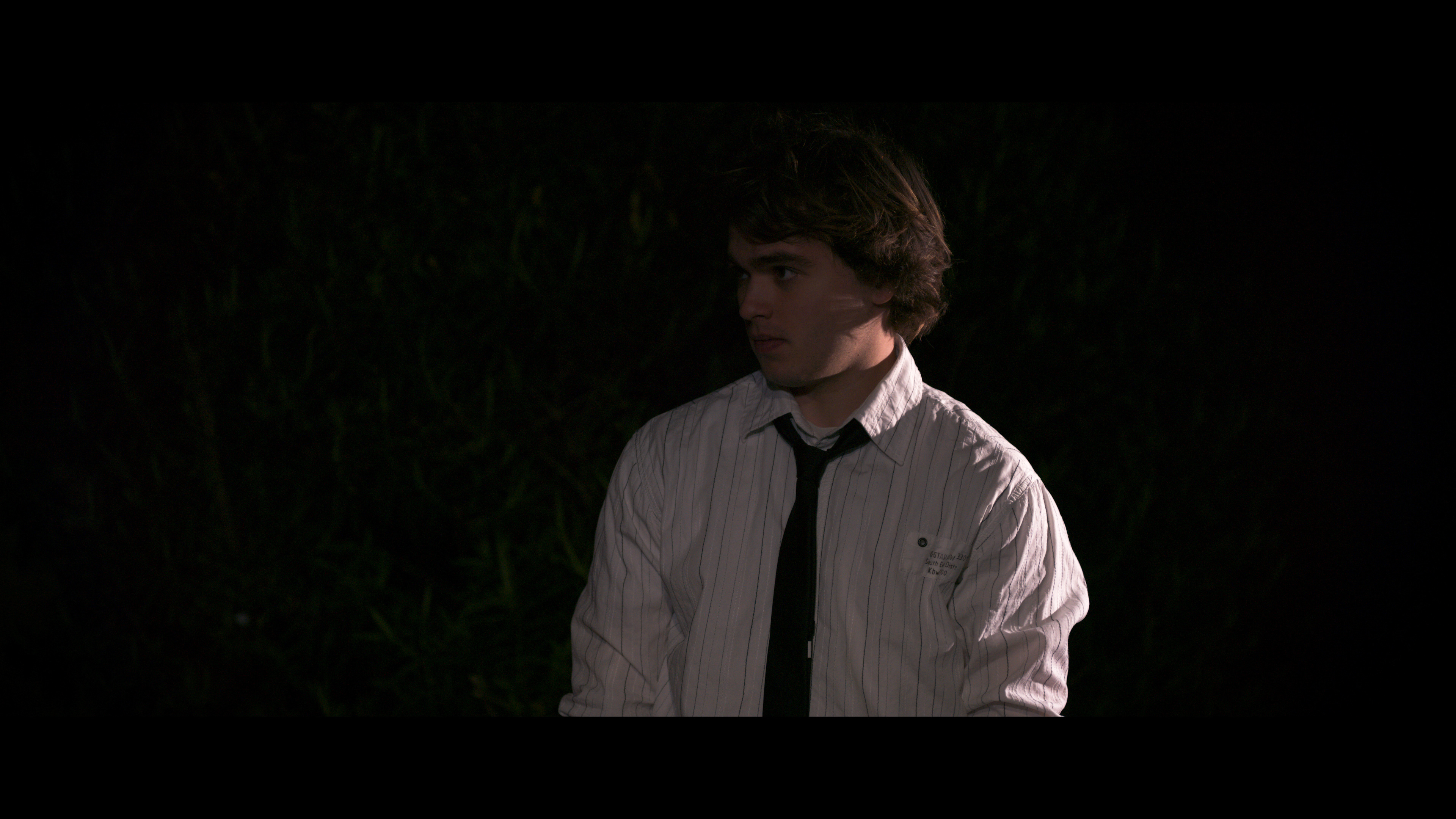
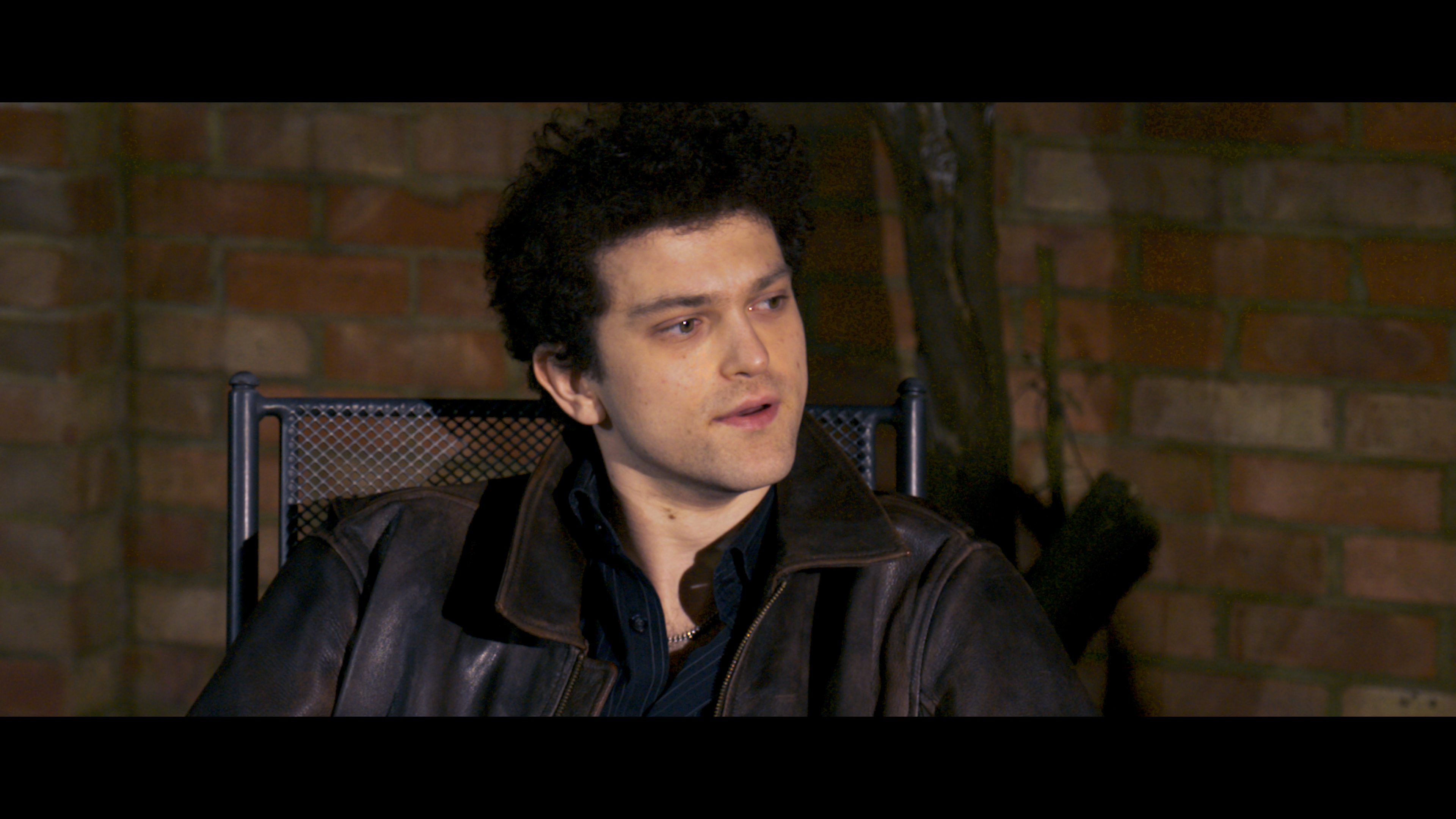
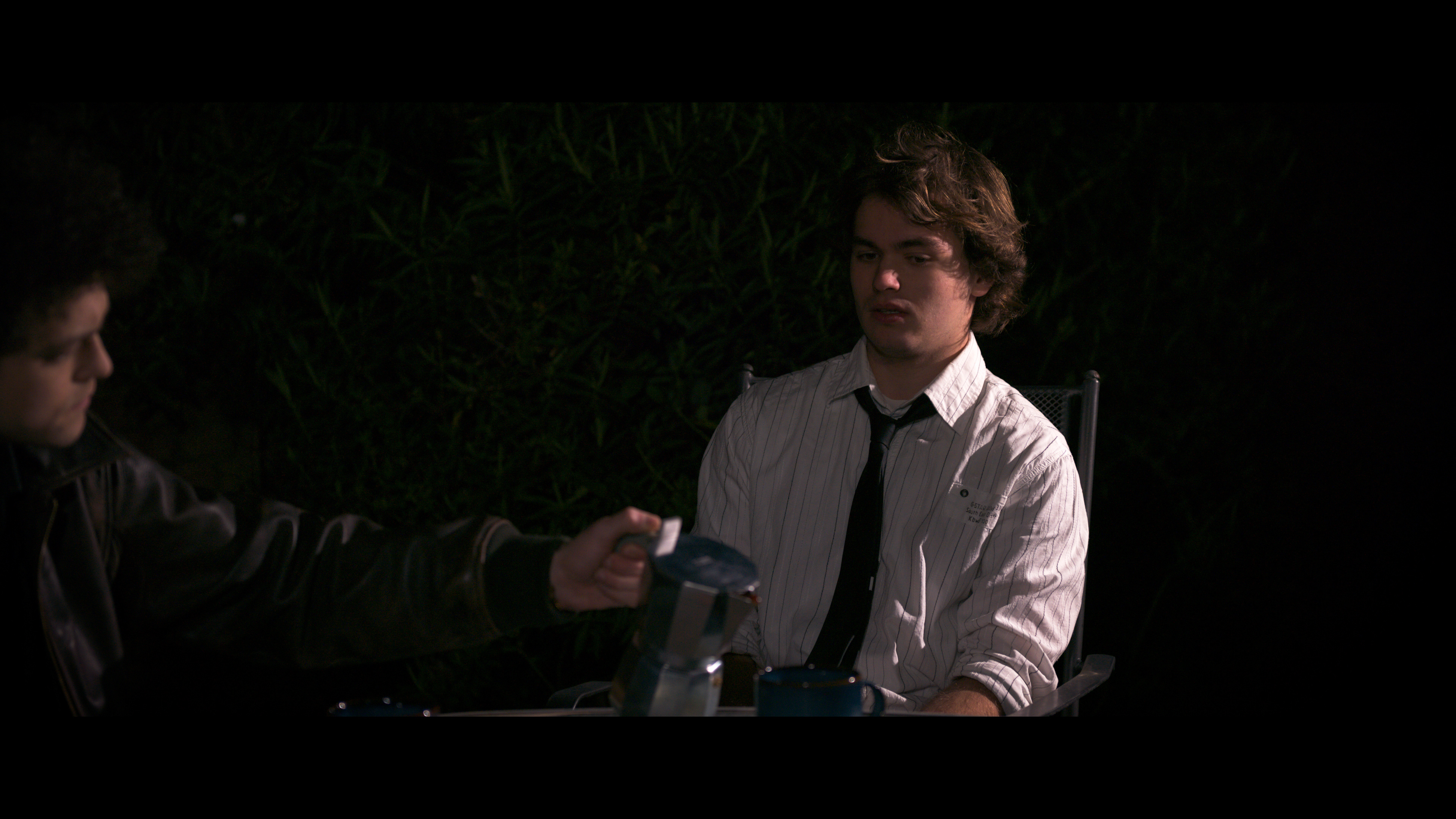
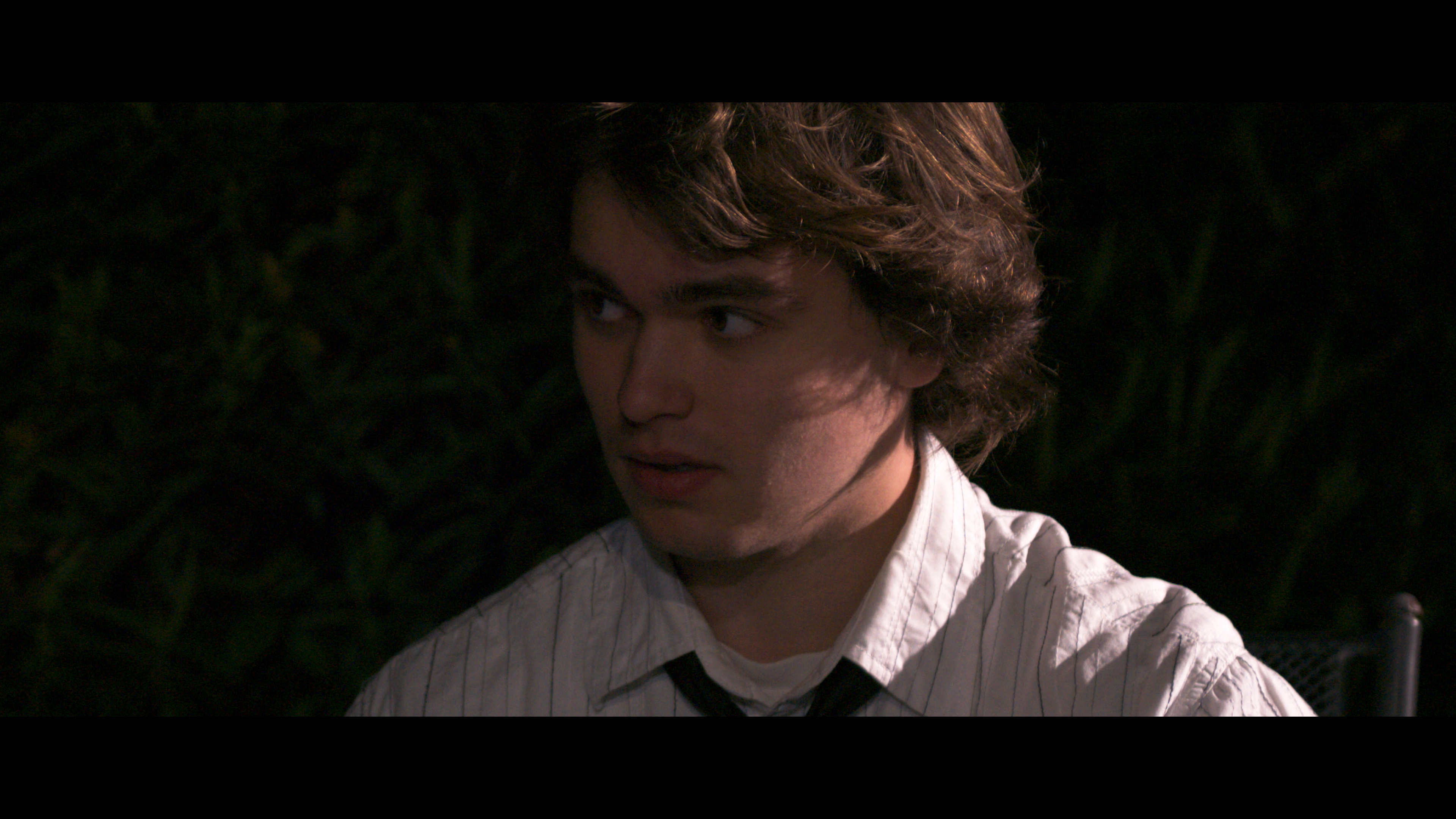
The café is the first and only unique place we see; it is never revisited or returned to. Irritatingly, these still frame grabs don't really do justice to the scene, as there is a lot more dynamic range that we see in these jpegs. Peter did the initial grade on the entire café scene, and I think it works really well. The green of the bush behind Elias, for example, is the closest connection we get to nature, and we wanted to make that pop and stand out as an earthy green, as opposed to the greens and teals in the ocean.
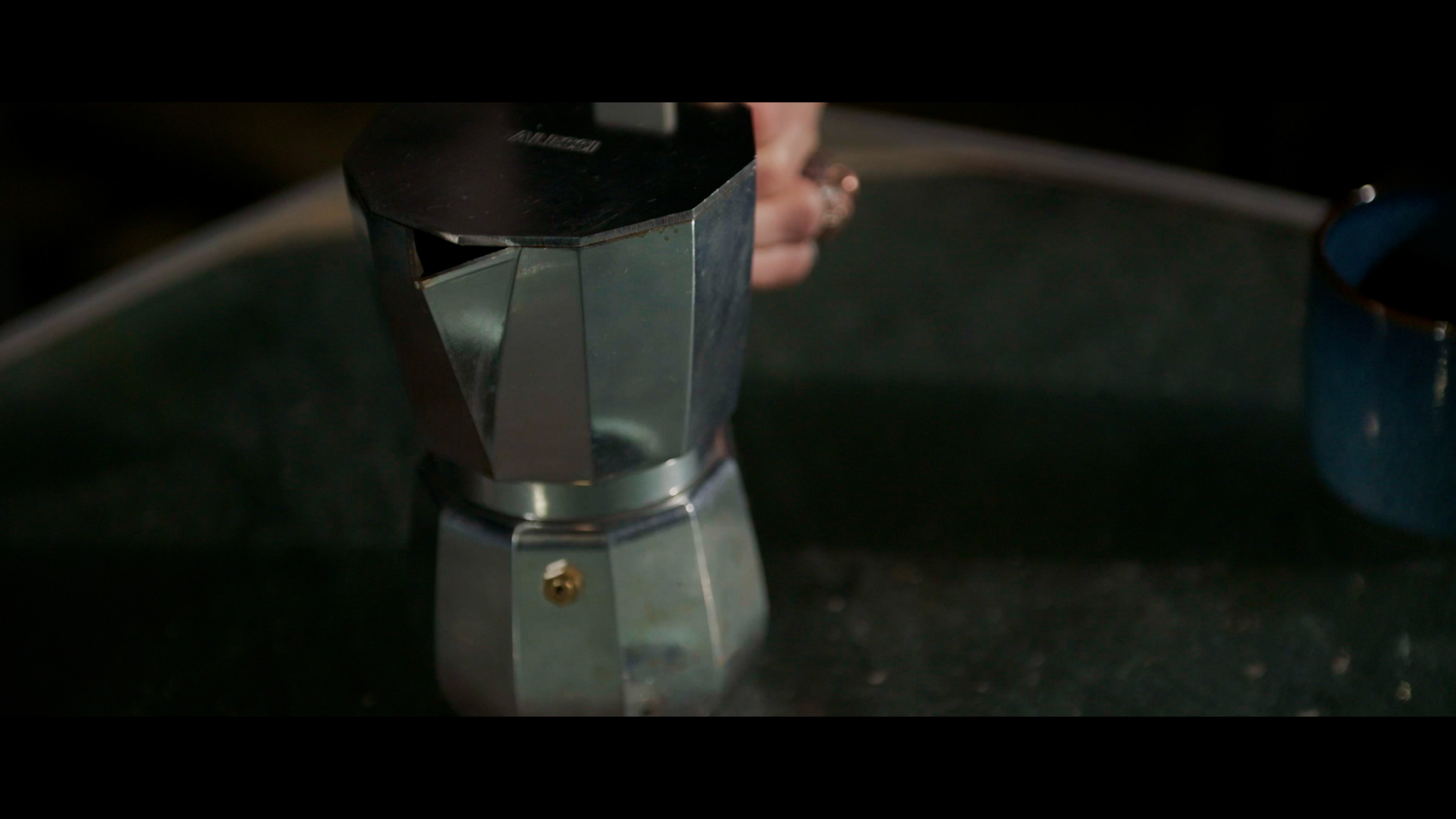
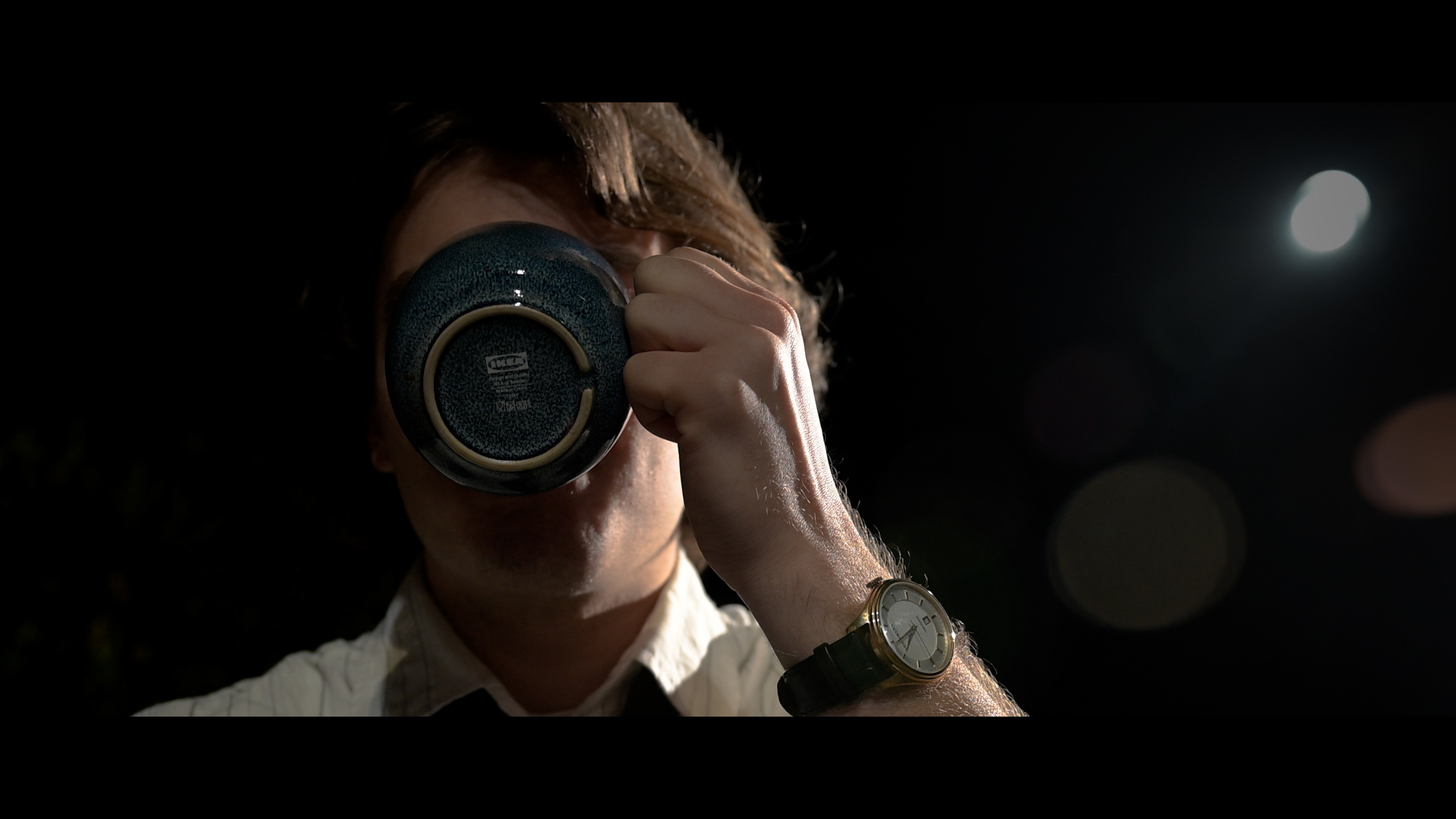
"Step out of the waves" Sequence
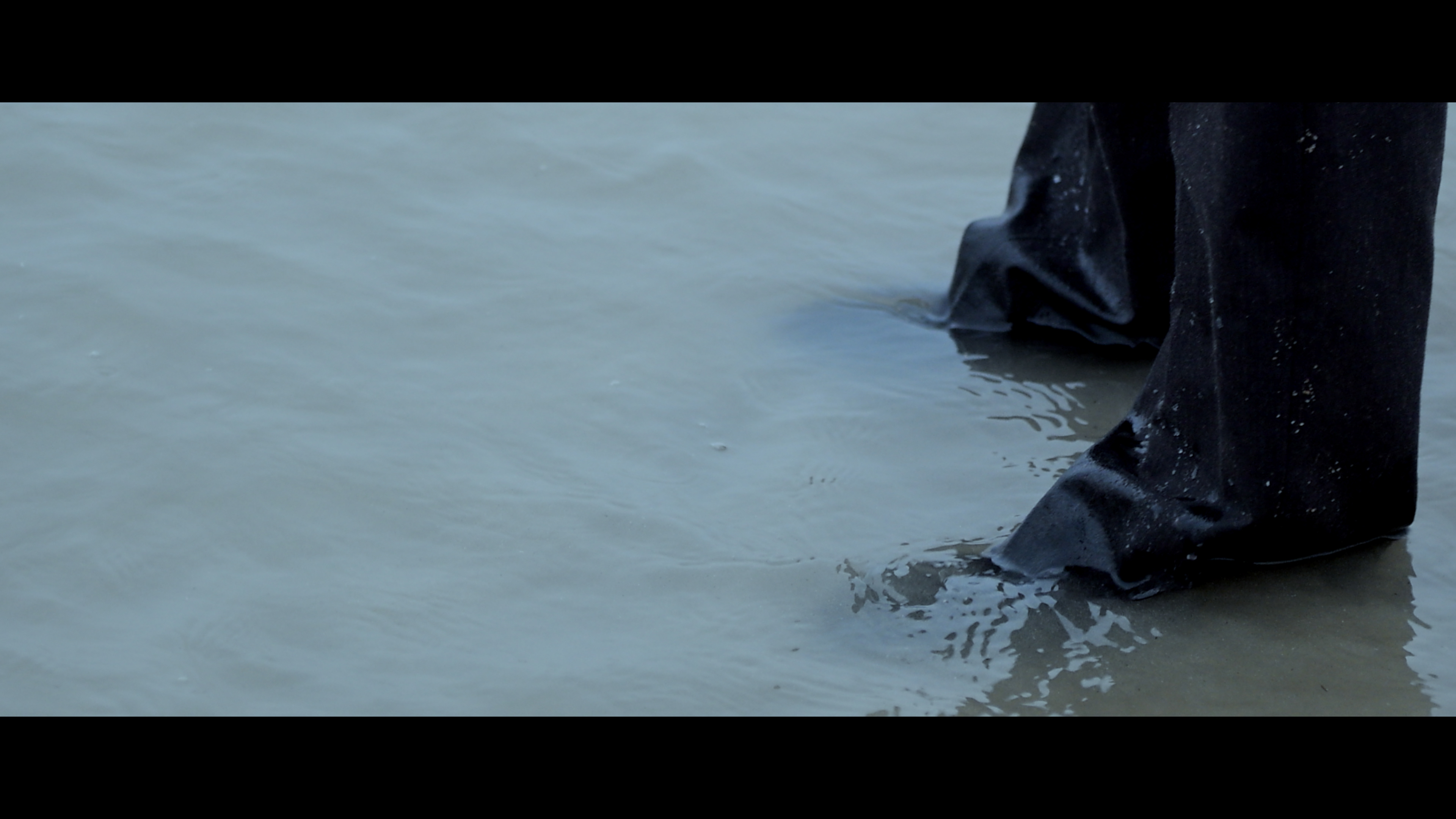
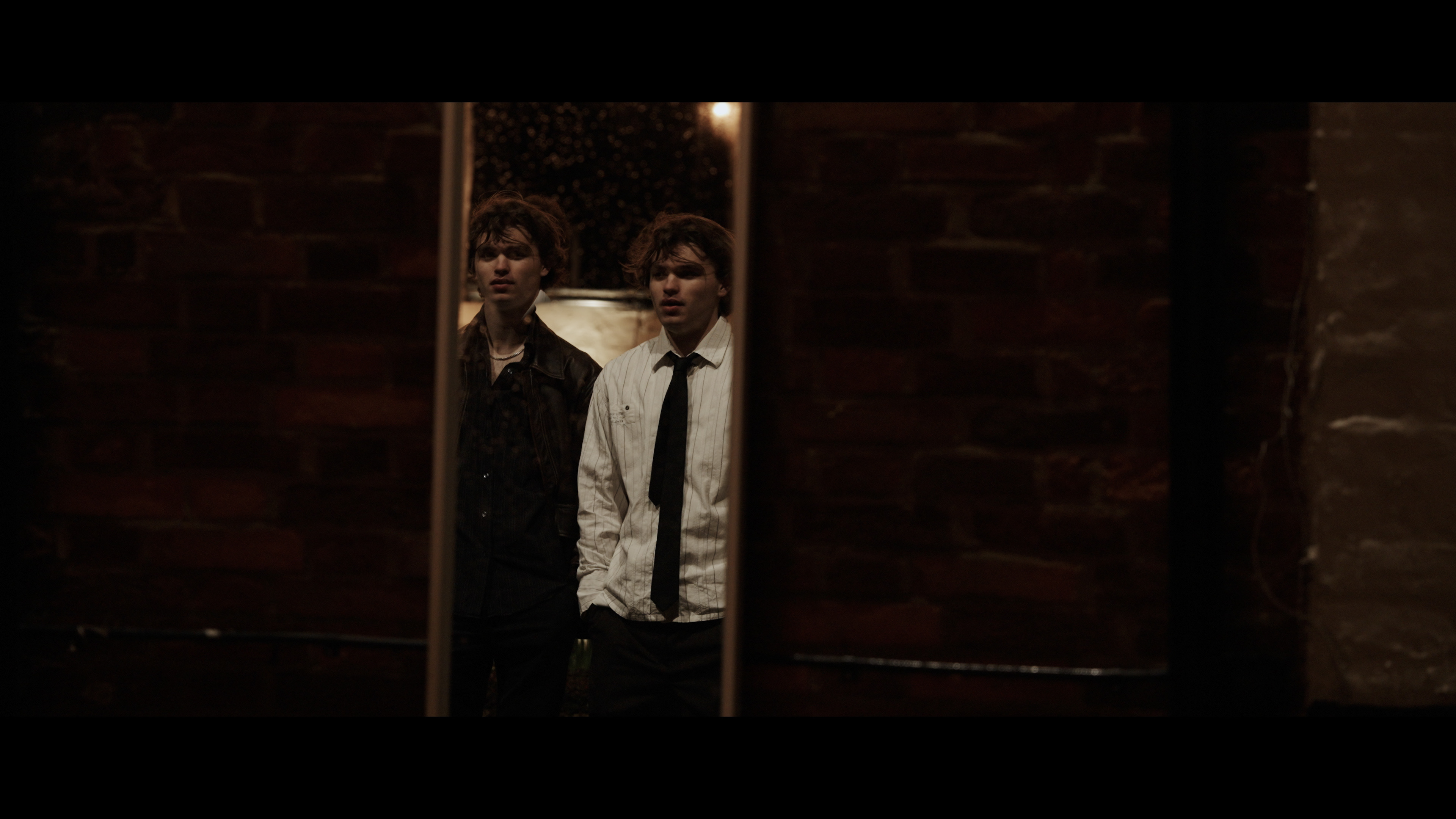
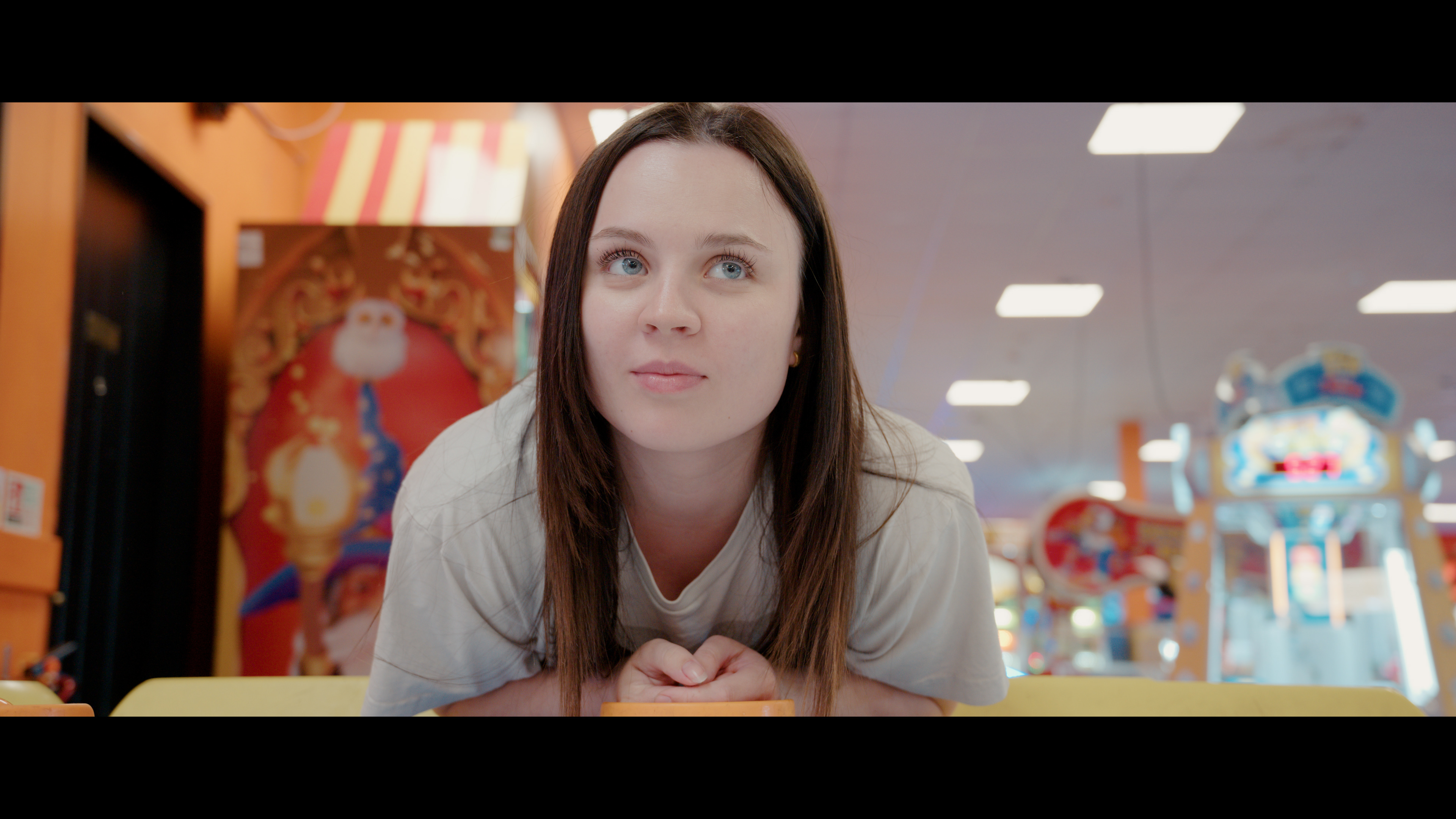
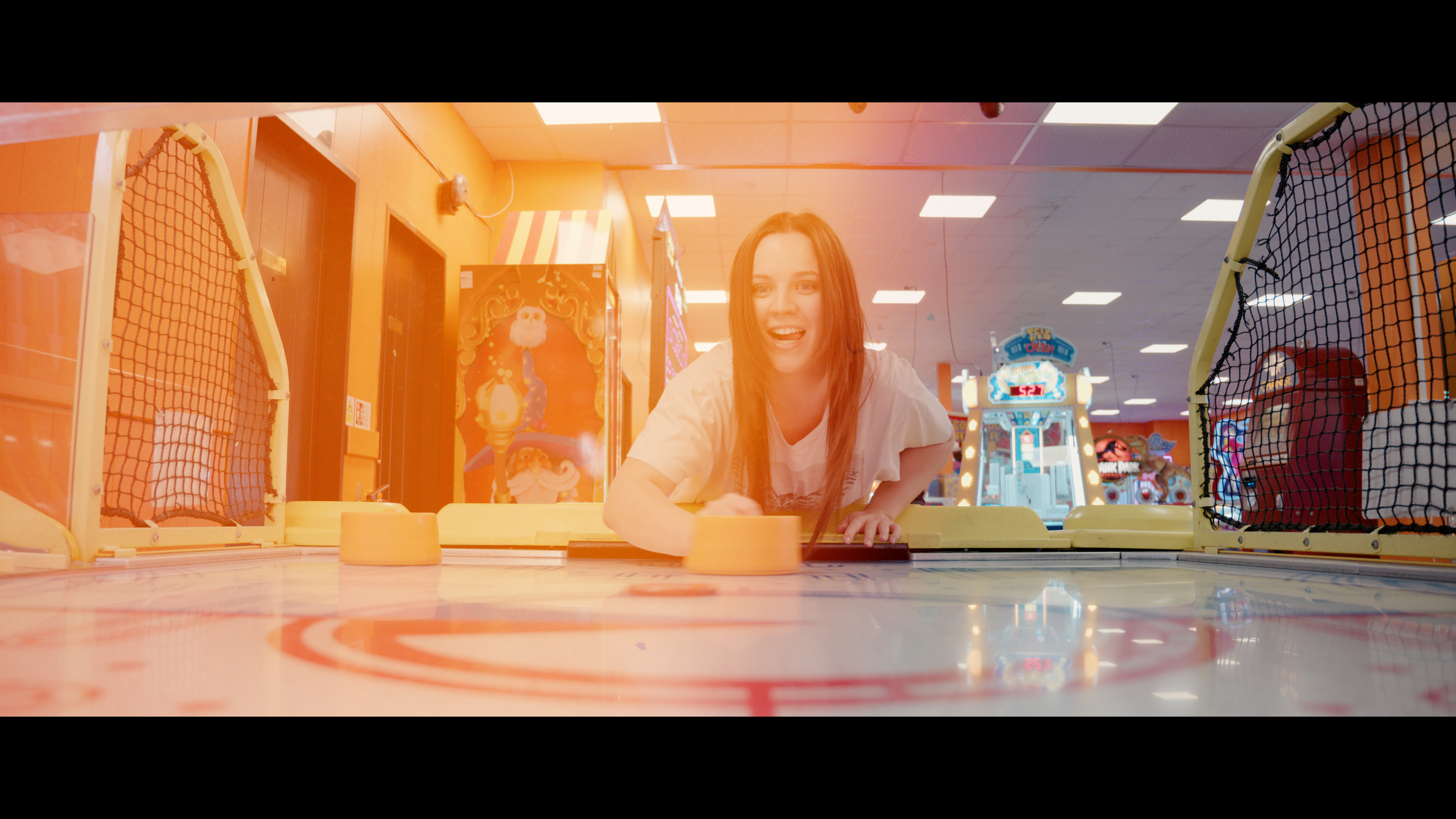
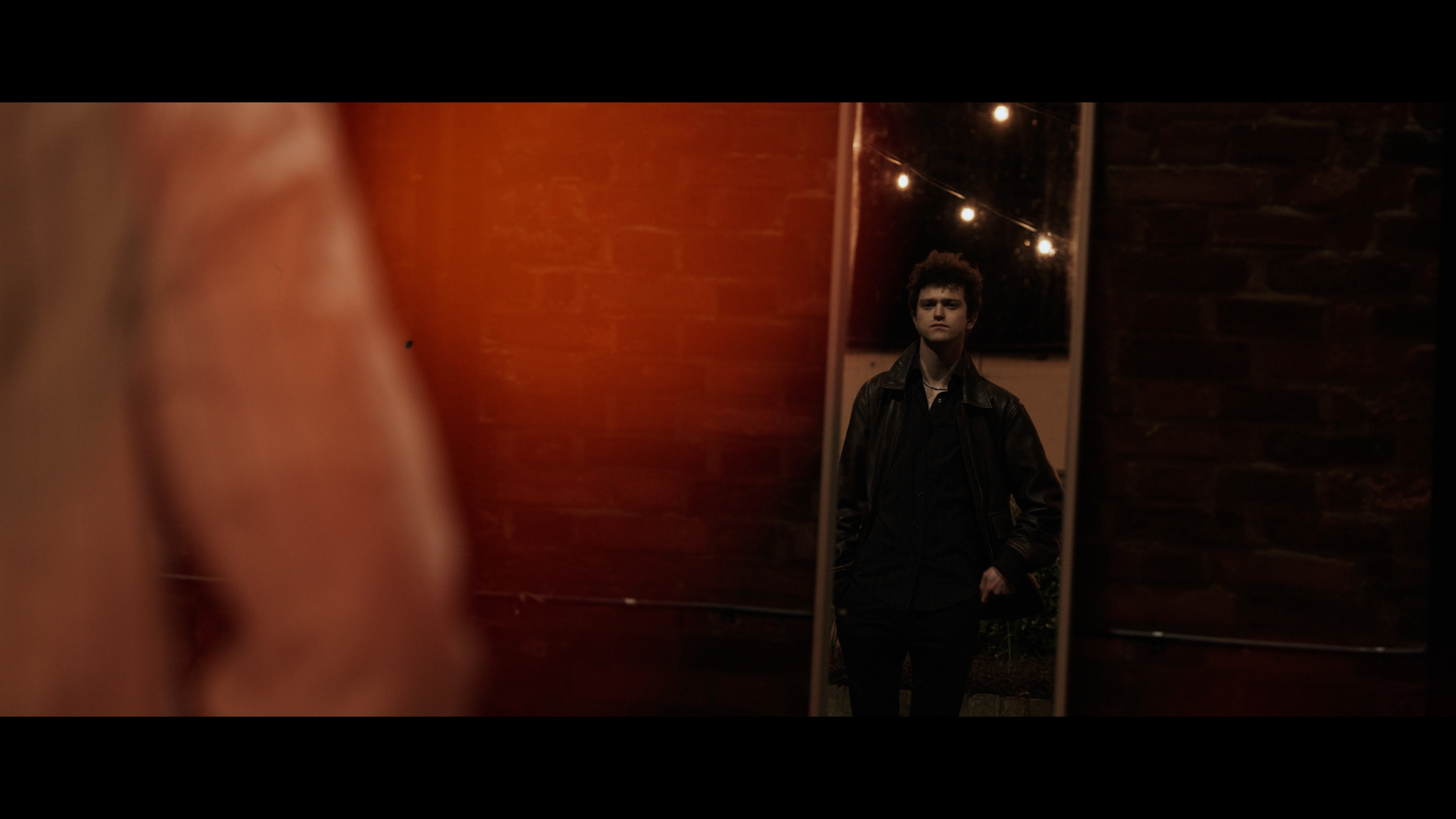
This is a real mix of shots, basically recapping everything we've seen so far, and acting as the emotional climax for Elias. We see Isobella guiding him out of the waves, with his feet in the most natural-looking water we've seen so far. Then we revisit "Look at yourself" / "I am," but this time with the payoff of no response to that, except of the single-frame face glitches.
Then, we see flashbacks of Isoella from Elias' point of view, followed by Elias looking into the mirror to see Lucid staring back at him. We also see the interaction outside th pub that we witnessed early with Lucid and Isobella, except it now happens at it really was, with Elias and Isobella. Finally, Elias does manage to step out of the waves, and ends up back in the cinema.
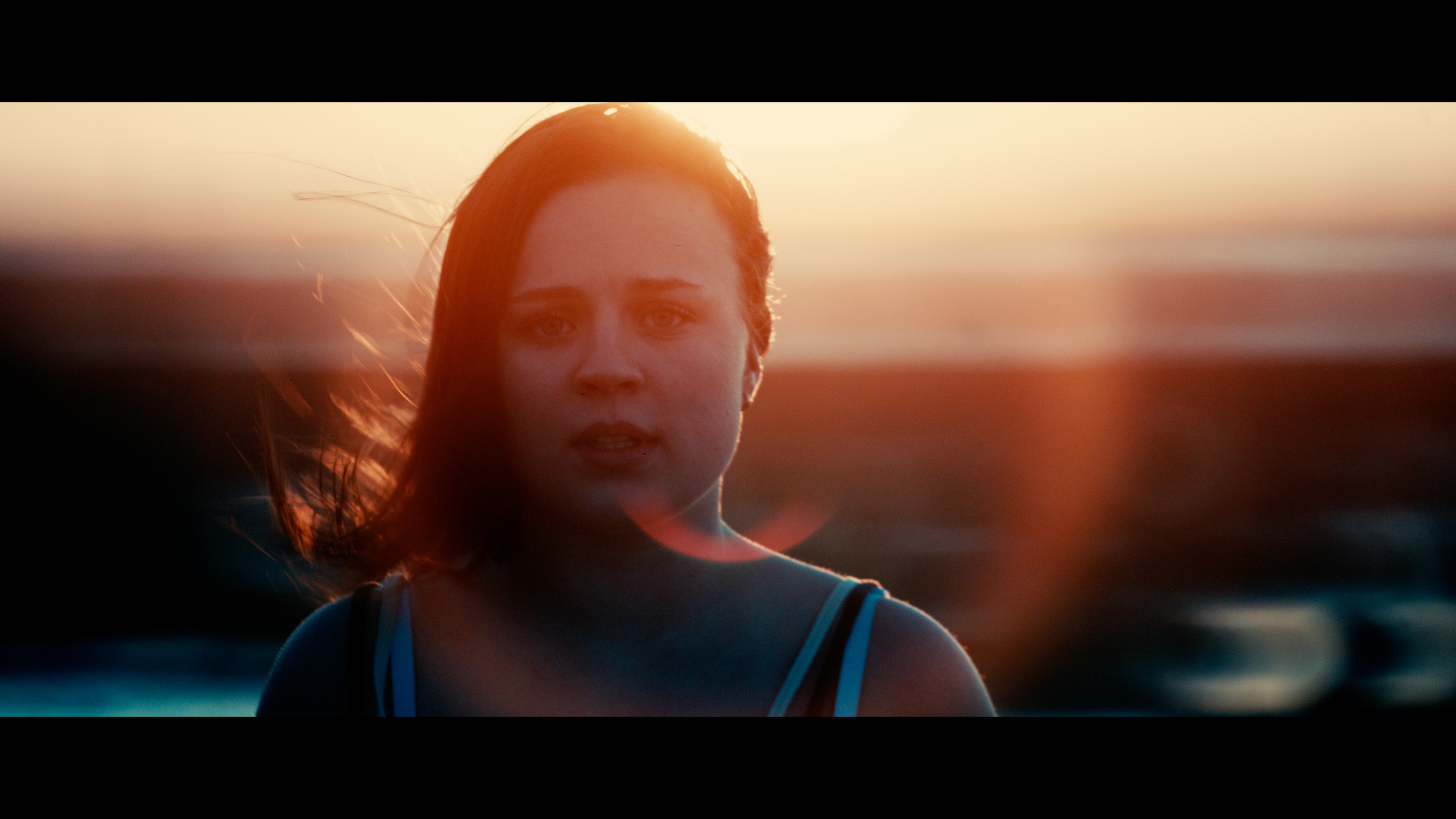
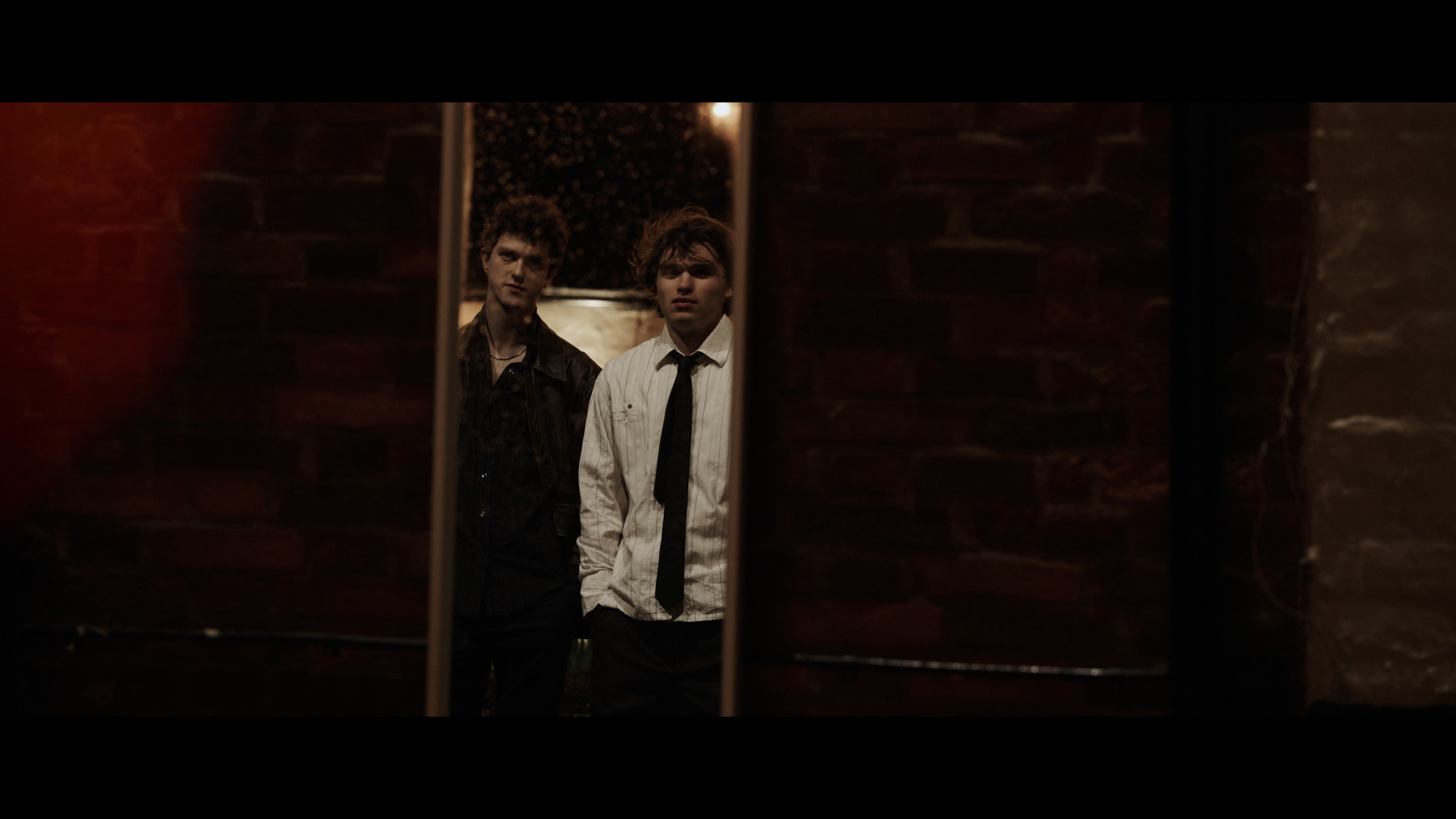
Bus Sequence
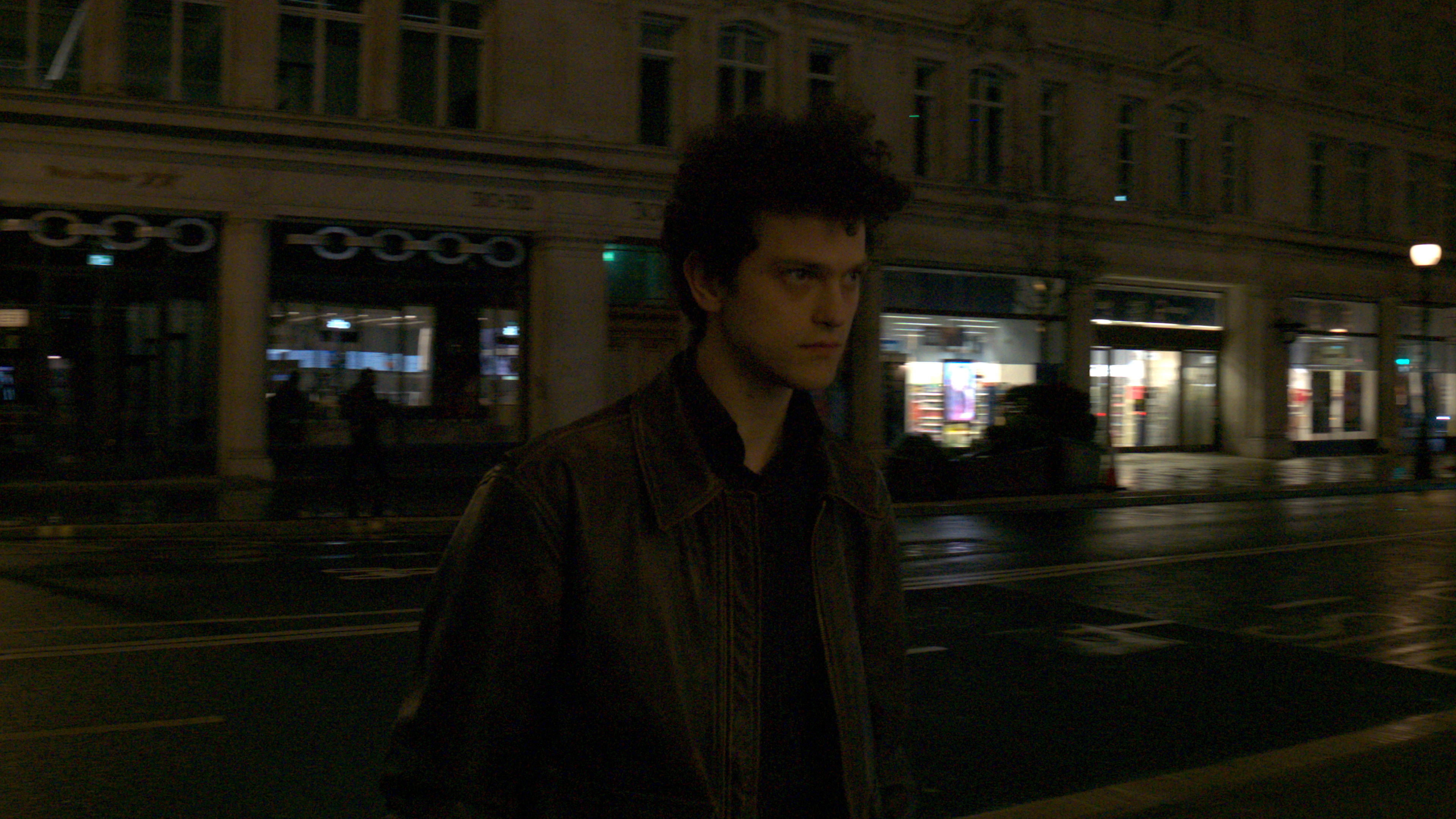
We cut to black on the last sequence, and open with Elias leaving, and locking up the cinema. On the face of it, this leaves a lot of questions unanswered. As Elias steps into the road, a bus slams into him and we start to get the indication of some answers.
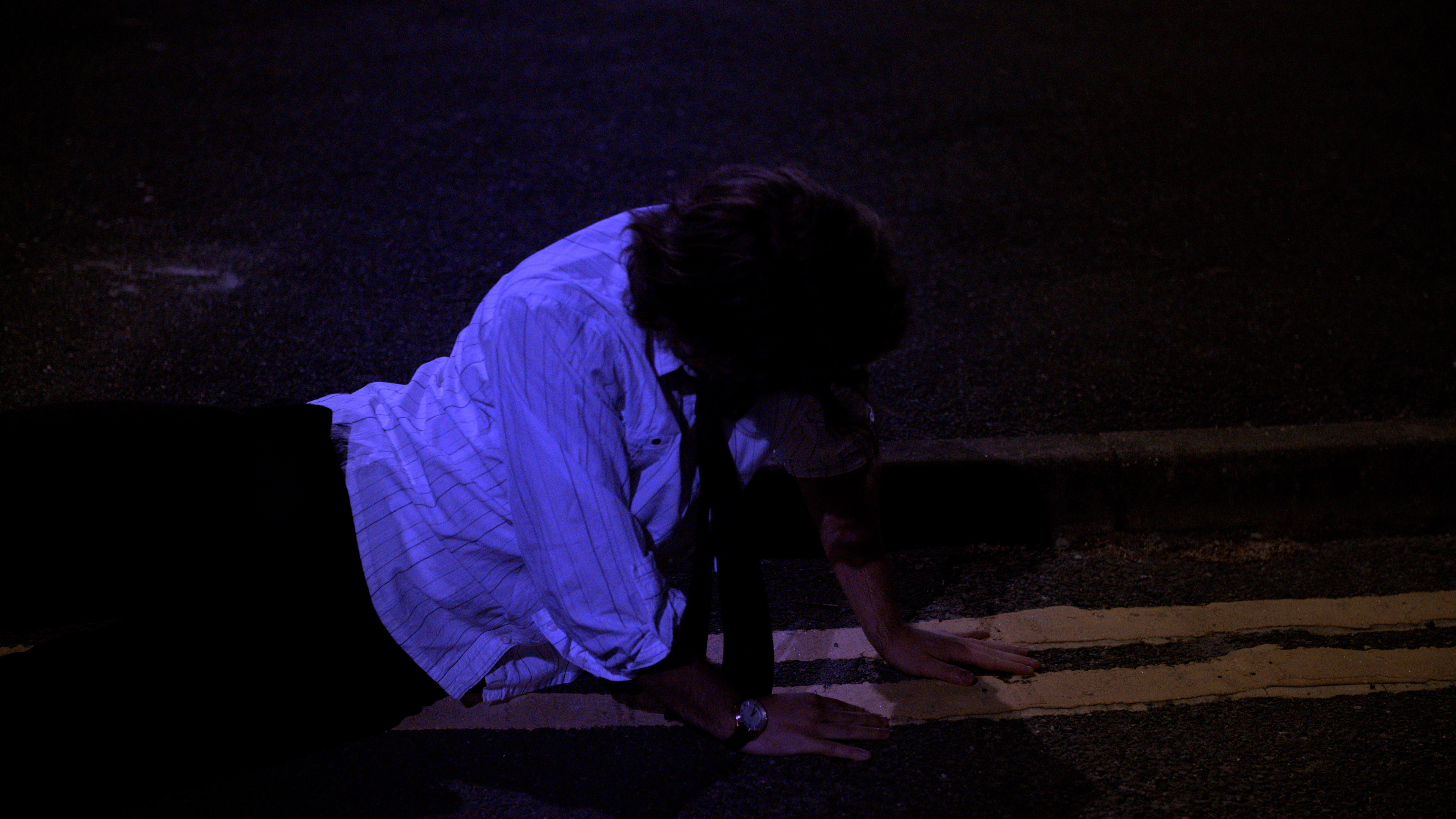
We see Elias' head hit the kerb, and then as he struggles to sit up, Lucid steps over him. Both are cast blue by ambulance lights, and Lucid spins in and out of focus as his voice echoes and falters. Finally, he reaches out an echoey and distorted hand to him, and hands him his jacket. Elias puts it on, and transforms into Lucid, on his was to go and help Elias come to terms with his emotional turmoil.
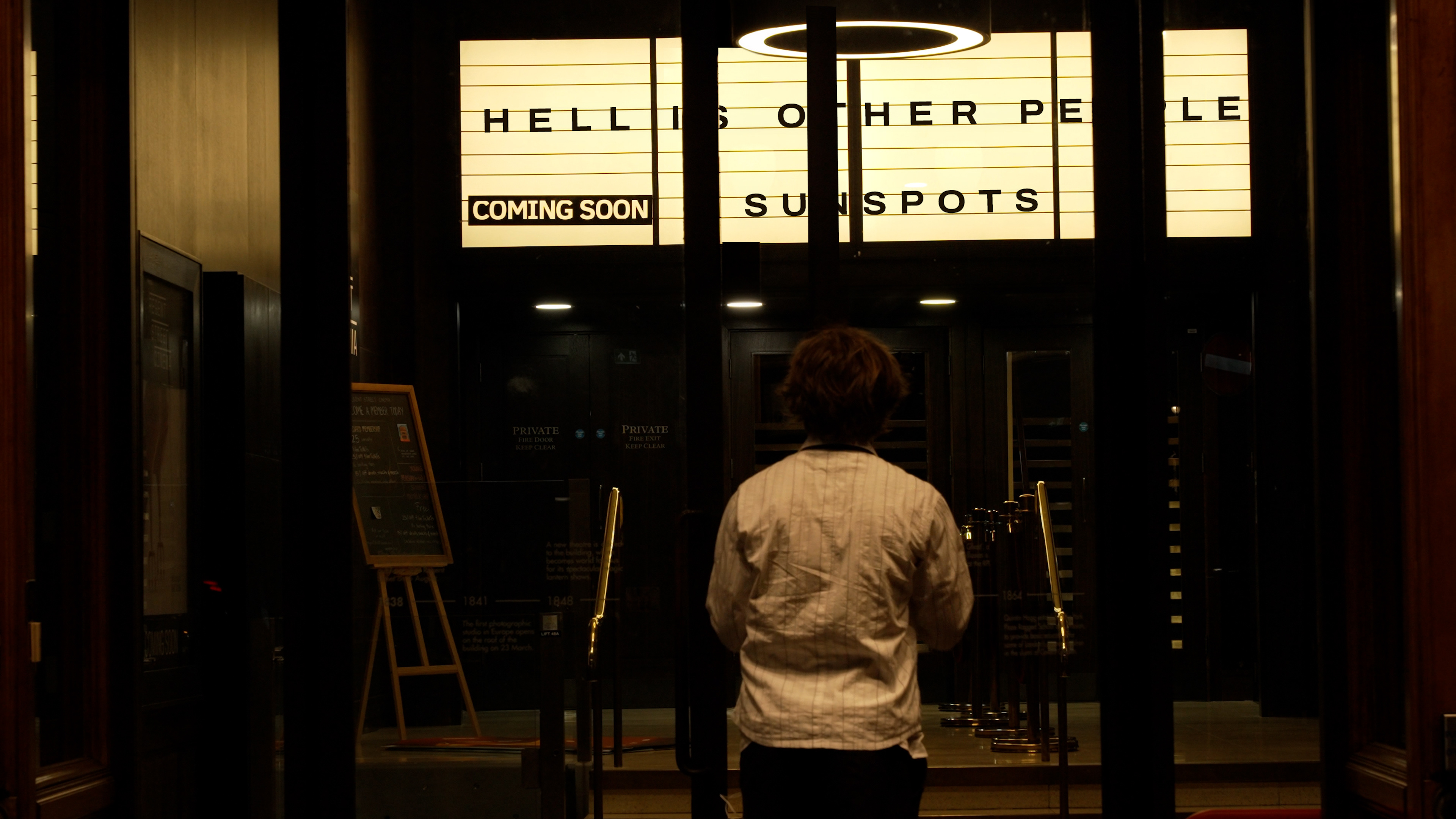
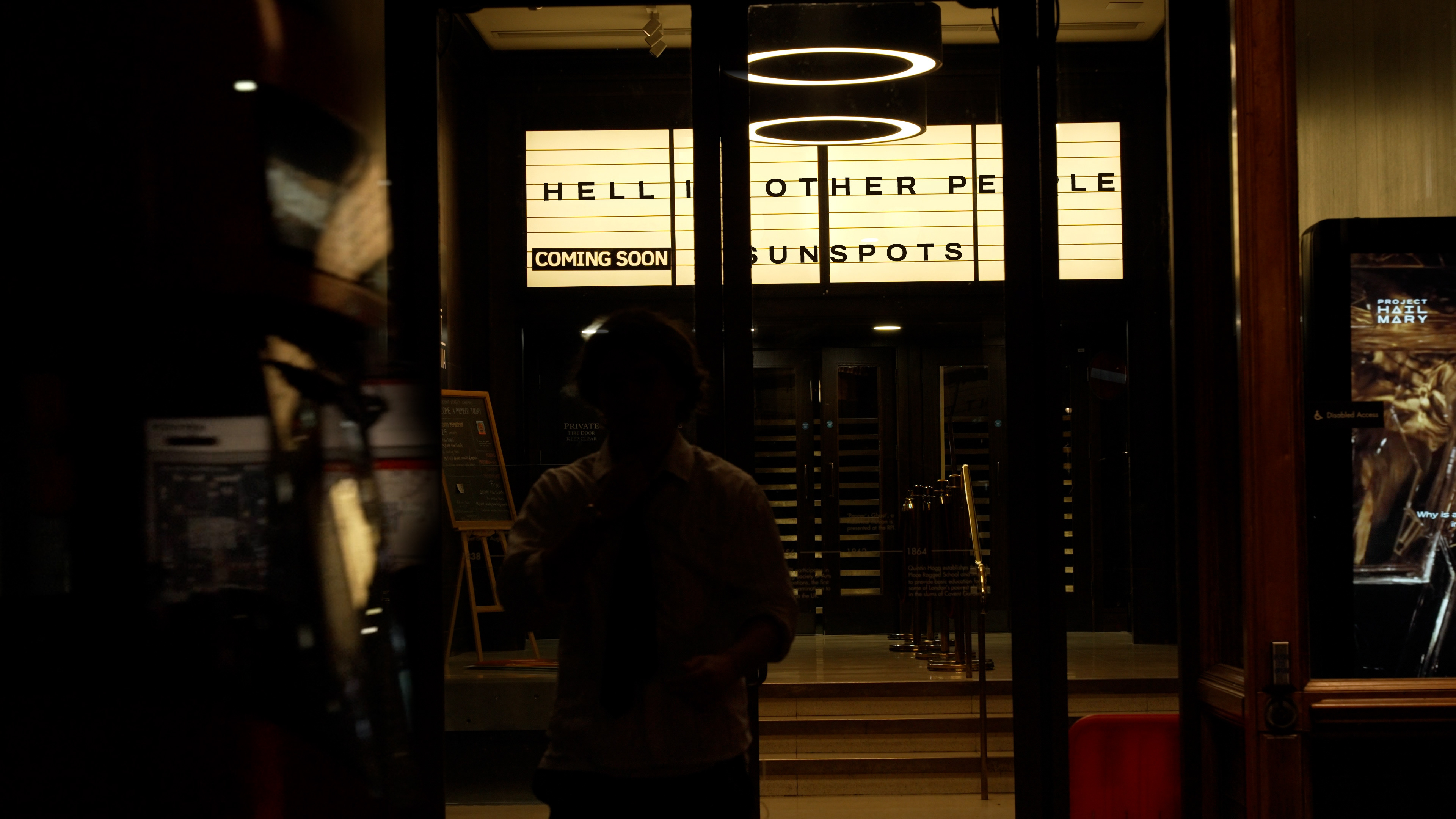
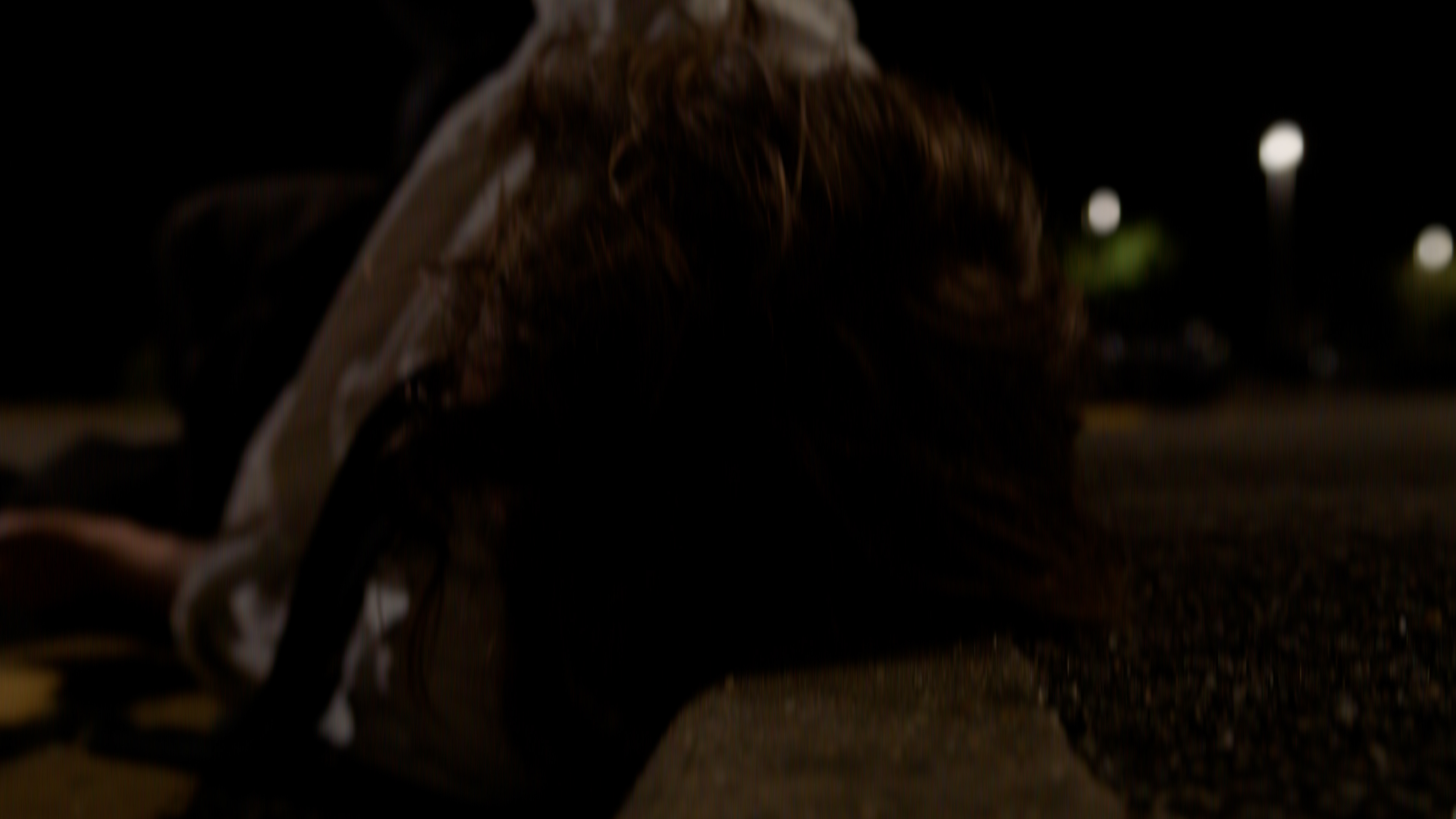
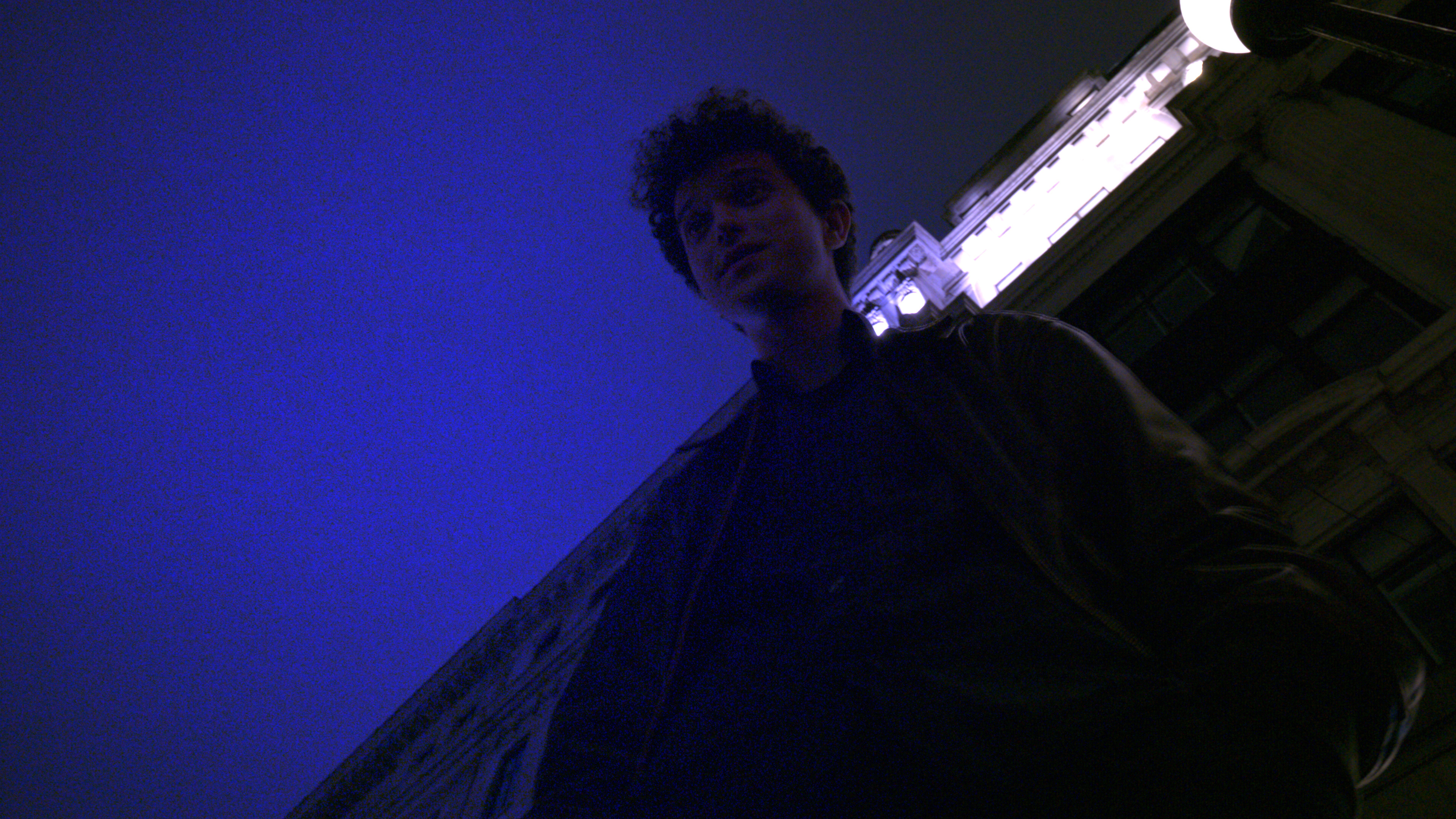
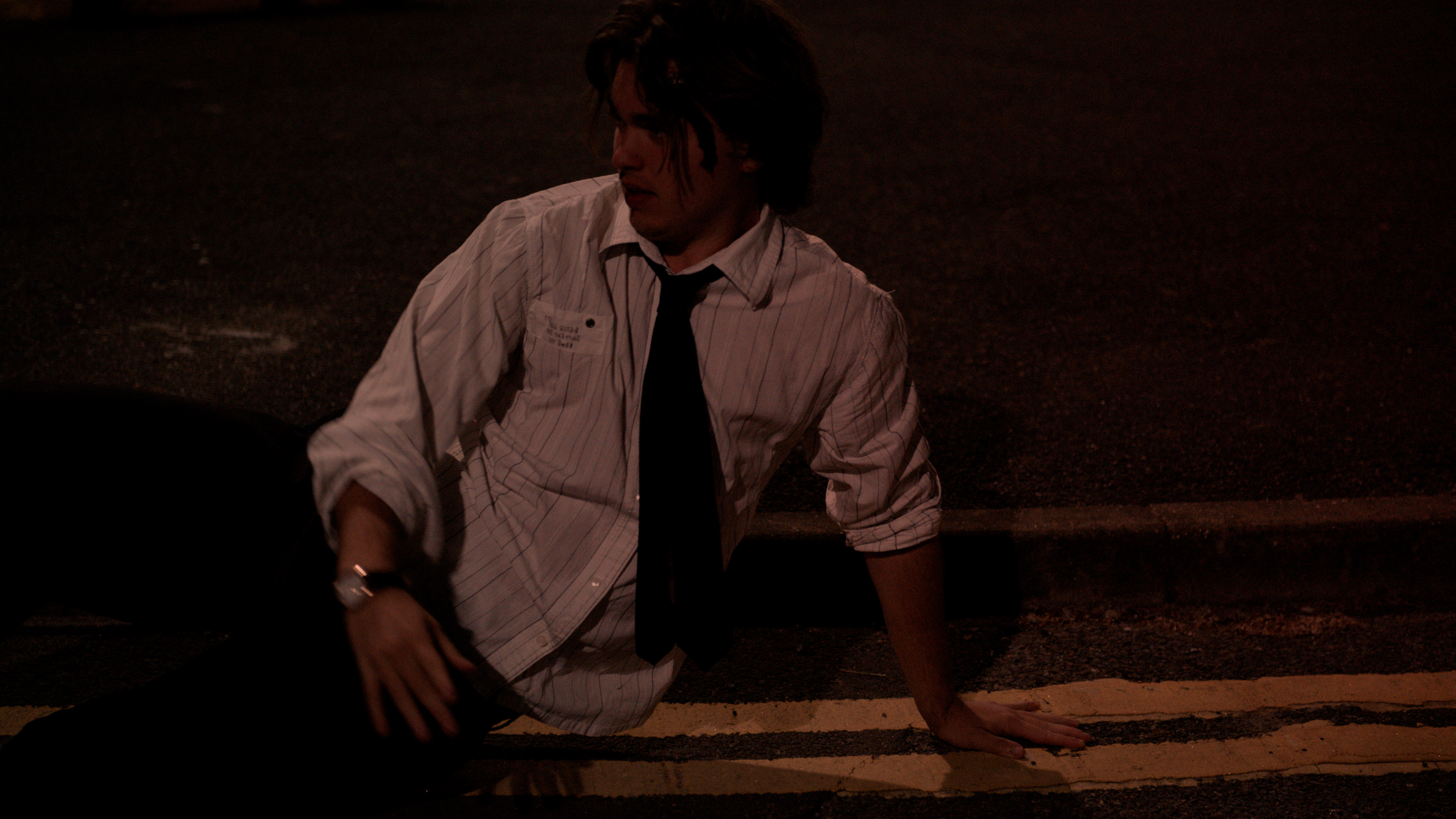
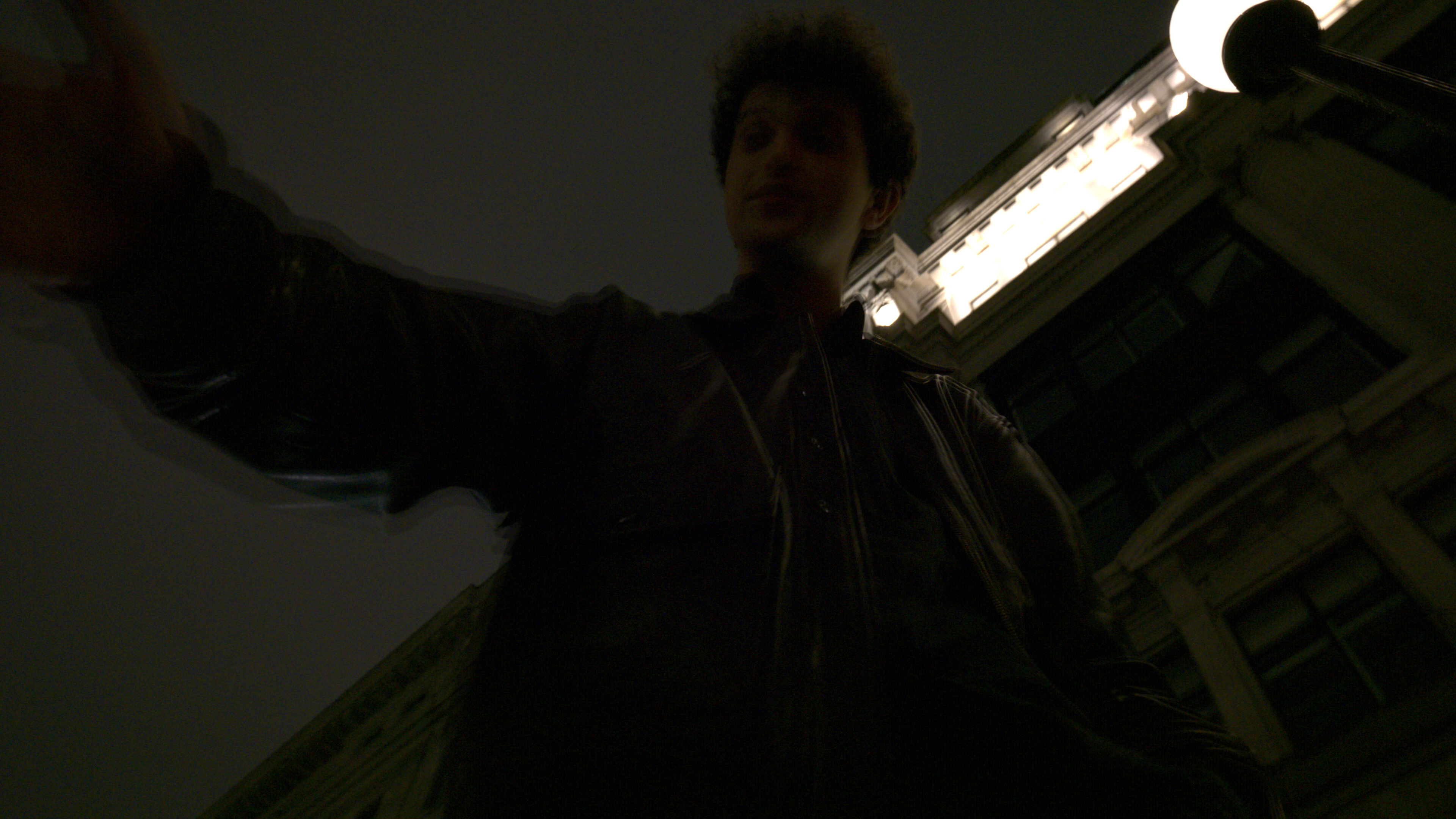
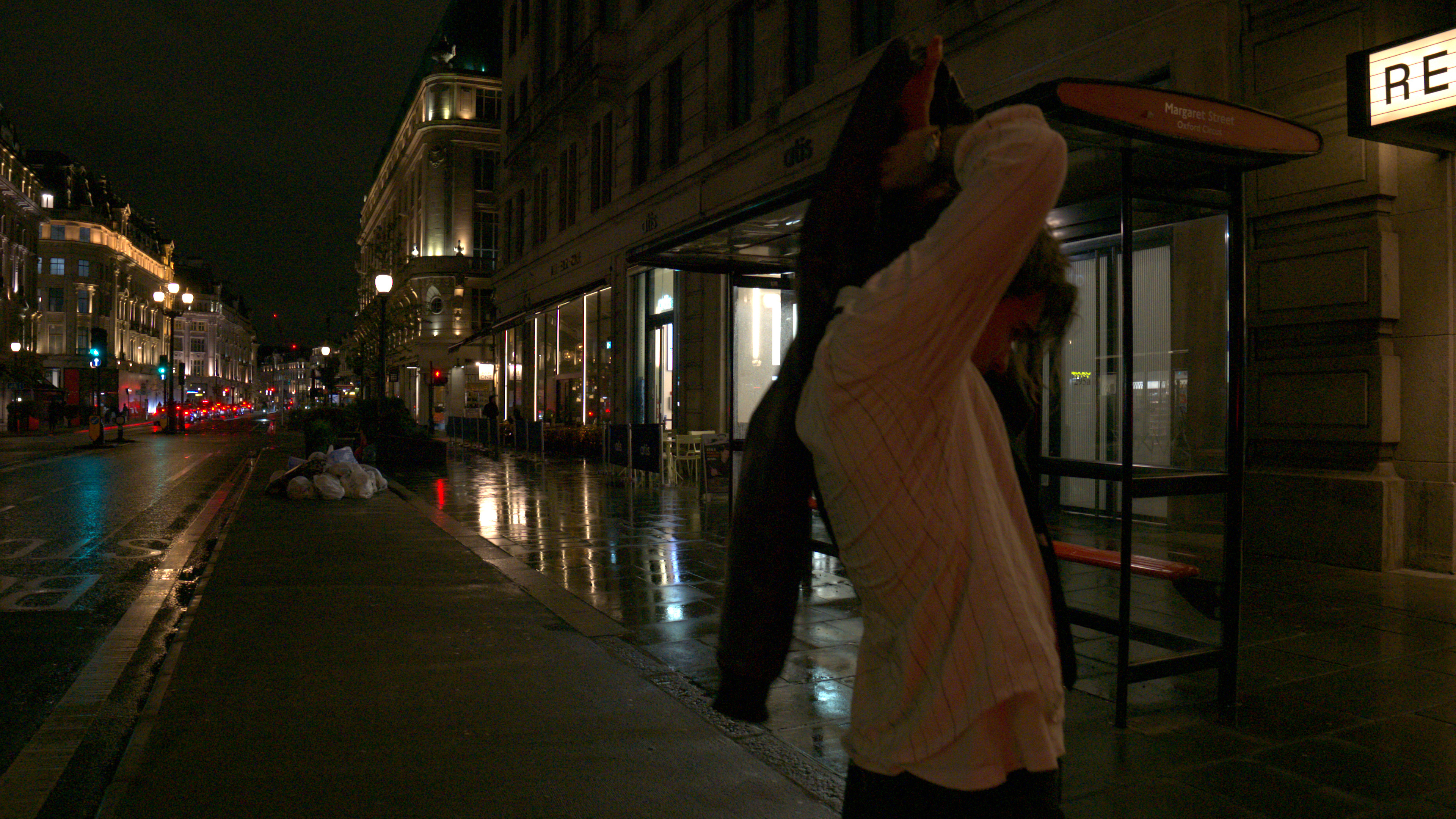
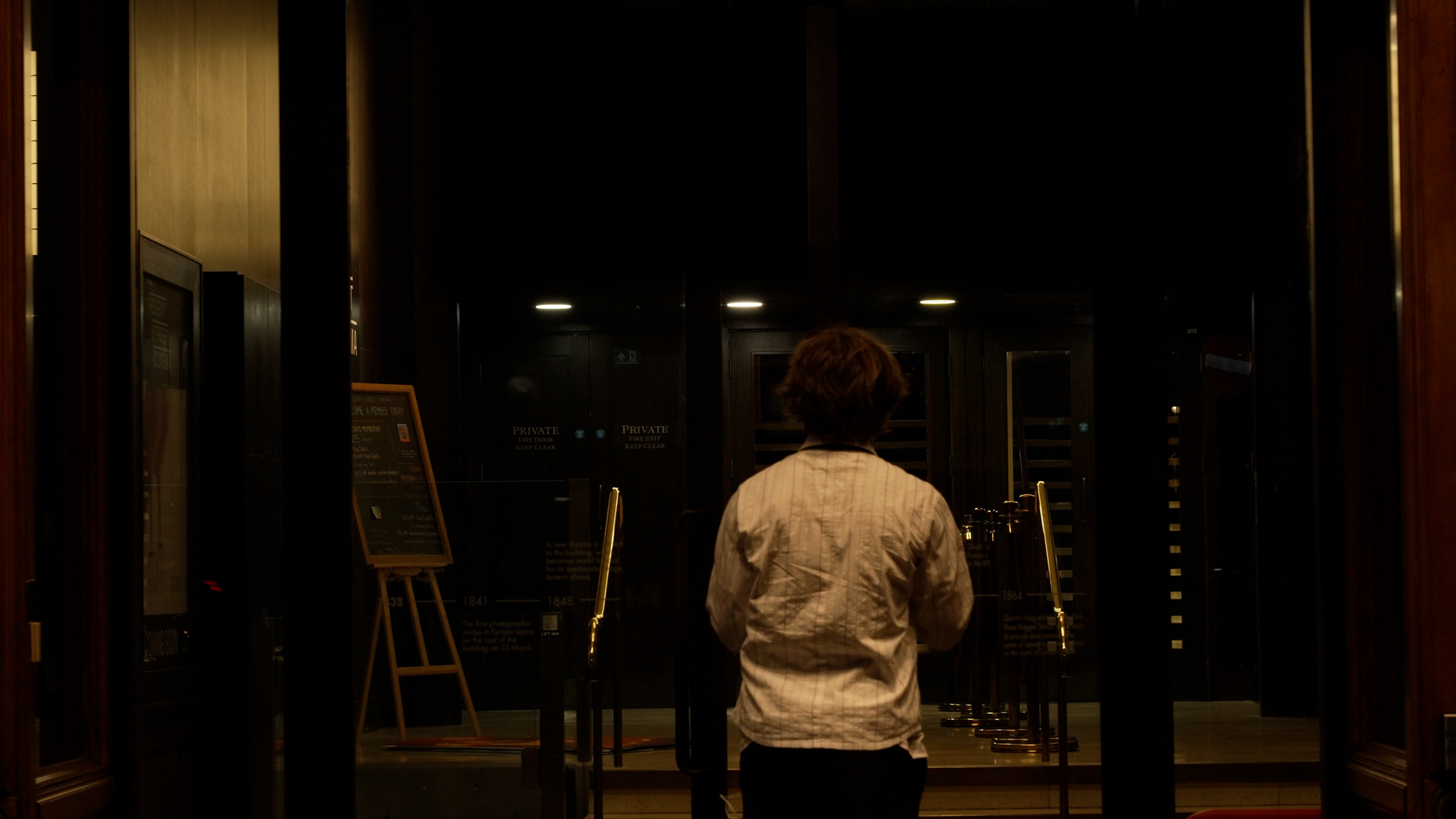
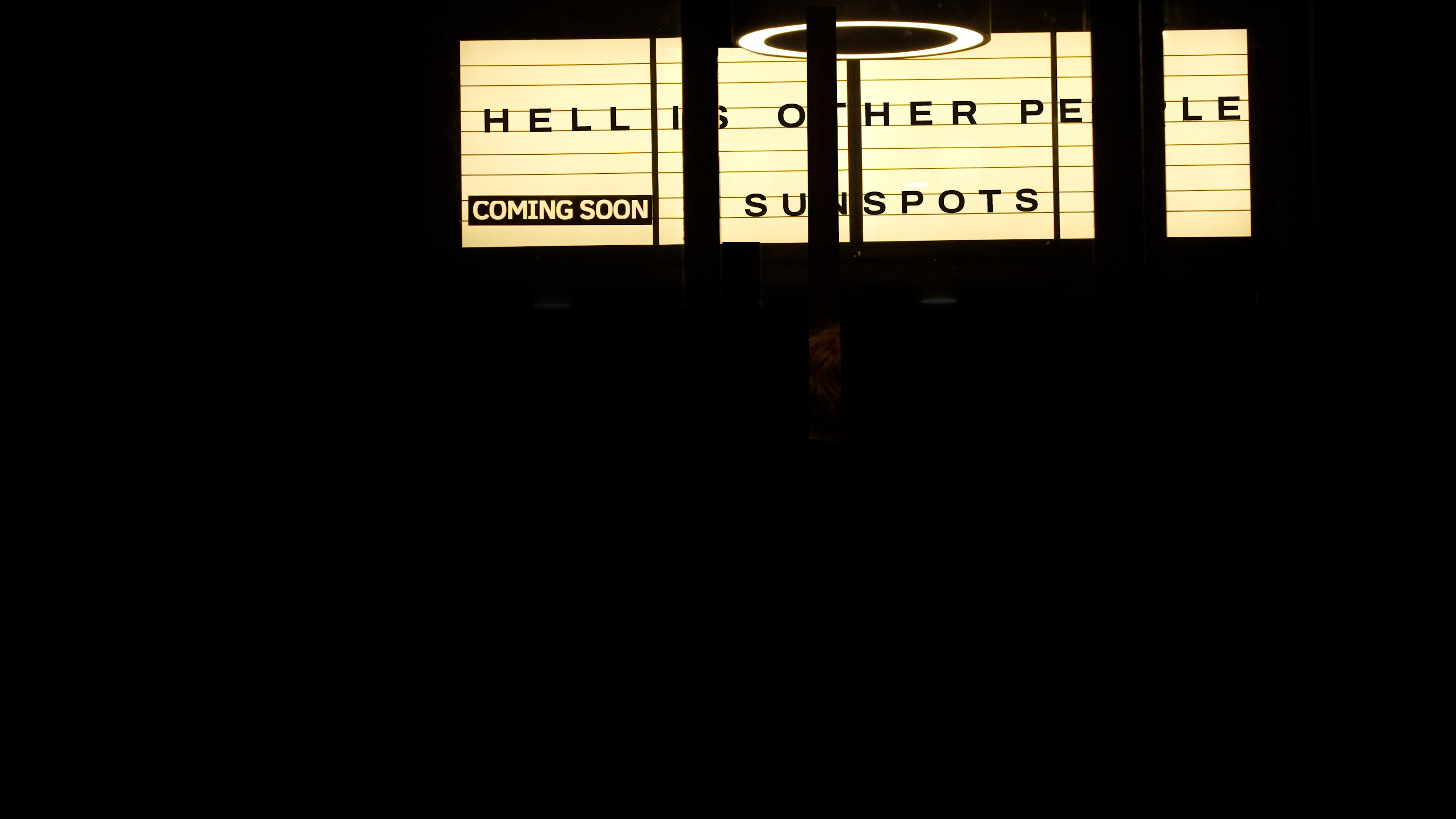
For the final shot outside the cinema, we wanted to have ‘Sunspots on the board as just an easter egg really, but mostly because we didn’t want to immediately date it with real films (originally it had Project Hail Mary — excellent film, but would quite quickly date our film as being ‘mid-2026’.). There’s three layers to this: the board, which I just edited in Photoshop, then the main shot of Elias and the cinema, with the board removed, and then the wood of the door, which I had to mask Rame-by-frame so that as the door opens, it doesn’t reveal what was originally behind it! Then we decided the second film (or first, really) should be Hell is Other People, just as an easter egg really.
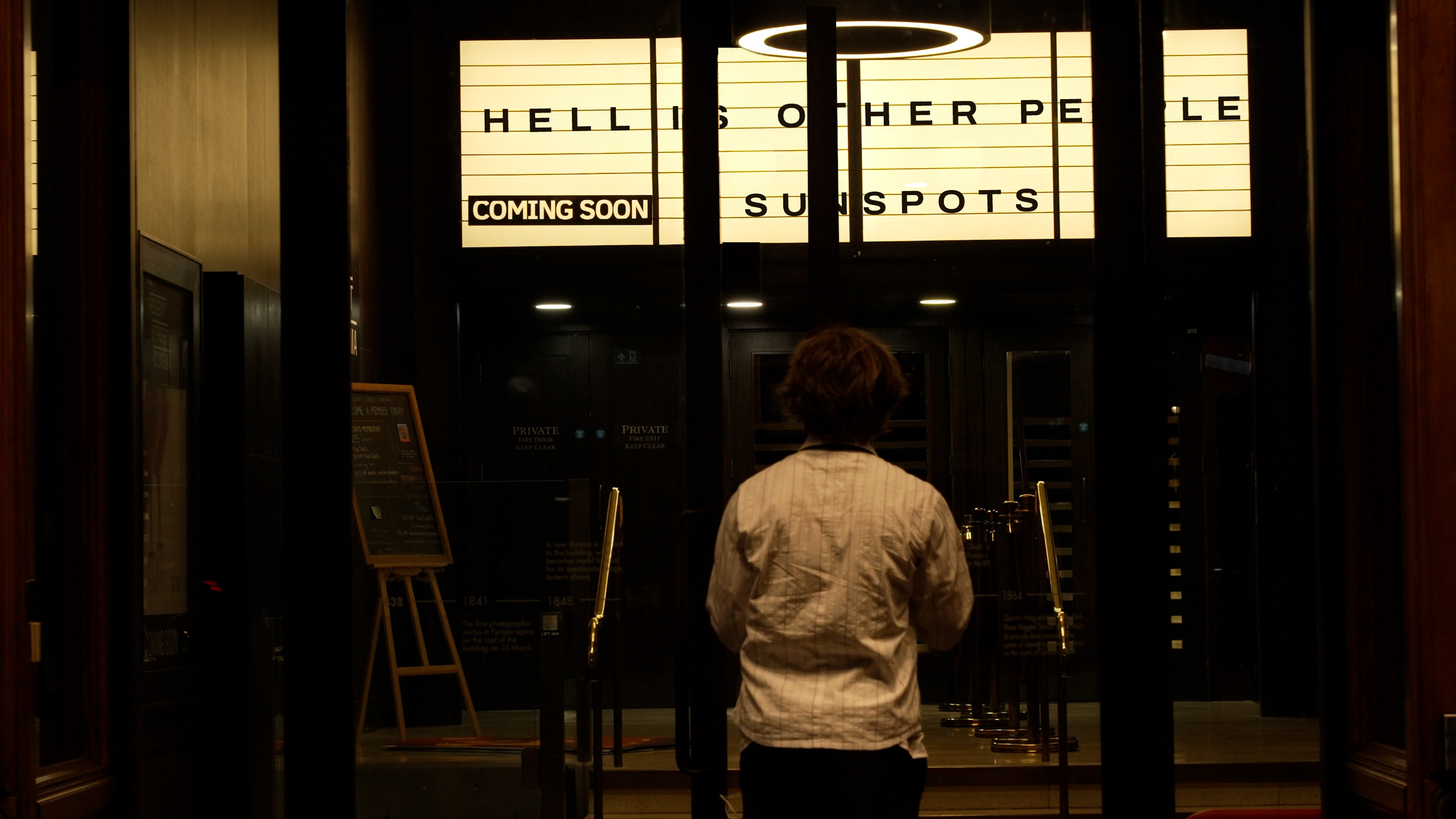
From this sequence it's also worth mentioning that the shot of Elias' head hitting the kerb was obviously reversed: I set the camera up at the angle we wanted, then basically pulled Luca up from the ground with his arms. We sped up and reversed the shot to look like he smashed his head into the kerb.
13 May: Final Cut
Today, we finally pressed submit on our final cut:
Evaluation
Aims of the Project
Sunspots was developed as a psychological drama exploring memory, identity, and emotional fragmentation through experimental visual storytelling. The project centred around three characters: Elias, Lucid, and Isobella. The ambiguity around their relationships and identities acts as the emotional and narrative core of the film. As a collaborative production, the project aimed to combine cinematic visual language, stylised sound design, and emotionally-grounded performances in order to create a surreal yet intimate viewing experience.
One of the primary aims of the project was to explore fractured identity and subjective memory through the duality of Lucid and Elias. Throughout development, the narrative evolved from dialogue-heavy psychological concept into a more emotionally-layered exploration of grief, self-perception, and introspection.
Initially, Isobella functioned primarily as a symbolic figure within Elias’ memories; however, during rehearsal and script development, her role expanded significantly. The addition of Isobella as her own character added agency to her that she didn’t have before, initially only being seen through Elias’ eyes and memories.
Visually, the project aimed to create a dreamlike and psychologically unstable atmosphere through cinematography, editing, colour grading, and recurring symbolic imagery. A major stylistic intention was to use colour and lighting not simply for realism, but as an emotional extension of Elias’ mental and emotional state. I aimed to use non-naturalistic transitions to move through scenes in a dreamlike manner, making both Elias and the audience question the reality of what they are experiencing.
In relation to the module brief, the project aimed to develop a sustained and ambitious piece of collaborative moving-image work that combined experimental visual storytelling with intricate production workflows.
Contextual Survey
The development of Sunspots was informed by a range of cinematic, visual, and philosophical influences, particularly psychological films concerned with fractured identity, unreliable perceptions and emotional subjectivity.
During rehearsals and the initial auditions process, Fight Club and Whiplash were both frequently used as performance references. The relationship between Andrew and Nicole, especially when they break up, was an incredibly useful reference for our actors, as was the relationship between Tyler and The Narrator of Elias and Lucid. The influence of psychological cinema can be seen particularly in the film’s ambiguity surrounding the character’s identity and memory. The visual atmosphere of the project was inspired by contemporary digital cinematography and the work of filmmakers such as David Fincher. The high-contrast bleach-bypass look of many of the cinematic ‘greats’ of the past thirty years — from Fight Club and Se7en, to Pulp Fiction, Nineteen Eighty-Four, Dune and Saving Private Ryan — is what gives them a sense of grittiness, and often has a huge impact on how ‘cinematic’ a film looks. We use this approach, contrasted with the saturated, popping colours of some of the flashback moments, to separate out what is real, or a memory, and what is not. Additionally, I intended to use aspect ratio as a narrative device, using a full 16:9 frame for the present tense, real world, and then cropping down to an anamorphic-look cinescope wide screen for memories, illusions, or fantasies. No sooner had I discussed this with Hannah and Peter, than Project Hail Mary came out and used aspect ratio shifts to signal the difference between Grace’s memories of earth (widescreen) and his present tense experience in space (the taller 16:9 or IMAX). While slightly different to how I intended to use this, Project Hail Mary became a huge influence, especially when it came to colour grading.
Colour grading became one of the most significant contextual influences on the project’s visual language. Rather than pursuing strict realism, I used colour symbolically to reinforce emotional tone and psychosocial instability.
The project also engages with ideas surrounding subjective perception and unreliable memory often explored within psychological cinema. In this sense, Sunspots reflects broader contemporary interest in fragmented identity and emotional alienation within modern film narratives. The fragmented visual language of the film reflects Baudrillard’s ideas surrounding simulation and unstable realities, particularly through the blending of memory, fantasy, and present experience, and the ideas around memory fragmentation were central during the scriptwriting process.
Reflection of Practice
Pre-production became one of the most collaborative and creatively formative stages of the project. We discussed colour, shots, transitions, sound design, and locations, right from the scriptwriting stage. I had initial ideas about locations, and knew the shots I wanted for the beach. Having to mitigate the issues caused by the weather when we were shooting at the beach actually improved the film, I believe. Taking the cooler, blue/green hues instead of the sunrise golden glow adds a new depth to the scene. Even better, then, is when we finally see Isobela on the beach, and she is lit by a golden setting sun. This acts as a metaphor for the sun setting over their relationship as Elias finally puts to bed what he spent a long time trying and failing to understand, get over, and move past.
The audition process significantly shaped the direction of the final film. As a writer and director, you never really know how it will go until you see someone perform your characters. I remember especially with Neve, her delivery of some of the lines — before I’d even directed anything at all — was perfect. She completely understood the emotional complexity of the character, and was able to deliver the role as authentically I could have ever hoped for. To those ends, rehearsals became essential in clarifying both character psychology and narrative ambiguity. Discussions surrounding the Stanislavski method forced me to make difficult decisions about the characters that I had previously left up for interpretation, and helped to ground the characters emotionally, even while remaining a sense of ambiguity. In retrospect, the rehearsals were not simply preparation for production, but an extension of the writing process itself.
A major aspect of the production process involved adapting continuously to logical, financial, and environmental challenges. As mentioned previously, the weather at many locations was sporadic and unpredictable. We were incredibly lucky to have rain at the cinema, allowing us to get some lovely cinematic shots of the street, with headlights, street lamps, and neon signs reflected against the road surface.
One of the most significant difficulties during production was securing locations, especially as we just didn’t have the budget to be forking out hundreds on booking venues. Our biggest expense was the Air BnB where we stayed in Kent, allowing us to shoot two consecutive sunrises there, without having to leave at 2am every day. Budget constraints frequently forced creative compromise and restructuring, even insofar as the way we were filming: we had three cameras most of the time — and FX6, and Peter and I both bought Nikon/RED ZRs — but due to increasingly storage costs and the need for backups as well as primary storage, we elected generally to shoot ProRes where we could, but rarely Raw. Being able to shoot R3D RED RAW would have been enormous — but so would the storage costs. This would have given us ultimate flexibility in post with colour grading and noise reduction, but having to work around that forced us to be more careful of our shots, how many takes we were doing, and how long we rolled for.
Independent filmmaking inevitably requires adaptability, and this became increasingly apparent throughout the production process, and when it rains, it really does pour. We had to deal with a location pulling out last minute, weather discrepancy between consecutive shoot days, stolen bags, wallets and SSDs (although, luckily we had backups!), actors availability being sporadic, and travel issues, all within a few weeks. Troubleshooting these issues ultimately reinforced the importance of contingency planning and flexibility, but with such a tight budget this was often extremely difficult — for example, there was no way we could have taken everyone to Kent again, as the petrol alone for two cars made this a practical impossibility.
In several cases, however, limitations unexpectedly contributed positively to the film’s atmosphere, as the unpredictable nature of production forced increasingly instinctive creative decisions. I do think that the beach having no sun really adds atmosphere to the film, and the green hues are really beautiful. Above all else, beyond the reasoning and metaphors and references, a film’s ultimate goal — in my opinion — is to be visually, audibly, and emotionally appealing. The shots have to look good, be designed well, show action and remain consistent while retaining a sense of beauty. The sound has to be clear, audible, legible, but usually also layered and complex. The emotional appeal of a film doesn’t have to be that it has a happy ending, or makes you feel positive — but it has to make you feel something. The end of Fight Club is as devastating as it is beautiful, and the same could be said about many, many films. But the substance has to be there for the metaphors and justification to work in the first place.
Sound is always one of, if not the, most important parts of film. When we were able to have a sound engineer on set, it was a huge benefit, but when Ellie wasn’t able to be there it meant I had to work around that. I do think that everyone contributed absolutely equally to this project, but there were times where balancing directing, operating cameras and DOPing, and then monitoring audio, could get a little bit overwhelming. Of course, on a professional set that would never be an issue, but as independent and student filmmakers, we have to work with what we’ve got, and the experience of our crew. The best shoot was probably the pub exterior — we had Ellie on sound, Vanya on lighting, Hannah and Peter on Cameras, and two runners who came to help and be extras for the background of shots, which meant I could direct and DOP with much more breathing space than when our crew depleted for shoots further afield. At the beach, for example, on the first day the audio was all unsalvageable. One of the mic packs and one of the receivers were playing up, which meant every few seconds we just got a shot of static; I knew from watching the rushes back that we would need to do ADR for that scene, at least. These situations were all manageable, however — and more importantly, we did manage them effectively.
Cinematography became one of the primary storytelling devices within Sunspots. Throughout production, visual language was prioritised as a method of communicating Elias’ psychological state — even insofar as to represent his narrow field of view when remembering or imaging his own fantasies. The recurring contrast between warm and cool colour palettes became central to the emotional progression of the film. In the edit, I used experimental compositing and masking techniques frequently, both in order to reinforce the themes of fractured memory, and to effectively achieve the desired, consistent colour grade for scenes. The project demonstrated how experimental visual techniques can communicate psychological subjectivity more effectively than dialogue alone.
Conclusion
Overall, Sunspots became a project defined as much by adaptation and experimentation as by its original concept. Despite significant technical and logistical challenges, the film successfully achieved all of its initial aims. I think we effectively created dreamlike and psychologically unstable atmospheres, made better through our non-naturalistic and nonlinear transitions between scenes.
The project also reinforced the importance of sound, not only as a narrative device, but also as utterly essential for audience comprehension. Through ADR, Foley recording, and layered sound design, I became increasingly aware that audio often determines the emotional believability of a scene more than visuals alone. The combination of distorted ambience, fragmented dialogue, and recurring musical motifs became essential in reinforcing the unstable psychological perspective of the film.
Sunspots reinforced my love of psychologically-driven visual storytelling and experimental cinematic techniques. The project has significantly developed and shaped my understanding of collaborative filmmaking, particularly in relation to visual storytelling, sound design, and post production, and I really enjoyed being able to direct and oversee the visual language of the project throughout production. Ultimately, the production demonstrated how uncertainty, experimentation, and collaboration can become defining creative strengths rather than limitations — but that, above all, proper planning, contingencies, and a concrete visual and narrative concept are essential.Bibliography
Bibliography
Baudrillard, J. (1994) Simulacra and Simulation. Ann Arbor: University of Michigan Press.
Fincher, D. (dir.) (1995) Se7en [Film]. New Line Cinema.
Fincher, D. (dir.) (1999) Fight Club [Film]. 20th Century Fox.
Fincher, D. (2010) RED ONE M-X – The Match (Camera Test) [Camera Test/Short Film]. RED Digital Cinema. Available at: https://thefincheranalyst.com/commercials/2010-red-one-m-x-the-match-camera-test/ (Accessed: 12 May 2026).
Nolan, C. (dir.) (2014) Interstellar [Film]. Paramount Pictures.
Lord, P. and Miller, C. (2026) Project Hail Mary. United States: Amazon MGM Studios.
Radford, M. (dir.) (1984) Nineteen Eighty-Four [Film]. Virgin Films.
Scott, R. (dir.) (1982) Blade Runner [Film]. Warner Bros.
Tarantino, Q. (dir.) (1994) Pulp Fiction [Film]. Miramax Films.
Tarantino, Q. (2022) Cinema Speculation. New York: HarperCollins.
Villeneuve, D. (dir.) (2021) Dune [Film]. Warner Bros.
Villeneuve, D. (dir.) (2016) Arrival [Film]. Paramount Pictures.
Whiplash (2014) Directed by D. Chazelle [Film]. Sony Pictures Classics.
Orwell, G. (1949) Nineteen Eighty-Four. London: Secker & Warburg.
West, S., Deuchars, K. and Ali-MacLachlan, M. (2024) Research into affective soundscape evaluation in open-plan offices.